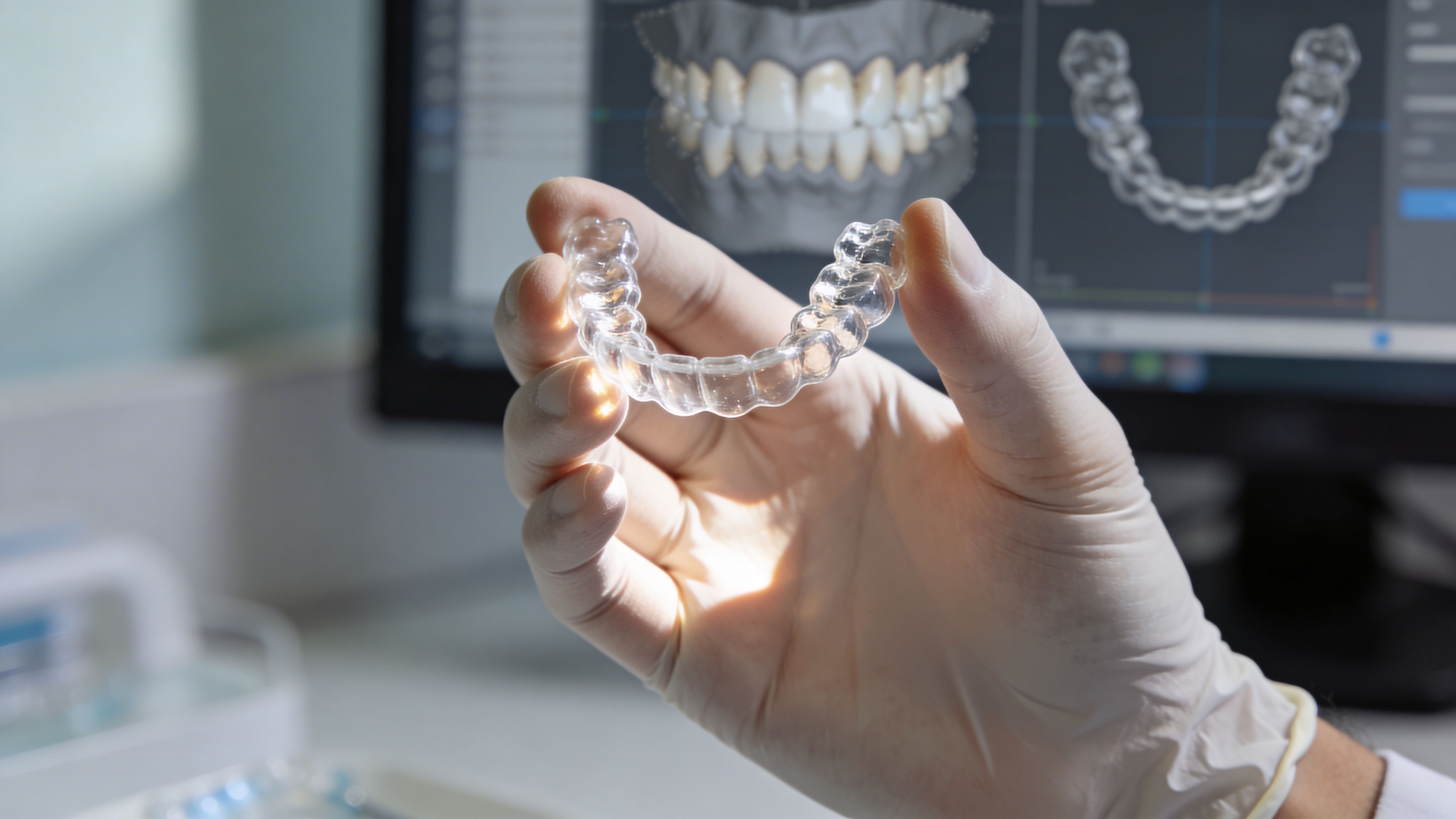
Clear Aligners and School Life: What Your Teen's Day Looks Like
Direct Answer: A teen wearing clear aligners keeps trays in all day except at meals. Trays come out for lunch and snacks, get brushed, and go back in before the period ends.
By the time most parents call me, they already know the basics. They know their teen is probably a candidate, and they know the trays need to stay in most of the day.
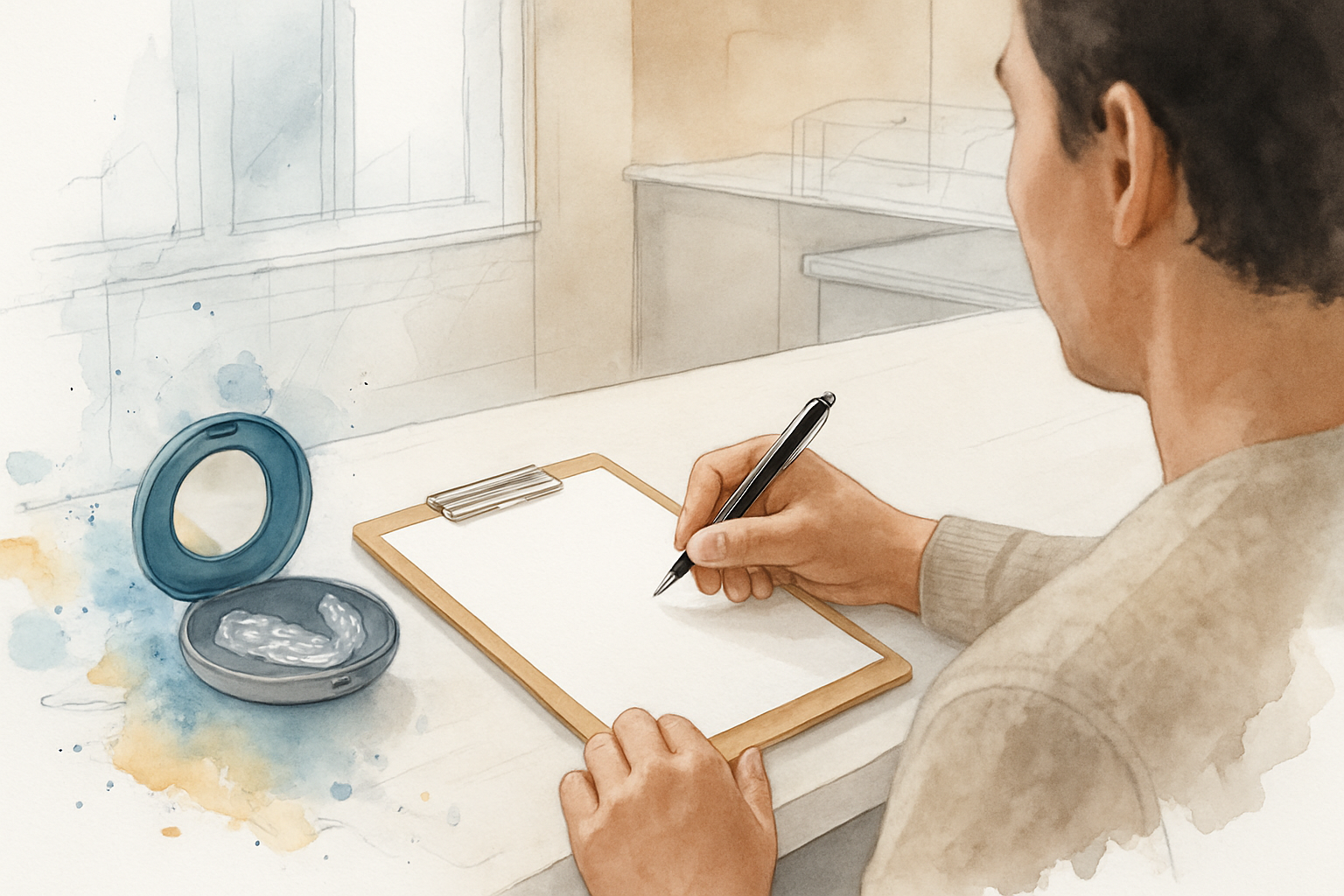
What almost nobody explains is the part that actually decides whether treatment goes smoothly: the choreography of a normal school day. A 25 minute lunch period. A case that has to not end up wadded in a napkin. Water only during third period.
So this is a walkthrough of that rhythm, not a pitch for one treatment over another. If you have a teen at Huntington Beach High, Marina, or Fountain Valley High, this is what a Tuesday with clear aligners for teenagers actually looks like.
A real school day with clear aligners, hour by hour
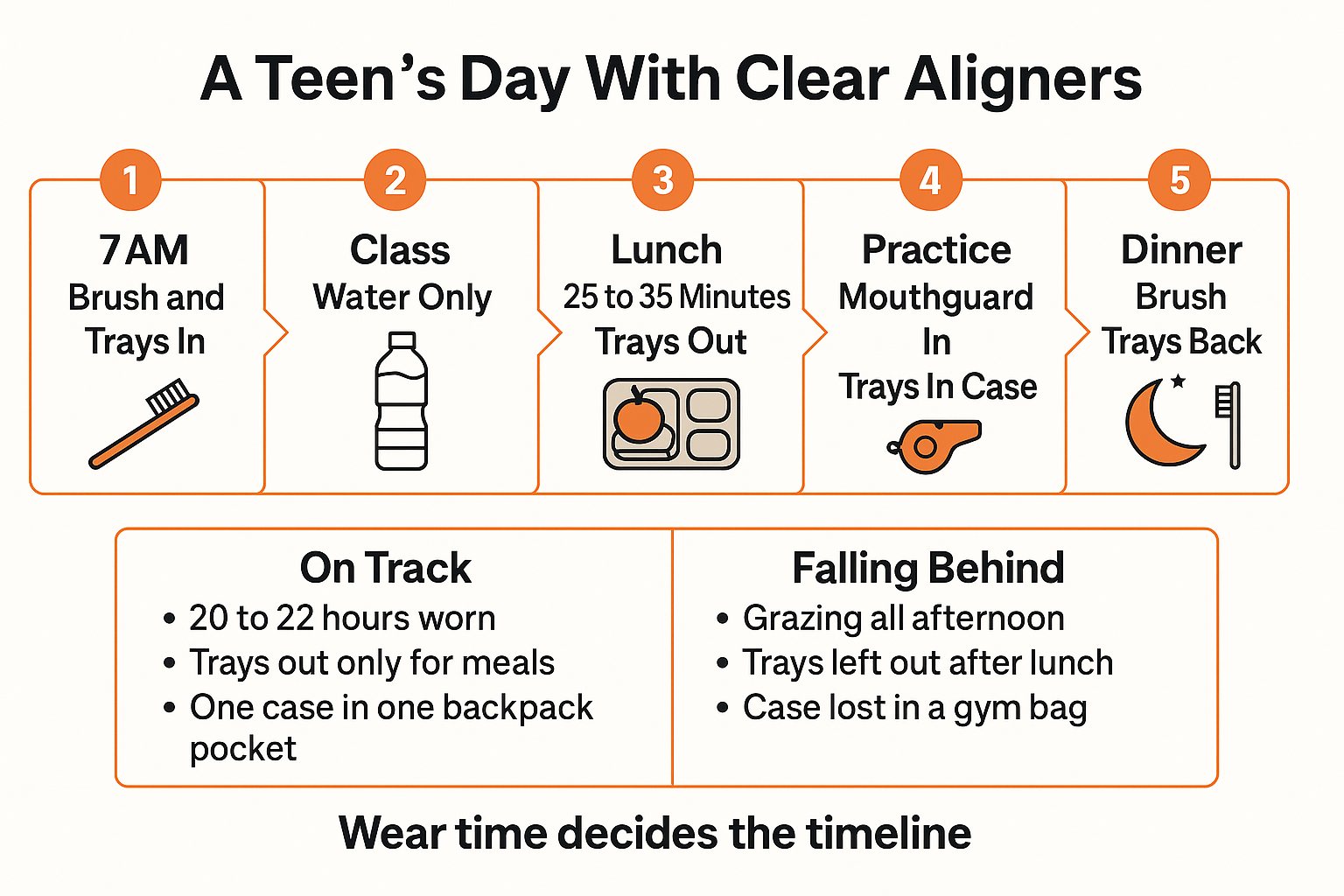
Aligners work on wear time. Most teen plans call for roughly 20 to 22 hours a day, which sounds impossible until you map it against an actual schedule and realize the trays are only out for food.
Here is the shape of a typical weekday:
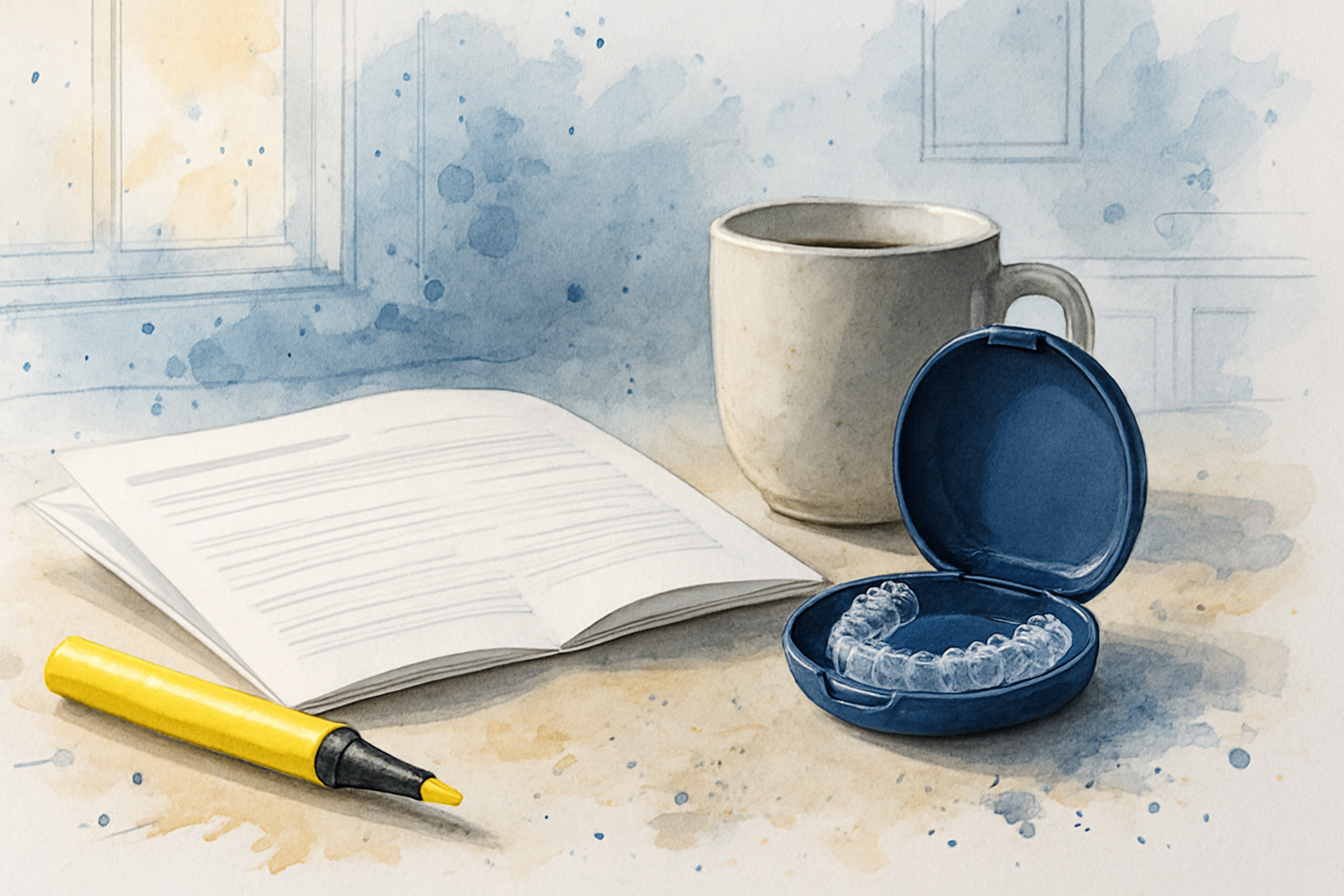
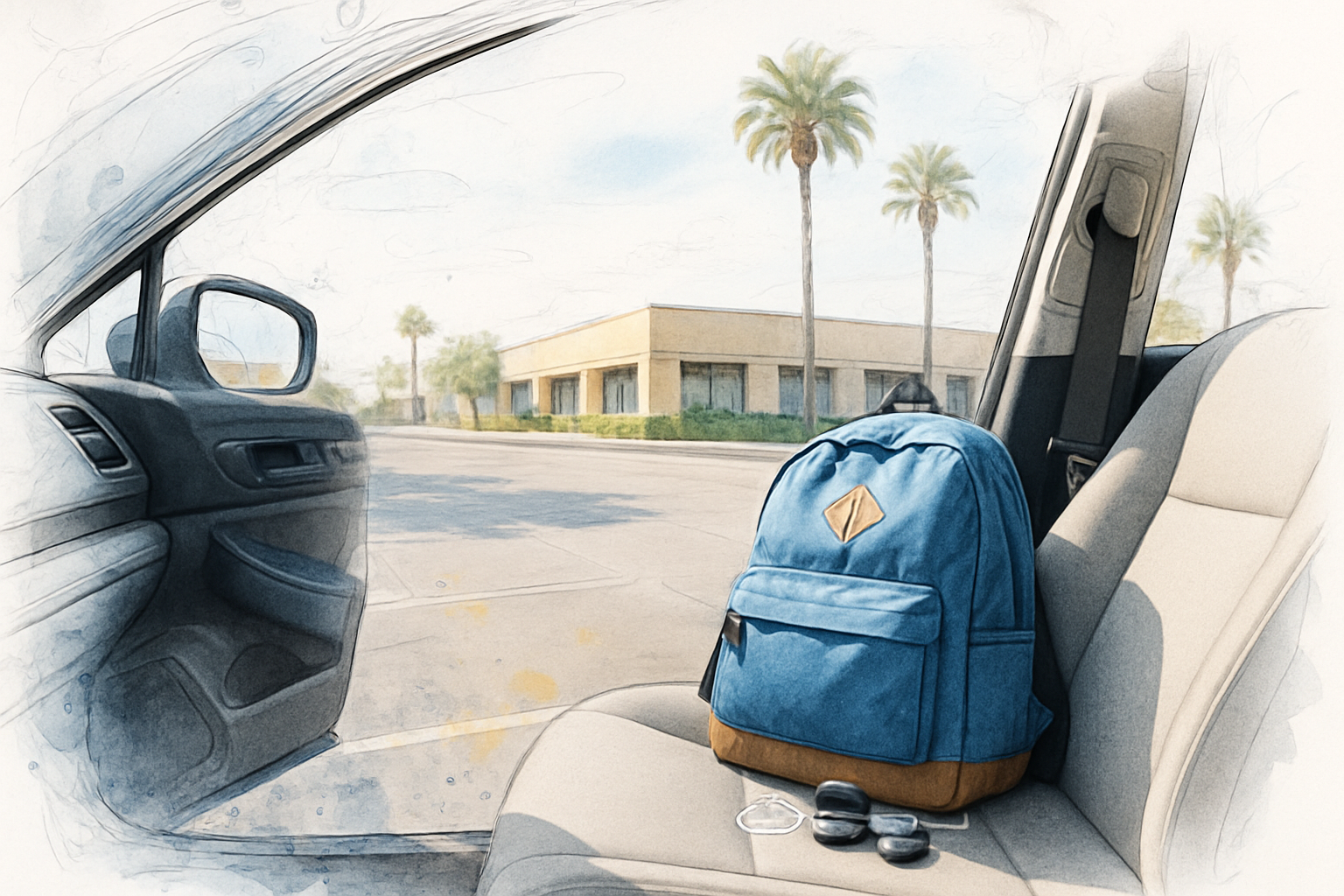
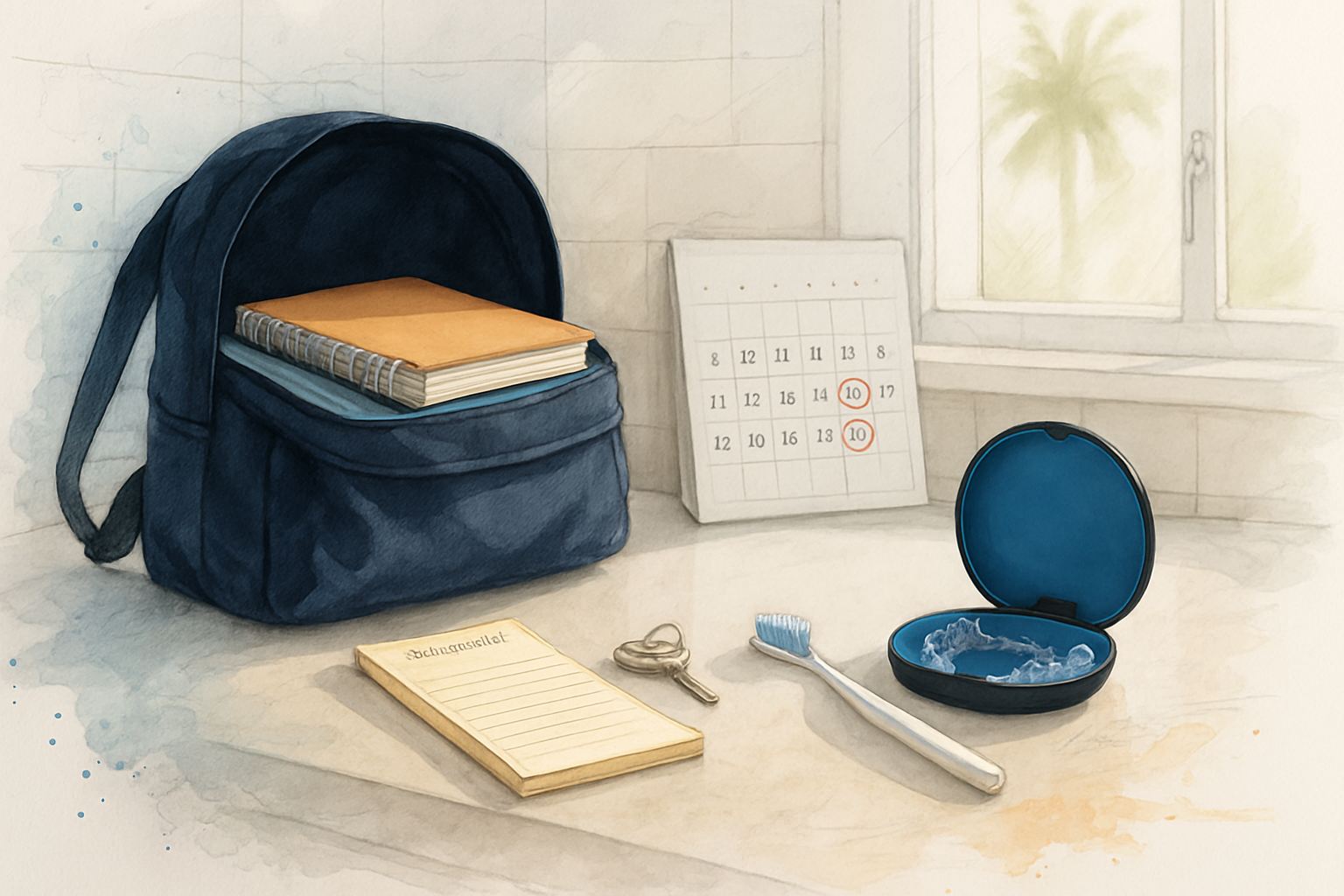
- Morning: brush, trays in before leaving the house, case zipped into the same backpack pocket every single day
- Passing periods and class: trays stay in, water is the only thing that goes in the mouth with trays in place
- Snack break or brunch: trays out, eat, rinse, trays back in before the bell
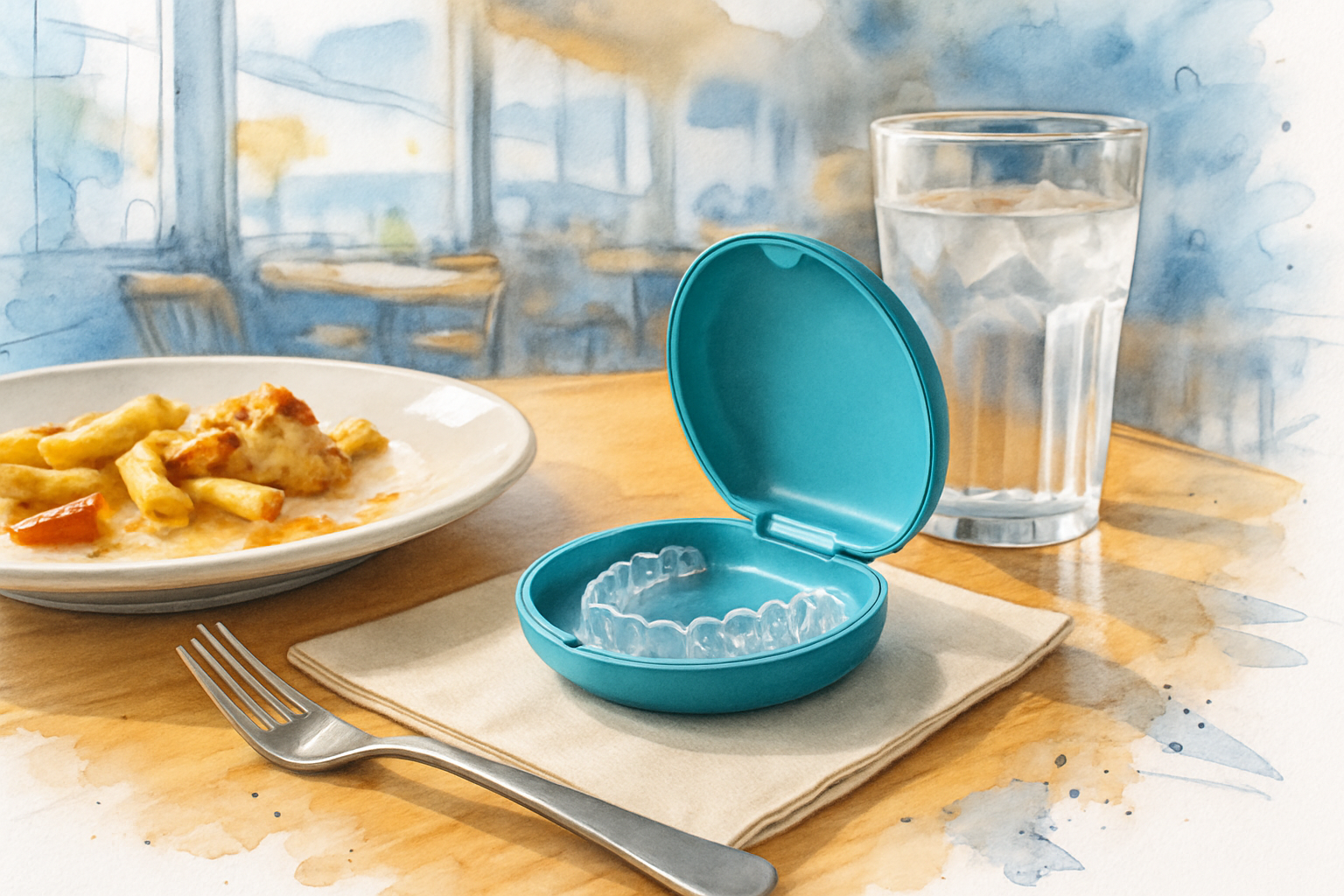
- Lunch, about 25 to 35 minutes: the big one, covered in detail below
- After school: practice, work, a food run with friends, this is the stretch that quietly costs the most hours
- Dinner and homework: trays out to eat, brush, trays back in for the rest of the night
The day is not hard. It just has more decision points than braces do. With brackets, the appliance is on whether the kid thinks about it or not. With trays, every meal is a small choice, and those choices add up across a semester.
Lunch is where wear time quietly disappears
If a teen falls behind on wear time, I can usually trace it to eating patterns, not to a kid who decided to stop wearing the trays.
Here is how the hours vanish. Lunch runs long because they were talking. Then there's a bag of chips in the car at 3:30. Then a smoothie on the way to practice. Nobody skipped a wear session on purpose, and the trays were still out for four or five hours.
The habits that hold up are boring and specific:
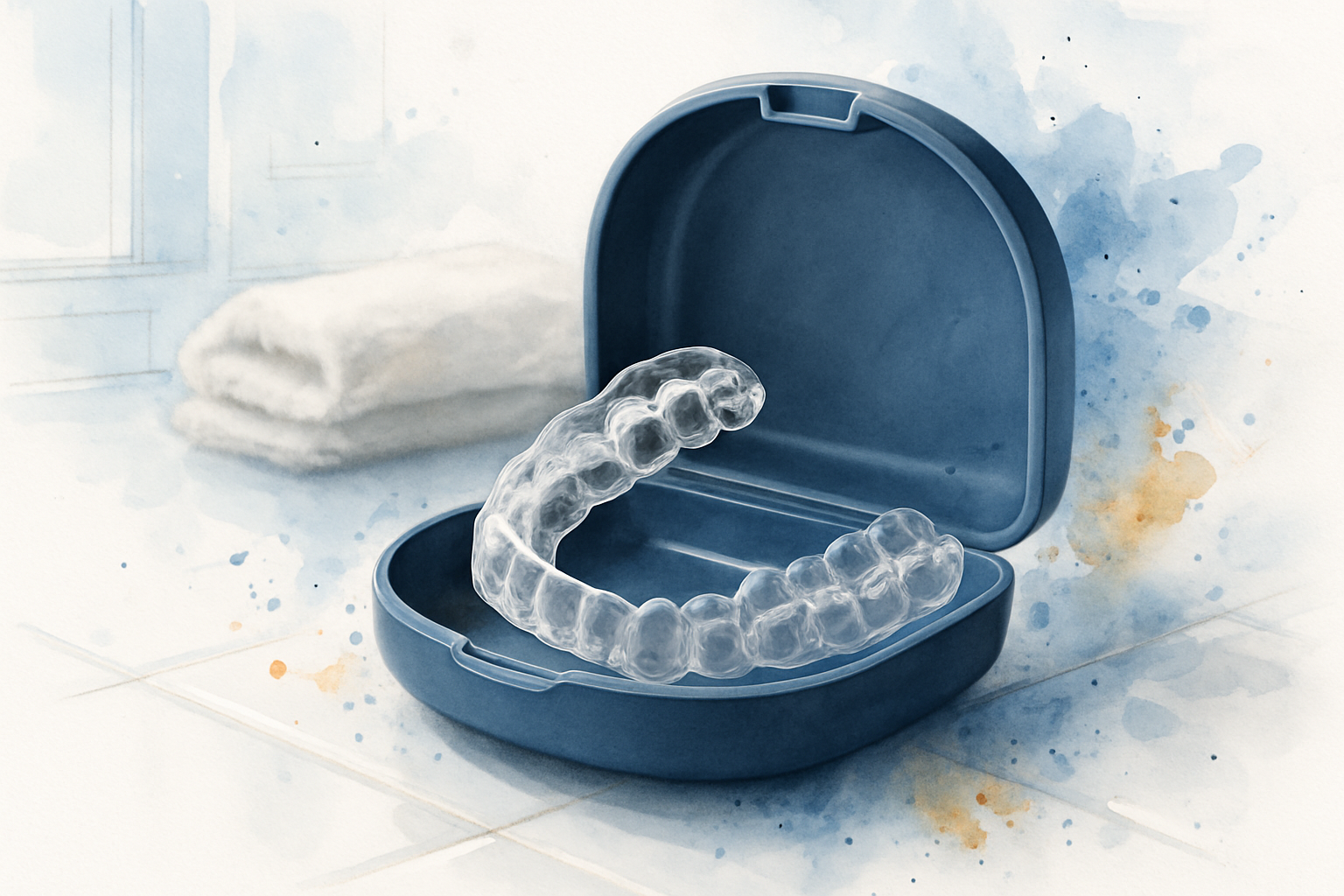
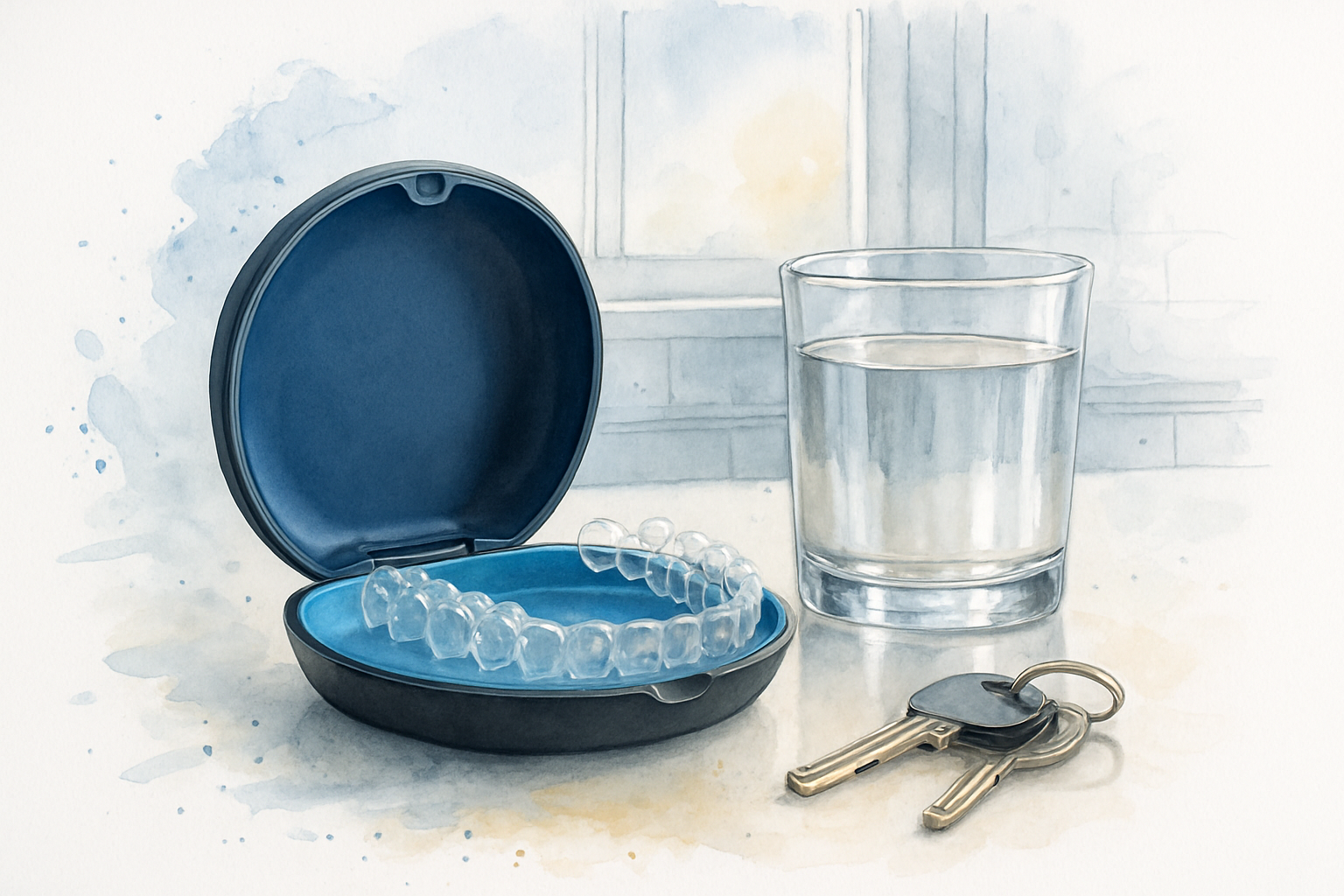
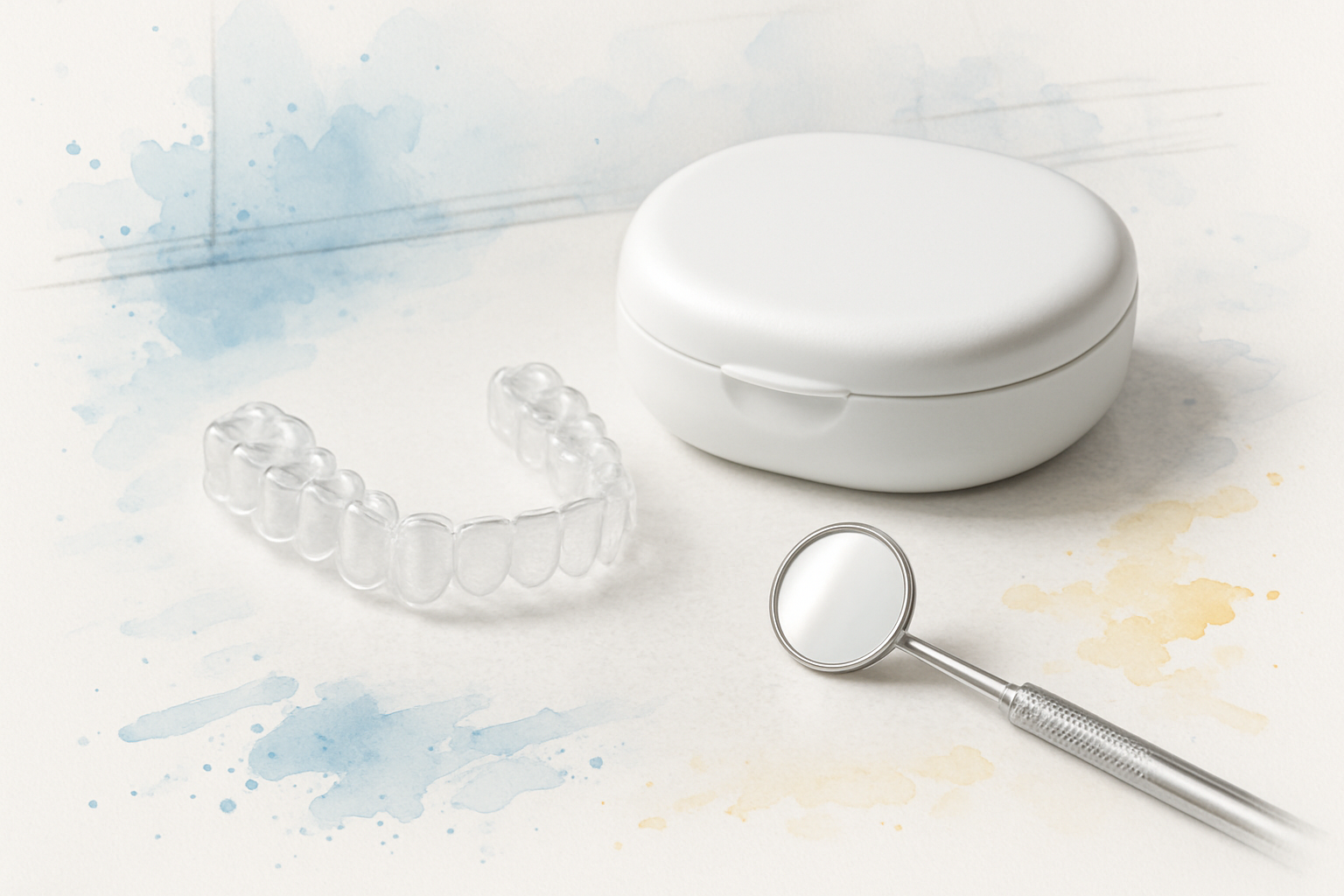
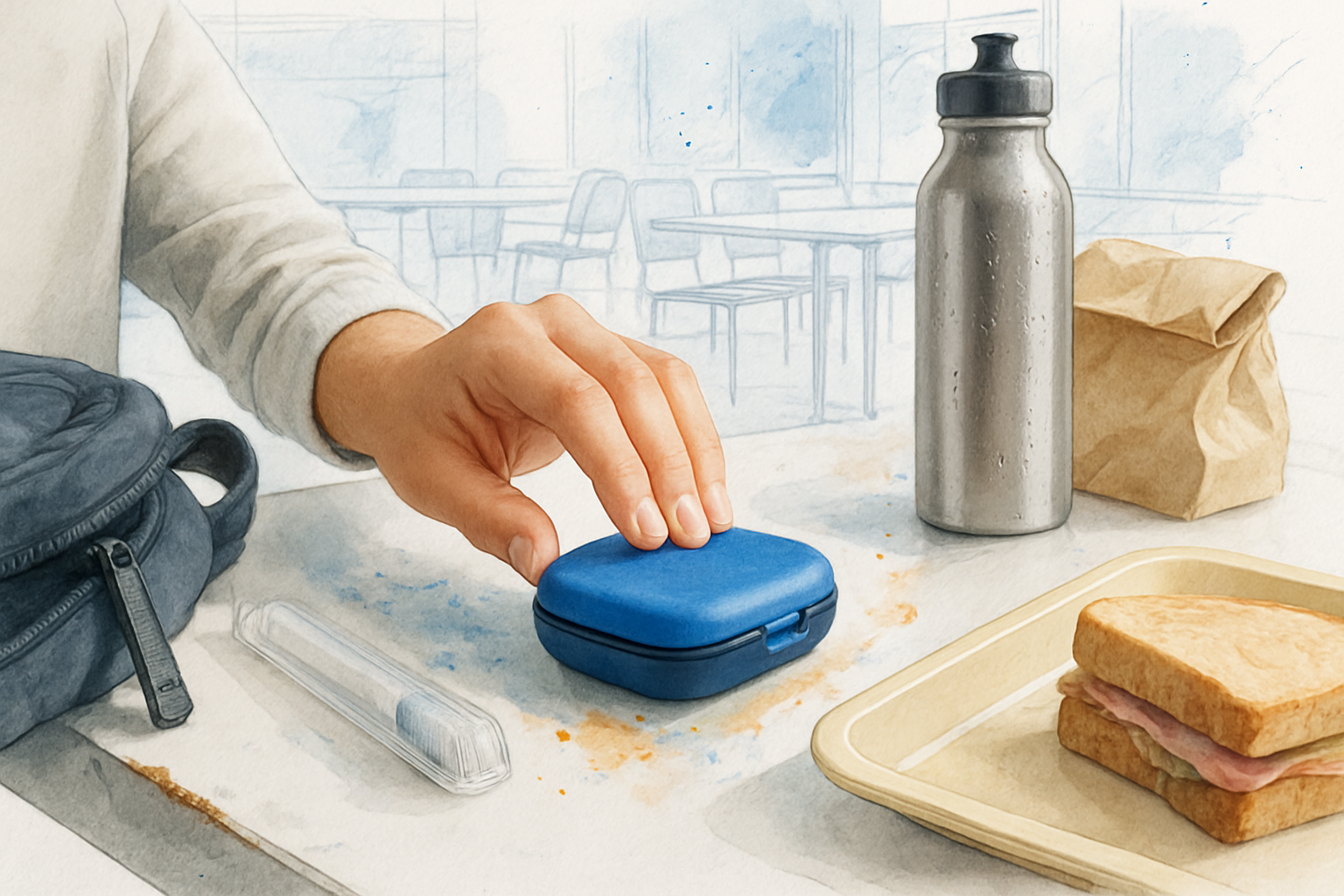
- One case, one home. The same backpack pocket every day. Loose cases in lockers and gym bags get lost within a month.
- Anything but water means trays out, then back in within the period. No grazing with trays in, and no leaving them out "until later."
- Eat in a window, not continuously. A defined 30 minute lunch beats picking at food for two hours.
- A travel toothbrush lives in the backpack. Teeth get brushed, or at minimum rinsed hard, before the trays go back in.
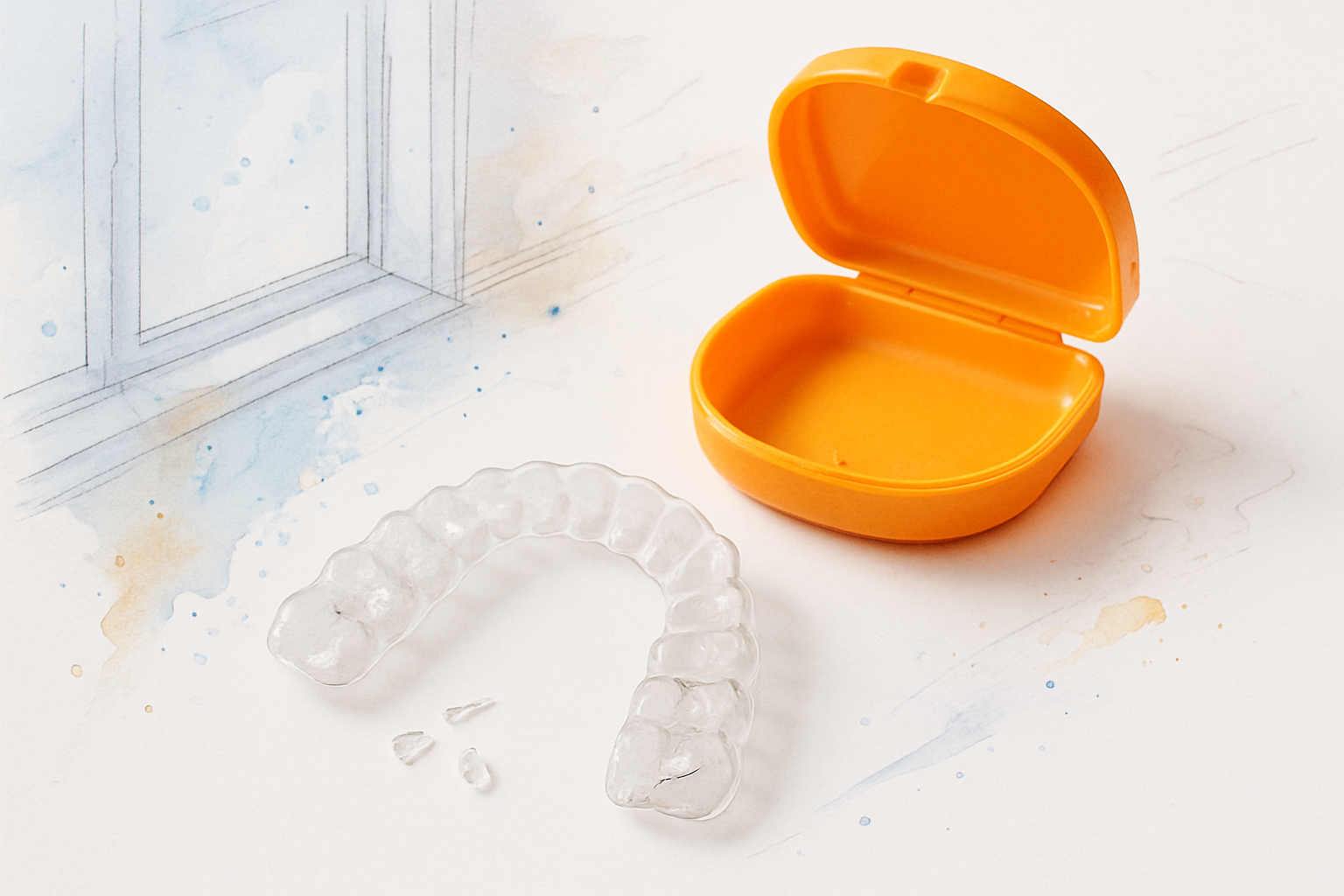
One more thing worth saying plainly: trays should never be wrapped in a napkin on a lunch tray. That is the single most common way an aligner ends up in a cafeteria trash can, and replacing one costs time in the schedule even when the fee is small. Keeping the trays clean matters too, and a simple daily cleaning routine takes about two minutes at the sink.
Sports, band, and the parts of a Huntington Beach schedule that collide with treatment
Teens around here are not sitting still after 3 p.m. Water polo, surf team, club soccer, marching band, and a lot of beach time. Each one has its own wrinkle.
Contact sports. Aligners come out when a mouthguard is required. That is standard guidance, and the American Dental Association is clear that a properly fitted mouthguard belongs in any sport with a real risk of impact. Practice and game time counts as tray time lost, so we plan around it.
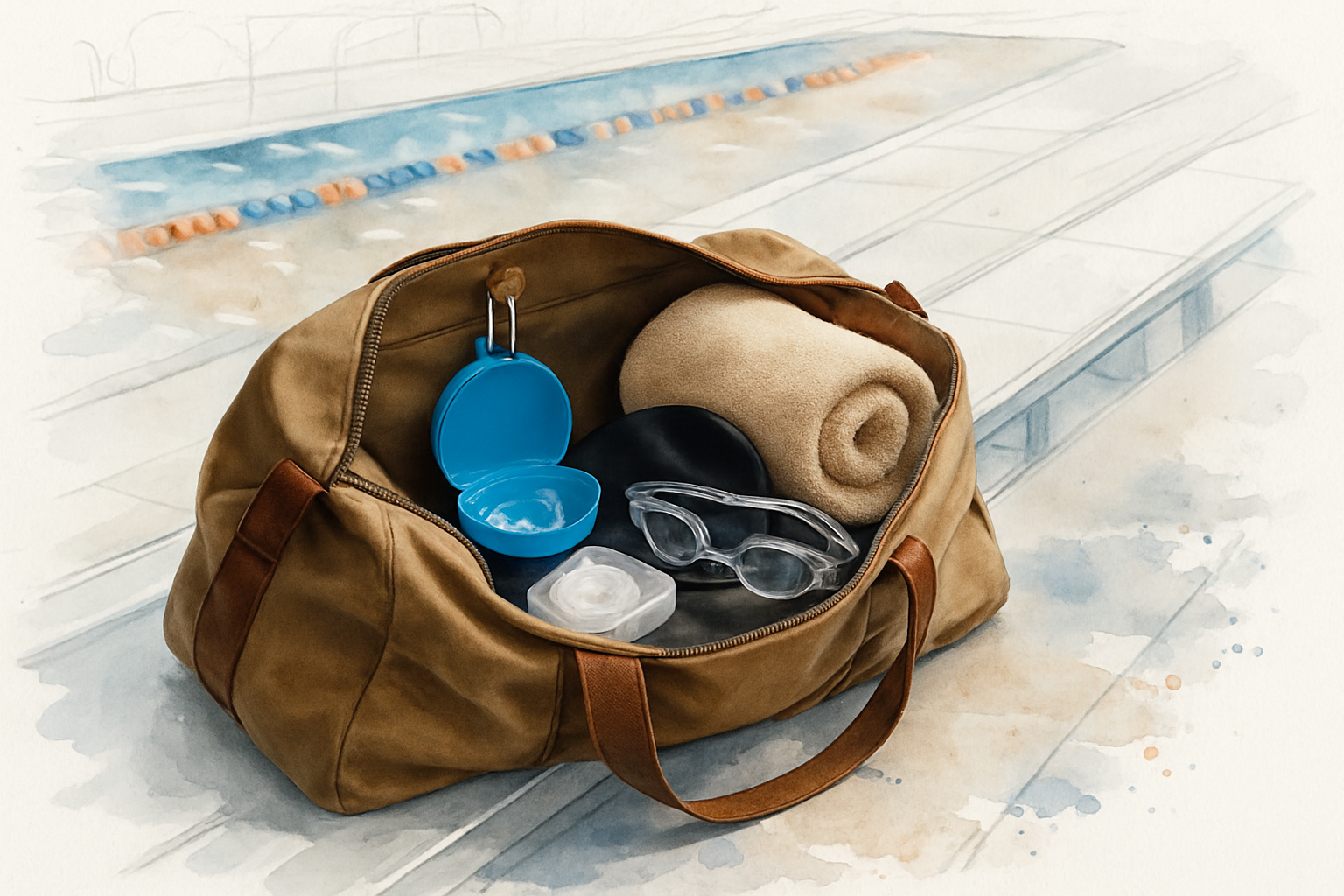
Water polo, swim, and surf team. The trays themselves are fine, the case is the problem. A pool deck and a sandy beach bag are two of the easiest places on earth to lose a small clear object. A brightly colored case clipped to something inside the bag solves most of it.
Wind instruments. Trumpet, clarinet, and sax players usually adjust to playing with trays in within a week or two. There is often a short period where embouchure feels slightly off, and it settles.
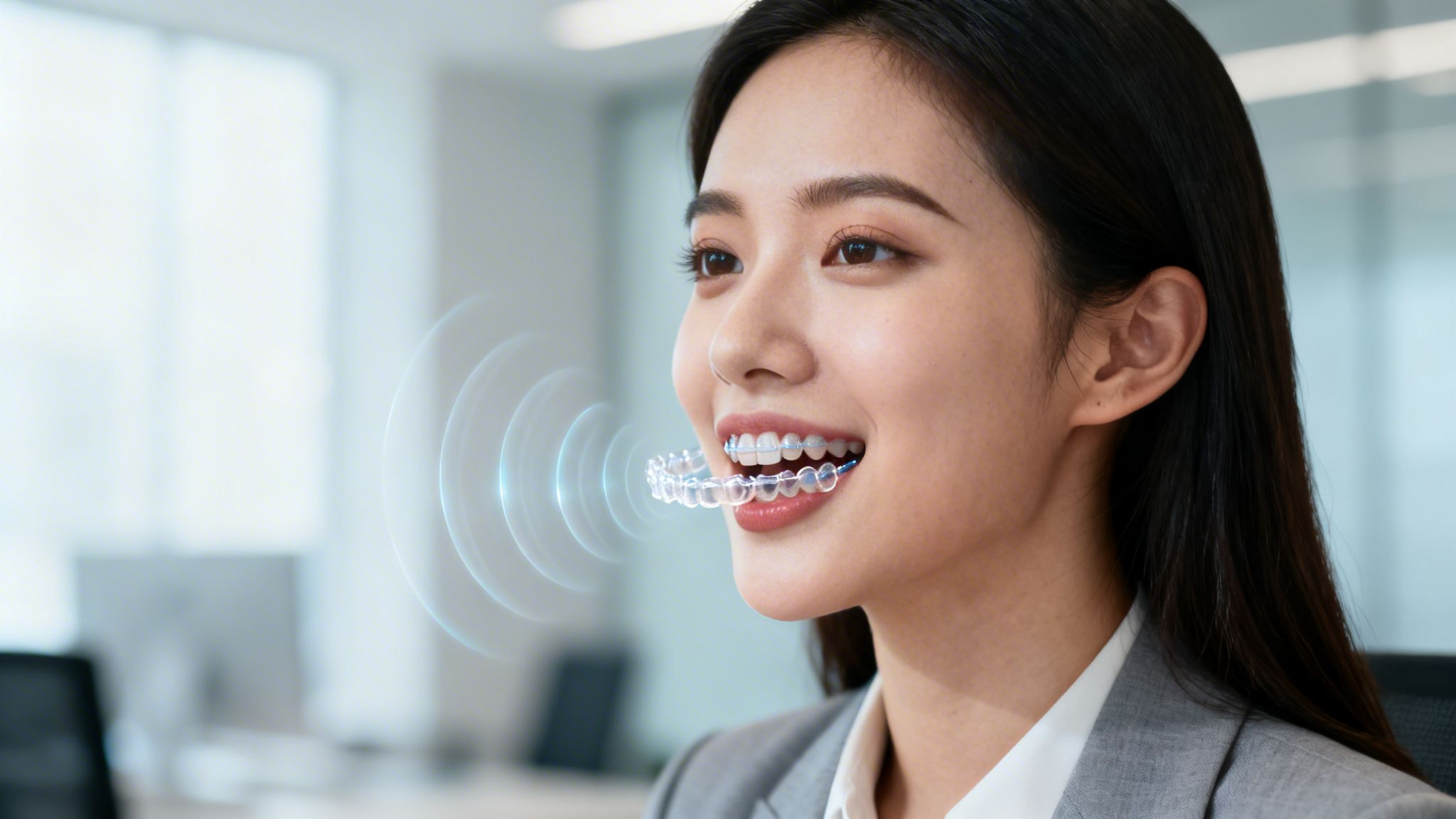
And here is the honest part I tell every teen at the first tray: the first two or three days of a new aligner feel tight, and speech can sound a little different when you first pop them in. It fades fast, usually within a couple of days, but it is real and nobody should be surprised by it.
Where the school day collides with tray time
This is the chart I sketch out for families on a napkin. It maps the moments that actually cost wear time and the habit that fixes each one.
| Moment in the day | What usually happens | Habit that holds up |
|---|---|---|
| Snack break | Trays out for a granola bar, then forgotten | Trays back in before the bell, no exceptions |
| Lunch, 25 to 35 min | Eating stretched across the whole period | Eat in a set window, brush, trays back in |
| After school food run | Grazing from 3:00 to 5:00 | One eating window, not continuous snacking |
| Practice with a mouthguard | Trays in a pocket or gym bag floor | Bright case clipped inside the bag |
| Band rehearsal | Trays out because playing feels odd | Keep them in, most players adjust in 1 to 2 weeks |
| Evening homework | Trays out from dinner until bedtime | Trays go back in right after brushing |
The wear time math, visualized
Here is how a 24 hour school day breaks down when a teen is keeping up with treatment, and where the hours leak out when they are not.
How aligners actually look at school, attachments included
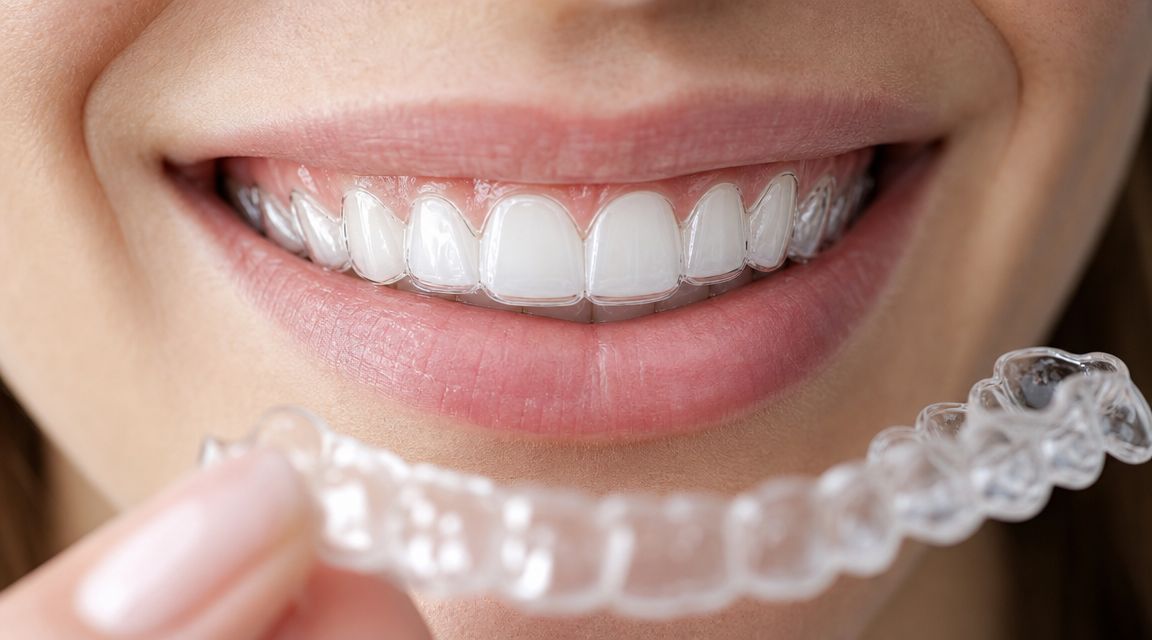
Appearance is the reason most teens ask about trays in the first place, so let me be straight about it.
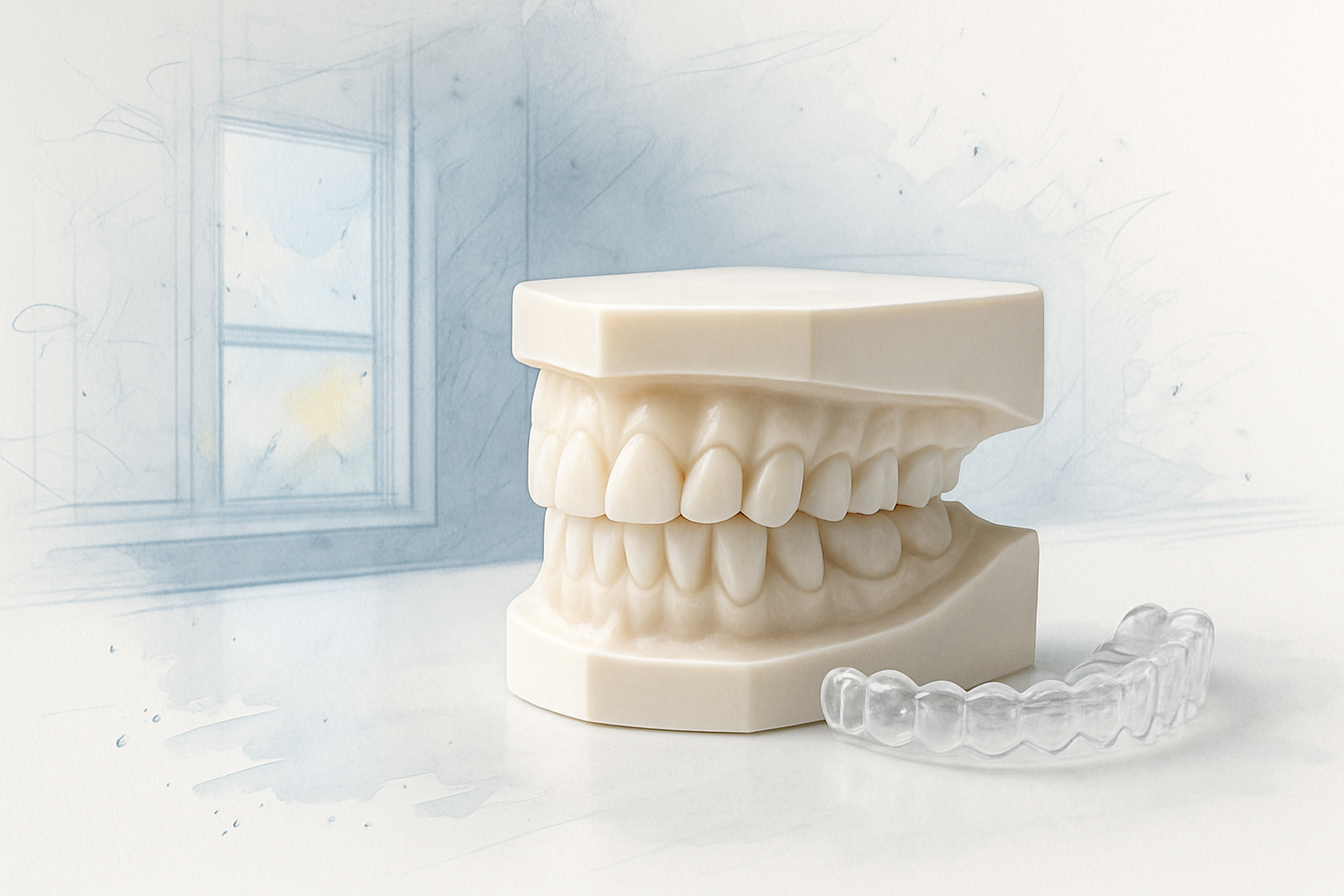
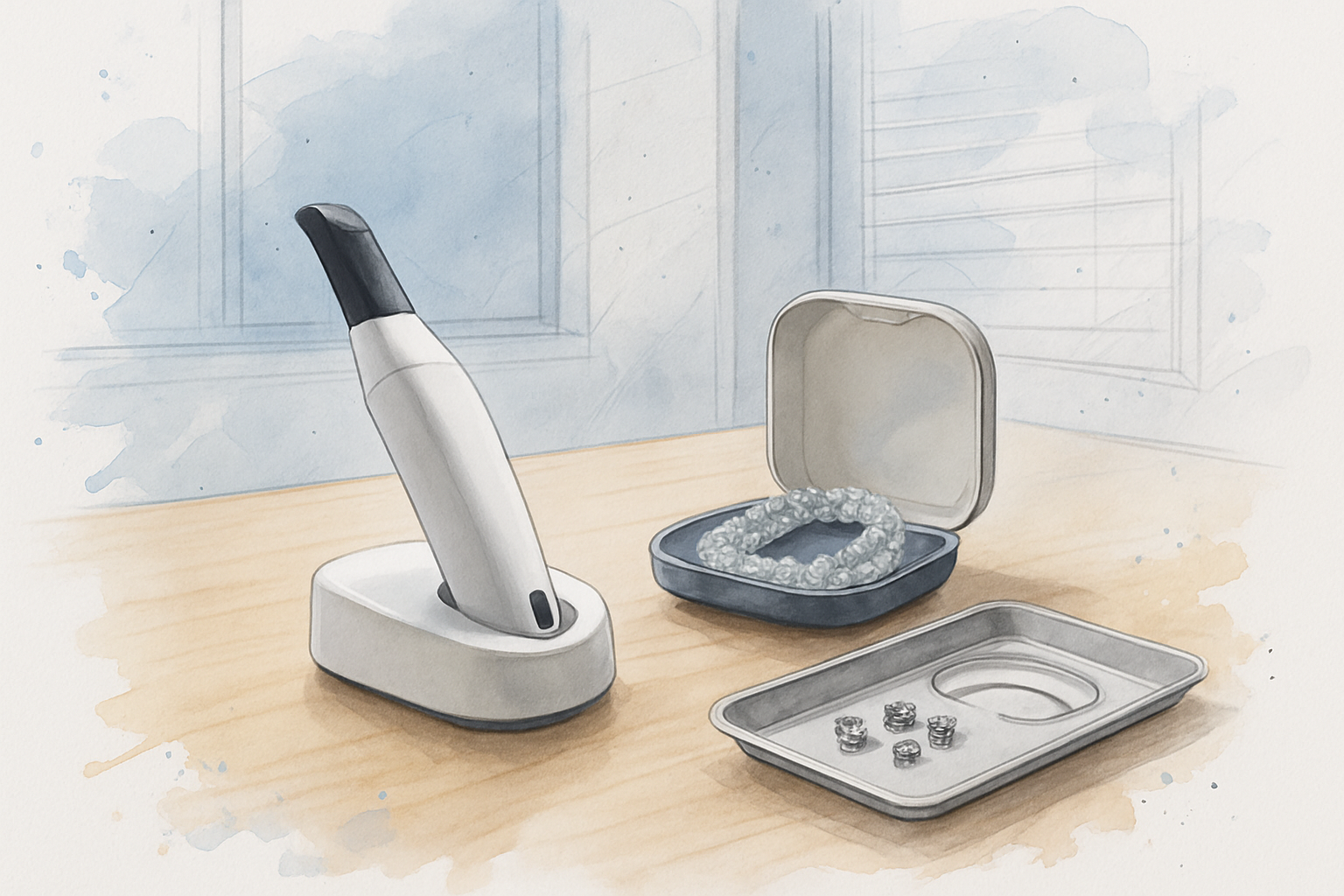
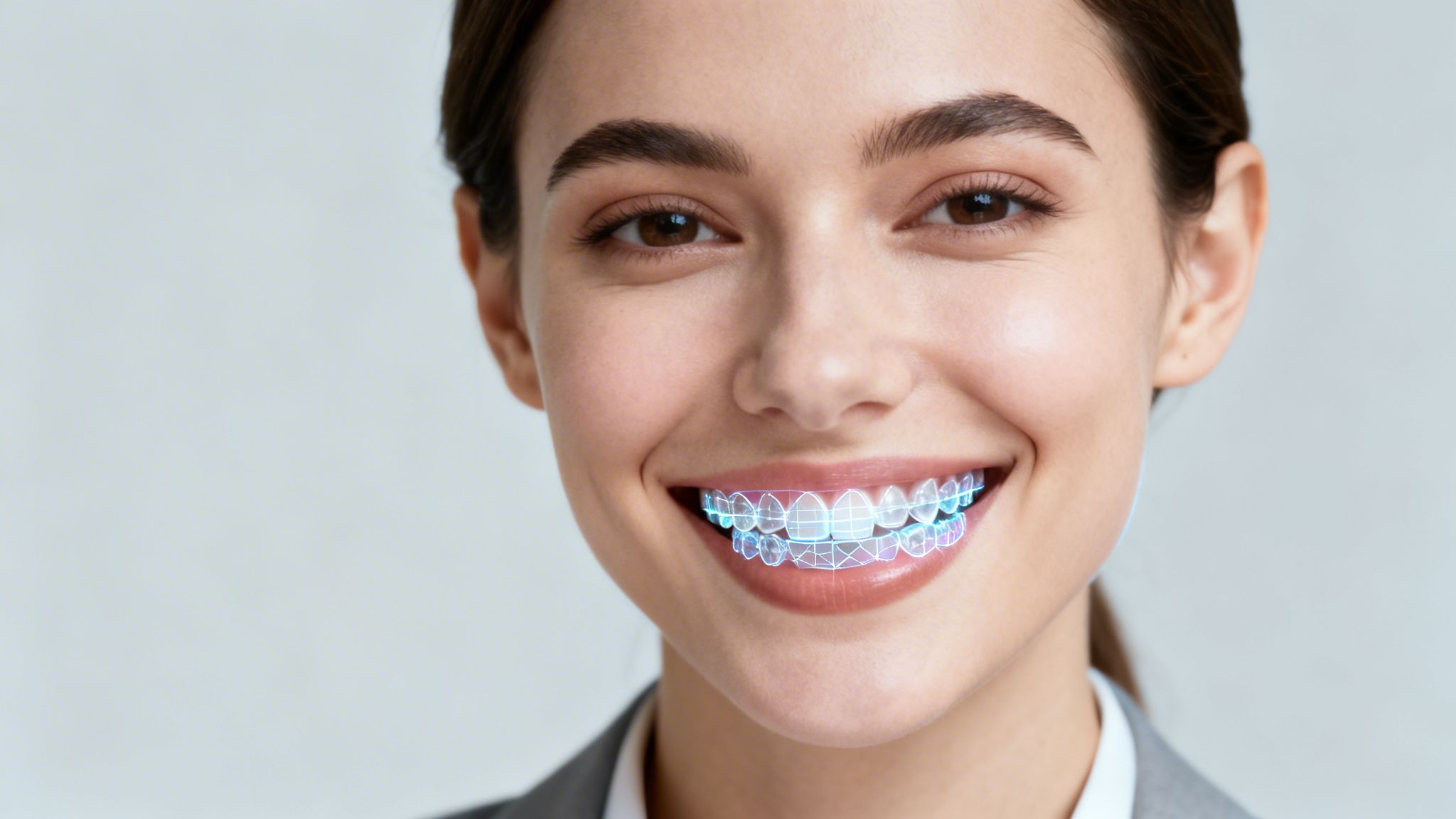
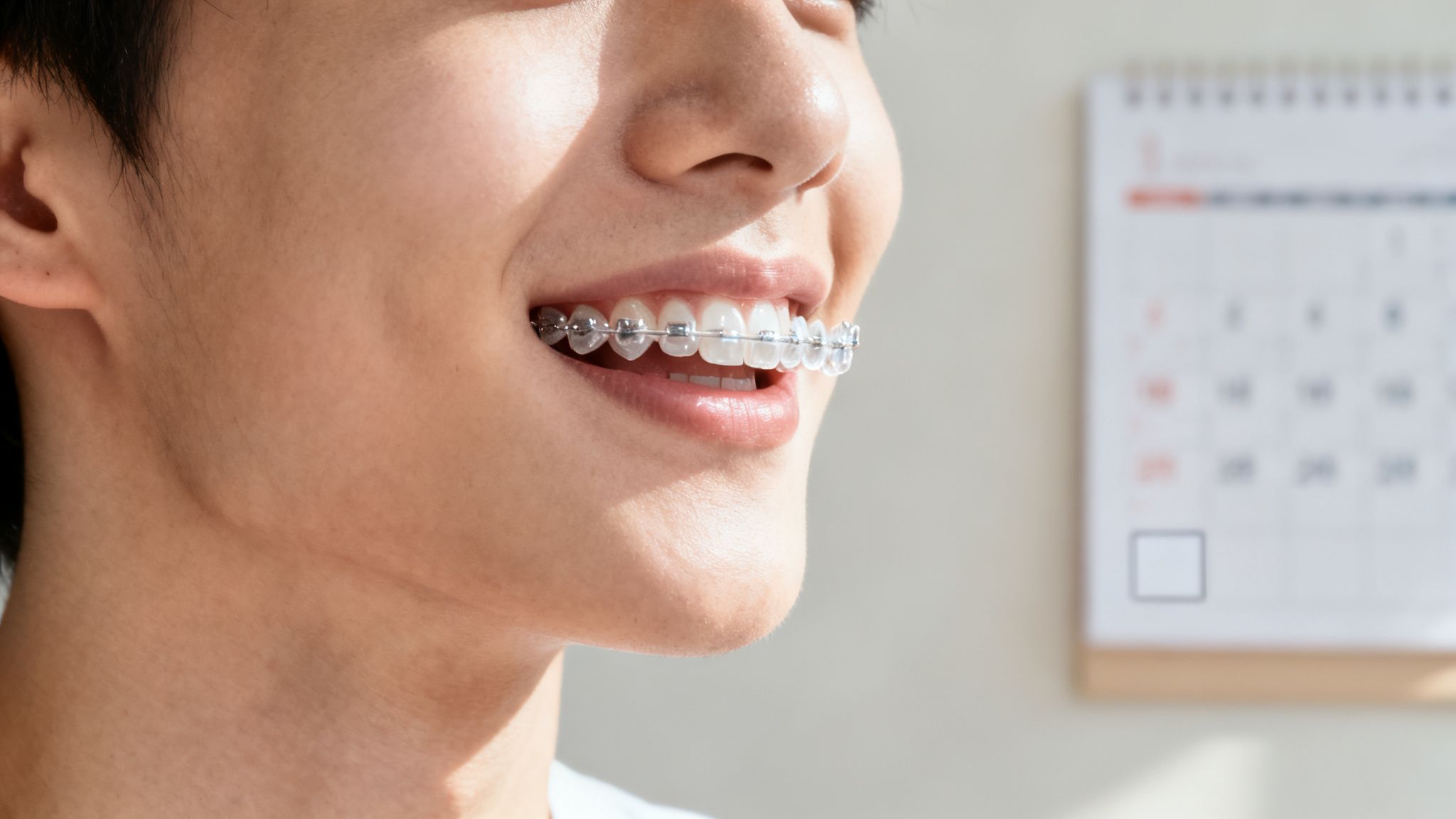
From across a classroom, or in a school photo, the trays are hard to notice. Up close is a different story, and the honest detail that gets skipped is attachments. Those are the small tooth colored bumps bonded to certain teeth that give the aligner something to grip, and they are part of most teen plans.
Attachments blend well with enamel and they come off at the end. But a friend standing two feet away in the hallway may see them, and a teen who was promised total invisibility feels misled. I would rather they hear it from me first.
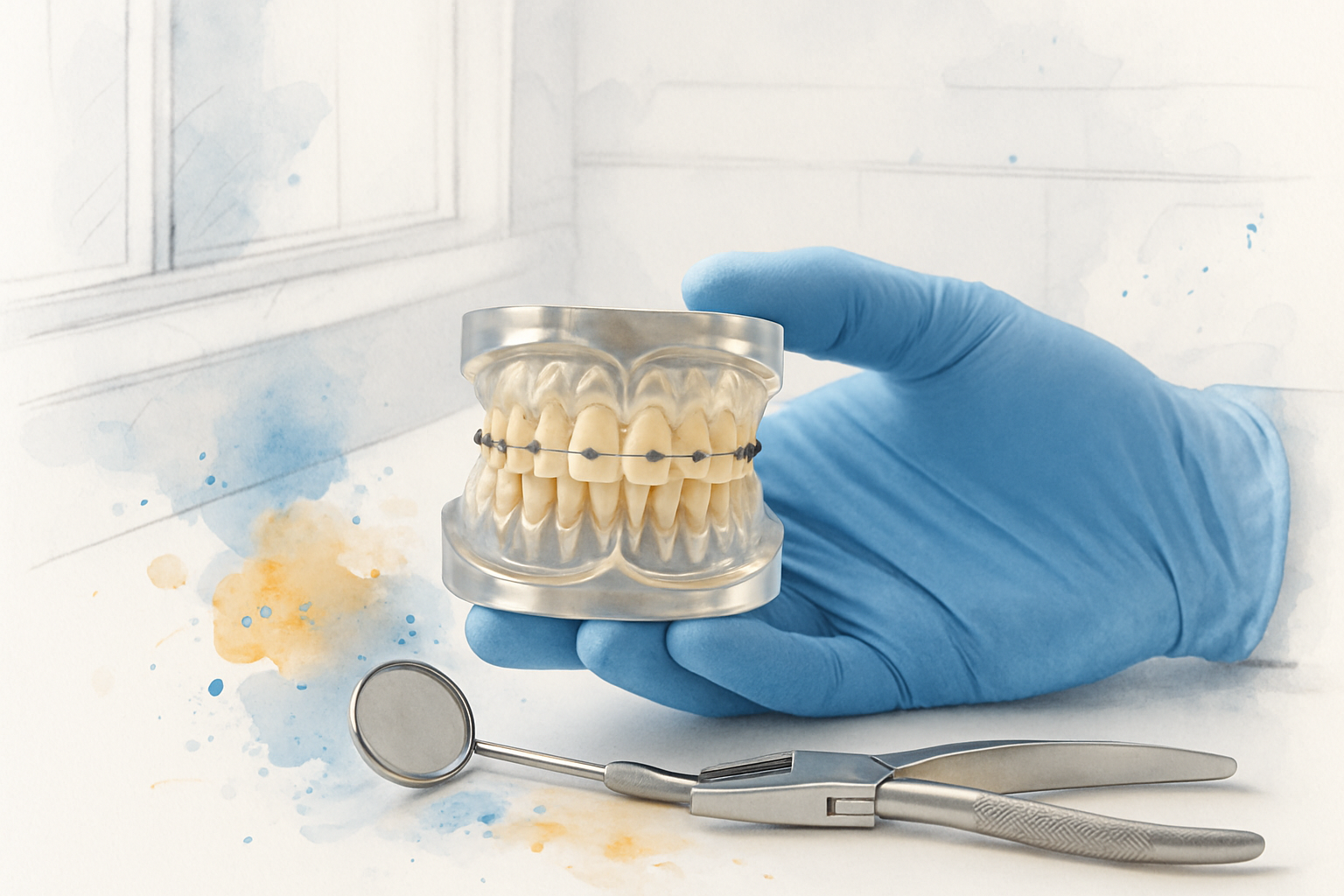
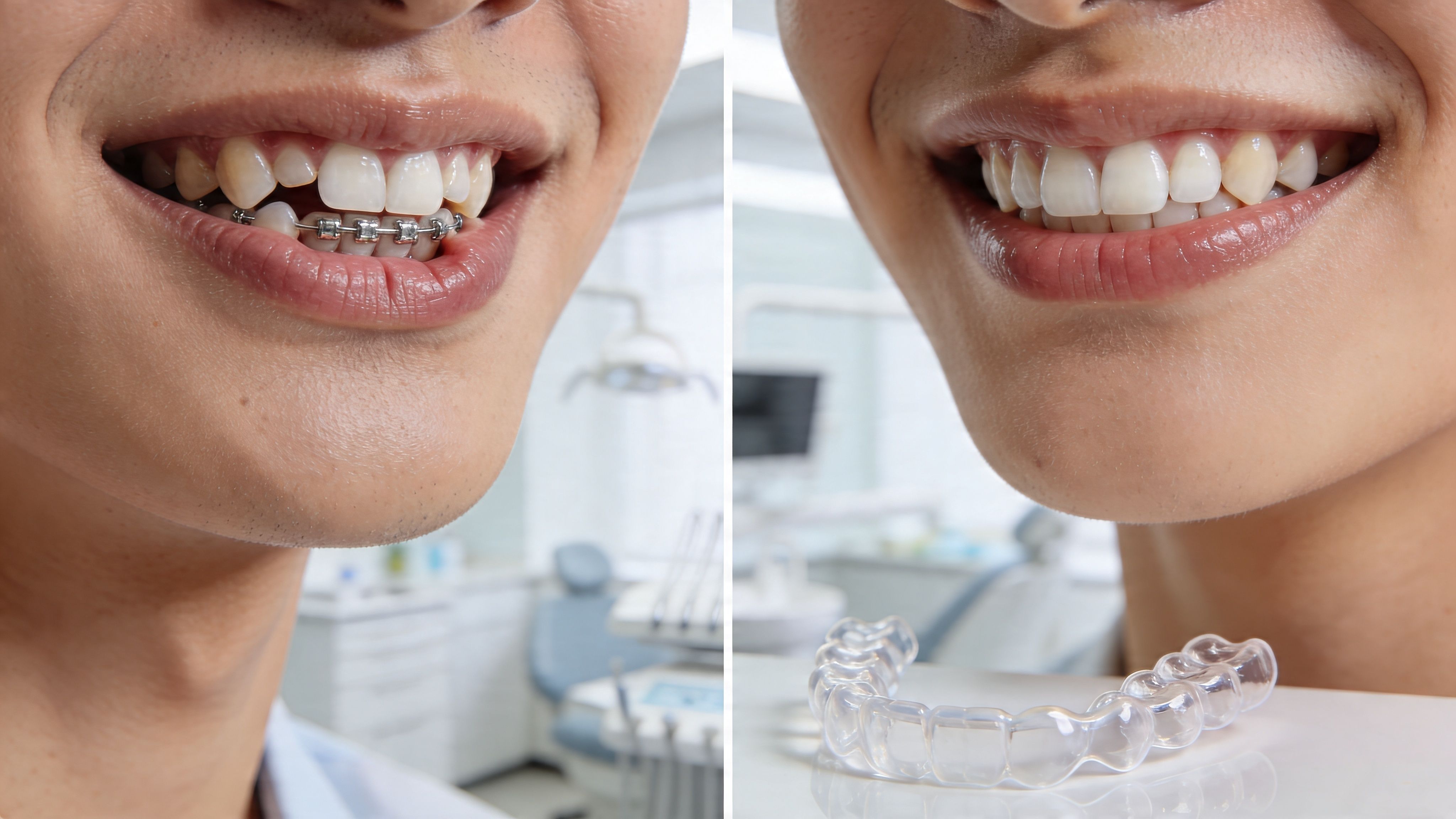
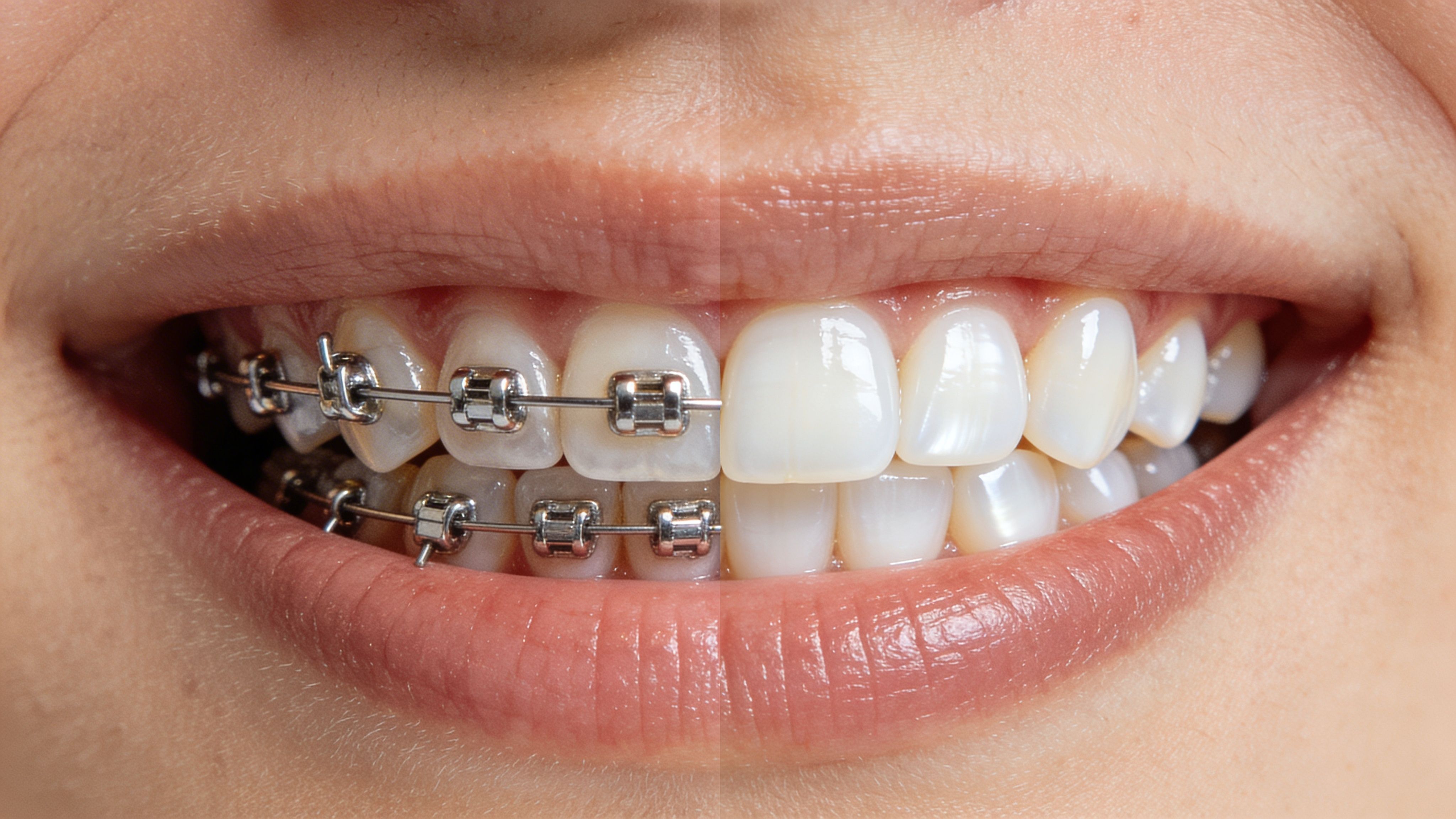
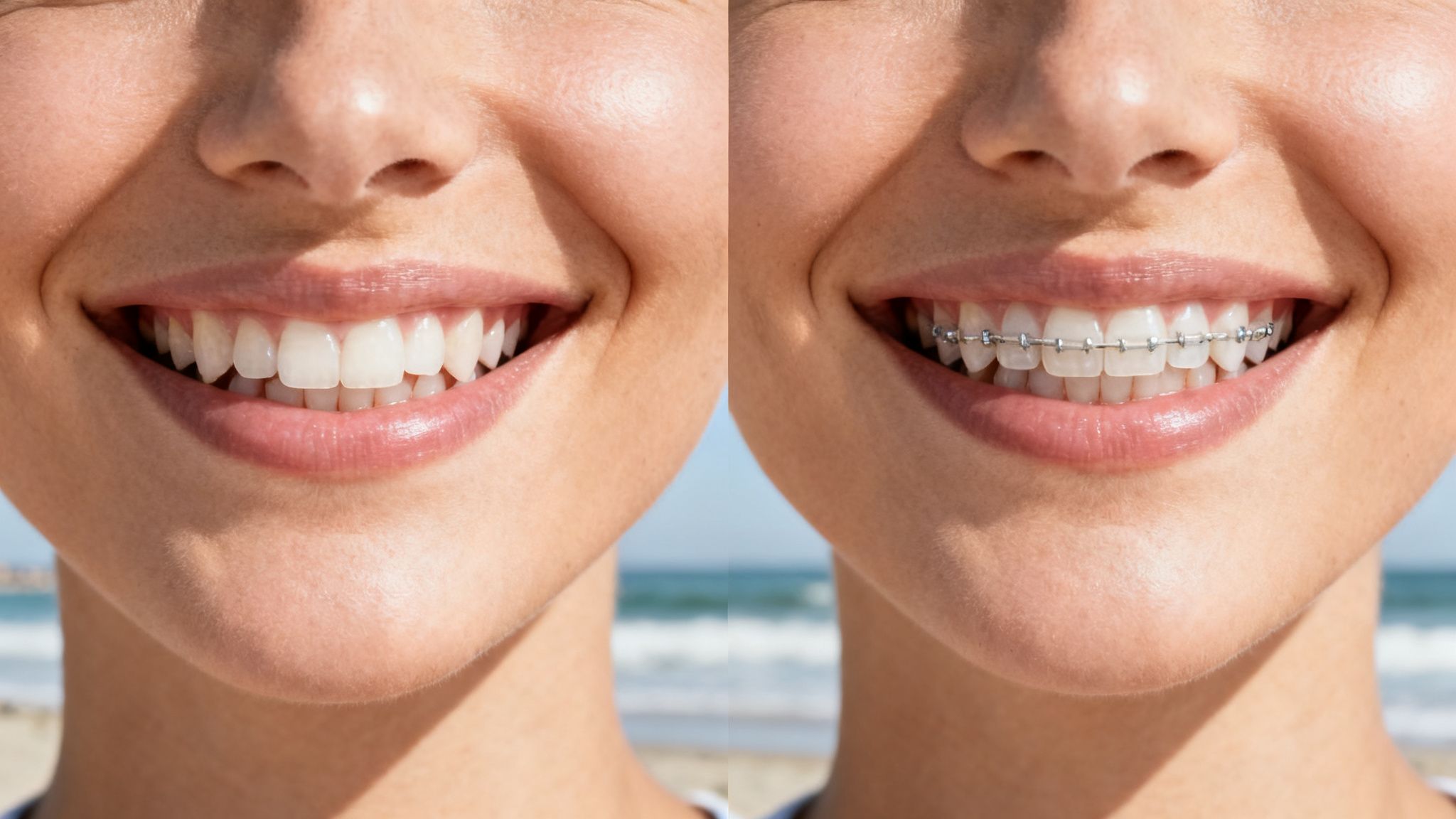
Some teens hear all this and decide they would rather not manage trays at all. For them, Iconix champagne colored brackets are a fair alternative, not a step down. They are fixed, they work without any wear time discipline, and the champagne tone reads softer and more subtle than standard silver in photos.
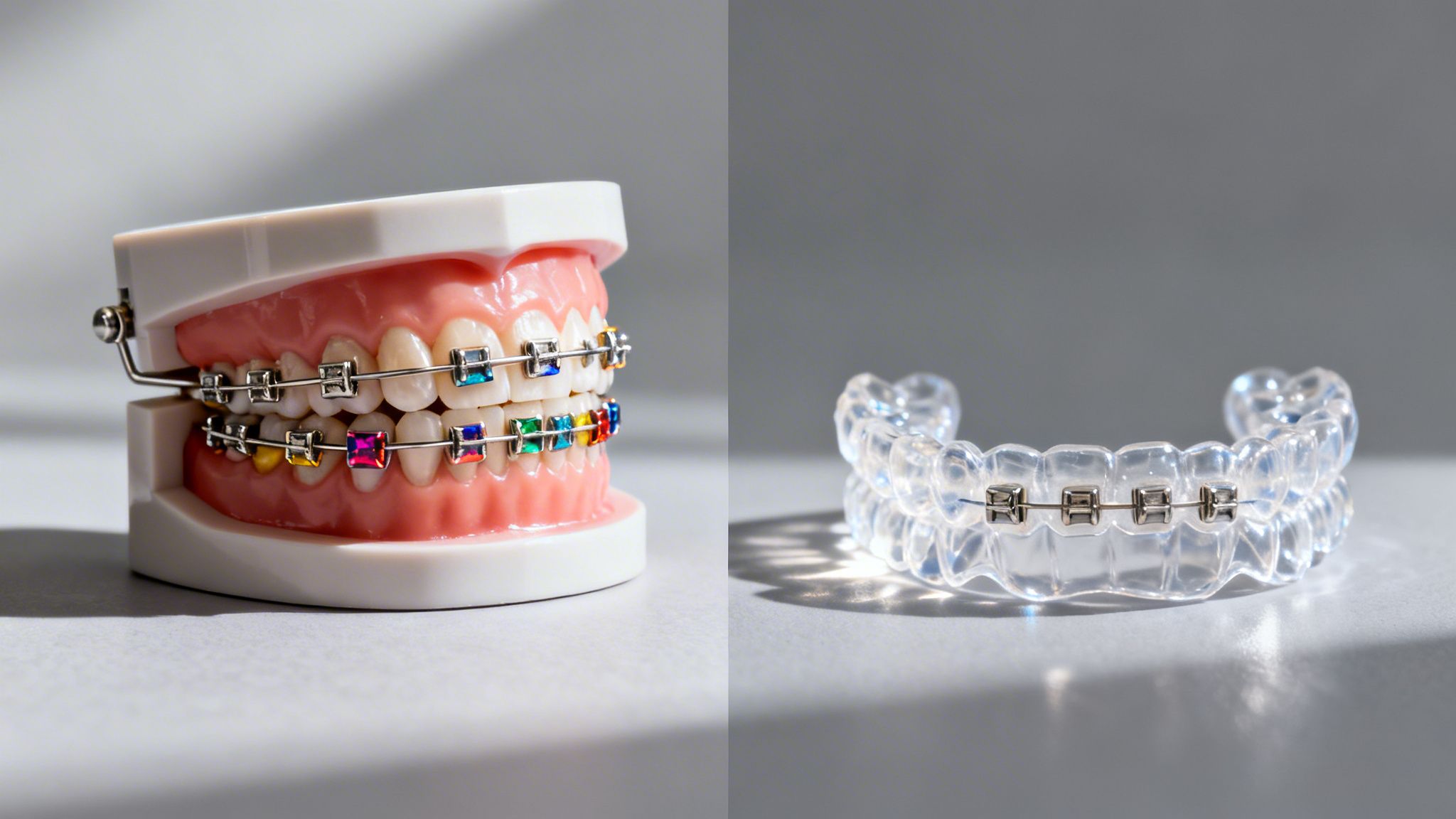
Both paths straighten teeth. It really is a lifestyle fit question, and comparing braces and aligners honestly for your teen is worth doing before anyone signs anything. Teens who care most about how their options look during treatment often find the aesthetic side of the decision is the deciding factor.
The supervision question, answered straight
Parents ask me some version of this constantly: will my kid actually keep them in?
This is not a character test, and I do not treat it like one. Aligner treatment moves responsibility onto the teen in a way braces do not, so the real question is practical. Is this particular kid organized enough right now, at this age, to manage a case and a routine?
An honest trial looks like this. Give it the first four to six weeks and watch for concrete signs rather than asking "are you wearing them?" every night:
- The case comes home in the backpack, not left at school
- New trays seat fully without a big gap at the back molars
- The teen is not complaining that every tray feels painfully tight, which often means the last one was not worn enough
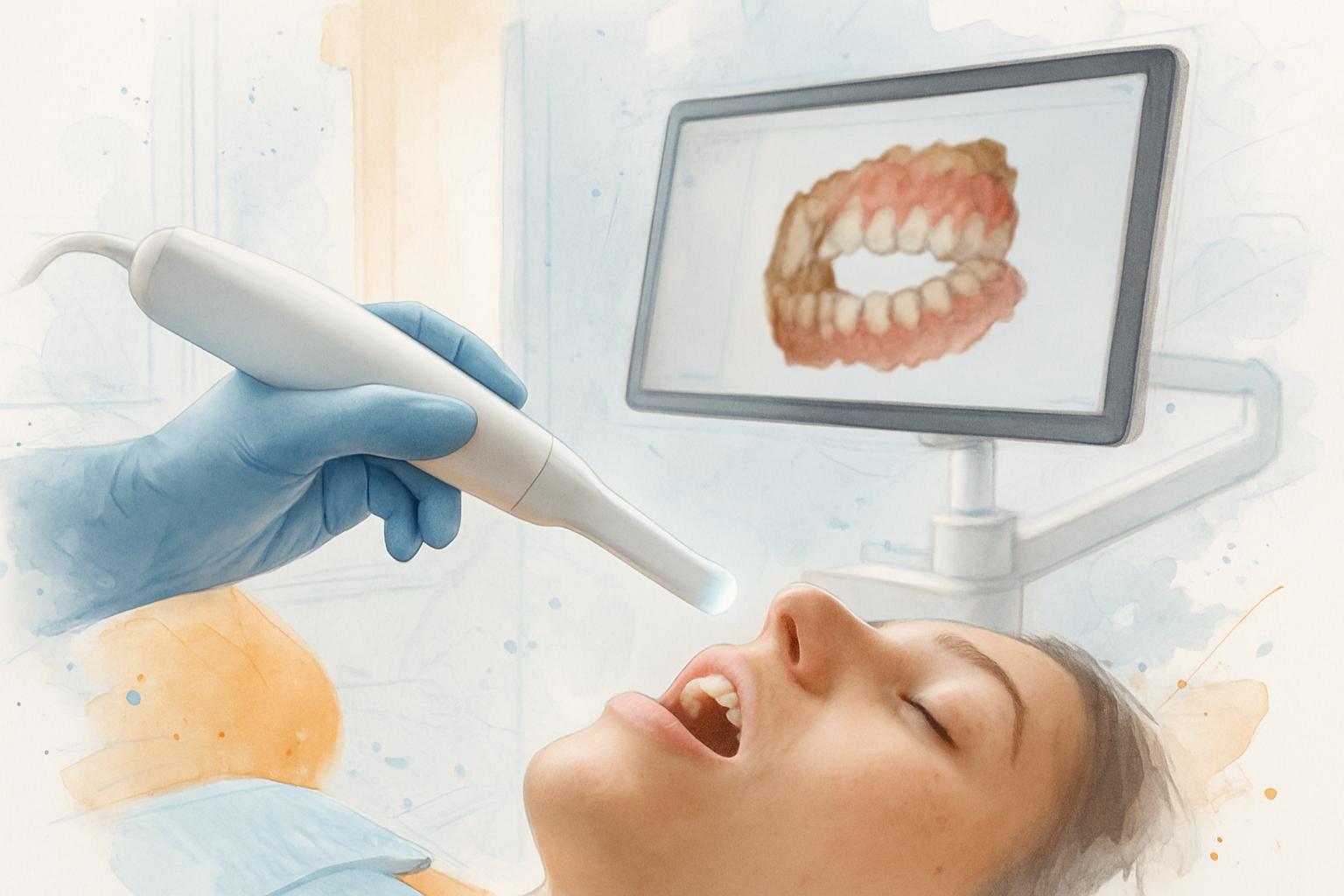
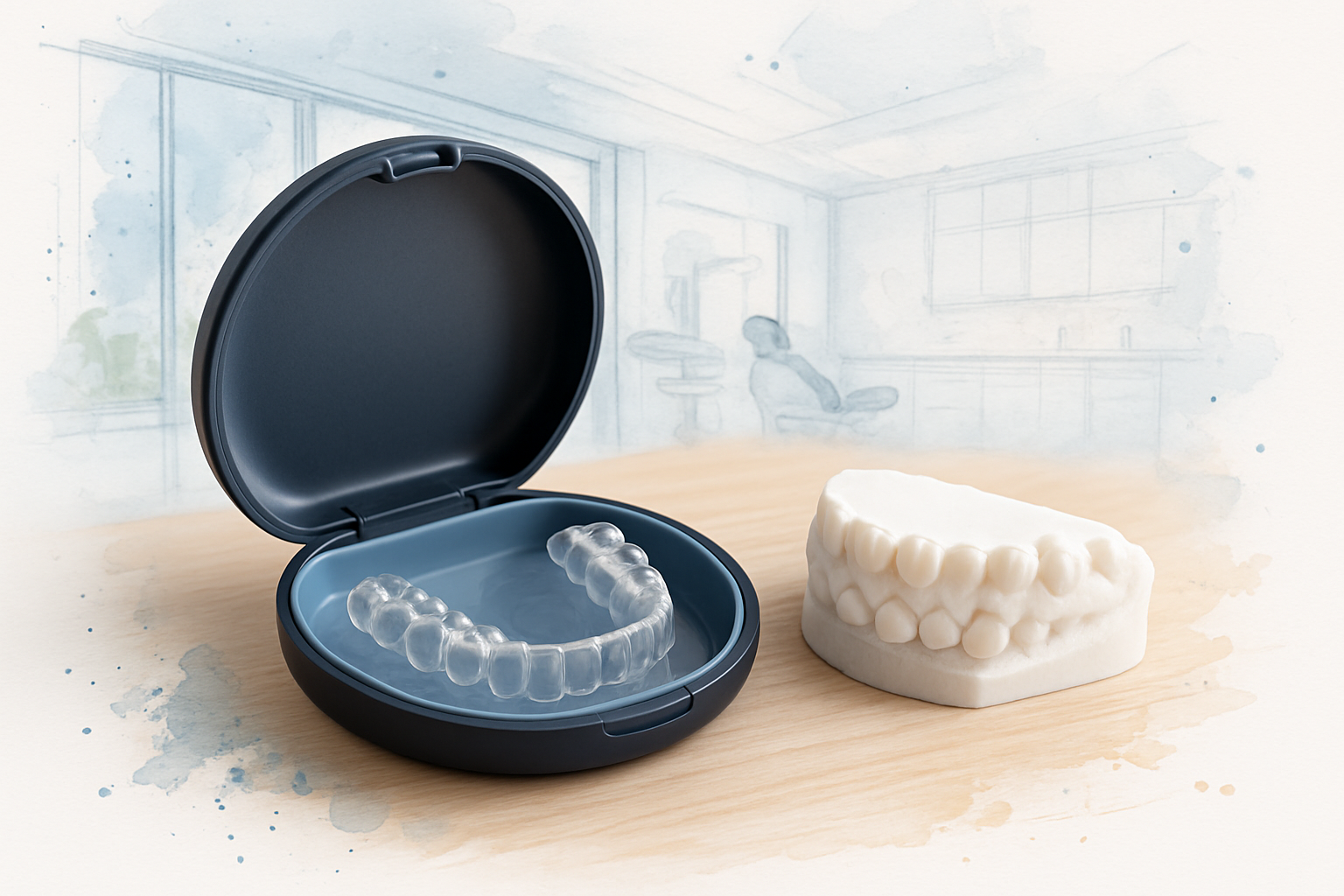
- Teeth are tracking with what we mapped at the scan
If wear time is not happening, the plan changes. We can shorten the leash, add check ins, or move to brackets. Nobody has failed anything. What matters is catching it at week six instead of month six, which is exactly why I want eyes on these cases early and often.
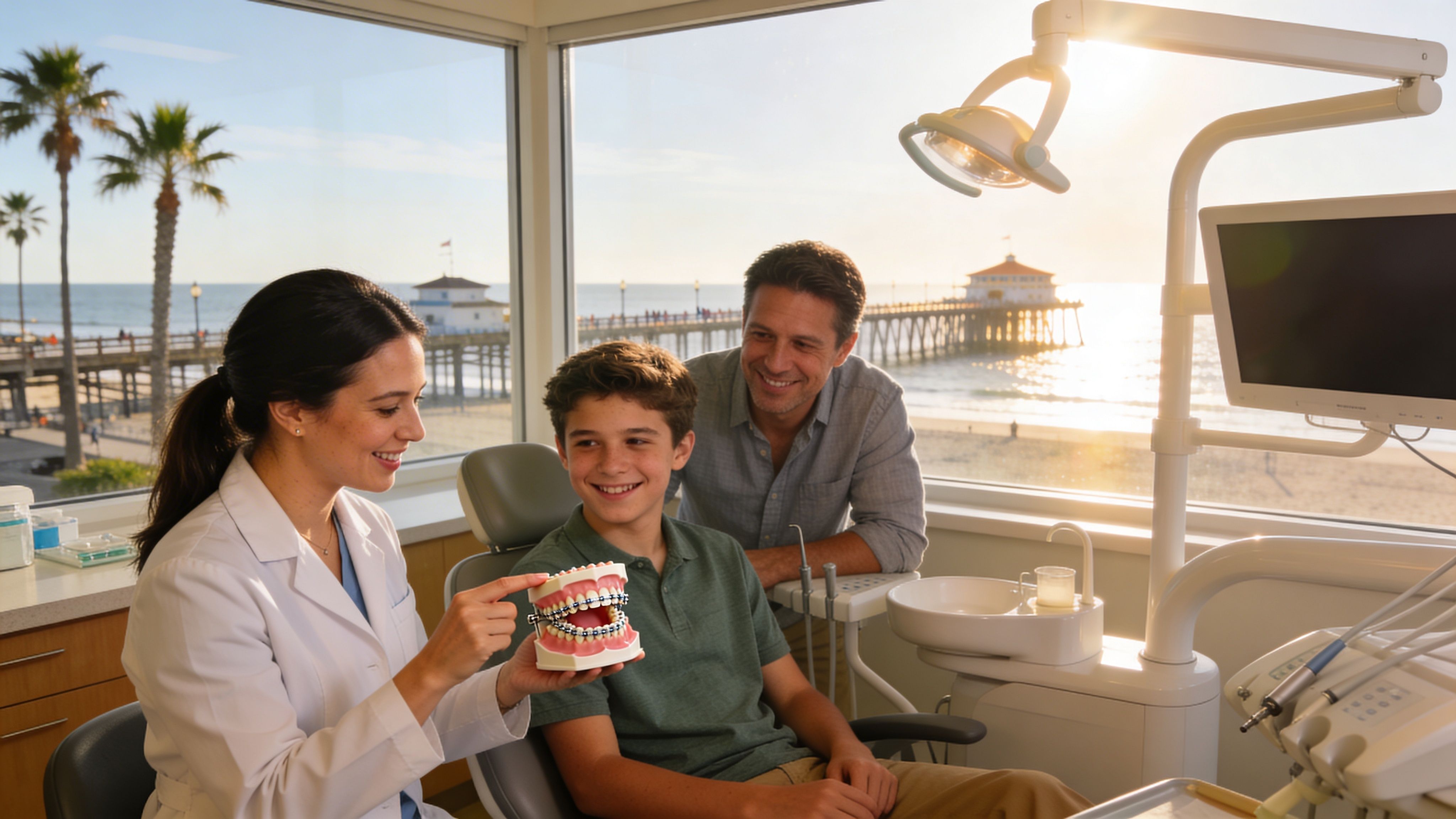
One last thing parents in Goldenwest, Adams, and Central Fountain Valley bring up: the weekday driving. Aligner check visits are generally shorter and spaced further apart than the wire adjustments braces require, which adds up to a real difference in after school trips to Beach Boulevard over a year of treatment. Both Dr. Jeremy and Dr. Melissa are Invisalign certified providers and see patients at every appointment rather than handing off, which is how small wear time problems get caught before they cost months. One parent put it simply in a review: "I love that they are the ones that see my son at every appointment."
Frequently Asked Questions About Clear Aligners and School
Can my teen drink coffee or a smoothie with the trays in?
Water only. Anything with sugar, acid, or heat means trays out first. Sugary drinks with trays in trap liquid against enamel, and hot drinks can warp the plastic.
What happens if a tray gets thrown away at lunch?
It happens more than you would think. Call the office, put the previous tray back in so teeth do not drift, and we sort out whether to move forward or replace. Do not just go without a tray for a week, that is what actually sets treatment back.
Will braces or aligners cost more for a teen?
Fees vary a lot based on how much movement is needed and how long treatment runs, so I would not trust any flat number you see online. In general, comprehensive treatment with trays and with brackets land closer together than most families expect, and most orthodontic offices in Orange County offer monthly payment plans. A consultation is where you get a real number for your kid's case.
Does my teen have to brush at school every time?
Ideally yes after meals, but a hard rinse with water is better than nothing when the bell is about to ring. A travel toothbrush in the backpack makes this a 90 second habit instead of a hassle.
How long does teen aligner treatment usually take?
Most teen cases run somewhere in the 12 to 24 month range, though simpler cases finish faster and complex bite issues take longer. Wear time is the single biggest variable, which is why the school day rhythm matters as much as the treatment plan itself.
Thinking through what fits your teen's schedule?
If you are weighing trays against brackets for a kid juggling classes, practice, and a part time job, a consultation is the fastest way to see what their actual day would look like. Our office sits on Beach Boulevard, convenient and local for families across Huntington Beach and Fountain Valley, and consultations with Dr. Jeremy and Dr. Melissa can be arranged at 714-594-5777 or magicfoxsmiles.com.