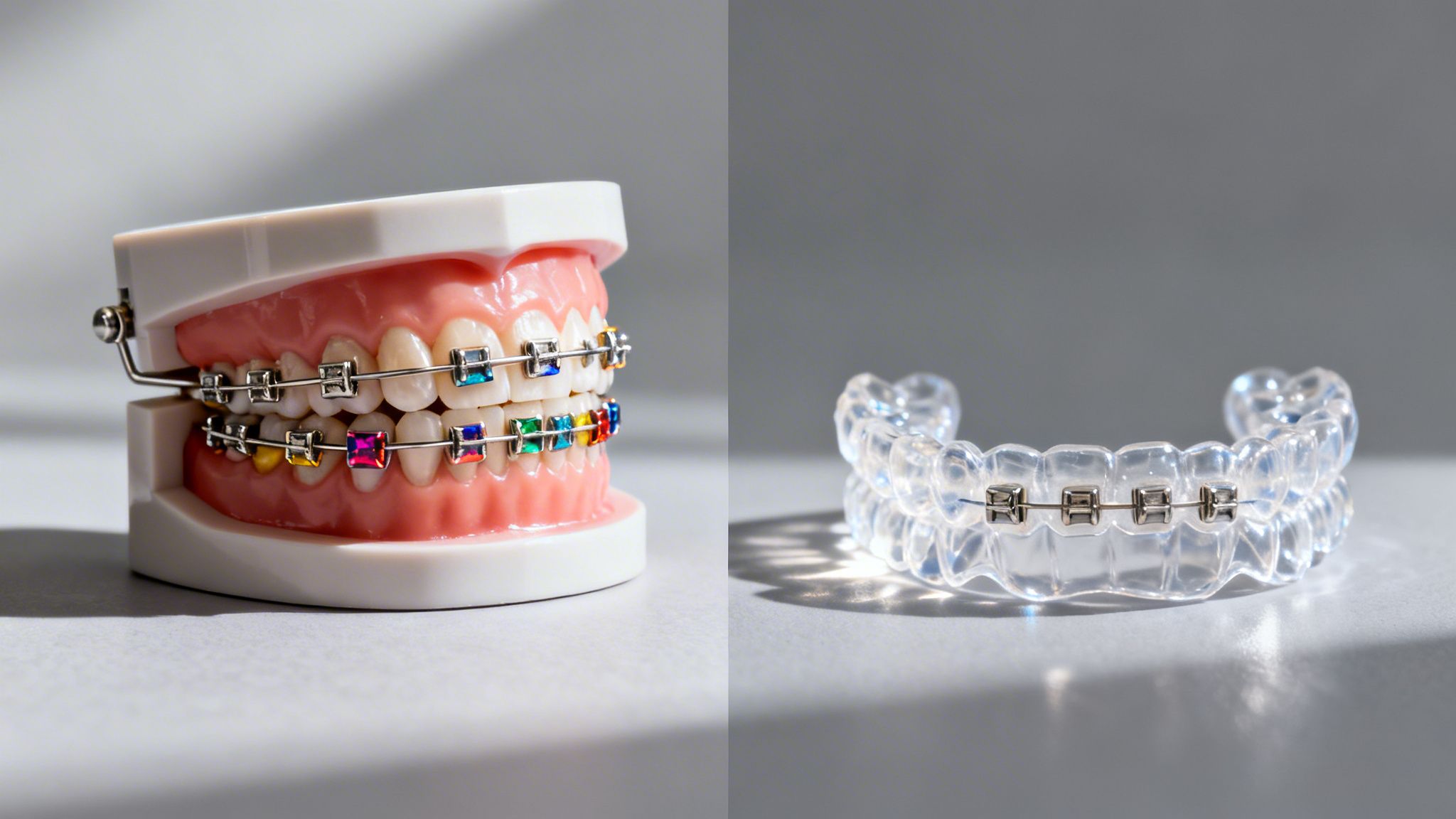
Choosing an Orthodontist When Vietnamese or Spanish Is Your Home Language
Direct Answer: Ask which languages the team speaks, who explains the financial plan, and whether the same doctor sees you at every visit. If the answers are clear in your language, you can decide with confidence.
Most of the calls I take about braces start the same way. Someone is on the phone for their whole family, translating in real time, trying to hold three answers in their head at once: does insurance cover this, how long will it take, and can we pay monthly.
I have listened to enough of these calls to notice something. The decision almost never stalls on price. It stalls on whether the person who has to say yes actually understands what they are agreeing to.
So this article is about that gap, and how to close it before you book anywhere. What to ask, which insurance words trip families up even in English, and why the language spoken in the room matters as much in Fountain Valley as it does in Huntington Beach.
The Call I Hear Over and Over: Translating for Your Family in Real Time
Here is the pattern. An adult daughter calls about her mother. A bilingual dad calls about his son. One person is doing the listening, the translating, and the deciding, all at once.
That is a lot to carry. And when the information comes fast, people do what anyone would do. They say they need to check with their spouse, and the call ends politely with nothing scheduled.
One caller this past summer seemed to land with us in part because a language barrier had made things confusing somewhere else. Small detail, bigger point: when families cannot get a clear answer in the language they think in, they stop rather than guess.
What I watch for on our end is simple:
- Does the person have to repeat the question because the first answer used clinical words?
- Are they asking about cost and coverage before they will discuss anything else?
- Are they translating for someone who is sitting right next to them?
When the answer to that last one is yes, the whole conversation needs to slow down. Not because anyone is confused about teeth, but because consent, payment terms, and a two year commitment deserve to be understood the first time.

Fountain Valley and Huntington Beach Are Not the Same Language Map
People lump these two cities together because they sit side by side on Beach Boulevard. On paper they are very different.
Fountain Valley is roughly 36.7% Asian, and about 32.8% of residents were born outside the United States. In Huntington Beach those figures are closer to 13% and 16.4%.
The part of Fountain Valley north of the 405 sits inside Little Saigon, the largest Vietnamese community outside Vietnam. Spanish speaking households are a steady presence too, especially around Oak View and along the Newland and Adams corridors.
So here is something I think patients should know: most orthodontic websites in this area never say which languages the team speaks. Not out of secrecy. It just does not occur to anyone to put it on the page.
That means asking is normal and fair. You are not being difficult by calling an office and saying, "Is there someone there who speaks Vietnamese?" before you drive over. It is the same as asking about parking or Saturday hours, and it saves everyone a wasted trip. If schedule is your other sticking point, Saturday visits by appointment are worth asking about in the same call.
Five Questions Worth Asking Any Office Before You Book
I would ask these of any practice, including ours. The answers tell you a lot in about ninety seconds.
| Ask this | Why it matters | A good answer sounds like |
|---|---|---|
| Who will actually be in the room during the exam? | You want to know if the doctor examines your child or if you are handed to a rotating team | The doctor performs the exam and stays for your questions |
| Will the financial conversation happen in the same language as the clinical one? | Many offices explain treatment warmly, then hand the money talk to a different person | The same language support covers both parts of the visit |
| Are consent forms and retainer instructions explained out loud? | Paperwork in a second language is where real misunderstandings start | Someone reads through the key points with you, not at you |
| Will the same person be there at follow-up visits? | Consistency is what lets a nervous patient relax by visit three | You see the same doctor month to month |
| What is your soonest available consultation? | Availability varies a lot, and some offices book weeks out | A specific date, plus a cancellation list if you want sooner |
Why "Who Is in the Room" Is the Question I Care About Most
The single most repeated theme in our reviews is not the office design, even though people love the bookshelf door. It is that the doctors take the time to explain things until the patient truly understands the plan.
One parent put it this way: "I love that they are the ones that see my son at every appointment. It really matters to me to have a personalized experience."
That is not a small preference. When Dr. Jeremy and Dr. Melissa see the same patients themselves month after month, the explaining gets easier every visit, because nobody has to start over. For a family working across two languages, that continuity does more good than any brochure.
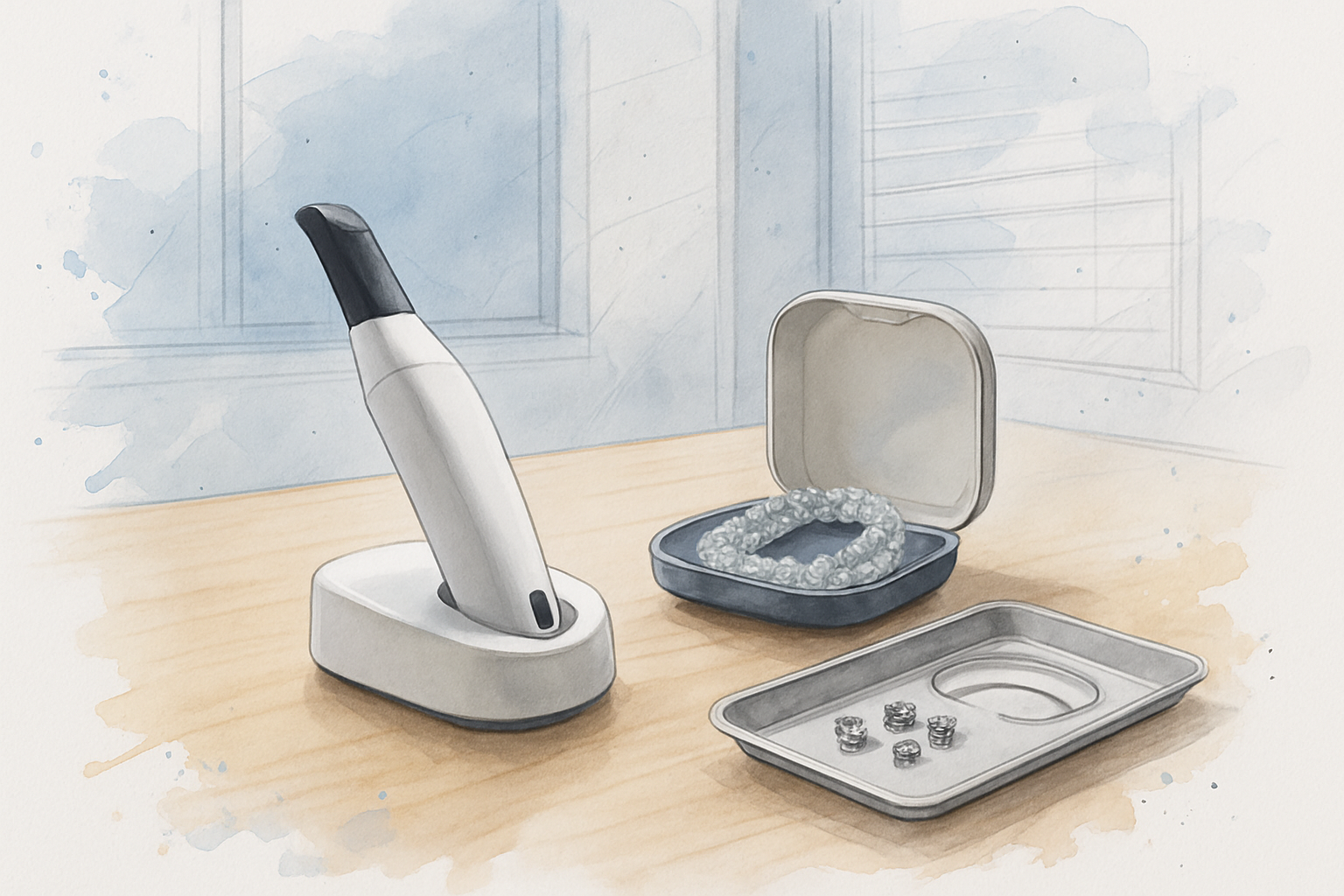
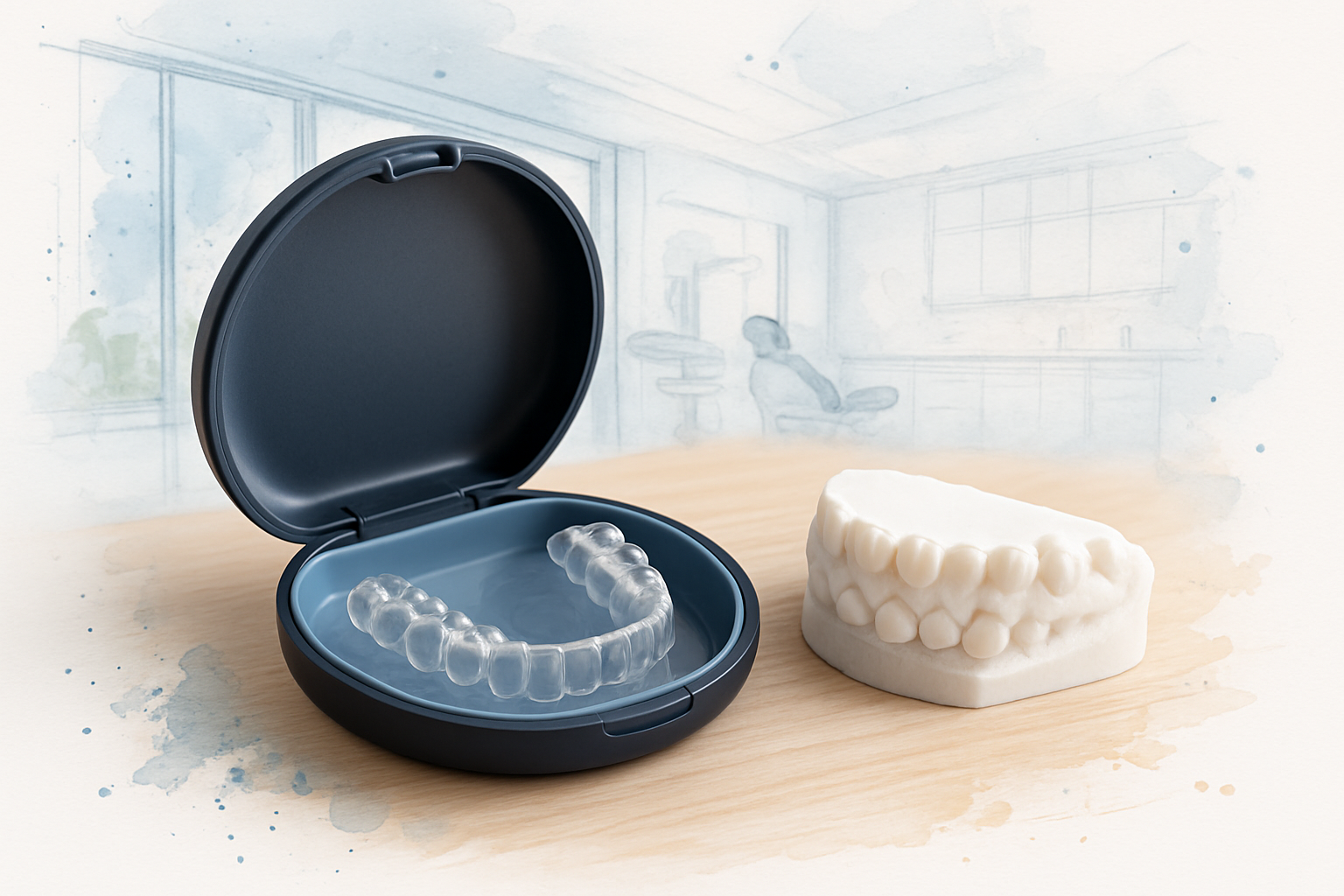
One more practical thing that removes a hurdle: we use digital scanning instead of the old putty molds. That takes an uncomfortable procedure off the table entirely, which is a relief for a nervous grandparent or a squirmy nine year old in any language.
The Money Conversation Is Where Being Understood Matters Most
Two questions come up on our phones more than anything else: "Does insurance cover any of this?" and "What are my payment options, can I do monthly payments?"
The families who get clear answers early tend to move forward. The ones who do not stay non-committal, and honestly, I do not blame them.
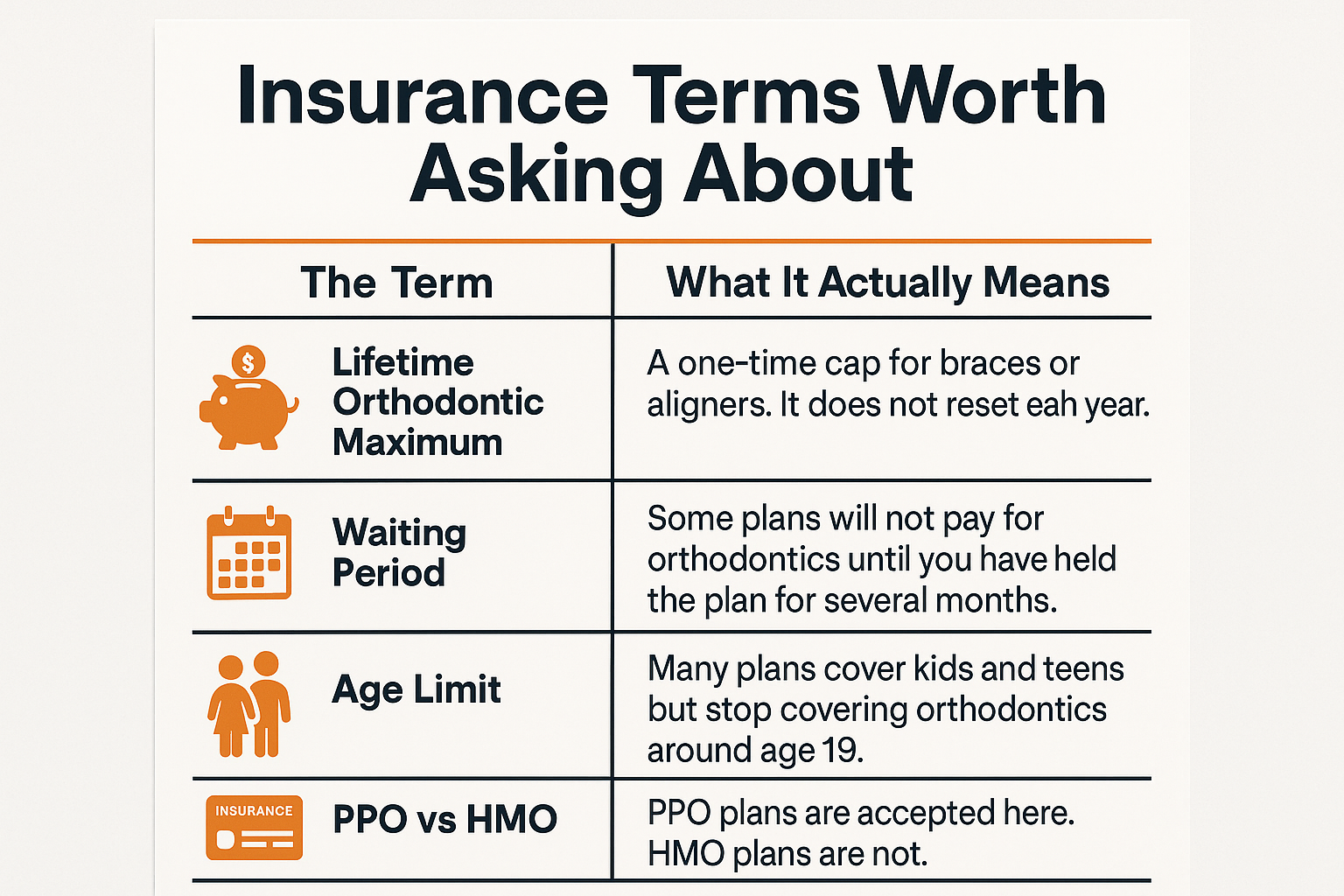
Part of the problem is that dental insurance uses terms that confuse people who grew up speaking English:
- Lifetime orthodontic maximum is a one time cap on braces or aligners, not a yearly allowance. Once it is used, it does not refill.
- Waiting period means some plans will not pay for orthodontics until you have held the plan for a set number of months.
- Age limits are common. Plenty of plans cover children and teens but stop covering orthodontics at 19.
- PPO versus HMO matters a lot here. We work with PPO plans and we do not accept HMO plans.
On cost, I will not pretend there is one number. Fees in Orange County vary by case complexity, treatment length, and whether you are doing comprehensive treatment or a focused touch-up for one or two specific things.
A short focused case and a full 24 month case are not in the same range, and anyone quoting you a figure before seeing records is guessing. Monthly payment arrangements are a normal part of orthodontics, and the honest way to get your number is an exam and a written plan. Call us and ask for the specifics on your plan before you commit to anything.
Insurance Words That Trip Families Up
These four terms cause more hesitation than the fees themselves. Here they are in plain language.
When More Than One Person in the House Needs Treatment
These calls are rarely about one patient. A parent brings a child in, listens for twenty minutes, then asks quietly near the end whether it is too late for themselves.
About 20.7% of Fountain Valley residents are 65 or older, and multi-generational households are common here. So that quiet question comes up a lot.
The answer is no. Adult treatment is at record levels nationally, with roughly 1.91 million adults in active treatment, up from about 1.64 million in 2022, and roughly one in three orthodontic patients is now an adult. We treat patients well into their 70s, and one of our own reviewers started at 76.
Timing is the other thing families plan around, and cultural calendars are part of that:
- Some families want a child's visible treatment stage settled well before Tet, which falls on February 6, 2027.
- Others start a child over winter break so the first few adjustment days do not land in the middle of a school week.
- Adults often start in a quieter work season, which is one reason clear aligners appeal to working adults who present in meetings.
If you are weighing options across two generations, it helps to read up on how treatment choices differ by age and goal and on why age 7 is the recommended first checkup for the youngest kids in the house.
Frequently Asked Questions About Vietnamese and Spanish Speaking Orthodontic Care
Is it rude to ask what languages your team speaks before booking?
Not at all. Our team speaks English, Vietnamese, and Spanish, and I would rather you ask on the phone than find out in the chair. Most offices in this area never list languages online, so calling is the only way to know.
Will consent forms and retainer instructions be explained out loud, not just handed to me?
That is how it should work anywhere. Paperwork in a second language is where misunderstandings start, so the key points should be talked through with you, with time for questions. Ask any office you are considering how they handle it.
Am I too old for braces or Invisalign at 65 or 70?
No. We see patients well into their 70s, and adult cases are a growing share of orthodontics nationally. What changes with age is the treatment planning, not your eligibility, which is why an exam matters more than a number.
Do you take Medi-Cal or Denti-Cal?
Public programs work very differently from private dental insurance, and orthodontic coverage under them is limited to specific criteria. We work with PPO plans and do not accept HMO plans. Call and ask about your exact plan so you get a straight answer before you drive over.
How long does treatment usually take?
It depends on the case. Comprehensive treatment commonly runs somewhere in the 12 to 30 month range, while focused touch-up treatment for one or two specific concerns is much shorter. You can read more about what drives treatment length, then get a real estimate at a consultation.
Ready to Ask Your Questions in the Language You Think In?
If you have been putting off a consultation because the explaining feels like too much work, know that our team speaks English, Vietnamese, and Spanish, and that Dr. Jeremy and Dr. Melissa see patients themselves rather than handing them off. We are on Beach Boulevard, a short drive from Central Fountain Valley and Talbert Village, with Saturday visits available by appointment. Consultations can be arranged at 714-594-5777 or at magicfoxsmiles.com whenever you are ready.