What Age Do You Lose Milk Teeth? Your Guide
Quick Answer
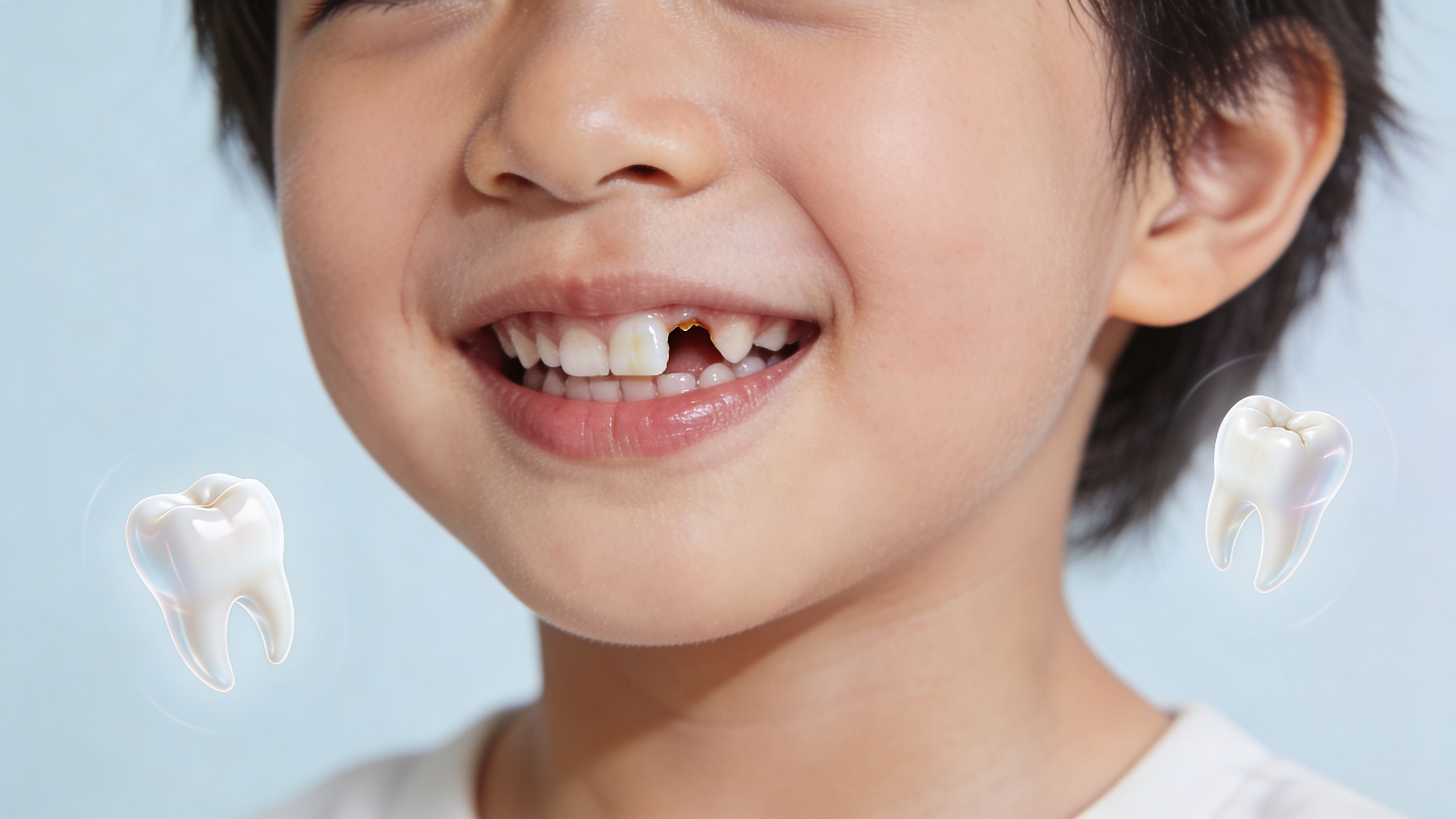
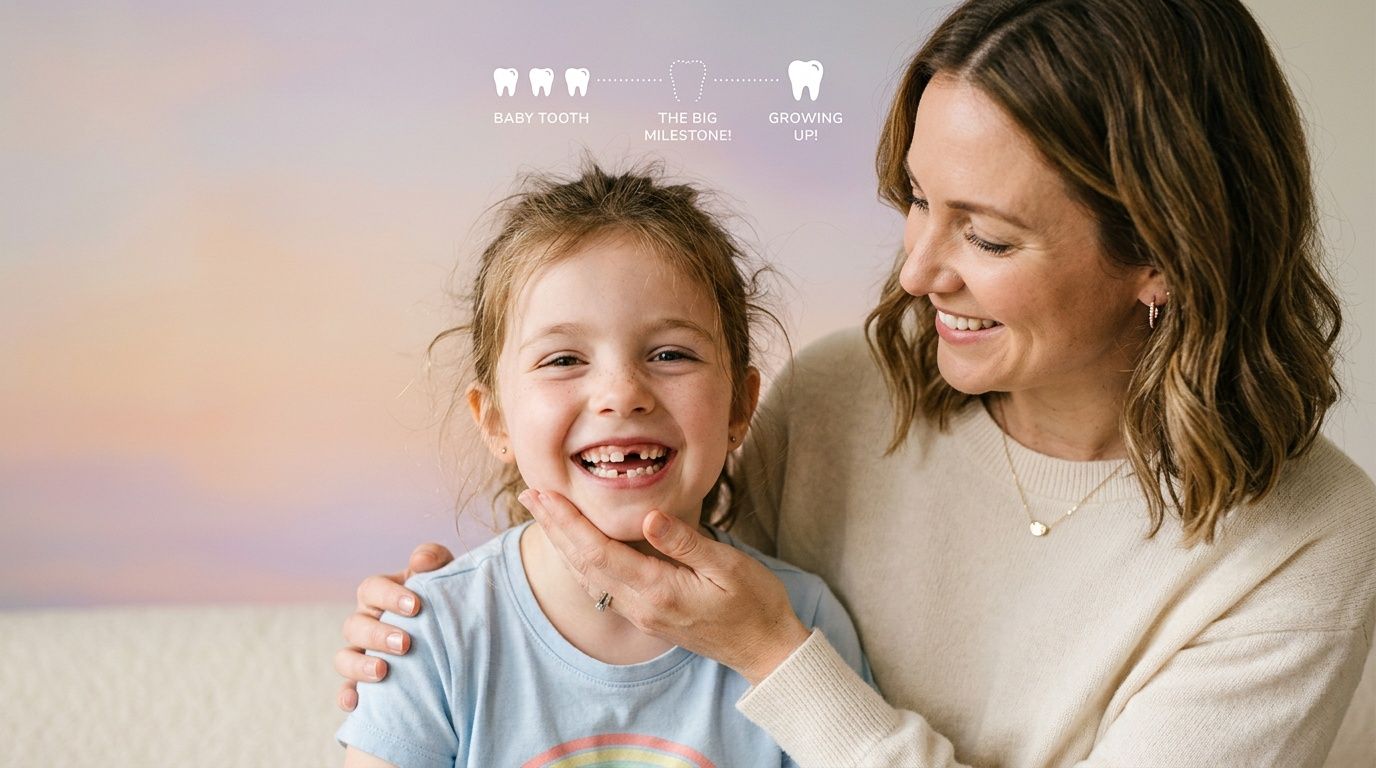
Most children start losing milk teeth at around age 6 and finish by about age 12. The first teeth to loosen are usually the lower front teeth at 6 to 7, followed by other front teeth, then canines and molars over the next several years. Small variations are common, but very early or very delayed tooth loss deserves a professional look.
If your child has a loose front tooth right now, you're probably asking two things at once. What age do you lose milk teeth, and is this happening the way it should?
For most families, the process is routine. It can also be the first time a parent starts wondering whether the adult teeth will have enough room, whether timing looks normal, and whether it's time for an orthodontic check.
The Typical Timeline for Losing Baby Teeth
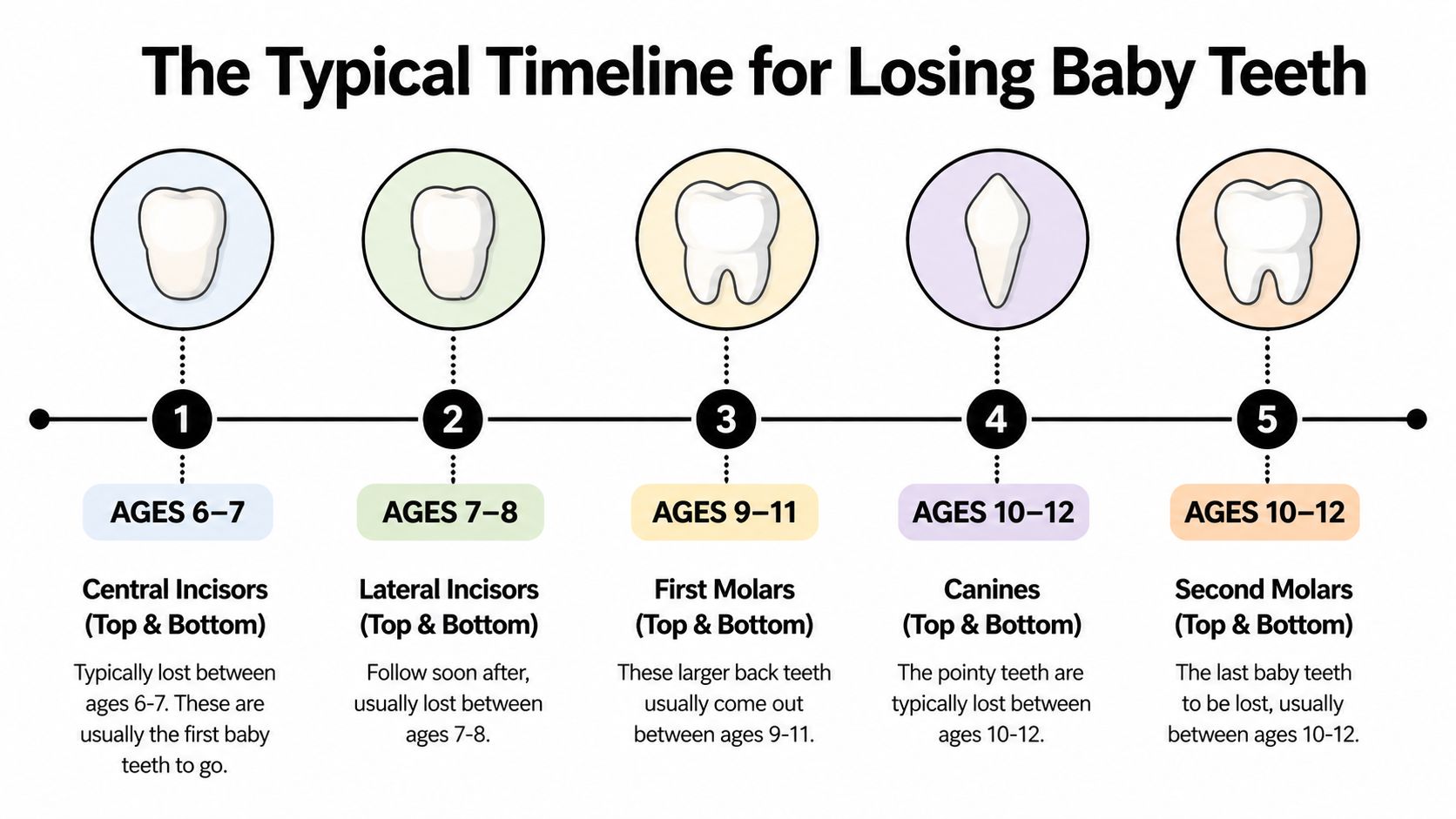
Most children begin losing baby teeth at about age 6 and complete the process by about age 12, according to this overview of when baby teeth fall out. The sequence is usually predictable, and it tends to follow the same general order the teeth came in.
That matters because parents often worry when one tooth loosens before another. In many cases, the bigger question isn't whether a tooth is loose today. It's whether the overall pattern still makes sense.
The usual order
The first teeth to go are usually the lower central incisors at 6 to 7 years. After that, the upper front teeth and side incisors follow, and the back teeth come later.
| Baby Tooth Loss Timeline | Typical Age of Loss |
|---|---|
| Central incisors | 6 to 7 years |
| Lateral incisors | 7 to 8 years |
| First molars | 9 to 11 years |
| Canines | 9 to 11 years |
| Second molars | 10 to 12 years |
A child doesn't lose all 20 baby teeth in one stretch. This unfolds over several years, with quiet periods in between.
Practical rule: Look for the general sequence, not a perfect calendar date.
Why the process happens in that order
Baby teeth loosen because the permanent teeth underneath start moving into position. As that happens, the roots of the baby teeth gradually resorb, which is why a tooth that once felt solid begins to wiggle and eventually comes out.
That process is normal, and it usually doesn't need intervention. If you'd like a broader early-years reference before the tooth-loss stage, this UK parent's guide to baby teething is a useful starting point for understanding how the first phase of tooth development connects to the next one.
Parents who want a simple age-by-age comparison can also review this baby tooth fall-out guide from our office blog.
What counts as normal variation
Not every child starts right on their sixth birthday. Some children run a little earlier, some a little later, and the timing can still be normal if the pattern is sensible and the permanent teeth are developing in an expected way.
Girls often lose teeth somewhat earlier than boys. A child who got baby teeth early may also start losing them earlier.
What to Do When a Tooth Is Loose
A loose baby tooth usually doesn't need much help. What works best is patience, gentle wiggling, and keeping the area clean.

What helps
Let your child wiggle the tooth gently with a clean finger or their tongue. If it's ready, it will usually come out with very little force.
A small amount of bleeding when the tooth falls out is common. Gentle pressure with clean gauze is usually enough.
- Keep brushing: Brush normally, just a little more gently around the loose tooth.
- Let the child lead: Children usually handle this better when they feel in control.
- Offer soft foods if needed: If the tooth is very wiggly, softer foods can make chewing more comfortable.
Most loose baby teeth come out more easily when nobody rushes them.
What doesn't help
Pulling a tooth before it's ready often turns a simple milestone into a painful one. It can irritate the gum and make children more anxious the next time.
Skip home tricks that involve force. If the tooth resists, leave it alone and check again later.
When a loose tooth needs more than waiting
If the tooth became loose after a fall or a hit to the mouth, that's different from natural shedding. If your child lost a baby tooth unusually early and you're worried about the space being left behind, this explanation of space maintainers can help you understand why that gap sometimes needs monitoring.
Normal Variations Versus Warning Signs
Some timing differences are harmless. Others are worth checking because they can affect how permanent teeth come in.
A normal variation is a child who starts a little earlier or later than a sibling, or a girl who seems to lose teeth before a boy the same age. A warning sign is a pattern that suggests the permanent teeth may not have a clear path.
Variations that usually aren't a problem
A child may lose one front tooth and then wait a while for the matching one. The sequence can be slightly uneven and still be normal.
Children also don't all follow the same family schedule. Comparing cousins, classmates, or siblings usually creates more worry than clarity.
Signs to pay attention to
Premature loss matters because baby teeth help hold space for adult teeth. In a study cited by the National Institutes of Health, 40.54% of children aged 5 to 10 had premature loss of primary teeth, and that early loss can contribute to alignment problems if space isn't maintained, as described in this publication on premature loss of primary teeth.
Call your dentist or orthodontist if you notice:
- A tooth lost very early: Especially if it happened because of decay or injury.
- One area losing space: Neighboring teeth can drift into that spot.
- A front tooth still present long after the other side changed: That can be normal, but it deserves a closer look if the pattern seems stalled.
- Pain, swelling, or signs of infection: Natural tooth loss shouldn't come with significant swelling.
A baby tooth isn't just temporary. It guides the tooth that's supposed to replace it.
If you want to compare the expected sequence with what you're seeing at home, this guide to the order of losing teeth is a helpful reference.
Why Losing Milk Teeth Is an Orthodontic Milestone
A parent often notices the gap first. One front tooth is out, the adult tooth starts to show, and the next question is usually, "Is this coming in the right way?"
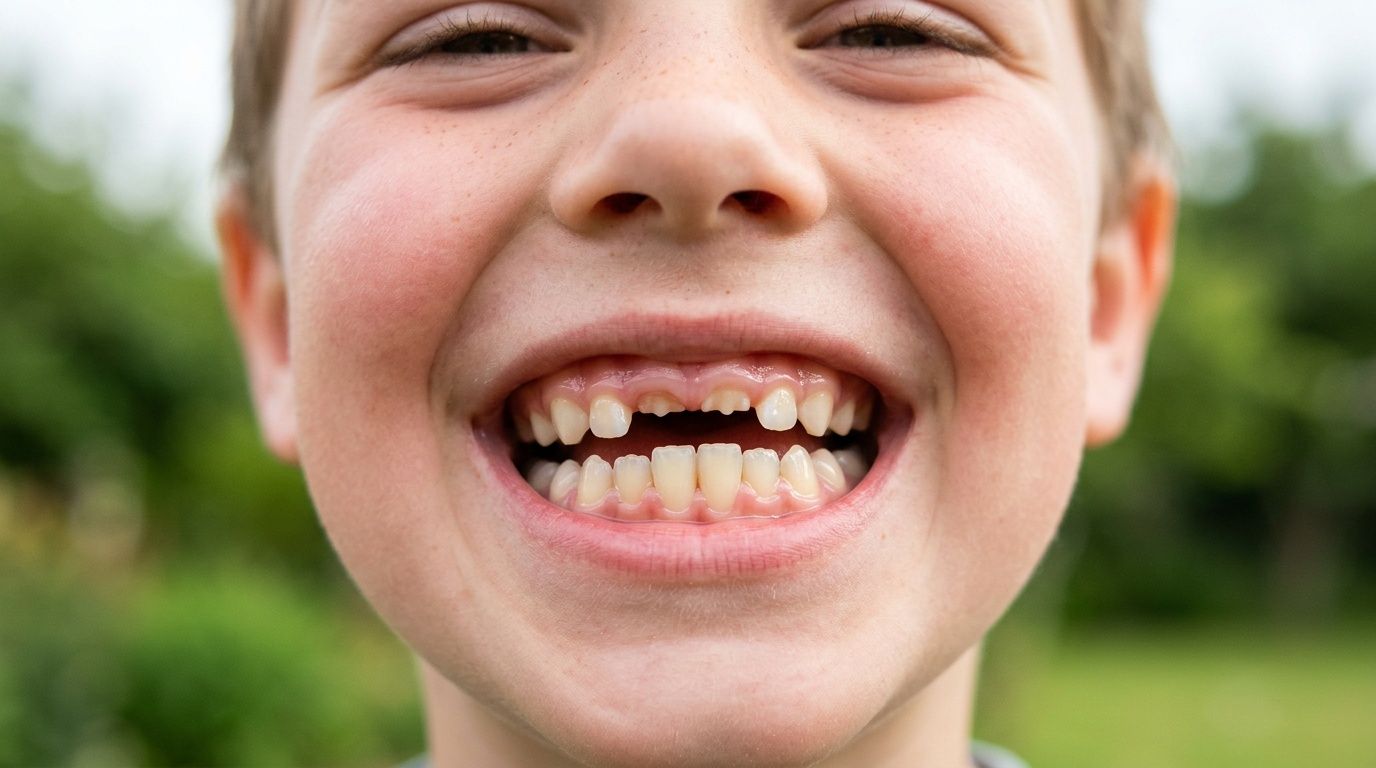
From an orthodontic standpoint, that moment matters because tooth loss gives us an early view of how the bite is developing. We are not only watching for a baby tooth to fall out. We are checking whether the permanent tooth has a clear path, whether enough space is available, and whether the upper and lower teeth are starting to fit together as expected.
Some children need monitoring. Others already show patterns that are easier to address early, such as crowding, a crossbite, teeth erupting off to one side, or space closing after a baby tooth was lost before its time. Those findings do not always mean treatment starts right away, but they do shape what comes next for the family.
That is why this stage often becomes the first real orthodontic checkpoint. A good evaluation can answer practical questions parents in Huntington Beach and Fountain Valley usually have at this age. Should we just watch this? Is there enough room for the adult teeth? Do we need to protect space now so a bigger problem does not develop later?
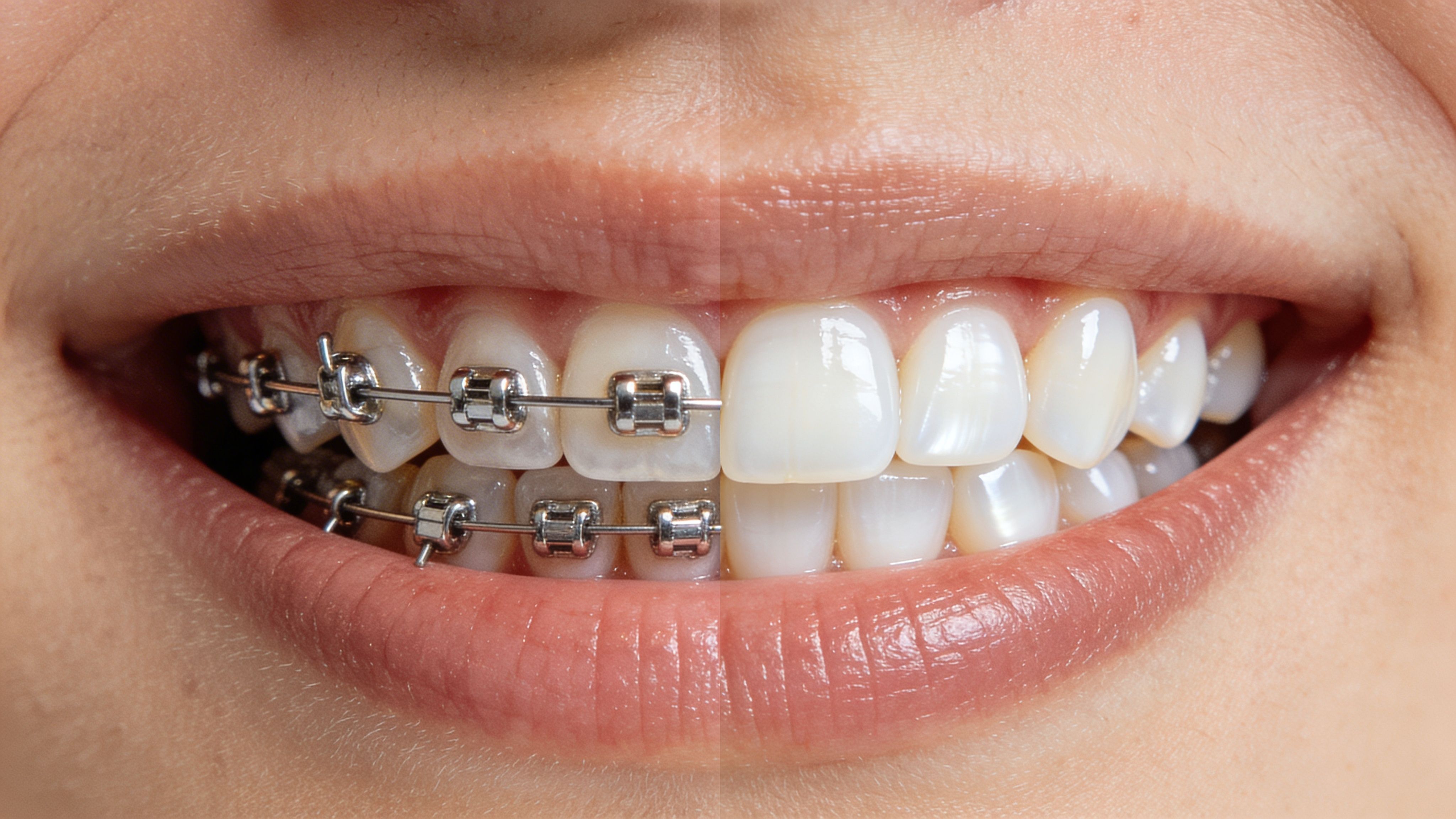
If you want to see how early observations can connect to braces or aligners later, this overview of full orthodontic treatment planning explains what that process can include.
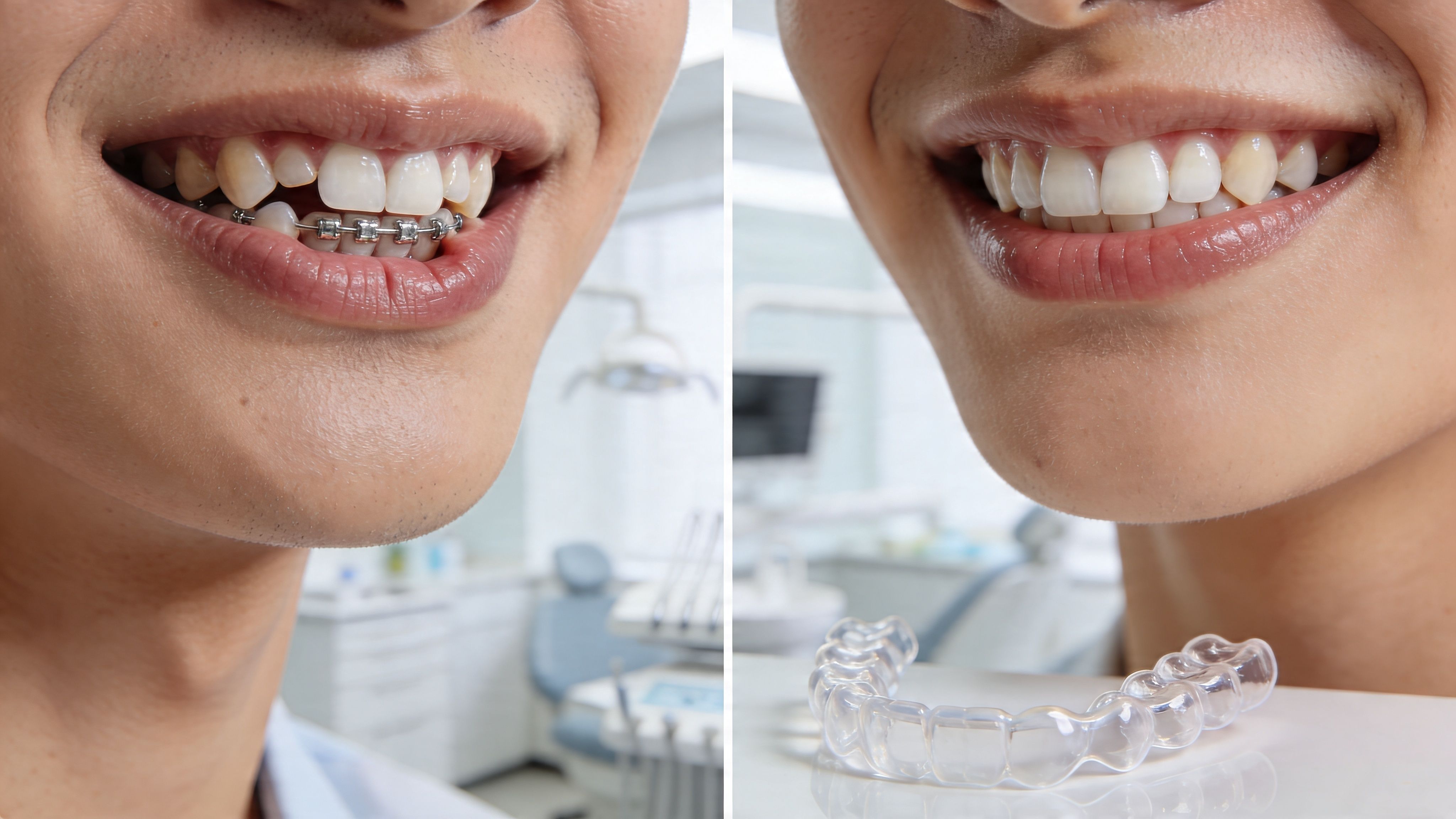
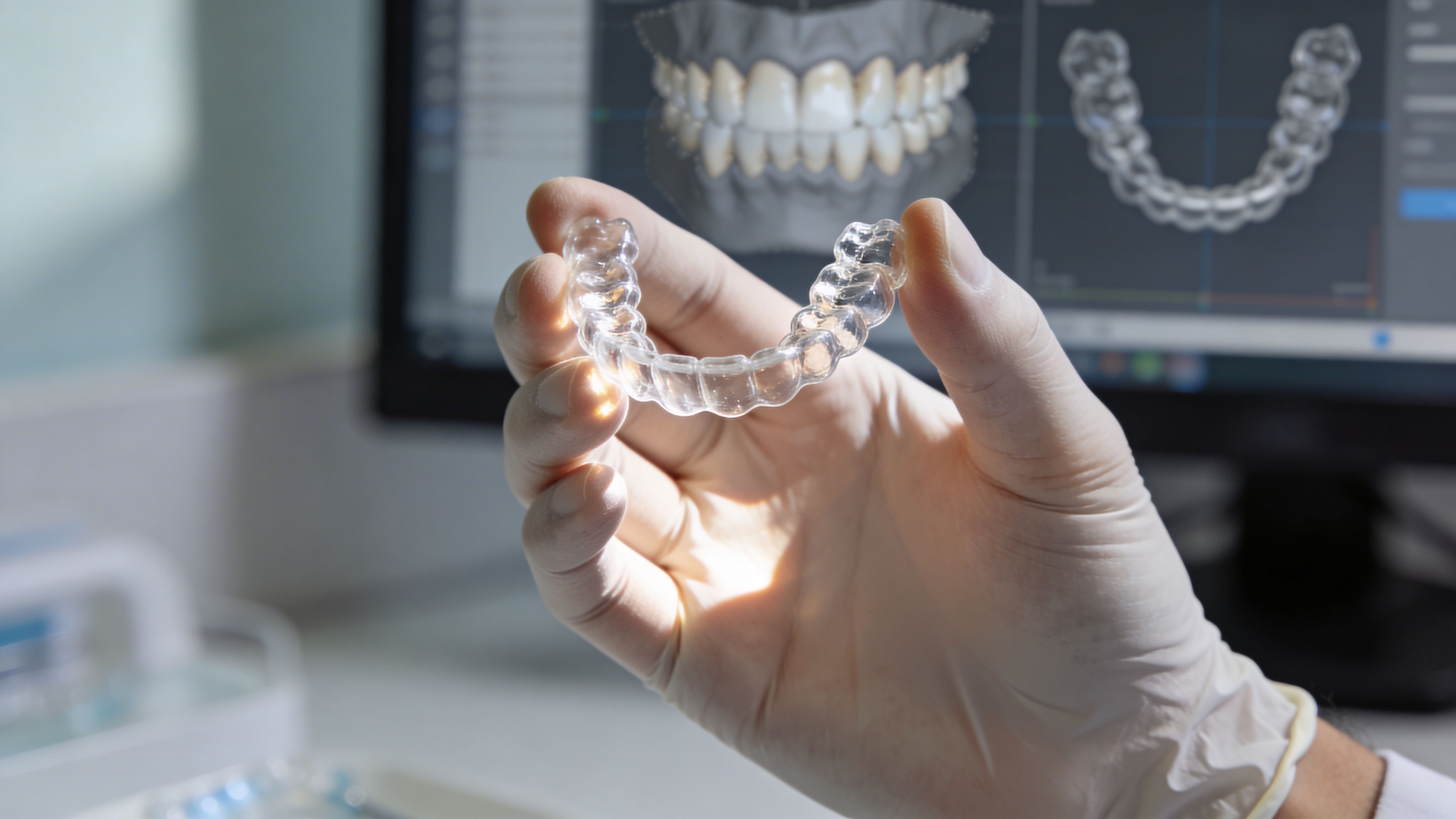
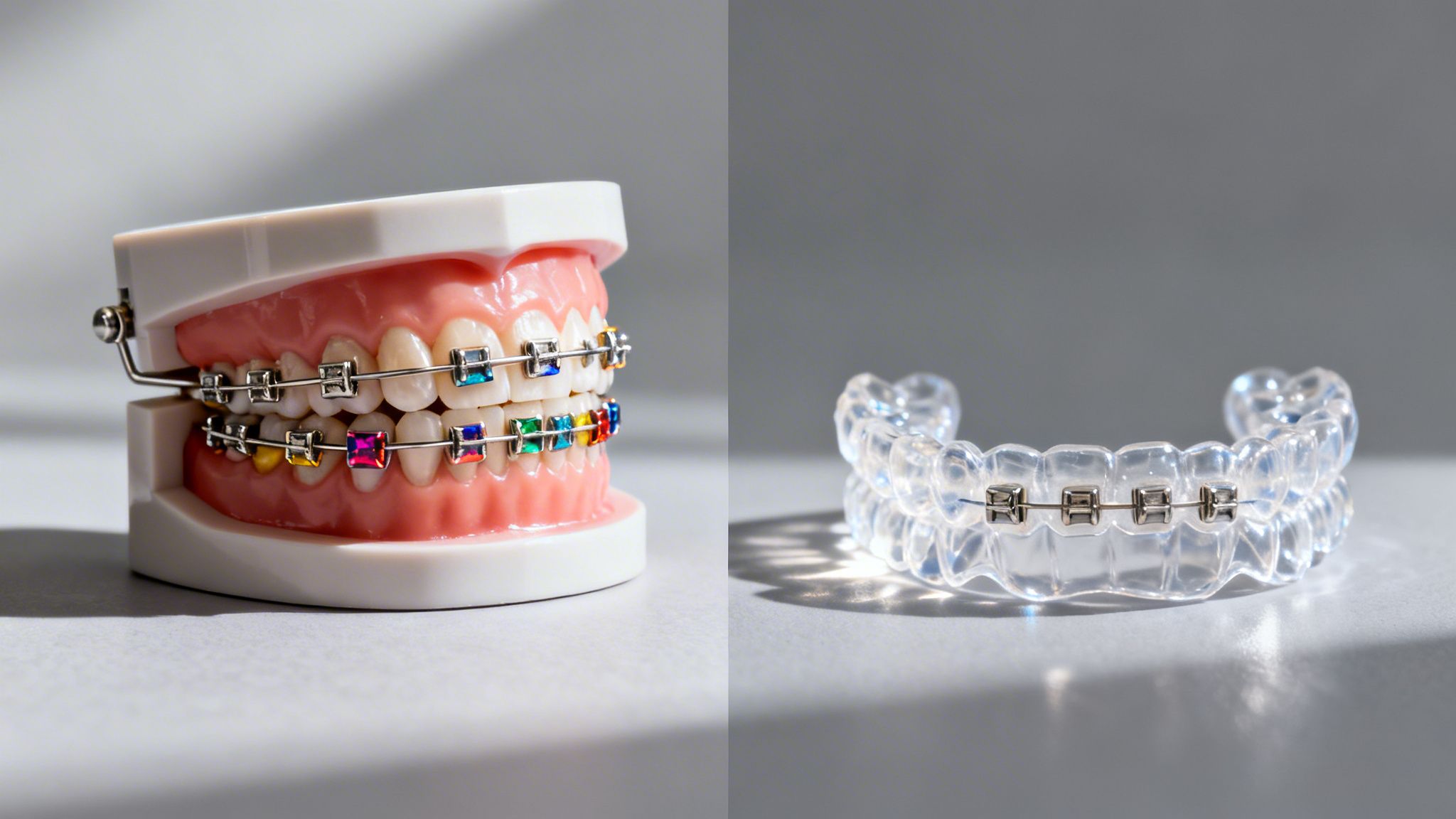
One local option for monitoring this transition is Magic Fox Orthodontics, where Dr. Jeremy and Dr. Melissa evaluate developing bites and explain whether the next step is simple observation, a follow-up growth check, or planning for future treatment such as Invisalign, Iconix esthetic brackets, or traditional metal braces.
When to Schedule Your First Orthodontic Visit
Parents usually don't need to wait until all the baby teeth are gone. The first orthodontic visit is often most useful during the mixed-dentition stage, when some baby teeth are still present and the first permanent teeth are already in.
Why age 7 is a practical checkpoint
By this stage, an orthodontist can often see whether the bite is developing evenly, whether crowding is starting, and whether permanent teeth are following a normal path. This visit is usually about observation and planning, not starting treatment on the spot.
Problems are easier to spot while the change is happening. According to this review of the exfoliation sequence and delayed eruption concerns, delays beyond age 8 for incisors or 14 for molars can signal issues such as ectopic eruption or root resorption problems, which may be evaluated with a panoramic radiograph.
What Dr. Jeremy and Dr. Melissa look for
At a first orthodontic check, the focus is usually on a few practical questions:
- Is there enough room for incoming teeth
- Are the upper and lower jaws fitting together reasonably well
- Is any tooth erupting in an unusual position
- Did an early tooth loss create a spacing problem
- Does this child need treatment now, or just monitoring
For families in Huntington Beach and Fountain Valley, that kind of visit is often reassuring. Sometimes the answer is, "Everything looks on track. We'll keep an eye on it."
If you're wondering why orthodontists pay attention this early, these reasons to book an ortho check by age 7 give a clear parent-focused explanation.
Frequently Asked Questions About Losing Milk Teeth
My child is 7 and hasn't lost any teeth yet. Is that a problem?
Not always. Some children start a little later, and a single delay doesn't automatically mean something is wrong. What matters more is the overall pattern, whether permanent teeth seem to be developing normally, and whether your dentist or orthodontist sees any blockage or spacing issue.
Should I pull a loose baby tooth out for my child?
Usually, no. If the tooth is ready, it should come out with very light effort. If it hurts, resists, or only wiggles a little, waiting is safer.
What are shark teeth?
Parents use "shark teeth" when a permanent tooth starts coming in behind a baby tooth that hasn't fallen out yet. This can happen during normal transition, but it should be checked if the baby tooth isn't loosening or the permanent tooth is erupting far out of position.
Do different ethnic groups lose teeth at different ages?
There can be some variation. This discussion of baby tooth timing differences notes that some studies suggest children of Asian descent may lose their first tooth slightly later on average than Caucasian children, and girls across groups tend to lose teeth 6 to 12 months earlier than boys.
What if a baby tooth falls out too early?
Early loss can leave extra room for nearby teeth to drift into the space. That's one reason an orthodontic evaluation can be useful after early tooth loss, especially if the missing tooth is in the back where space matters for future eruption.
Does losing milk teeth mean my child needs braces?
No. Tooth loss is a normal developmental stage, not a sign that braces are automatically needed. It does signal a good time to check spacing, jaw growth, and bite development so you know what to watch.
Will a first orthodontic visit be painful or stressful?
It shouldn't be. A first visit is usually a conversation, an exam, and sometimes imaging if it's appropriate. For most children, it's far easier than parents expect because no treatment has to begin that day.
How much does an orthodontic check cost?
Costs can vary depending on what records or follow-up are needed. The simplest way to get an accurate answer is to ask the office directly, since fees, insurance, and treatment needs differ from child to child.
If you're still wondering what age do you lose milk teeth and whether your child's pattern looks normal, a free consultation with Dr. Jeremy or Dr. Melissa can give you a clear answer without pressure. You can contact Magic Fox Orthodontics at (714) 594-5777, visit 17041 Beach Boulevard, Suite 101, Huntington Beach, CA 92647, or explore the office online at magicfoxsmiles.com. Office hours are Monday to Friday 9:00 AM to 5:00 PM and Saturday 8:00 AM to 2:00 PM.