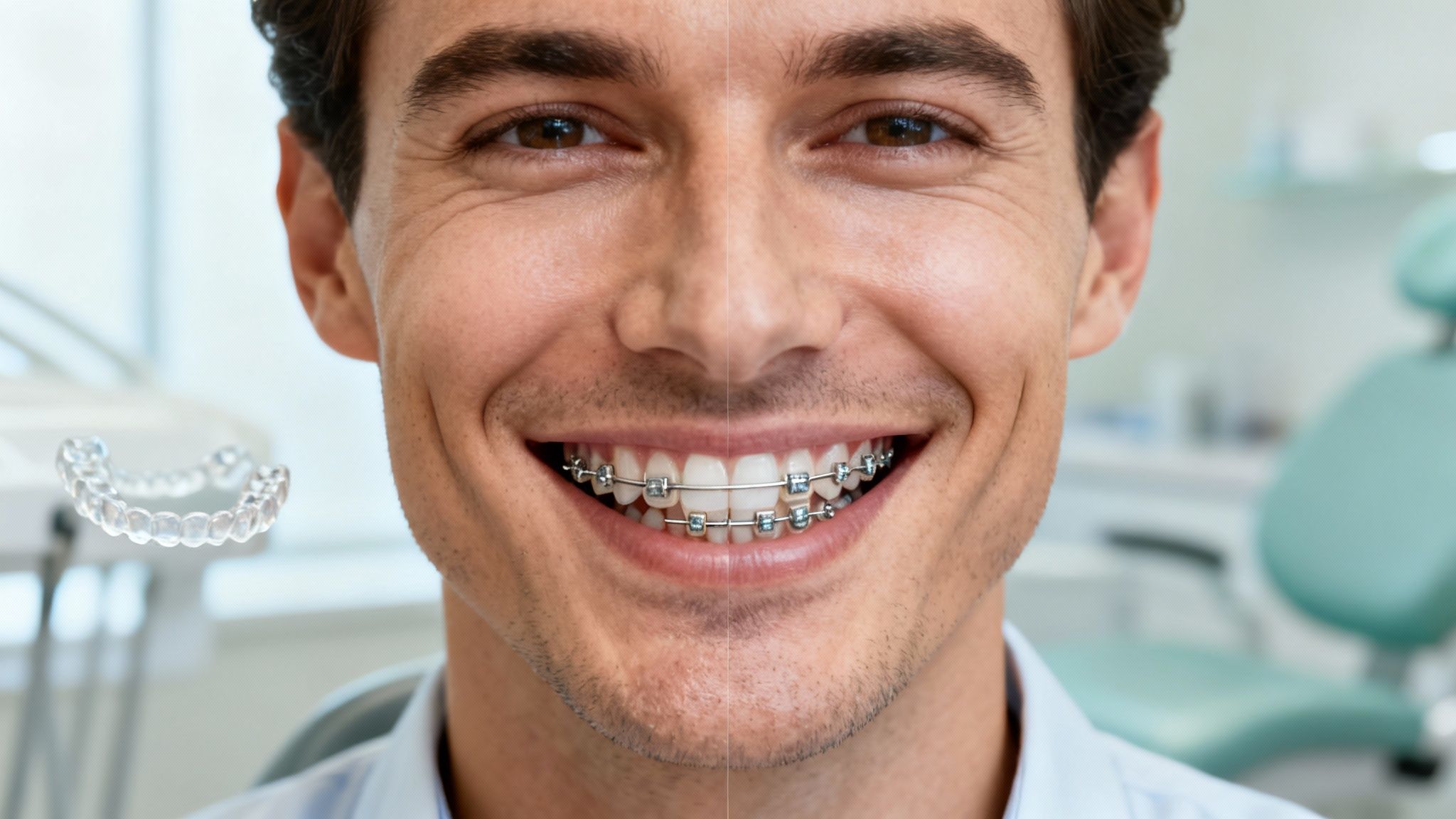
How Early Braces Exams Prevent Bigger Problems
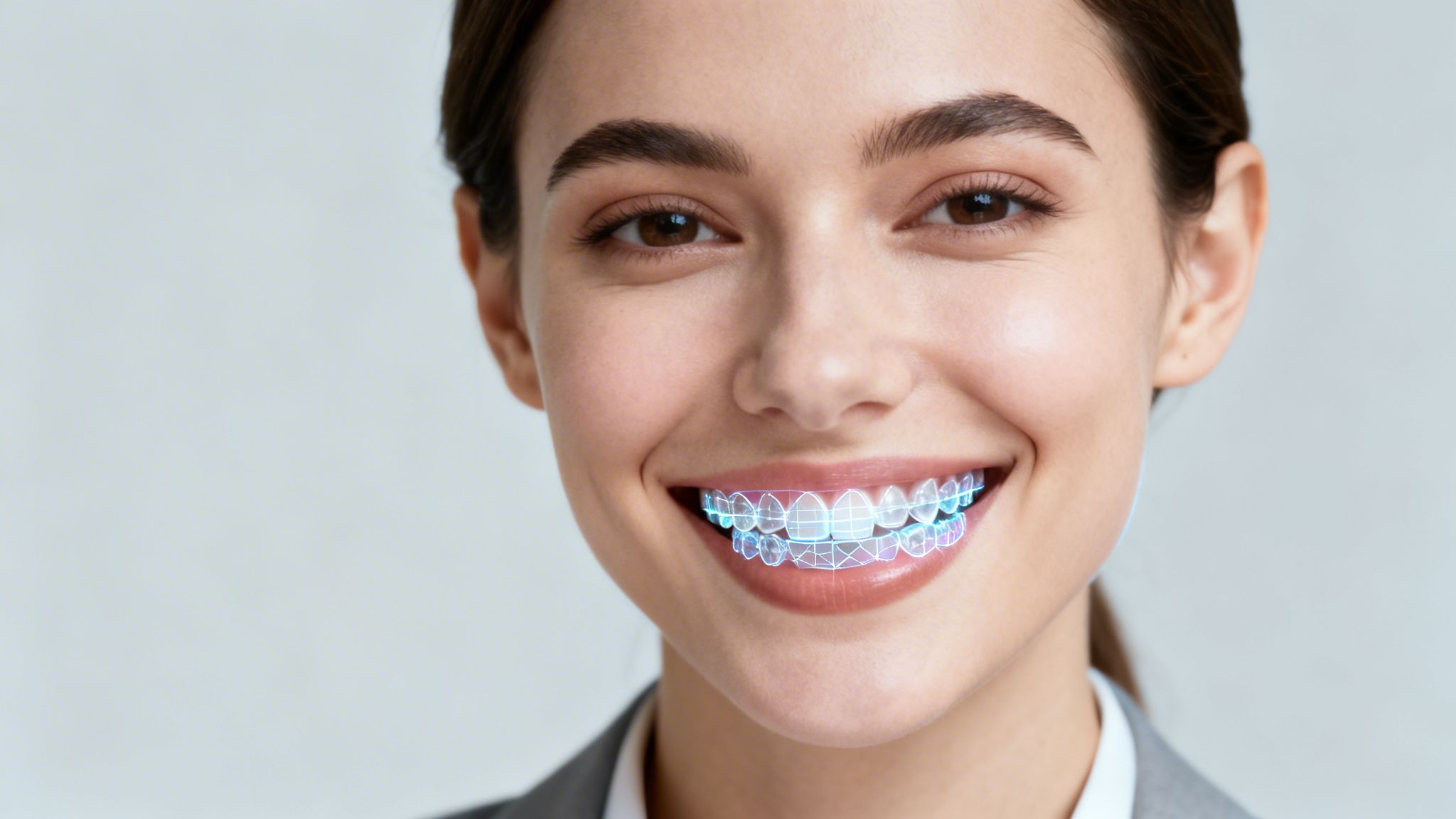
An early orthodontic exam is the first step toward preventing bigger, more complicated dental problems down the road. This check-up, which we recommend by age seven, gives our orthodontists a chance to spot and fix subtle issues with jaw growth and incoming teeth before they become serious.
Think of it as proactive care that can make future treatment much simpler. It often helps kids avoid needing tooth extractions or jaw surgery later in life.
Why an Orthodontic Exam by Age 7 Is a Game Changer
Many parents in Huntington Beach think about orthodontics when their kids hit their pre-teen or teenage years. While that's often when braces go on, the best time for a first look is much earlier. An exam by age seven isn't about rushing into braces; it’s a crucial opportunity to see how your child's jaw and teeth are developing.
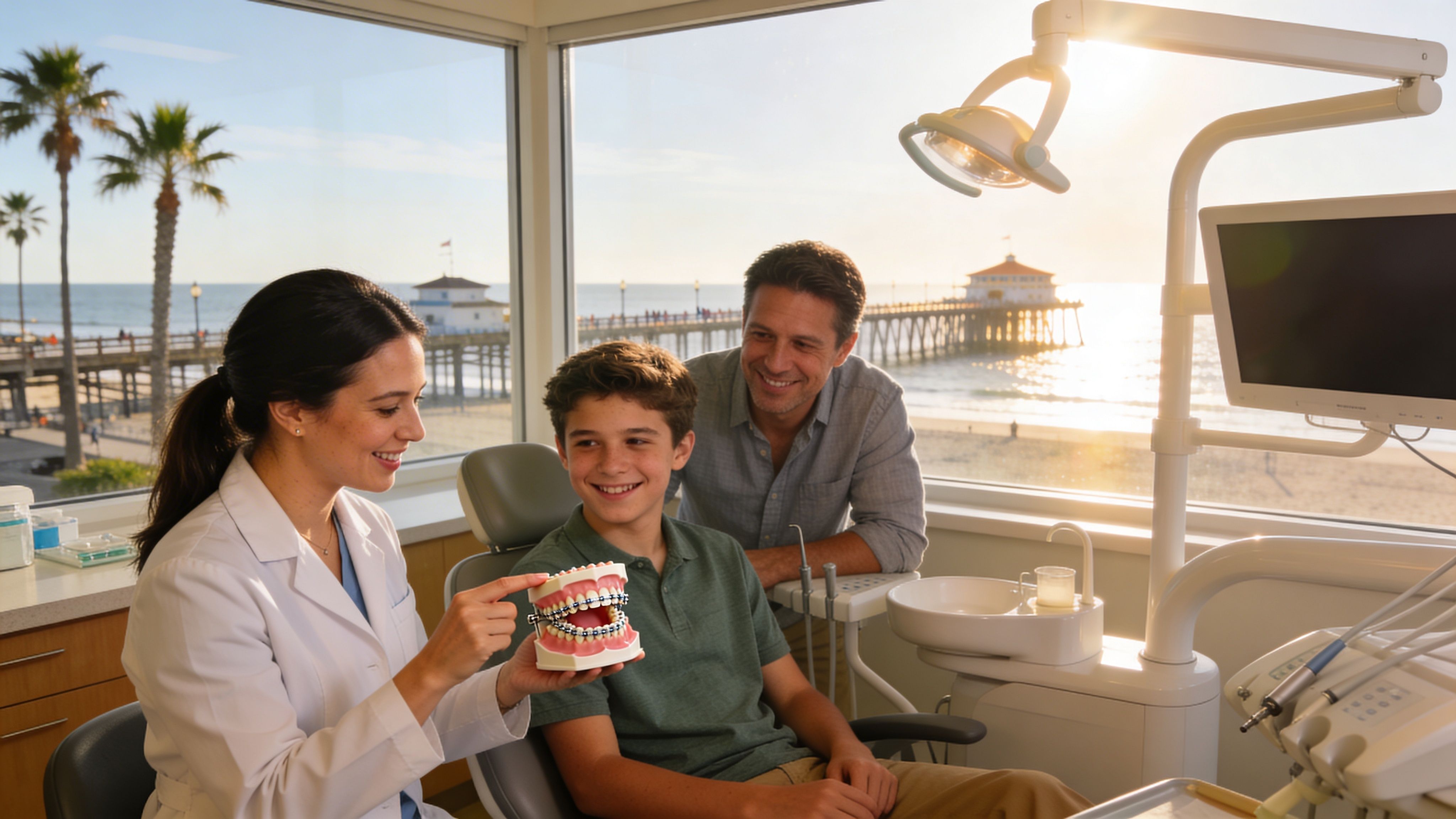
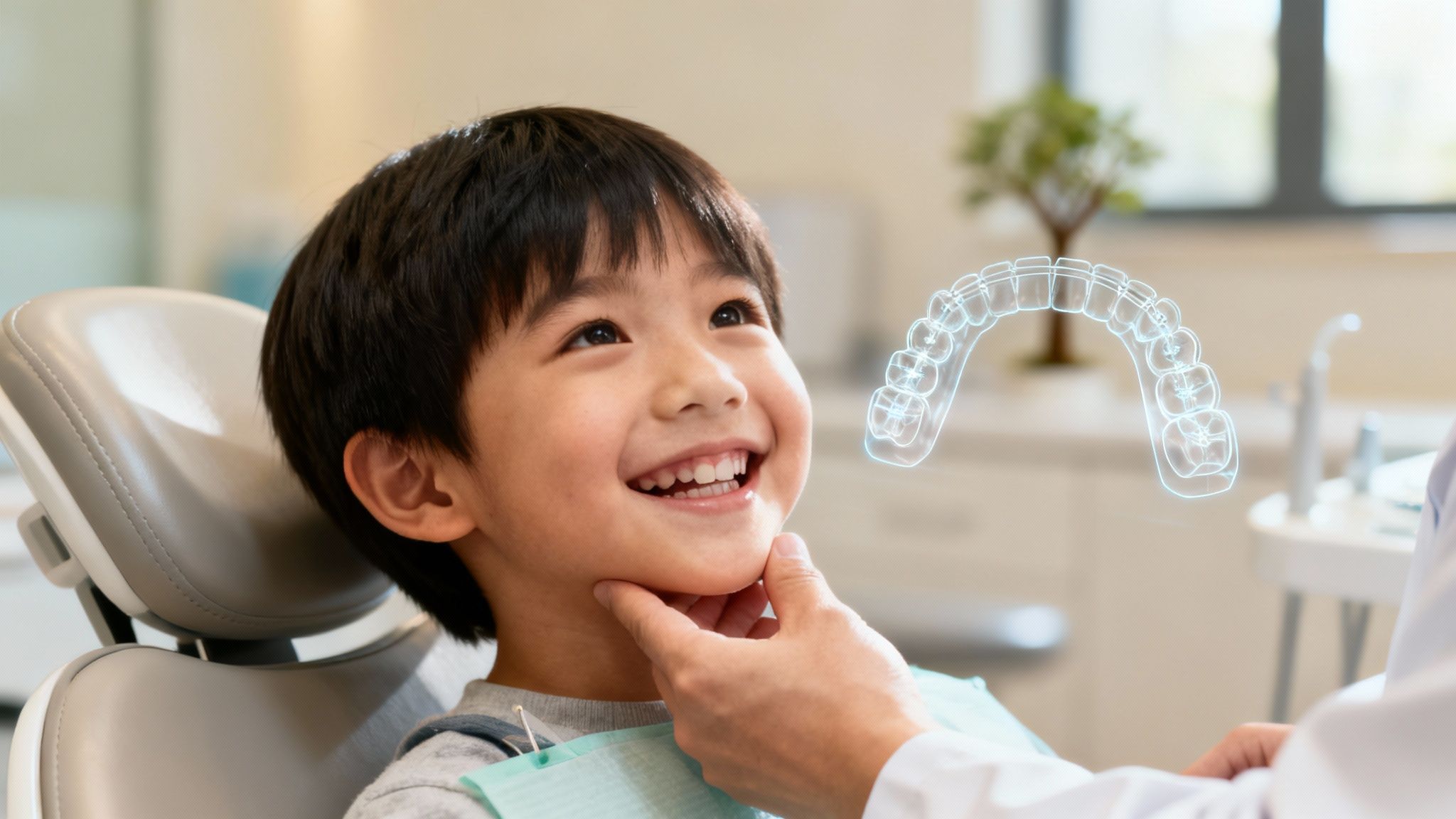
Imagine a gardener gently guiding a young tree to grow straight and strong—that’s exactly what an early check-up lets us do. At Magic Fox Orthodontics, Dr. Jeremy and Dr. Melissa can spot subtle issues with jaw growth, bite alignment, and how permanent teeth are coming in, creating a kid-friendly, welcoming environment while they do it.
The Myth of Waiting
There's a common misconception that you should wait until all baby teeth are gone. Recent data shows most parents believe the first visit should happen around age 9½, even though the American Association of Orthodontists (AAO) recommends a check-up by age seven.
That two-and-a-half-year gap can mean missing a critical window for simple, effective guidance. For more on this, you can check out our detailed parent's guide to early orthodontic checkups.
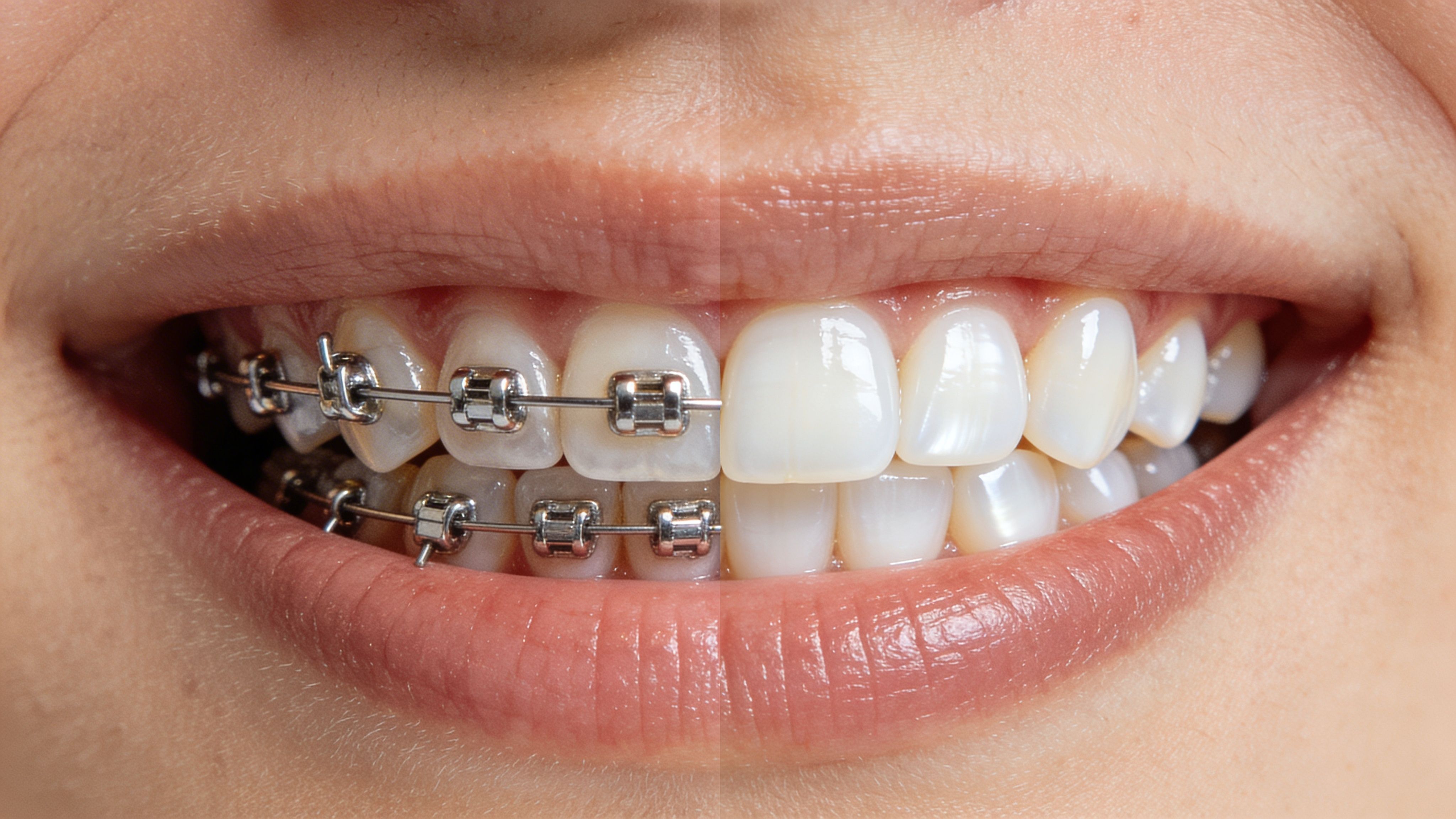
This quick visual breaks down the main benefits of an early exam, showing how it paves the way for gentler treatments while helping to sidestep more invasive procedures.
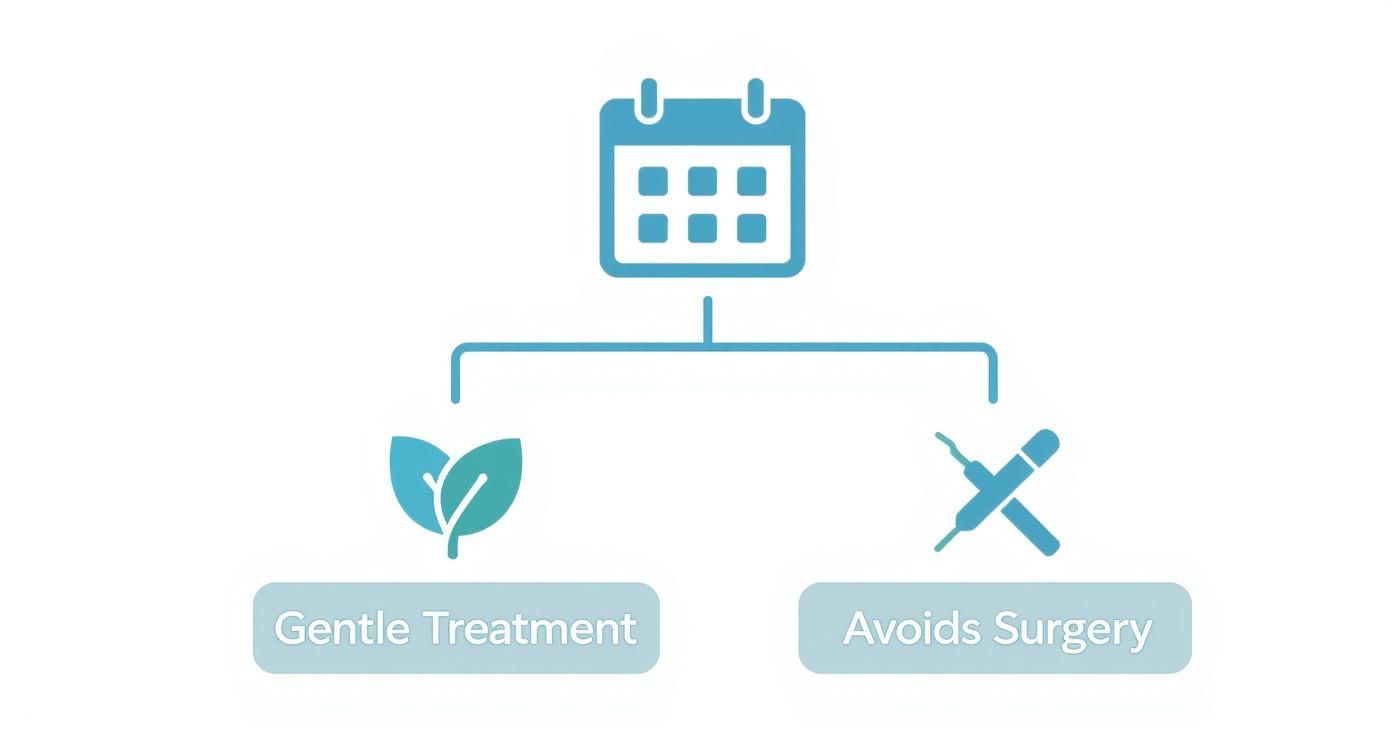
The key takeaway is that spotting things early gives us more options to guide your child's growth. This almost always makes any future treatment shorter, simpler, and more successful.
Early Exam vs Waiting: What It Means for Your Child
To make it crystal clear, let's look at the difference between getting an early look and taking a "wait and see" approach. The advantages of being proactive are significant.
This table shows how a simple check-up at age seven can completely change your child's orthodontic journey for the better.
Setting the Stage for Lifelong Health
This proactive approach is all about setting your child up for a lifetime of healthy, confident smiles. To really get why a specific age is so important, it helps to be familiar with your child's key developmental milestones.
An early visit gives families in Fountain Valley and Huntington Beach incredible peace of mind. You will know your child’s oral health is on the right track from the start.
Spotting the Signs Your Child May Need an Early Check-Up
As a parent, you have a front-row seat to your child's development. You are in the best position to notice the little things. While many orthodontic issues are brewing below the surface, certain signs can be a clear signal that it’s time for a professional evaluation at our Huntington Beach office.
Think of it like spotting a slight wobble in a bicycle wheel—catching it early prevents a much bigger problem. An early check-up is the best way to figure out if these little signs point to a developing issue that needs gentle guidance.
Common Physical and Habitual Signs
You absolutely don't need to be an orthodontic expert to spot potential concerns. Many of the earliest signs are tied to everyday actions, like how your child chews or breathes.
Here are a few key things to keep an eye on:
- Difficulty Chewing or Biting: If your child avoids certain foods or frequently bites their cheeks, their bite might not be lining up correctly.
- Mouth Breathing: Regularly breathing through the mouth, especially while sleeping, can influence how the face and jaw develop over time.
- Early or Late Loss of Baby Teeth: If baby teeth fall out too soon or hang on for too long, they can create spacing or crowding problems for the permanent teeth.
- Jaws that Shift or Make Sounds: Any clicking or popping in the jaw could point to an underlying issue with how the upper and lower jaws meet.
These symptoms are often the first signs of a malocclusion, which is just a fancy word for a misaligned bite. With the global prevalence of malocclusion in children around 56%, you can see why early exams are so critical. You can discover more insights about these findings on nature.com.
Visual Clues in Your Child's Smile
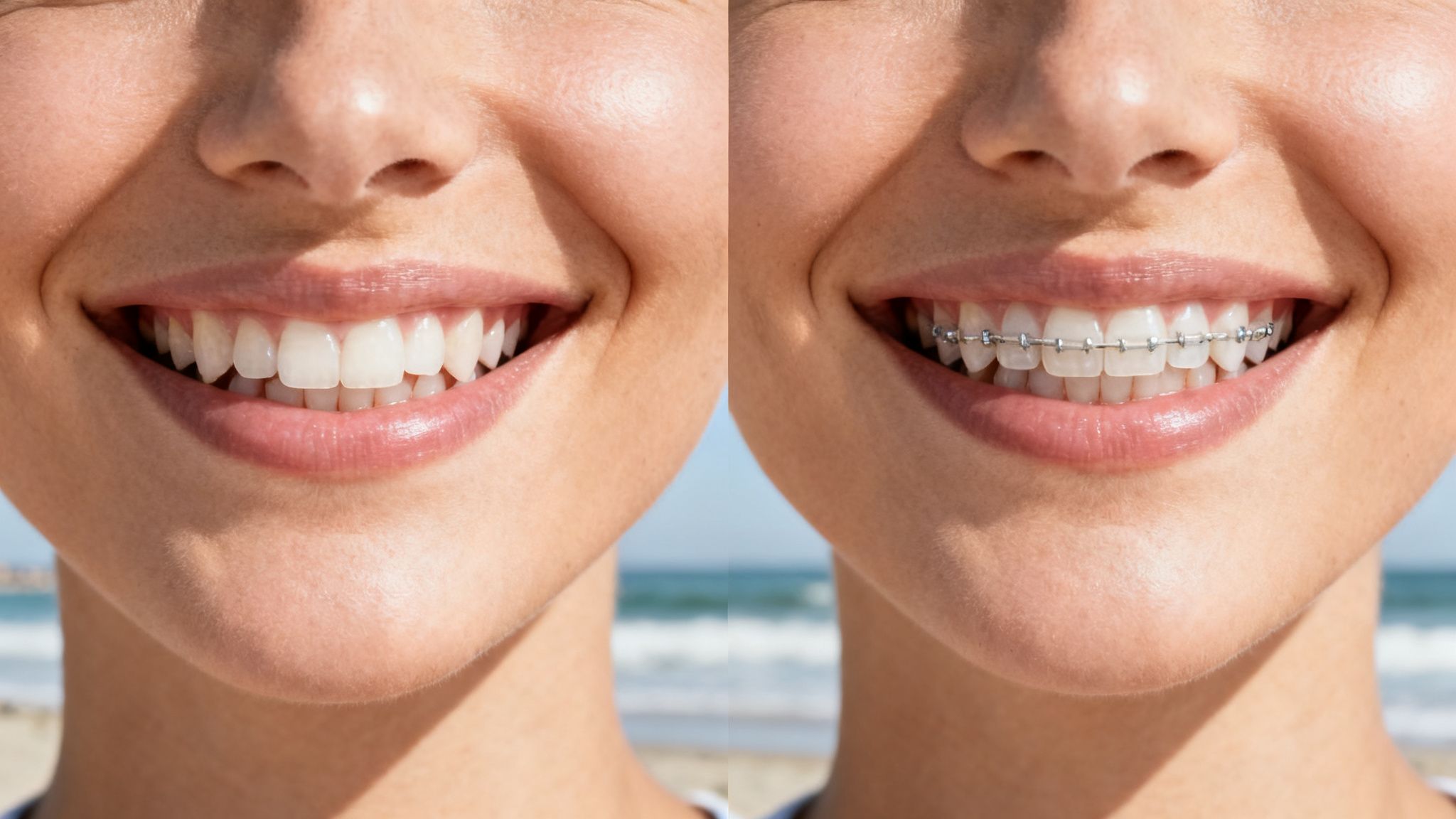
Sometimes, the clues are right there in plain sight when your child smiles or talks. You might notice something just by taking a quick look at their teeth.
A key part of how early braces exams prevent bigger problems is simply by identifying misalignment before it has a chance to permanently affect a child’s jaw growth.
Pay attention to these visual cues:
- Crowded, Misplaced, or Blocked-Out Teeth: This is one of the most obvious signs. It shows there isn't enough room in the jaw for all the permanent teeth.
- Teeth That Don't Meet Correctly (or at all): When your child bites down, do their top and bottom teeth fit together nicely, or is there a big gap?
- Protruding Teeth: Front teeth that stick out are more than a cosmetic issue. They are much more vulnerable to being chipped or broken during sports or play.
Noticing one or more of these signs doesn't mean your child needs braces tomorrow. It simply means a complimentary consultation is a really smart next step. For families in Goldenwest, Oak View, or anywhere in between, we can provide the clarity you're looking for. You can also explore our guide on the signs you need braces.
Common Problems We Can Solve With Early Treatment
An early orthodontic exam is all about getting ahead of the game. By spotting potential issues while your child is still growing, we can often solve them with simple, gentle treatments. This proactive approach helps us avoid more complex procedures down the road.
At Magic Fox Orthodontics, Dr. Jeremy and Dr. Melissa can catch subtle problems like a developing jaw misalignment or a tricky bite early on. Our goal is always to guide natural growth, not force it.
This early, or "interceptive," treatment is designed to tackle specific problems that could become much bigger if left alone. It’s a targeted game plan that sets the stage for a healthy, stable smile for life.
Correcting Bite and Jaw Issues
One of the biggest wins of an early exam is our ability to correct jaw and bite misalignments while the bones are still growing. Think of it like steering a boat; a tiny adjustment early on keeps it on course. Waiting too long requires a massive turn to get back on track.
Common problems we can address include:
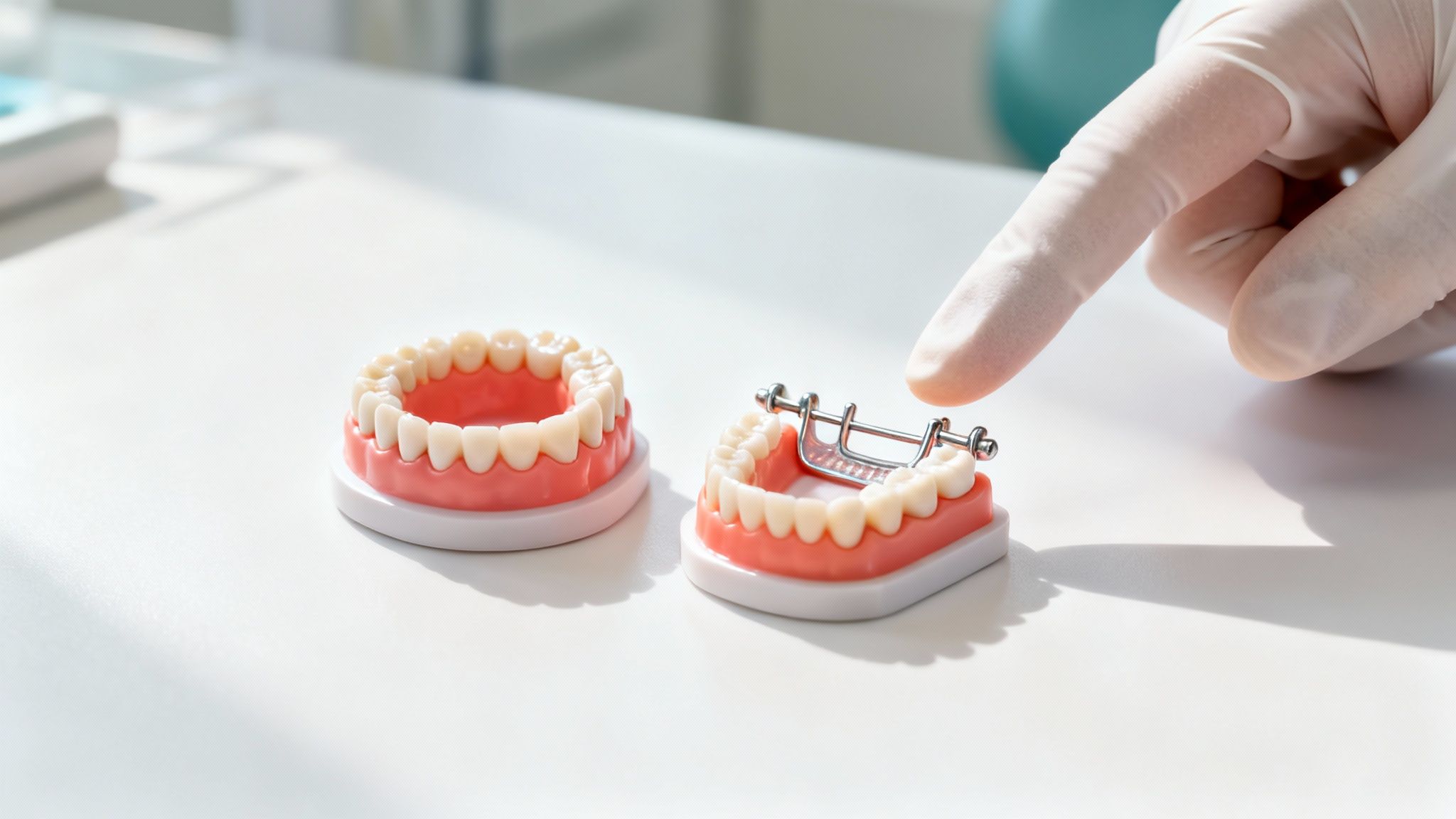
- Crossbites: This happens when the upper jaw is too narrow, causing some top teeth to bite inside the bottom teeth. A simple appliance can gently widen the upper jaw, creating a perfect fit.
- Severe Overbites: When the upper front teeth stick out too far (sometimes called "buck teeth"), they are at a higher risk of being broken. Early intervention can help guide the jaws into a more balanced relationship.
- Underbites: This is when the lower jaw grows out in front of the upper jaw. Guiding this growth at a young age can often prevent the need for corrective jaw surgery later in life.
Creating Space for Permanent Teeth
Another major focus of early treatment is making sure there’s enough room for all the adult teeth to come in. Overcrowding is one of the most common orthodontic issues we see.
Interceptive treatment is about making room, not just straightening teeth. By creating space, we give permanent teeth the best possible chance to erupt in their correct positions.
For instance, if a baby tooth is lost too early, we might use a simple device to hold that spot open. Our guide on what space maintainers are explains exactly how these work.
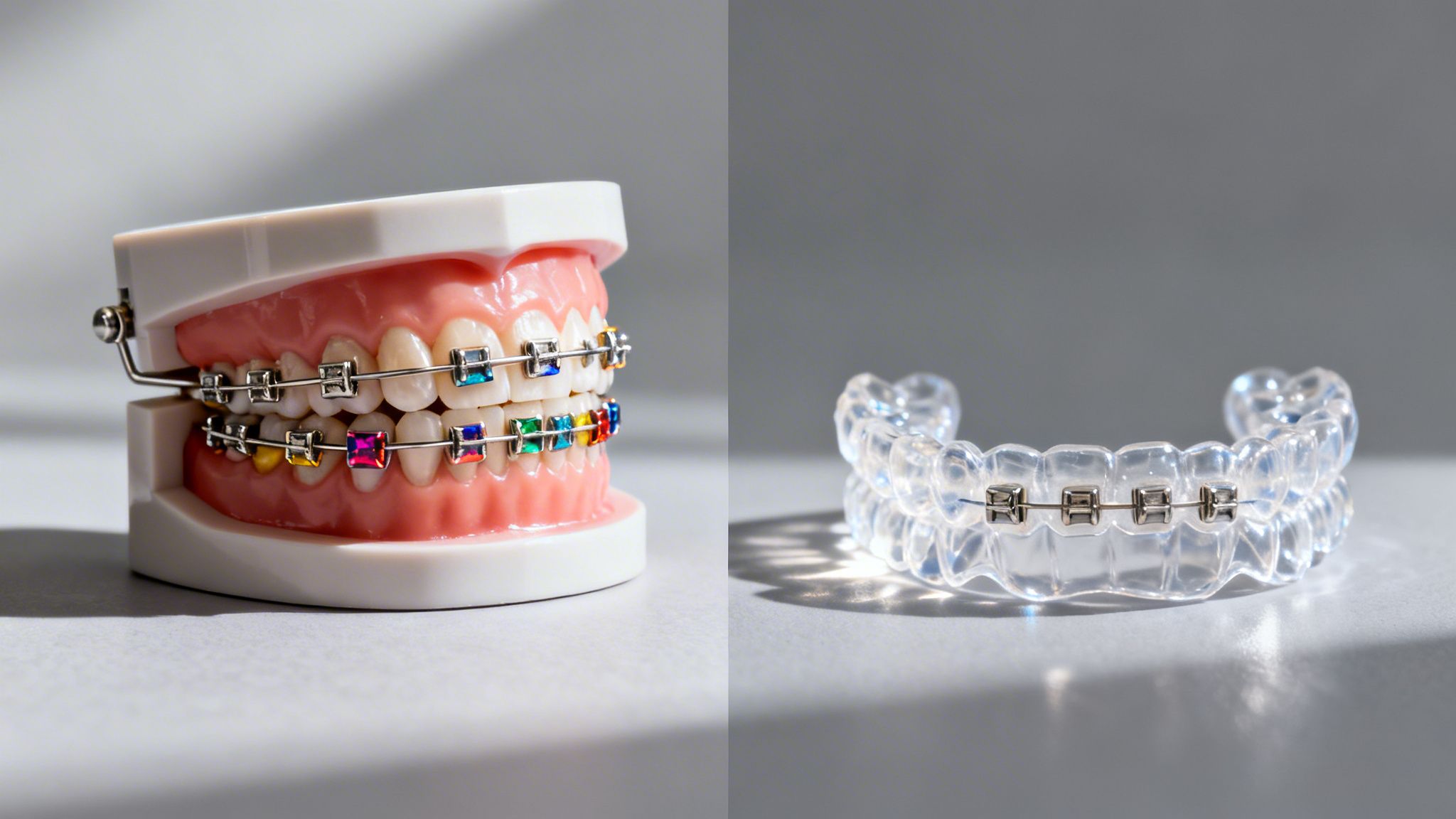
This kind of planning is exactly how early braces exams prevent bigger problems. For families in Huntington Beach and Fountain Valley, this means that future treatment with traditional braces or Invisalign is often shorter and less complex.
Understanding Interceptive Orthodontics
You may have heard your dentist mention “Phase 1” or “interceptive” orthodontics. What does that actually mean? Think of it less like a full set of braces and more like a focused, short-term treatment that uses your child's natural growth as a tool.
The goal here isn't to create a perfectly straight smile just yet. Instead, we’re intercepting specific, developing problems before they can turn into bigger ones. This early approach allows us to guide jaw growth and protect prominent front teeth from injury during play.
The Tools and the Purpose
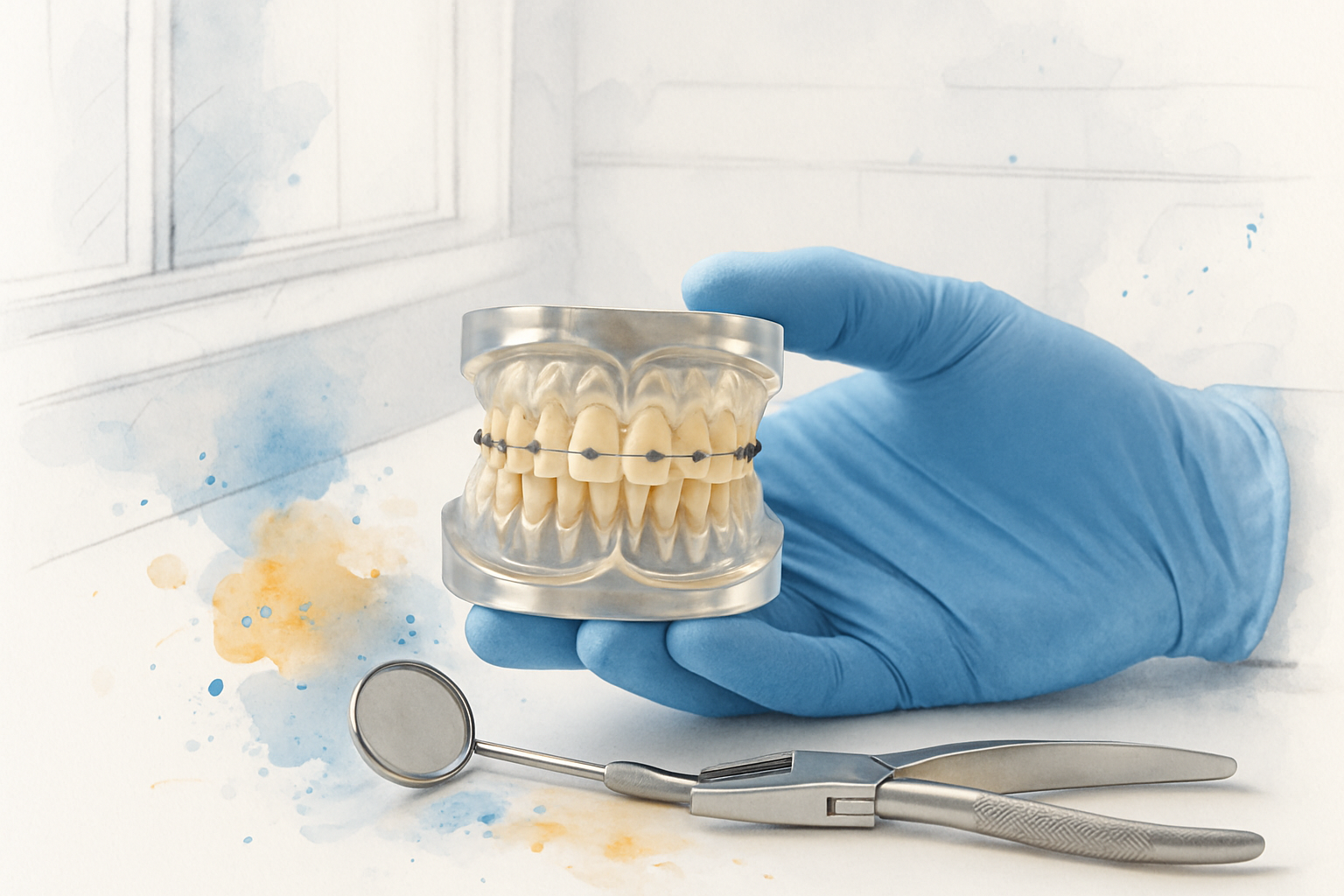
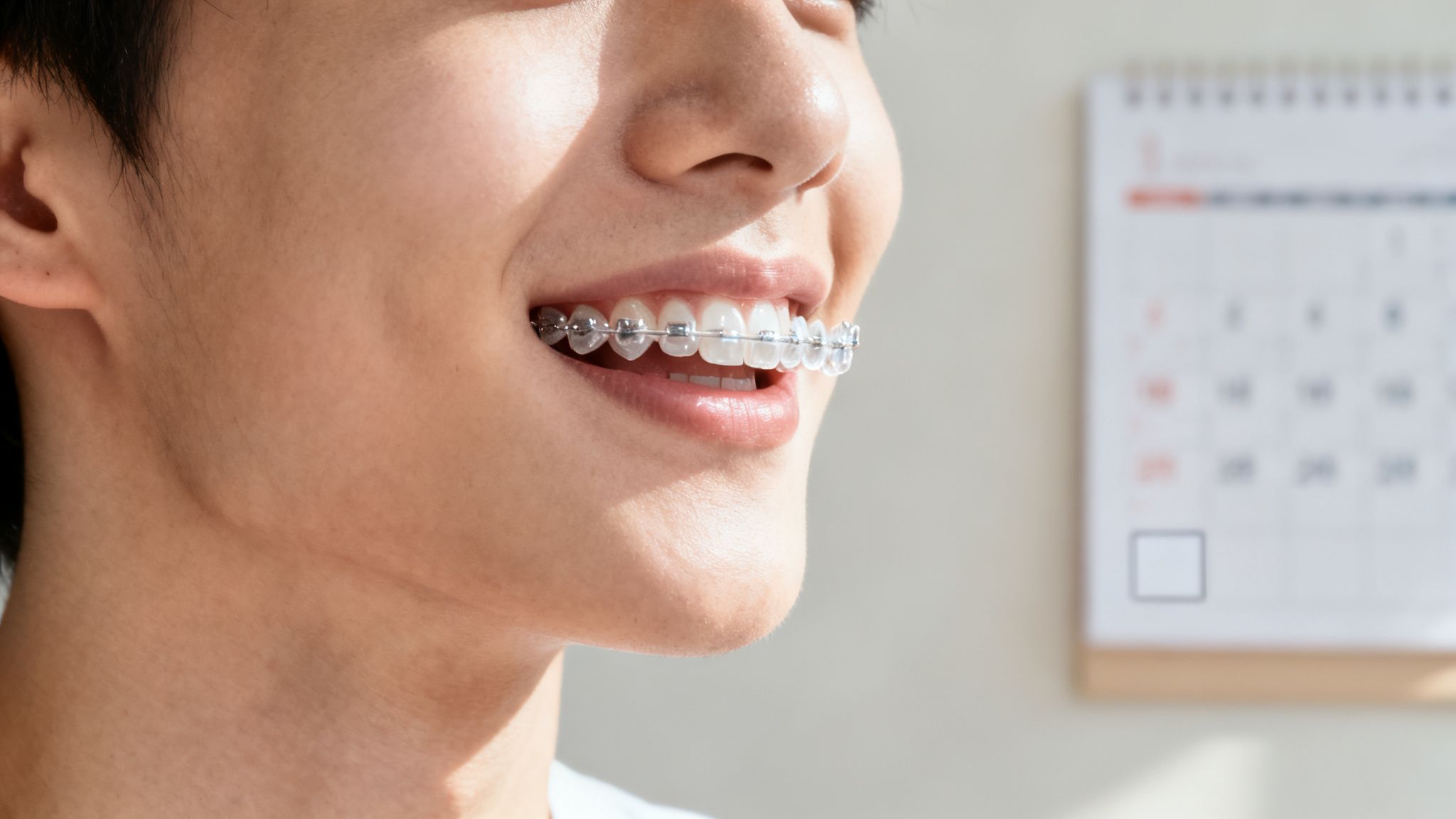
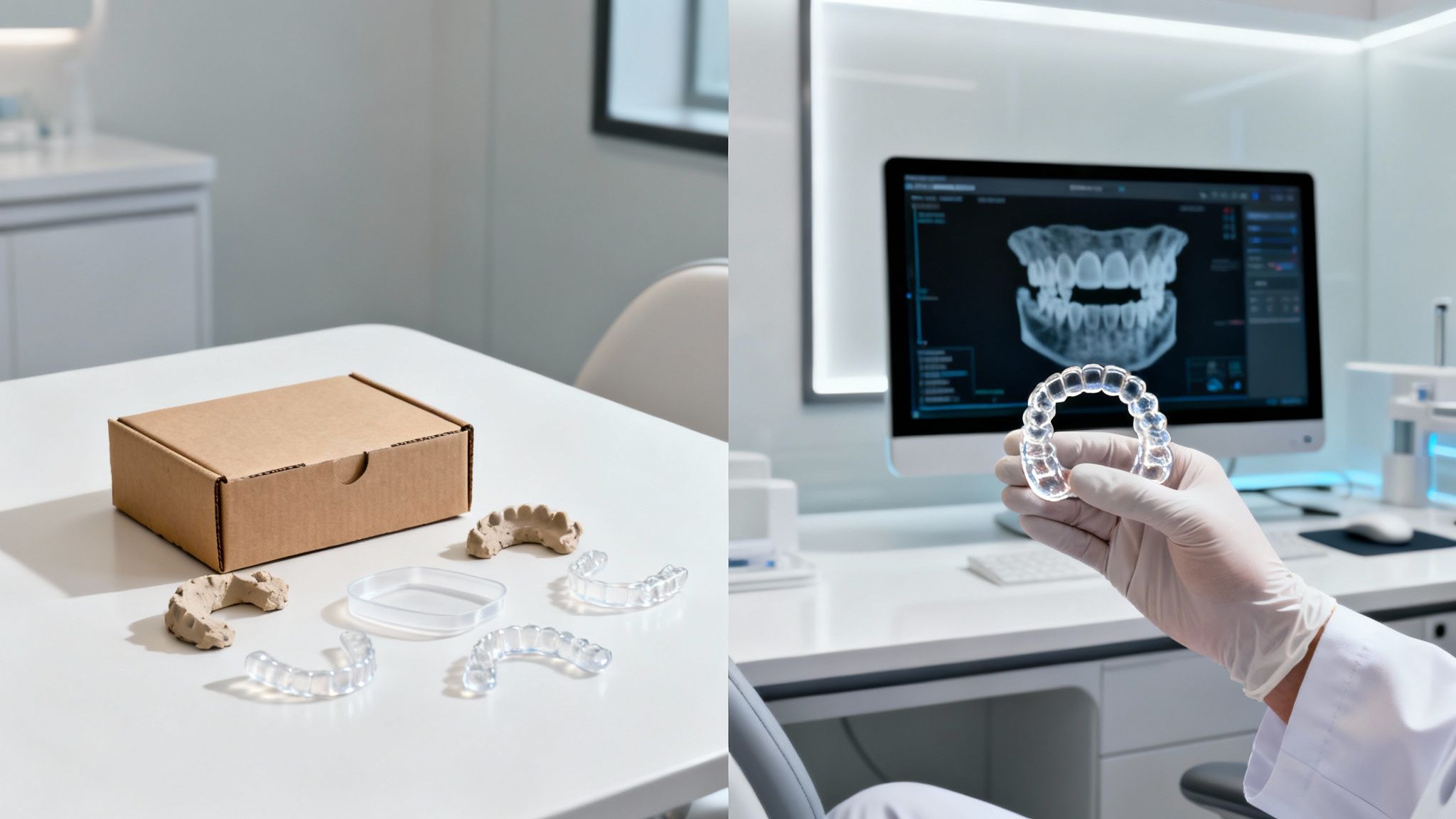
Interceptive orthodontics uses simple, effective appliances to get the job done. Depending on your child's needs, we might recommend a palate expander to widen the upper jaw or partial braces. At Magic Fox Orthodontics, we often use our beautiful Iconix esthetic brackets, which have a subtle, champagne-colored look kids love.
This early phase is designed to make any future orthodontic work—if it’s needed at all—much simpler. By creating space and correcting bite issues while the jaw is still growing, we can often shorten the time your child might need full braces or Invisalign later on.
"The primary purpose of interceptive orthodontics is to create a better environment for the permanent teeth to erupt into. It's about proactive guidance, not just reactive correction."
This preventative strategy has major long-term health benefits. Research shows that orthodontic treatment can lead to a 62.3% reduced likelihood of developing periodontal disease and a 92.9% reduced likelihood of needing tooth extractions in the future. You can read the full research about these orthodontic findings to see the data for yourself.
By addressing these issues during a critical growth window, we're taking a smart, preventive step. For families in Huntington Beach, understanding our approach to early interceptive orthodontics can provide real peace of mind.
Your Child’s First Visit at Magic Fox Orthodontics
Walking into a new doctor's office can feel a little intimidating, especially for a child. We get it. At Magic Fox Orthodontics, we’ve designed our complimentary consultations to completely remove that anxiety. Our goal is for every family, whether from Wintersburg or right here in Huntington Beach, to feel comfortable and informed.
That first visit is all about a positive introduction to orthodontics. There are no surprises or scary procedures. It's just a friendly, open conversation where we get to know you and your child.
What the Consultation Includes
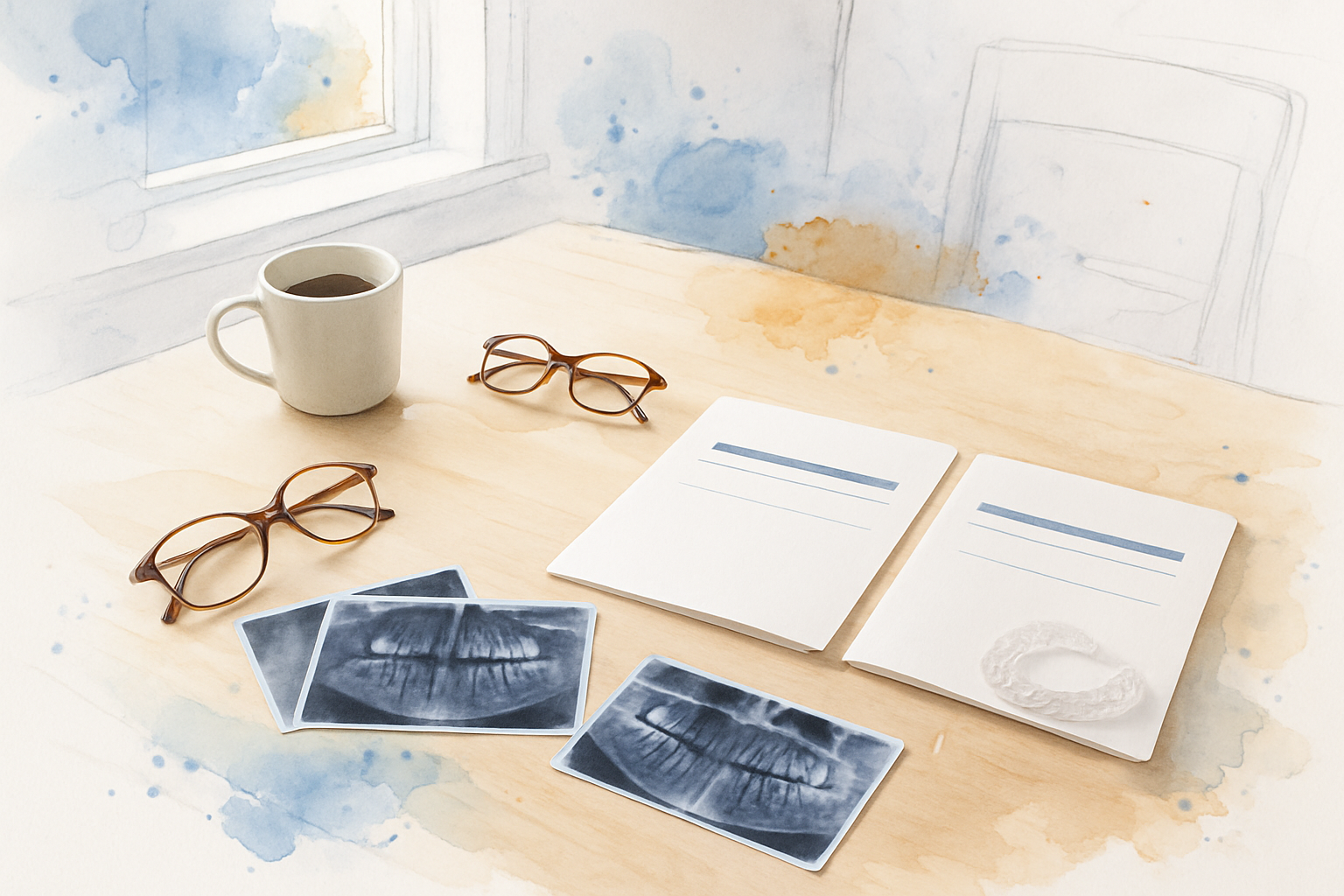
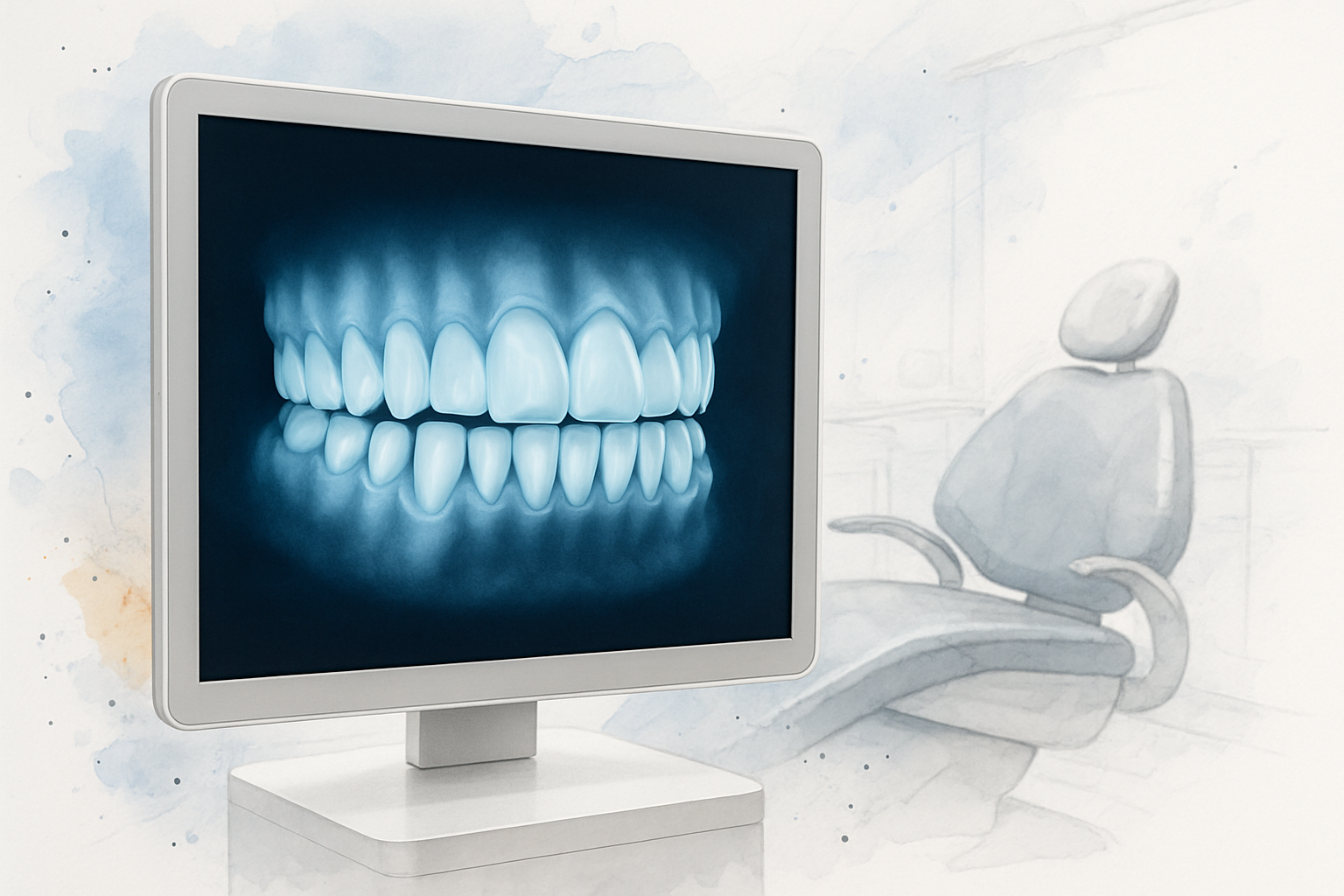
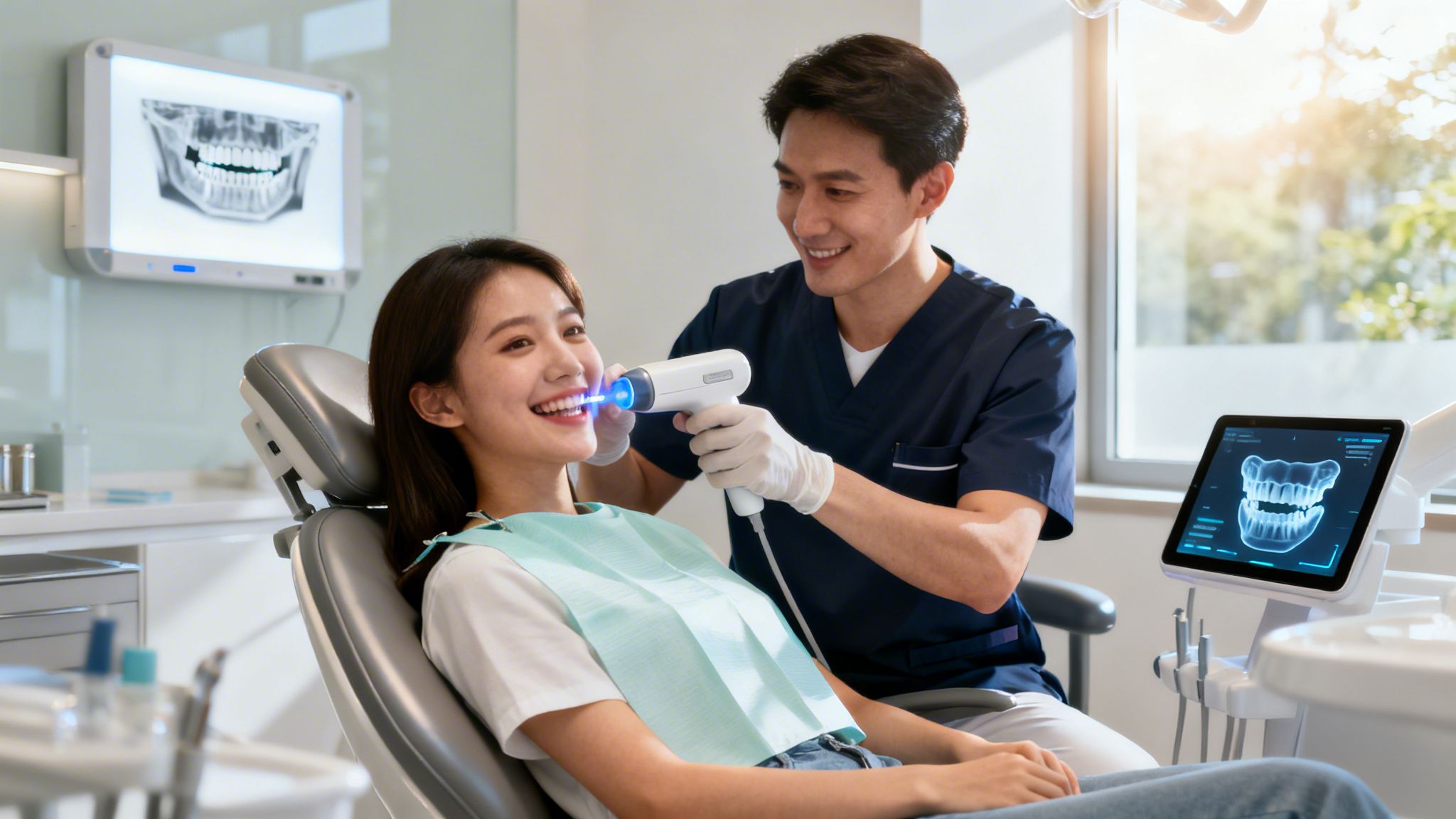
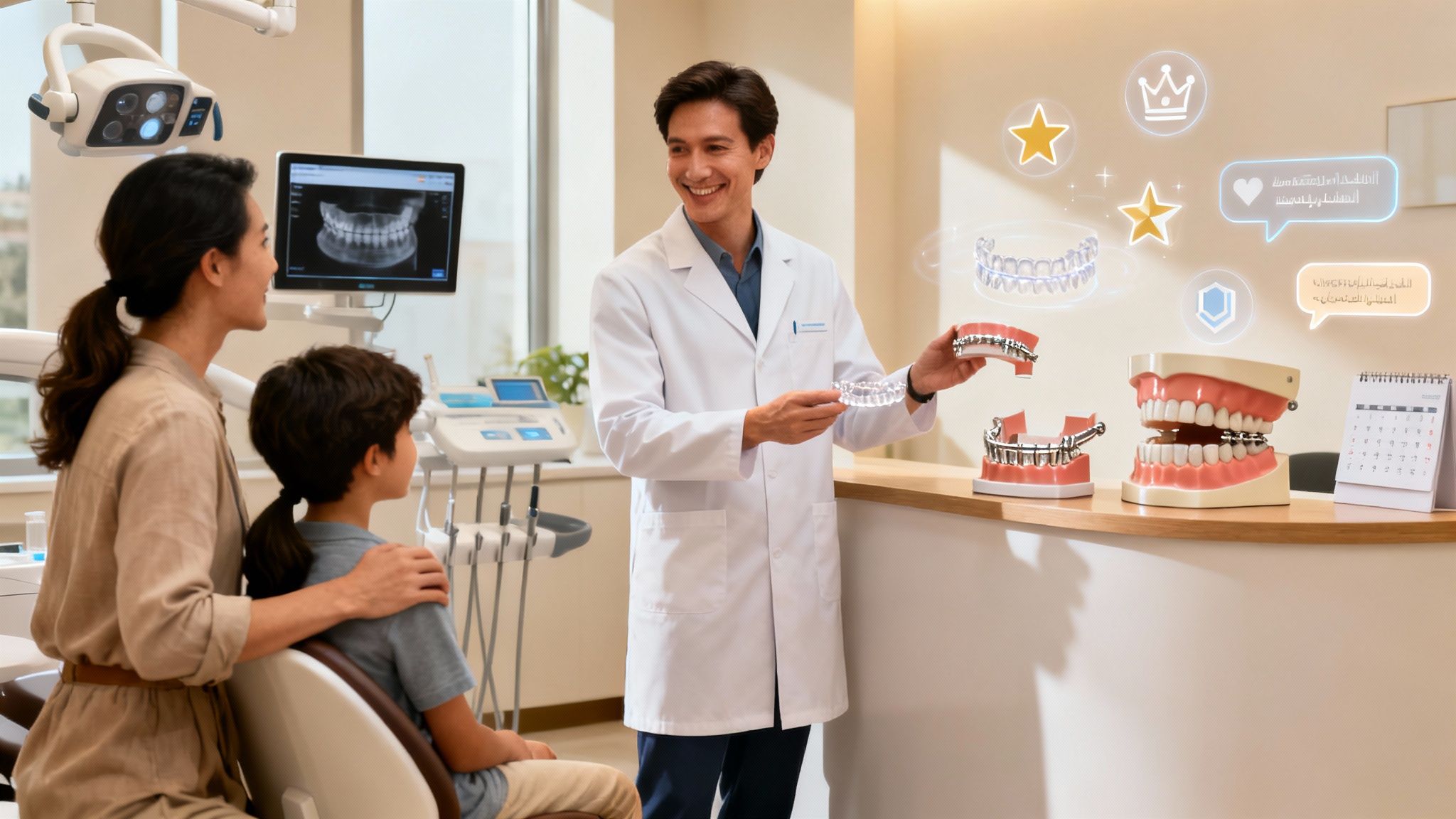
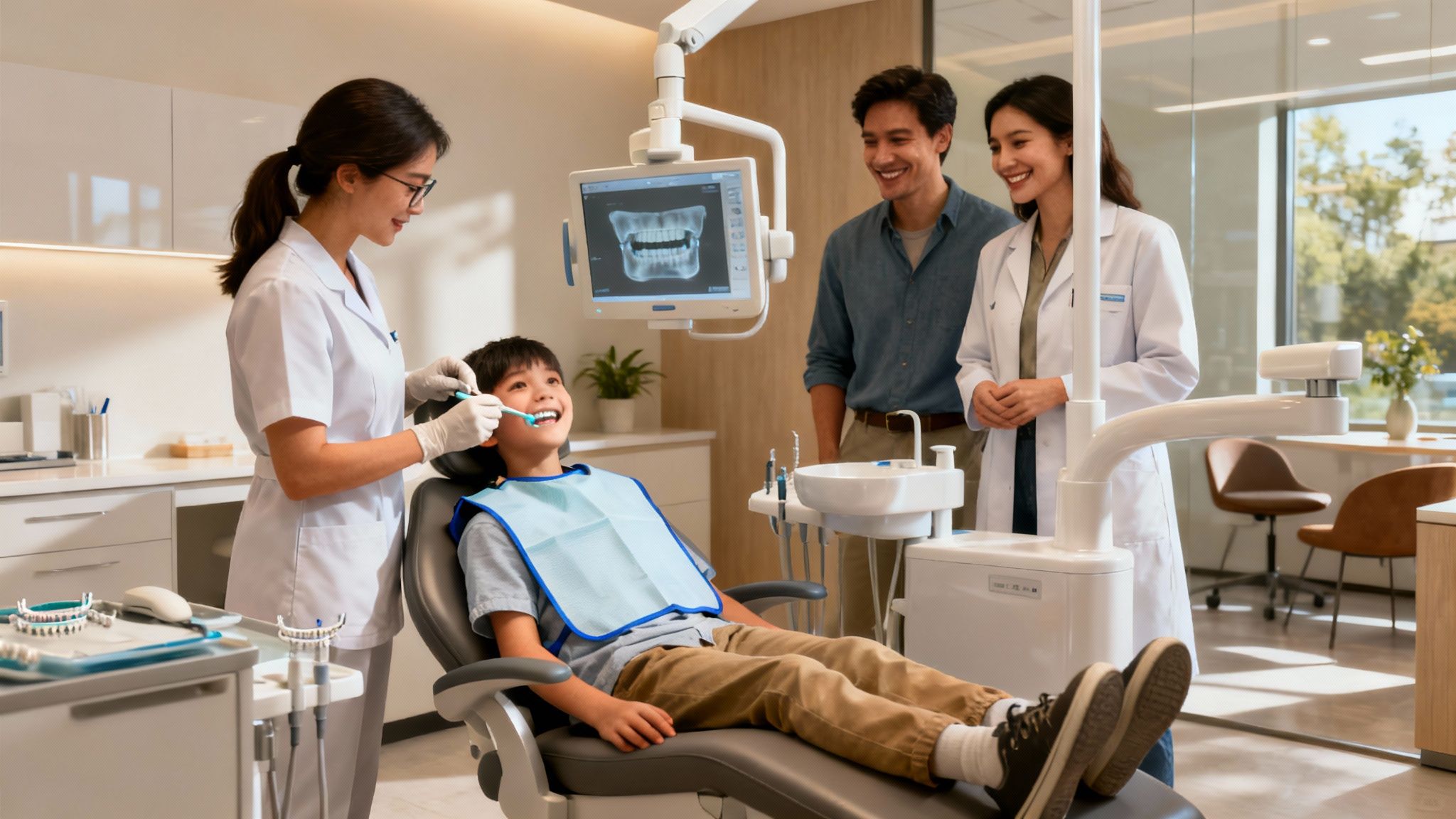
Your visit starts with a warm welcome. We’ll take some gentle, low-radiation digital X-rays and a few photos of your child’s teeth and jaw. This gives Dr. Jeremy or Dr. Melissa a clear picture of what’s happening.
After a quick look at the images, one of our doctors will perform a gentle exam. They’ll check your child’s bite, how the teeth are lining up, and how the jaw is developing. We take the time to explain everything we see in plain, easy-to-understand language.
Many parents believe orthodontic treatment is for the pre-teen years, but that can mean missing the crucial window for an evaluation by age seven. We’re passionate about closing this knowledge gap for families in Huntington Beach by providing clear, educational guidance.
A Focus on Conversation and Comfort
The most critical part of this first visit is the conversation. This is your chance to ask any and all questions you have. We want to hear every single one of your concerns.
Our goal is for your family to leave our Huntington Beach office feeling confident and empowered. We provide the information, but you make the decisions that are right for your child.
We’ll talk about whether treatment is needed now, or if it’s better to simply monitor your child’s growth. We’ll also walk through what the potential options would look like. If you'd like to get a head start, you can check out our helpful patient resources online.
This first step is exactly how early braces exams prevent bigger problems. It’s all about setting your child up for a lifetime of healthy, happy smiles.
Long-Term Benefits of a Proactive Approach
An early orthodontic exam is a powerful investment in your child's future health and self-esteem. When we take a proactive approach, we are preventing small issues from becoming major hurdles down the road.
A properly aligned smile isn't just about looking good; it's about functioning well. When teeth fit together correctly, it makes chewing more efficient and can even lead to clearer speech. Most importantly, straight teeth are easier to keep clean, which cuts down the long-term risk of cavities and gum disease.
Building Confidence and Wellness
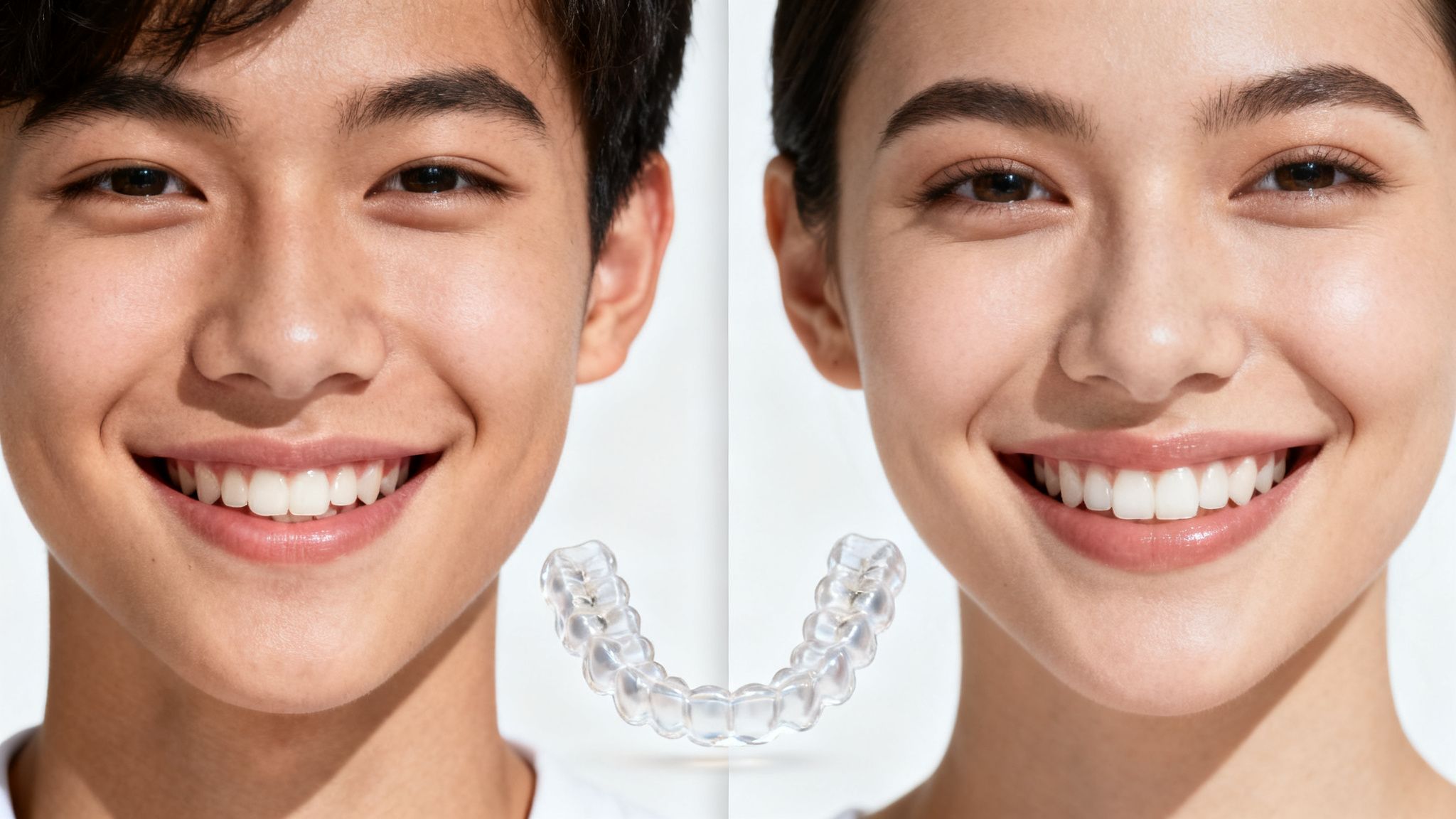
The benefits go far beyond physical health. A smile your child feels proud of can shape their social development and boost their confidence. When a child isn't self-conscious about their teeth, they're free to just be a kid—to smile, laugh, and engage without a second thought.
Taking action early doesn't just guide a child's smile—it helps build their confidence from the inside out, setting them up for a future of positive social interactions.
Just like early orthodontic care prevents bigger dental issues, developing strong problem-solving skills helps children navigate challenges in life. Investing in their smile is one of the most impactful ways to prepare them for a bright future.
For families here in the Huntington Beach area, giving your child the best possible start is simple. We invite you to schedule a complimentary consultation with Dr. Jeremy and Dr. Melissa. Together, we can create a proactive plan for your child's lasting health and confidence.
Frequently Asked Questions
We get it. The idea of orthodontics for your little one can bring up a lot of questions. Here are some straightforward answers to the things we hear most from parents in Huntington Beach and Fountain Valley.
Does an early exam mean my child gets braces right away?
Almost never. For most kids, this first visit is just a check-in to see how their jaw is growing and how their teeth are coming in. We only recommend starting "Phase 1" treatment if we spot a specific issue that would be much easier to fix now rather than later.
Is Phase 1 treatment uncomfortable for my child?
Modern orthodontic appliances are designed for comfort. While there might be some mild, temporary soreness as they get used to an appliance, it’s very manageable. We will walk you through tips to keep your child comfortable.
How long does this early treatment last?
Interceptive treatment, or Phase 1, is typically short and sweet, lasting about 9 to 12 months. The goal is to fix a specific, developing problem, like making room for crowded teeth. After that, we usually hit pause while the rest of their permanent teeth come in naturally.
What if we wait until all the adult teeth are in?
Waiting is an option, but for certain issues, it can make future treatment more complicated. One of the main reasons how early braces exams prevent bigger problems is that we can work with your child's natural growth. Once they stop growing, fixing some issues might require more involved procedures, like extracting permanent teeth.
Will my dental insurance cover an early evaluation?
Many dental plans offer coverage for orthodontic consultations and may help with the cost of Phase 1 treatment. Our team at Magic Fox Orthodontics is happy to check your specific benefits and help you get the most out of your coverage. We handle all the paperwork for you.
Ready to give your child the best possible start for a healthy, confident smile? Contact Magic Fox Orthodontics in Huntington Beach today to schedule your free consultation! You can book your appointment online at https://www.magicfoxsmiles.com.