A Parent's Guide to the Order of Losing Teeth
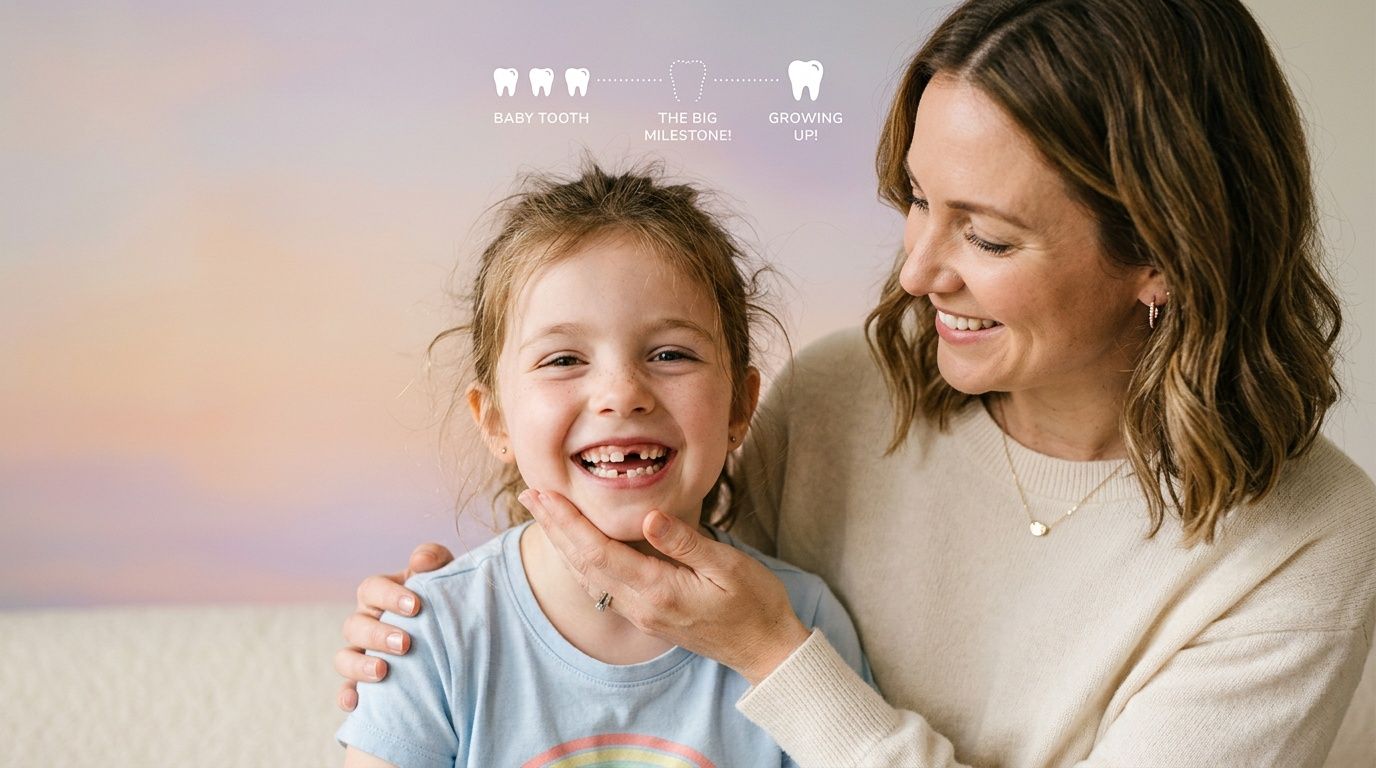
That first wiggly tooth is a huge deal for your child. It's a true rite of passage that is often filled with excitement and a lot of questions for you. Don't worry, you're not alone in wondering what comes next.
While every kid follows their own unique timeline, there's a surprisingly predictable pattern to how it all unfolds. Understanding this general sequence can turn your parental anxiety into confident reassurance.
The Typical Order of Tooth Loss
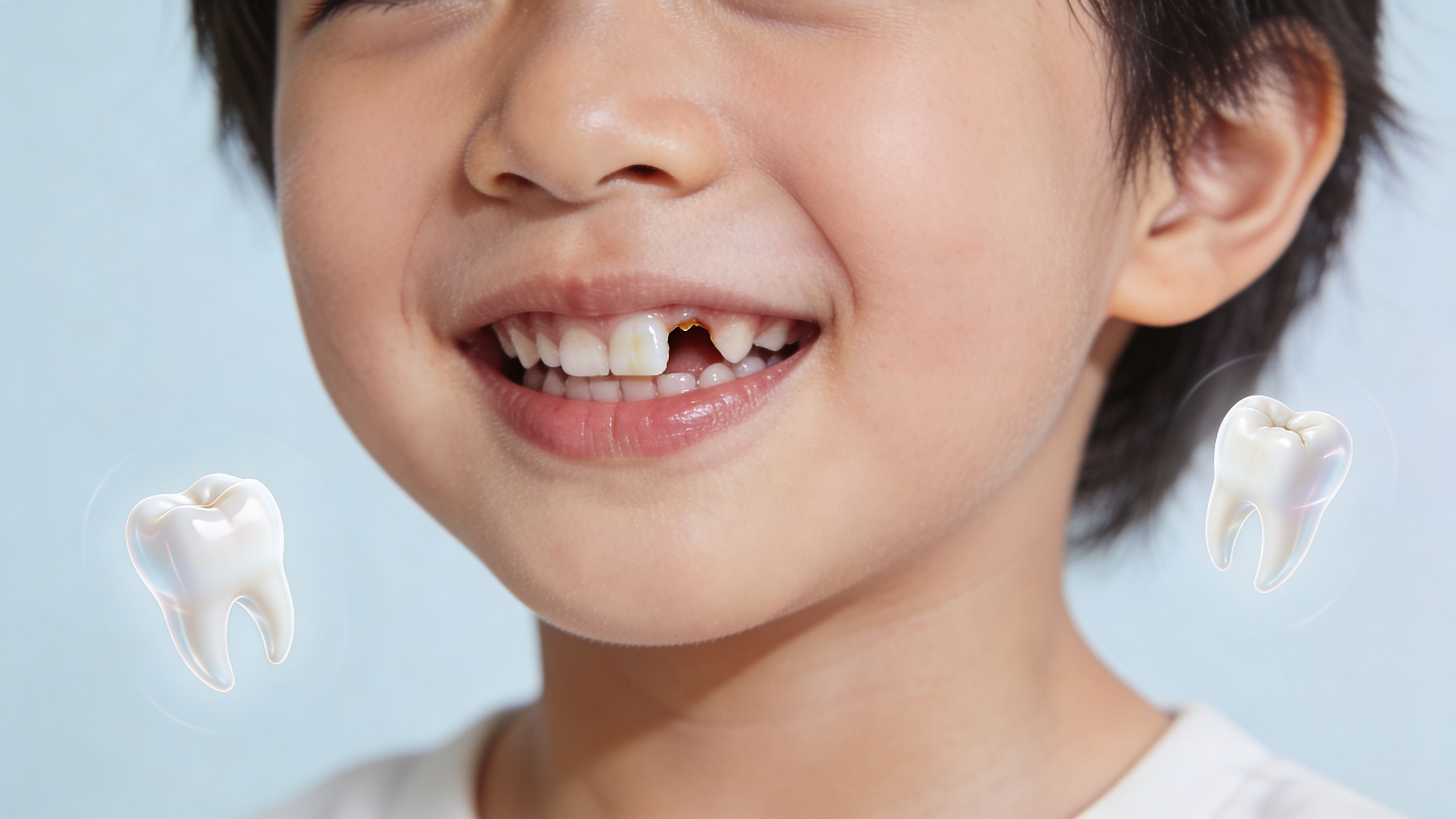
Think of losing baby teeth as a reverse replay of how they first came in. The process generally starts around age 6 with the two bottom front teeth (the central incisors). It usually wraps up by about age 12.
This whole experience is the perfect time for thinking about your child's long-term smile. It feels like just yesterday you were looking for the best teething baby chew toys for relief. Now, you’re trading teething rings for tooth fairy pillows.
Here’s what to keep in mind as this new chapter begins:
- A Predictable Pattern: Those first teeth in are almost always the first teeth out. It starts at the front and works its way to the back.
- Unique Timelines: It's completely normal for your child to be a little ahead of or behind the "average" schedule. No two kids are the same.
- Long-Term Health: This isn’t just about making room for permanent teeth. It’s the foundational stage for their future alignment and bite.
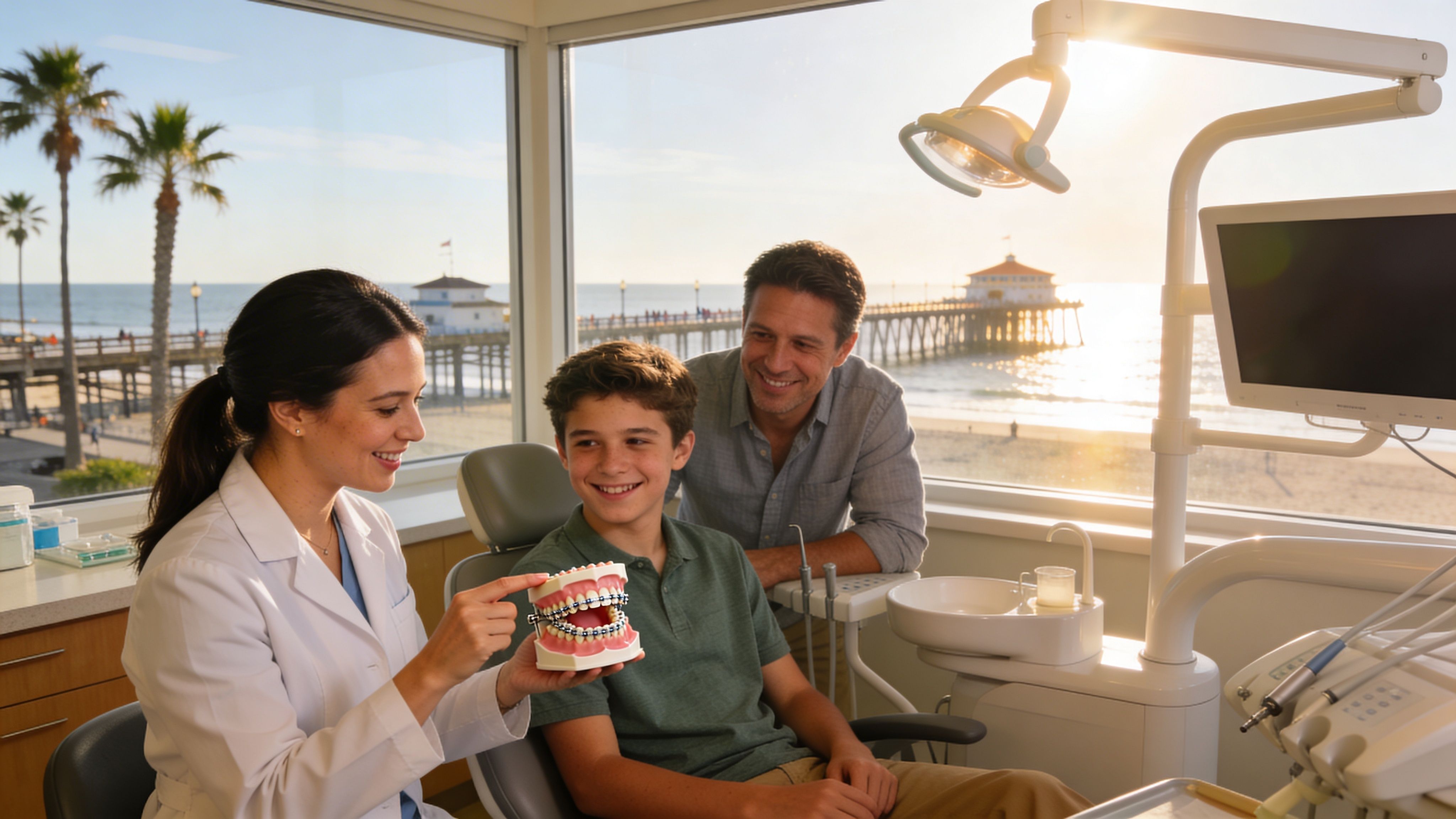
This transition is the ideal window to start thinking about their future smile. For our local families here in Huntington Beach, an early orthodontic check-up at Magic Fox Orthodontics is a simple way to make sure everything is on track. We can spot potential issues early and ensure your child is set for a healthy, confident smile for life.
Want a more detailed breakdown of the timeline? Check out our complete guide: When Do Baby Teeth Fall Out? A Parent's Guide.
The Typical Timeline for Losing Baby Teeth
The journey from a gummy grin to a full set of adult teeth follows a predictable path. For most kids, the process of losing all 20 baby teeth starts around age six and wraps up by age 12. Remember, though, that every child is a little different.
Understanding the typical order of losing teeth helps you know what to expect and when. Baby teeth tend to fall out in roughly the reverse order they first appeared. This natural process is important because it makes sure there’s enough room for the bigger permanent teeth to come in without crowding.
The Sequence of Tooth Loss
This dental milestone usually begins with the two bottom front teeth. From there, the process works its way toward the back of the mouth.
- Ages 6–7: The first to go are almost always the lower central incisors (the two bottom front teeth), followed by the upper central incisors.
- Ages 7–8: Next up are the lateral incisors, which are the teeth right next to the front ones, on both the top and bottom.
- Ages 9–11: The first molars, located further back in the mouth, begin to loosen and fall out.
- Ages 9–12: The pointed canine teeth (sometimes called cuspids) are next on the schedule to go.
- Ages 10–12: Finally, the second molars at the very back make their exit, completing the transition.
This timeline simplifies the key moments in your child's dental journey. It covers everything from teething to their first check-up and that exciting first wobbly tooth.
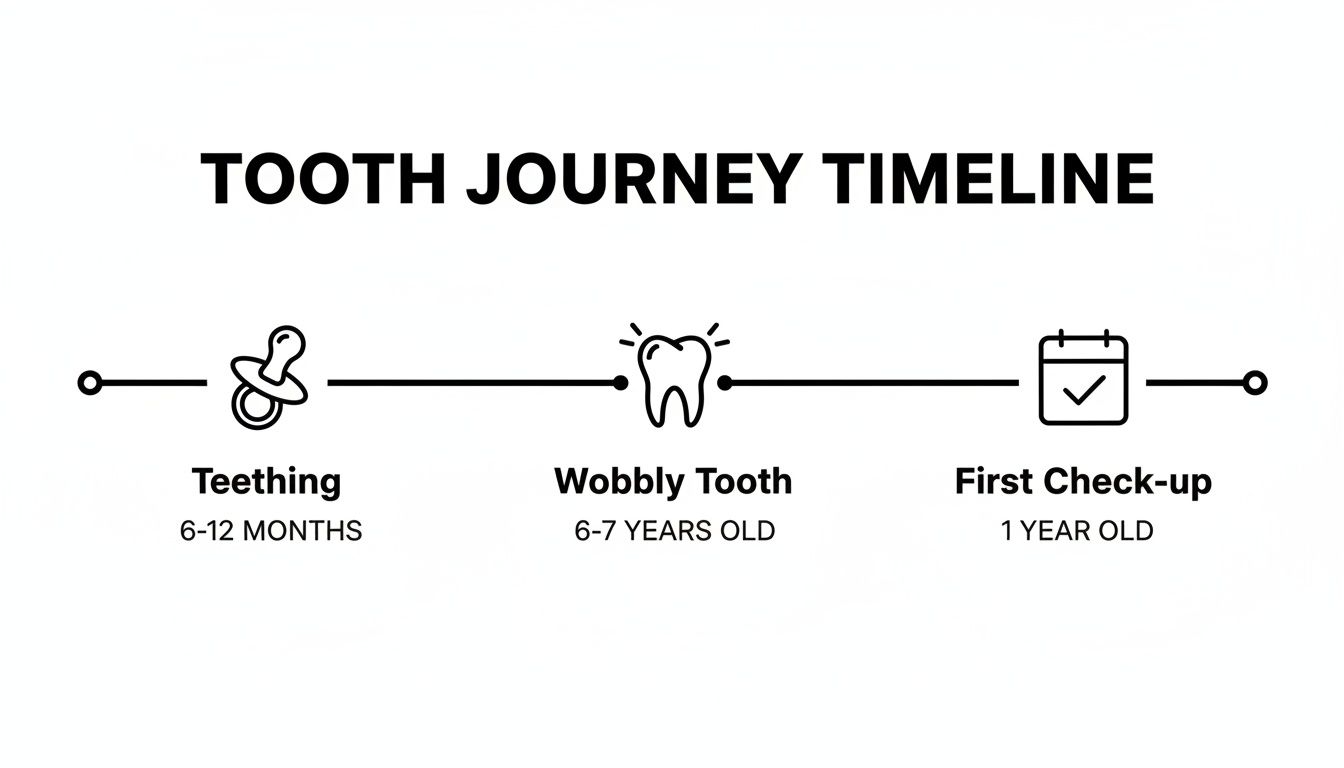
As you can see, losing teeth is a big milestone around age six, but the foundation for a healthy smile begins much earlier.
This predictable sequence is a critical part of dental development. It ensures that the jaw has enough space and that the permanent teeth are guided into their correct positions. By age 13, about 95% of children have lost all 20 of their primary teeth, making way for their adult smile. (Source: American Dental Association)
Keeping track of this timeline is helpful. Remember that every child's smile develops at its own unique pace. If you're curious, you can also read our guide on how many baby teeth kids actually lose.
When Your Child's Timeline Looks Different
What happens when your child’s tooth-loss timeline doesn’t quite match the charts you see online? It’s normal to worry, but take a breath. Those charts are a great roadmap, but slight detours are very common and usually nothing to be concerned about.
Just like with all childhood development milestones, every kid marches to the beat of their own drum. Genetics often plays a starring role here. If you or your partner were an early or late bloomer, there’s a good chance your child will be, too.
When Variations Might Signal a Problem
The main thing we look out for as orthodontic specialists are significant delays or premature losses. These can cause problems for the permanent teeth waiting to come in.
- Losing a Tooth Too Early: If a baby tooth is knocked out or lost to decay way ahead of schedule, the other teeth can drift into the open space. This can block the path for the permanent tooth underneath.
- A Baby Tooth That Won't Budge: On the other hand, if a baby tooth hangs on too long, it can force the incoming permanent tooth to erupt at a weird angle.
Each baby tooth is a natural placeholder, saving a spot for the adult tooth that will follow. When you lose that placeholder too soon, things can get disorganized fast.
This is exactly why an early orthodontic evaluation is so valuable for families in communities like Oak View and Goldenwest. We can spot these potential problems early. You can learn more about space maintainers in our guide.
How to Care for Gaps and New Adult Teeth
As your child’s smile starts to change, their oral care routine needs to evolve, too. This phase of gaps and new teeth is a crucial time to focus on dental health. You want to make sure those brand-new permanent teeth get the best possible start in life.
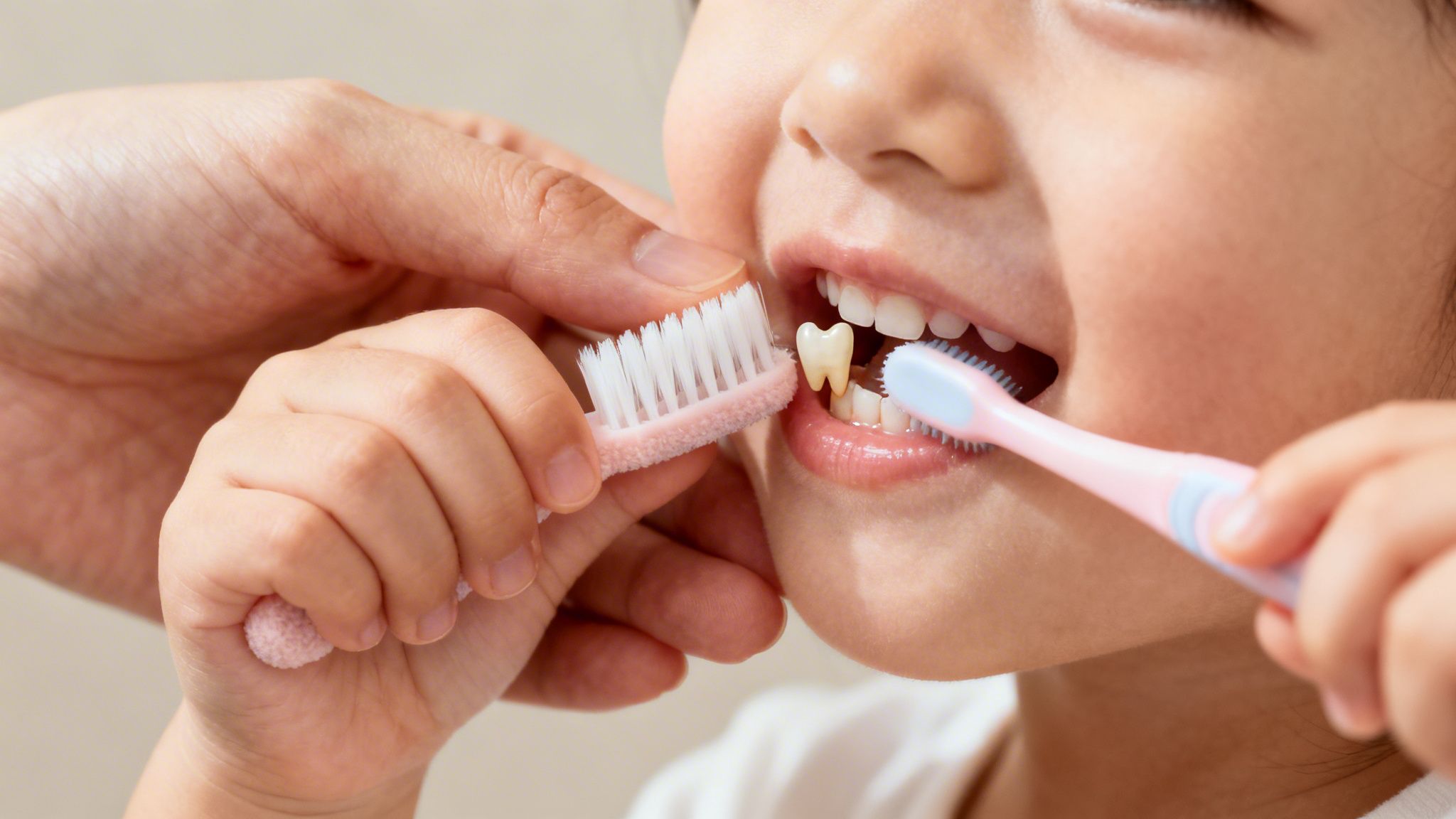
Don't worry, managing this transition is simpler than it sounds. A little gentle encouragement and consistent habits are all it takes to keep your kid comfortable and their grin healthy.
Handling Wiggly Teeth and Sore Gums
When a tooth gets really wiggly, it's best to let nature take its course. Letting your child gently wiggle it with their tongue or a clean finger is perfectly fine. Forceful pulling, on the other hand, can damage the sensitive gum tissue.
If a new tooth breaking through is causing some soreness, soft foods will be your best friend. Think smoothies, yogurt, or mashed potatoes. These can soothe tender gums while making sure your child is still getting the nutrition they need.
A newly erupted permanent tooth has enamel that isn't fully hardened yet. This makes it more vulnerable to cavities for the first few months.
Brushing and Flossing New Smiles
As the order of losing teeth continues, keeping up with great hygiene is vital. Those new gaps can easily trap food, and the permanent teeth peeking through need diligent cleaning.
- Brush Gently, Brush Well: Grab a soft-bristled toothbrush and a pea-sized dab of fluoride toothpaste. Use small, gentle circles to clean around the gaps and each new tooth.
- Don't Forget to Floss: Flossing is more important than ever. Show your child how to carefully guide the floss around their new, bigger teeth.
For a deeper dive into building a healthy mouth, check out our guide on how to improve dental health.
Why An Orthodontic Check-Up By Age 7 Is Key
As your child navigates that charmingly mixed-up smile phase, it opens the perfect window for a first orthodontic visit. The American Association of Orthodontists recommends a check-up by age 7. This early evaluation gives us a crucial look at how the jaw is growing and how the permanent teeth are lining up.

For families here in Huntington Beach and Fountain Valley, this first visit is a simple, stress-free way to get ahead of the game. It’s not about putting braces on right away. It's about foresight and smart planning.
What We Look For in an Early Evaluation
During this initial check-up, we look for subtle signs of developing issues that are much easier to manage now than in the teen years. We are checking to make sure the teeth, jaw, and face are all developing in harmony.
Here are a few key things we evaluate:
- Crowding and Spacing: Is there enough room for all the permanent teeth to come in straight?
- Bite Problems: We check for developing issues like crossbites or open bites. Malocclusion, or a misaligned bite, can interfere with proper jaw growth.
- Irregular Tooth Loss: We'll notice if the order of losing teeth is significantly off-track, which can sometimes signal a problem.
This proactive approach is often called interceptive orthodontics. It means we can use simple treatments now to guide jaw growth and prevent more complex issues later. Addressing concerns early often leads to shorter treatment times and better long-term results.
An early orthodontic check-up is like a sneak peek into your child's future smile. It gives us the power to guide development gently. To learn more about this important milestone, read our guide on why age 7 matters for a first orthodontic check-up.
Frequently Asked Questions
As your child's smile starts to change, you probably have a lot of questions. We hear many of the same great questions from parents all over Huntington Beach. Here are the answers to the most common ones.
Is It Okay for My Child to Wiggle a Loose Tooth?
Absolutely! Wiggling a loose tooth with a clean finger or their tongue is a natural and helpful part of the process. This gentle motion helps the root dissolve, making it easier for the tooth to fall out on its own. Just make sure to discourage any aggressive twisting or pulling that could hurt their gums.
What if a Permanent Tooth Comes in Behind a Baby Tooth?
Don't panic—this is very common! We call this "shark teeth," and it just means the permanent tooth erupted before the baby tooth was ready to leave. In most cases, the baby tooth will fall out on its own within a few weeks. If it hangs on for more than two months, give us a call at Magic Fox Orthodontics.
Why Do New Adult Teeth Look So Big and Yellow?
This is another classic parent concern, but it’s completely normal. Permanent teeth look bigger because they’re sized for an adult jaw, not a small child's jaw. They also have more dentin—the layer under the enamel—which has a natural yellowish tint that shows through the more translucent enamel.
My Child Lost a Tooth in an Accident. What Should We Do?
If a baby tooth gets knocked out too early because of an injury, you should see a dental professional right away. An orthodontist can determine if a space maintainer is needed. This simple appliance holds the empty space open and prevents other teeth from drifting into the gap.
When Should My Child Have Their First Orthodontist Visit?
The American Association of Orthodontists recommends a child's first check-up with an orthodontist around age 7. It’s not about getting braces right away! It’s about letting a specialist spot subtle issues with jaw growth or the order of losing teeth while your child is still developing.
Ready to transform your smile? Contact Magic Fox Orthodontics in Huntington Beach today to schedule your free consultation! Visit us at https://www.magicfoxsmiles.com.