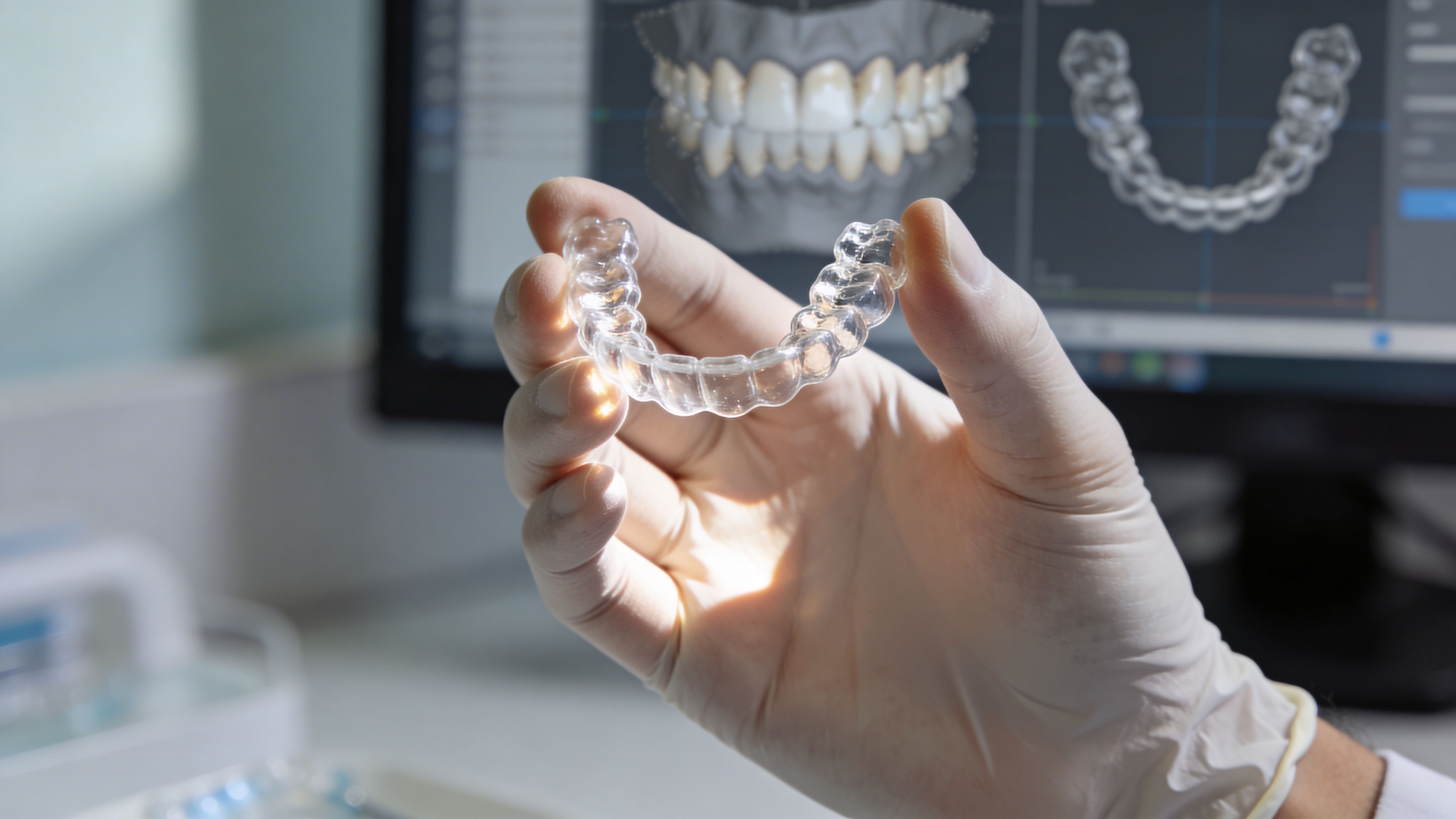
How Do Clear Aligners Work for a Straighter Smile?
Quick Answer
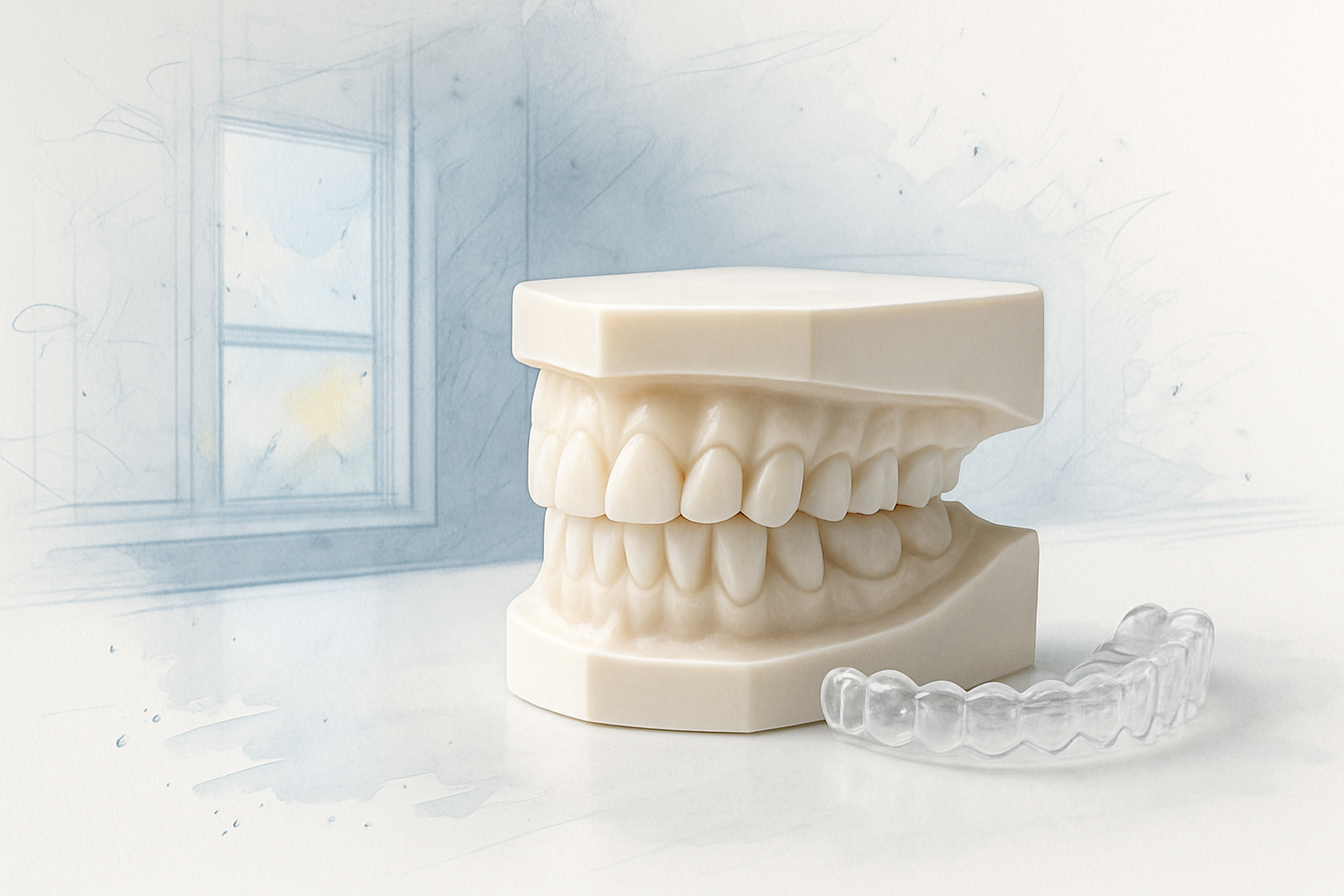
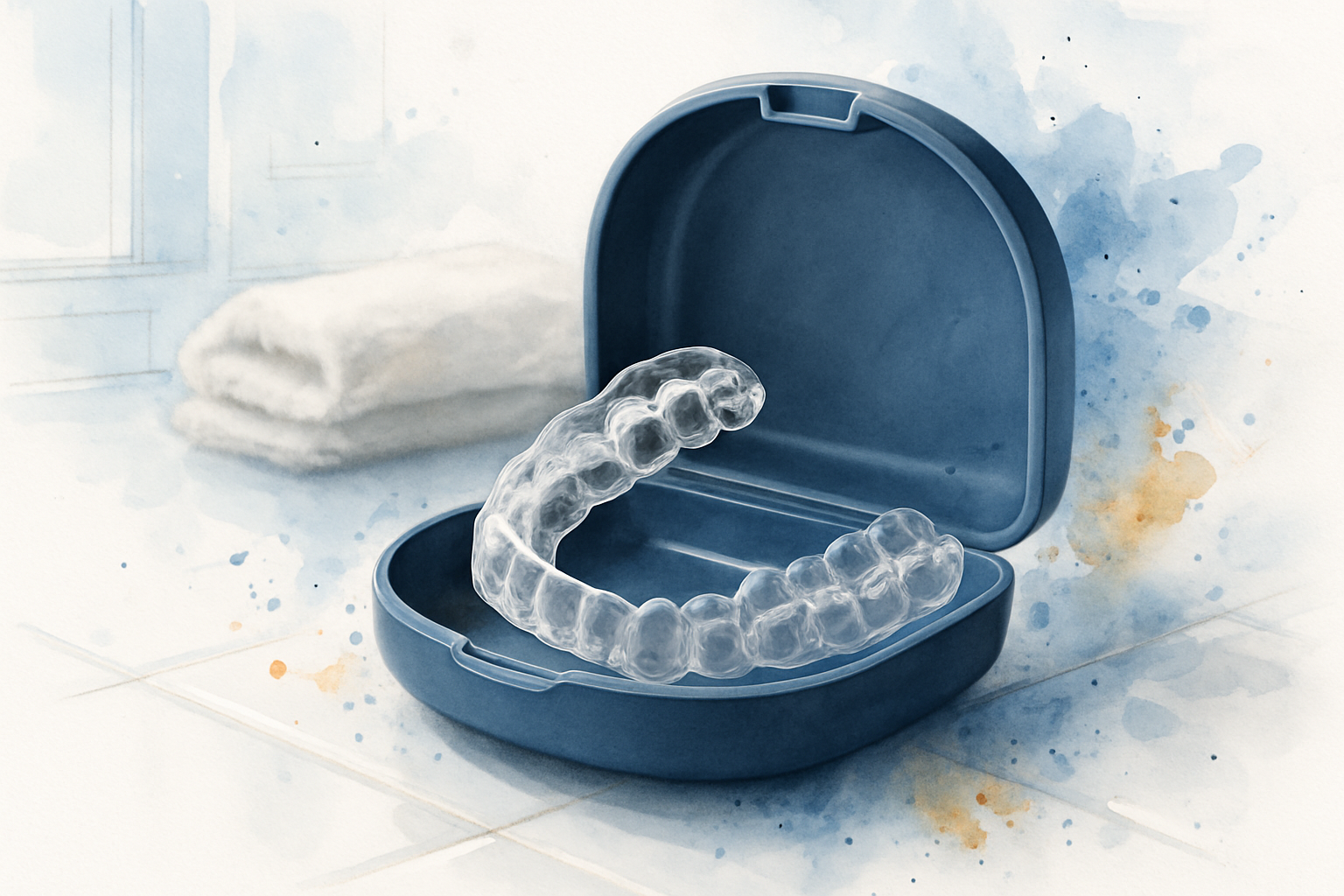
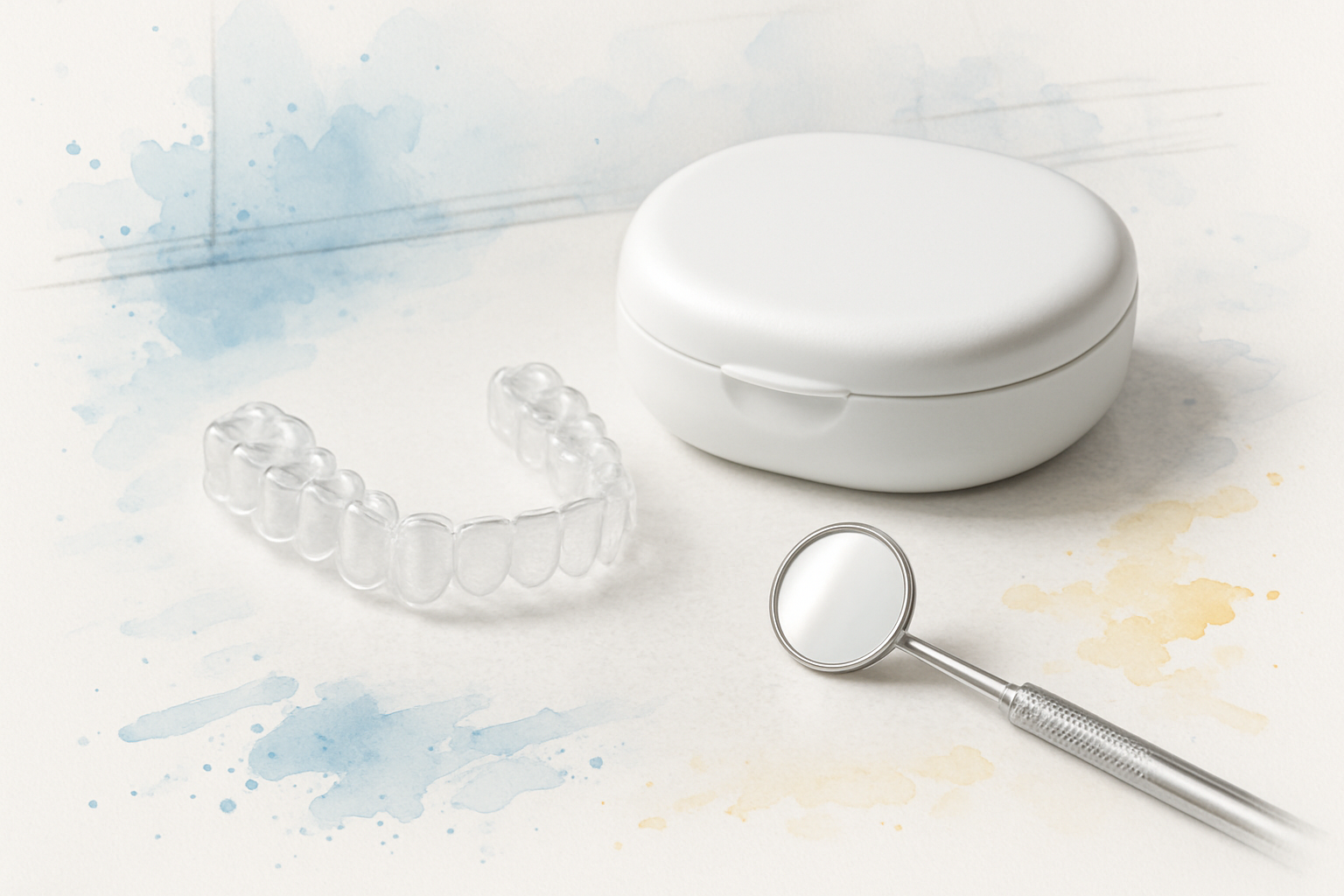
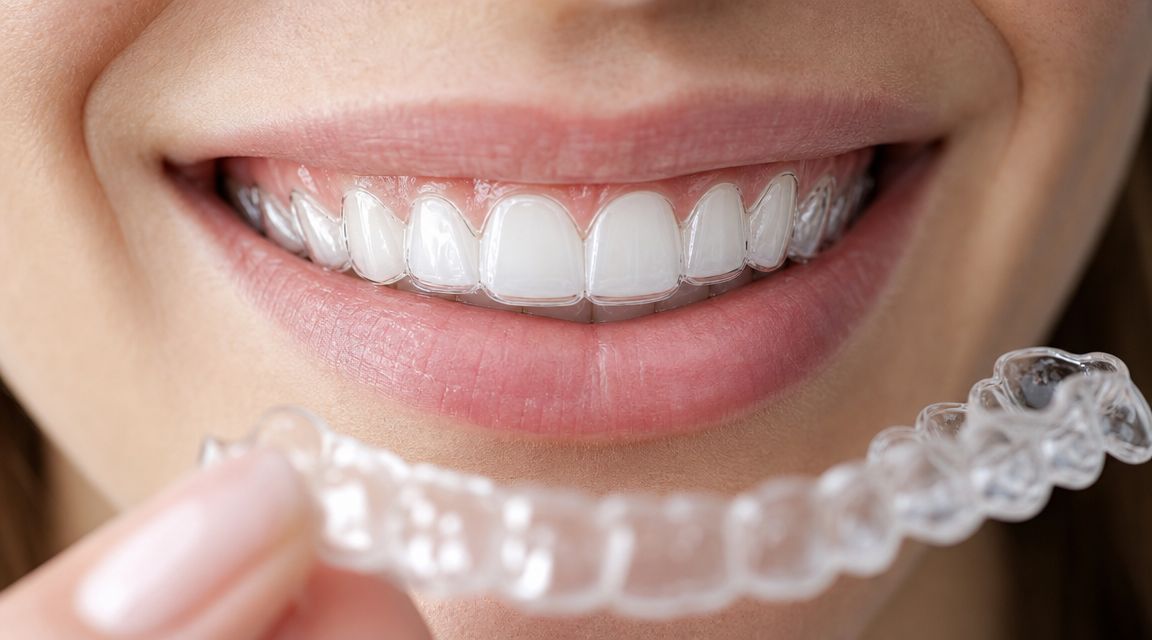
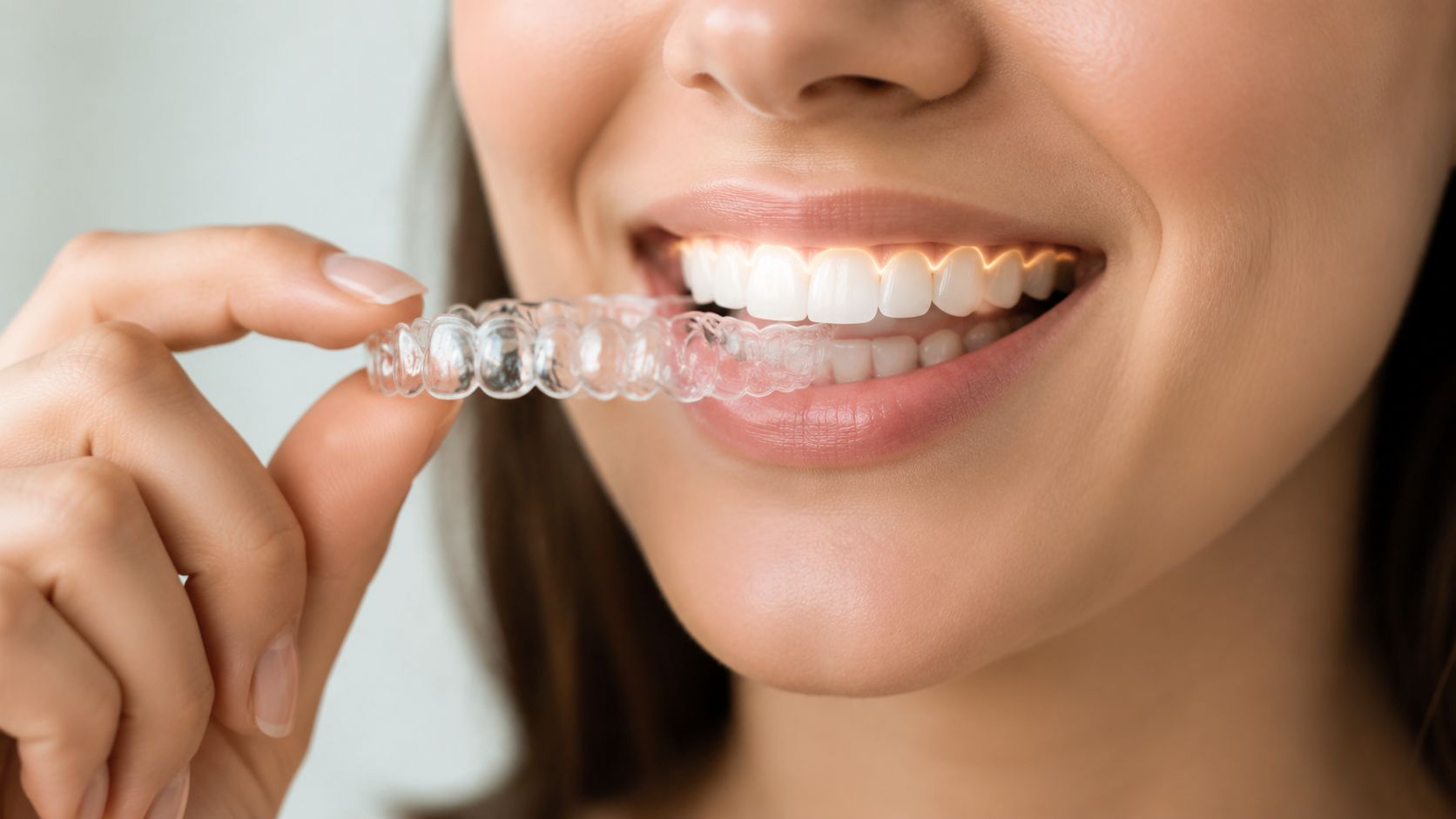
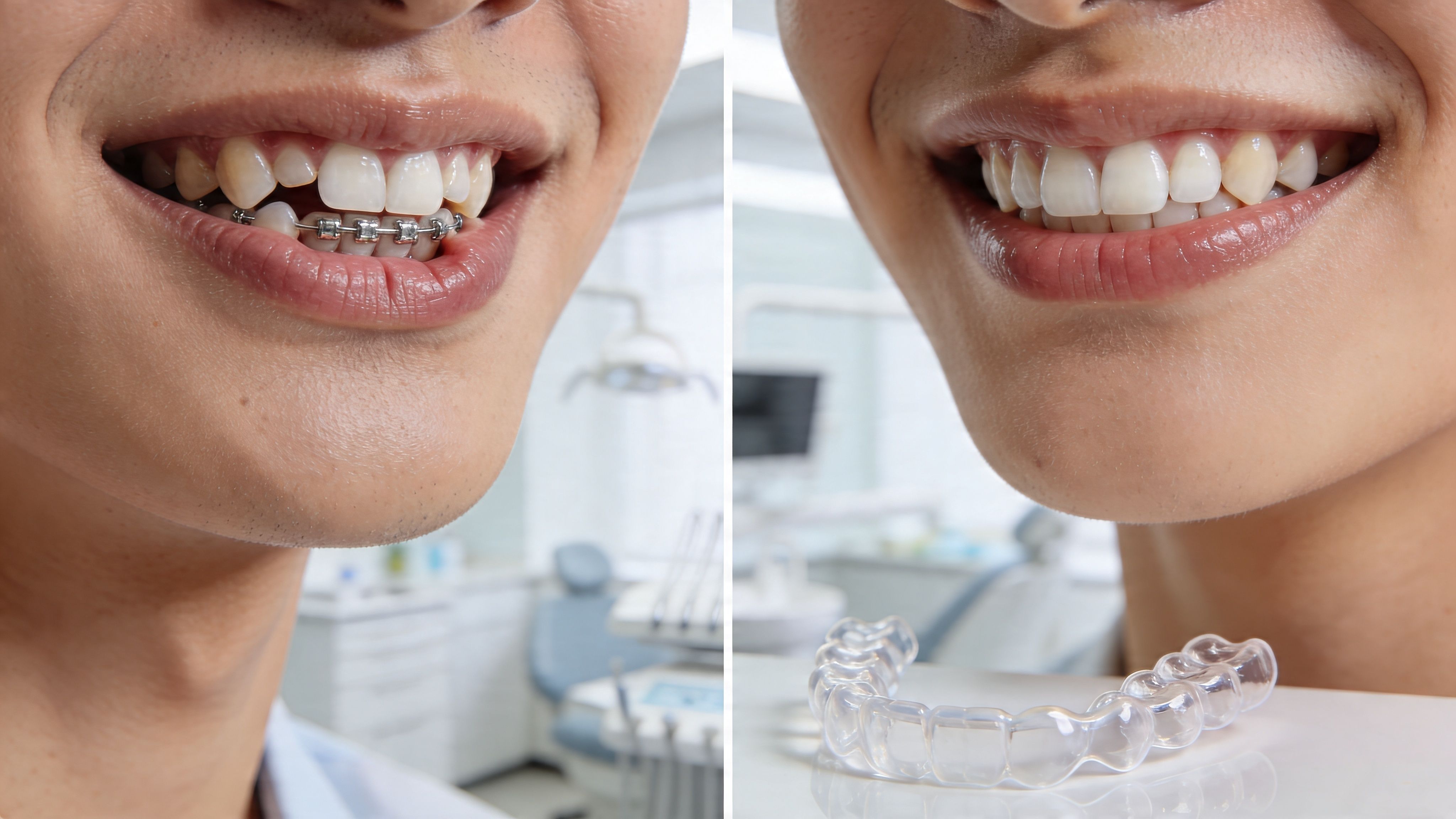
Clear aligners work by using a series of custom plastic trays that fit snugly over your teeth and apply gentle, controlled pressure. Each tray moves teeth a tiny amount, then the next tray continues that progress. When worn consistently, they guide teeth into better alignment over time. For a broader look at why so many patients choose them, this overview of discreet orthodontics in 2025 is helpful.
If you're asking how do clear aligners work, you're probably looking at a thin piece of plastic and wondering how something so simple can move teeth at all. That's a fair question.
Aligners can seem almost too minimal to do real orthodontic work. But the process is very real, very planned, and based on the same biology orthodontists have used for decades. The difference is how precisely that force gets delivered, and how much of the daily routine depends on you.
The Science of Moving Teeth with Gentle Pressure
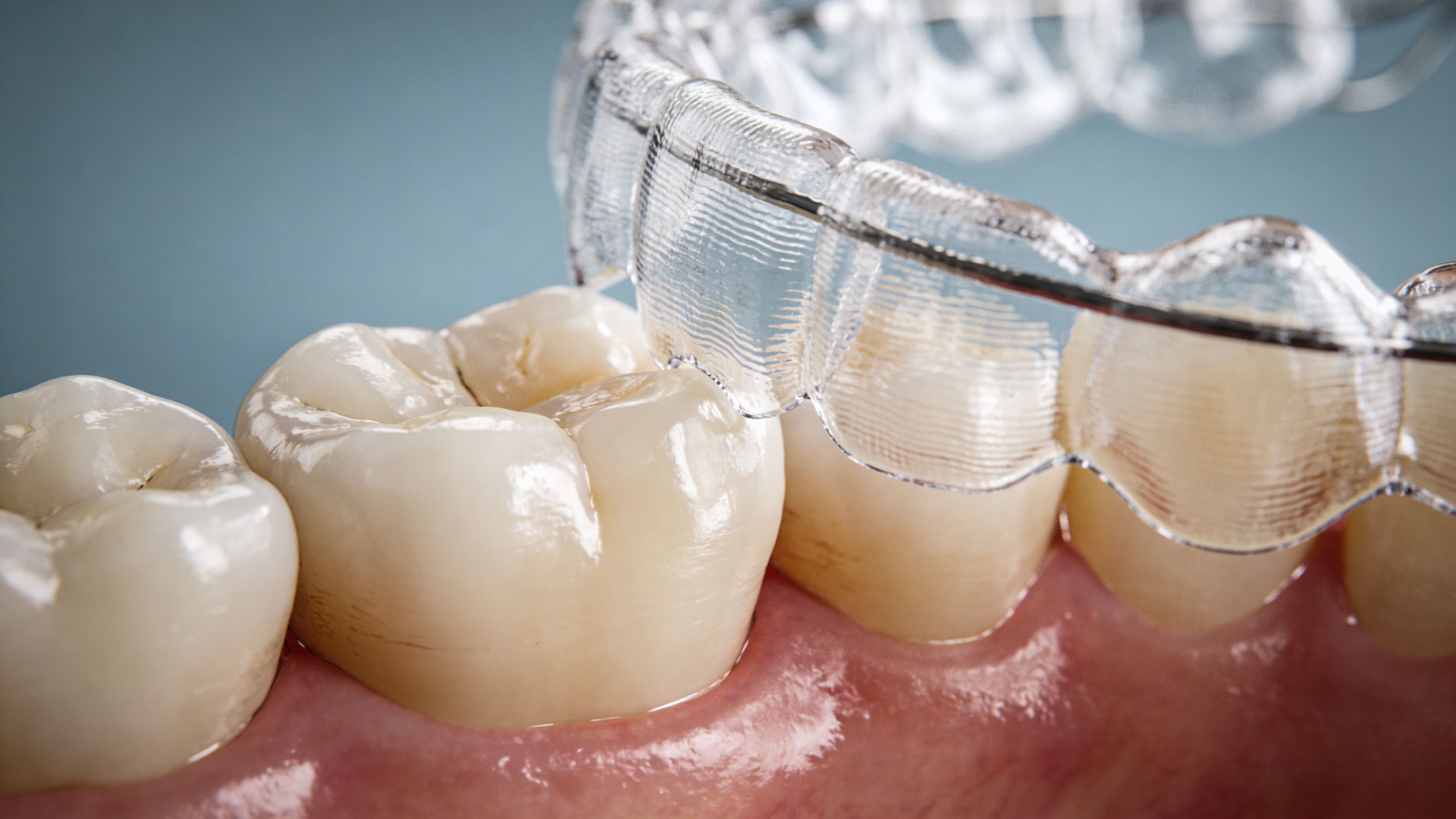
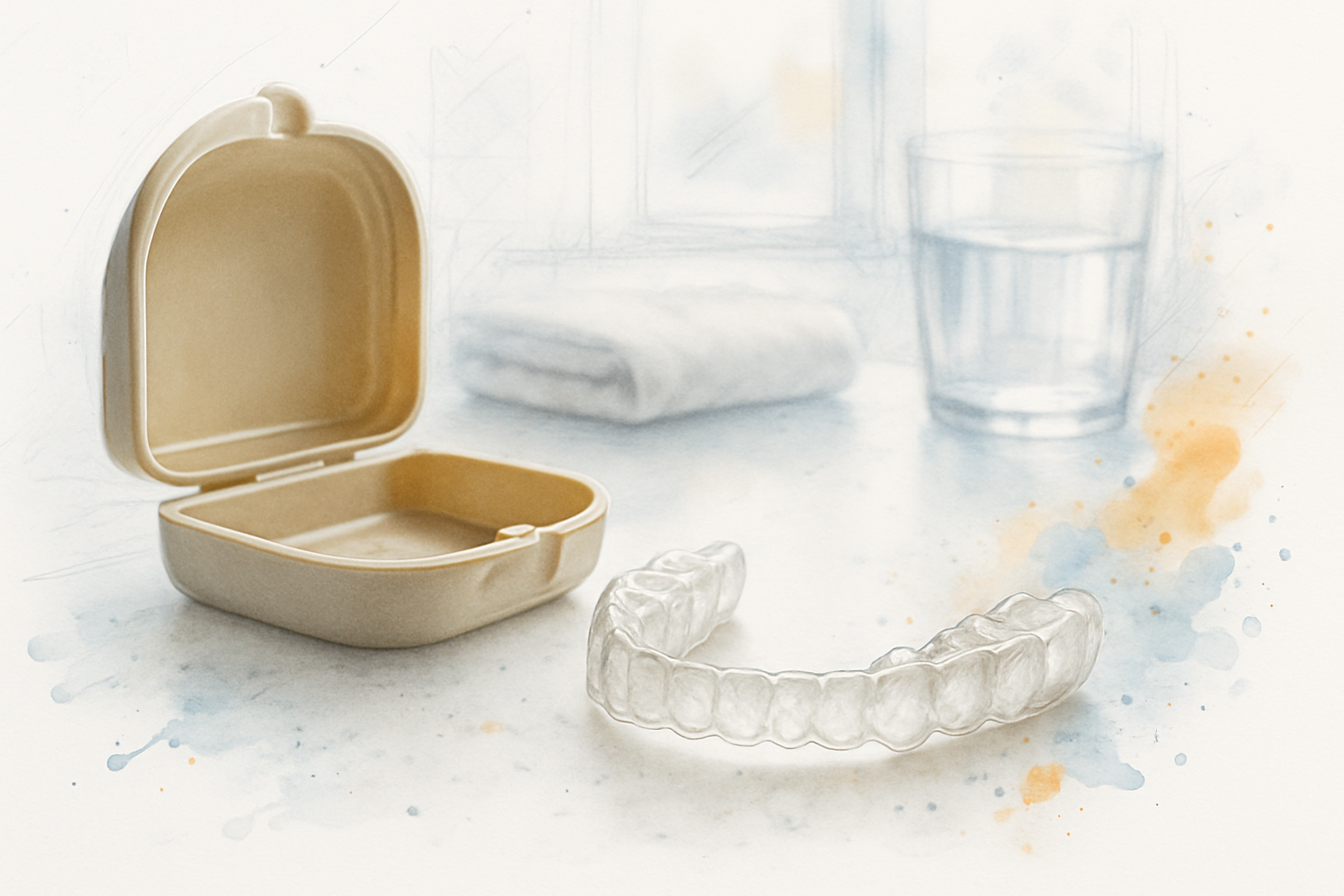
A clear aligner may look like a simple plastic shell, but the biology behind it is surprisingly complex. Teeth are not fixed in place like fence posts set in cement. Each one sits in a socket and is held by a thin cushion of tissue called the periodontal ligament. That small detail is what makes orthodontic movement possible.
A garden trellis is a helpful comparison. The trellis does not force the plant to change shape in one day. It gives the plant steady direction, and the plant responds gradually. Aligners work in much the same way. They provide controlled pressure, and your body does the remodeling needed for the tooth to shift.
Each tray is slightly ahead of your current position
Every aligner is made to fit the next planned stage of your smile, not the exact position of your teeth on the day you put it in. That tiny mismatch creates pressure in very specific places.
When a new tray feels snug, that sensation usually means the aligner is engaging the teeth it was designed to guide. Patients often worry that tight means something is wrong. In most cases, mild pressure for the first few days is expected. Sharp pain, gum injury, or a tray that will not seat fully is different and deserves a call to your orthodontist.
The scientific principle applies directly to daily aligner use. If you wear the aligner long enough each day, that gentle pressure stays consistent enough for your body to respond. If it spends too many hours out of your mouth, the process stalls, and the next tray may feel much tighter than planned.
Your body moves the tooth by remodeling bone
The plastic tray does not push a tooth straight through solid bone. Instead, the pressure signals the tissues around the root to adapt. On one side of the tooth, bone is broken down. On the other side, new bone is built. That coordinated response lets the tooth change position while staying supported.
This is why orthodontic treatment takes time. Bone and ligament respond on a biological schedule, not on a rushed one.
It is also why small, staged movements matter. A doctor can plan the path carefully, but your body still needs time to carry out each step safely.
Some tooth movements are more predictable than others
Clear aligners do very well with many mild to moderate spacing and crowding problems. They can also handle certain bite corrections, especially when attachments, elastics, or other small aids are added to help the trays grip and direct force.
Other movements can be trickier. Rotating rounded teeth, pulling a tooth downward into place, or correcting more complex bite problems may be less predictable with trays alone. In those situations, the orthodontist may recommend added tools or a different kind of appliance. That is not a failure of the system. It is good treatment planning.
Digital treatment planning has improved how these movements are staged and monitored. If you want a patient-friendly explanation of how newer software and scanning tools affect results, this article on new tech changing Invisalign results in 2026 adds useful context.
The big picture is simple. Clear aligners work because controlled force meets responsive biology. The tray supplies the direction. Your tissues supply the movement. And your day-to-day wear habits help determine how closely real life follows the plan.
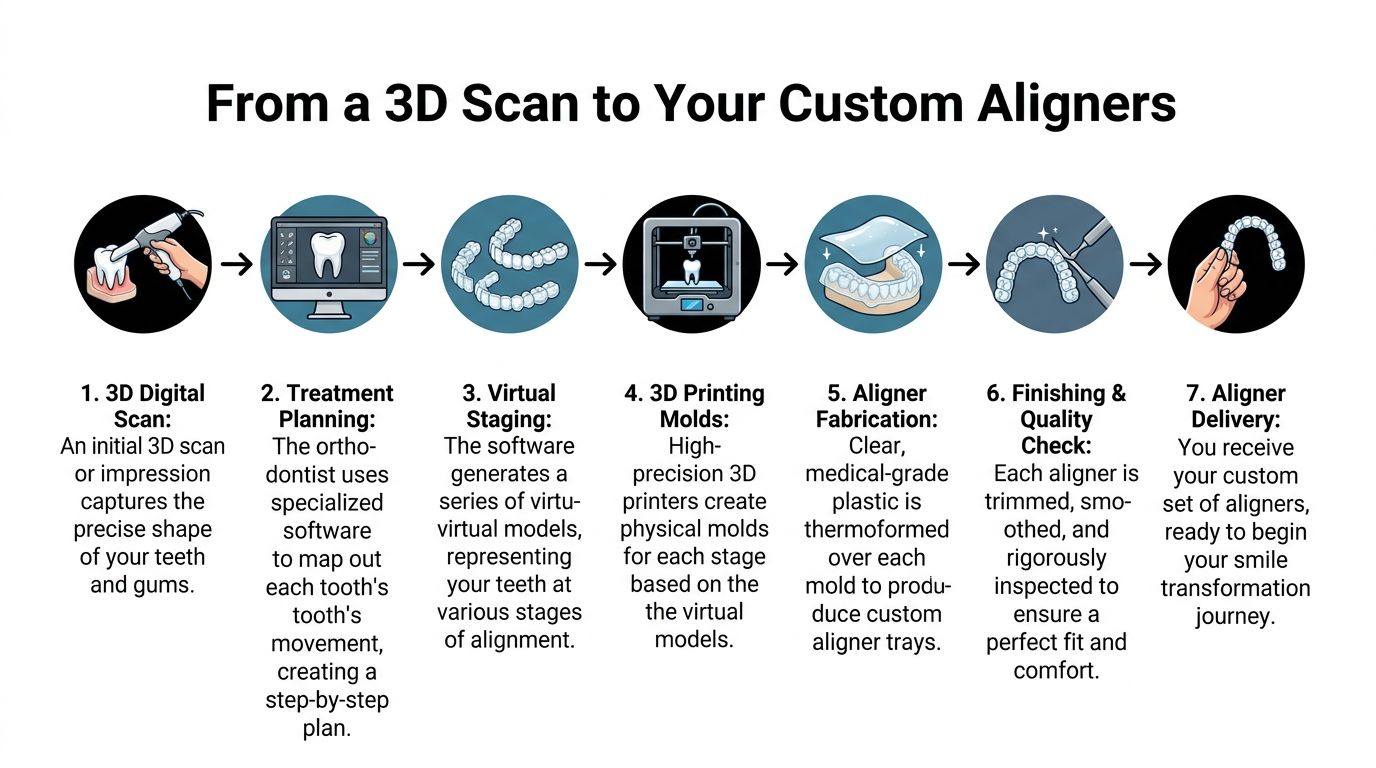
From a 3D Scan to Your Custom Aligners
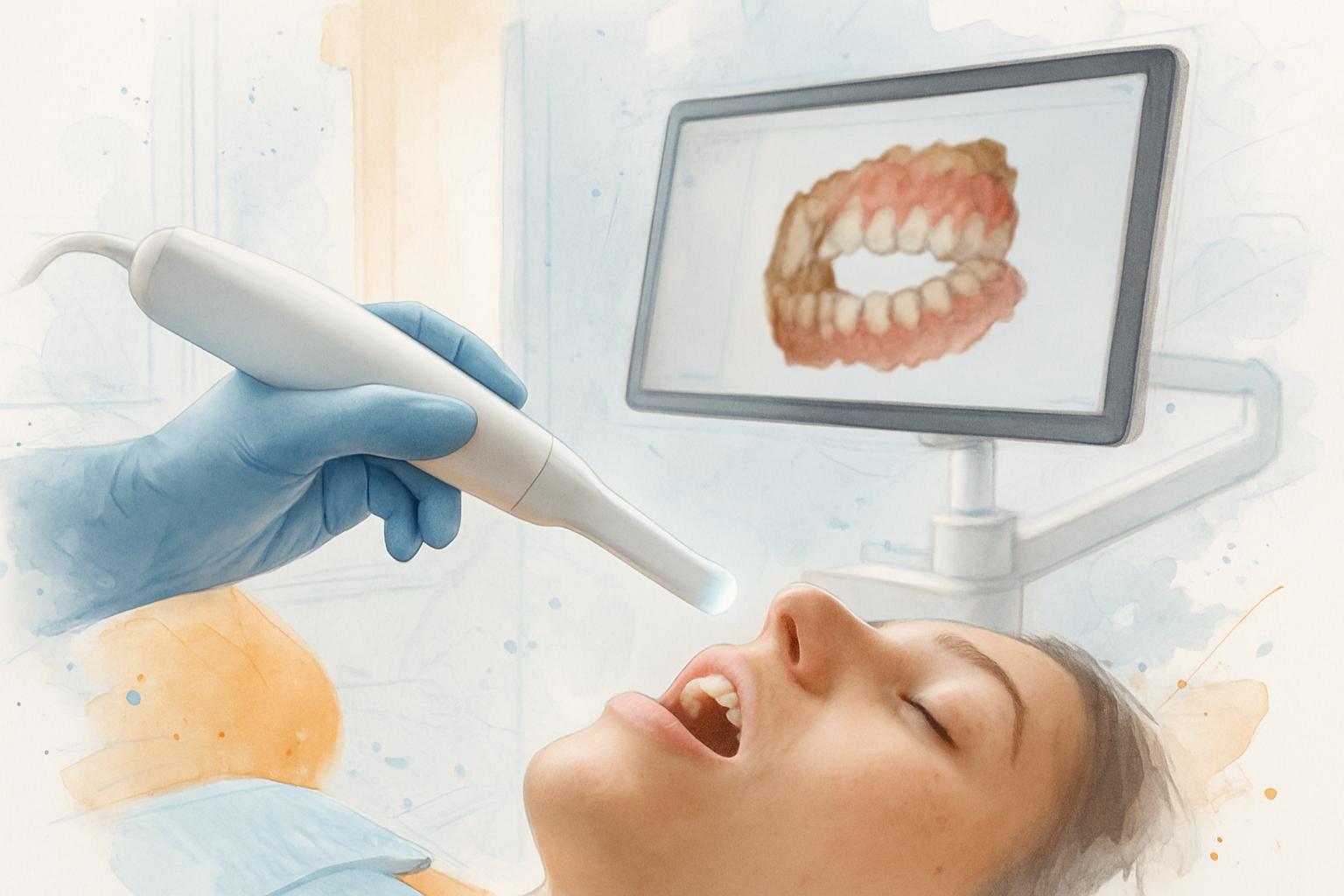
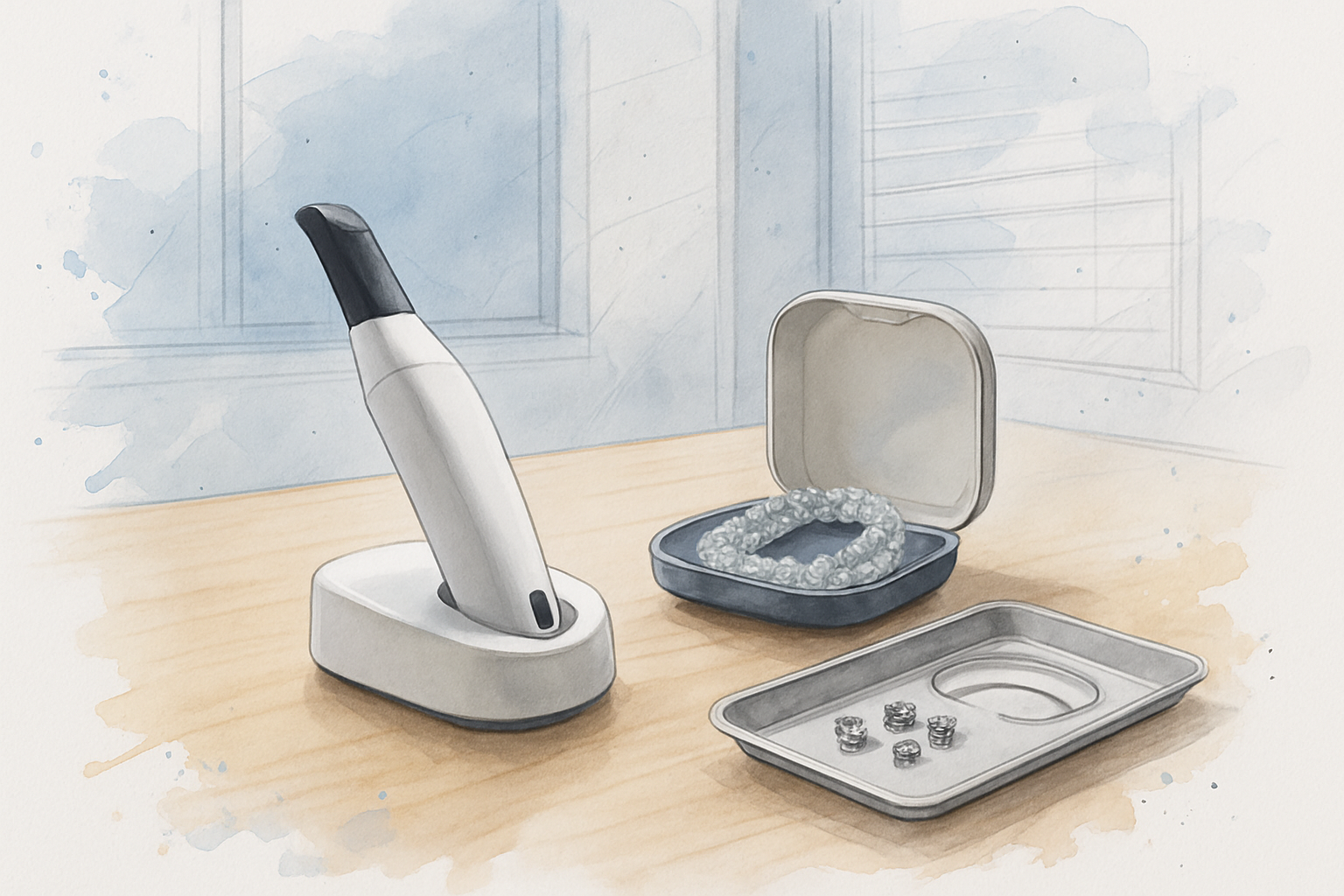
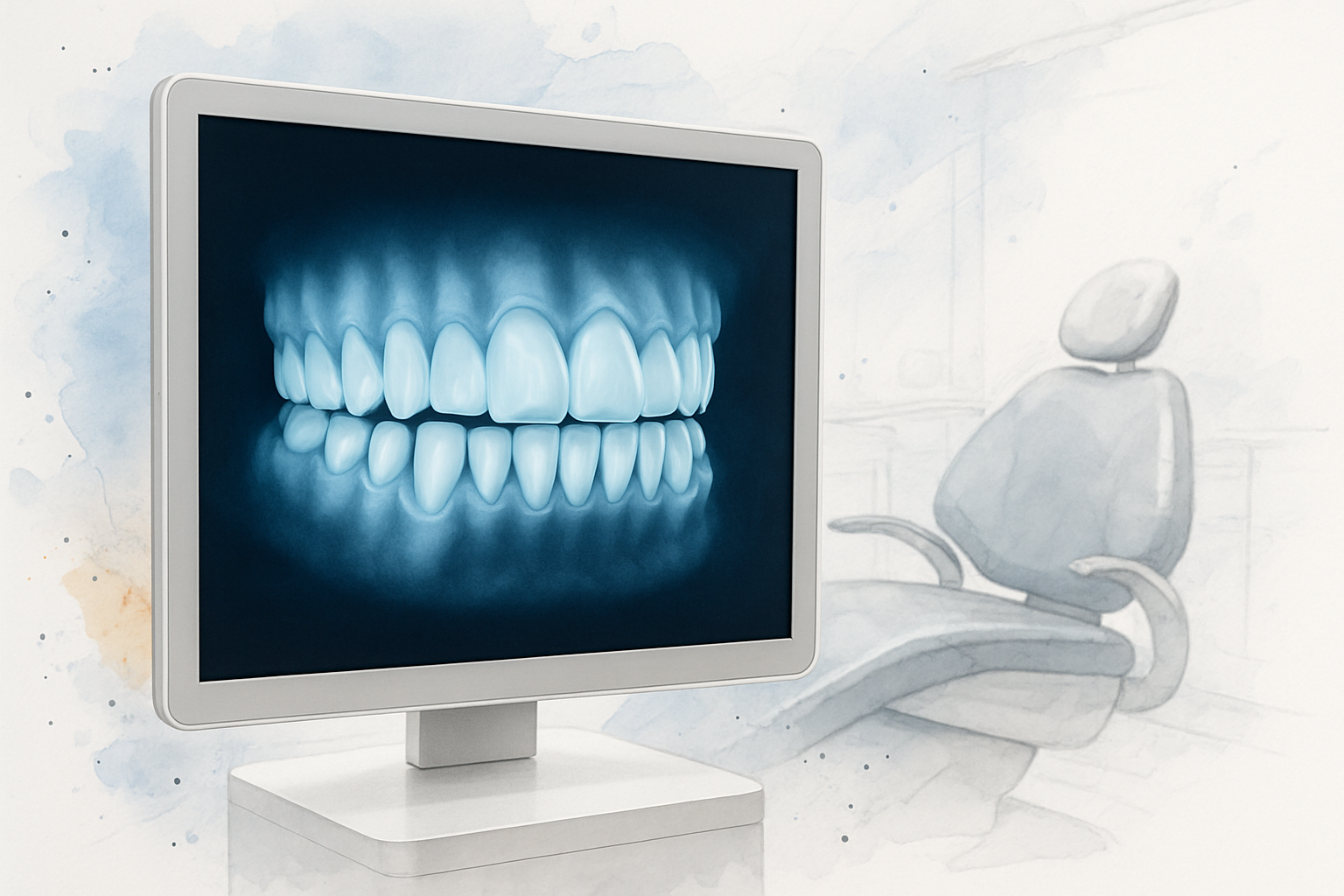
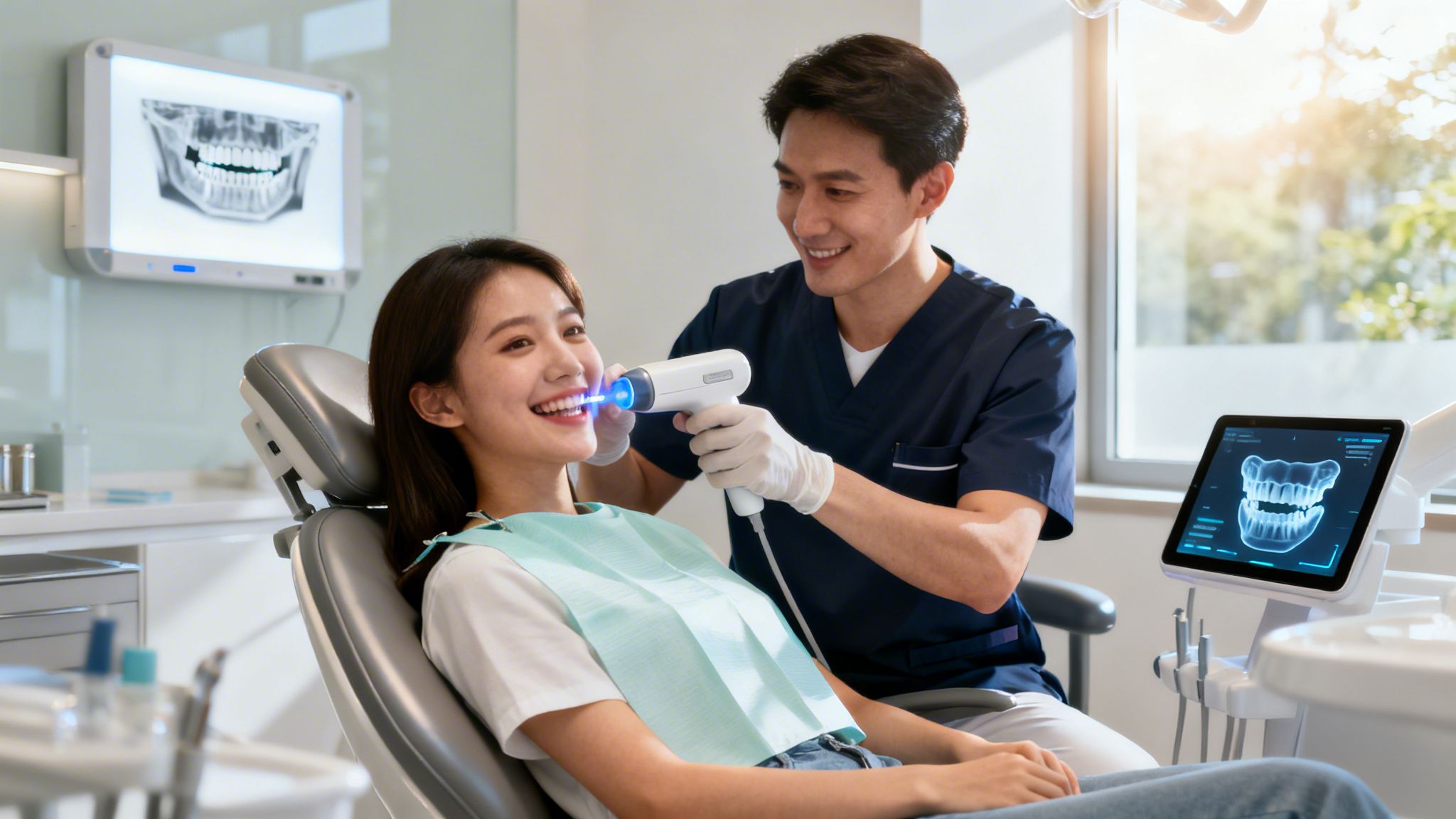
You sit in the chair, a small handheld scanner moves around your teeth, and a few minutes later your orthodontist is looking at a rotating 3D model of your bite on a screen. That scan is the starting point for the aligners you will later wear at home for most of the day.
It starts with a digital scan
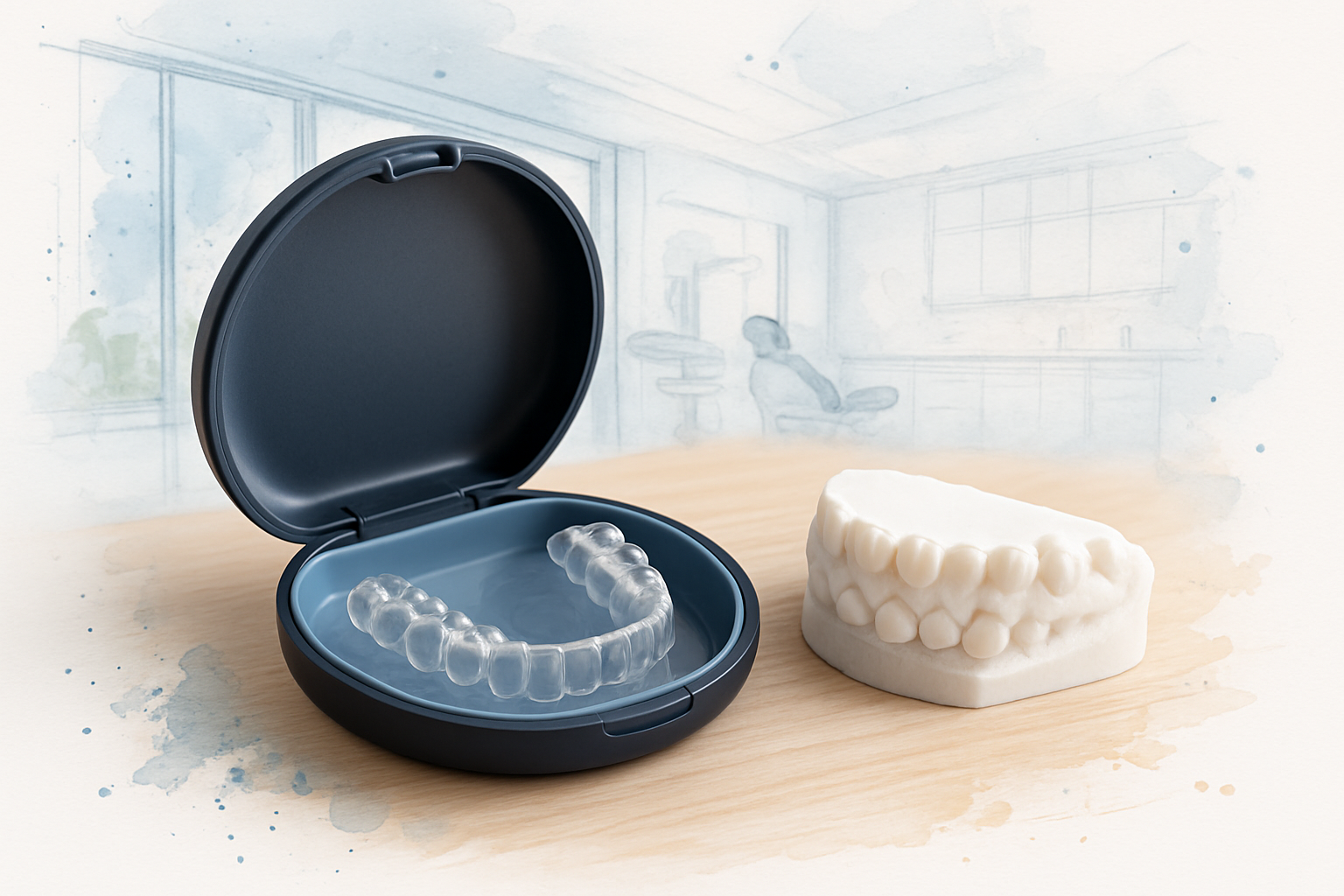
In many cases, a 3D intraoral scan replaces the old putty impression. The scanner captures the shape of each tooth, the way your upper and lower teeth meet, and small details that matter when movements are planned in stages.
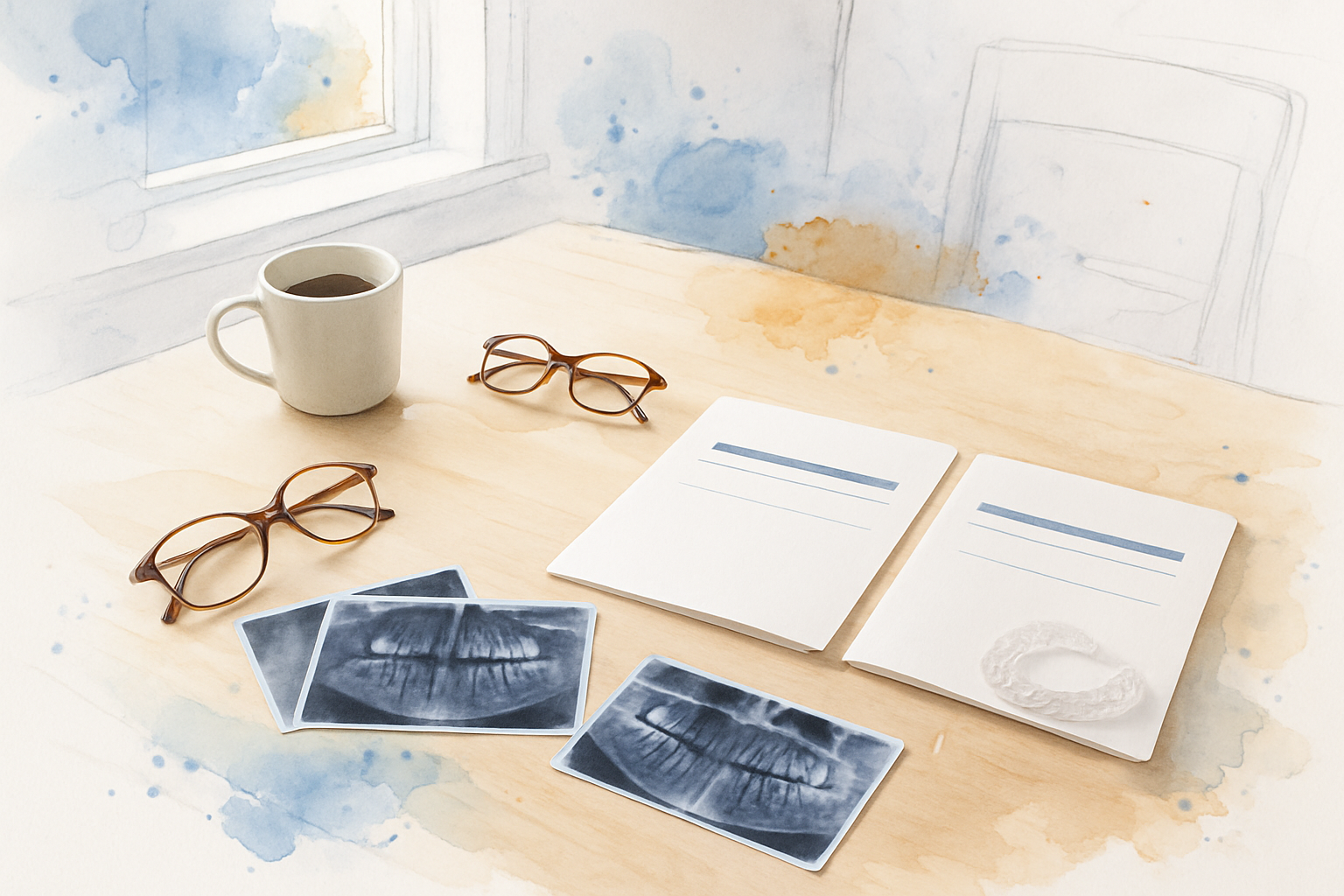
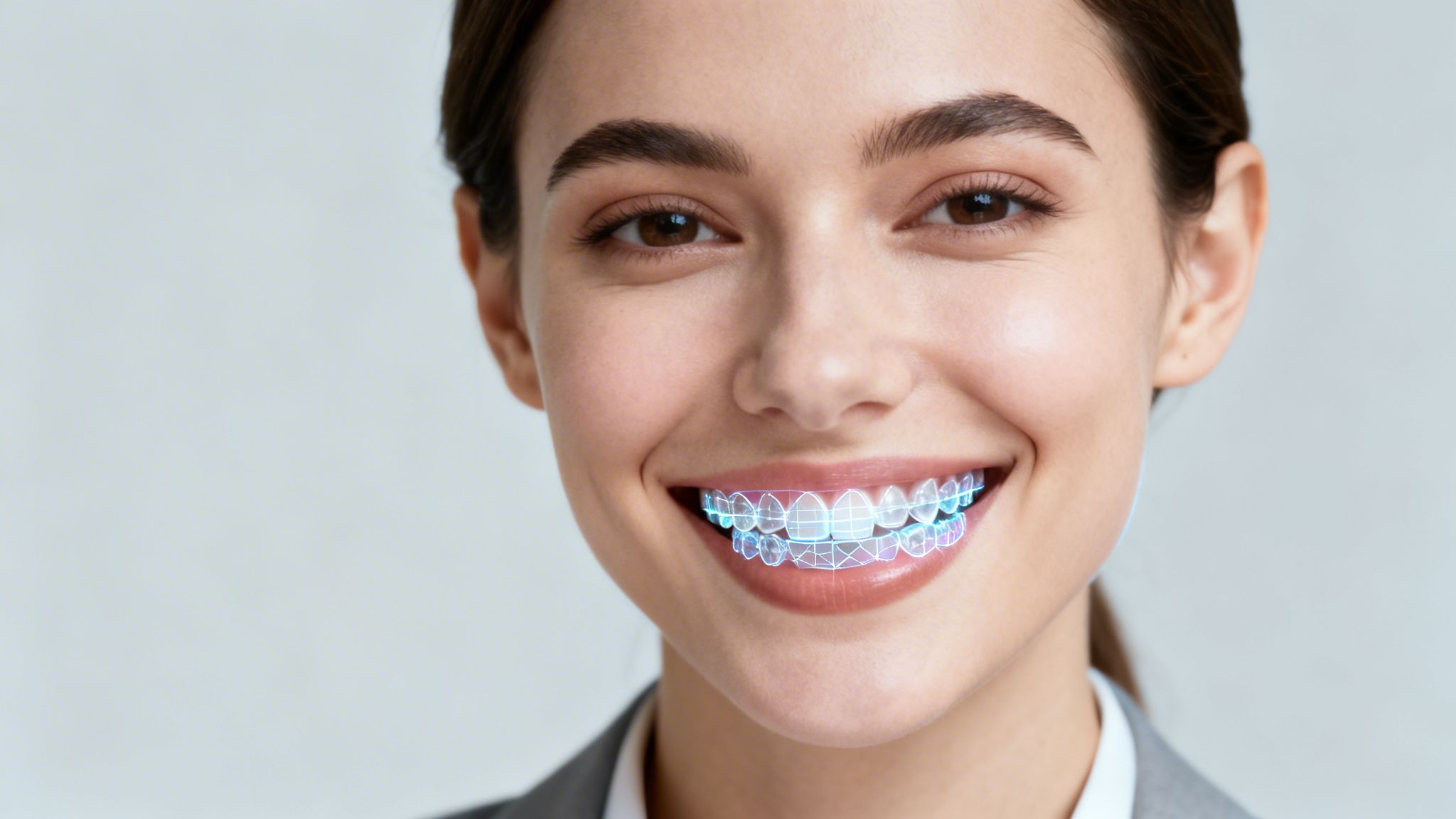
That digital model works like a blueprint. Before any trays are made, the orthodontist studies the bite from different angles, checks where space is limited, and identifies which teeth may need extra help from attachments or elastics. The technology is useful, but the clinical judgment matters just as much. Software can display movement. Your doctor decides whether that movement is realistic and healthy.
The trays are built from the plan
Clear aligners are not made first and adjusted later. The movement sequence is planned first, then the trays are fabricated to match that sequence.
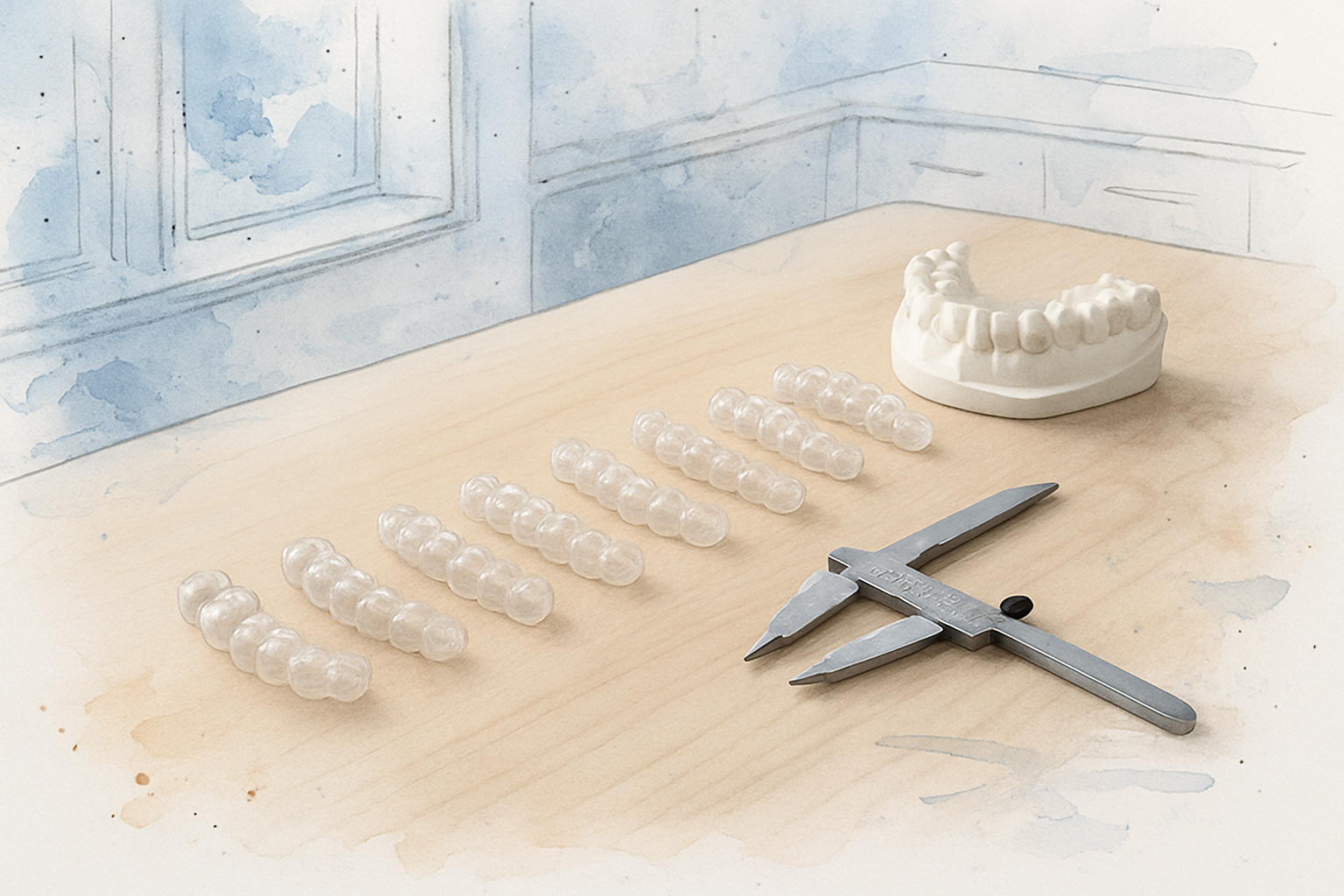
Each aligner is shaped a little differently from the one before it. That small difference is the whole idea. Tray one fits your starting position. Tray two fits the next planned position. Then tray three continues the same path. It works like a series of closely spaced stepping stones across a stream. Each step is small enough for your teeth and supporting tissues to follow.
A treatment plan often includes many trays because teeth usually respond better to a series of modest changes than to one large push.
How the digital plan connects to daily wear
This is the part patients often do not see. The scan and software create the map, but your daily routine is what keeps you on the road.
If an aligner is worn as directed, it has enough time to fully seat on the teeth and deliver the force it was designed to deliver. If it spends too many hours out, the next tray may feel unusually tight because the teeth have not reached the position the plan expected. That is one reason orthodontists talk so much about wear time. The digital plan only works well when real life matches it closely enough.
A simple way to picture it is a key fitting into a lock. Each new tray is made for a very specific tooth position. The closer your teeth are to that position, the better the tray fits and the more predictably treatment stays on track.
What your orthodontist is checking behind the scenes
From the patient side, aligners can look simple. From the doctor side, several questions are being reviewed at every stage:
- Is each tray fitting fully at the edges and chewing surfaces?
- Are attachments still in place and doing their job?
- Are the teeth tracking closely enough to the planned positions?
- Is the bite changing in a healthy, stable way?
- Will the next set of trays still work as designed, or is a midcourse correction needed?
That is why follow-up visits still matter, even with highly digital treatment.
The plastic tray is only the visible part of treatment. The actual work begins with diagnosis, planning, and careful checks that the teeth are responding the way the scan predicted.
If you want a patient-friendly look at the tools used in digital planning and monitoring, this article on the high-tech side of orthodontics in Huntington Beach shows how those tools support day-to-day care.
Your Treatment Timeline and What to Expect
The question behind how do clear aligners work often turns into a second question pretty quickly. How long does all of this take?
The honest answer is that it depends on how much movement is needed and how consistently the trays are worn. In general, aligner treatment may take 6 to 24 months according to the clinical ranges provided in the verified data.
What the rhythm usually looks like
Most patients wear each aligner for about 1 to 2 weeks before changing to the next one. During that time, the tray is doing a small amount of planned work.
You may also have attachments, which are small bonded shapes placed on certain teeth. They give the aligner more grip so it can guide difficult movements more effectively.
Check-in visits are usually shorter than many people expect. The orthodontist is checking fit, tooth tracking, bite changes, and whether the next group of trays should be started.
Refinements are common and normal
At the end of the first set of trays, some patients are done. Others need a refinement phase.
A refinement means the orthodontist takes another scan, reviews what's left to improve, and orders additional trays to fine-tune the result. That can happen even when a patient has done a good job. Teeth are biological structures, not machine parts.
The daily routine affects the timeline
The biggest factor you control is wear time. If trays are out too often, the teeth don't keep up with the schedule.
That matters for families too. Offices that actively improve patient experience often make treatment easier by using clearer reminders, simpler instructions, and better follow-up. In orthodontics, small routine problems can turn into delayed progress if they aren't addressed early.
If a tray stops fitting well, don't force your way through the set. That's usually a sign it's time to check in with your orthodontist.
Daily Life with Aligners Wear Care and Compliance
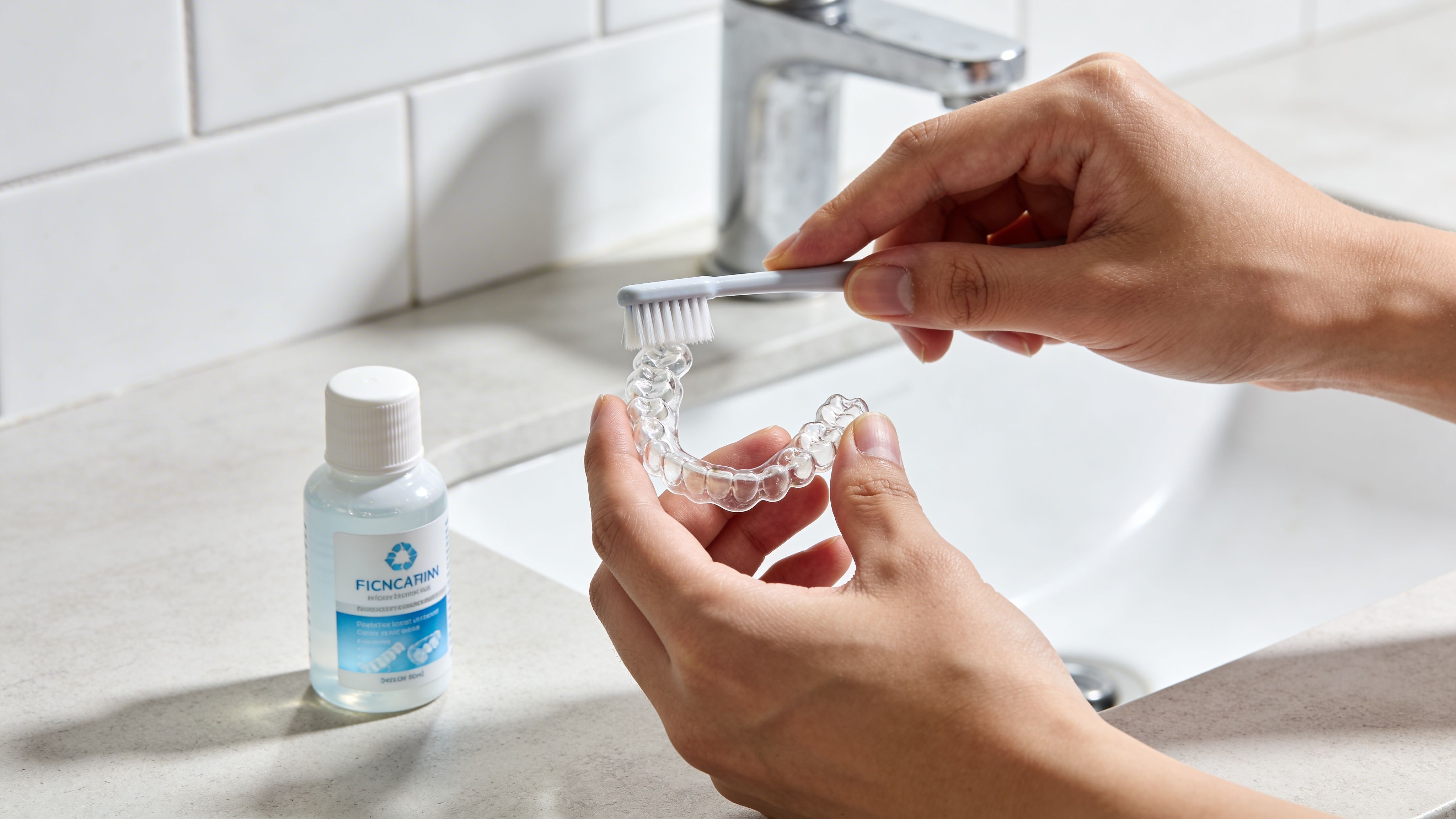
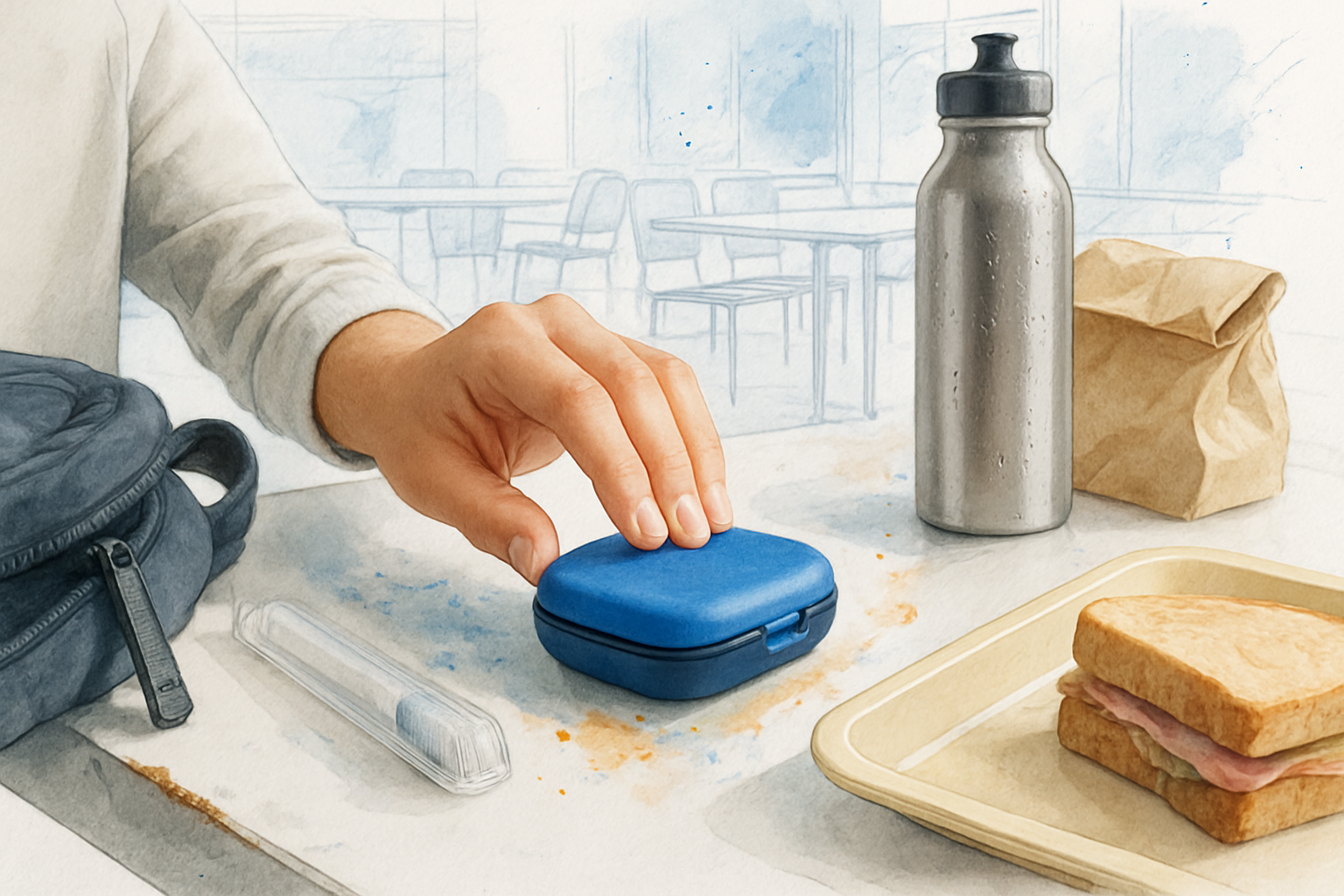
You finish lunch, set your aligners on a napkin for "just a minute," and the next thing you know, two hours have passed. That small gap matters more than many patients expect.
Clear aligners work through steady, gentle pressure. Your teeth respond best when that pressure stays consistent for most of the day. If the trays are in and out too often, the biological process slows down. The aligner was designed to guide a tiny movement. Your daily routine determines whether that movement happens on schedule.
That is why wear time matters so much. Aligners usually need to be worn about 22 hours a day, with time out mainly for meals, brushing, and flossing.
A simple way to picture it is this: wearing aligners is like keeping a hand on a steering wheel. Small, steady corrections keep you on course. If you keep letting go, you spend more time correcting than progressing.
The habits that keep treatment on track
The patients who do well with aligners usually do not have perfect days. They have reliable routines.
A few habits help:
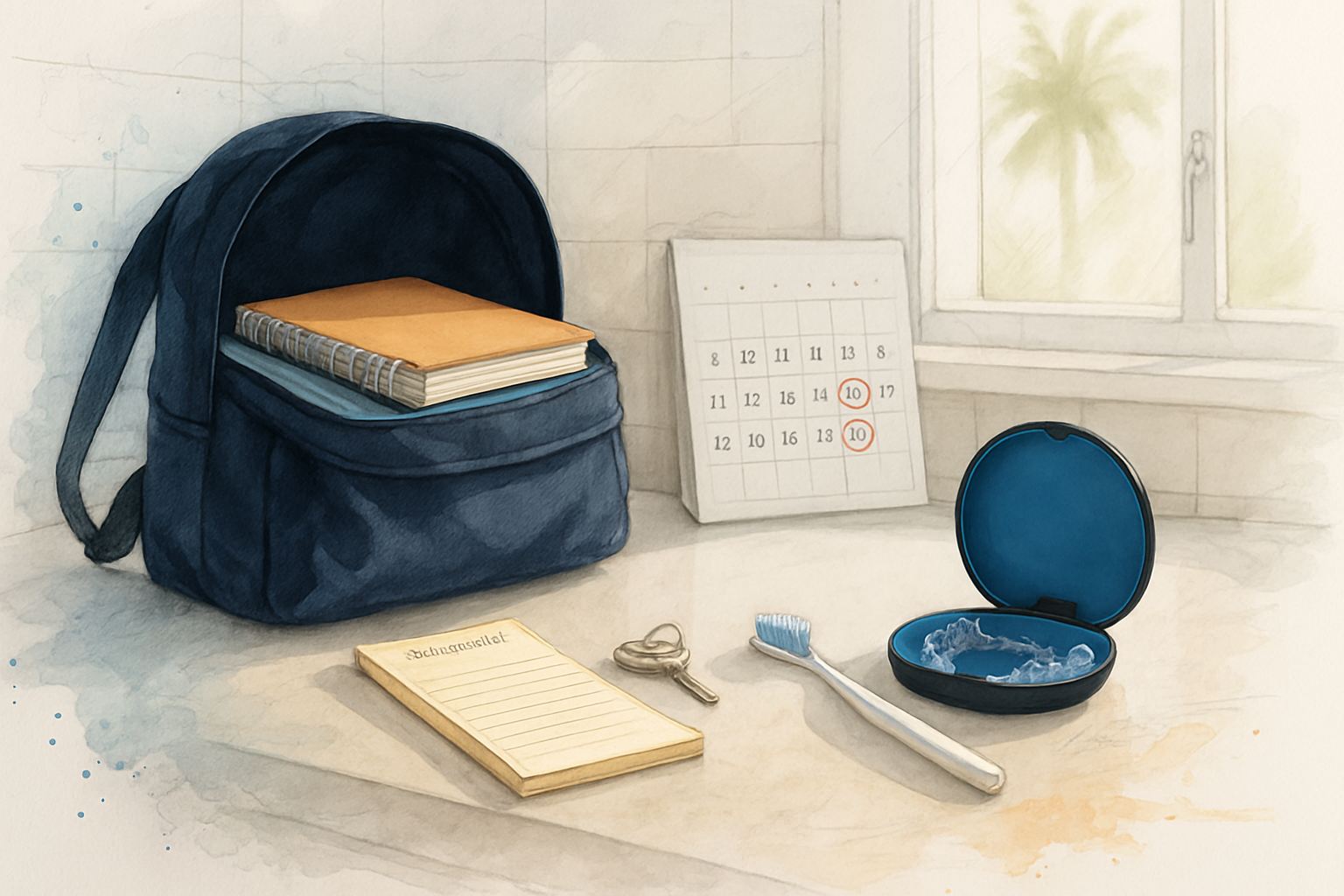
- Put aligners back in as soon as you finish eating so short meals do not turn into long stretches without pressure
- Brush and floss before reinserting when possible so food and plaque are not trapped against the teeth
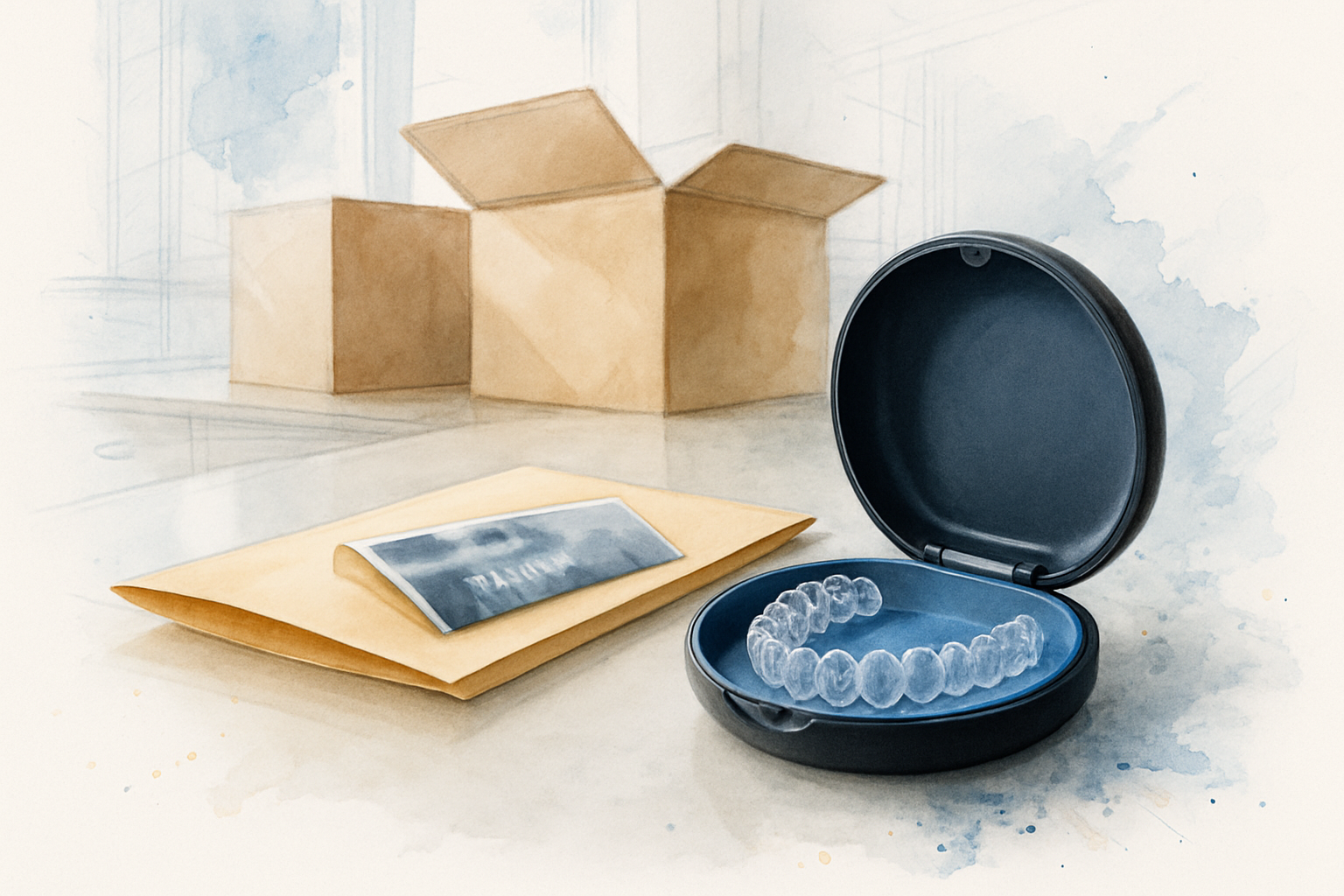
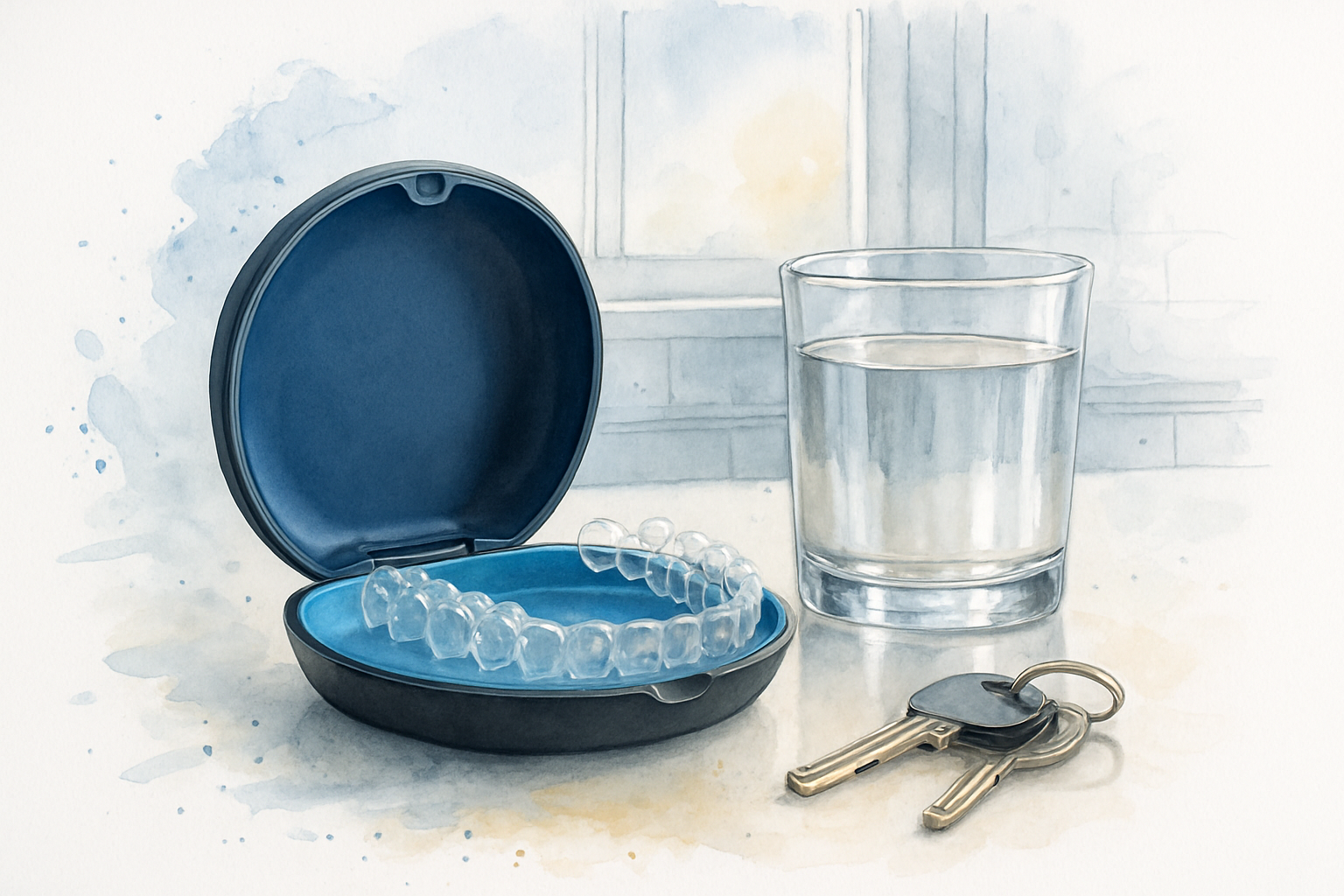
- Carry your case everywhere because aligners are often lost in napkins, pockets, lunch trays, or car cup holders
- Change trays on the schedule your orthodontist gave you and mark the date in your phone or calendar
- Pay attention to fit because a tray that suddenly feels very loose or will not seat fully may need to be checked
These sound small. In orthodontics, small habits add up.
Cleaning and comfort
Aligners need daily cleaning, just like teeth do. Rinse them when you remove them, clean them gently, and avoid hot water, which can warp the plastic.
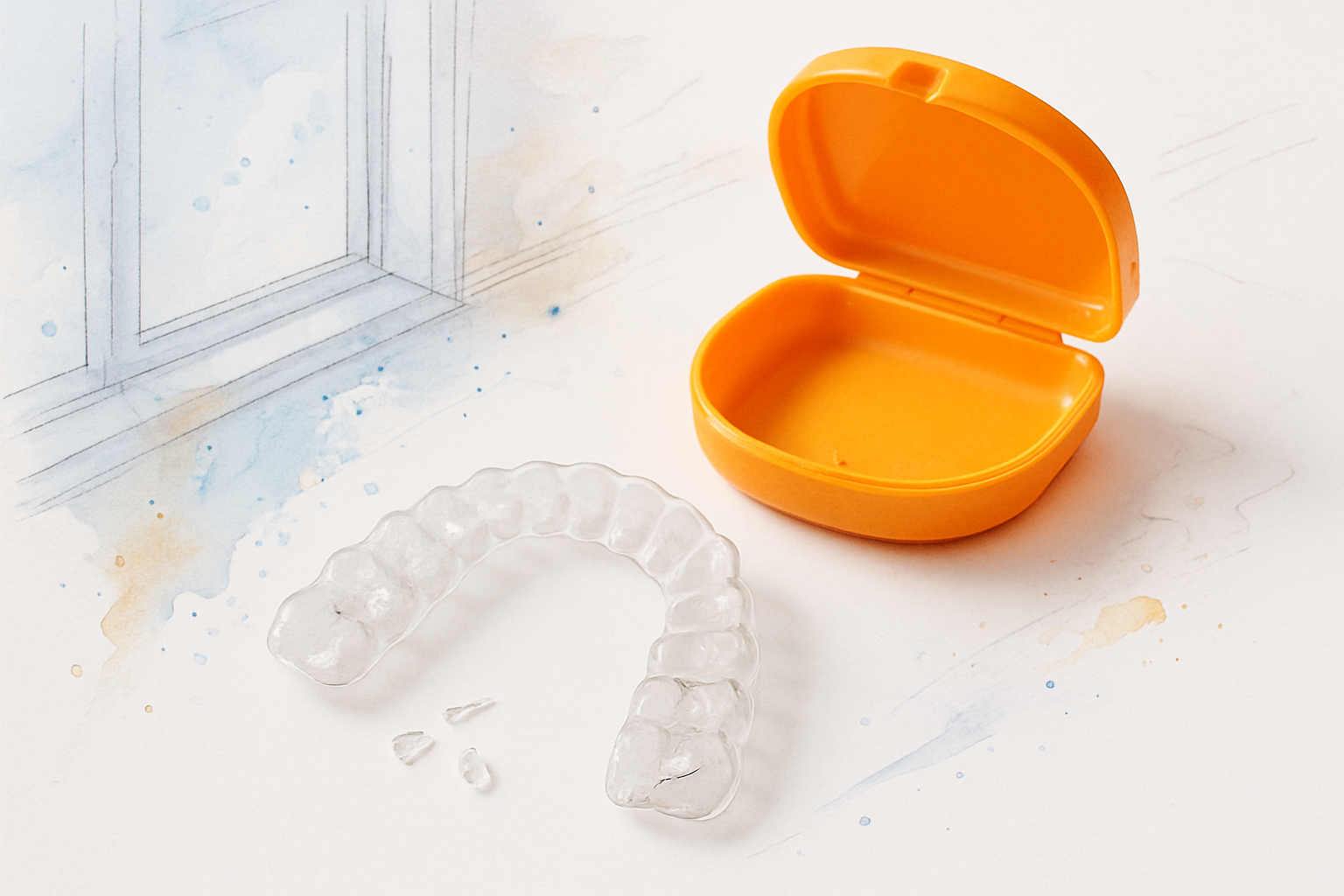
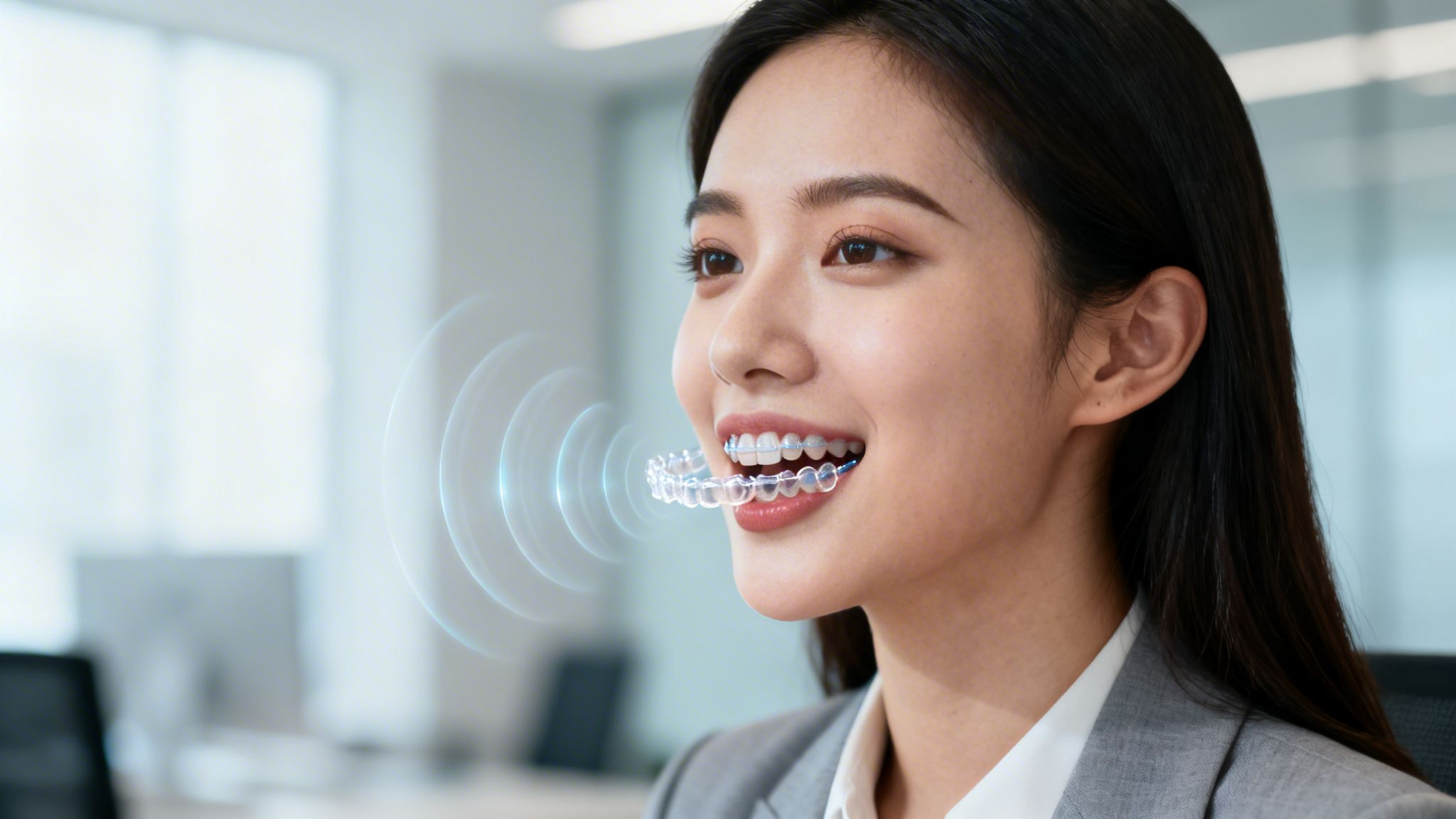
Speech changes can happen at first. Mild pressure is also common for a day or two after switching to a new tray. That feeling often tells you the aligner is active and delivering the next planned step of movement. Sharp pain, cracking trays, or a fit that seems clearly off is different. That is a good time to call the office rather than guess.
For practical home care tips, this guide on caring for Invisalign walks through cleaning, storage, and day-to-day maintenance.
Compliance is really biology plus routine
Patients sometimes hear "wear your trays" so often that it starts to sound like a rule without a reason. There is a reason. Teeth are supported by living bone and ligament. Those tissues need repeated, controlled pressure over time to remodel safely. A beautifully designed aligner from an accurate 3D scan still depends on consistent wear at breakfast, at work, after coffee, after soccer practice, and before bed.
That is the connection between the technology and real life. The scan maps the plan. Your routine carries it out.
An aligner only works while it is fully seated on your teeth. In a lunch bag or wrapped in a napkin, it is just a piece of plastic.
Are You a Candidate for Clear Aligners?

Clear aligners are a strong option for many teens and adults, but not every case is a perfect match. A consultation is what tells you whether aligners are the right tool, or whether braces will give better control.
Cases aligners often handle well
Aligners are commonly used for mild to moderate crowding, gaps, and certain bite issues. The verified data also notes they can be effective for spacing corrections and crowding within defined ranges when the case is appropriate.
You may be a good candidate if you have:
- Crowded front teeth that need gradual alignment
- Spaces between teeth that can be closed in stages
- Relapse after past orthodontic treatment
- Mild to moderate bite concerns that can be guided with attachments or elastics
Cases that may need braces or a hybrid plan
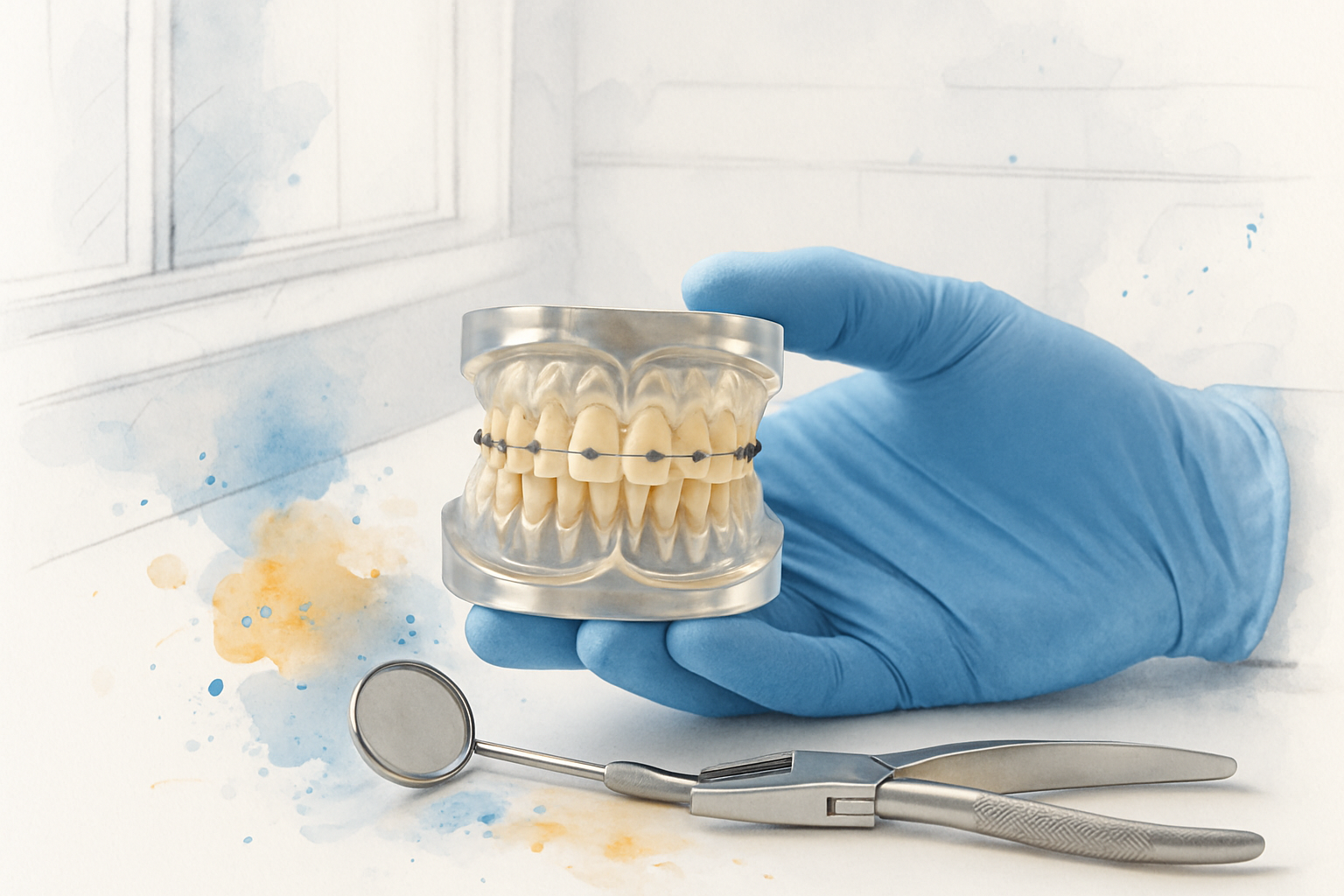
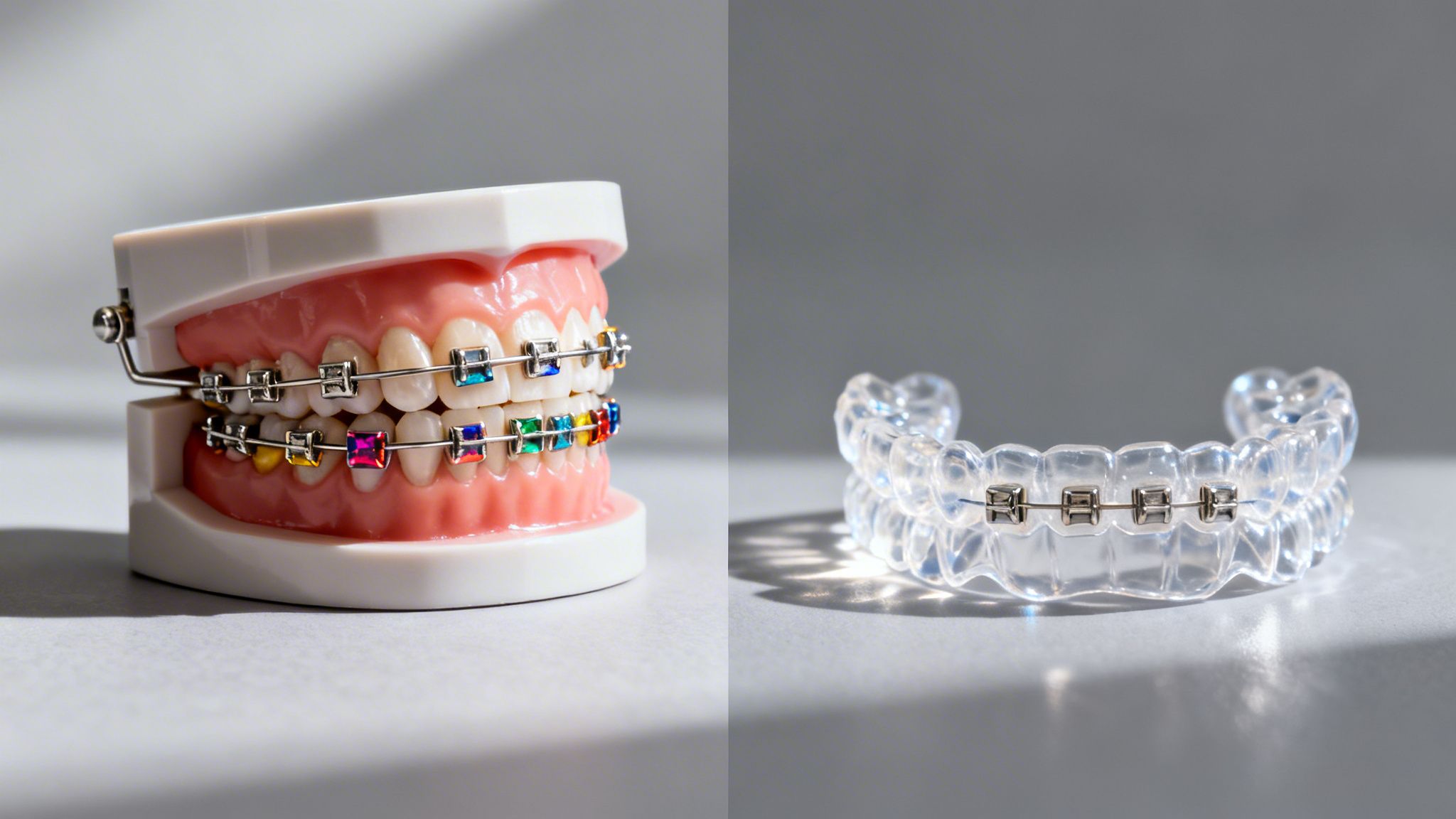
Some tooth movements are harder to control with aligners alone. Severe rotations, major vertical changes, or more complex bite corrections may be better managed with Iconix esthetic brackets or traditional metal braces.
That isn't a step backward. It's the same principle any good orthodontist uses. Pick the appliance that gives the safest, most predictable control.
If you're not sure which side of that line your teeth fall on, this article on how to know if you need braces or Invisalign can help you sort through the basics before a visit.
One more question matters
Can you wear them as directed?
A technically treatable case can still struggle if the trays stay out too long. Motivation, routine, travel, sports, school schedules, and meal habits all matter. That's especially true for busy families in Huntington Beach and Fountain Valley who need treatment to fit into real life, not an ideal version of it.
Frequently Asked Questions About Clear Aligner Treatment
Do clear aligners hurt?
Patients typically experience pressure more than pain. The first day or two with a new tray is usually when you notice it most, because that tray is starting the next planned movement. If something feels sharp, unusually painful, or doesn't fit, it's worth calling your orthodontist.
How long do I have to wear them every day?
For most plans, you need to wear them about 22 hours a day. That means they should only be out for meals, brushing, and flossing. If they're out too often, treatment can slow down and trays may stop fitting correctly.
Can I eat with aligners in?
No. Aligners should be removed before eating. Hot drinks, staining drinks, and chewing with trays in can damage or discolor them, so plain water is usually the safe exception while wearing them.
Will I talk funny?
You may notice a mild lisp at first. Most patients adjust fairly quickly as the tongue gets used to the trays. Reading out loud for a few minutes can help speed up that adjustment.
What happens if I lose one aligner?
Call your orthodontist's office. Depending on where you are in treatment, they may tell you to wear the previous tray, move to the next one, or come in for guidance. Don't guess, because the wrong move can affect how the next trays fit.
Are clear aligners faster than braces?
Sometimes, but not always. Some mild to moderate cases move very efficiently with aligners, especially when wear time is excellent. More complex cases may move more predictably with braces, so speed depends on the case and the patient's consistency.
How much do clear aligners cost?
Cost varies by case complexity, treatment length, and whether refinements or other appliances are needed. The best way to get a real answer is to have your teeth evaluated and your treatment options reviewed in person. A consultation is also the right time to ask about insurance and payment arrangements.
Do clear aligners work for teens too?
Yes, many teens do very well with aligners. The main question is whether the teen will keep them in for the required hours each day. If that's uncertain, braces may be the more dependable option.
Your Next Step Toward a Straighter Smile in Huntington Beach
Clear aligners work because they combine planned force, accurate digital design, and consistent daily wear. The trays may look simple, but the biology behind them is precise and the routine matters.
If you've been wondering how do clear aligners work, the next useful step is having your own teeth evaluated. That tells you whether aligners are likely to work well for your case, what kind of movement is needed, and whether another option would give you better control.
For patients in Huntington Beach, Fountain Valley, and nearby neighborhoods, a consultation gives you answers that are specific to your bite, not just general information online.
Sources
The article draws on one external reference for general background on clear aligner treatment and clinical use:
Impact Ortho. "Do Clear Aligners Work." 2025. https://impactortho.com/do-clear-aligners-actually-work/
Sources cited earlier in the article are not repeated here so the reference list stays clean and avoids duplicate links.
If you'd like personalized guidance, schedule a free consultation with Dr. Jeremy or Dr. Melissa at Magic Fox Orthodontics. You can call (714) 594-5777, visit 17041 Beach Boulevard, Suite 101, Huntington Beach, CA 92647, or learn more at magicfoxsmiles.com. Office hours are Monday through Friday 9:00 AM to 5:00 PM and Saturday 8:00 AM to 2:00 PM.