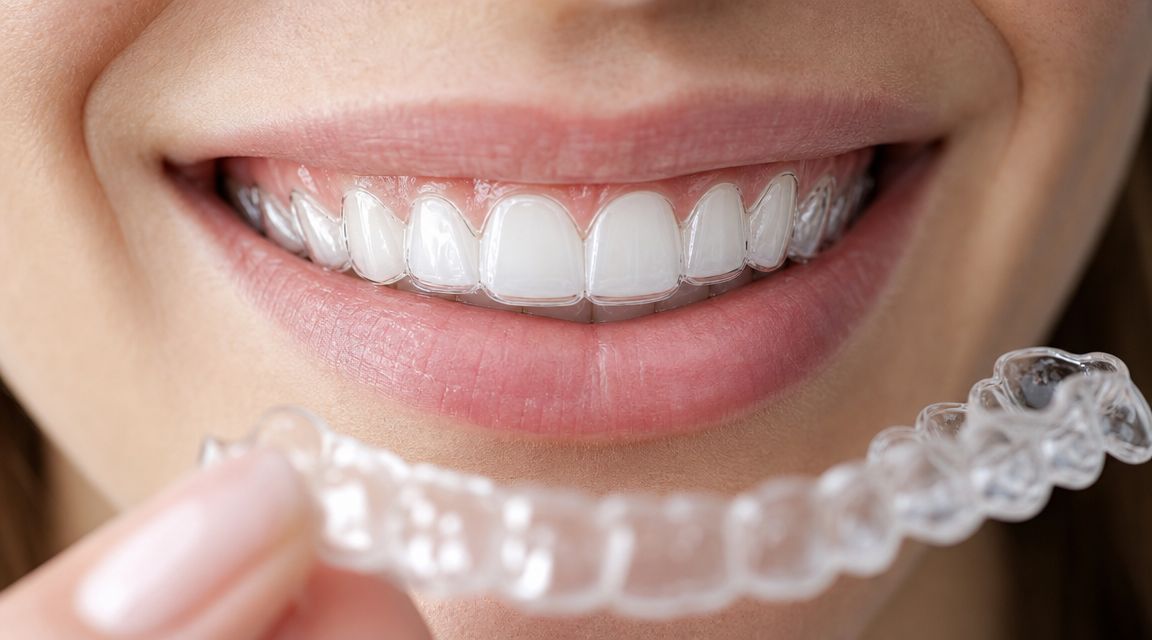
What Does Invisalign Look Like on Teeth: Invisalign: What
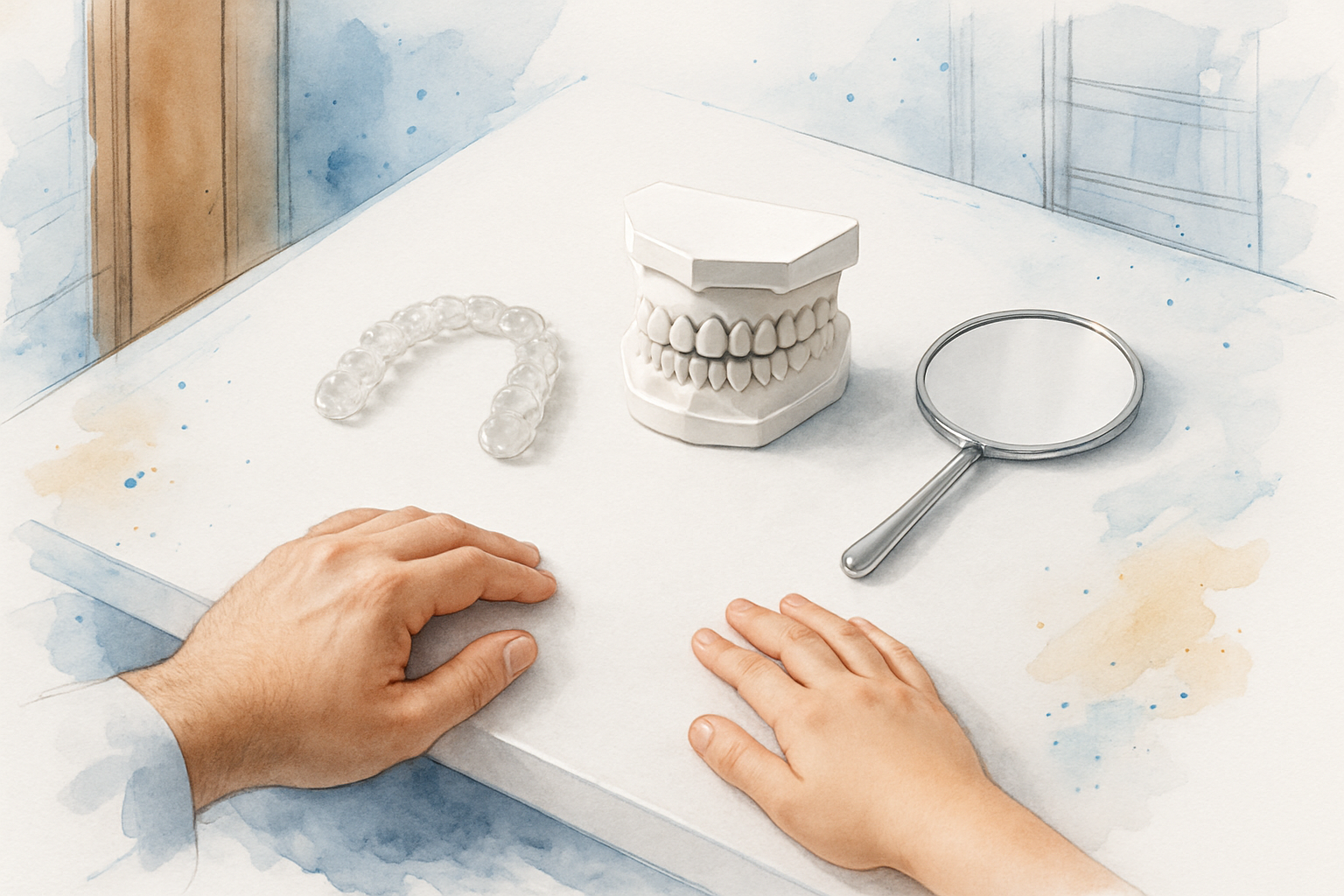
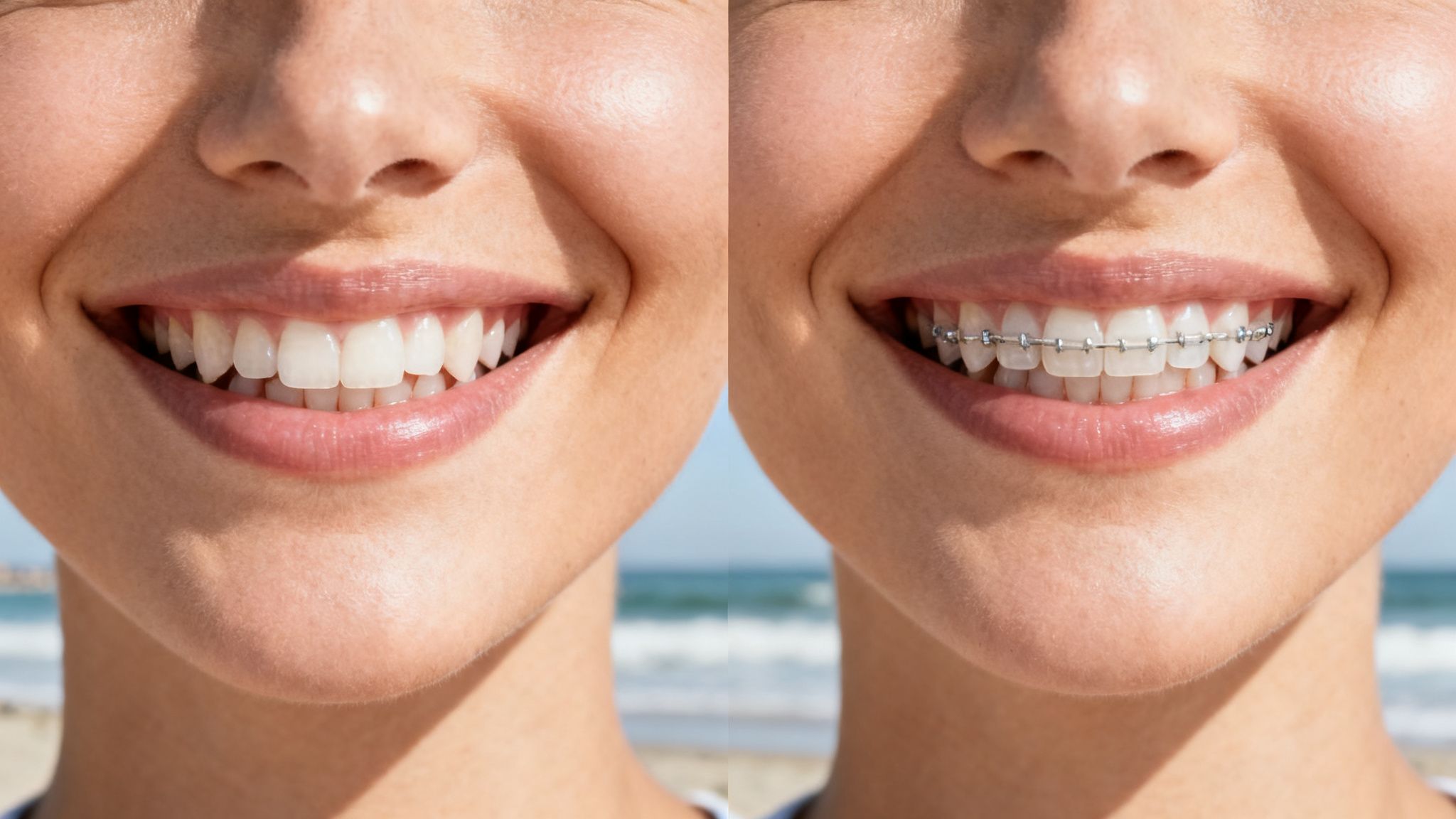
You're probably asking the same practical question we hear in consultation all the time in Huntington Beach. What does Invisalign look like on teeth when you're talking, smiling, laughing, or standing close to someone? Not in a studio photo. In real life.
That's the right question to ask. Invisalign is popular because it's discreet, but “clear” doesn't mean “entirely impossible to see.” What people usually want to know is how noticeable it is from across the room, across a dinner table, and in a close conversation. That answer depends on the tray itself, whether attachments are needed, and where you are in treatment.
What Invisalign Really Looks Like A Patient's Guide
If you're choosing between aligners and braces, appearance often matters just as much as convenience. That's not vanity. It's daily life. You may be in school, at work, on video calls, or taking photos with friends and family, and you want to know what people will see.
Invisalign has been used by over 18 million patients globally, including more than 4.5 million teens, and one survey cited that 84% of prospective teen patients preferred Invisalign over traditional braces because of its appearance and social comfort according to these Invisalign statistics. That lines up with what many patients are looking for: something lower profile than brackets and wires.
What most people notice first
From a normal social distance, “orthodontics” don't stand out immediately. Instead, your smile as a whole tends to be noticed. With Invisalign, the aligner tends to read more like a smooth surface over the teeth than a separate appliance.
Up close, people may notice a slight shine or edge around the teeth. If attachments are part of your plan, those can make the aligners more visible. That doesn't mean they look bulky. It means the look shifts from “barely there” to “subtle but detectable.”
Most patients aren't asking whether Invisalign is invisible under magnification. They're asking whether it looks natural in everyday life. Usually, it does.
If you want a broader primer on aligner treatment before focusing on appearance, this overview of what clear aligners are is a useful starting point.
The honest short answer
Here's the straightforward version:
- From conversational distance: usually hard to notice
- In photos: often much less obvious than braces
- Very close up: a clear tray and sometimes small attachments can be seen
- As treatment progresses: the aligner stays subtle, but tooth movement becomes more visible
That last point matters. Sometimes the thing people notice isn't the tray. It's that your teeth are starting to line up.
The Up-Close Appearance of an Invisalign Aligner
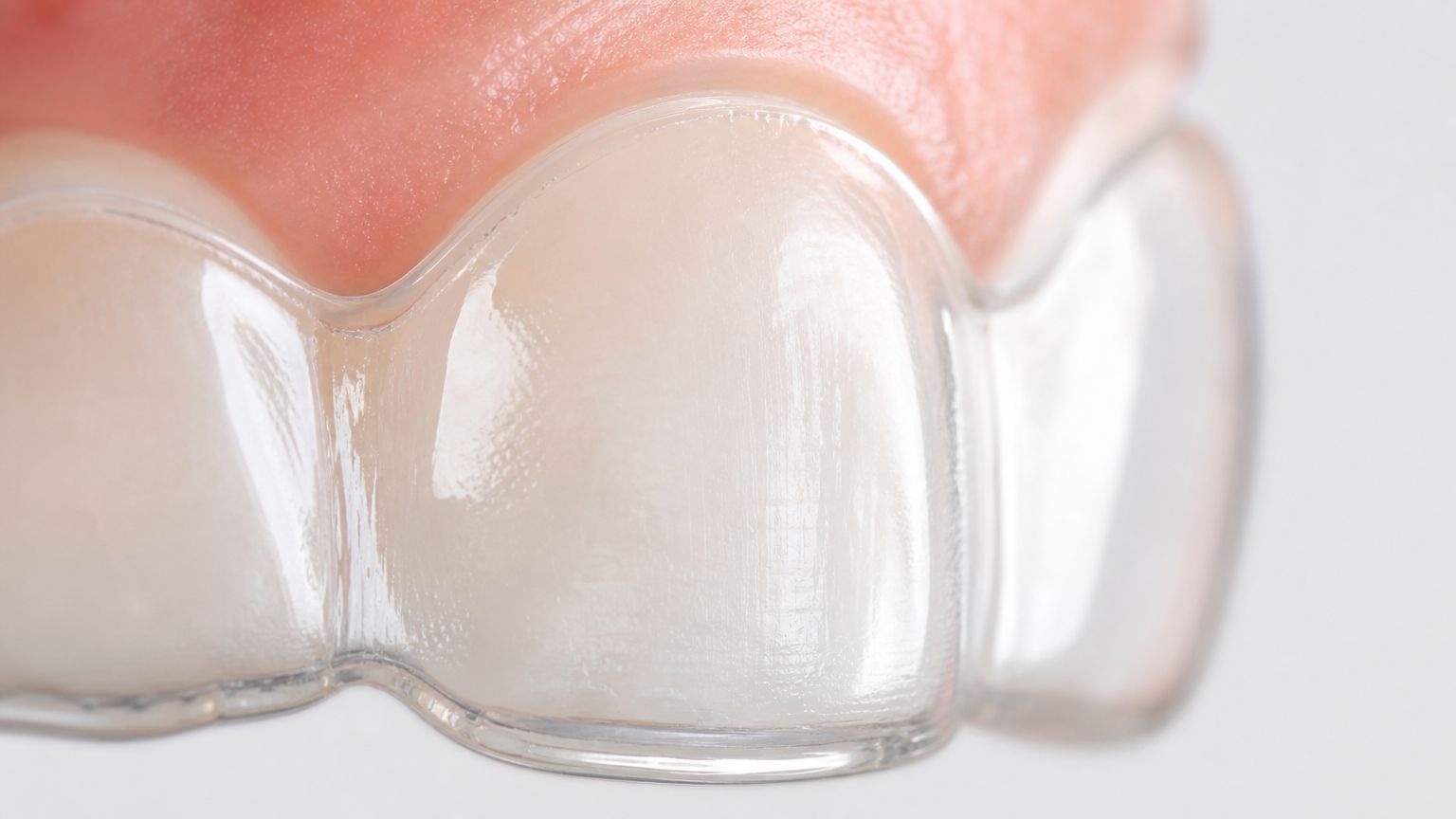
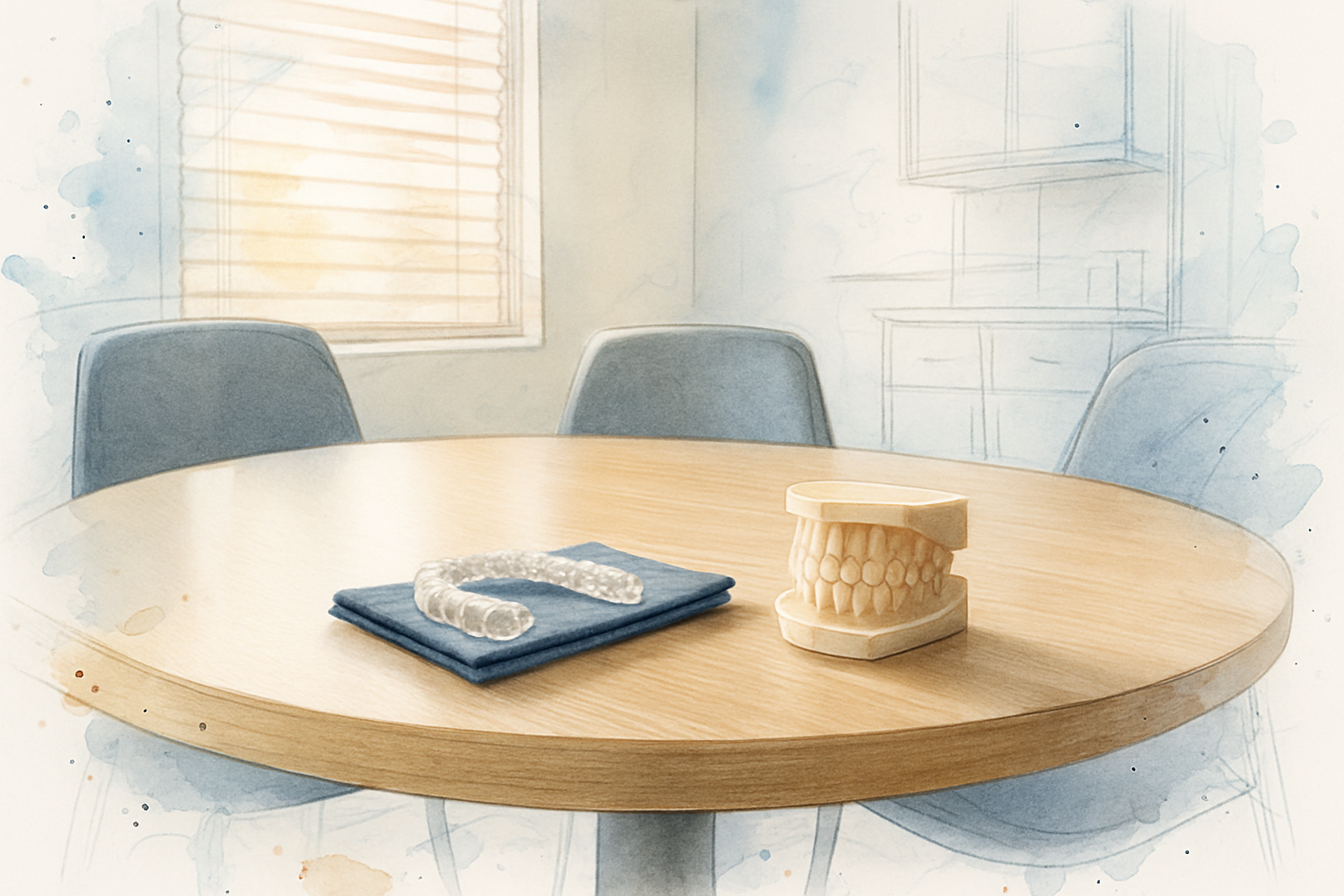
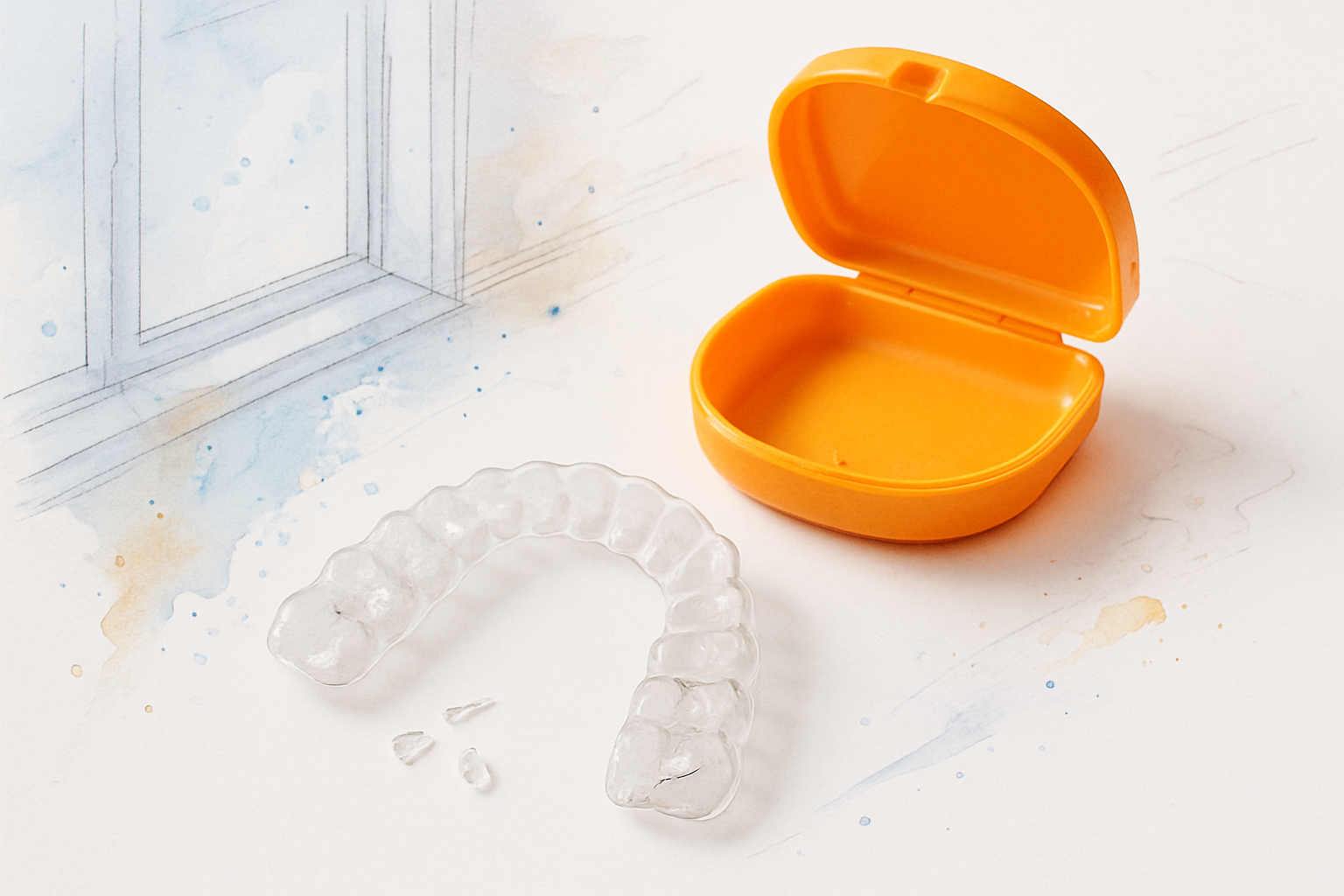
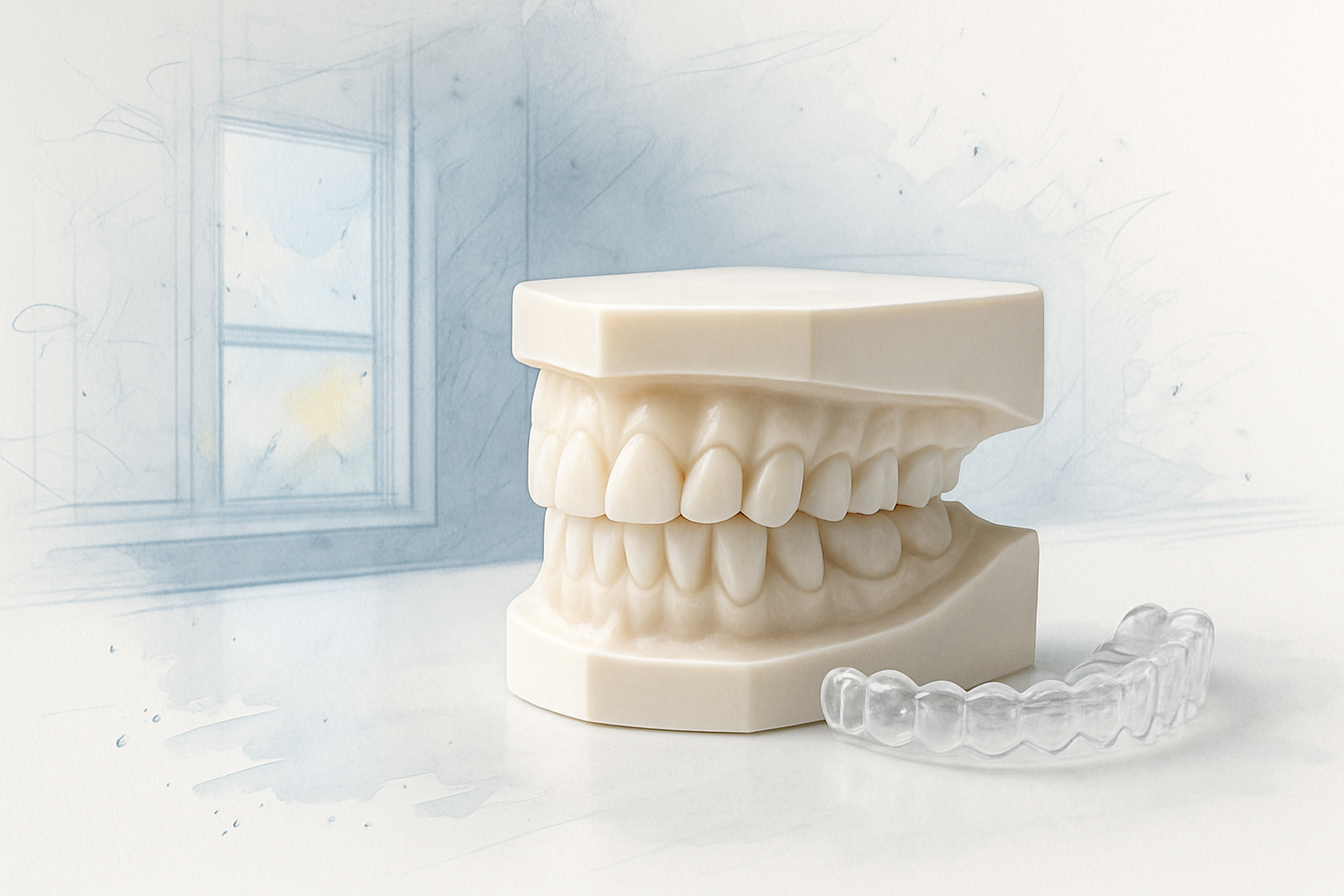
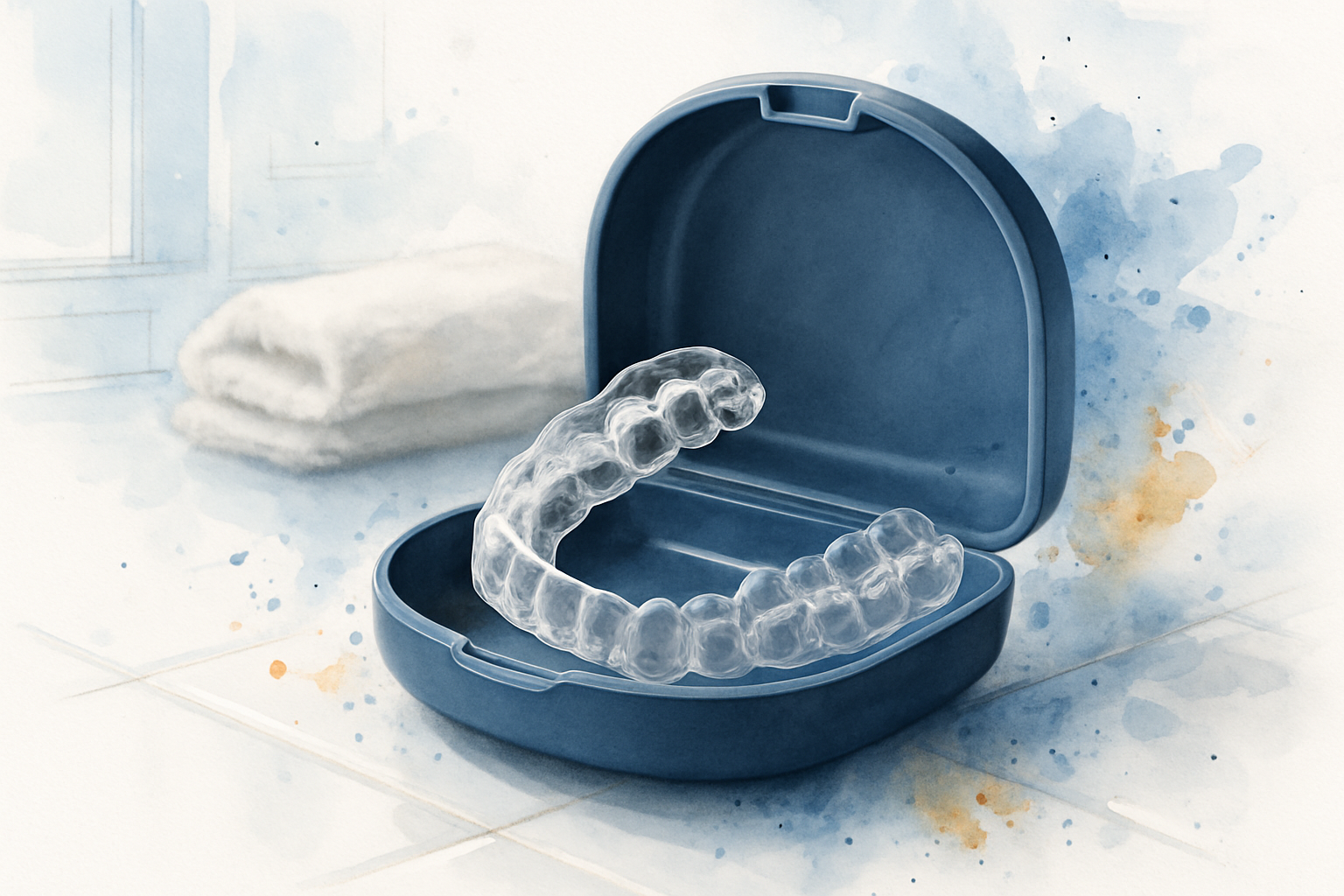
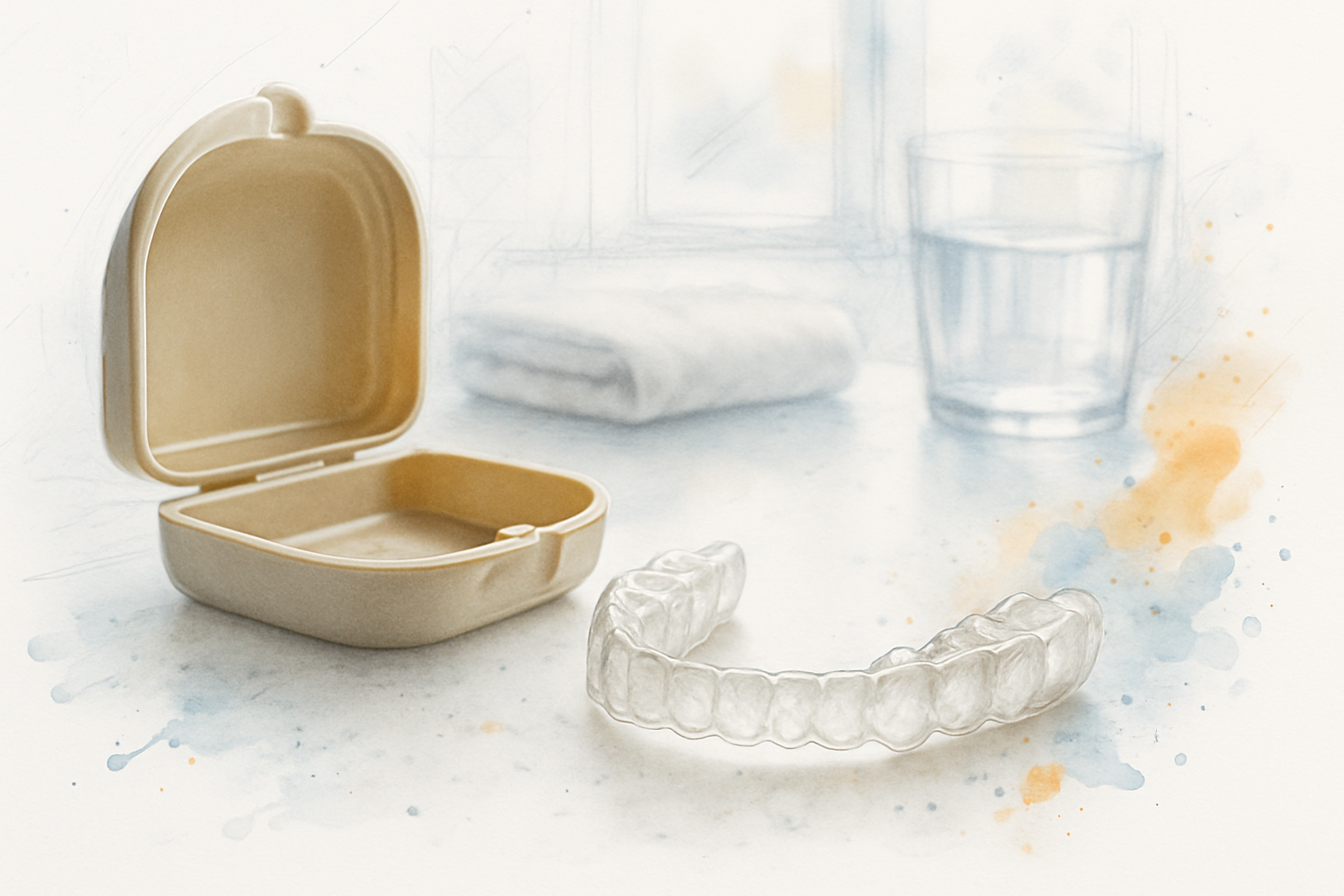
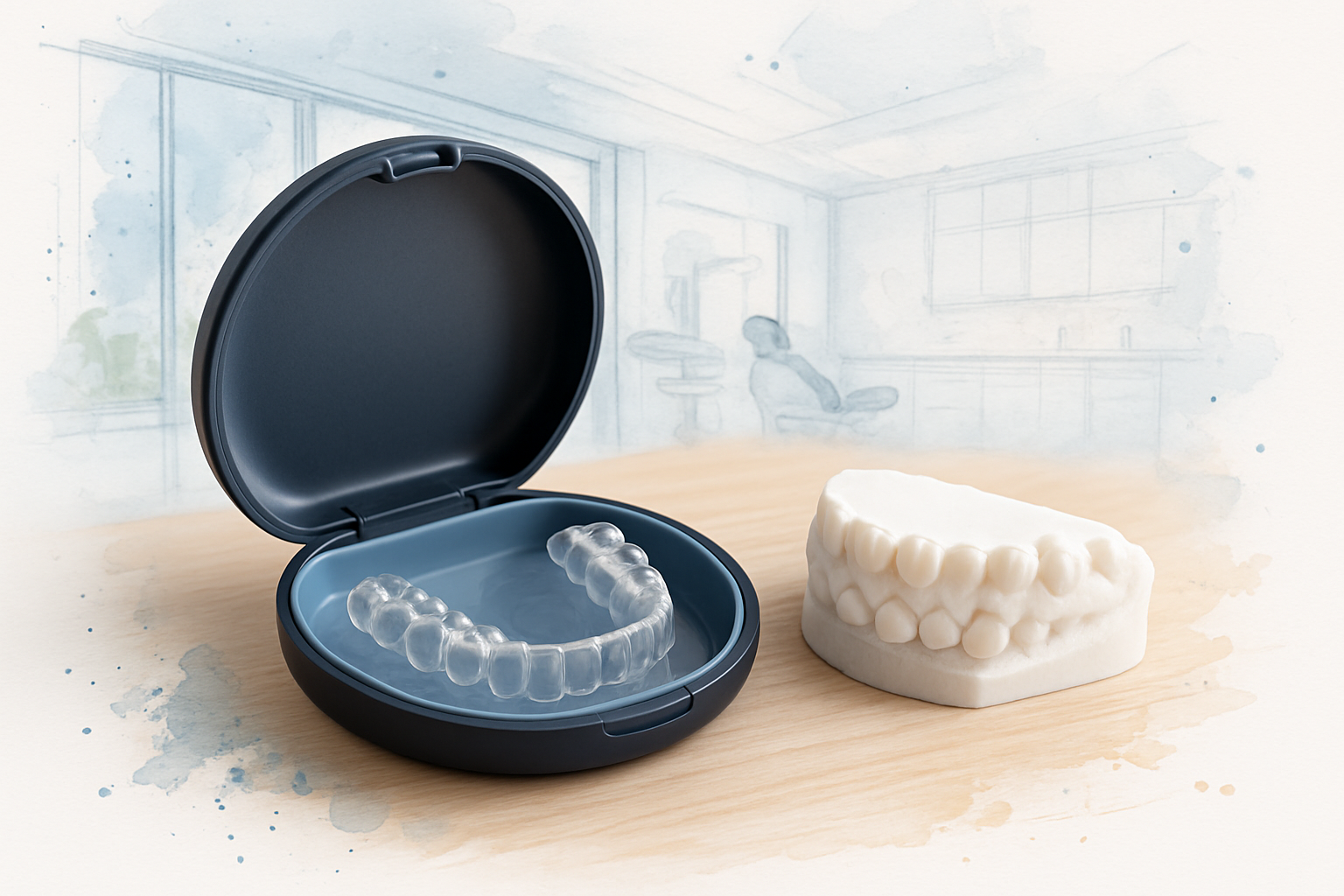
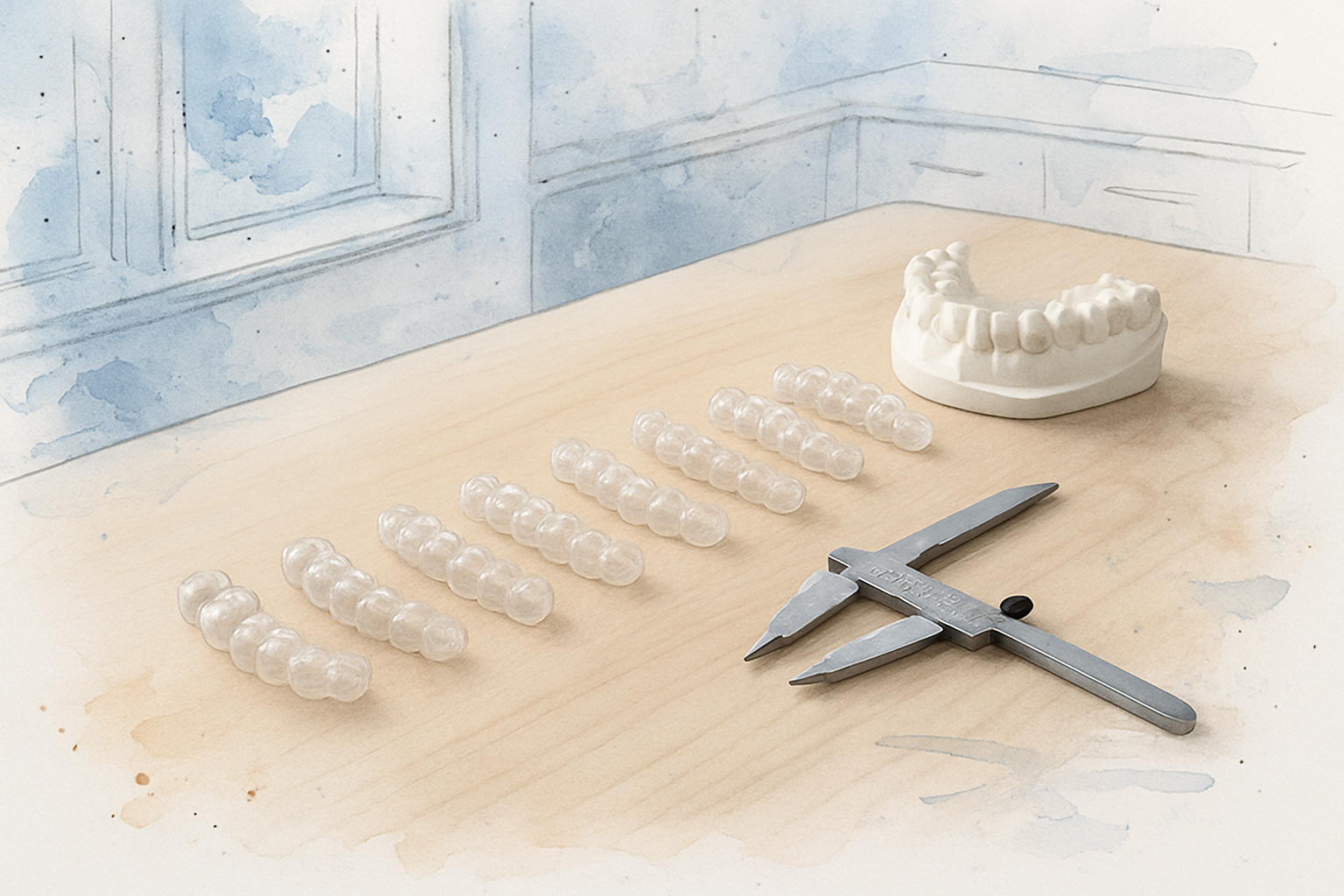
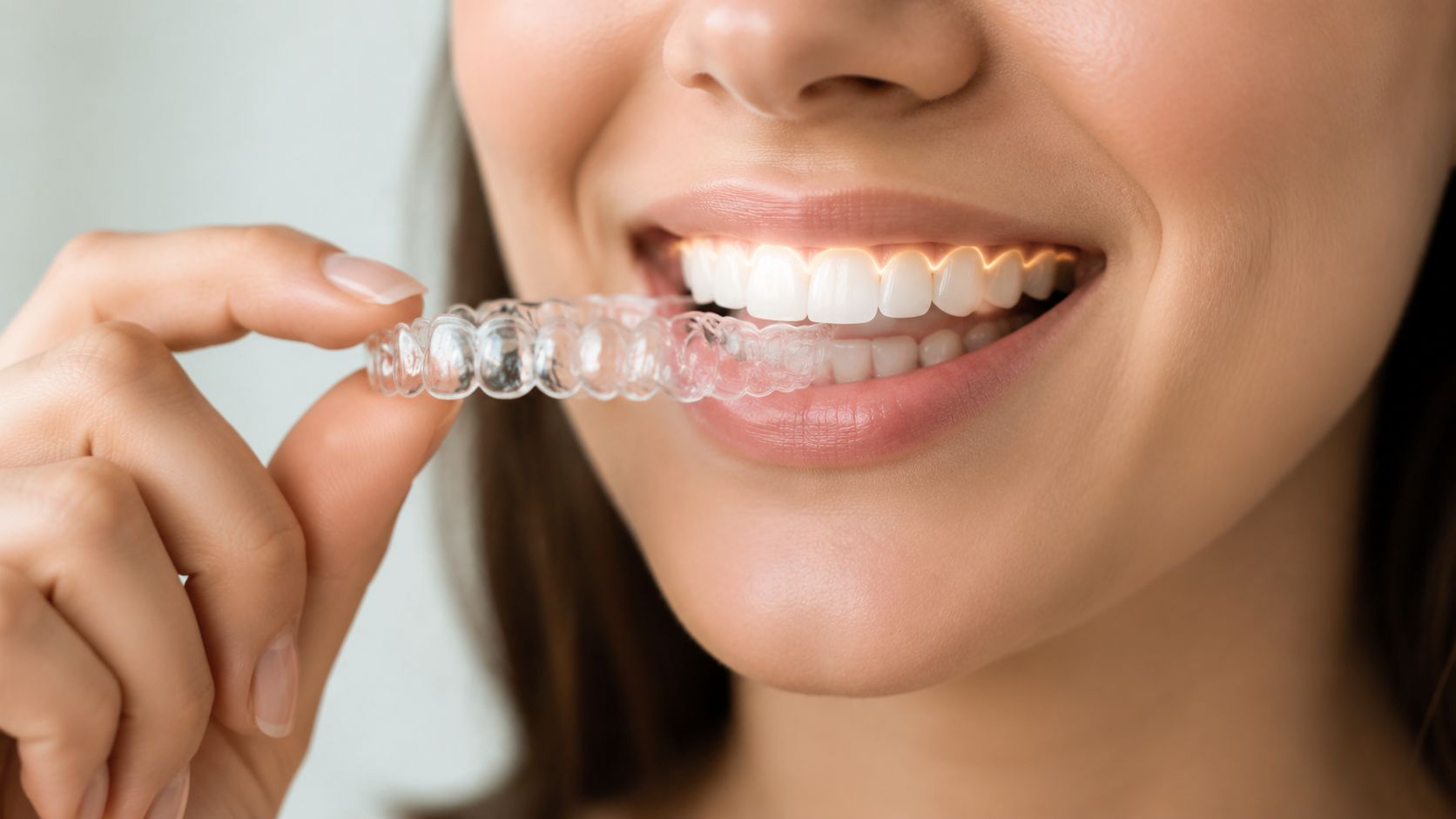
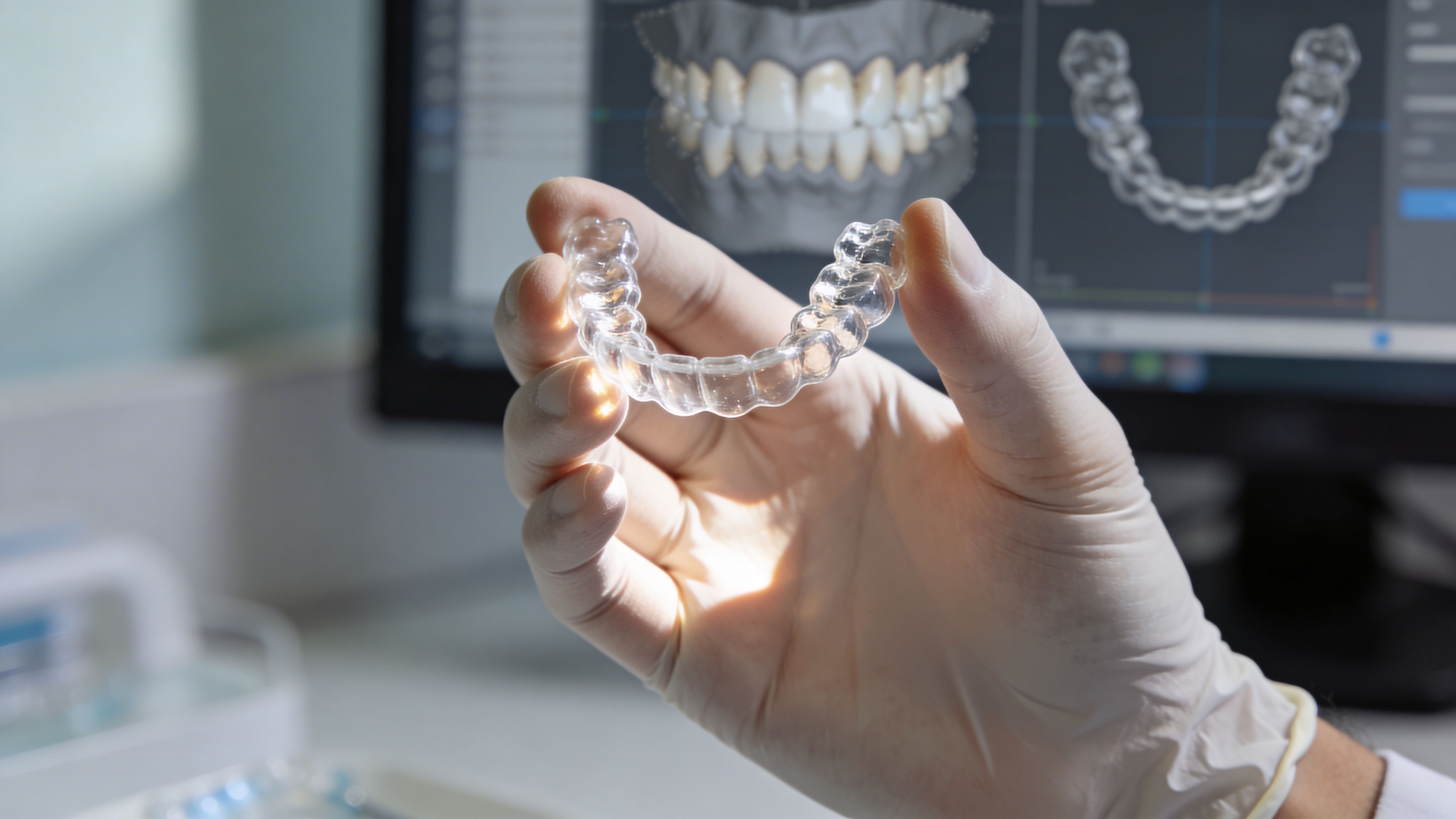
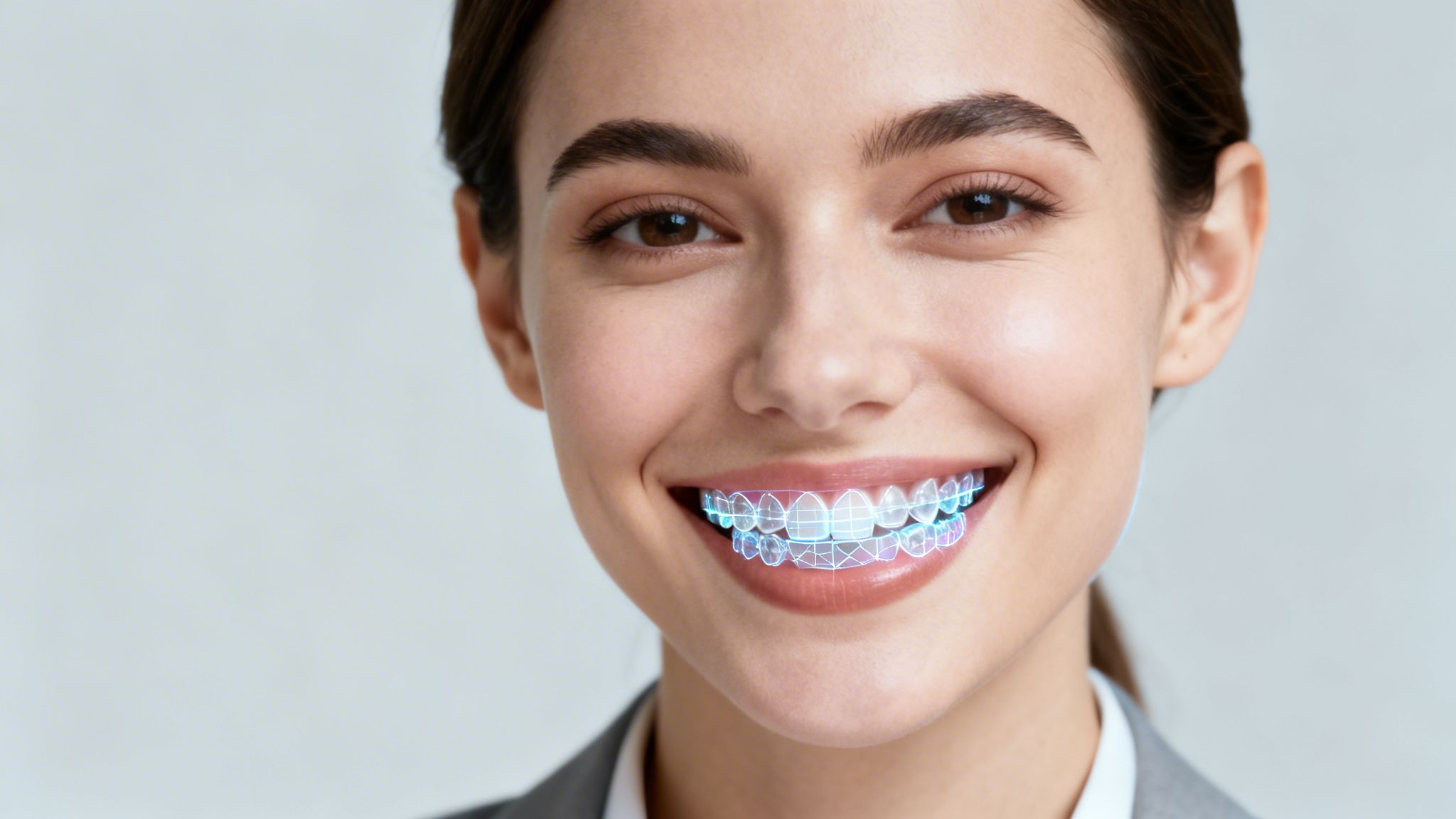
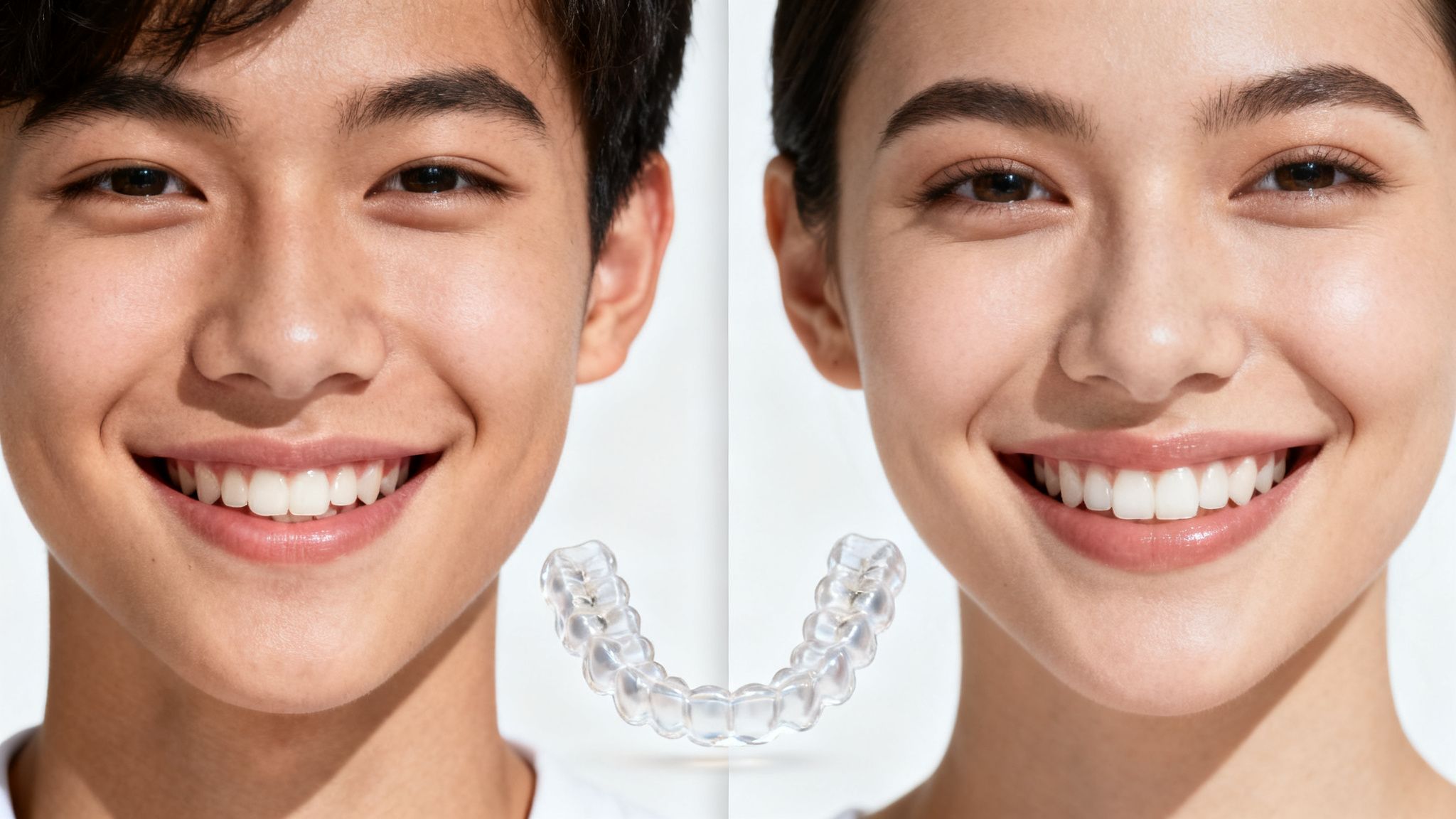
When an Invisalign tray is on your teeth, it looks like a thin, transparent shell that fits closely over each tooth. Invisalign describes the material as a biocompatible, clear medical-grade plastic intended to be nearly invisible in normal conversation and smiling, with more of a faint sheen at close range, as shown on the official Invisalign site.
It looks more like a glossy overlay than a device
Patients often expect something that looks like a sports mouthguard. That isn't what a properly fitted aligner looks like. A mouthguard is thicker and bulkier. An aligner is trimmed to fit closely around the teeth and along the gumline, so the profile is much lower.
That snug fit is why Invisalign tends to blend in better than people expect. Light reflects off the plastic a bit, so the teeth can look slightly glossier than usual, especially under bathroom lighting, flash photography, or bright sun.
What you see from different distances
The visibility changes with distance and lighting.
| Distance | What Invisalign usually looks like |
|---|---|
| Very close up | Clear edges, slight shine, and fine surface texture may be visible |
| Across a desk or dinner table | Usually reads as natural teeth with a smooth finish |
| In normal smiling or conversation | Often not the first thing people notice |
That's also why some patients say friends didn't realize they were wearing aligners until they mentioned it.
Practical rule: The tray itself is usually less noticeable than people fear. What makes it visible most often is glare, attachments, or wear on the plastic.
What doesn't work visually
A few things can make aligners stand out more than they need to:
- Wearing a stained tray: coffee, tea, or other dark drinks can dull the clear look
- Using abrasive cleaners: scratches make plastic look cloudy
- Ignoring buildup: dried saliva and plaque make the tray more obvious
A fresh, clean aligner tends to look much subtler than one that's been worn carelessly.
Understanding Attachments and How They Affect Visibility

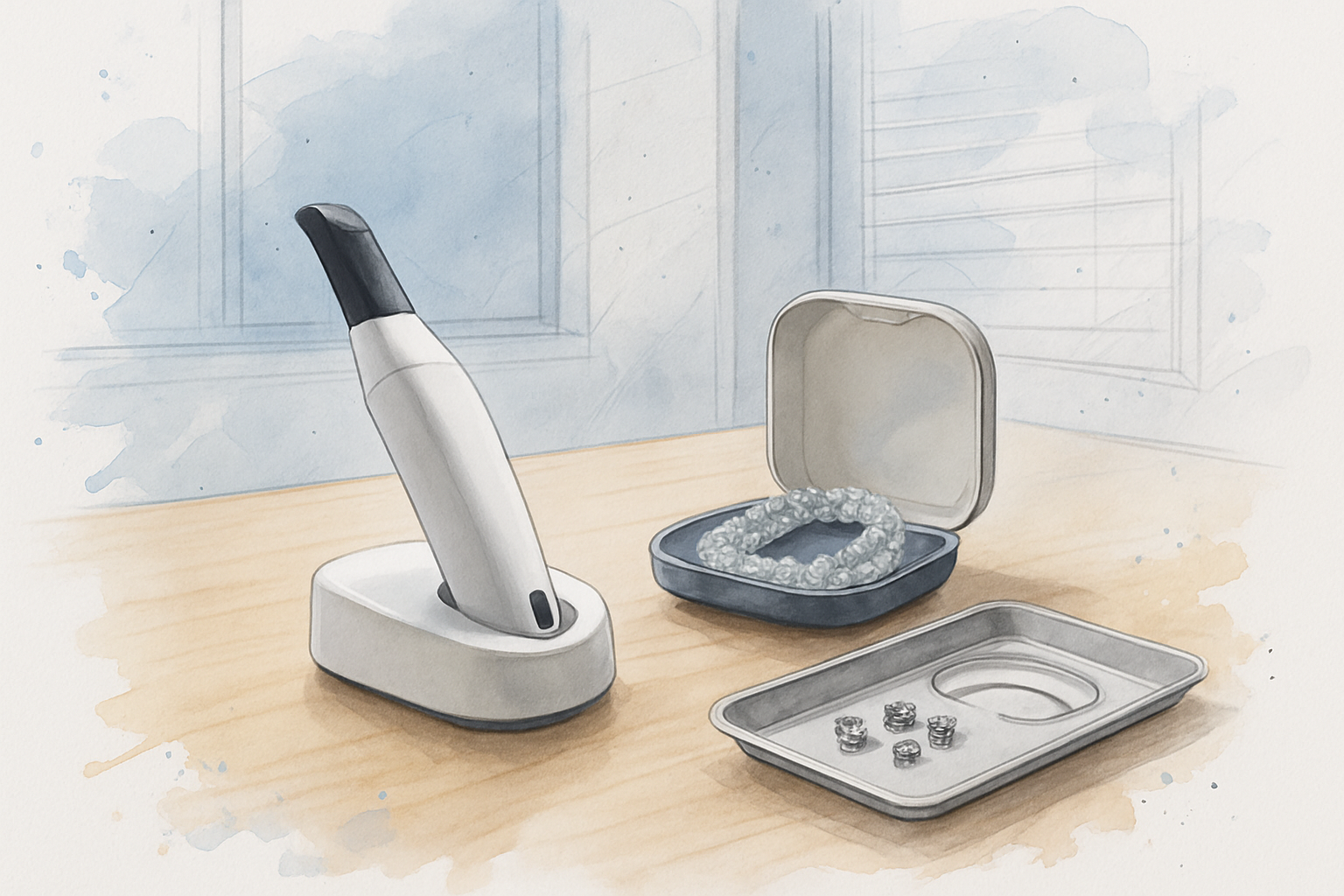
Attachments are the part many patients don't know about until treatment planning. They're small tooth-colored shapes placed on certain teeth so the aligner can grip better and apply force more precisely.
If you've been wondering why one person's Invisalign looked almost invisible and another person's looked a little more noticeable, attachments are often the reason.
Why attachments exist
Some tooth movements are simple. Others need extra control. An aligner on a perfectly smooth tooth can only do so much, so attachments give the tray something to engage.
That means attachments aren't a flaw in the system. They're often the reason the system works well.
For a plain-language explanation of the mechanics, this article on how clear aligners work gives helpful background.
How visible they really are
Attachments can catch light differently than the tooth surface, and they create small contours under the aligner. So yes, they can make Invisalign more visible.
At the same time, one source notes that around 70% of patients report attachments are still significantly less visible than traditional braces, according to this discussion of how Invisalign appears with attachments.
Here's the actual-world version:
- Front teeth attachments: usually the easiest to notice, especially up close
- Side teeth attachments: often less obvious in normal conversation
- Larger or multiple attachments: can create more texture under the tray
- No attachments: usually the cleanest, least noticeable look
What patients should expect
Attachments don't usually make you look like you have braces. They make the aligners look less perfectly smooth.
If attachments are part of your plan, expect Invisalign to look subtle, not invisible.
That distinction helps manage expectations. Patients who understand that upfront are usually much happier than patients who expect a completely undetectable appliance and then discover small buttons on the front teeth.
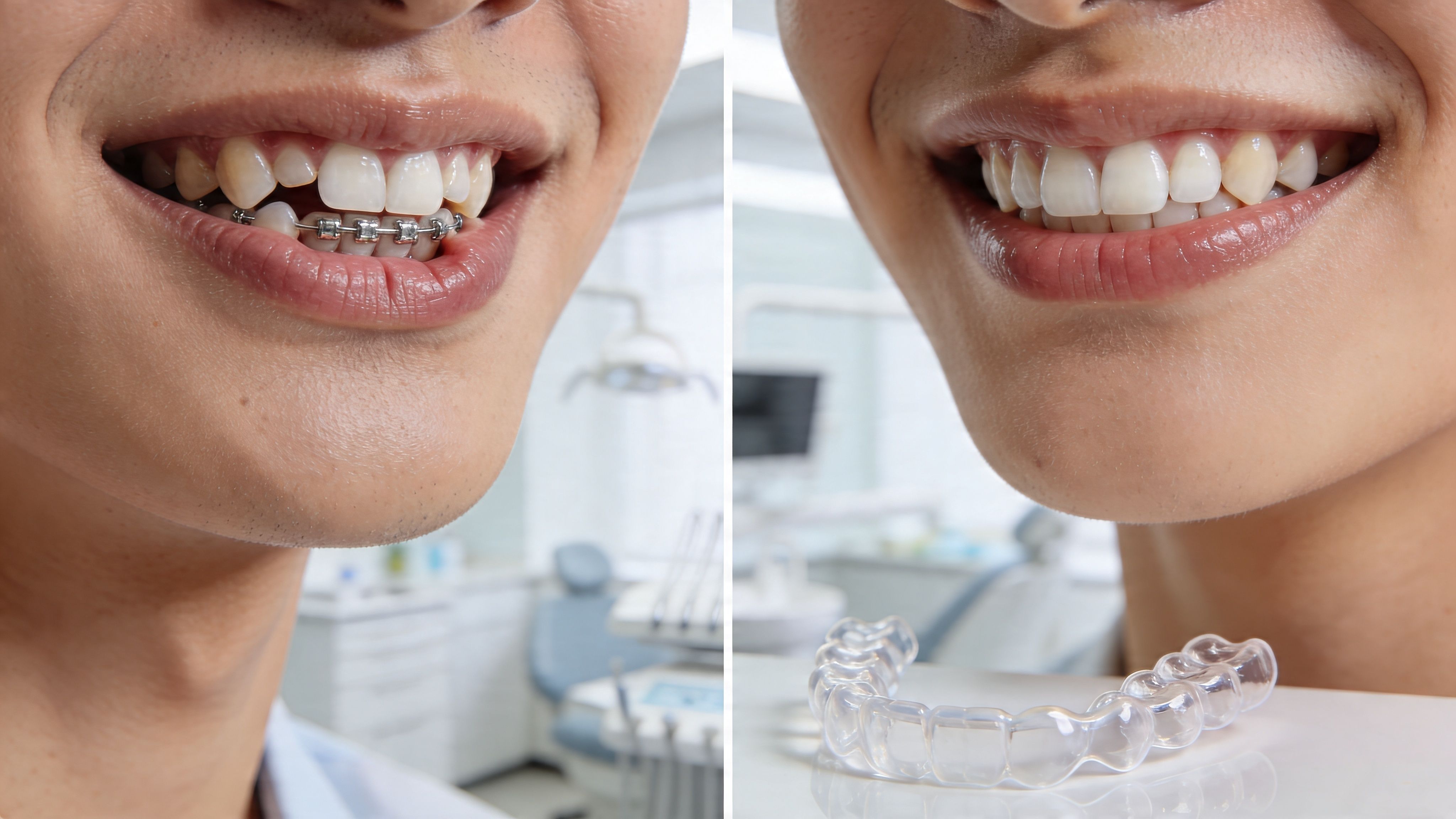
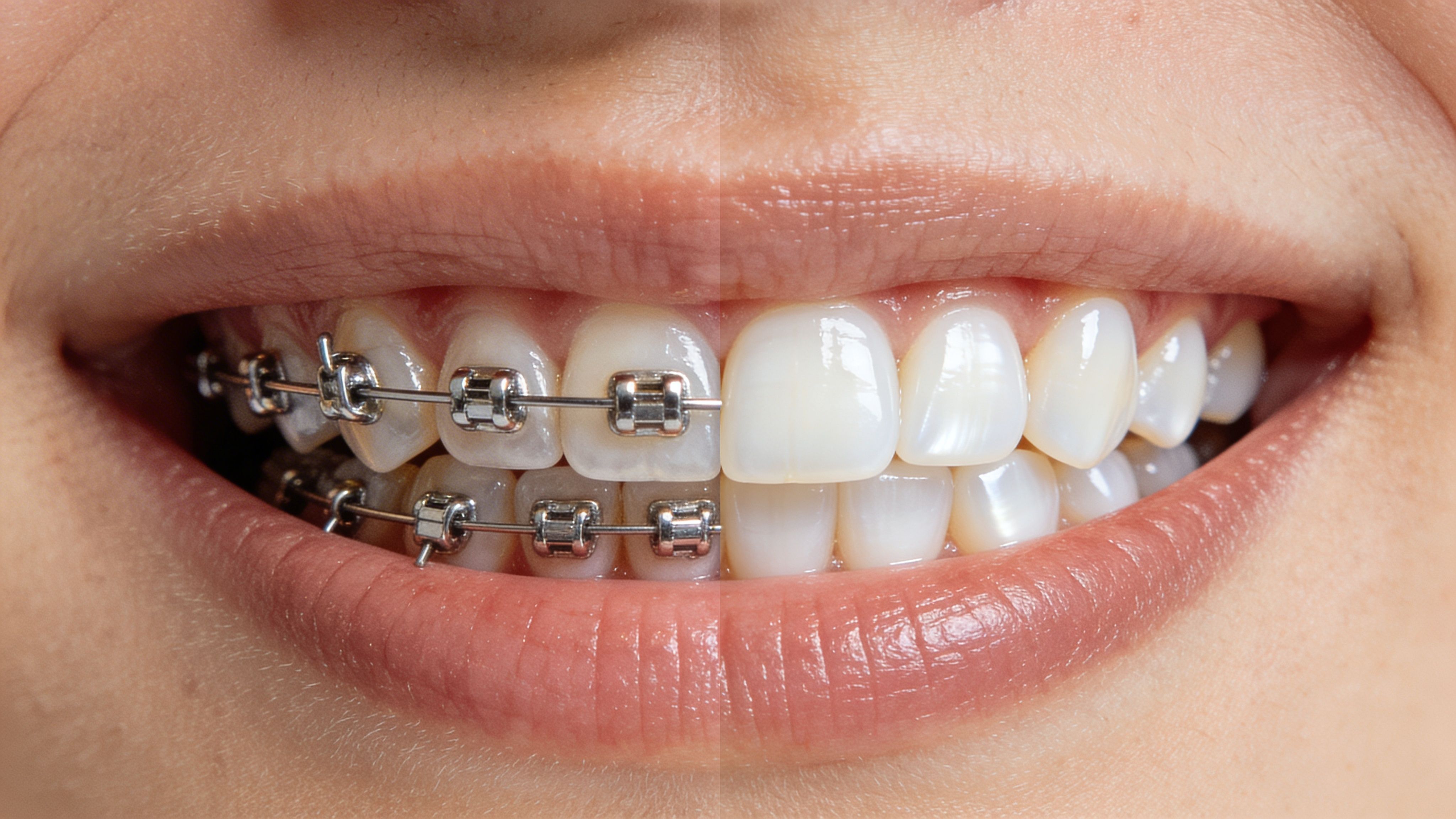
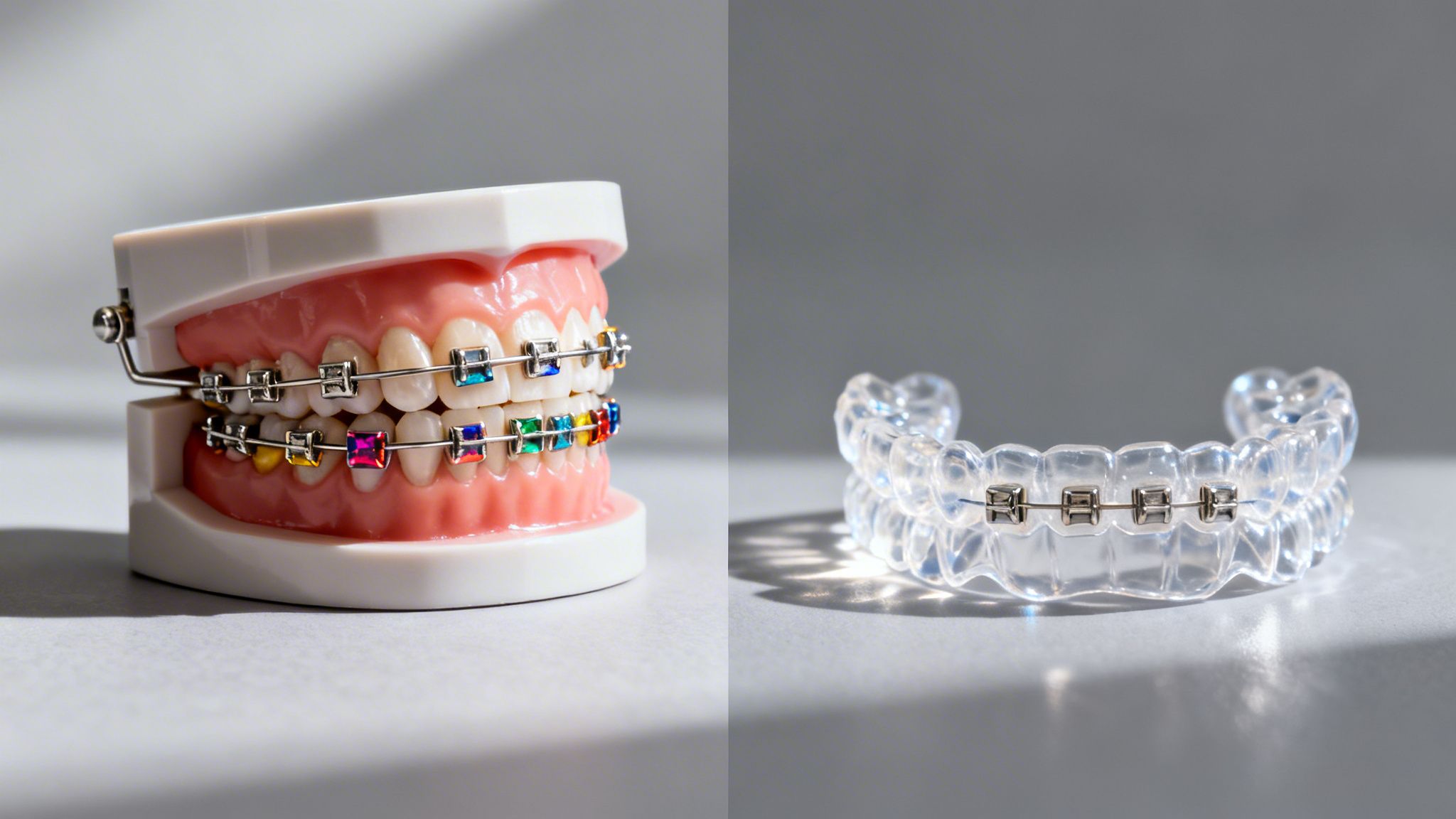
Invisalign vs Braces A Visual Comparison
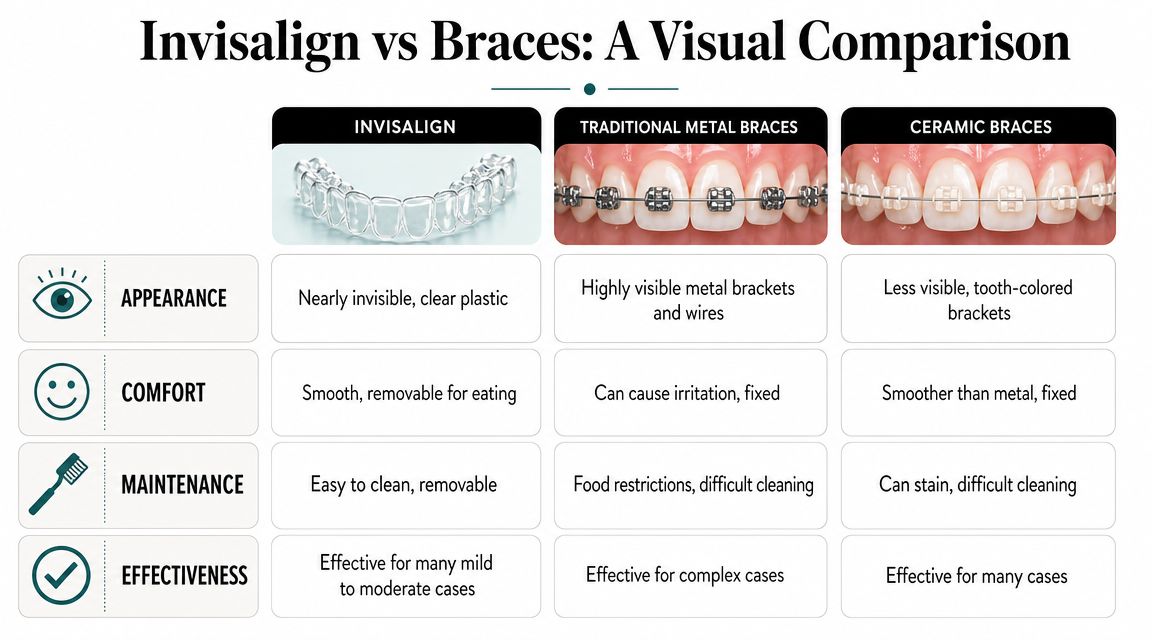
A visual comparison helps more than general labels like “discreet” or “noticeable.” At Magic Fox Orthodontics, the main cosmetic trade-off is usually between Invisalign, Iconix esthetic brackets, and traditional metal braces.
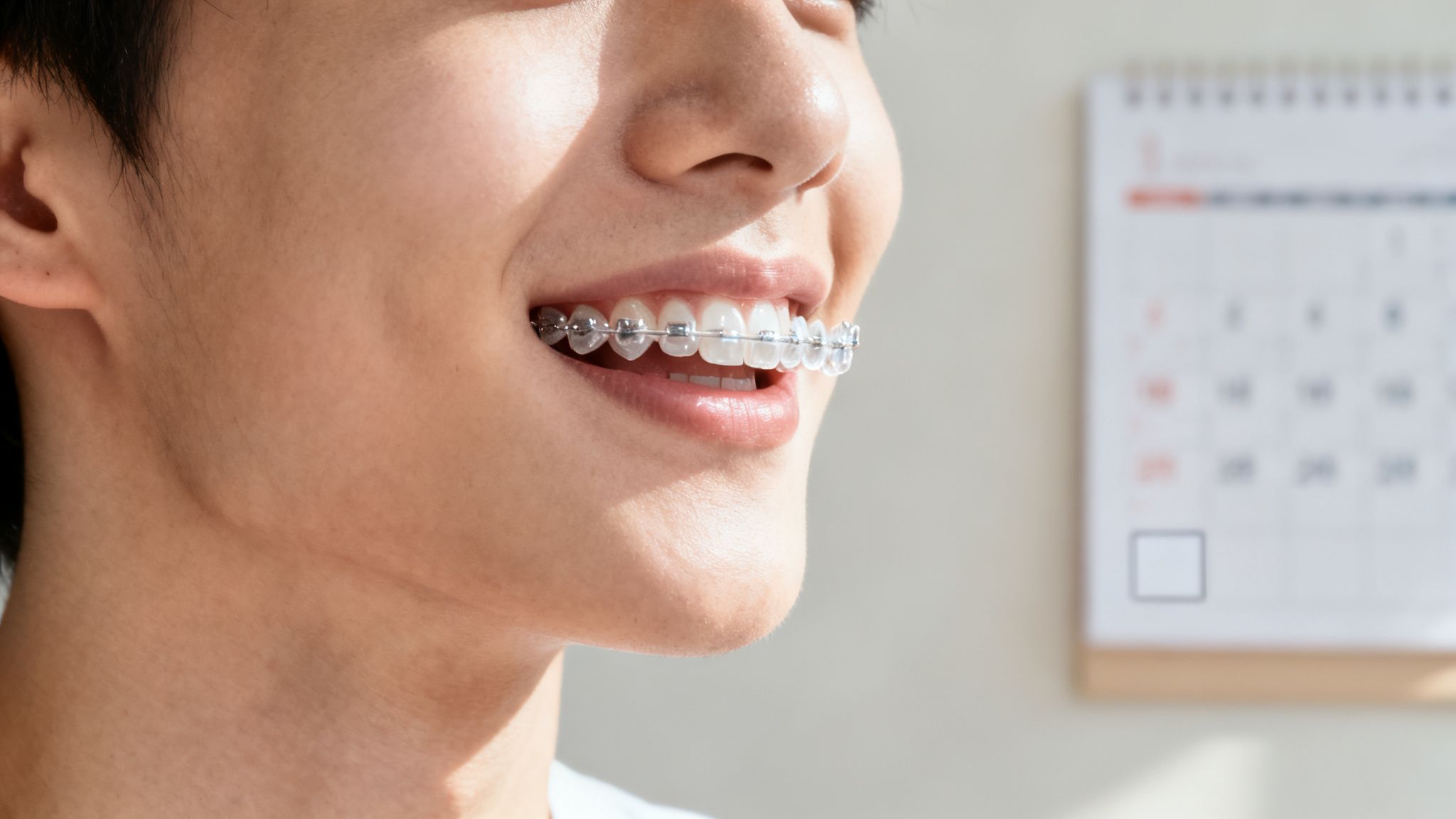
Invisalign is the lowest-profile option visually for many patients. Iconix brackets are still visible, but their champagne color softens the look compared with silver metal. Traditional braces are the most obvious because the brackets and wire are part of what people see immediately.
Appearance Comparison: Invisalign vs. Braces
| Feature | Invisalign | Iconix Brackets (Champagne) | Traditional Metal Braces |
|---|---|---|---|
| Conversational distance | Usually the least noticeable | Noticeable, but softer-looking than silver metal | Most noticeable |
| Close-up appearance | Clear tray edges and possible attachments | Brackets are visible on each tooth | Brackets and wire are clearly visible |
| Photos | Often subtle unless light catches the tray | Distinct orthodontic look | Classic braces appearance |
| Tooth surface look | Smooth plastic overlay | Individual bracket shapes | Individual bracket shapes with metal contrast |
| Best fit for appearance-conscious patients | Often yes | Sometimes, if fixed appliances are preferred | Usually chosen for reasons beyond appearance |
What works for different priorities
Some patients want the least noticeable option possible. Others care less about visibility and more about not having to remember to wear aligners. That's where the choice becomes personal.
- Choose Invisalign if visual subtlety is high on your list and you're comfortable with a removable appliance.
- Choose Iconix if you want fixed braces but prefer a less stark look than traditional metal.
- Choose metal braces if you want a fixed option and don't mind the appliance being clearly visible.
If you're weighing the pros and cons side by side, this post on Invisalign vs traditional braces can help you think through the decision in practical terms.
One note about the comparison graphic above: it mentions ceramic braces, but that isn't a treatment discussed here. For patients in Huntington Beach and Fountain Valley, the relevant comparison in this office is Invisalign, Iconix, and traditional metal braces.
Your Smile's Visual Journey During Treatment

What does Invisalign look like on teeth over time? That's different from what it looks like on day one.
Aligners are typically changed every 1 to 2 weeks and worn 20 to 22 hours per day, and because each tray applies mild pressure, the look of your smile changes gradually as treatment moves forward. Later stages can show more obvious alignment and space closure, as described in this overview of how clear aligners transform smiles.
Early treatment
At first, the biggest visual change is the tray itself. Your teeth won't look dramatically different right away, but you may notice the aligner edges and any new attachments when you look in the mirror.
Some patients also notice temporary shine, minor clouding as a tray gets older, or little marks from daily wear. That's normal. It doesn't mean something is wrong.
Mid-treatment
This is where things get interesting. Teeth often don't move in the simple, straight-across way people imagine.
A crowded area may open slightly before it closes. One tooth may look improved while another seems temporarily more prominent. That can feel odd if you're checking your smile every day, but it's part of moving teeth in a planned sequence.
Teeth sometimes look “in progress” before they look finished. That isn't backtracking. It's how many orthodontic movements unfold.
For patients who want examples of how those in-between stages can turn into a finished result, it helps to look at crooked teeth Invisalign before and after examples. To see real customer stories and learn more about Magic Fox Orthodontics, visit their success stories page.
Near the end of treatment
Closer to the finish, the aligner usually looks the same to other people, but your smile starts to look more balanced. At that point, the change others notice most is often your tooth position, not the appliance.
That's one reason Invisalign can feel low-drama socially. The hardware tends to stay subtle while the result becomes more visible.
Practical Tips to Keep Your Aligners Invisible
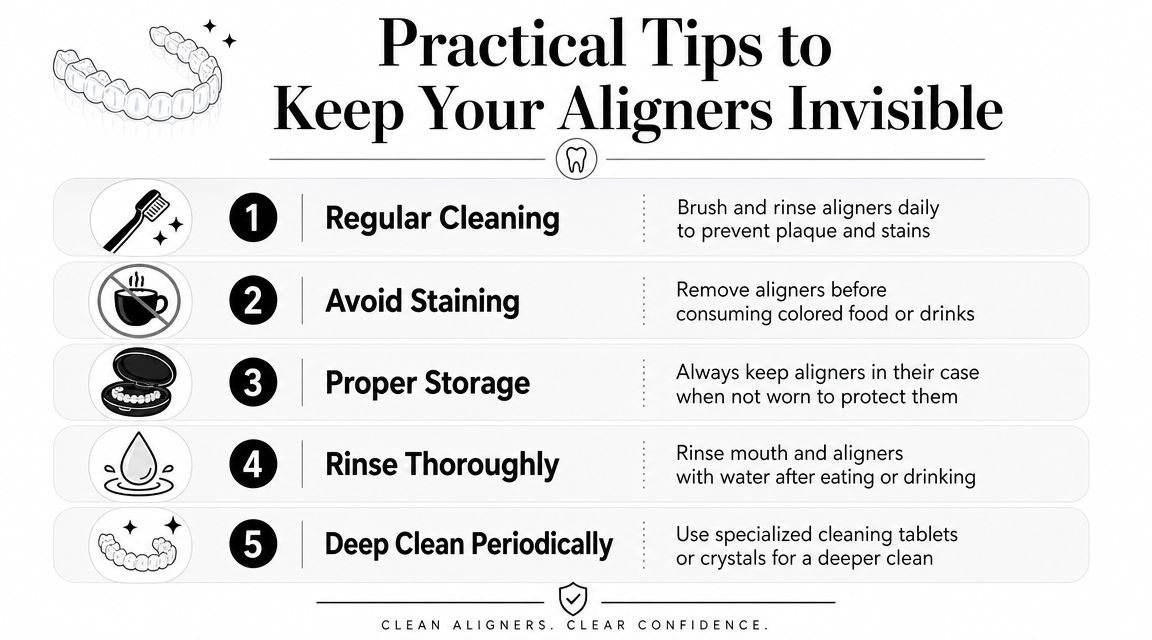
How invisible Invisalign looks depends partly on the material and partly on your habits. Clean trays look clearer. Worn, stained, scratched trays don't.
Habits that help
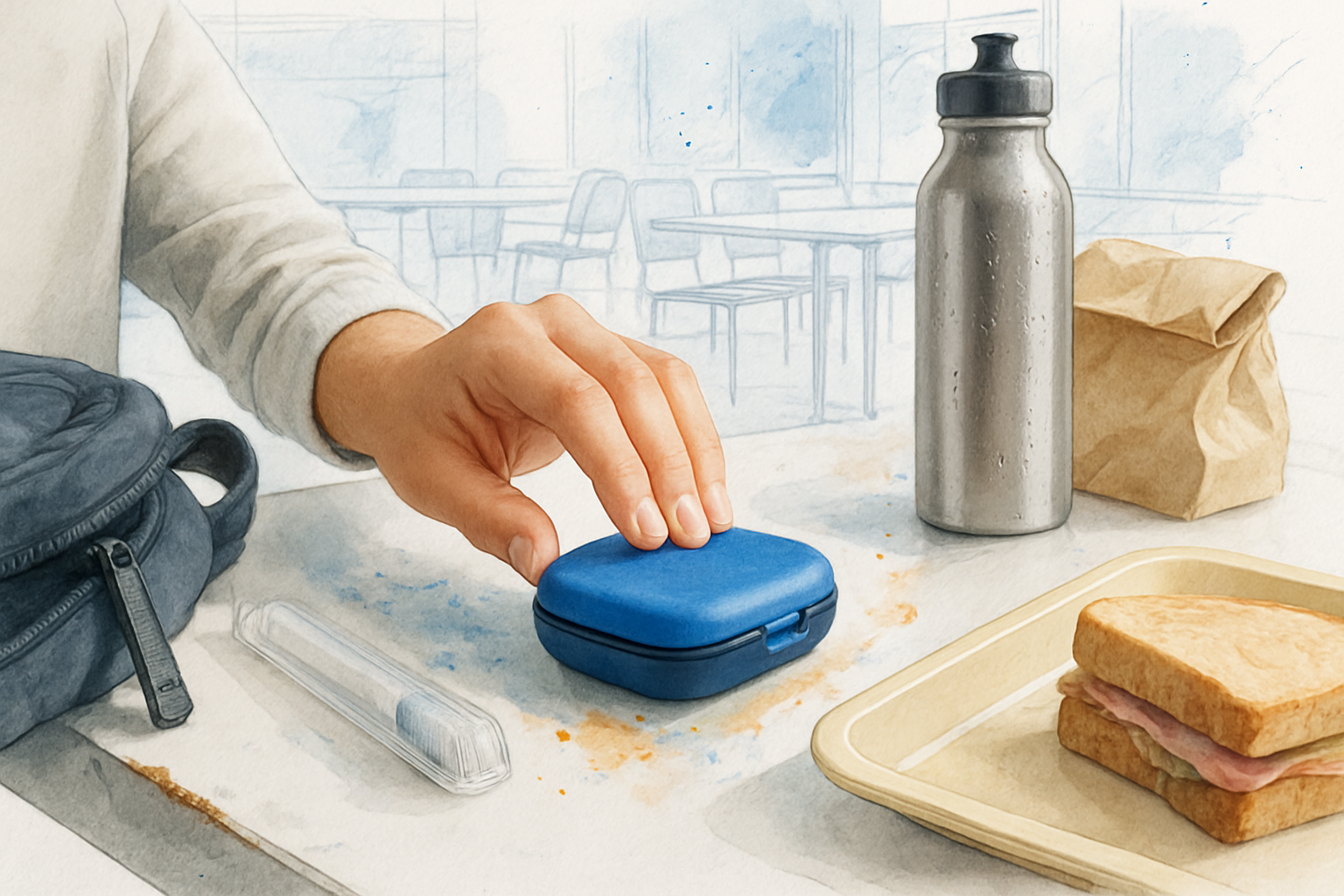
- Take aligners out for food and colored drinks: water is the safe exception. Coffee, tea, soda, sports drinks, and wine can discolor the plastic.
- Rinse before putting them back in: that cuts down on visible residue and trapped debris.
- Brush gently with the right cleaner: a soft brush and clear soap are safer than abrasive toothpaste.
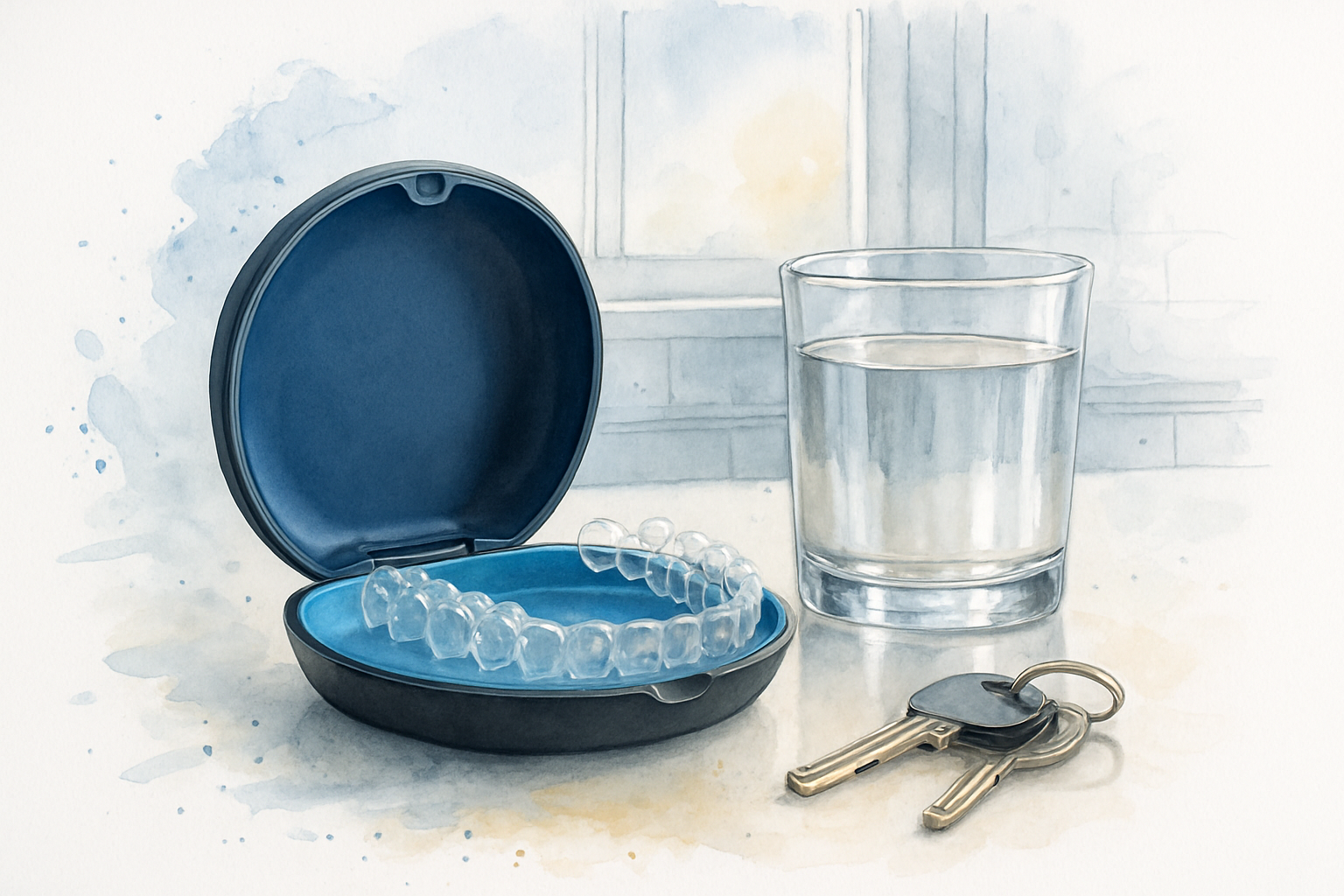
- Store them in their case: pockets and napkins are hard on trays and can leave them damaged or dirty.
- Deep clean when needed: if you want a basic guide on cleaning clear aligners properly, that resource covers the process clearly.
Habits that make them stand out
Cloudy trays are usually the result of avoidable wear. The common culprits are simple: drinking staining beverages with aligners in, scrubbing them too aggressively, or letting buildup sit on the plastic.
If you want office-specific guidance, Magic Fox Orthodontics has a helpful article on how to care for Invisalign.
A clean tray won't become invisible. But it will stay much closer to the discreet look most patients want.
Common Questions About Invisalign's Appearance
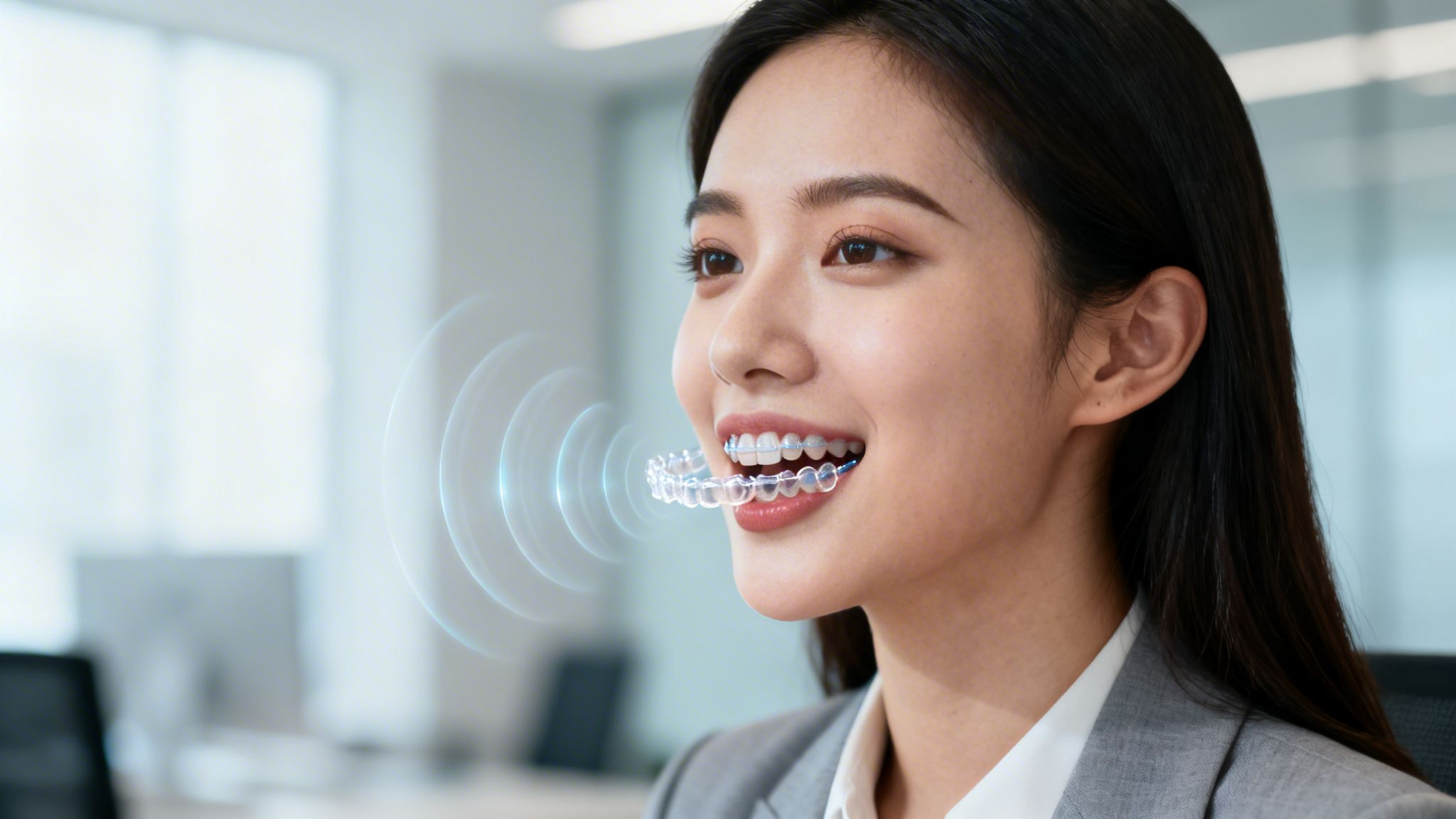
Do people notice Invisalign when you talk?
Usually not right away. In normal conversation, attention is usually drawn to your face and smile first. If they're very close, or if light catches the tray, they may notice a slight sheen.
Does Invisalign look different on certain teeth?
Yes. Front teeth tend to draw the most attention, so trays or attachments there are easier to spot. Back teeth matter less visually because they don't show as much when you speak or smile.
Will Invisalign make my teeth look bigger?
Sometimes the tray creates a slightly fuller outline because it covers the teeth. It's subtle. Most patients describe it more as a smooth overlay than a bulky look.
Can aligners look cloudy by the end of the tray?
They can. That usually comes from normal wear, minor scratching, or staining. It's one reason older trays often look a little more visible than fresh ones.
Will my teeth ever look worse before they look better?
They can look temporarily uneven during movement. A space may open before it closes, or one tooth may seem more prominent for a while. That doesn't mean treatment is off track.
Is Invisalign still less noticeable than braces if I need attachments?
For many patients, yes. It may not look as unnoticeable as trays alone, but it usually still looks lower profile than visible brackets and wires.
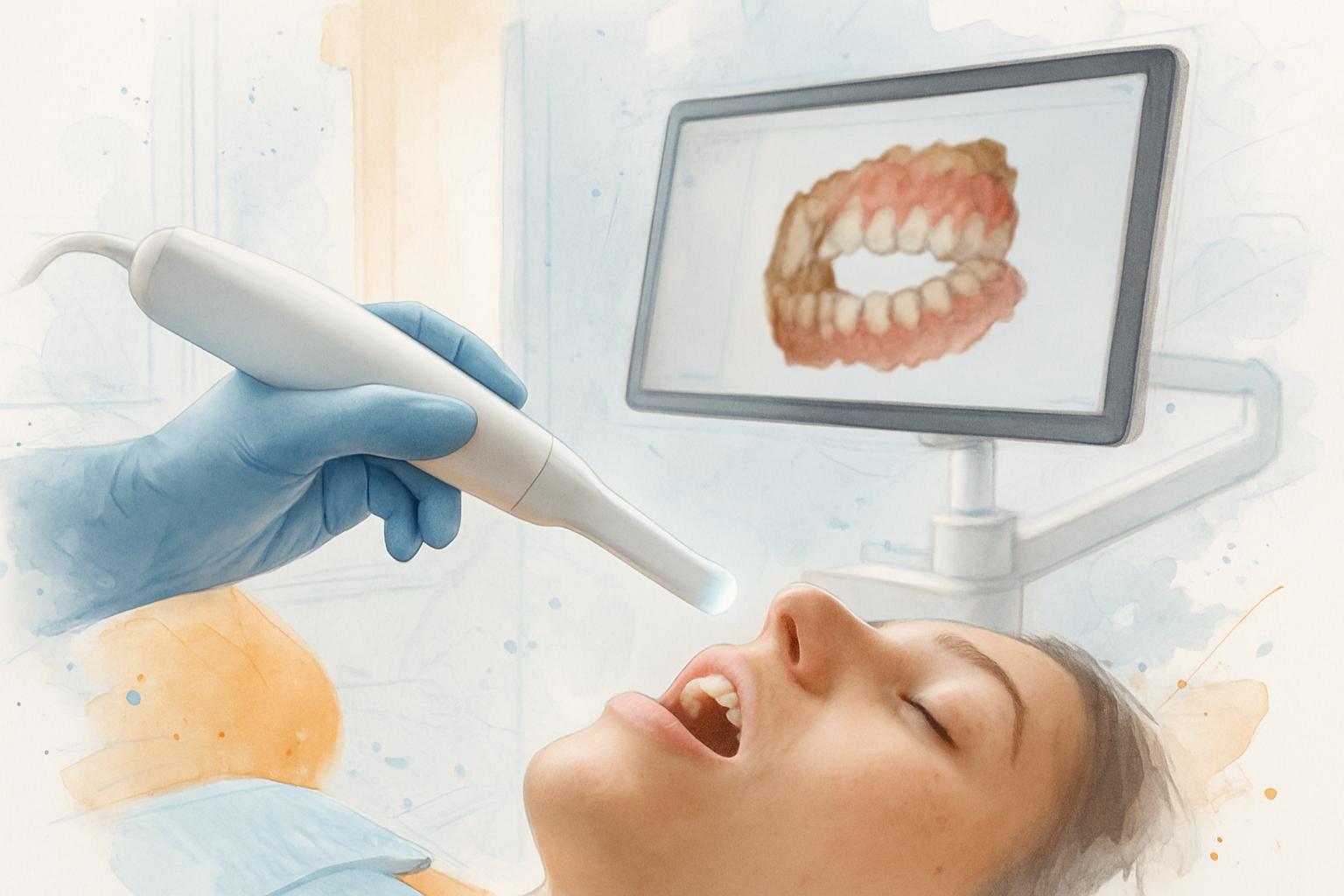
If you're trying to decide which option fits your day-to-day life, Magic Fox Orthodontics provides Invisalign, Iconix esthetic brackets, and traditional metal braces for patients in Huntington Beach and Fountain Valley. The useful next step is a consultation where Dr. Jeremy or Dr. Melissa can show you how your teeth, not just a stock photo, are likely to look during treatment.