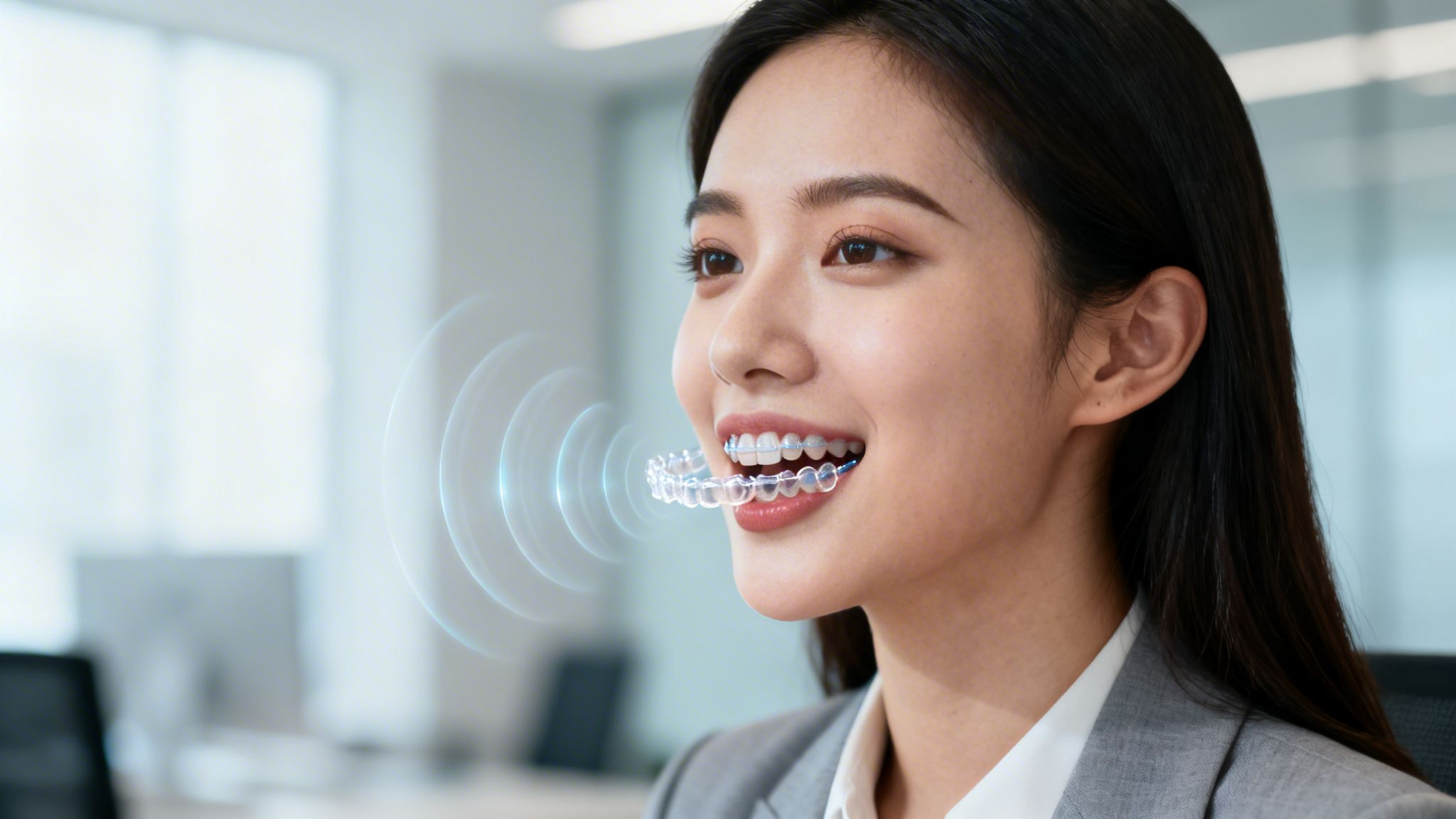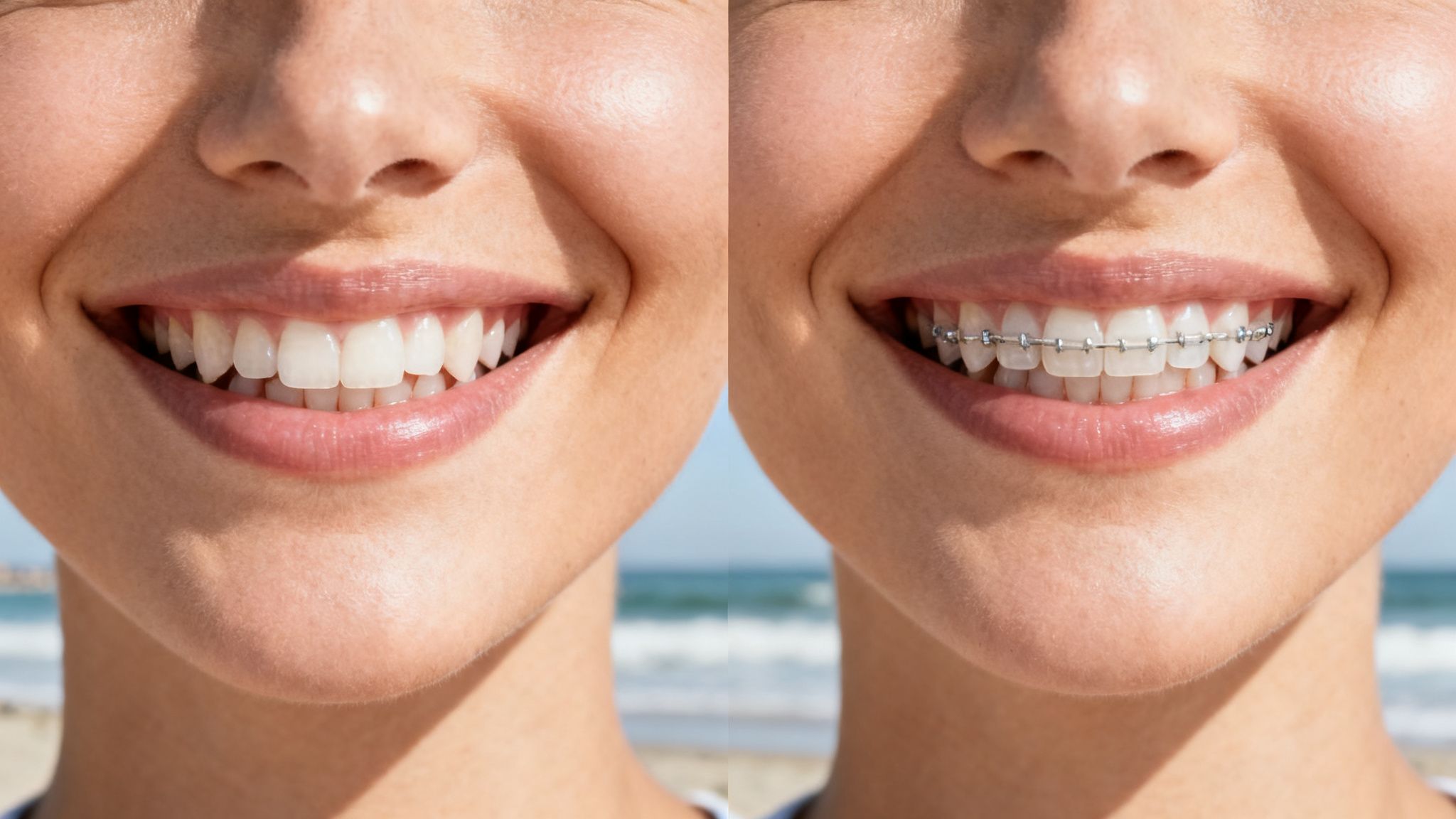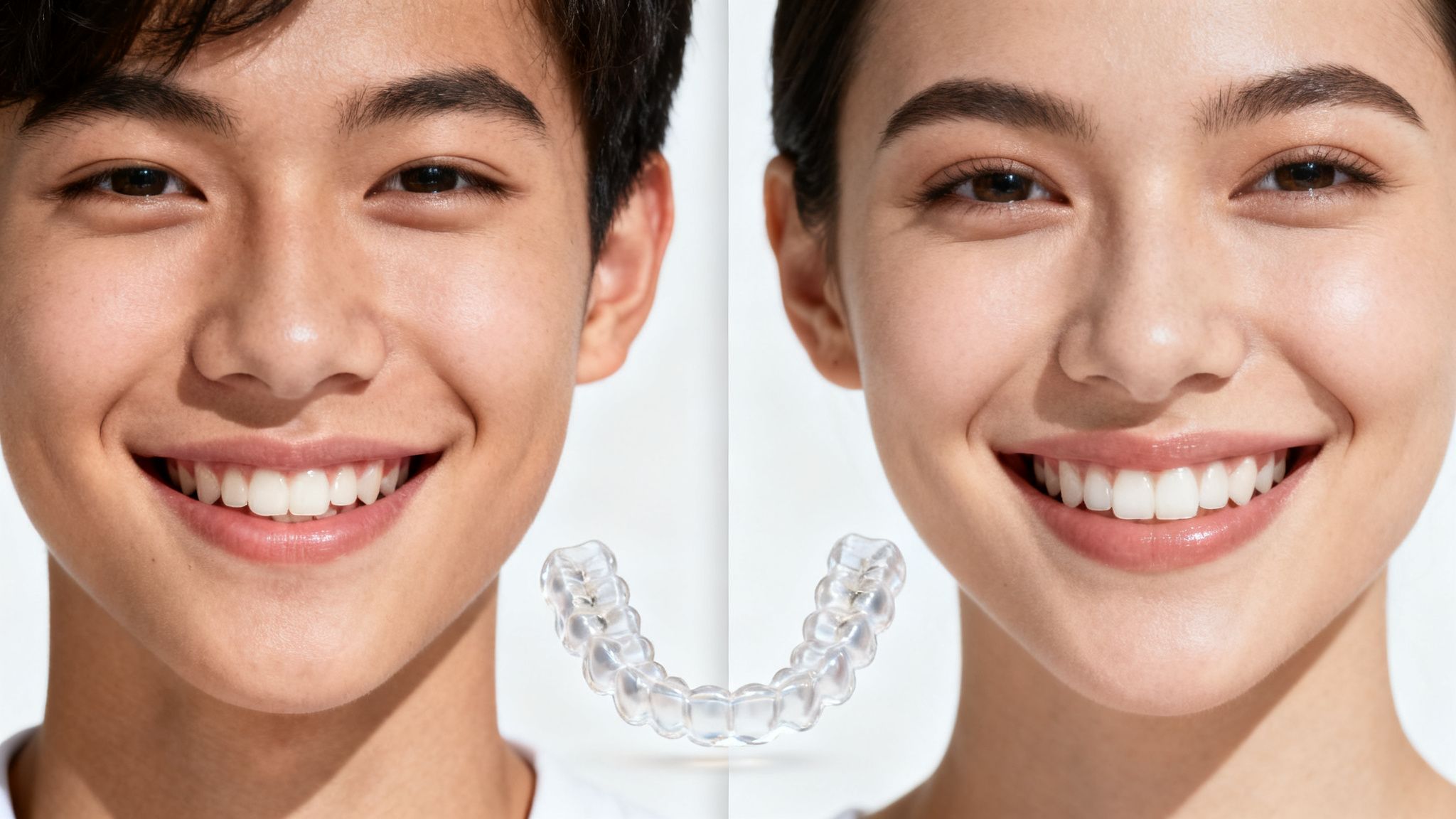
Is Invisalign as Effective as Braces for Complex Cases?
If you're exploring orthodontic options in Huntington Beach or Fountain Valley, you've probably heard different opinions about Invisalign. It can be confusing to know what's best. Let’s get straight to it: for simple to moderate smile corrections, clear aligners are a fantastic and effective tool.
But when we’re talking about a truly complex case—one with severe bite problems or major tooth rotations—traditional braces often deliver more predictable and powerful results.
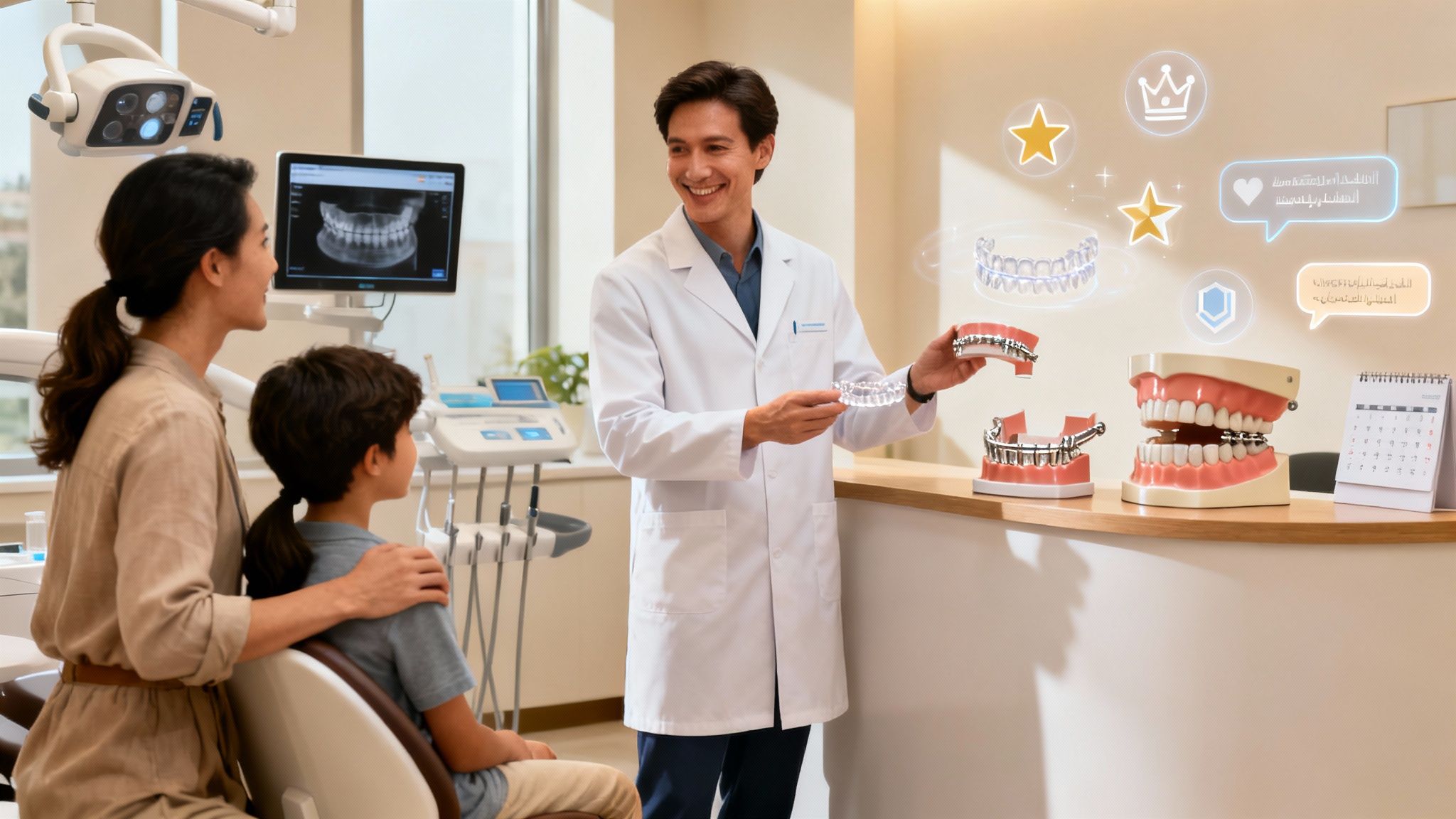
An Honest Answer for Huntington Beach & Fountain Valley Families
When you are looking into orthodontic treatment, you just want to make the right decision for your family without wasting time or money. It is confusing when you get different opinions, especially when it comes to more difficult cases.
A common misstep is assuming Invisalign is a one-size-fits-all solution. Some patients are also guided toward aligners by general dentists who may not fully evaluate complex bite issues.
The truth is, not all orthodontic problems are the same. A board-certified orthodontist is trained to see the full picture.
What the Data Says: Braces vs. Invisalign for Complex Issues
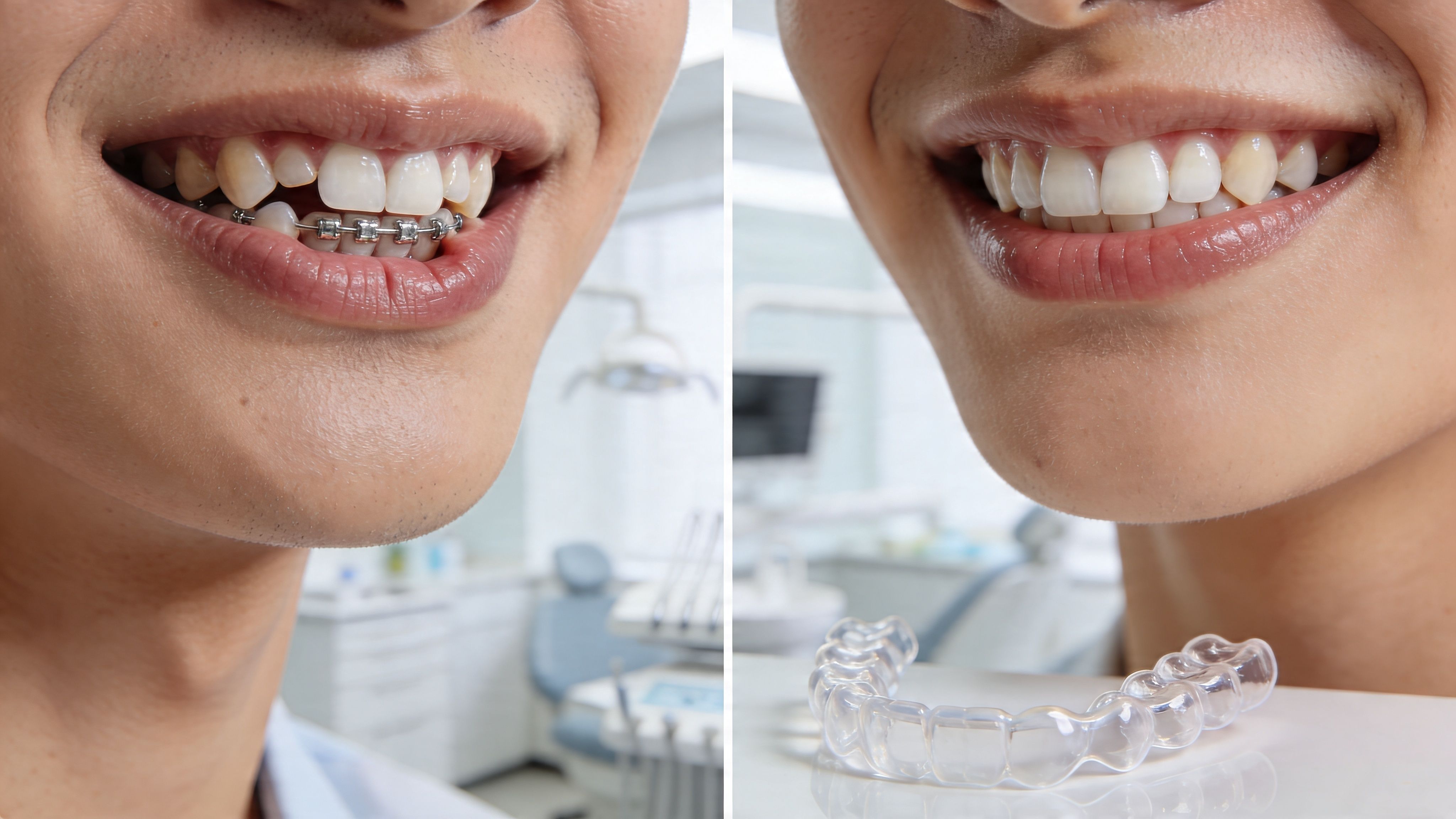
While Invisalign technology has improved a lot, traditional braces are still the gold standard for power and precision in the most challenging situations. Clear aligners are highly effective for most mild to moderate cases, with success rates of 80–90% when supervised by an orthodontist. (Source: American Association of Orthodontists)
However, for complex bite issues like severe overbites or rotations, braces may still be the better tool. To give you a clearer picture, here is a quick breakdown of which treatment is typically best for different orthodontic challenges.
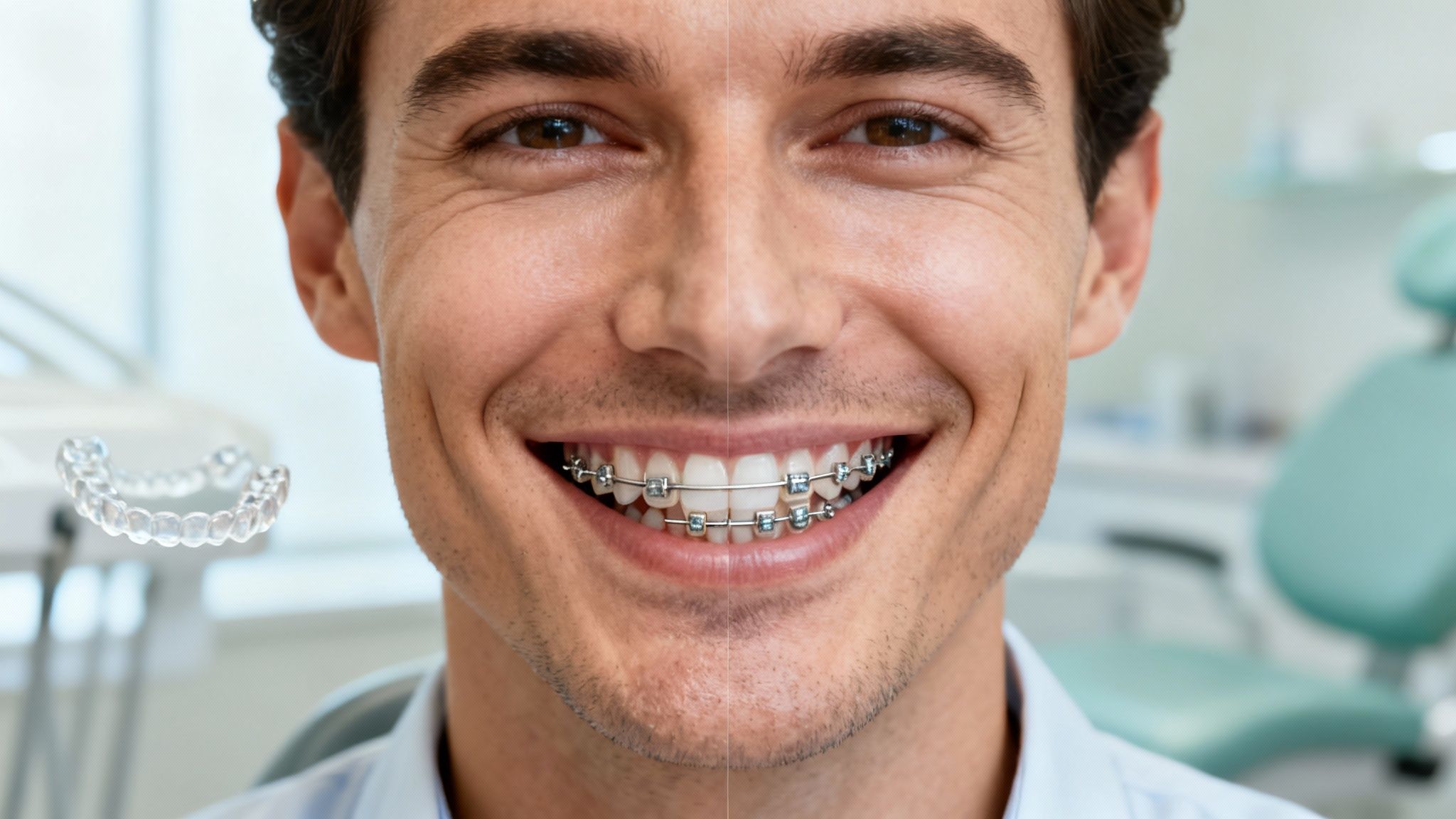
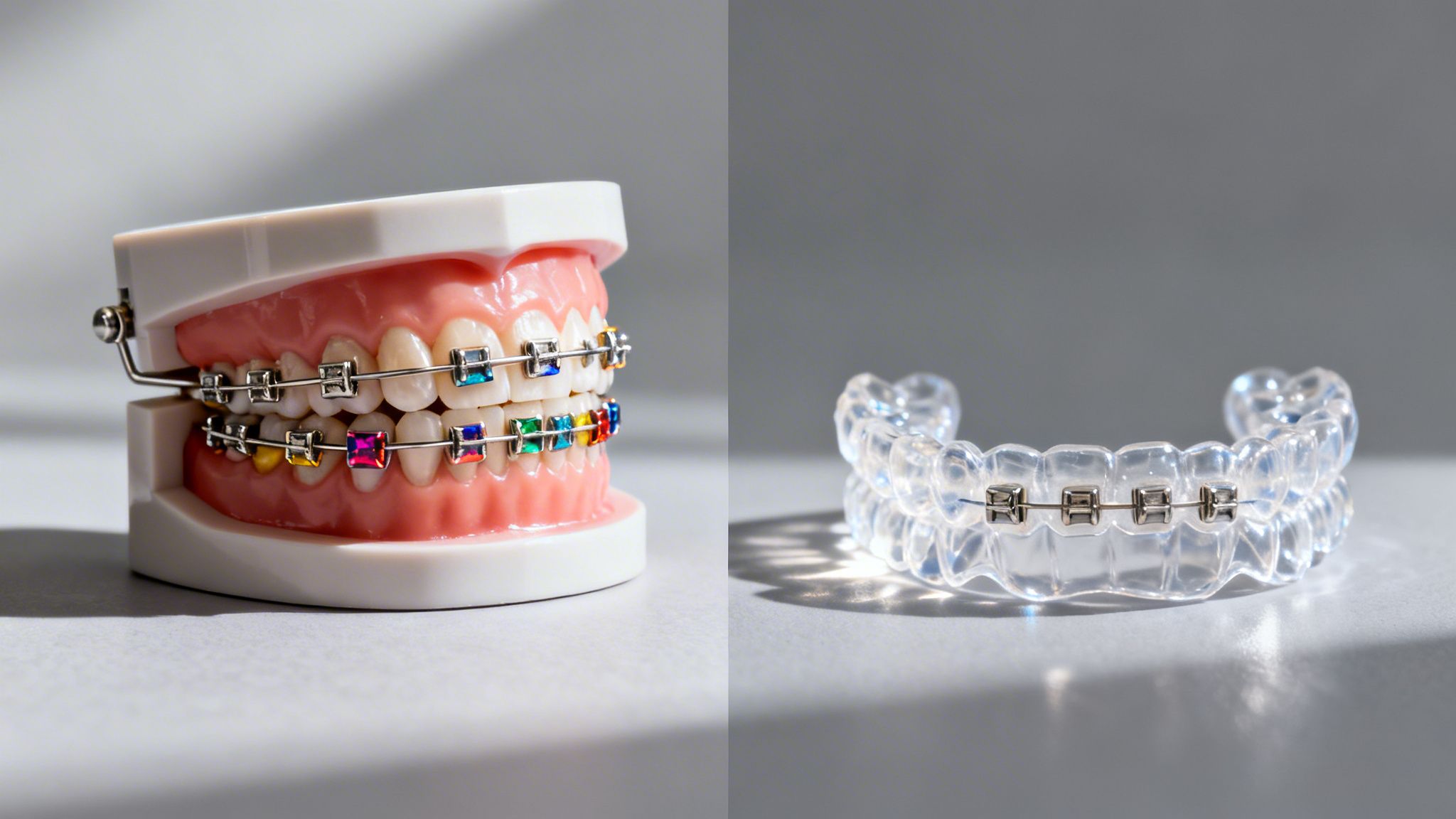
Quick Comparison: Braces vs. Invisalign for Complex Cases
| Orthodontic Issue | Best for Traditional Braces | Can Be Treated with Invisalign |
|---|---|---|
| Severe Crowding | Yes, highly effective. | Yes, but may need more complex planning. |
| Deep Overbite | Yes, provides excellent control. | Possible, but often needs elastics and expert planning. |
| Severe Tooth Rotations | Yes, ideal for rotating teeth like canines. | Limited, especially for rotations over 20 degrees. |
| Impacted Teeth | Yes, the preferred method to guide teeth into place. | Not recommended; requires the direct force of braces. |
Choosing between braces and Invisalign for a complex case isn't about which one is "better." It's about which one is the right tool for a specific, intricate job.
The most important step you can take is to see a board-certified orthodontist who offers both braces and aligners. This ensures you get a recommendation based on what’s most effective for your smile, not just what a provider sells.
At Magic Fox Orthodontics, Dr. Jeremy and Dr. Melissa are qualified to give honest recommendations to families in Huntington Beach and Fountain Valley. We assess every patient, from young kids to adults, and will tell you when braces are the more reliable option. Our guide on why choosing the right local orthodontist matters explains this in more detail.
If you’re in the Goldenwest or Wintersburg areas and feel unsure, we invite you to schedule a consultation. You’ll get a clear, no-pressure answer about whether clear aligners will truly deliver the smile you want.
What Makes an Orthodontic Case "Complex"?
To understand if Invisalign is as good as braces for complex cases, we need to define “complex.” A case becomes complex when it goes beyond simple straightening and requires significant, carefully planned movements of the teeth and jaw.
Many families in our local communities, from Talbert Village to Newland, hear the word "complex" but aren't sure what it means. It’s not just about how crooked your teeth look. It’s about the underlying mechanics of your bite.
Dr. Jeremy and Dr. Melissa look past the surface to evaluate these deeper issues during your first consultation.
Common Types of Complex Cases
So, what kind of issues push a case into the "complex" category? It's usually one or more of the following problems.
- Severe Crowding: This is when there isn't enough room in your jaw for all your teeth to fit correctly. This makes teeth hard to clean and increases the risk of cavities.
- Significant Spacing: Large gaps between teeth can affect your bite and leave your gums more vulnerable to problems.
- Major Bite Misalignments: Your bite, or malocclusion, is how your top and bottom teeth come together. A complex case almost always involves a significant bite problem.
What is Malocclusion?
Malocclusion simply means a misalignment of the teeth or bite. Common examples are overbites, underbites, and crossbites.
Tooth Movements That Add Complexity
Beyond the general diagnosis, some tooth movements are harder to achieve than others. These situations often need the specific forces that traditional braces, including our champagne-colored Iconix esthetic brackets, provide.
For instance, we might see a teen from the Adams neighborhood with an impacted tooth—a tooth that's stuck in the jawbone. Guiding that tooth into its proper spot is a complex process that typically needs the direct pulling force of braces.
Other difficult movements include:
- Significant Rotations: Aligners can struggle with severely twisted teeth, especially rounder teeth like canines. A rotation over 20 degrees is considered a difficult move.
- Extrusion and Intrusion: These terms mean moving a tooth up or down in the jawbone. These vertical movements require very controlled force.
- Cases Requiring Extractions: When crowding is severe, we may need to remove a tooth. Closing these large spaces requires the powerful movement that braces provide.
Understanding these factors is part of what we call comprehensive orthodontic treatment. To learn more about this process, read our guide on what is comprehensive orthodontic treatment. At Magic Fox Orthodontics, we make sure our patients, from Downtown Huntington Beach to Fountain Valley, understand their unique treatment plan.
How Braces Excel in Challenging Situations
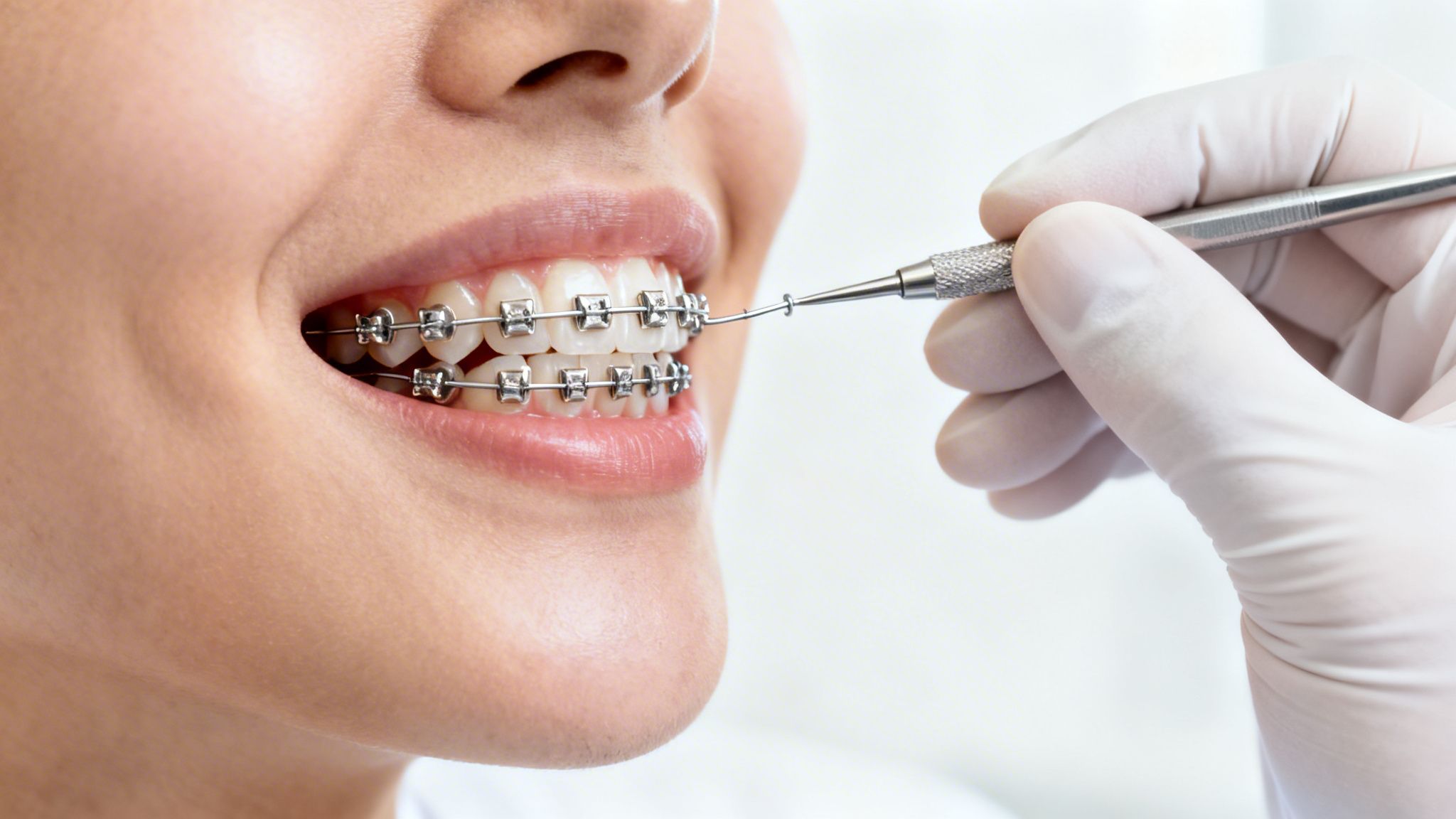
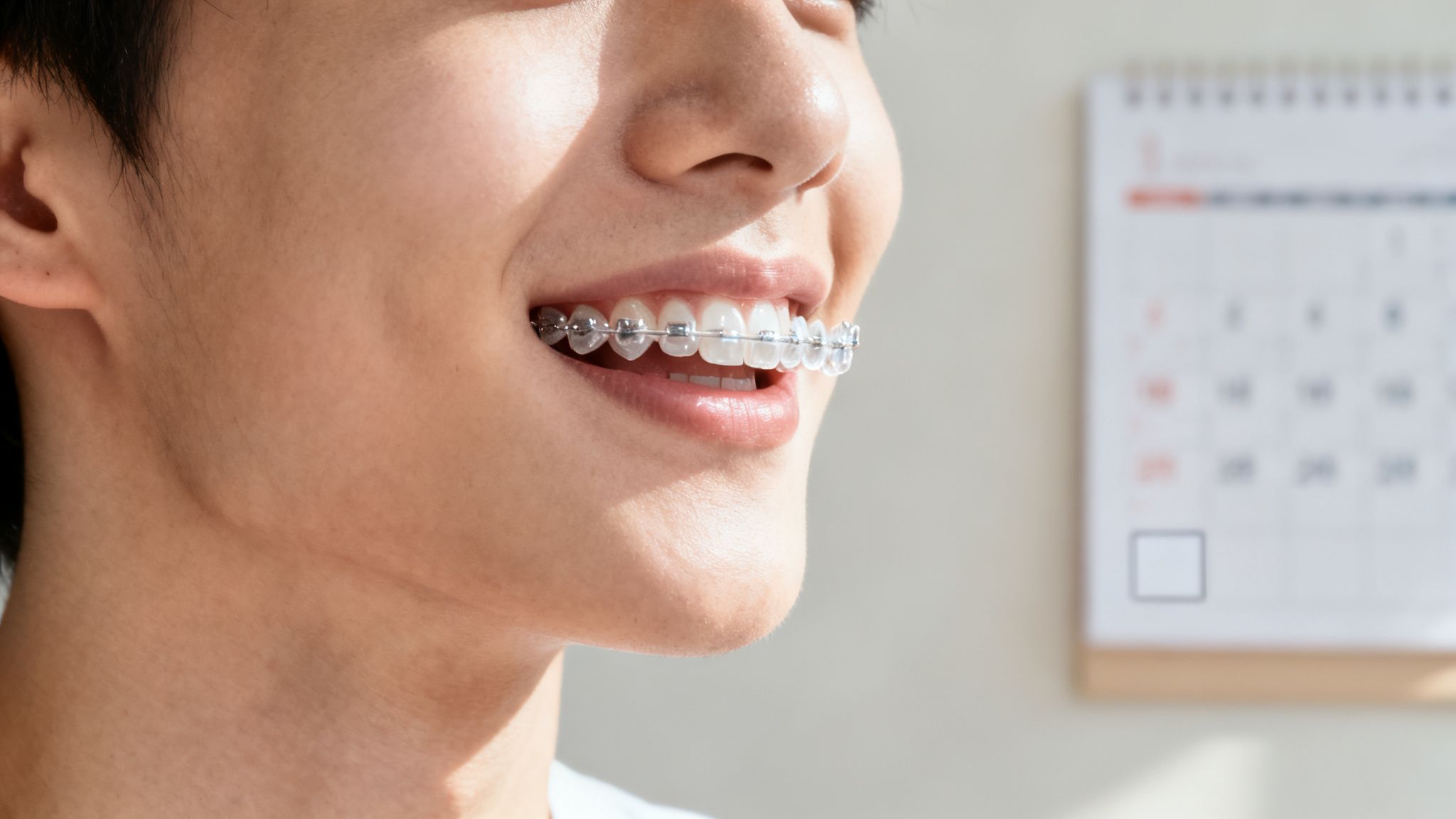
When a case is complex, braces—whether traditional metal or our subtle Iconix Esthetic Brackets—show their true power. They provide a level of control and force that is essential for difficult tooth movements.
The effectiveness of braces comes down to simple physics. Brackets are bonded directly to each tooth and connected by an archwire, creating a powerful system. This allows your orthodontist to apply constant, gentle pressure in specific directions.
This direct connection gives Dr. Jeremy and Dr. Melissa the hands-on control they need to make real-time adjustments. This is a huge advantage when dealing with stubborn tooth movements.
Superior Control for Precise Tooth and Root Movement
One of the biggest reasons braces are so effective for complex cases is their ability to control the entire tooth, including the root. Moving the whole tooth is essential for a stable, long-lasting result.
This level of control is especially critical in these situations:
- Correcting Severe Rotations: Braces excel at turning significantly twisted teeth. The direct force from a bracket and wire can apply the torque needed to fully correct the rotation.
- Closing Large Gaps: If a tooth was removed, braces are the most efficient tool for closing that space. They can move multiple teeth together in a predictable way.
- Vertical Tooth Movements: Moving a tooth up or down in the jawbone is one of the toughest movements in orthodontics. Braces provide the precise, anchored force required.
The Advantage of Hands-On Orthodontic Expertise
At every appointment, Dr. Jeremy and Dr. Melissa are not just checking on progress; they are actively directing it. This direct management is why braces remain the gold standard for challenging smiles.
This hands-on approach allows them to respond to your unique biology. Every person’s teeth move differently. This is why the answer to "is Invisalign as effective as braces for complex cases?" often points to the unmatched precision of braces.
For families in local neighborhoods like Oak View, understanding the dental braces procedure can make it clear why we sometimes recommend it for tougher situations. The system gives an expert orthodontist more tools to work with to achieve a beautiful, healthy smile.
How Invisalign Tackles Complex Cases With Advanced Tools
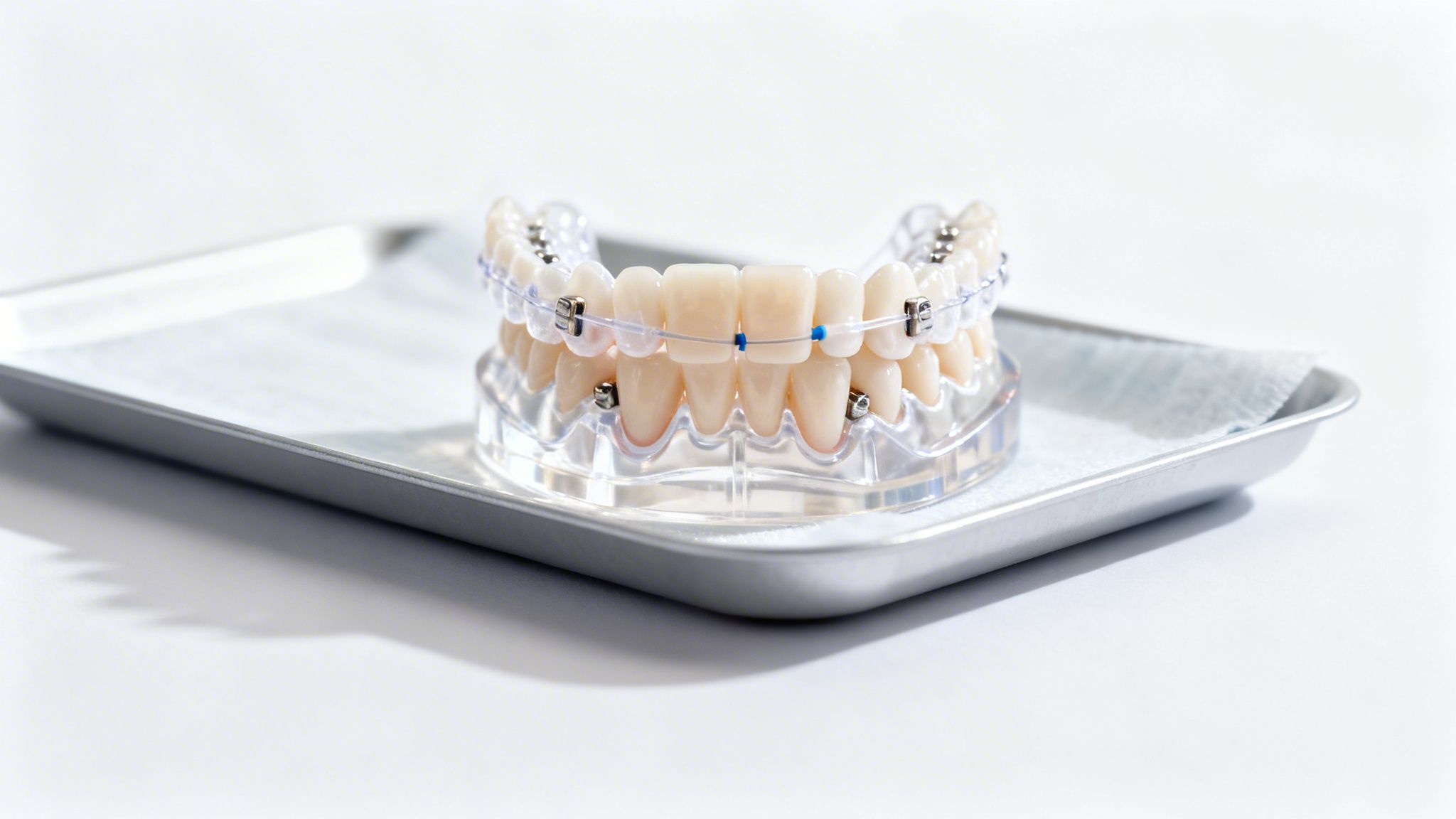
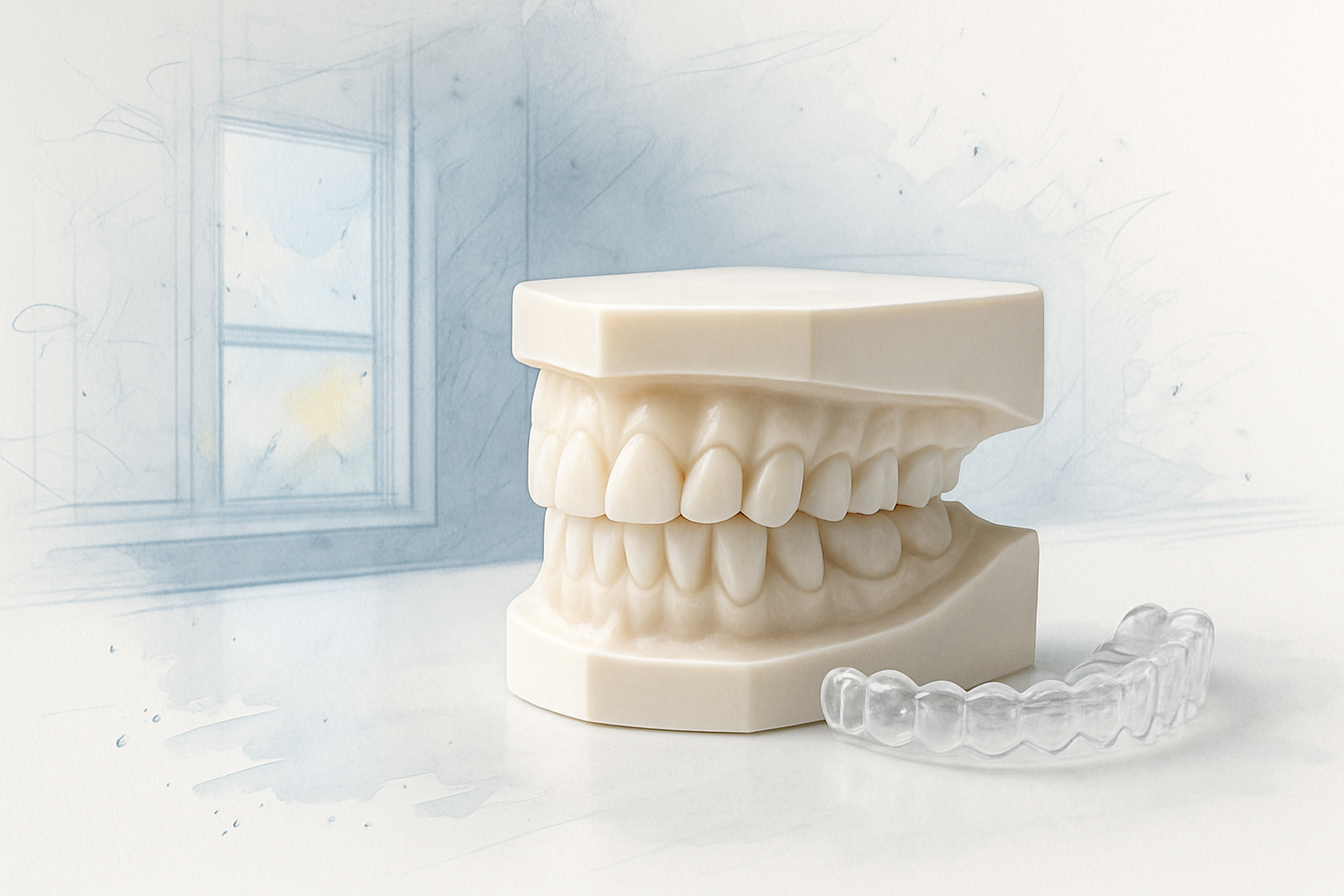
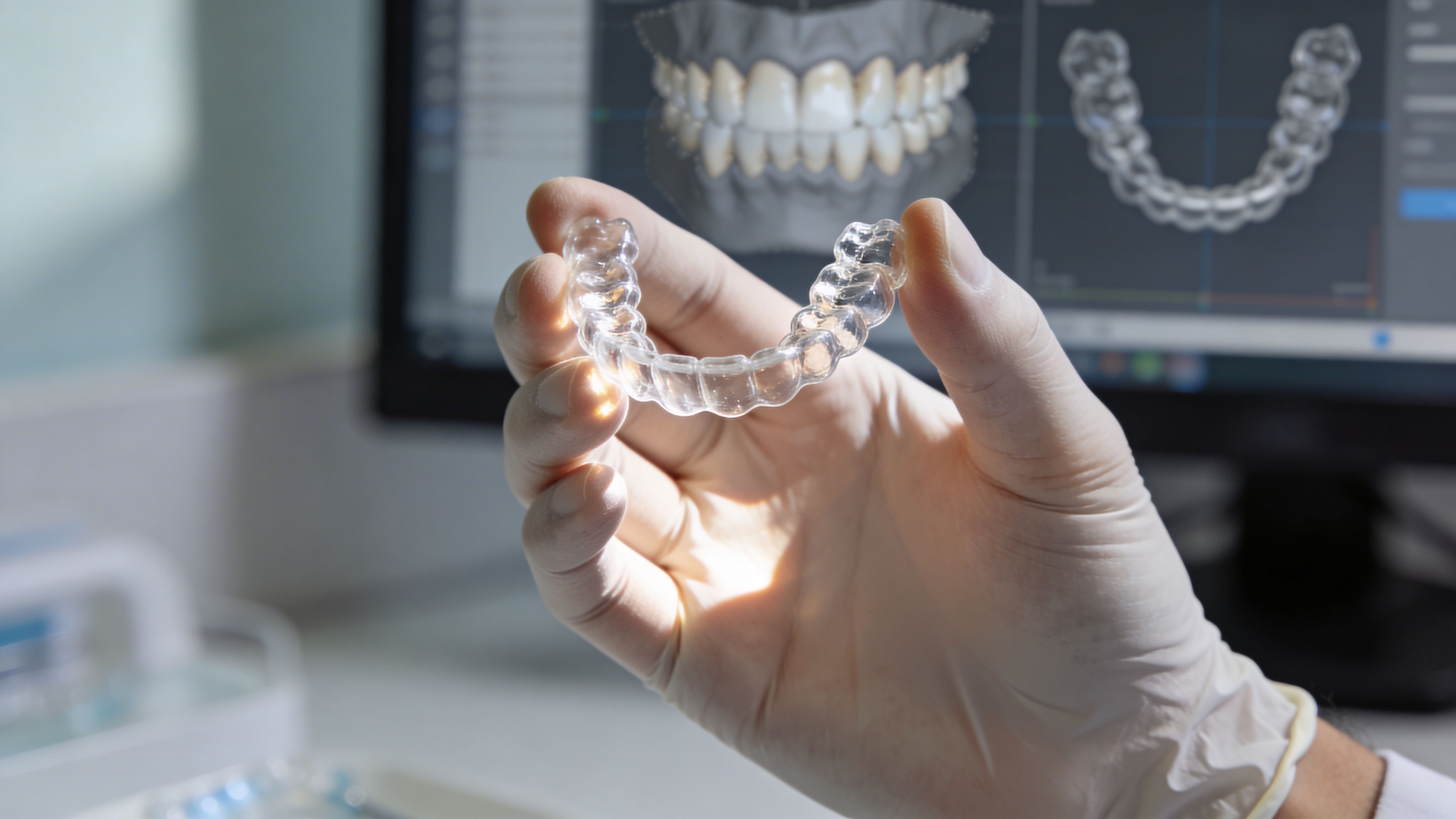
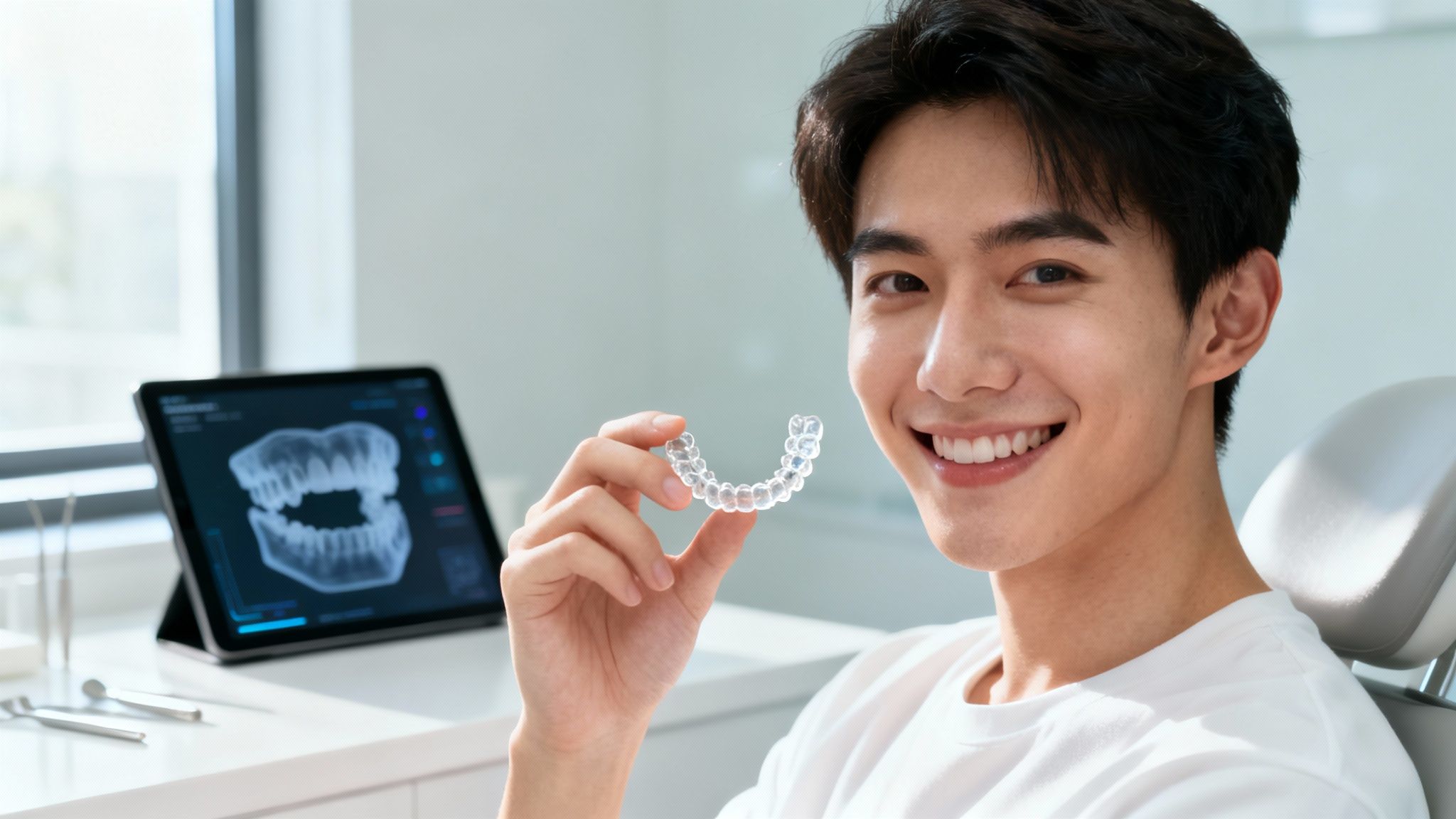
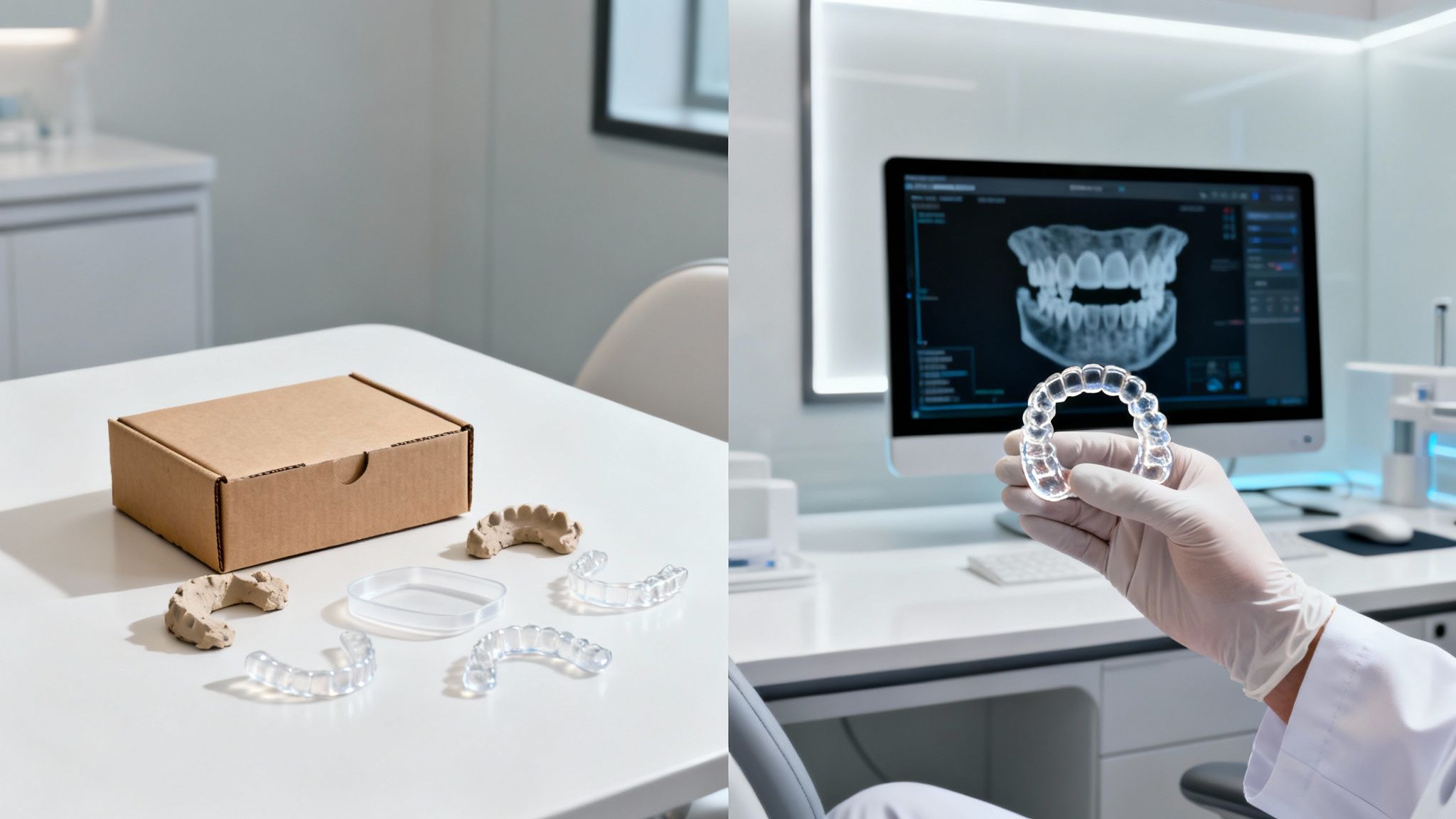
While braces have undeniable power, Invisalign technology has come a long way. Its success in tougher cases now relies on a toolkit of advanced add-ons called auxiliaries. These tools give us the power to achieve difficult tooth movements.
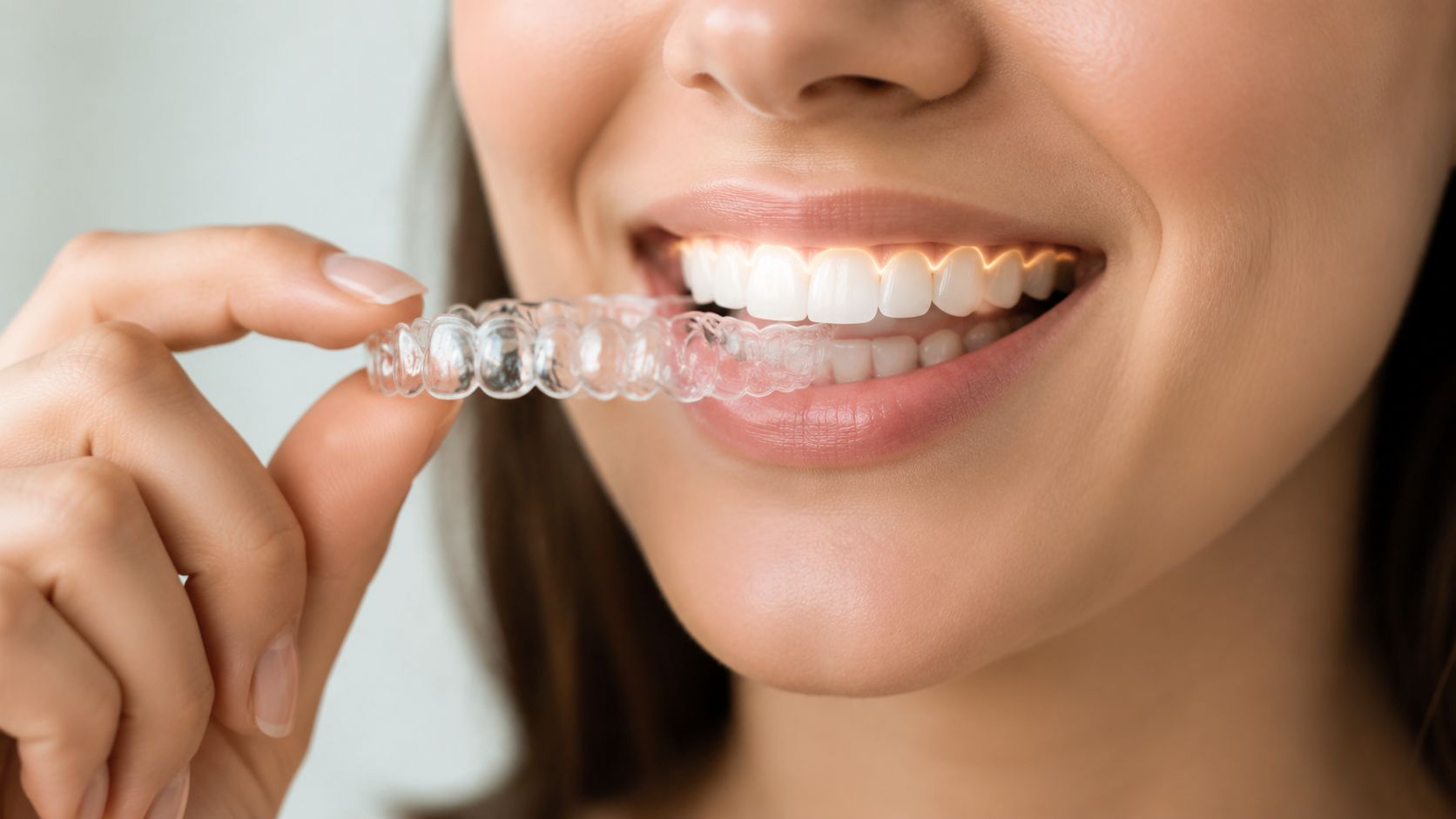
Many patients we see in Huntington Beach think Invisalign is just a series of simple plastic trays. For a complex treatment, the aligners are just one part of a sophisticated system.
The real art is knowing how and when to use these extra tools. That’s where the expertise of Dr. Jeremy and Dr. Melissa really shines.
The Power of Attachments and Elastics
The two most common tools we use with Invisalign are attachments and elastics. They give the aligners the extra grip and leverage they need to pull off difficult movements. This is why the question "is Invisalign as effective as braces for complex cases?" is more relevant than ever.
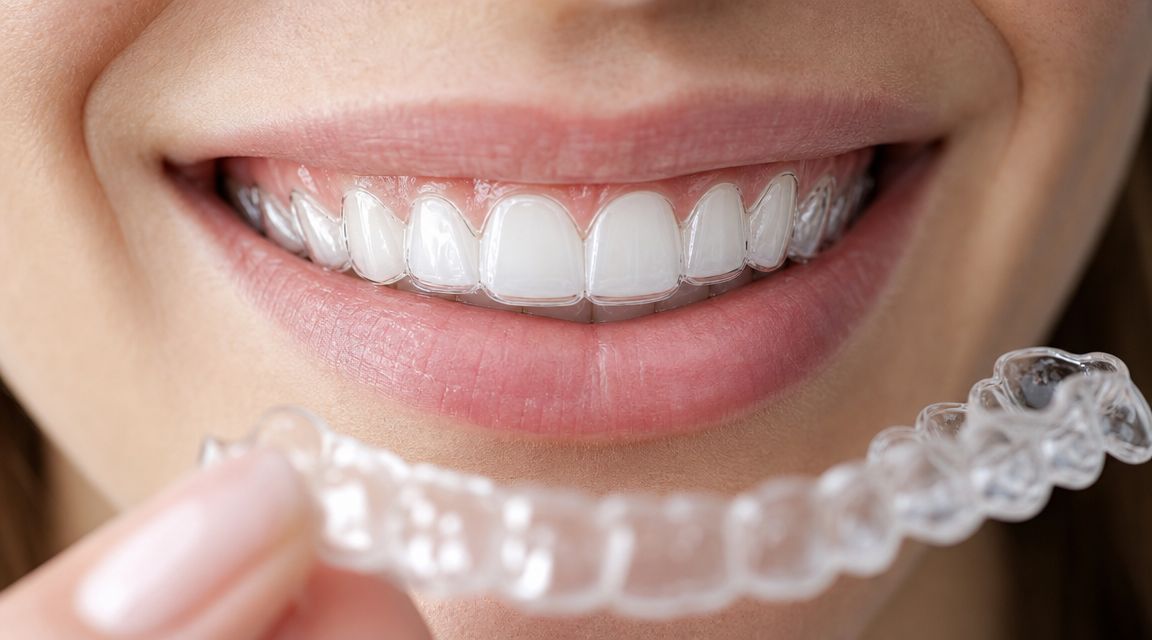
- Invisalign Attachments: These are tiny, tooth-colored bumps of dental bonding material that we temporarily place on certain teeth. They act like little handles, giving the aligner something to grab onto to apply more precise force.
- Elastics (Rubber Bands): Just like with braces, we can use rubber bands with Invisalign to fix bite problems. These small elastics hook onto the aligners to gently shift the jaw and correct issues like overbites.
Advanced Techniques for Complex Alignments
Beyond attachments and elastics, we have other ways to make space and get teeth moving. One of the most effective is Interproximal Reduction, or IPR.
What is IPR?
IPR is a simple procedure where an orthodontist carefully polishes a tiny amount of enamel from between the teeth. This creates just enough extra room to resolve crowding.
Using these tools requires a deep understanding of how teeth move. For example, a male patient from Fountain Valley with moderate crowding and a slight overbite could be a perfect candidate for Invisalign with attachments and elastics.
The success of any complex Invisalign case boils down to two critical factors:
- The Orthodontist's Skill: The treatment plan must be designed by a specialist who knows how to program these advanced movements.
- Patient Compliance: You must wear your aligners and any elastics for 20-22 hours per day.
The latest aligner technology has opened up amazing possibilities. You can learn more about how new tech is changing Invisalign results. At Magic Fox Orthodontics, Dr. Jeremy and Dr. Melissa are experts in designing these detailed treatment plans for patients of all backgrounds.
Comparing Treatment Timelines and Lifestyle Factors
When families in Fountain Valley explore orthodontic treatment, two questions always come up: "How long will this take?" and "How will this change our daily lives?" The answers depend on your case and what matters most to you.
For simple issues, Invisalign and braces often have similar treatment times. For complex cases, braces often have an advantage in speed and efficiency.
How Treatment Duration Differs
The main reason braces can be faster for tough cases is constant, direct force. Brackets and wires are attached to your teeth 24/7, so the tooth-moving process never pauses. This is very efficient for fixing significant rotations and severe bite problems.
Invisalign's timeline, on the other hand, is directly influenced by a few key factors:
- Wear Time: You must wear your aligners for 20-22 hours every day. Anything less will slow you down.
- Tray Changes: You'll switch to a new set of aligners every one to two weeks, which sets the pace.
- Refinements: It’s common for complex cases to need an extra set of "refinement" aligners at the end, which can add to the total treatment time.
Lifestyle and Daily Experience
The day-to-day experience with braces versus Invisalign is completely different. This is often where the choice becomes personal for families from Downtown Huntington Beach to the Newland neighborhoods.
Invisalign offers unmatched flexibility and convenience:
- No Food Restrictions: You can remove your aligners to eat whatever you want.
- Easier Oral Hygiene: Brushing and flossing are simple because you don’t have to work around wires or brackets.
- Nearly Invisible: The clear plastic is very discreet, which many teens and adults appreciate.
But this freedom comes with responsibility. You have to be disciplined about wearing them and keeping them clean. Knowing how to clean clear aligners is a key part of the lifestyle.
Braces offer a "set it and forget it" experience:
- No Daily Reminders: Once braces are on, they are on. You don't have to worry about taking them in or out.
- Dietary Adjustments: You will have to avoid hard, sticky, or chewy foods that could damage your braces.
- Oral Hygiene Takes More Effort: You'll need a new routine for brushing and flossing to keep your teeth and gums healthy.
The right choice balances clinical needs with your family’s lifestyle. Is the convenience of removable aligners worth a potentially longer treatment? Our guide on adult braces vs. Invisalign can also give you more great insights.
Making the Right Choice with Magic Fox Orthodontics
Deciding on orthodontic treatment can be stressful, especially when you're worried about making the wrong choice. Families from Huntington Beach and Fountain Valley often feel confused after getting different opinions on whether Invisalign is as good as braces for tough cases.
The most important first step is finding a team that gives you an honest answer based on what your smile truly needs.
At Magic Fox Orthodontics, Dr. Jeremy and Dr. Melissa are experts in both Invisalign and braces, including our subtle Iconix Esthetic Brackets. This means their recommendations are driven by what's clinically best for you, with no pressure to choose one over the other.
Your Path to a Confident Decision
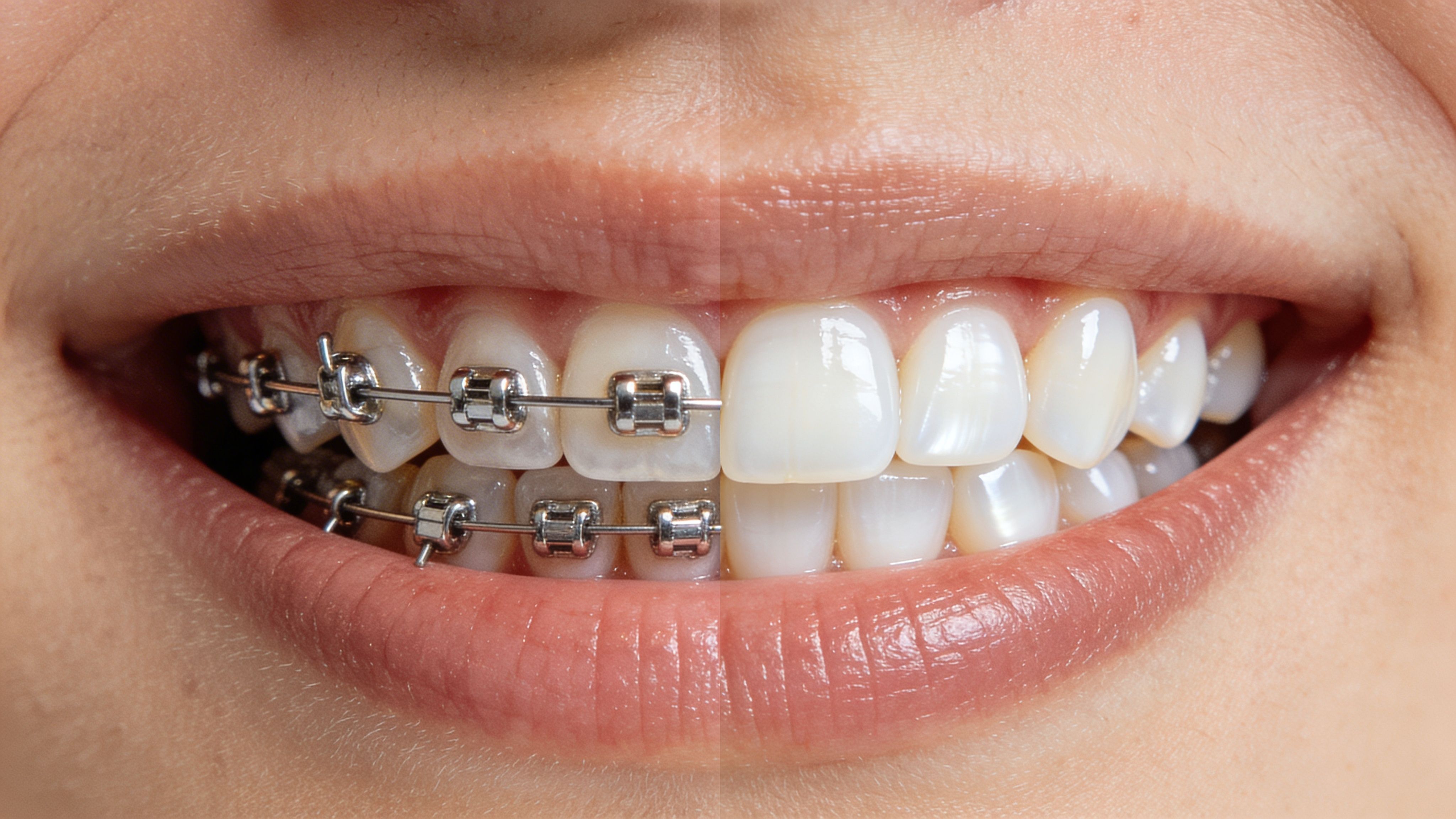
For mild to moderate cases, clinical results for braces and Invisalign are very similar, with high success rates. However, the patient experience is where they really differ.
While both are effective, patient satisfaction studies show that comfort and appearance are highly valued. A key takeaway is to work with an orthodontist who can tell you if your case is truly "complex," where one tool might have a clear advantage.
This decision tree gives you a look at how an orthodontist thinks through this process.
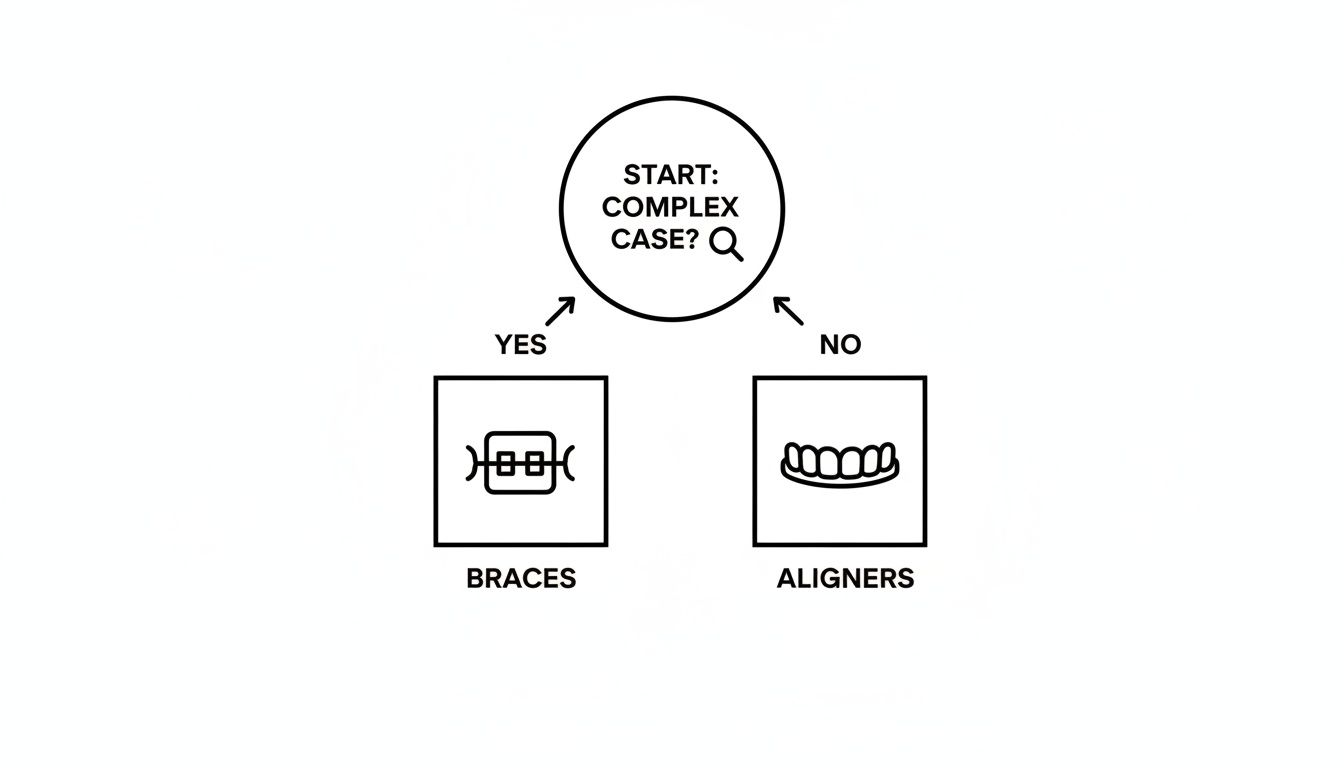
As you can see, the first question is always about complexity. It’s all about picking the most reliable tool for the job.
The best way to get a definitive answer is through a personalized consultation. A board-certified orthodontist can assess your specific bite, tooth positions, and goals to create a treatment plan that guarantees a beautiful, stable result.
If you live in Goldenwest, Oak View, or any surrounding community, you don’t have to guess. Dr. Jeremy and Dr. Melissa will provide a detailed evaluation and help you understand all of your options, with zero pressure.
Ready to transform your smile? Contact Magic Fox Orthodontics in Huntington Beach today to schedule your free consultation.
Frequently Asked Questions
It’s normal to have a lot of questions when considering treatment for a complex orthodontic case. Here are answers to some questions we often hear from patients in Huntington Beach and Fountain Valley.
Is Invisalign more expensive than braces for a complex case?
For a complex case, the cost of Invisalign is often similar to traditional braces. A difficult case requires more advanced digital planning and a larger series of aligners. At your free consultation, we provide a clear breakdown of all costs and discuss flexible payment options.
How do I know if an orthodontist is experienced with complex Invisalign cases?
The best way to know is to ask about their experience with cases like yours and to see before-and-after photos. A confident, board-certified orthodontist will be happy to show you their work. Dr. Jeremy and Dr. Melissa manage advanced cases every day and welcome the chance to discuss their approach.
Will I have to wear rubber bands with both Invisalign and braces?
Yes, it is very likely. Rubber bands, or elastics, are essential for fixing bite issues like overbites and underbites. Whether you choose traditional braces, our stylish Iconix brackets, or Invisalign, elastics are a critical tool for achieving a stable, functional bite in most complex treatments.
What happens if Invisalign isn’t working for my complex case?
This is a valid concern and highlights why you should choose an orthodontist who is an expert in both methods. If a tooth isn't moving as planned, we can create a new set of "refinement" aligners. In the rare case that aligners can't finish the job, we can seamlessly switch to braces to ensure you get the best result.
Are Iconix brackets as effective as traditional metal braces?
Yes, absolutely. Iconix Esthetic Brackets provide the same clinical control as traditional metal braces. The only difference is their appearance. Their champagne-gold color offers a more subtle look that many of our teen and adult patients in the Huntington Beach area love, without compromising the final result.
Ready to find out which treatment is the perfect fit for your smile? Contact Magic Fox Orthodontics in Huntington Beach today at (714) 594-5777 to schedule your free consultation and get the clear answer you deserve. You can also visit us online at https://www.magicfoxsmiles.com.