Before Open Enrollment Closes: How to Read Your Orthodontic Benefit
Direct Answer: Most dental plans cover part of braces or Invisalign through a separate lifetime orthodontic maximum. Check that number, plus your coinsurance, waiting period, and dependent age limit, before open enrollment closes.
I answer a lot of phones, and I can tell you the most common opening line by heart. It is some version of "Do you take my insurance?" Callers name Delta Dental, United Healthcare, Cigna PPO, Blue Shield, and Medi-Cal before they will talk about anything else.
I understand why. But after a few years of these calls, I think most people are asking the wrong question first. The plan name matters far less than what the orthodontic section of that plan actually says.
This is the time of year to find out. Employer enrollment windows open in October, and once you make your elections, you are locked in for the year. So here is how to open your own benefit summary and understand what you are looking at.
Why the plan name tells you almost nothing about orthodontic coverage
Two neighbors on the same street in Oak View can both have Delta Dental and have completely different orthodontic benefits. One plan might cover a healthy share of treatment for a child. The other might cover nothing at all for anyone over 19.
I see this constantly with families across Goldenwest, Wintersburg, Central Fountain Valley, and Talbert Village. Same carrier name on the card, very different math once we run the benefit check.
What actually decides your out of pocket number:
- Whether the plan includes an orthodontic rider at all, since plenty of dental plans simply do not
- The lifetime orthodontic maximum attached to that rider
- Your coinsurance split for orthodontic services
- Any waiting period before the benefit becomes usable
- The dependent age limit and whether adults are covered at all
That is five variables, and none of them are printed on the front of your insurance card. They live in your summary of benefits, usually a few pages deep, under a heading like "Orthodontia" or "Class IV services."
If you want the broader picture first, we walk through it in our guide on how dental insurance handles braces. But if you only have ten minutes before your enrollment deadline, keep reading.
Four terms to hunt for in your benefit summary
Open the PDF your HR team sent you. Use the search function. These are the four phrases I would look for, in this order.
1. Lifetime orthodontic maximum. This is its own separate pot of money. It is not the same as the annual dental maximum that resets every January, and it does not refill. Once it is spent, it is generally gone, even if you change jobs or switch carriers later.
2. Coinsurance. This tells you the share the plan pays versus the share you pay. A 50/50 orthodontic coinsurance means the plan picks up half of covered charges, but only up to that lifetime cap. The cap almost always runs out before the percentage does.
3. Waiting period. Some plans will not pay an orthodontic claim until you have been enrolled for a set stretch of months. If you enroll in November and start treatment in January, a waiting period can quietly push your benefit out of reach for that first stretch.
4. Dependent age limit. This one surprises people the most. Plenty of plans stop paying orthodontic benefits the moment a child ages out, often in the late teens or at 19. And adult orthodontic coverage varies so much from plan to plan that I never assume anything until I read it.
I am not going to quote you a dollar figure here, because I would be guessing at your plan. What I can tell you is which of those four numbers is dragging your estimate up or down, once I have your actual documents in front of me.

HMO vs PPO: the most common dead end I see
Someone filled out our contact form recently and wrote, in so many words, that before booking they wanted to confirm we take their Anthem Silver 87 HMO. That exact concern comes up on the phone every few weeks.
Here is the practical difference, in plain terms:
- An HMO plan assigns you to a network of contracted providers. Care is routed through that network, and going outside it usually means the plan pays nothing.
- A PPO plan gives you a network with better rates, but you generally keep the freedom to choose your provider, with a different share of the cost if you go out of network.
Orthodontic offices differ in which plans they contract with, and those contracts change. Which is why a five minute phone call beats an hour of guessing on a message board.
The part I wish more people knew: being out of network is not automatically the end of the road. In house monthly payment arrangements exist separately from insurance, and they change the math for a lot of families. One patient told us she finished her braces after a long stretch of unemployment because the payment plan made it workable.
If your coverage is Medi-Cal or Denti-Cal, the rules are different again, and we cover that in detail in our post on Medi-Cal coverage for braces in California.
What each benefit term actually does to your number
Here is a quick reference you can hold next to your plan documents while you read them.
| Term in your plan | What it means | How it moves your out of pocket |
|---|---|---|
| Lifetime orthodontic maximum | A separate, one-time pot of money for orthodontic care | Sets the hard ceiling on what the plan will ever pay toward treatment |
| Annual dental maximum | Resets each January, usually for cleanings, fillings, and similar care | Often does not apply to orthodontics at all, so do not count it twice |
| Coinsurance | The percentage split between plan and patient | Decides how fast you reach that lifetime cap |
| Waiting period | Months you must be enrolled before orthodontic claims are paid | Can delay when your benefit becomes usable after you enroll |
| Dependent age limit | The age at which a child stops being covered for orthodontics | Can end coverage mid-treatment if a teen crosses the line |
| Adult orthodontic coverage | Whether the rider extends past dependents | Frequently the difference between partial coverage and none |
The four numbers worth finding this week
If you only do one thing before your enrollment window shuts, find these four items in your summary of benefits.

The 2026 calendar, without the manufactured panic
Dates matter here, so let me lay out the real ones.
- Open enrollment for 2027 ACA marketplace coverage runs November 1 through December 15, 2026. That is a noticeably shorter window than the January 15 deadline many people got used to in prior years.
- Most employer plans run enrollment from October into early December. Your HR portal is the source of truth on your exact closing date.
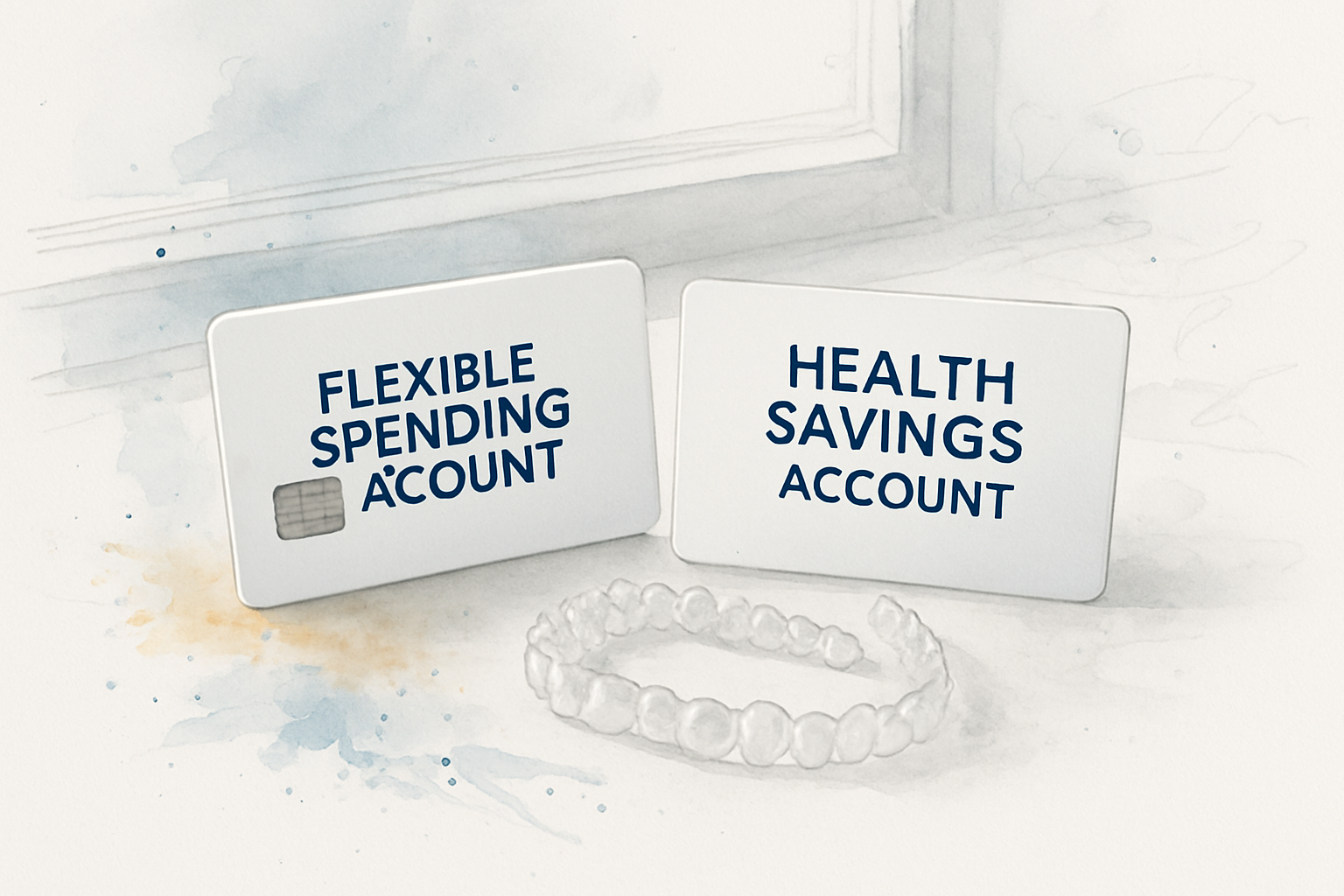
- Health FSA elections lock for the plan year once your window shuts. No changes until the following year, barring a qualifying life event.
For 2027, the health FSA contribution limit is projected at $3,500, with a projected $700 carryover. Those are projections, not law. The IRS does not confirm official figures until a revenue procedure lands in the fall, as explained in this rundown of IRS contribution limits.
So what does that mean for you practically? If you are considering treatment, a consultation before your elections close gives you a real treatment estimate to base the FSA number on. Elect blind and you are stuck with a guess you cannot revise for twelve months.
We get into the tax-advantaged side more deeply in our post on using FSA and HSA dollars for braces or Invisalign.
A note for the adults reading this
Huntington Beach and Fountain Valley both skew older and higher income than the Orange County average. Median age sits in the mid forties in both cities, and roughly one in five residents is over 65.
Meanwhile, the American Association of Orthodontists now reports that about one in three orthodontic patients is an adult. So a lot of local readers are working from plans whose orthodontic language was written with dependent children in mind, while the patient reality has moved somewhere else entirely.
If your plan caps orthodontics at a dependent age limit, you are not out of options. You are just paying for it differently, usually through a monthly arrangement rather than a carrier. One of our patients wrote after finishing treatment at 76 that her smile is awesome, and she is not an outlier here.
We wrote more about that in our piece on orthodontics for adults over 60.
What happens after you pick a plan
This part is invisible to most people, so it is worth walking through.
An orthodontic office typically verifies your benefits before treatment starts, then submits the treatment plan to your carrier for pre authorization. Carriers often pay orthodontic claims out over the course of treatment rather than as one lump sum, which is why your first statement rarely shows the full benefit applied.
Bring two things to your first visit:
- Your member ID card, front and back
- Your summary of benefits, printed or on your phone
And ask the office these questions directly:
- What is my lifetime orthodontic maximum, and has any of it been used?
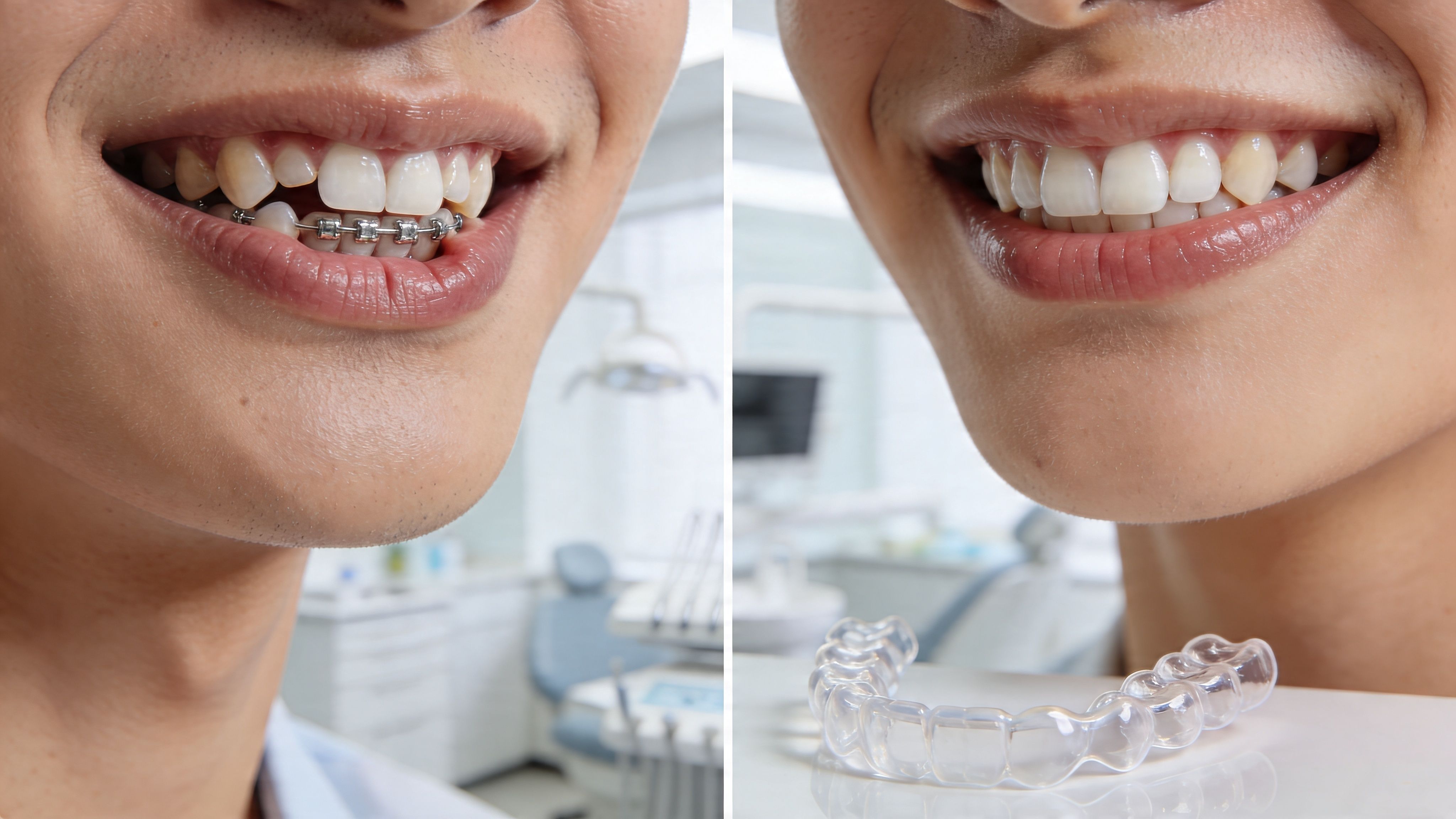
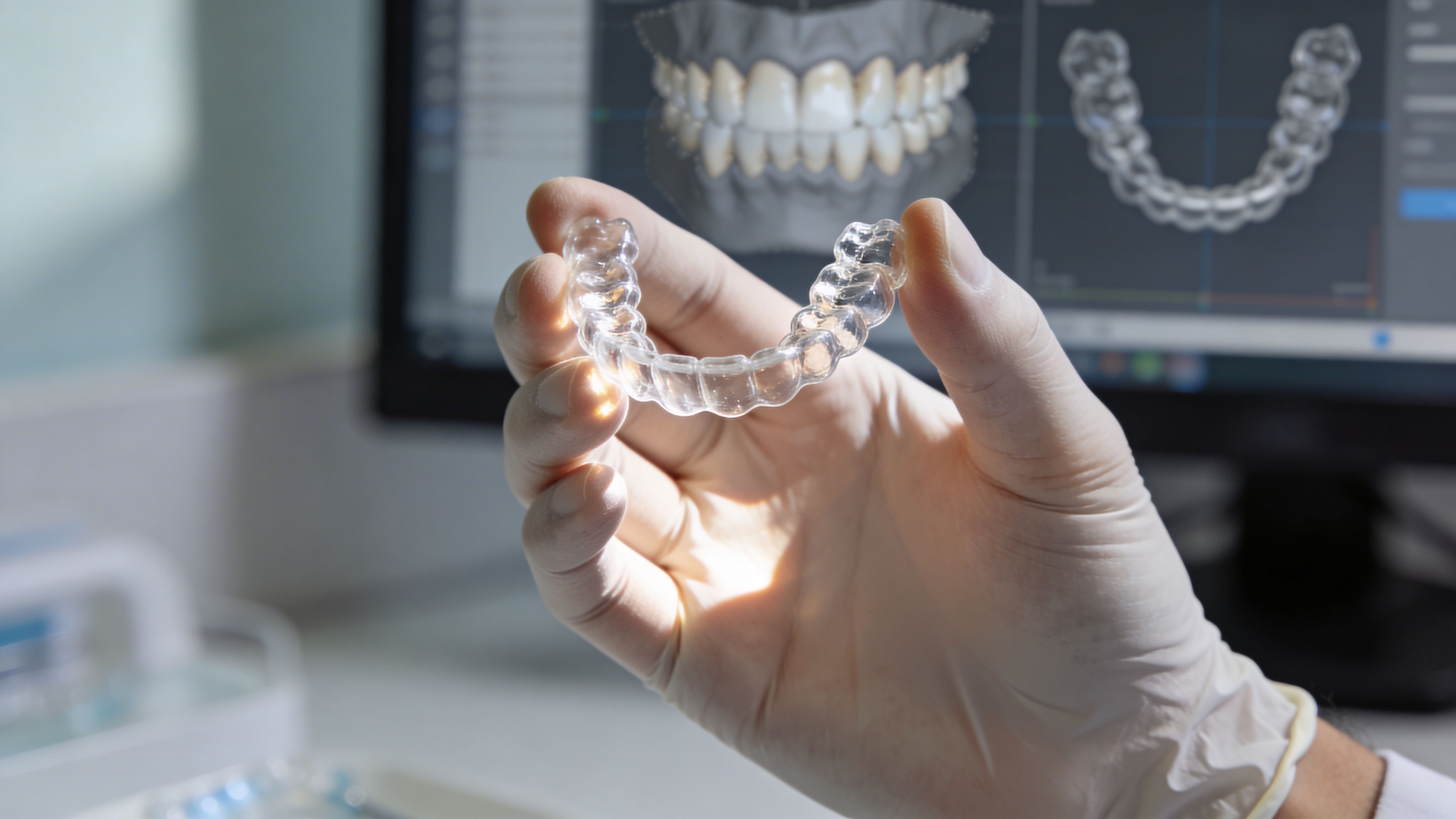
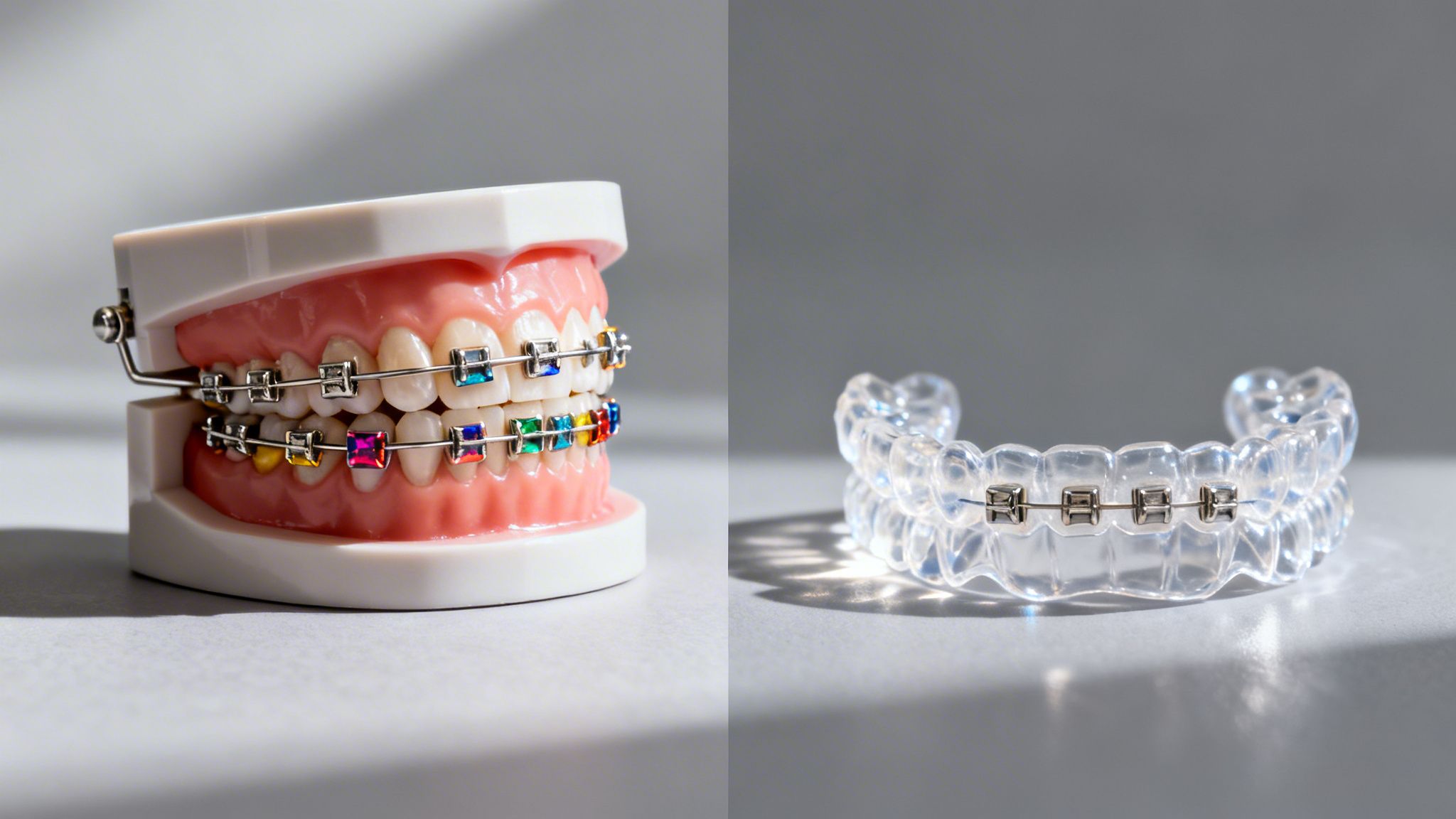
- Are clear aligners covered the same way as braces under my plan? They are not always.
- Is there a waiting period, and when does it end?
- If my child ages out mid-treatment, what happens to the balance?
One more thing people forget to ask about: if you change carriers partway through treatment, benefits are usually handled on a prorated basis. The specifics vary enough between carriers that I would confirm rather than assume.
When you are weighing the treatment options themselves, our comparison of Invisalign cost versus braces cost covers what drives the difference.
Frequently Asked Questions About Orthodontic Insurance Benefits
Do you accept my insurance?
It depends on the plan, and the honest answer is that we check rather than guess. Callers name Delta Dental, United Healthcare, Cigna PPO, Blue Shield, and Medi-Cal most often, and the answer is different for each one depending on whether it is an HMO or PPO and whether an orthodontic rider is attached. A quick call with your member ID handy settles it in a few minutes.
Is Invisalign covered the same as braces?
Often yes, but not always. Some plans treat clear aligners as a covered orthodontic service with the same lifetime maximum, and others carve them out or pay at a different rate. Ask specifically, using the words "clear aligner therapy," because that phrasing is what appears in many plan documents.
My plan has a waiting period. Should I still come in now?
I would, yes. A consultation gives you the actual treatment estimate and timeline, which is what you need to size an FSA election or decide whether to wait. Knowing the number beats sitting on a guess until the waiting period clears.
What if I am out of network?
It is not a dead end. Plenty of families here start treatment out of network using an in house monthly payment arrangement, which works separately from insurance. The total does not change, but how and when you pay it does.
My teen will age out of our plan next year. Is it too late to start?
Not necessarily. Because carriers usually handle mid-treatment changes on a prorated basis, some of the benefit may still apply to the months your teen was covered. Worth confirming with your carrier before you make any decision about timing.
Am I too old for orthodontic treatment?
No. Dr. Jeremy and Dr. Melissa treat patients well into their 70s, and adults now make up roughly a third of orthodontic patients nationally. Your plan language may assume otherwise, but your teeth do not read your benefit summary.
Want your own benefit read before you elect?
Our office sits on Beach Boulevard between Huntington Beach and Fountain Valley, so it is a short drive whether you are coming from Newland, Adams, or Talbert Village. Consultations are complimentary, second opinions are welcome, and our team speaks English, Vietnamese, and Spanish. Patients tell us again and again that Dr. Jeremy and Dr. Melissa take the time to explain the whole plan before anything starts, and a benefit review works the same way. You can reach us at 714-594-5777 or at magicfoxsmiles.com whenever you are ready.