Can Invisalign Actually Fix an Overjet? Here's the Real Answer
Direct Answer: Yes, Invisalign can fix mild to moderate overjets. Significant skeletal overjets may need a combined approach. An in-person exam with digital imaging is the only way to know which applies to you.
If you've been searching for a straight answer on whether Invisalign can fix an overjet, you've probably noticed that most articles either dodge the question or give you a vague "it depends" without actually explaining what it depends on. That's frustrating — especially when you're trying to figure out whether your situation even qualifies before picking up the phone.
This article gives you the real clinical answer. We'll explain what an overjet actually is, how Invisalign approaches it, where the limits are, and what the process looks like start to finish. Whether you're a patient in Huntington Beach or Fountain Valley, or a parent researching options for a child, the goal here is to leave you genuinely informed.
If you've been telling people your teeth "stick out" or your bite feels off and you're not sure what term applies, this is the right place to start.
Overjet vs. Overbite — These Are Not the Same Thing
A lot of people use these terms interchangeably, but they describe two different problems, and the distinction matters for treatment planning.
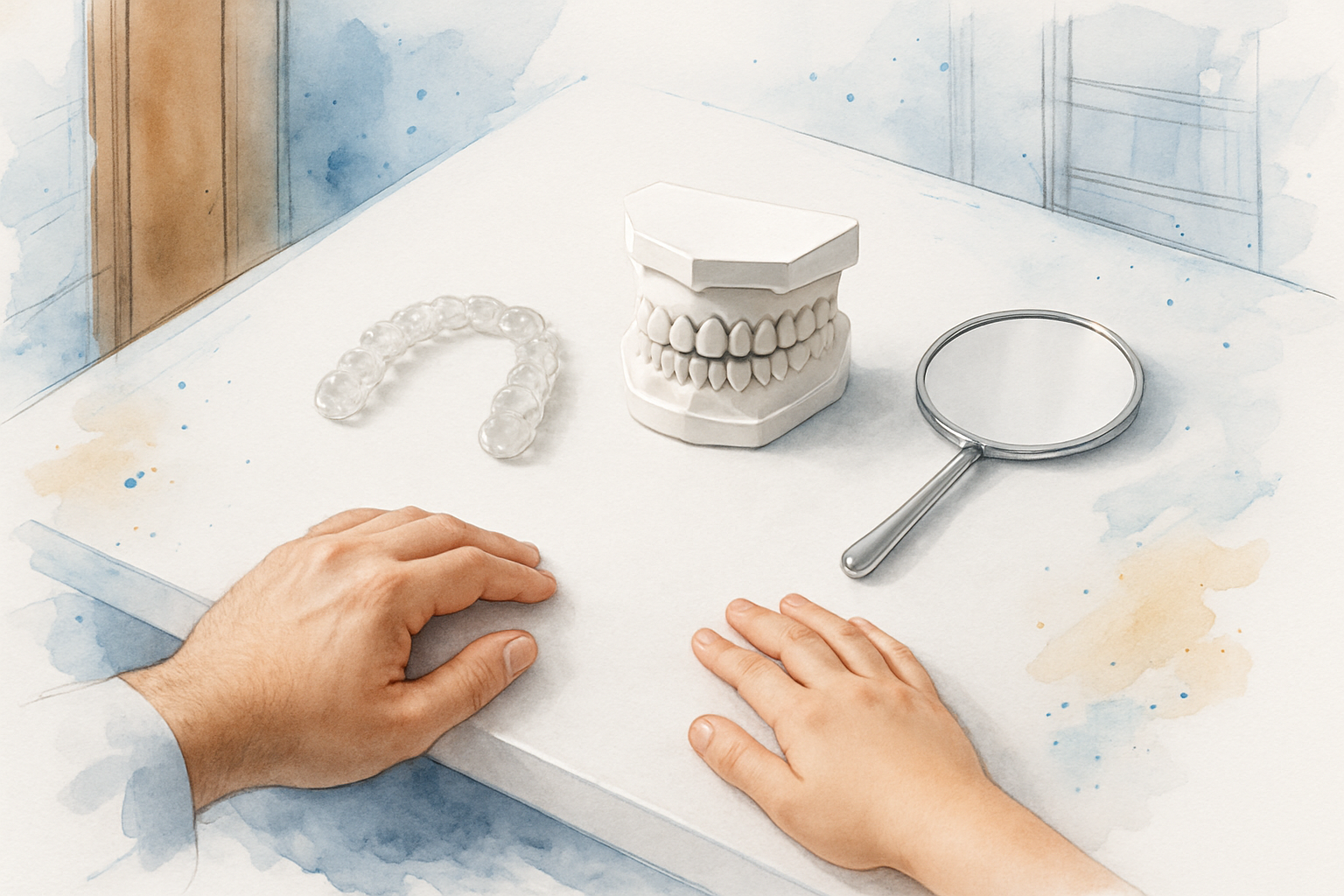
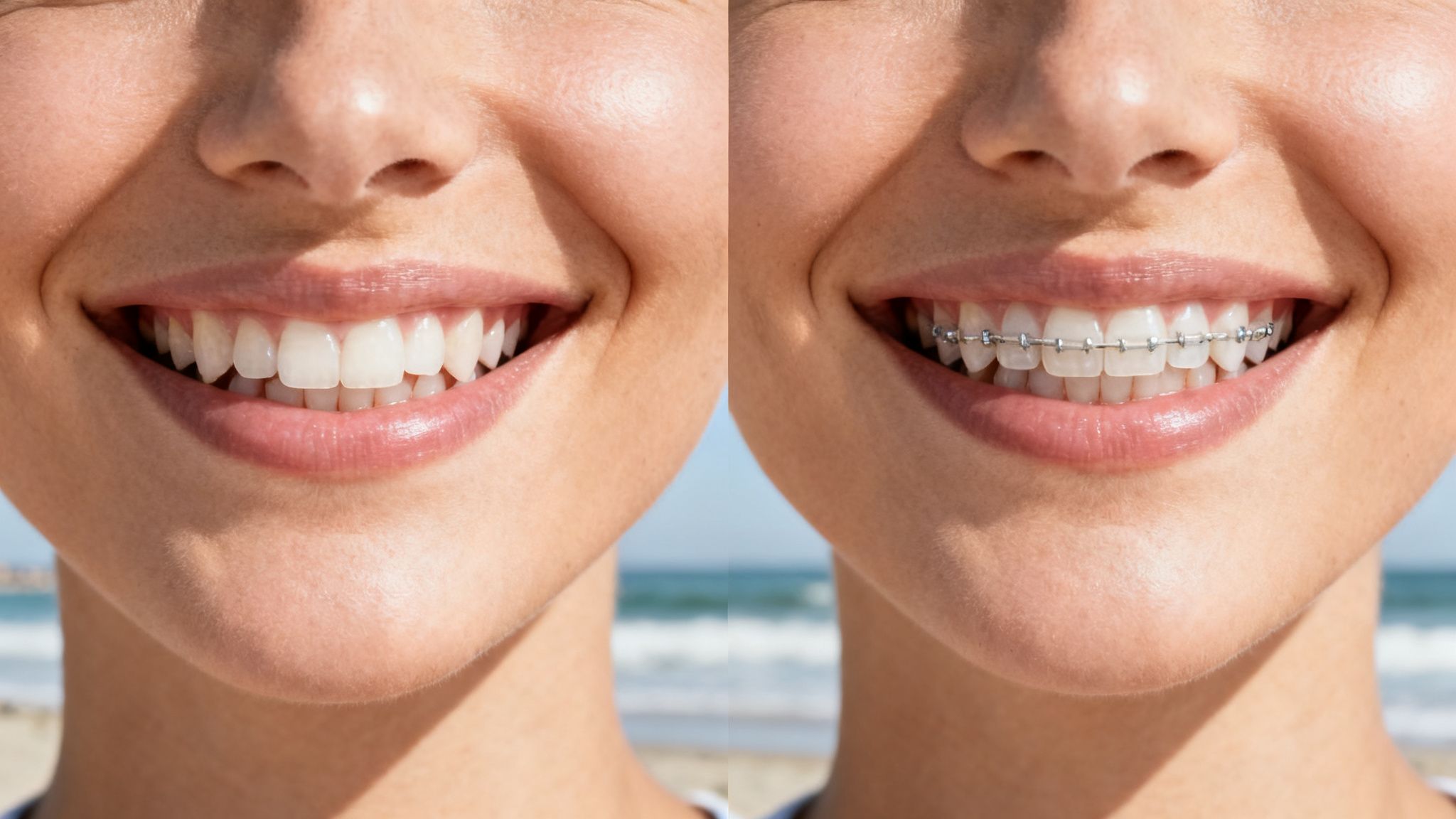
An overjet is a horizontal issue. It refers to how far your upper front teeth protrude forward beyond your lower teeth — measured from front to back. When someone says their teeth "stick out" or they worry about how far forward their top teeth sit, they're usually describing an overjet.
An overbite is a vertical issue. It's how much your upper front teeth overlap down over your lower teeth when you bite down. Some vertical overlap is normal and healthy. An excessive overbite — sometimes called a deep bite — is a separate concern with its own treatment approach.
Real form submissions from patients frequently describe wanting to fix "how far my teeth stick out" or their "bite" without using either clinical label. Both are valid descriptions, and both are worth bringing to a consultation. But knowing which issue you actually have changes the treatment conversation significantly.
For a deeper look at how Invisalign handles a closely related issue, see this overview of Invisalign deep bite before and after results.
So Can Invisalign Actually Fix an Overjet?
The honest answer is: often yes, but not always on its own — and the degree of your overjet is the deciding factor.
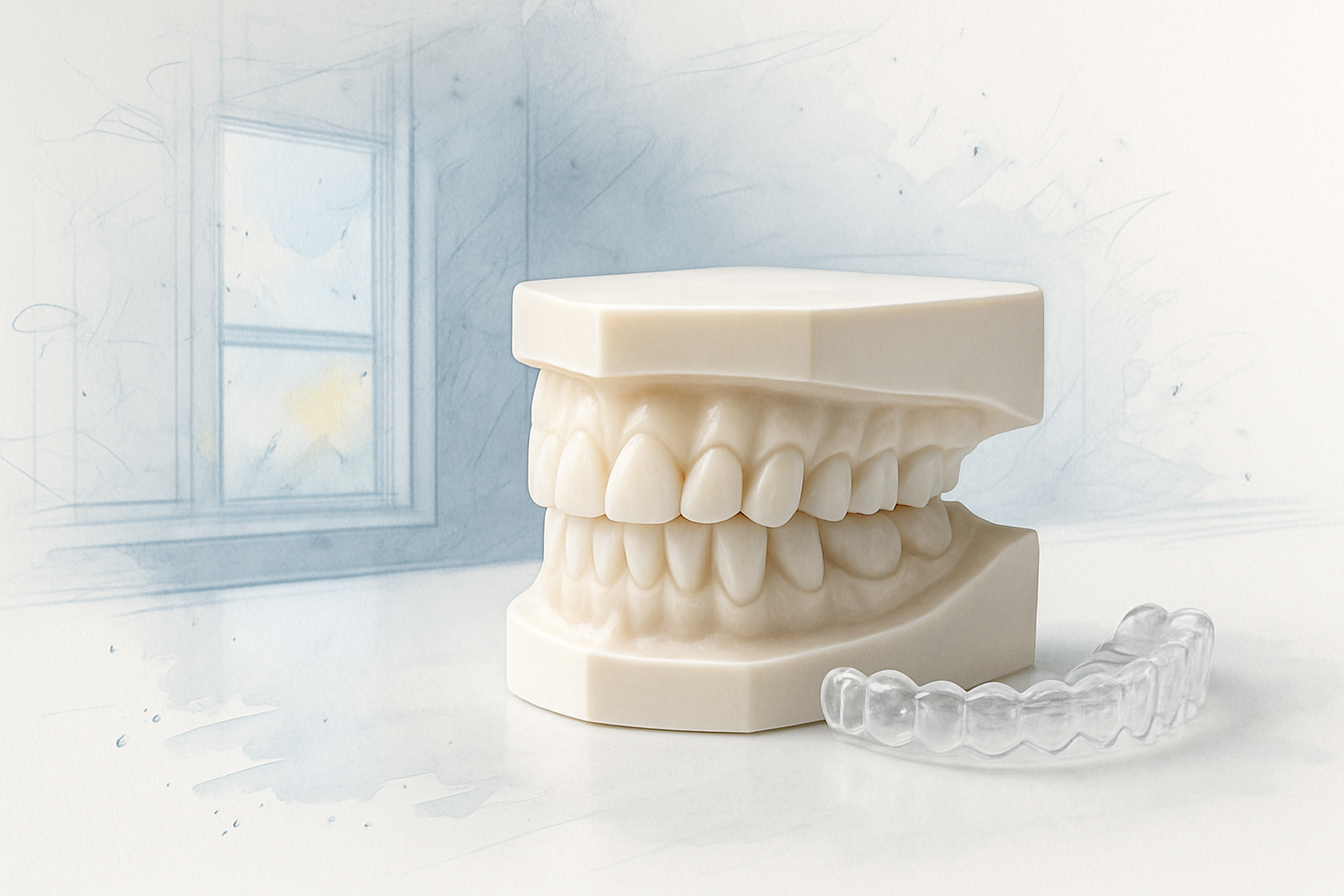
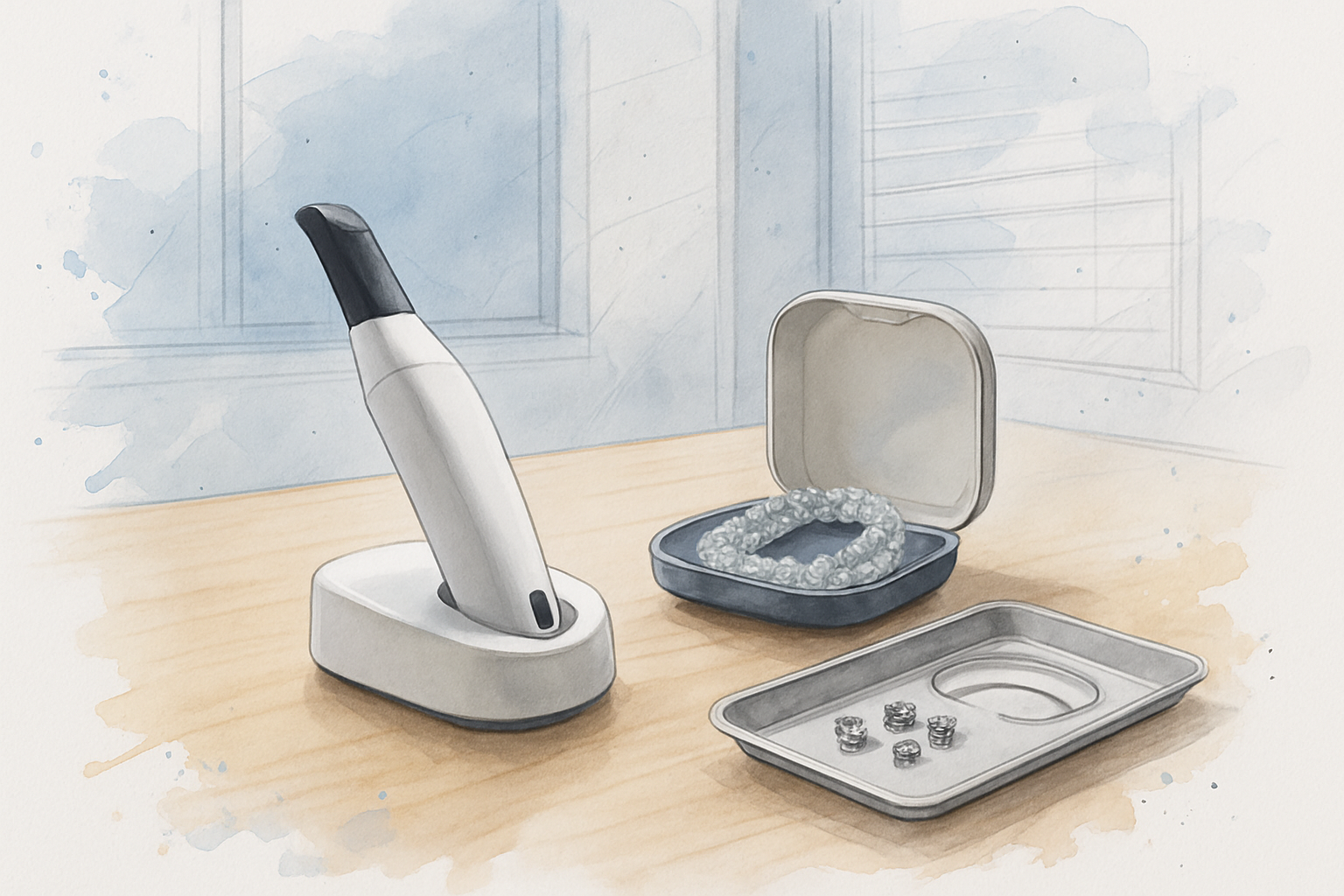
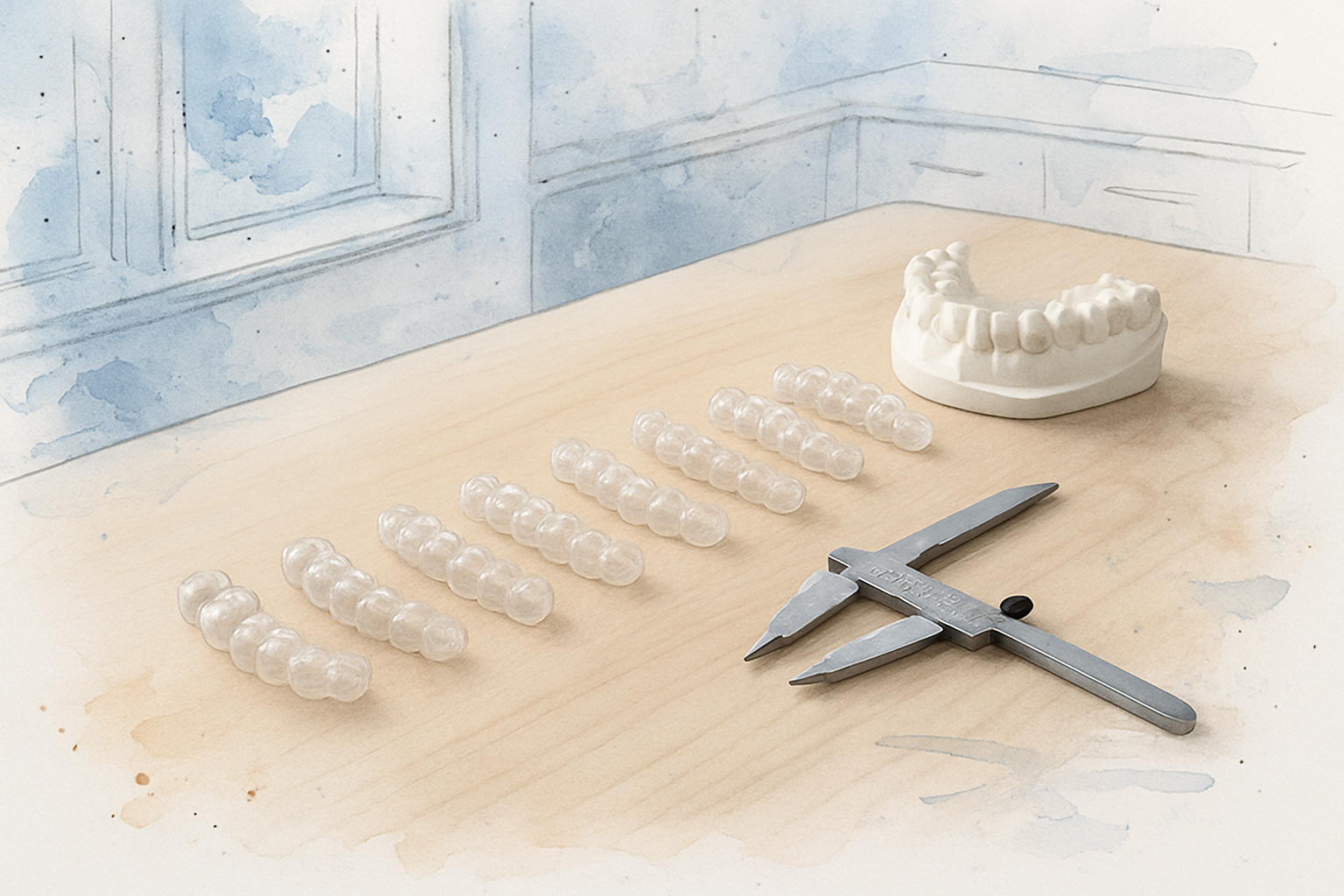
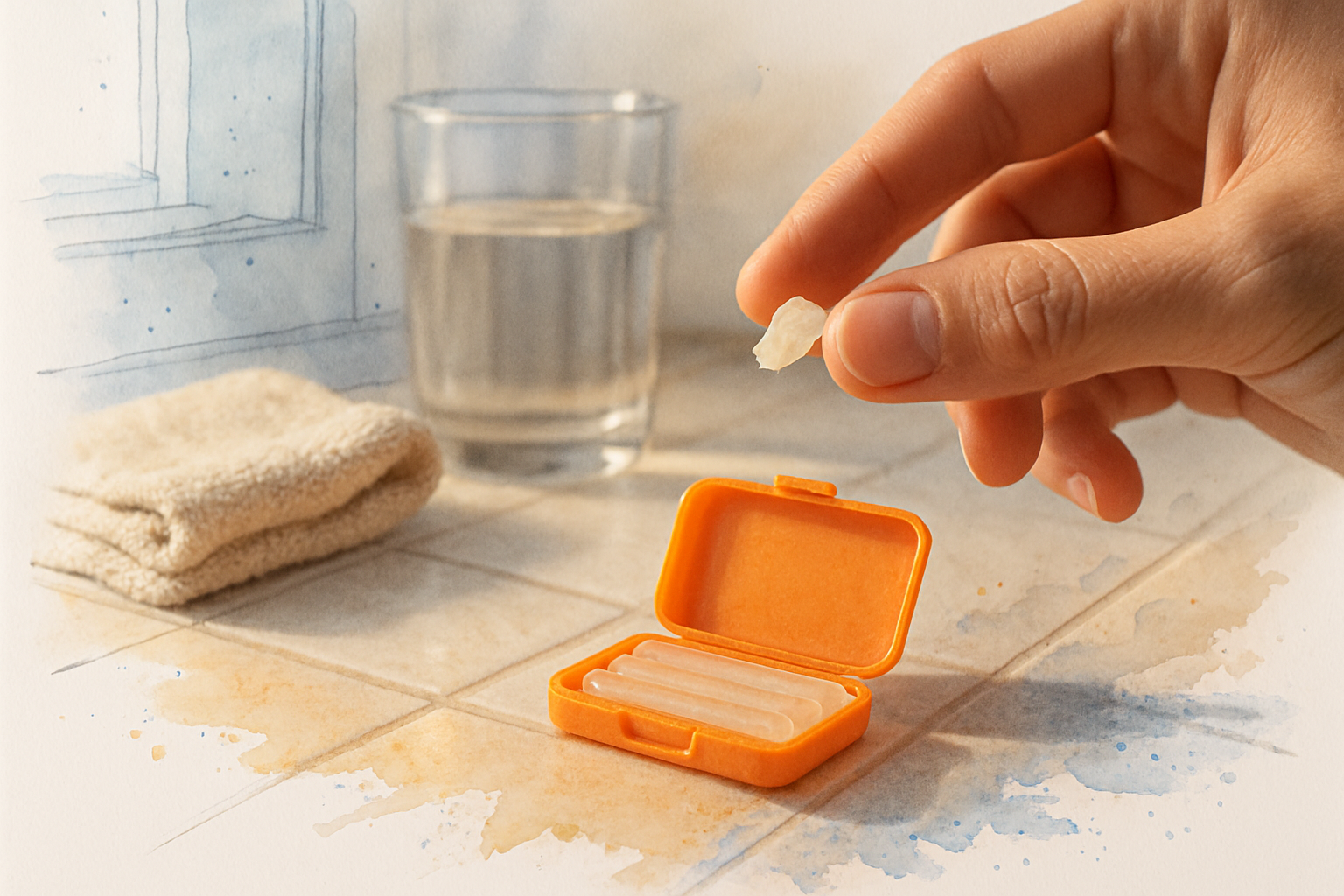
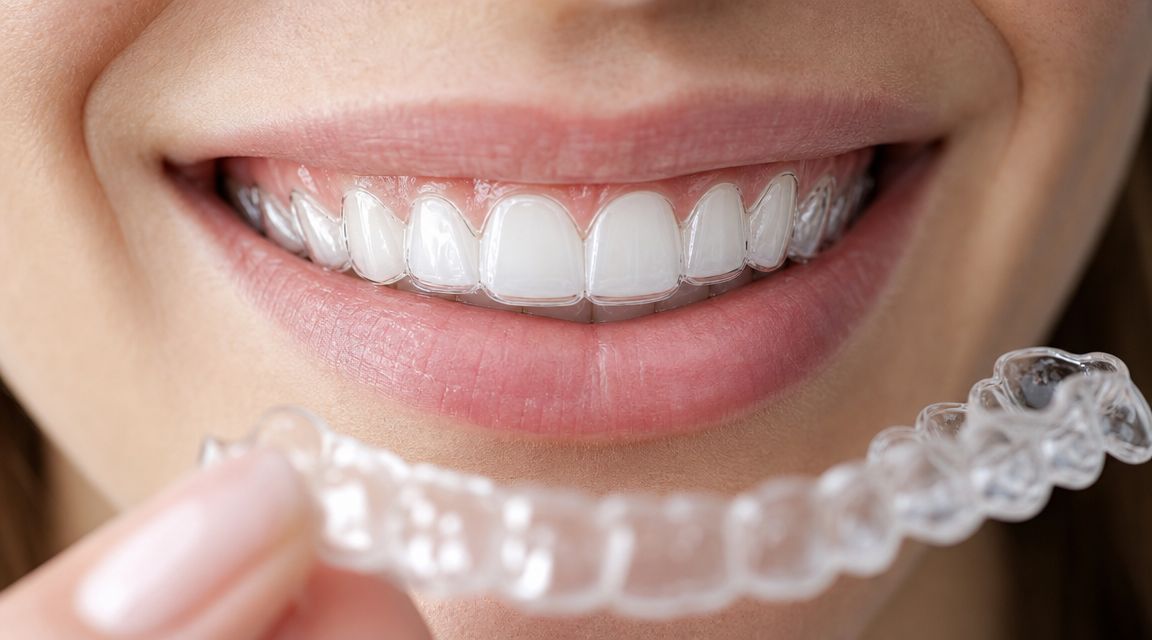
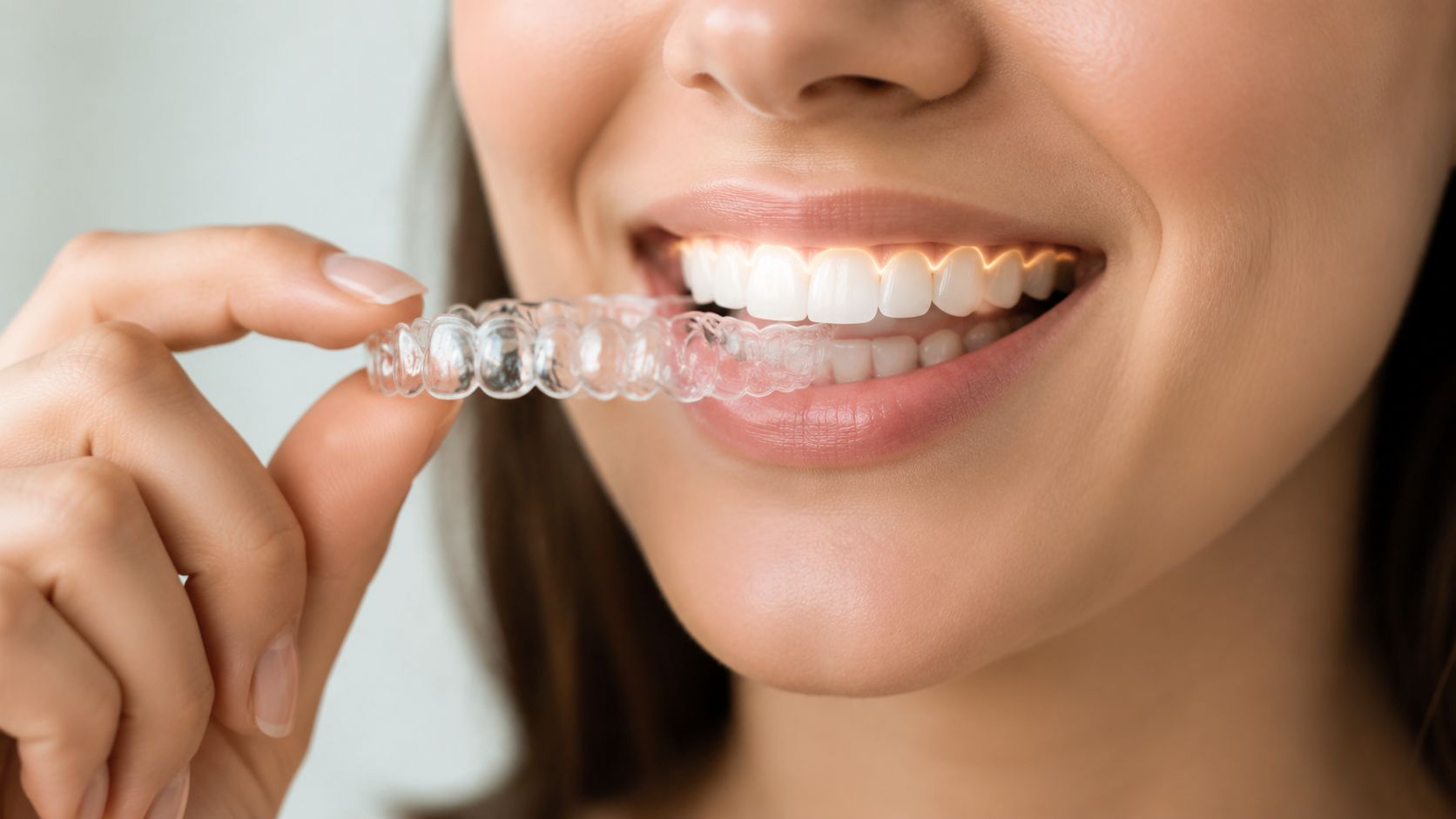
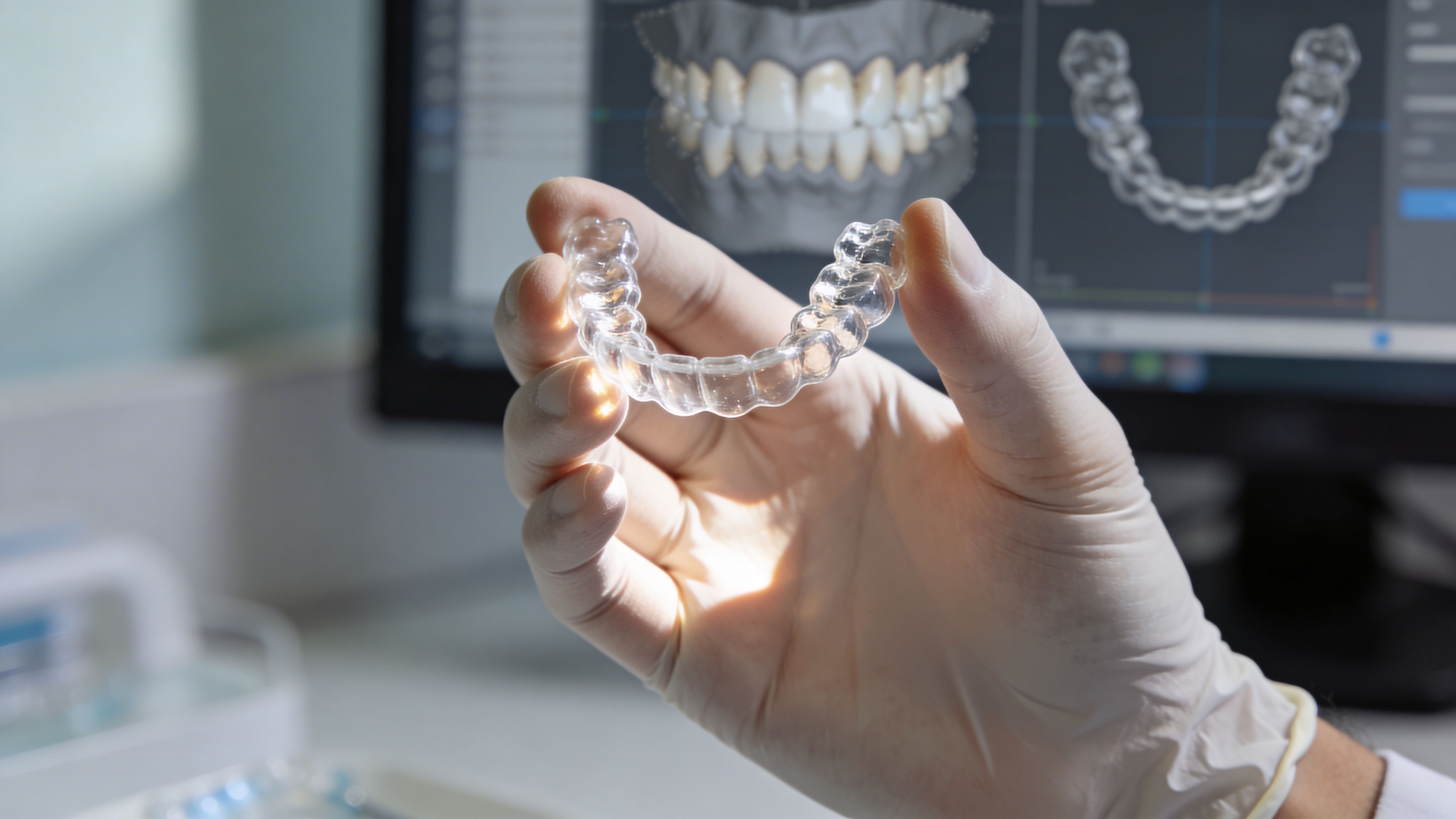
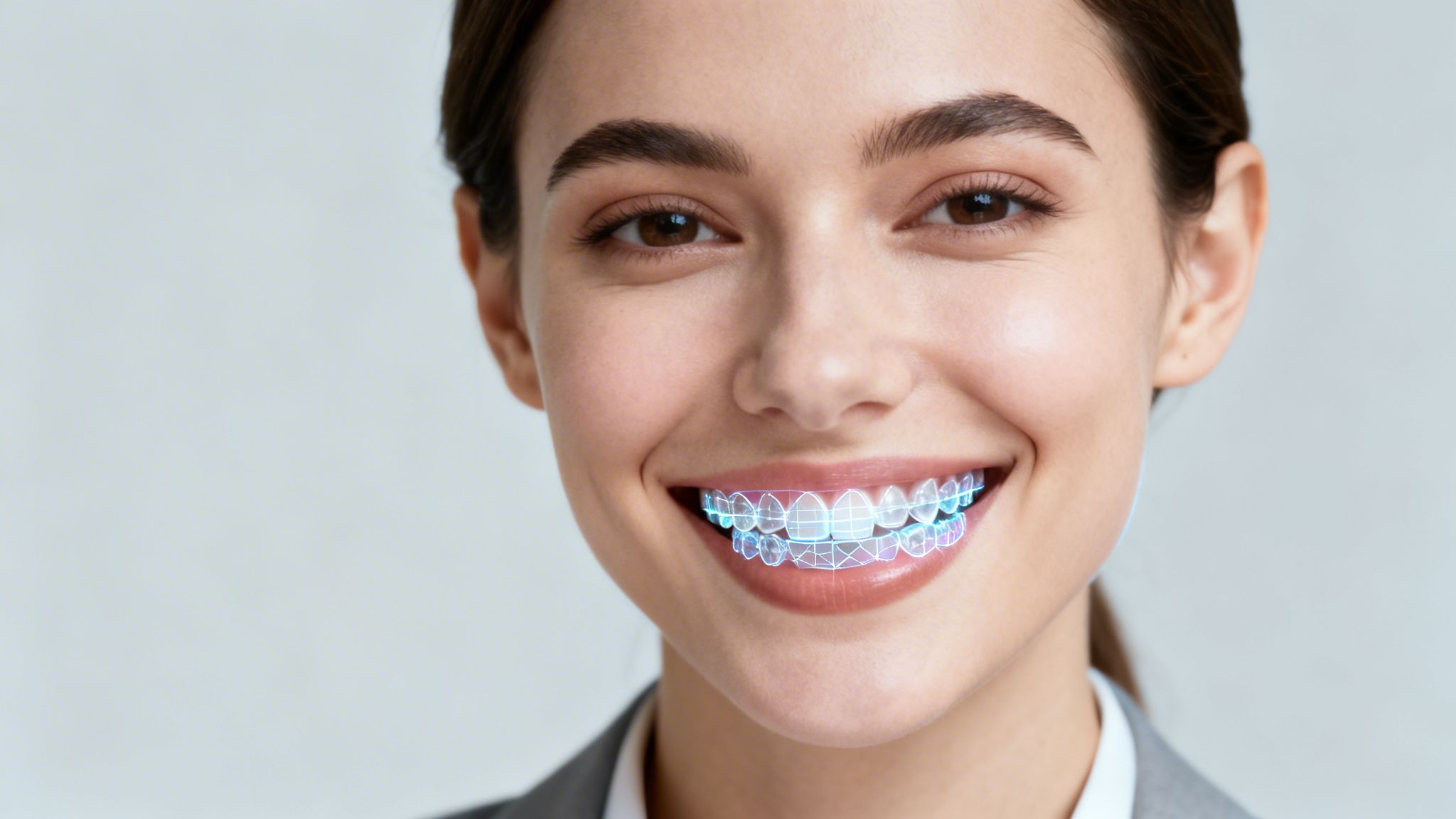
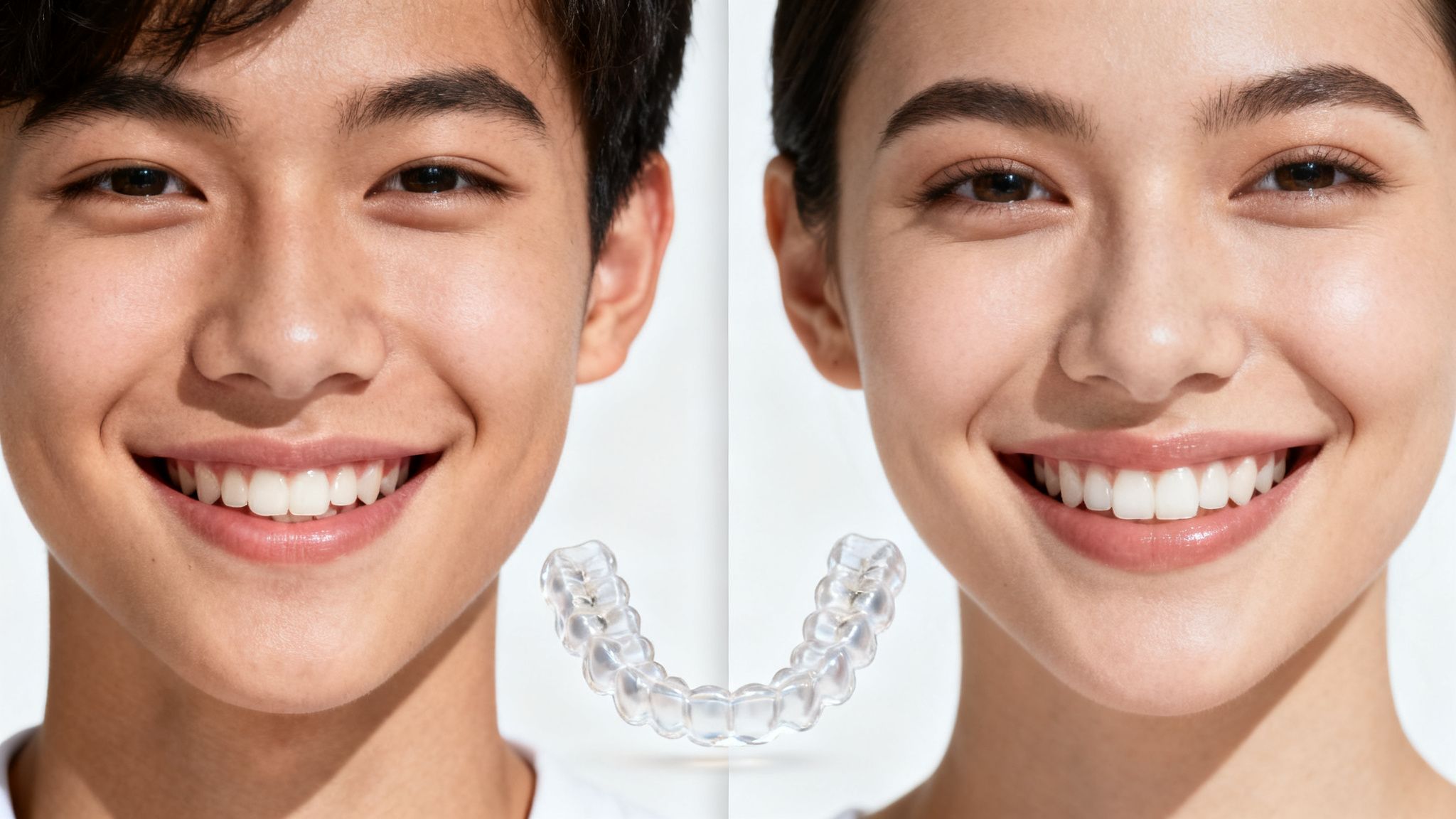
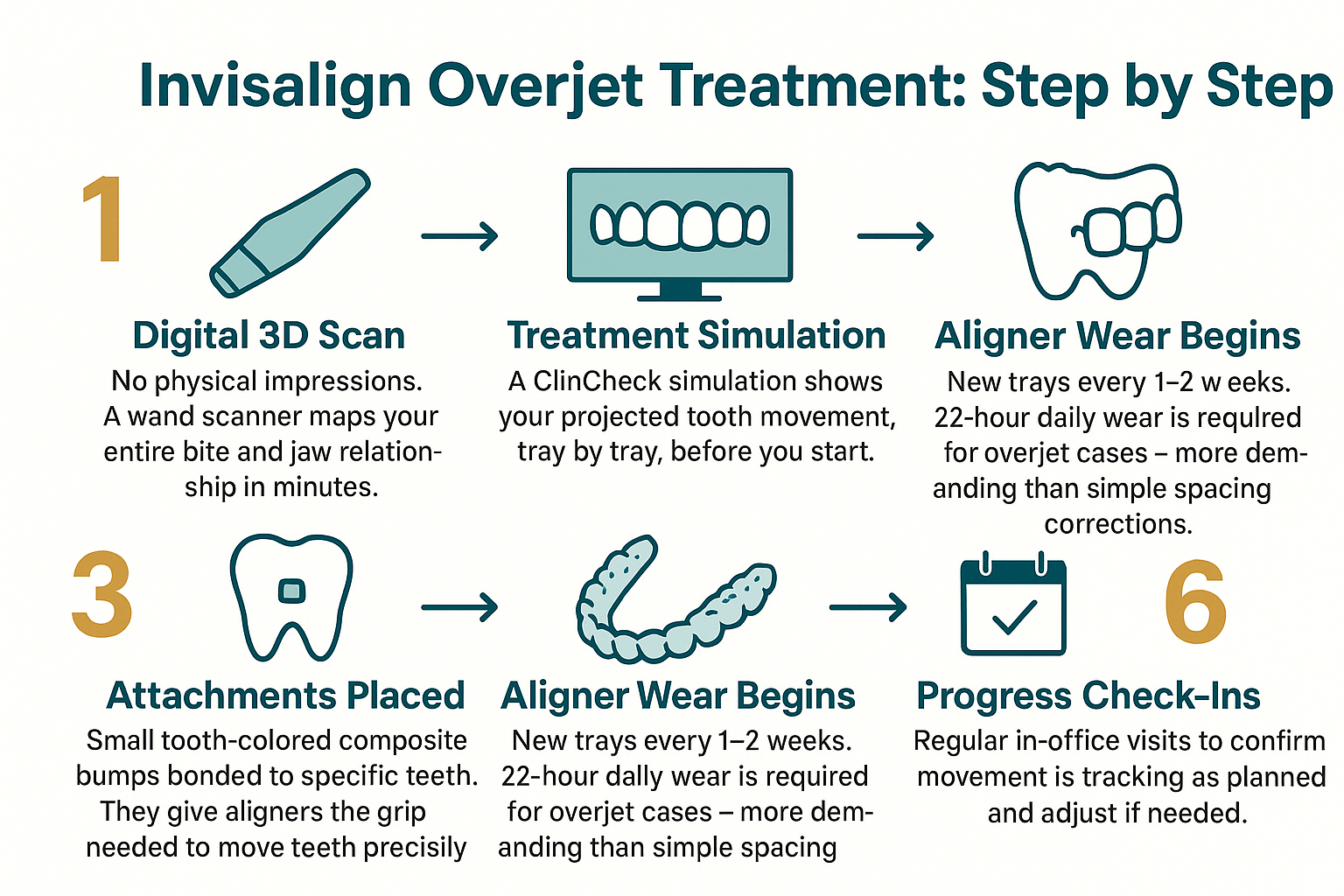
Mild to moderate overjets are treated with Invisalign regularly. The aligners work by using a series of precisely calculated tooth movements to gradually retract the upper front teeth and, depending on the case, encourage a shift in the lower jaw relationship. Small tooth-colored attachments — sometimes called buttons — are bonded directly to specific teeth to give the aligner something to push against. Without them, the smooth plastic surface of an aligner can't generate the directional force needed to move teeth with that level of precision.
More significant skeletal overjets are a different situation. When the upper jaw itself is positioned too far forward relative to the lower jaw — a skeletal rather than dental problem — Invisalign alone may not be enough. These cases sometimes require a combined approach, which could include traditional braces for specific tooth movements, or in more complex situations, an evaluation for jaw-level intervention. Dr. Jeremy and Dr. Melissa assess this distinction at the initial consultation using clinical examination and, where needed, digital imaging.
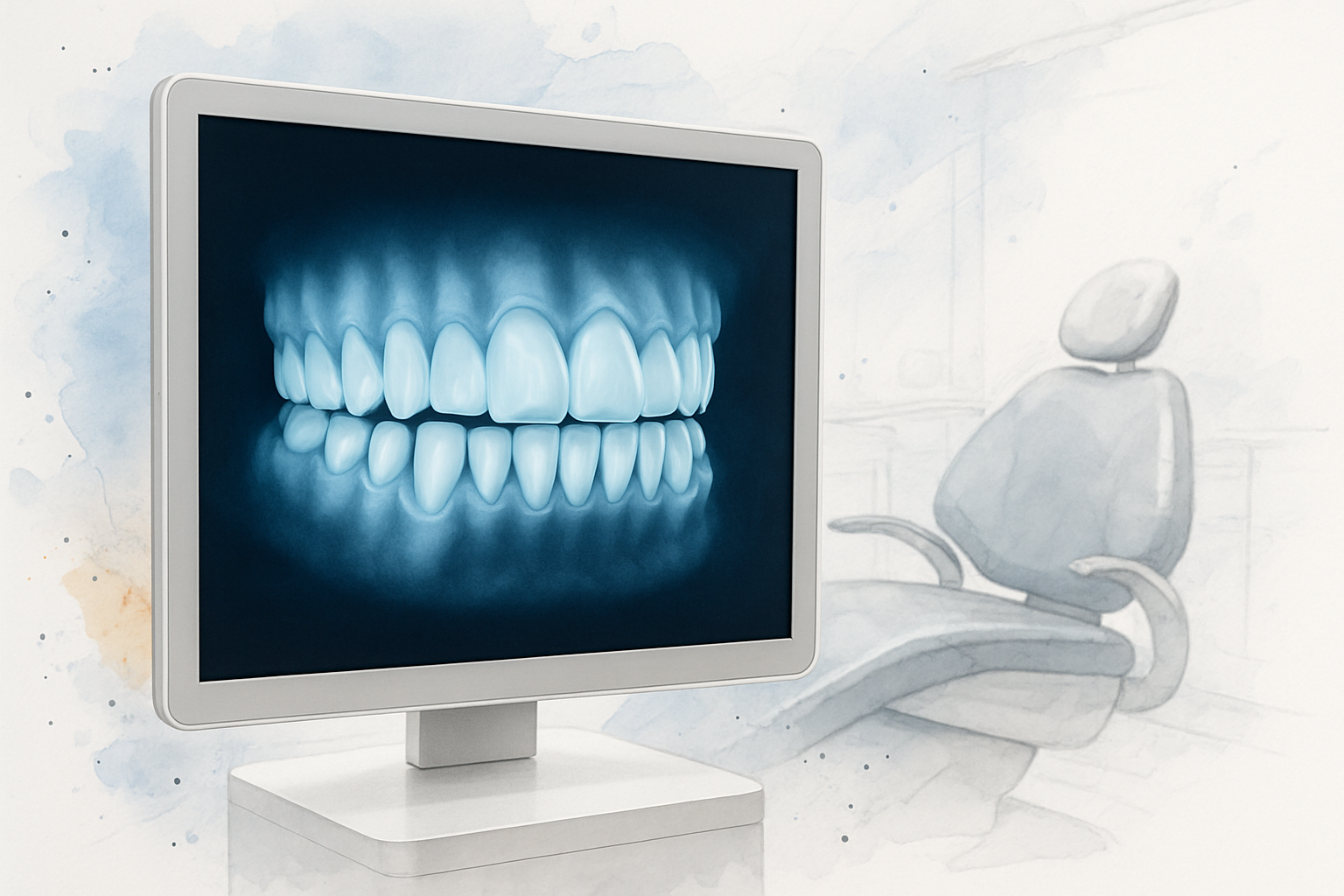
The key takeaway: you cannot determine which category you fall into from a photo or a description. An in-person exam with a 3D scan is how you actually find out.
One patient who submitted a form specifically asked whether the practice takes cases "like that" — referencing a complex bite situation. That question gets answered at the consultation, not before it, because no two bites are identical.
What Invisalign Treatment for an Overjet Actually Looks Like
The Invisalign process for overjet correction follows a specific clinical sequence. Here's what each stage involves.
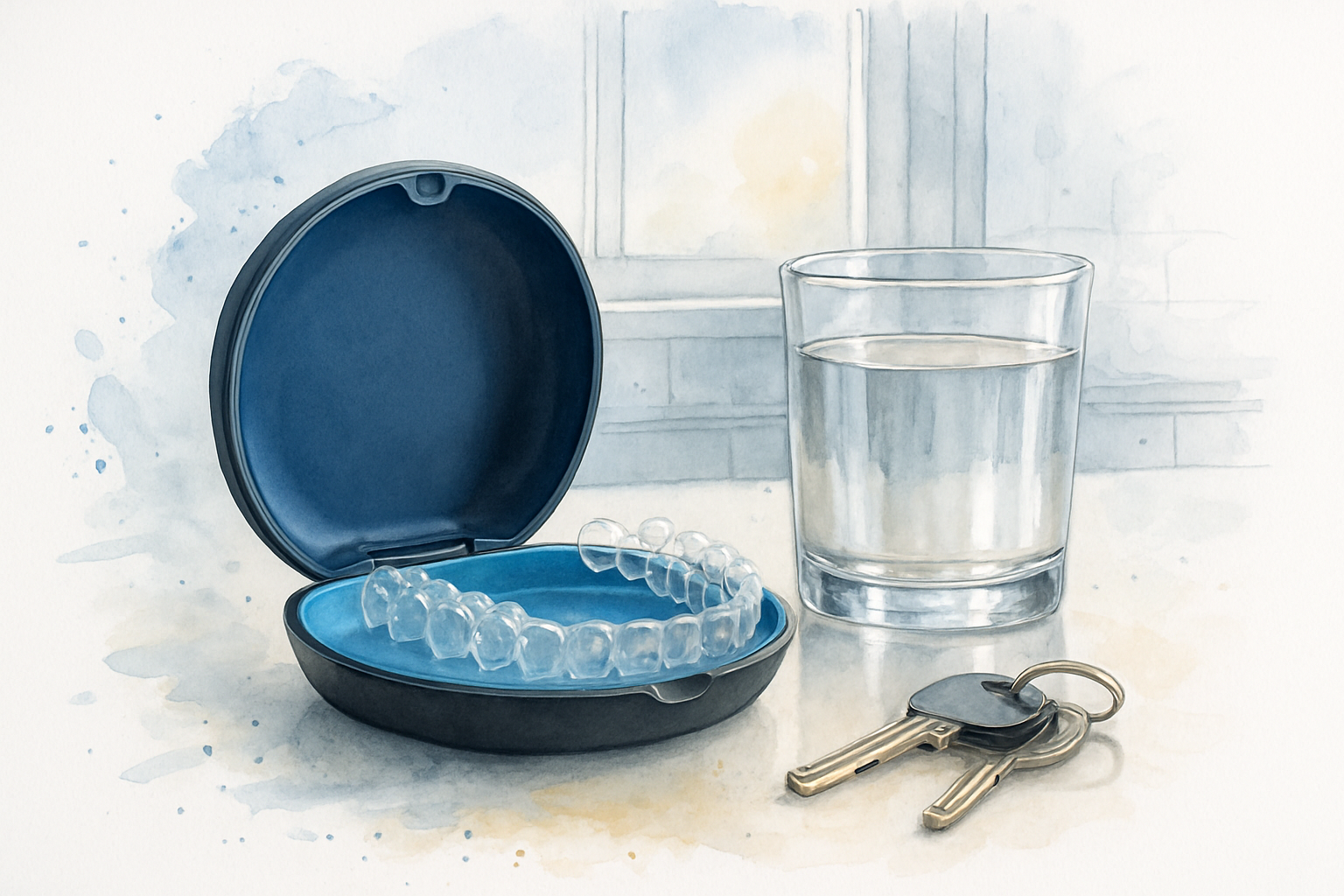
Why 22-Hour Wear Is Non-Negotiable for Overjet Cases
This is the part most people underestimate — and it's worth being direct about.
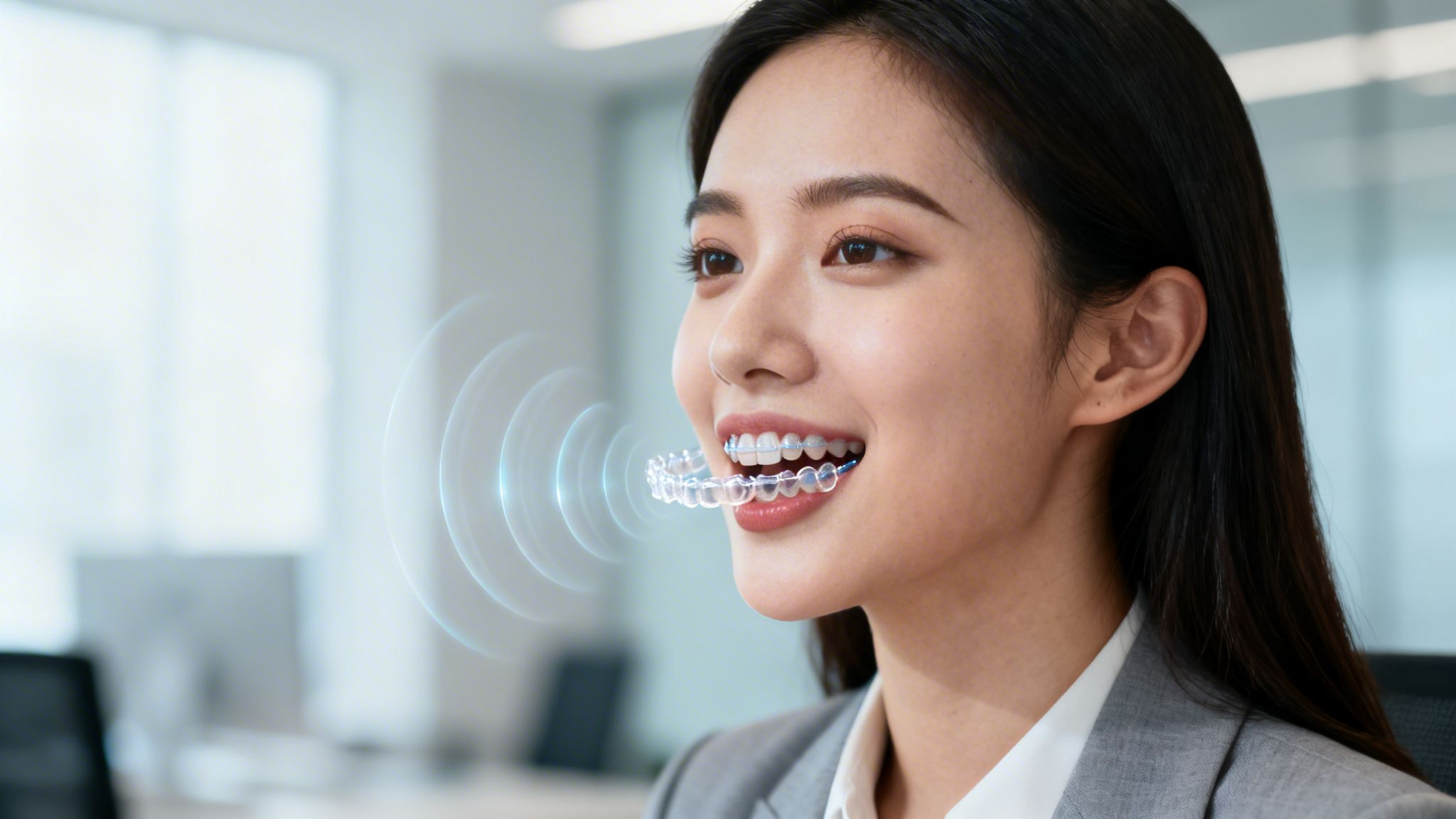
For simple spacing or a small gap, missing a few hours of wear here and there is inconvenient but usually recoverable. Overjet correction is biomechanically more demanding. The tooth movements involved — retracting upper incisors, managing root torque, guiding the bite — require consistent, uninterrupted pressure from the aligners over time. When you take them out for extended periods, you interrupt that process.
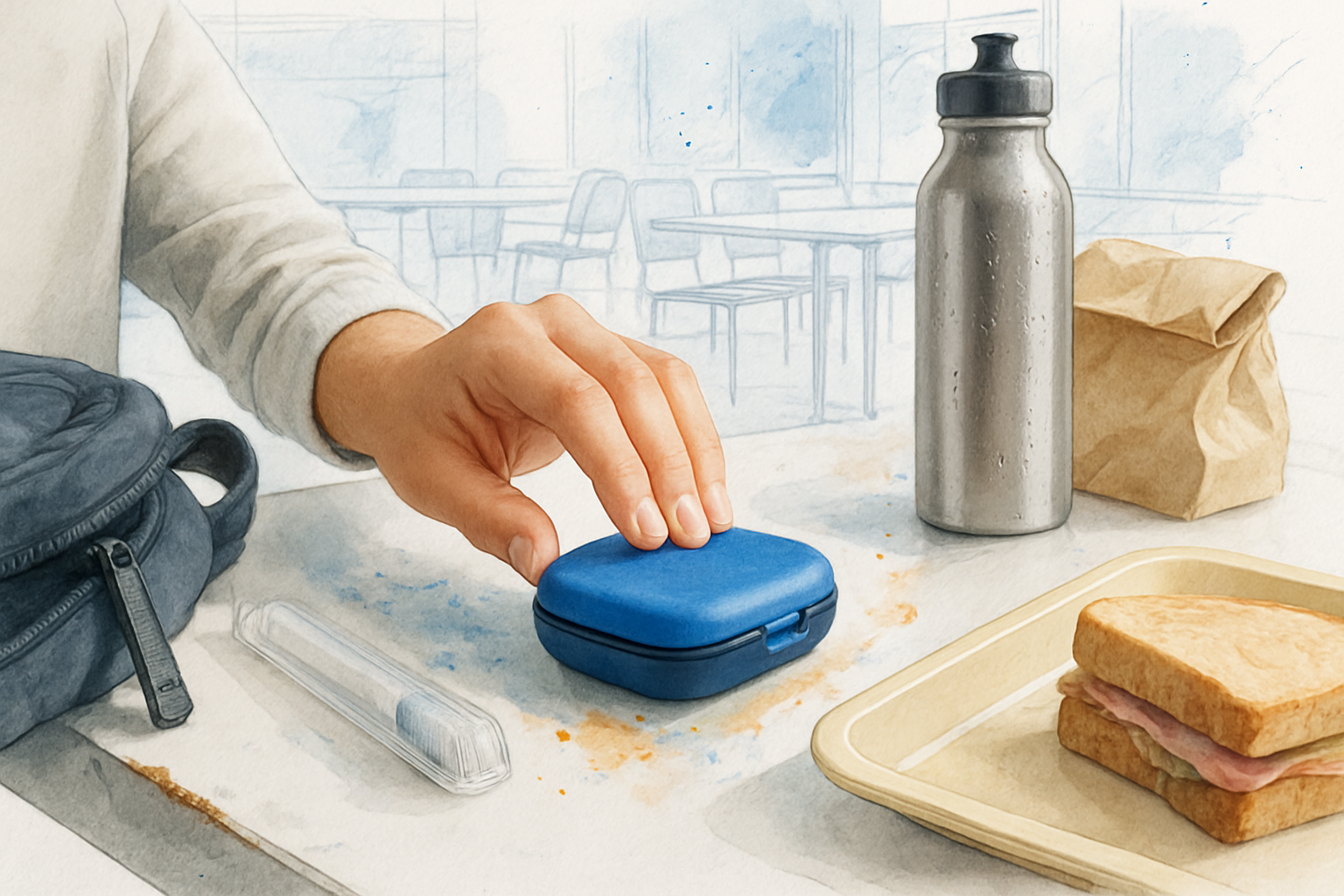
22 hours of daily wear isn't a suggestion for these cases. It's a clinical requirement.
This is also one of the reasons that overjet correction belongs in the hands of an orthodontist — not a general dentist offering Invisalign as a side service, and definitely not a mail-order aligner company. The treatment planning for these cases requires a trained understanding of how the entire bite functions, not just how the front teeth look. For more on why that distinction matters, this article on whether your regular dentist can do Invisalign or braces breaks it down clearly.
The lifestyle question is real and worth asking yourself honestly. If you travel frequently, work long hours, or know you have trouble with compliance habits, that's important information for your consultation — not a reason to avoid treatment, but a factor that affects which option is actually right for you.
Invisalign vs. Braces for Overjet Correction: How They Compare
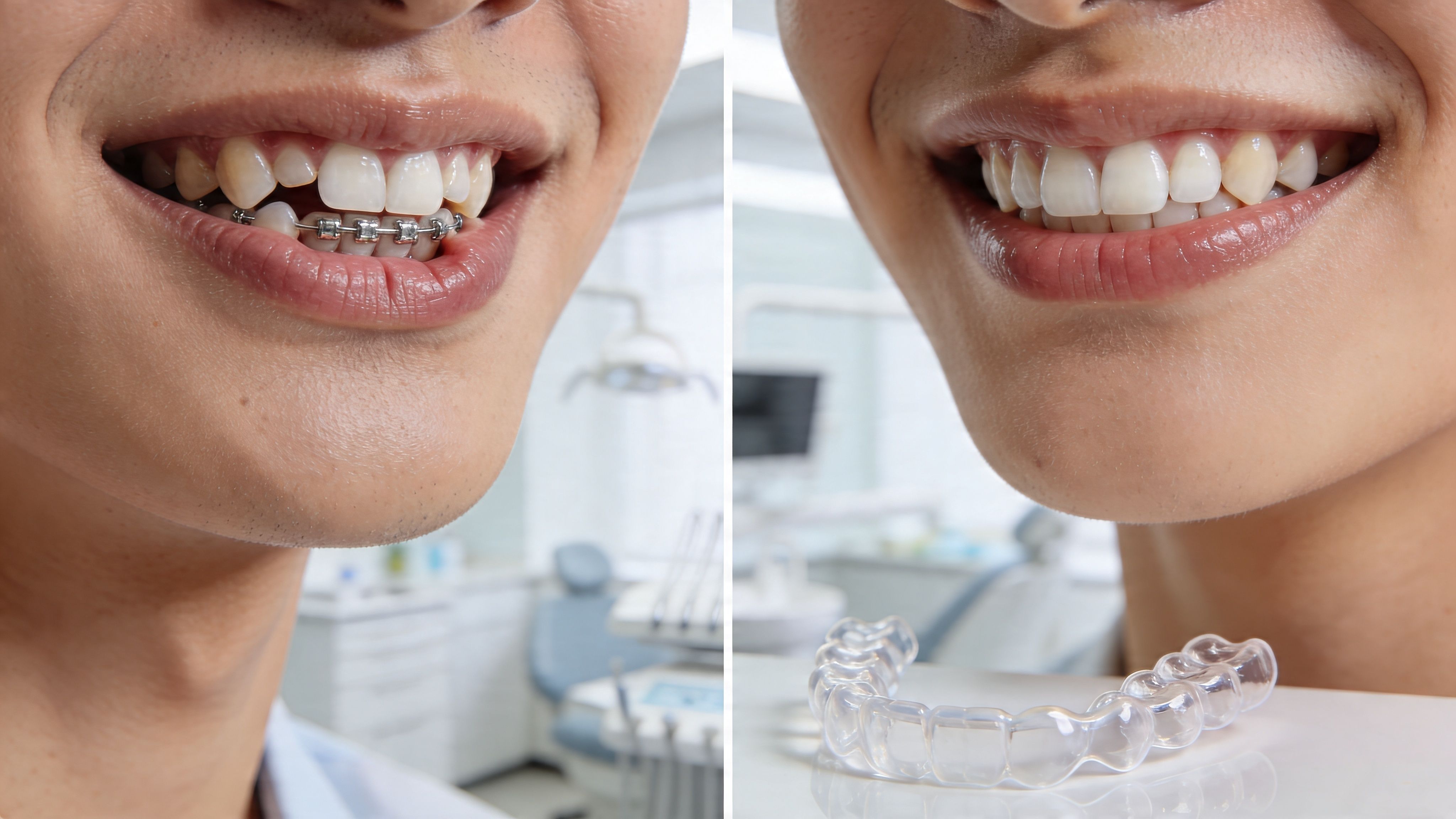
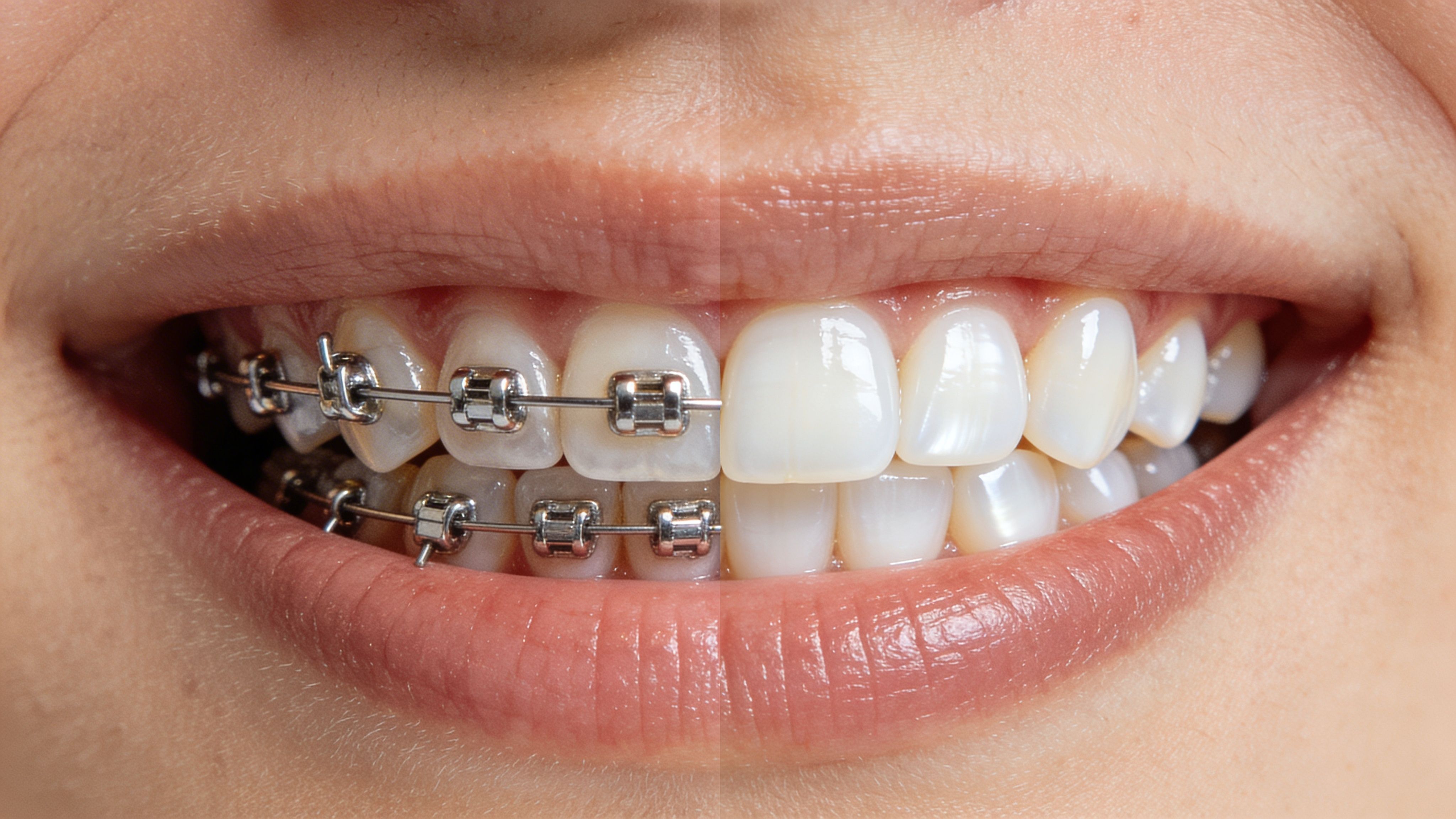
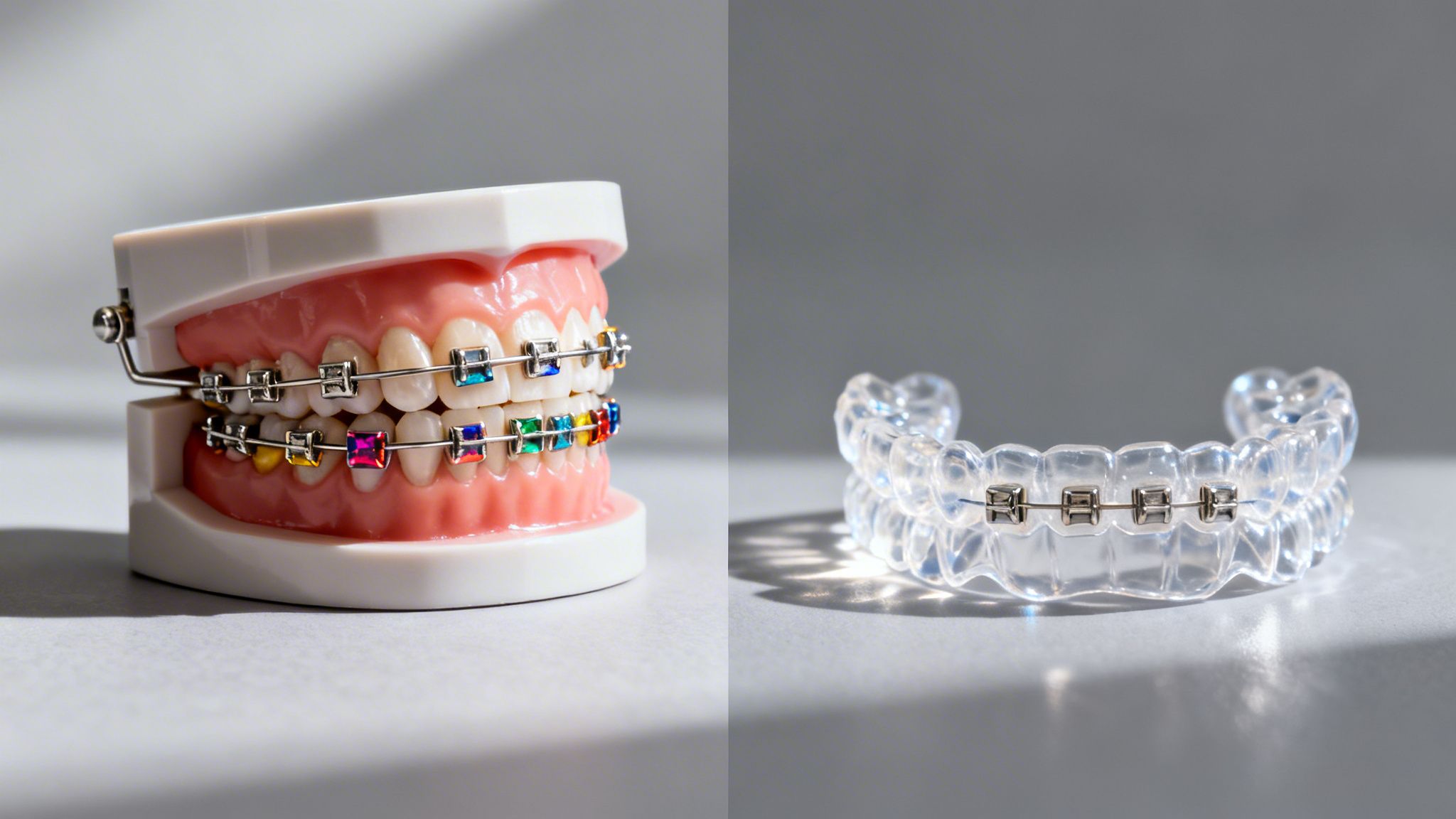
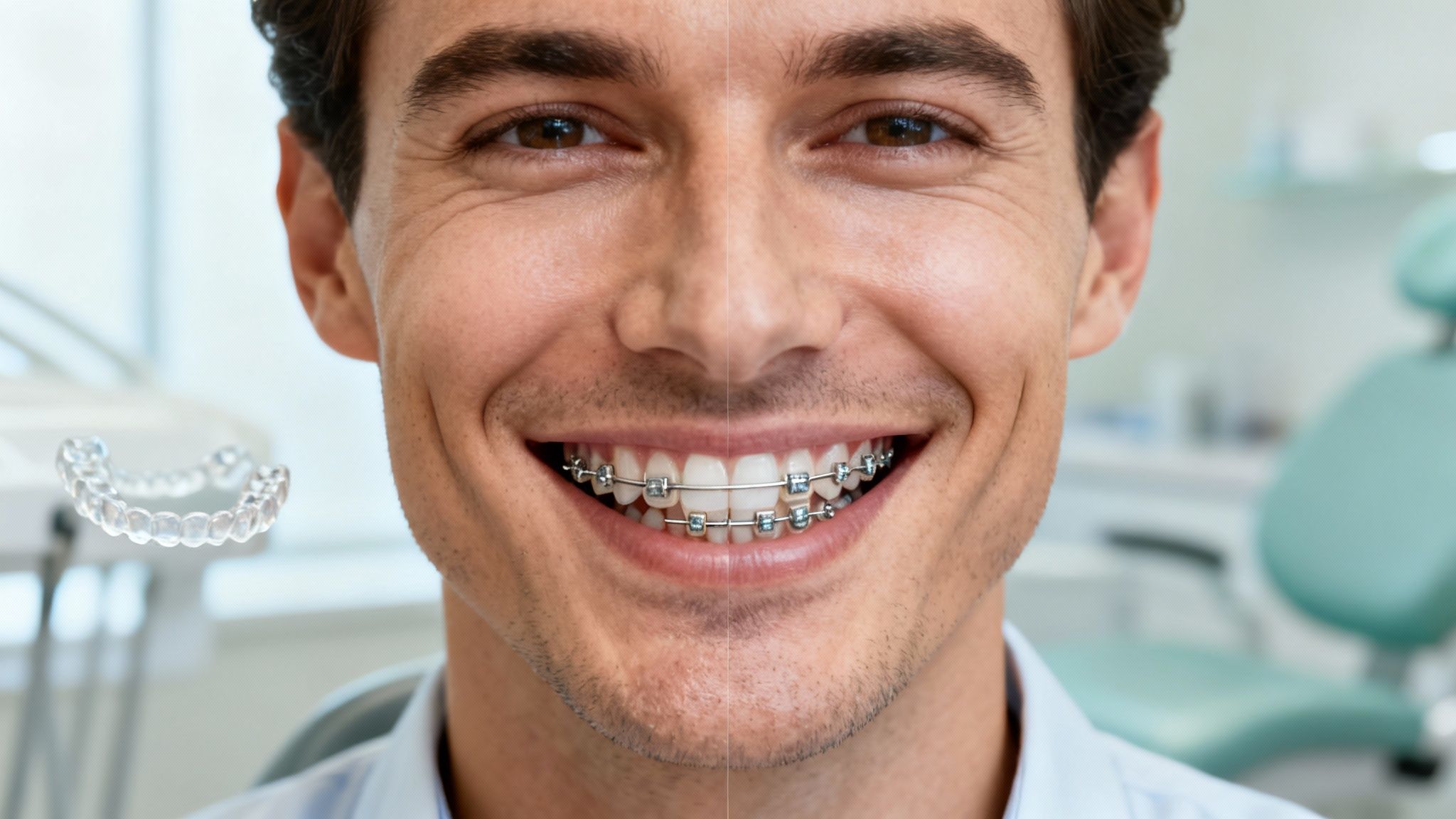
Both options can address overjets effectively. The right choice depends on the complexity of your bite and your lifestyle. This comparison covers what most patients want to know before making a decision.
| Factor | Invisalign | Traditional Braces |
|---|---|---|
| Mild to moderate overjet | Frequently treated | Frequently treated |
| Significant skeletal overjet | May need combined approach | Often preferred for complex cases |
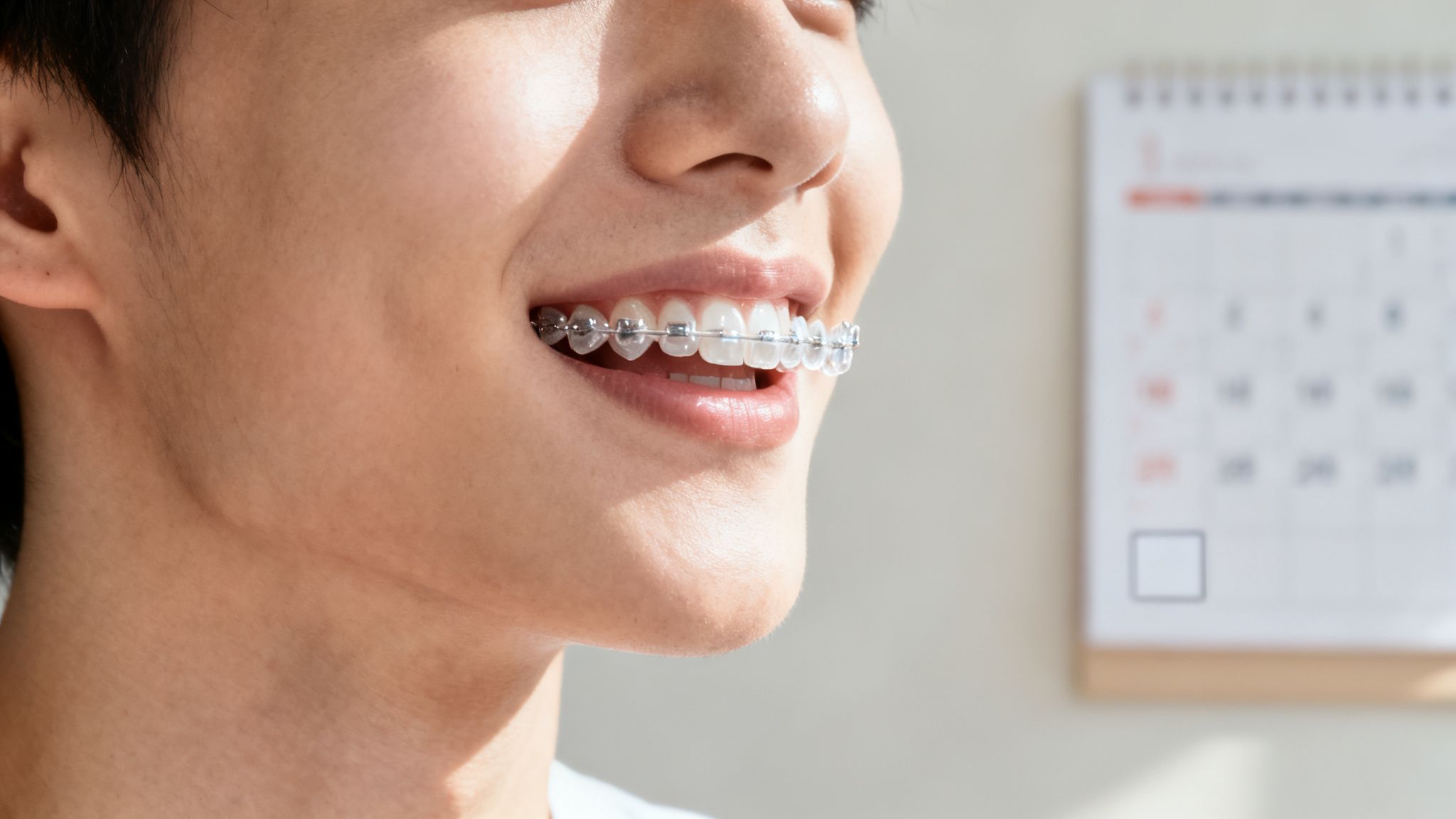
| Visibility during treatment | Nearly invisible | Metal brackets visible |
| Requires strict compliance | Yes — 22 hrs/day for bite cases | Fixed to teeth; no compliance issue |
| Attachments needed | Usually yes, for overjet cases | Not applicable |
| Removable for meals/photos | Yes | No |
| Typical treatment timeline | Varies; determined at consultation | Varies; determined at consultation |
| In-office supervision required | Yes — orthodontist oversight | Yes — orthodontist oversight |
What Happens at Your First Consultation for an Overjet Concern
A lot of people hold off on booking because they're not sure whether their situation "qualifies." The first appointment is exactly how you find that out — and it's a conversation, not a commitment.
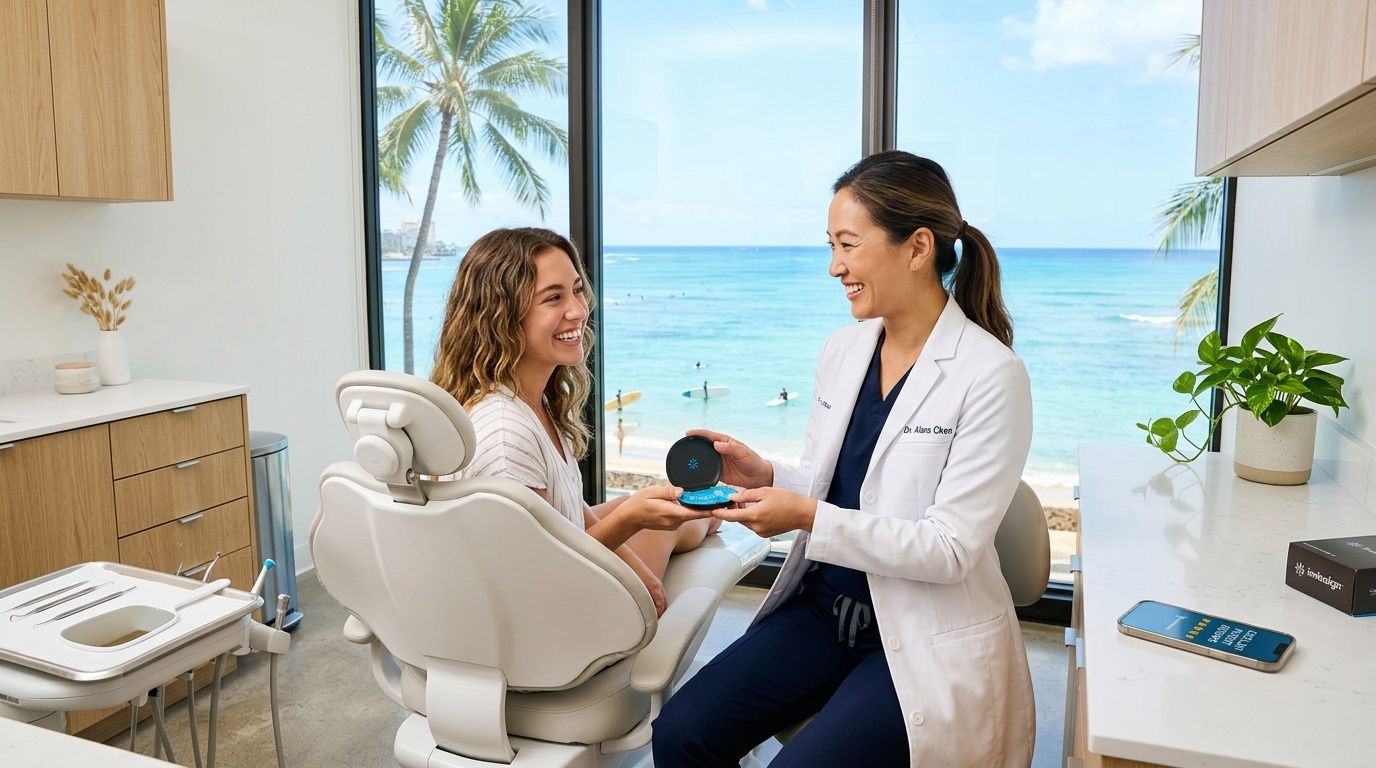
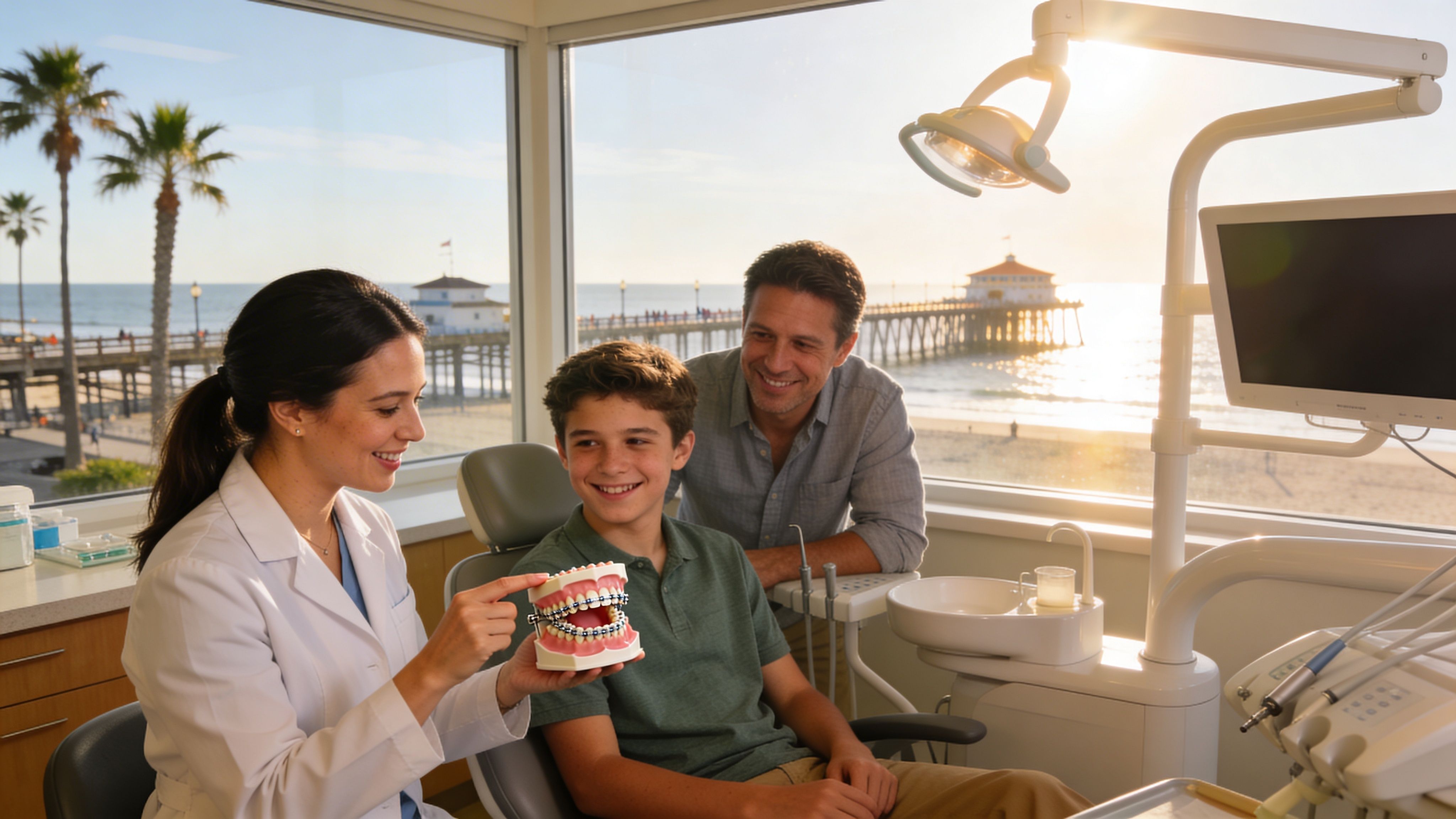
At Magic Fox Orthodontics, a consultation for a patient concerned about an overjet typically covers:
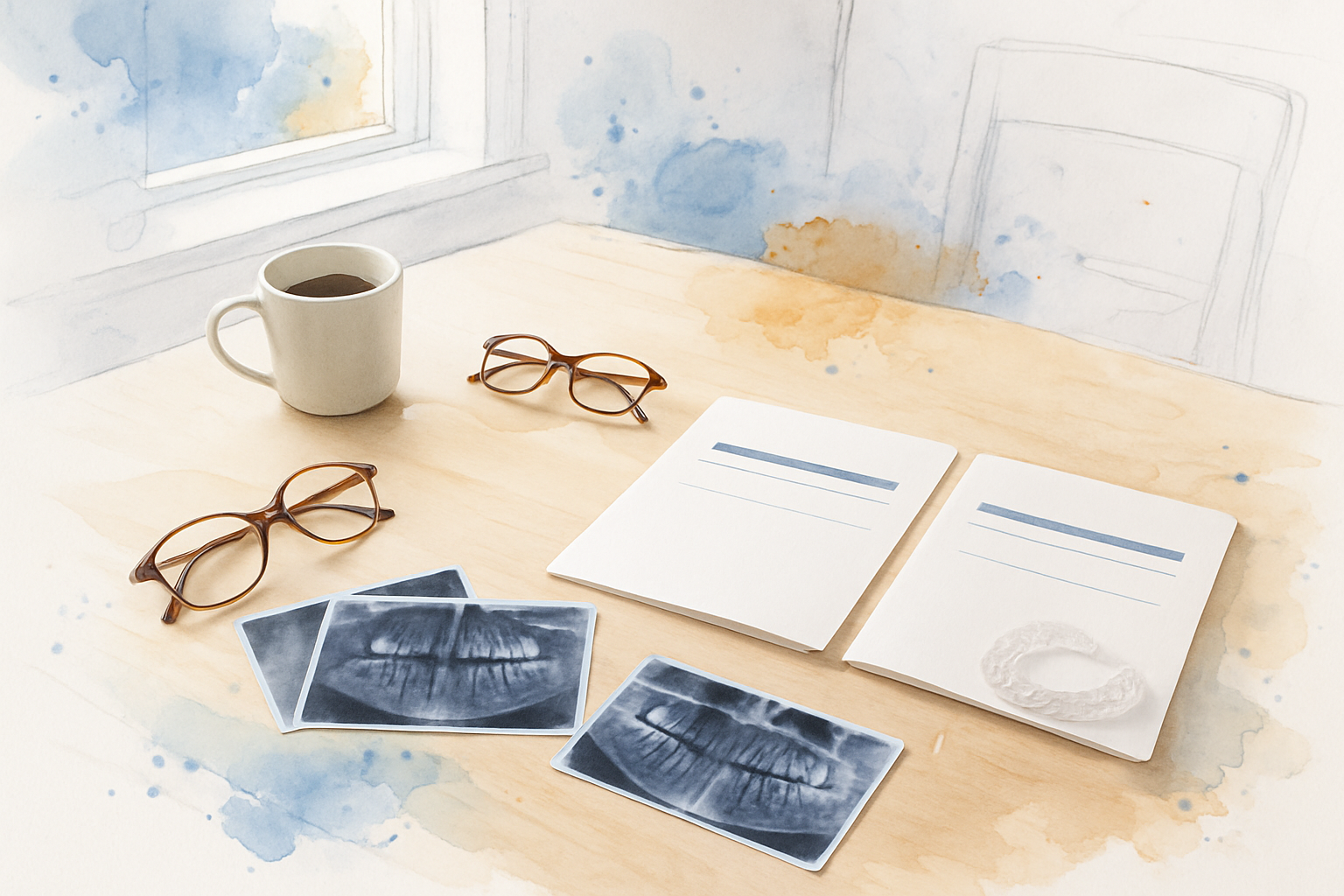
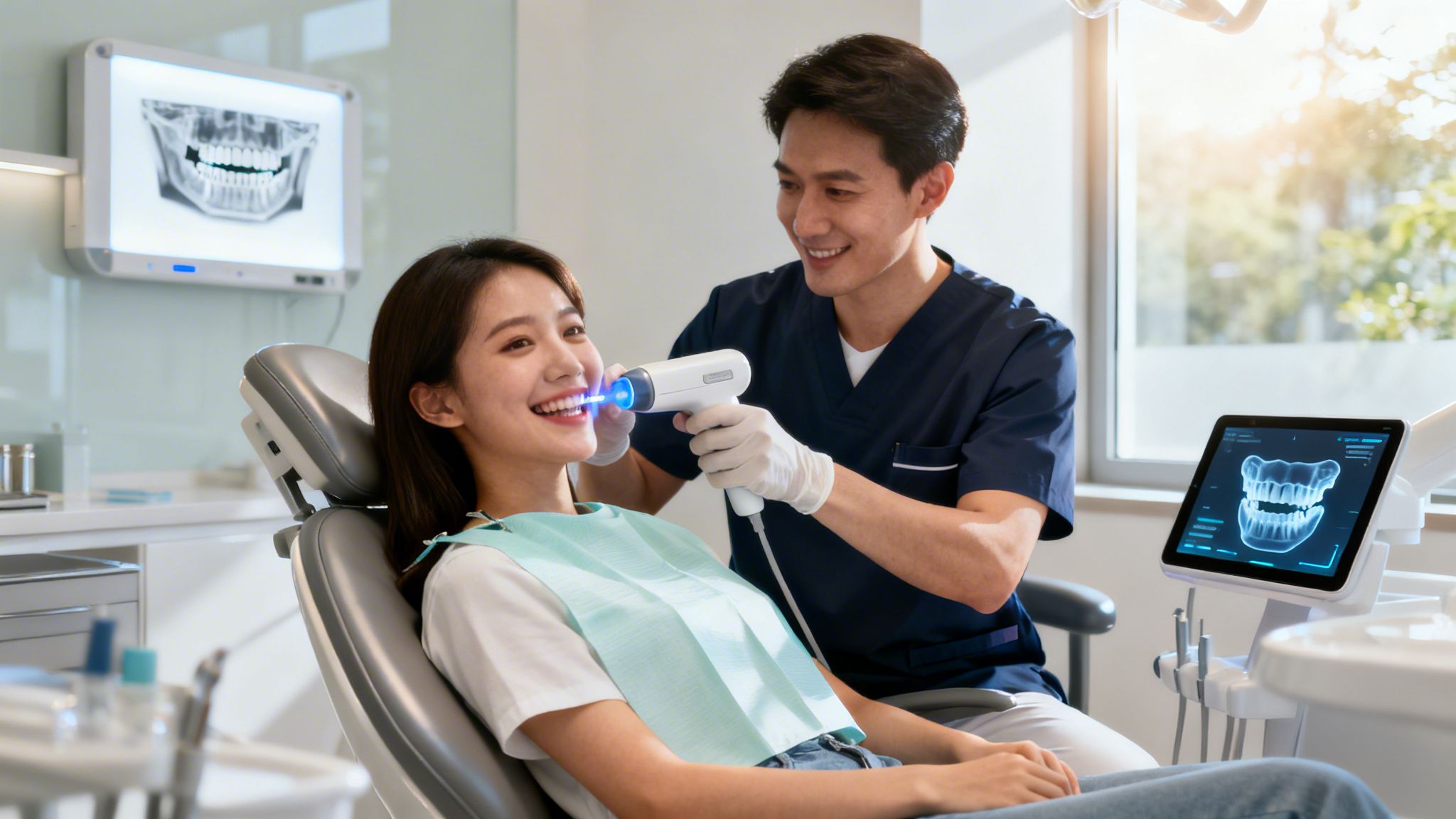
- Clinical exam — Dr. Jeremy or Dr. Melissa evaluates your teeth, your bite relationship, and the position of your jaws
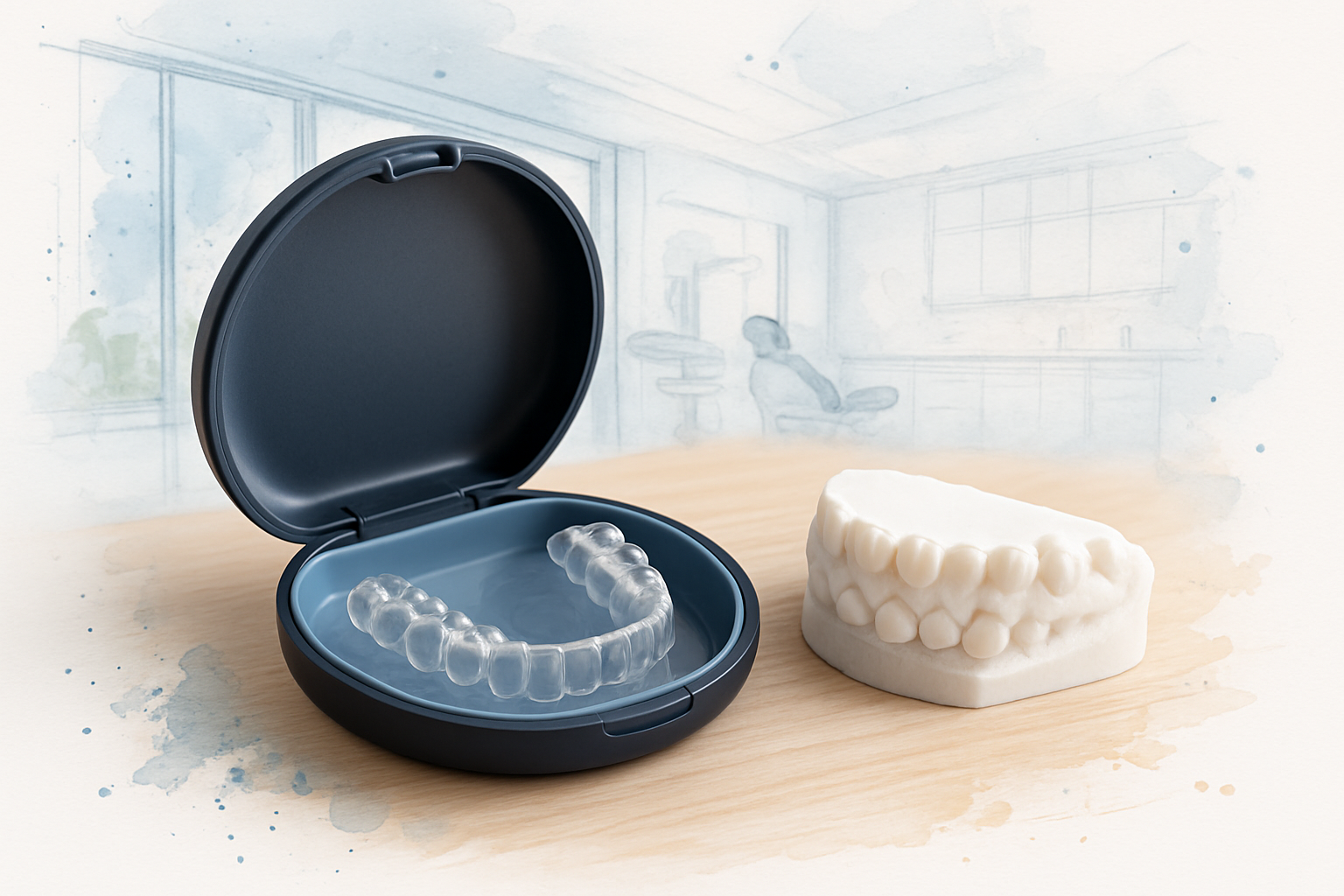
- Digital 3D scan — a wand-based scanner that captures your entire bite without physical molds or impressions
- Bite assessment — determining whether your overjet is primarily dental (tooth position) or skeletal (jaw position), since those lead to different treatment plans
- Option discussion — a frank conversation about whether Invisalign, traditional braces, or a combination approach fits your specific case and your lifestyle
Vivian D., a patient who visited the practice, described the experience this way: "Dr. Chau was thorough, answered all my questions, and made the process easy to understand." That's exactly what an overjet consultation should feel like — clear information, no pressure, just a real explanation of what's going on and what can be done.
For families across Huntington Beach neighborhoods like Oak View, Goldenwest, and Wintersburg — or patients coming in from Central Fountain Valley and Talbert Village along Beach Boulevard — the process is the same: one visit to understand your bite, and a clear path forward from there.
If you want to understand what to expect before walking in, this guide on what to look for in a Huntington Beach orthodontist is worth a read.
Frequently Asked Questions About Invisalign and Overjet
How do I know if I have an overjet or an overbite?
Look at your teeth from the side. If your upper front teeth sit noticeably further forward than your lower teeth — horizontally — that's likely an overjet. If your upper teeth drop down and overlap your lower teeth vertically when you bite, that's more of an overbite. Many people have some degree of both. The only way to measure either accurately is with a clinical exam.
Can Invisalign fix my overjet without attachments?
For most overjet cases, attachments are part of the plan. The small tooth-colored composite bumps are what allow the aligner to generate the specific directional forces needed to retract upper teeth. Without them, the aligner doesn't have enough grip to produce precise movements. Some very mild cases might require fewer attachments, but that's determined by the treatment plan, not by preference.
How long does Invisalign take to correct an overjet?
Treatment length depends on the severity of the overjet and how much tooth movement is required. Mild cases can be shorter; more complex bite corrections take longer. Dr. Jeremy or Dr. Melissa will give you a projected timeline during your consultation after reviewing your 3D scan — there's no honest way to estimate it without seeing your actual bite.
Is Invisalign or braces better for an overjet?
Neither is universally better — it depends on your specific bite. Mild to moderate overjets are frequently handled well with Invisalign. More complex skeletal cases sometimes do better with traditional braces, which provide fixed, continuous force without relying on patient compliance. Both options are available at Magic Fox, and Dr. Jeremy and Dr. Melissa will walk you through which fits your situation.
What if I've been turned away by another office for a complex bite issue?
Several patients have reached out after being told by other practices that their case was too complicated. That's worth exploring rather than accepting as final. The scope of what Invisalign can treat has expanded significantly with improvements in attachment systems and treatment planning software. An evaluation at a dedicated orthodontic practice is the right next step.
Does fixing an overjet with Invisalign hurt?
Most patients experience some pressure or mild soreness when they start a new set of trays — that's normal and usually fades within a day or two. Overjet correction isn't pain-free, but it's also not the dramatic discomfort people sometimes expect. The experience varies by person and by stage of treatment.
Ready to Find Out If Invisalign Can Fix Your Overjet?
If you're in Huntington Beach, Fountain Valley, or the surrounding neighborhoods and you've been sitting on this question, the next step is straightforward: a consultation with Dr. Jeremy and Dr. Melissa that includes a clinical exam and a 3D digital scan — the same scan that makes it possible to actually answer whether Invisalign is right for your specific bite. You can reach Magic Fox Orthodontics at 714-594-5777 or visit magicfoxsmiles.com to request a time that works for your schedule.