One or Two Crooked Teeth: Do You Need Full Braces for That?
Direct Answer: No, if your overall bite is healthy and only one or two teeth have shifted, focused touch-up orthodontics can correct the problem in less time and at lower cost than full braces.
I hear a version of this story all the time. Someone had braces years ago, wore their retainer faithfully for a while, then life got busy. Now one front tooth has rotated just enough to notice in photos, and they want it fixed. When they call around and get quoted the price of full comprehensive braces, they hang up and decide to live with it.
That reaction makes complete sense, because most people don't know that full braces aren't always the answer. If your bite is in a reasonable place and you're dealing with minor shifting in one or two specific teeth, there's a more focused option worth knowing about.
Starting in July 2026, we began offering focused touch-up treatment at Magic Fox Orthodontics, a structured option designed specifically for patients who want to correct something small without committing to a comprehensive treatment plan. Here's how to know whether it might apply to you.
Why Teeth Shift After Braces
Teeth are not set in stone after braces come off. They are held in place by the surrounding bone, gum tissue, and, most importantly, your retainer. The American Association of Orthodontists recommends long-term retainer wear for this exact reason: without it, teeth gradually drift back toward their original positions over months and years.
I've seen form submissions from patients whose messages read almost word for word like: 'I used to have braces and wasn't consistent with my retainer, so my teeth shifted.' Some add that they already got a quote somewhere else for six months of braces, but the cost stopped them cold.
This is a real and common situation. And the important thing to understand is that the amount of shifting matters a lot. Minor drift in one tooth after years of good retainer wear is a very different problem than significant crowding, an unresolved bite issue, or a large gap that was never fully corrected. The first situation may be a strong candidate for focused touch-up treatment. The second is not.
If you want to understand more about why shifting happens and what drives it, this post on what causes teeth to shift covers the mechanics in plain terms.
What Focused Touch-Up Treatment Actually Is
Focused touch-up treatment is not a shortcut version of full orthodontics. It is a purpose-built option for a specific kind of patient.
The right candidate for this approach generally looks like this:
- Had braces or aligners in the past
- Has an overall bite that is in reasonable alignment
- Is dealing with one or two teeth that have drifted or rotated
- Does not have significant crowding, a bite problem, or complex spacing issues
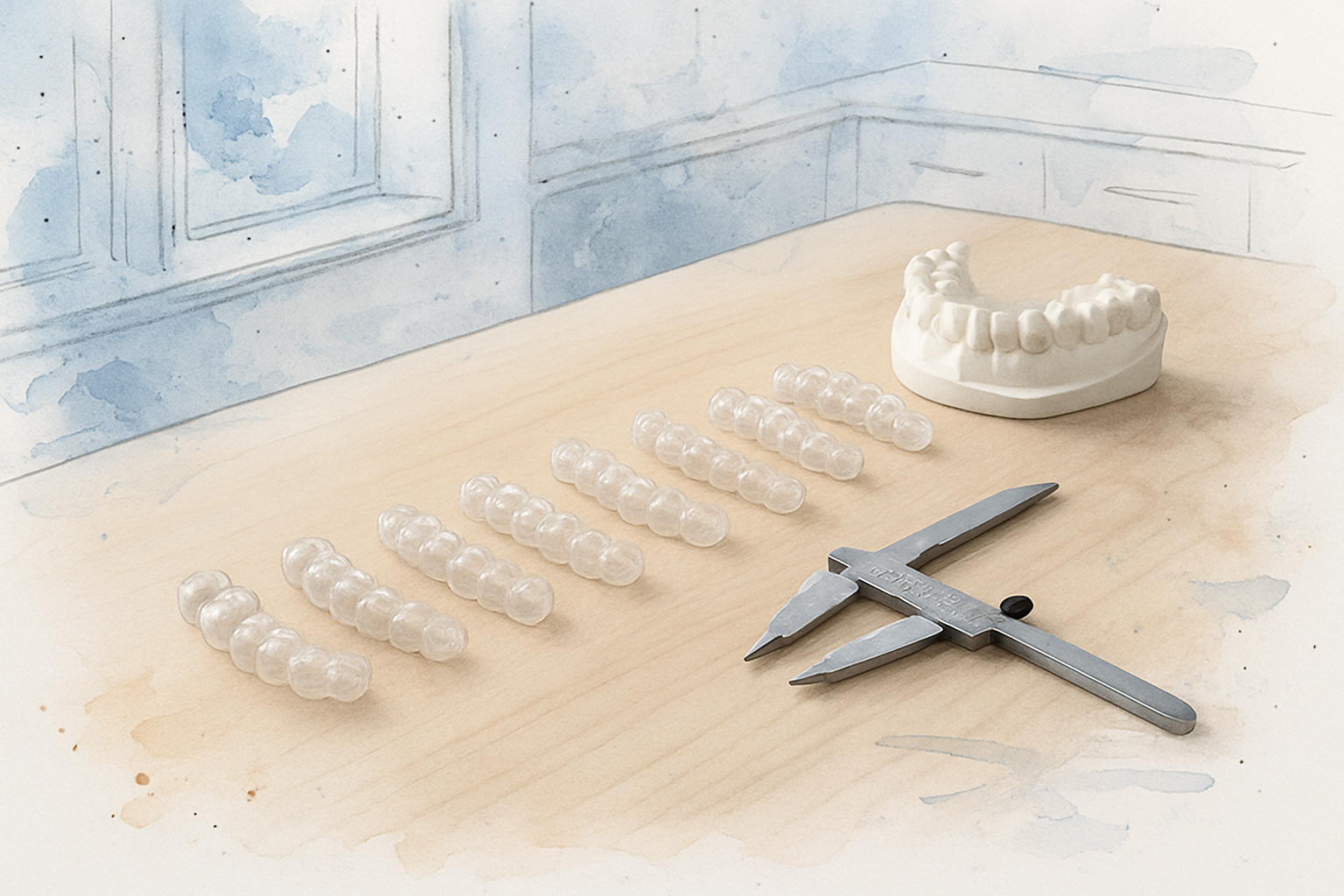
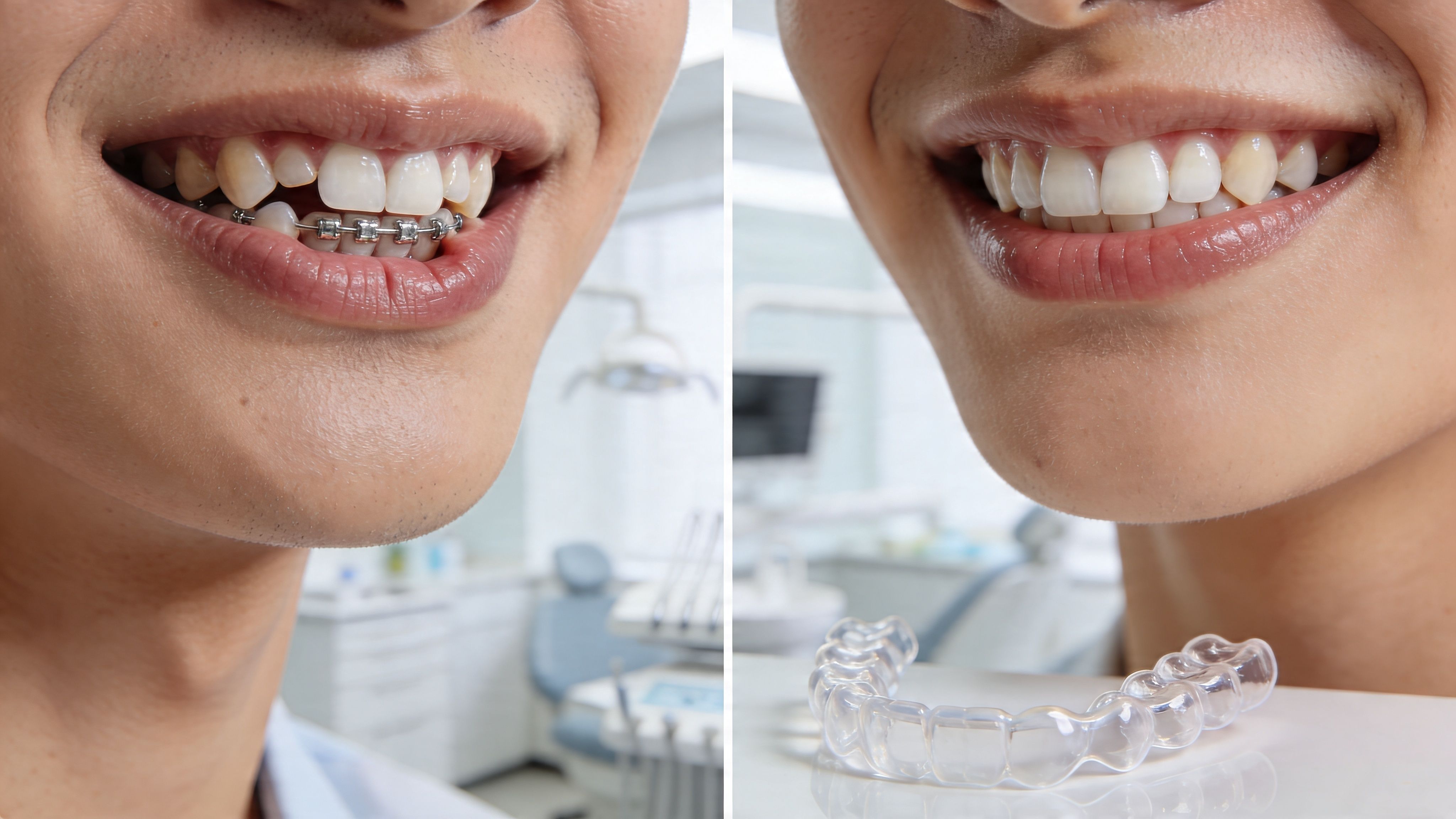
Because the scope of correction is narrower, touch-up treatment typically uses fewer aligners and runs for a shorter period than a full treatment plan. That narrower scope is directly connected to cost, less treatment time and fewer steps generally means a lower total investment than comprehensive care. I won't quote a specific number here because every case is different and Dr. Jeremy and Dr. Melissa build every plan individually, but the relationship between scope and cost is real and worth knowing.
For a broader look at how treatment length connects to cost in general, this breakdown on Invisalign cost for adults is a useful starting point.
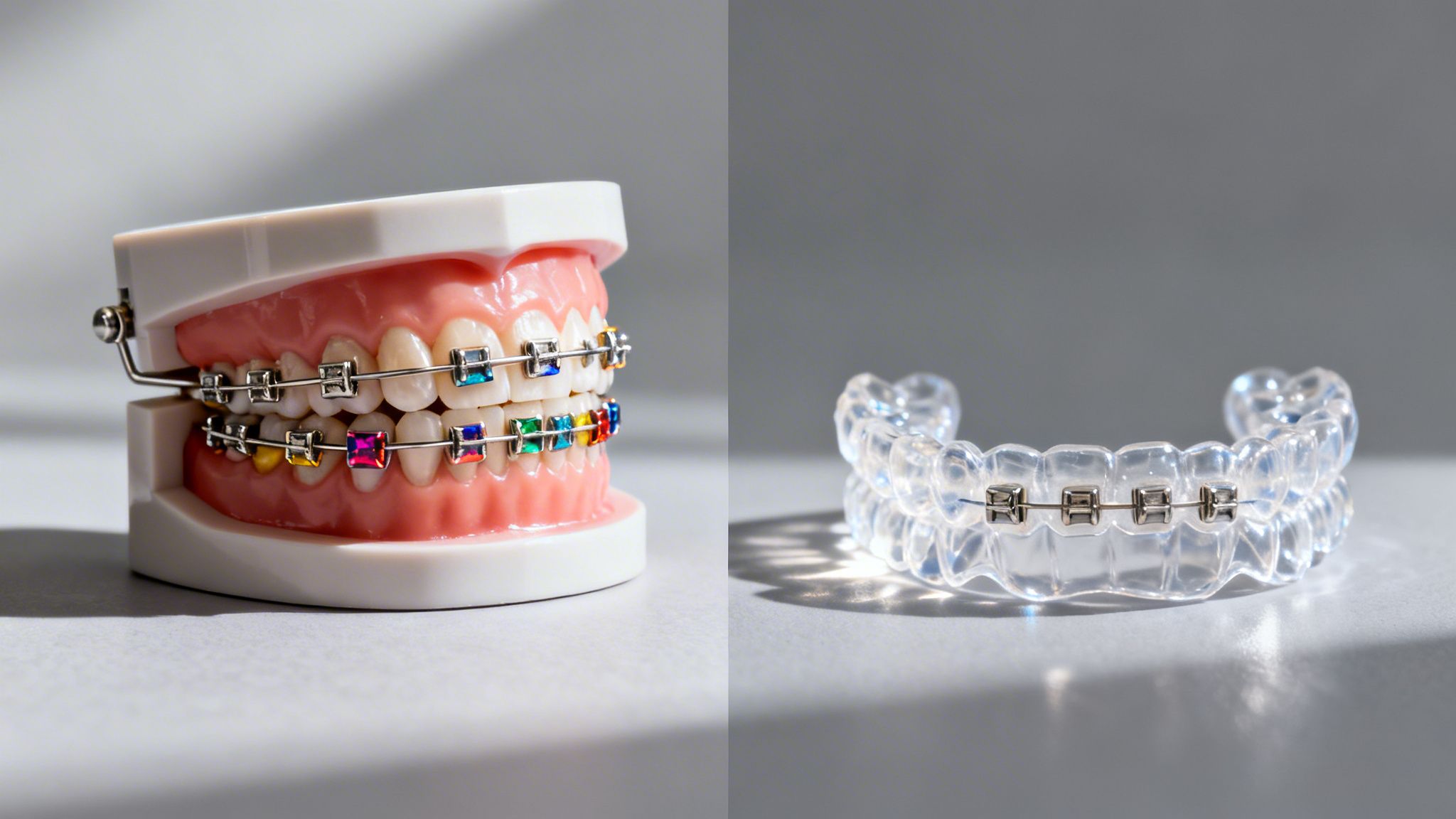
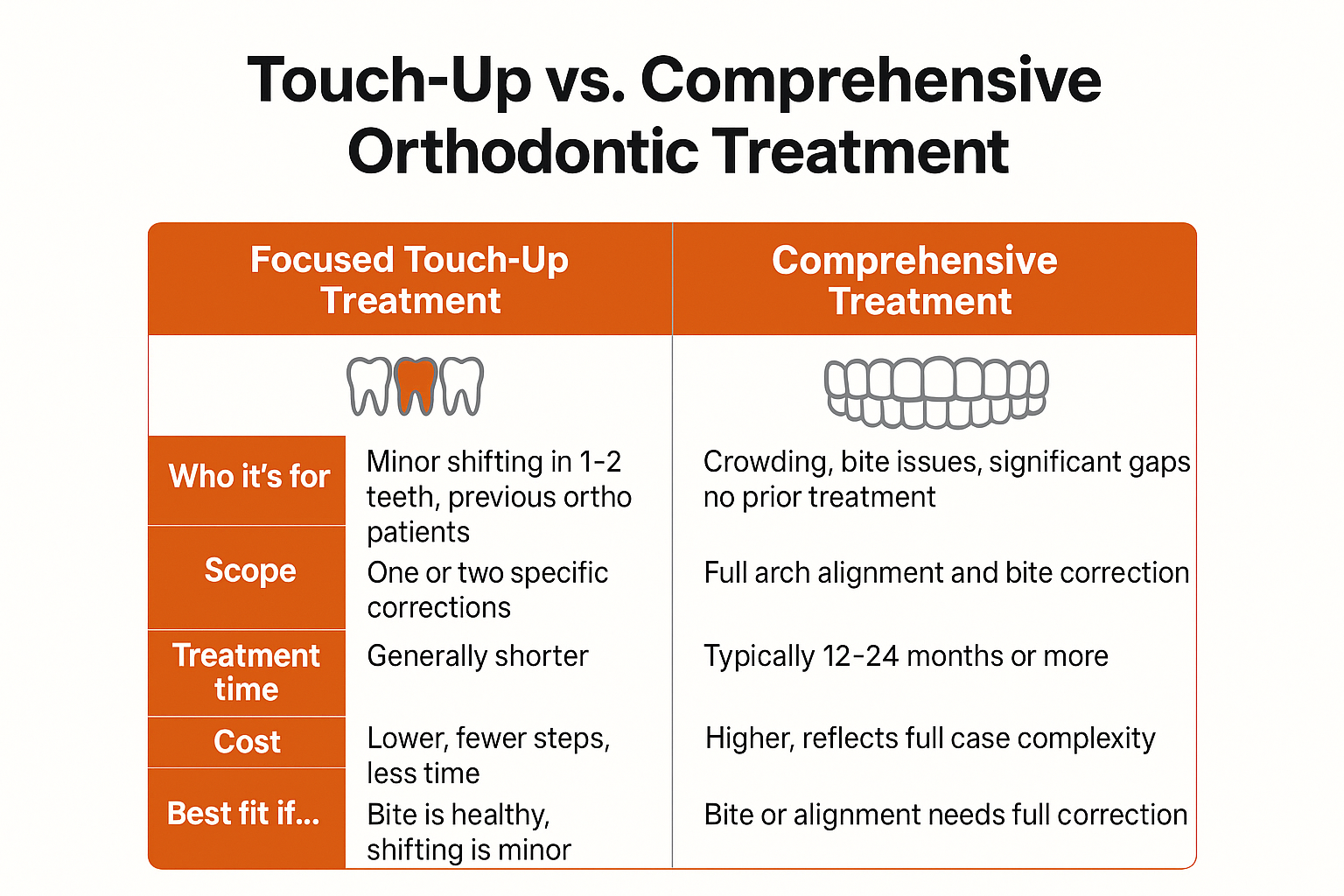
Touch-Up Treatment vs. Comprehensive Treatment: At a Glance
This comparison shows the key differences between focused touch-up orthodontics and full comprehensive treatment, so you can quickly see which situation fits yours.
Who This Is NOT Designed For
I want to be straightforward here, because I think honest framing matters more than making this option sound like it fits everyone.
Focused touch-up treatment is not a good fit if:
- You had significant crowding going into original treatment and it is returning
- You have a bite issue, an overbite, underbite, crossbite, or open bite, that was never fully resolved or is worsening
- The shifting involves multiple teeth across the arch, not just one isolated tooth
- You never had braces and are starting from scratch with moderate to complex misalignment
Patients in those situations are much more likely to be comprehensive treatment candidates, and walking in expecting touch-up pricing would lead to a frustrating conversation. The honest version of that conversation is: the scope of what needs to move determines what treatment looks like, and no shortcut gets around that.
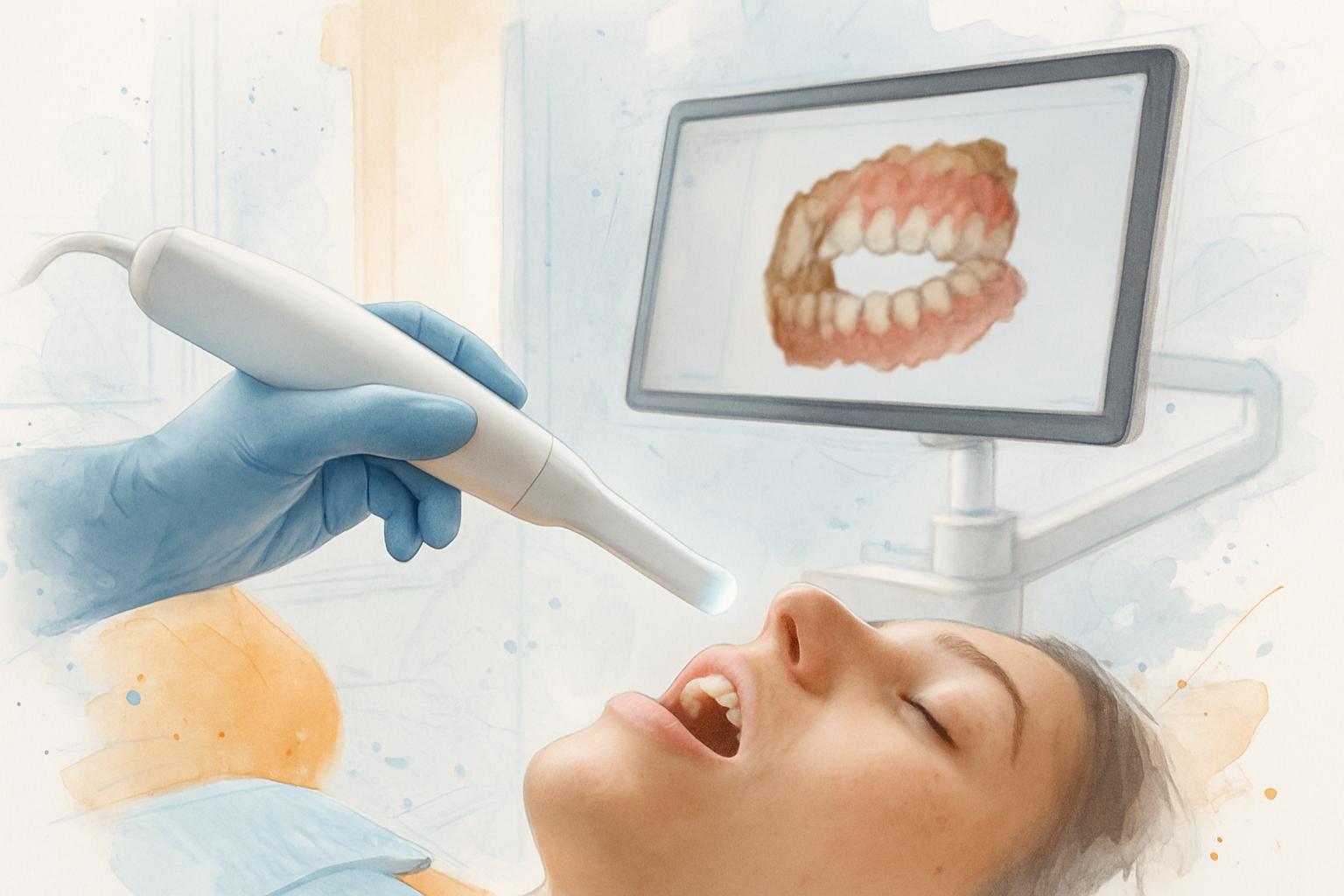
If you're unsure which category you fall into, that is exactly what a consultation is for. Dr. Jeremy and Dr. Melissa can look at your teeth, review your bite, and tell you plainly what they see, no guessing required.
Quick Self-Check: Touch-Up or Comprehensive?
Use this as a starting point, not a diagnosis. A consultation with Dr. Jeremy or Dr. Melissa is the only way to know for certain.
| Your Situation | More Likely Touch-Up | More Likely Comprehensive |
|---|---|---|
| Previous orthodontic treatment? | Yes, completed treatment | No prior treatment |
| Bite alignment? | Feels comfortable, no shifting when biting | Overbite, underbite, or crossbite present |
| How many teeth shifted? | One or two specific teeth | Several teeth or full arch |
| Retainer history? | Wore it for years, then stopped | Never wore retainer or very short wear period |
| Amount of movement? | Minor rotation or slight drift | Significant crowding or gap returning |
A Note on Cost, Time, and Why People Wait
The two things that stop most adults from fixing minor shifting are cost and time. I've heard it directly from callers who said they needed to figure out payment options before committing, and from people who assumed any orthodontic treatment would mean two-plus years of full braces.
That assumption keeps a lot of people in Huntington Beach and Fountain Valley, in neighborhoods like Talbert Village, Newland, and Adams, driving past orthodontic offices every day with something small they'd genuinely like fixed.
Focused touch-up treatment doesn't make orthodontics free, and I won't suggest it does. But the relationship between scope and cost is real: fewer aligners and shorter treatment time typically means a more accessible total investment than a full plan. For patients who hesitated at full-treatment pricing, this option changes the math.
We also know that figuring out payment before committing is a completely reasonable thing to want. That conversation happens at your consultation, and Dr. Jeremy and Dr. Melissa approach it the same way they approach everything, transparently, with the actual numbers on the table.
For a broader look at how adults are approaching orthodontic decisions right now, this article on straightening smiles after 30 is worth a read.
Frequently Asked Questions About Focused Touch-Up Orthodontics
I had braces ten years ago and stopped wearing my retainer. Am I a candidate for touch-up treatment?
You might be, but it depends on how much has shifted and whether your bite is still in a reasonable place. If one or two teeth have drifted and your bite feels normal, there's a real chance touch-up treatment fits. If the crowding has come back significantly or your bite feels off, a full evaluation will tell you more. The only way to know is to have Dr. Jeremy or Dr. Melissa look at your specific situation.
How is this different from just getting a new retainer?
A retainer holds teeth in their current position, it does not move them. If a tooth has already rotated or shifted out of its corrected position, a retainer won't bring it back. Touch-up treatment uses aligners to actively move the tooth, then a retainer holds it afterward.
Will this be Invisalign, or something different?
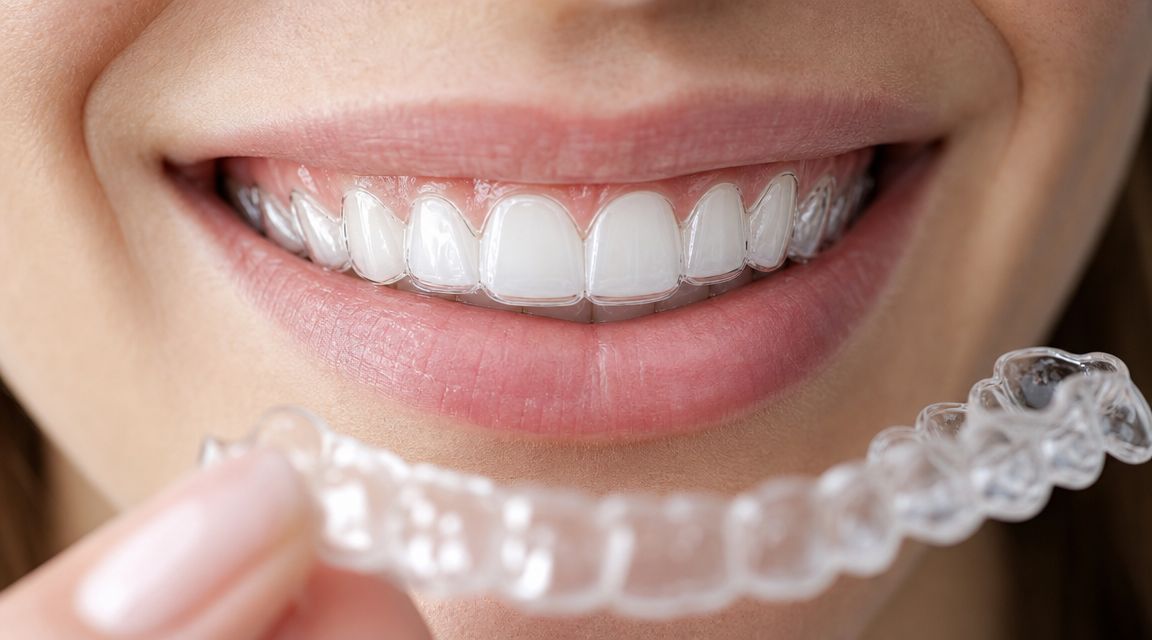
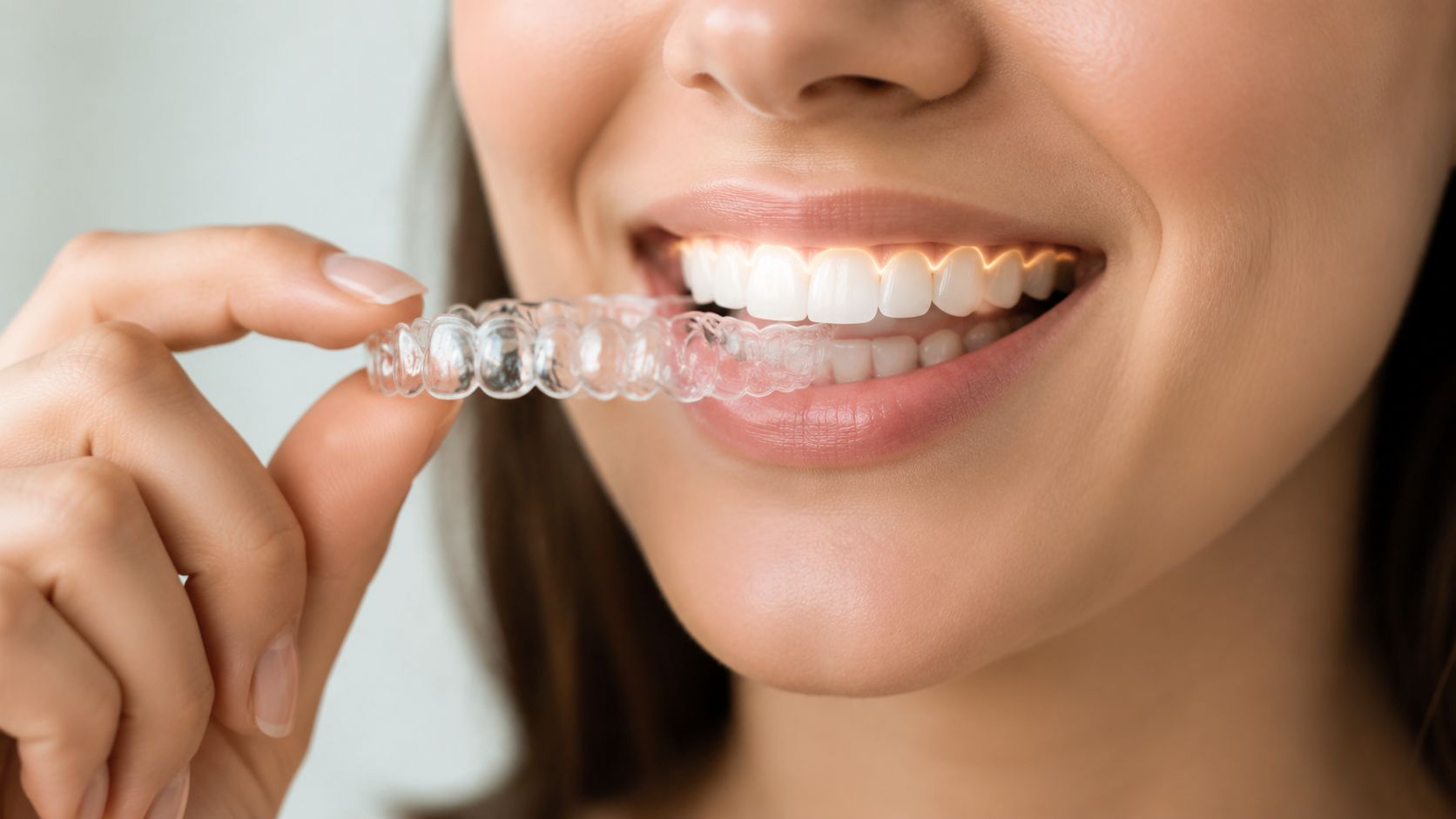
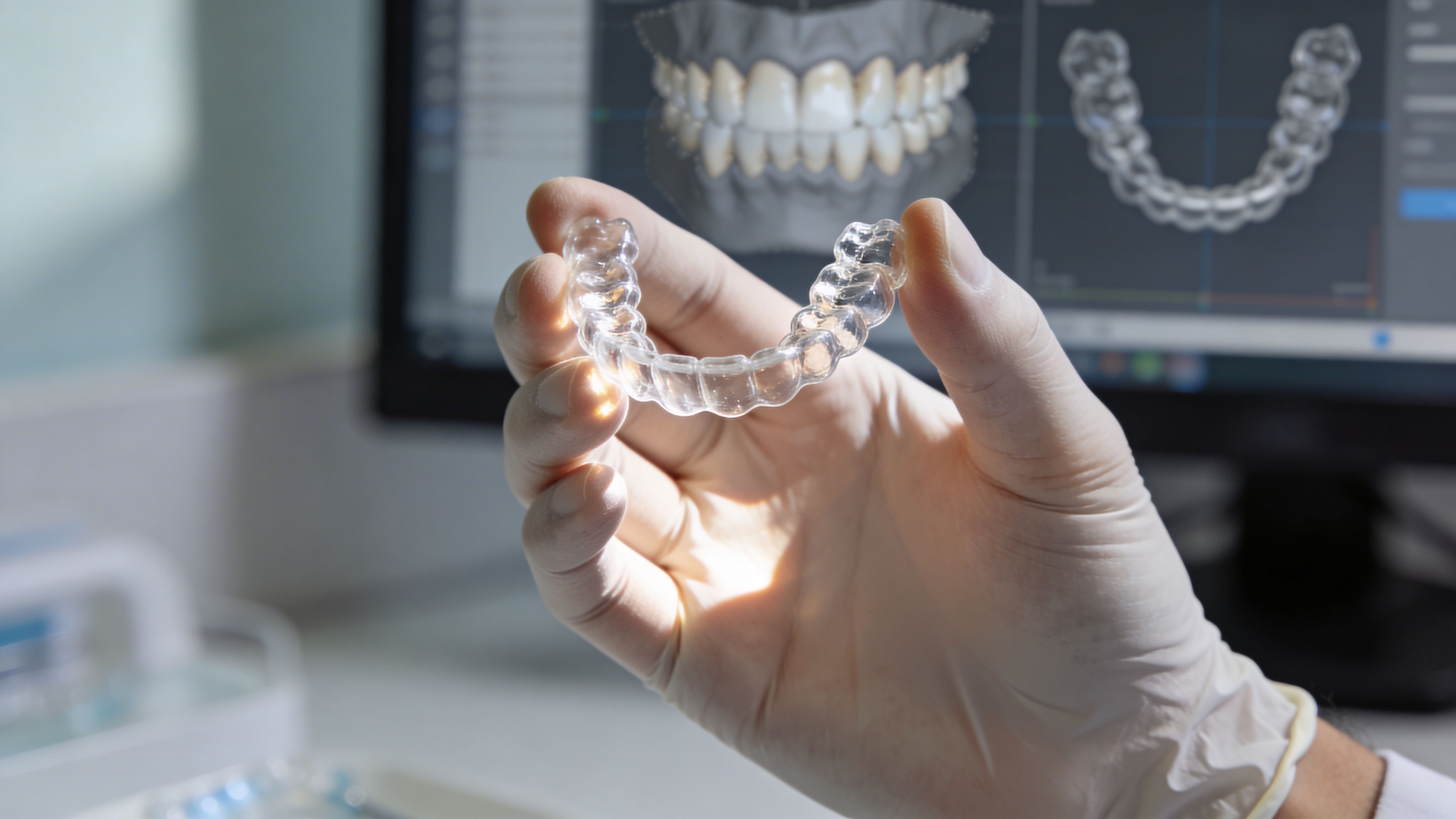
Touch-up treatment for the right candidate is typically delivered through clear aligners similar to Invisalign, removable, nearly invisible, and comfortable for daily wear. The exact approach depends on what Dr. Jeremy and Dr. Melissa recommend for your specific correction.
What if I find out at the consultation that I actually need full treatment?
That's useful information, not a wasted visit. Knowing exactly what your teeth need, and hearing it from an orthodontist rather than guessing, puts you in a better position to make a real decision. If the recommendation is comprehensive treatment, you'll understand why, and you can talk through options and timing from there. We see patients for second opinions all the time, and there's no pressure to commit on the spot.
My teeth are moving but I'm not sure how bad it is. Should I wait?
Teeth that are shifting tend to keep shifting. Waiting usually means more movement, which can push a minor correction into a more complex one. Getting evaluated sooner gives you more options and, often, a simpler fix.
Ready to Find Out If a Small Fix Is All You Need?
If you've been putting off a minor correction because you assumed it meant full braces, it's worth having the actual conversation. Dr. Jeremy and Dr. Melissa see patients from across Huntington Beach and Fountain Valley, from Goldenwest to Talbert Village, and they'll tell you plainly what your teeth need and what your options look like. You can reach Magic Fox Orthodontics at 714-594-5777 or visit magicfoxsmiles.com to request a consultation.