Turned Away for Invisalign Because of Crowns? Read This First
Direct Answer: Having crowns doesn't automatically disqualify you from Invisalign. What matters is where they are, what condition they're in, and what movement is actually needed — not the presence of a crown by itself.
One caller who found us after searching for an Invisalign provider in the Huntington Beach area put it plainly: "I was turned away by other offices because of my permanent crowns on my front teeth. I just want to know if you can still help me." That frustration is worth taking seriously — because the answer is almost never as simple as a front desk rejection makes it sound.
If you've been told you're not a candidate for Invisalign because of crowns, prior restorative work, or a complicated dental history, you're not alone. A number of adults throughout Huntington Beach and Fountain Valley have been in exactly that spot. And many of them, after a proper evaluation, found out the answer was very different from the "no" they'd already accepted.
This article breaks down what actually determines Invisalign candidacy when prior dental work is in the picture — so you can walk into a consultation knowing what questions to ask and what to expect.
Why Crowns Don't Automatically Rule Out Invisalign
The most common misconception people bring into an orthodontic consultation is that any crown equals an automatic disqualification. That assumption is sending people to the wrong conclusion before they've even been evaluated by a specialist.
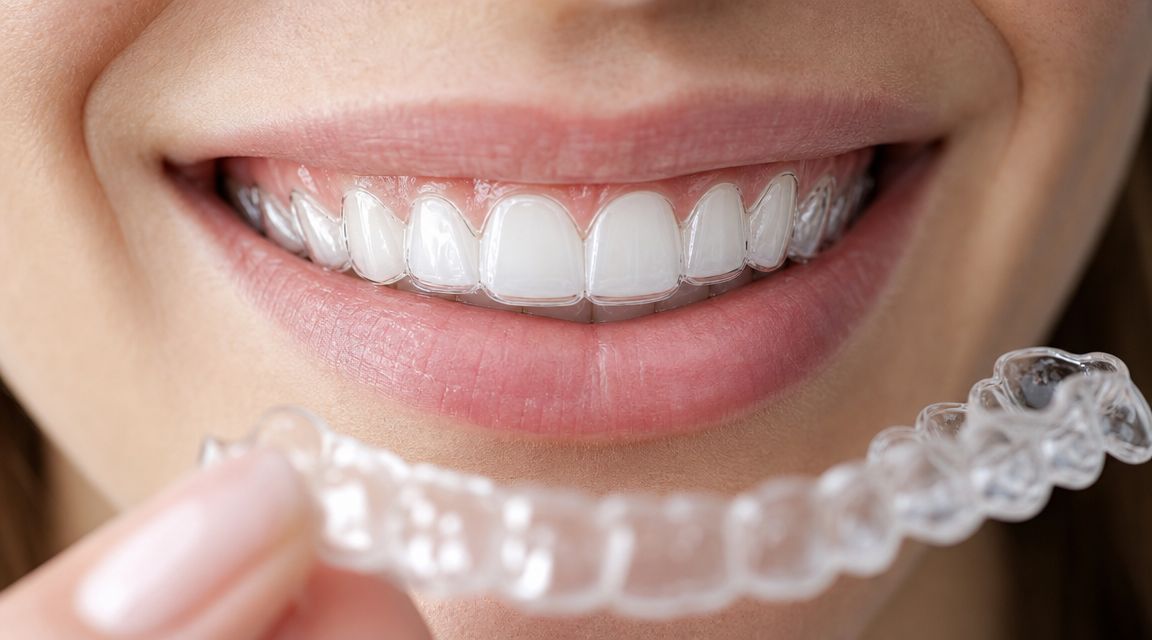
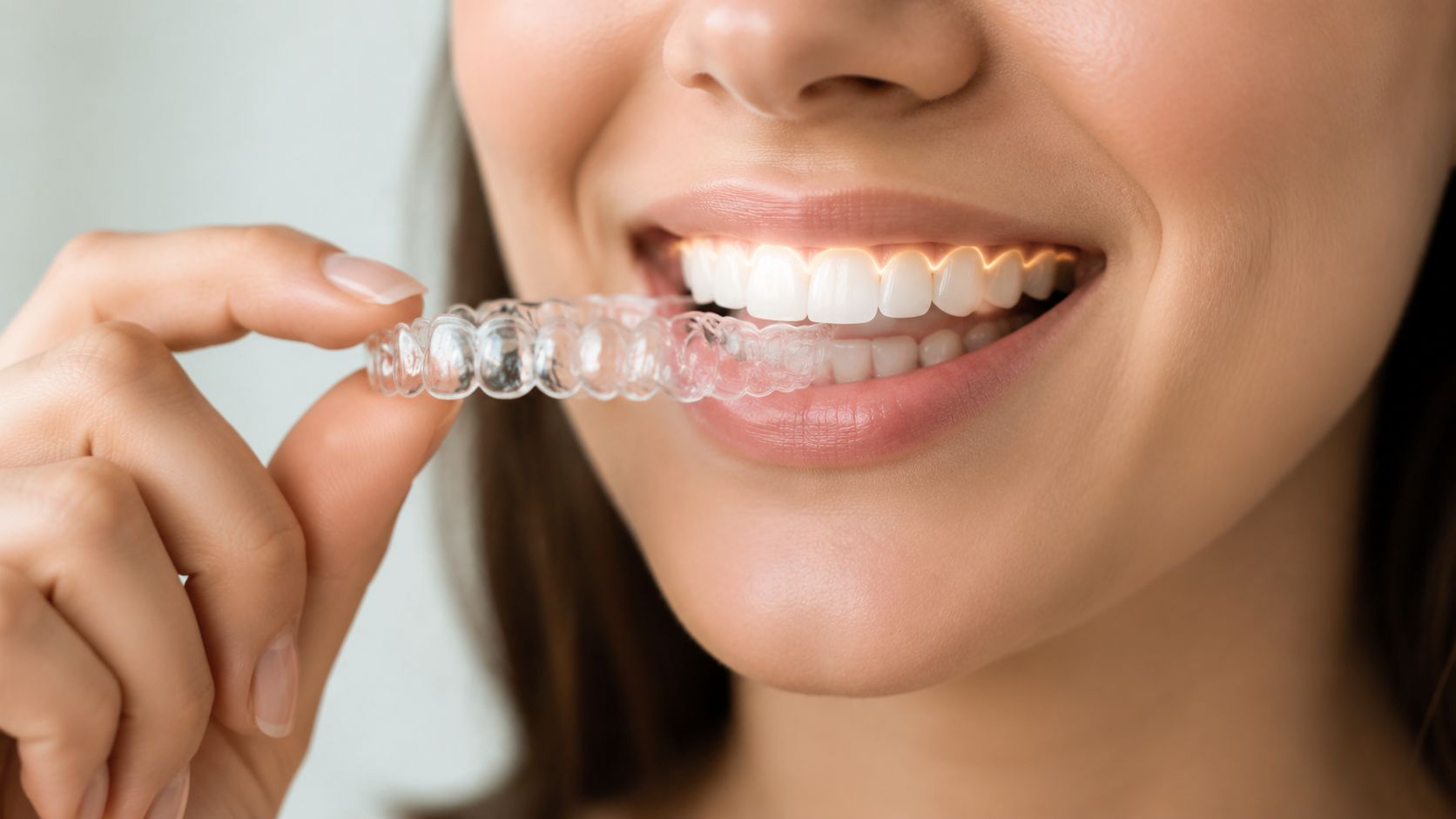
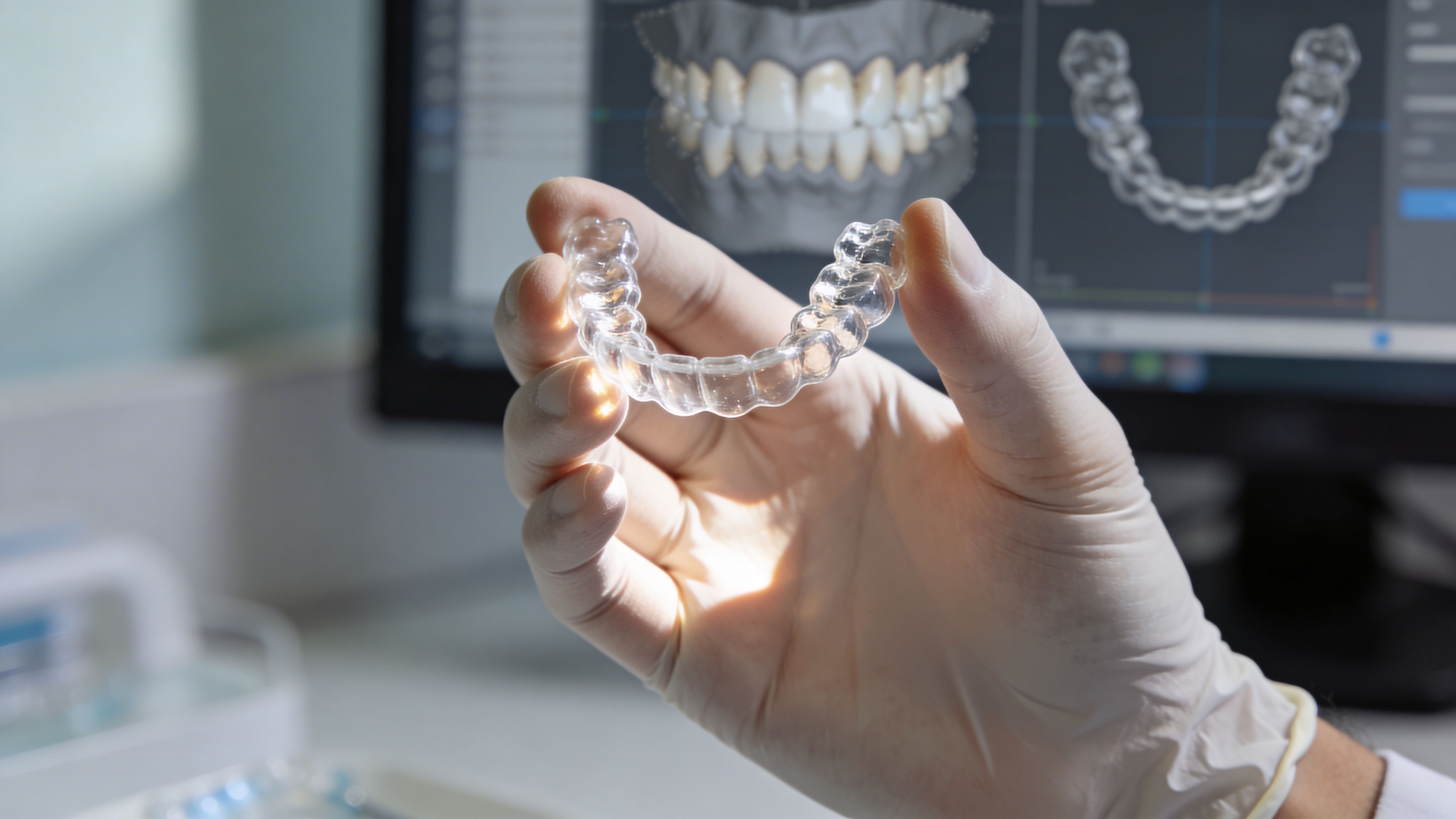
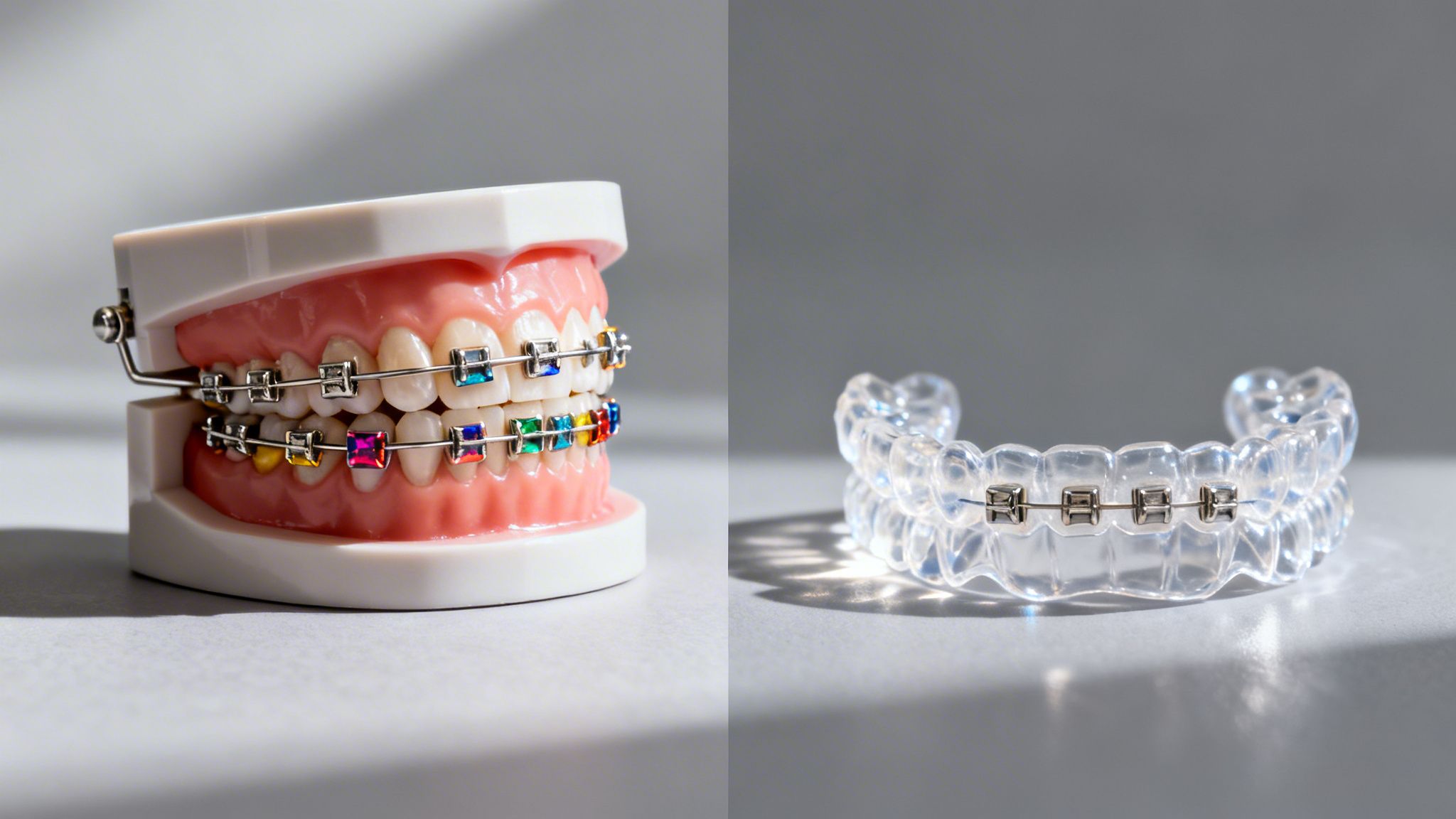
Here's how Invisalign actually works: the aligners are custom-made plastic trays that attach to your teeth using small composite pieces called attachments. These attachments give the trays something to grip and guide tooth movement precisely. Crowns can hold attachments just as well as natural teeth can — meaning a patient with one or two crowned teeth is often entirely workable.
What actually matters in a candidacy review is a much more specific set of questions:
- Where are the crowns located — front teeth, back molars, or in the specific arch being treated?
- What condition are they in — are they solid, well-sealed, and stable?
- What movement is being planned — is the crowned tooth even involved in the correction?
- How does the surrounding bone and bite look — is there enough healthy structure to support controlled movement?
None of those questions can be answered over the phone. And that's exactly why a front desk "no" — however well-intentioned — is not the same thing as an orthodontist reviewing your actual records.
If you're weighing your options more broadly, adult orthodontics options for Huntington Beach patients covers how different treatment paths work for adults with varying dental histories.
When the Clinical Picture Does Get More Complicated
There's a difference between a patient with one crown on a back molar and a patient with multiple crowned teeth, previous extractions, an implant in the arch being treated, and a significant bite issue layered on top. Both situations deserve an honest evaluation — but the second one requires a lot more nuance.
For more complex cases, an orthodontist needs to think through several things at once:
- How existing restorations interact with planned tooth movement — moving a tooth with a crown attached is different from moving a natural tooth, and the treatment plan has to account for that
- Whether there's enough healthy tooth structure to anchor aligners effectively throughout treatment
- Whether any prior work might need refreshing by a general dentist before or during orthodontic treatment — older crowns or worn margins can sometimes complicate things
- Whether an implant sits in the arch being treated — implants don't move with the surrounding teeth, so their position matters significantly in treatment planning
This is exactly why being evaluated by an orthodontic specialist — not a general dentist offering Invisalign as an add-on service — matters when you have a complicated history. A specialist spends every working day thinking through these interactions. A general practice running Invisalign alongside fillings and cleanings may not have the same depth of experience with edge cases.
For more on how that distinction plays out in real consultations, the difference between an orthodontist and a dentist is worth reading before your first appointment.
What a Real Invisalign Candidacy Evaluation Actually Covers
A proper evaluation goes well beyond a quick look in your mouth. This is what an orthodontist needs to assess when prior dental work is part of your history.

The Pattern Behind 'I Was Told No Before'
Adults who've been putting off Invisalign because of prior dental work often share the same backstory. They had some restorative work done years ago, were told at some point they might not be a candidate, and quietly wrote themselves off. Years pass. The idea of pursuing a healthier, more confident smile gets filed under "not for me."
That pattern is worth challenging — because 'I was told no before' is a reason to get a second opinion, not a final answer.
Front desk staff at a general dental office aren't trained to evaluate orthodontic candidacy. Even a dentist who offers Invisalign may give a conservative answer to avoid taking on a case that feels outside their comfort zone. Neither of those situations means an orthodontic specialist would reach the same conclusion.
A number of patients across the Huntington Beach area — including people who came in after being turned away elsewhere — have gone through a proper evaluation with Dr. Jeremy and Dr. Melissa and found out their situation was far more workable than they'd been led to believe. That doesn't mean everyone qualifies. But it does mean the only way to know for sure is to actually be evaluated.
If you're also wondering whether your age is working against you, adult orthodontic care for patients over 30 addresses that question directly.
Crown Location and Invisalign Candidacy: General Patterns
Every case is individual and only a clinical exam can give you a real answer — but this table gives a general sense of how crown location tends to factor into the conversation.
| Crown Location | General Impact on Candidacy | Key Consideration |
|---|---|---|
| Single crown on a back molar | Often low impact — frequently workable | Is the crowned tooth involved in planned movement? |
| Crown on a front tooth in the treatment arch | Requires closer review — often still possible | Can an attachment bond securely to the crown surface? |
| Multiple crowns throughout the arch | More complex — needs thorough specialist review | How do restorations interact with planned tooth movement overall? |
| Crown adjacent to a dental implant | Implant position is a key factor — specialist evaluation essential | Implants don't move; surrounding teeth must be planned around them |
| Older or worn crown | May need refreshing before treatment begins | General dentist may need to update the crown before aligners start |
What to Expect at a Consultation for Complex Cases
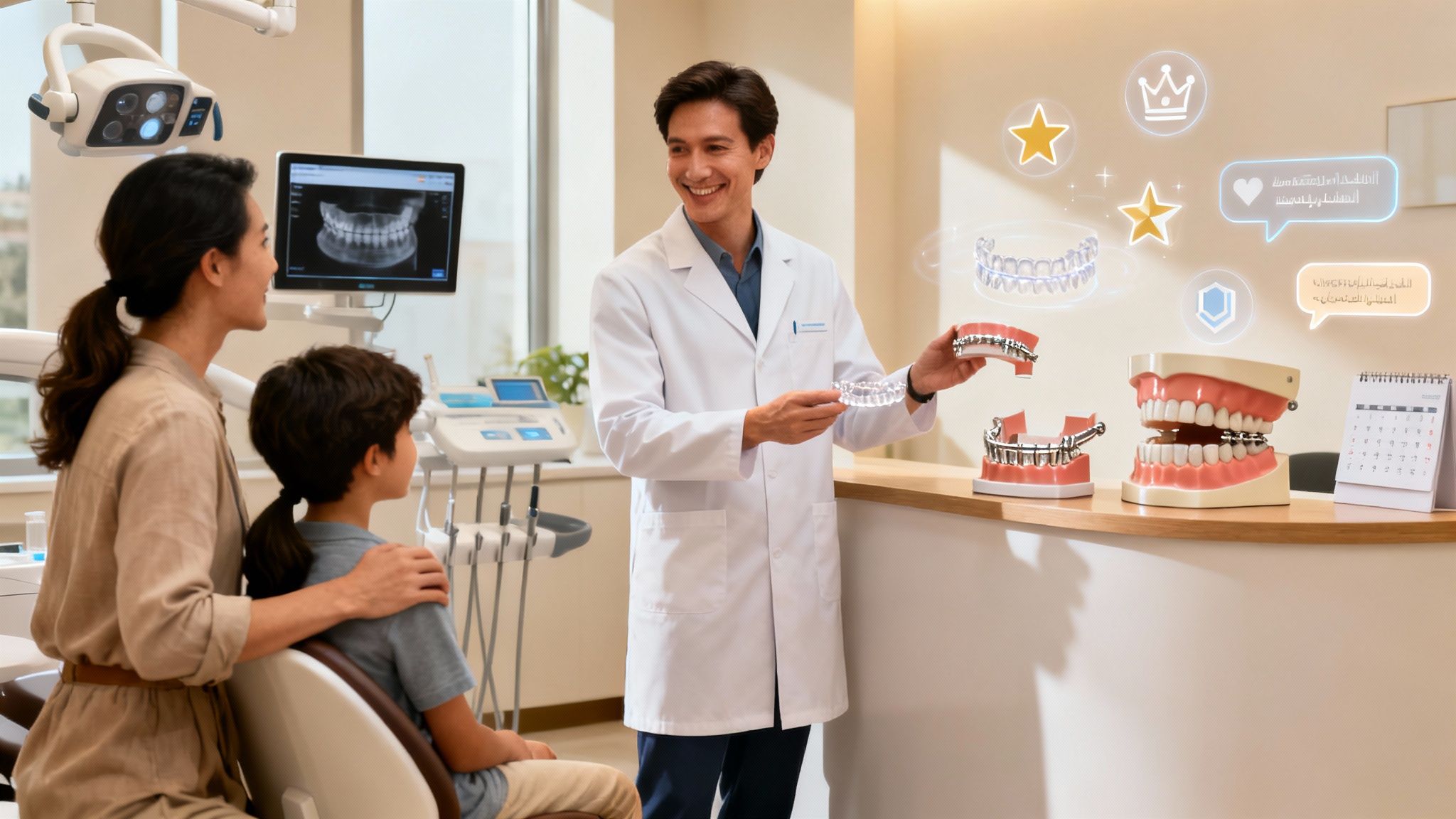
One of the biggest reasons patients with complicated histories hesitate to book a consultation is that they expect to be handed a sales pitch. Knowing what a real evaluation actually looks like can make it feel a lot less like a commitment and a lot more like getting real information.
A thorough Invisalign candidacy assessment for someone with prior dental work typically includes:
- A full clinical exam — the orthodontist looks at tooth positions, gum health, bite alignment, and the condition of any existing restorations
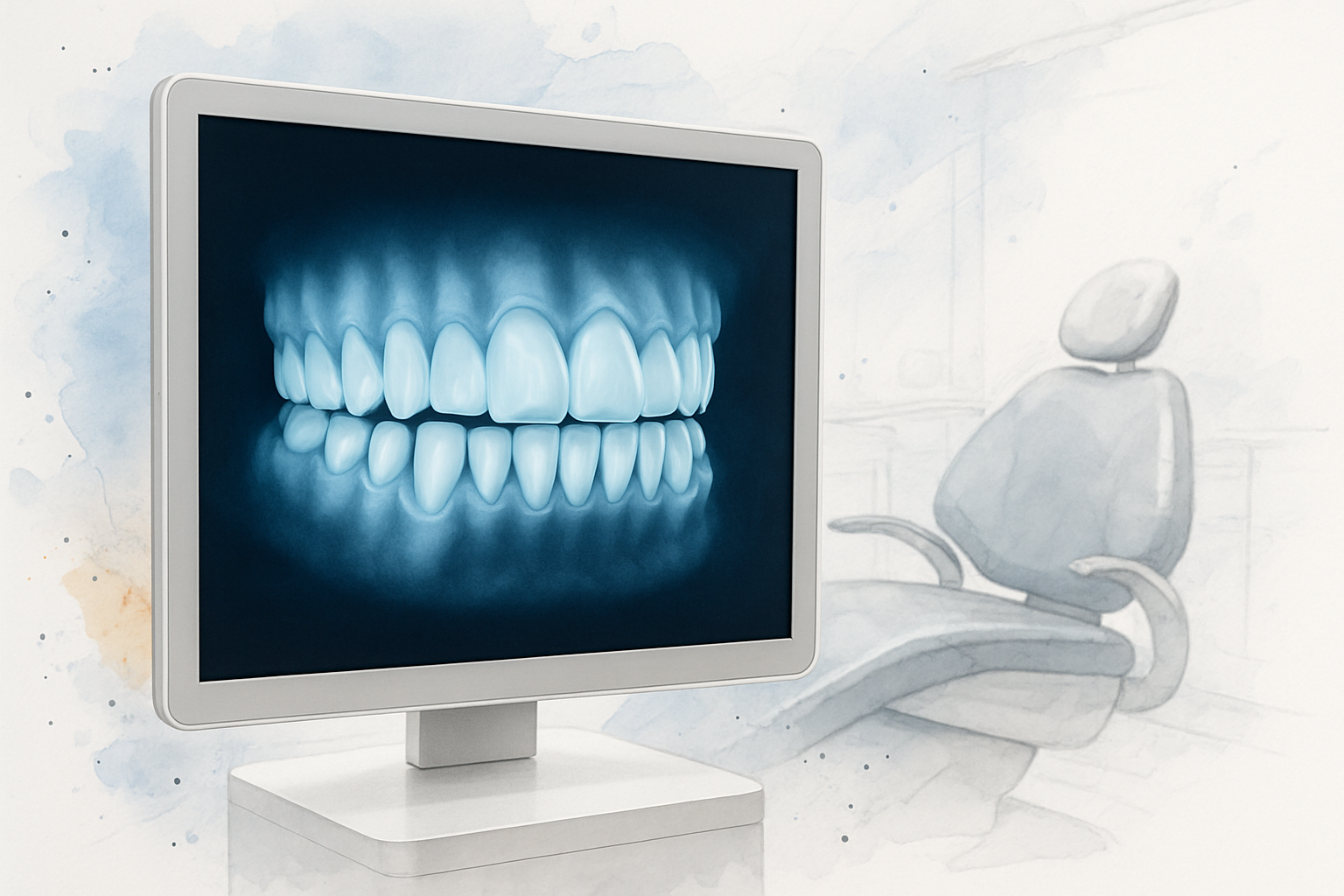
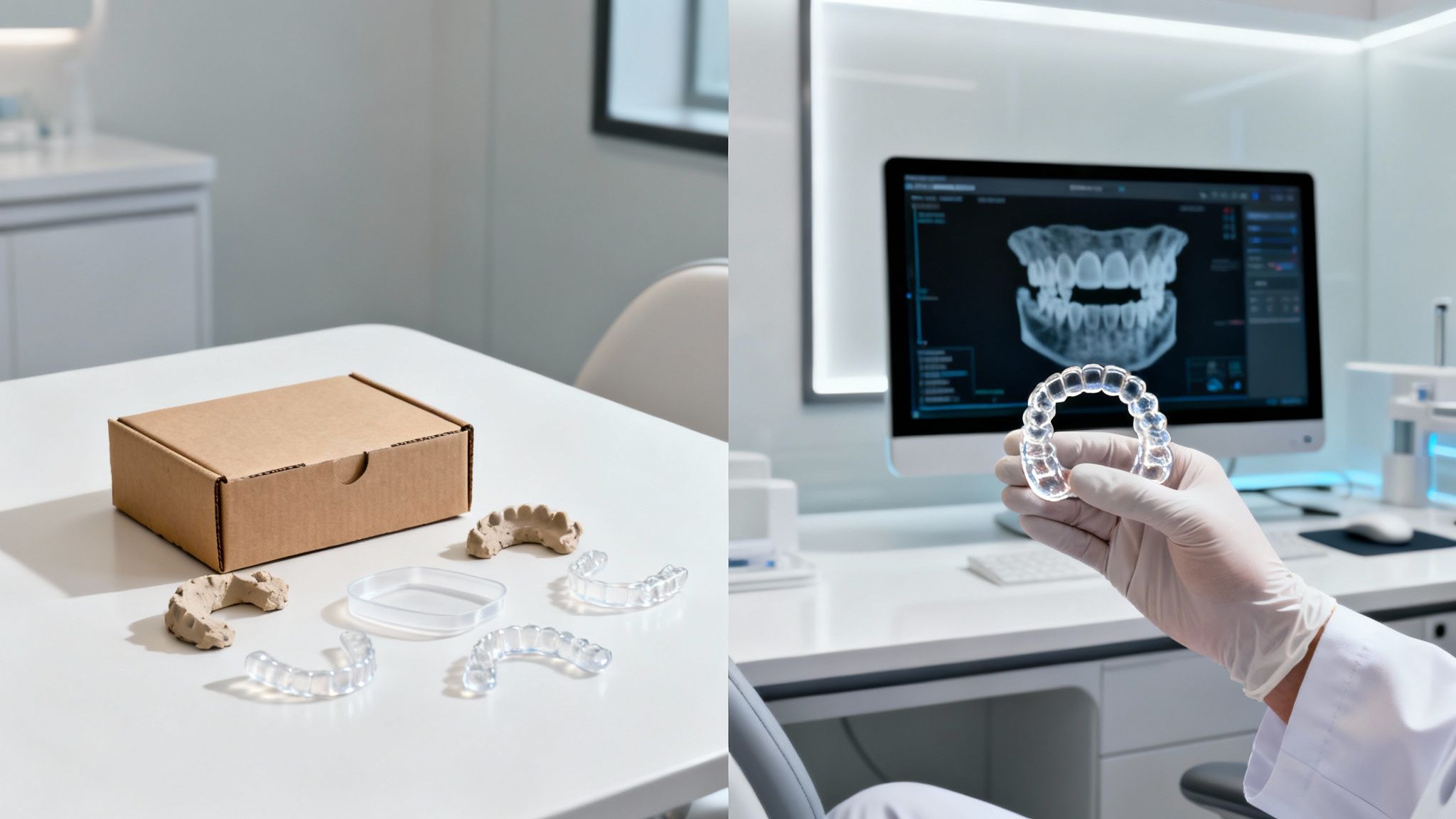
- Digital X-rays or 3D imaging — these show bone levels, root positions, and how crowns or other work sit relative to the surrounding structure
- A review of your dental history — previous extractions, implants, crowns, and any other work factor into the movement planning
- A conversation about your goals and timeline — what you're hoping to correct, how long you're willing to be in treatment, and whether any prep work is needed first
No honest orthodontist can tell you whether crowns disqualify you over the phone. The answer only comes from seeing the actual records.
What patients consistently say about Dr. Jeremy and Dr. Melissa is that they take the time to show you what's going on — walking through the X-rays, explaining why something is or isn't possible, and making sure you understand the plan before you agree to anything. For someone who's already been turned away once, that kind of transparency makes a real difference. One reviewer described it simply: Dr. Jeremy "takes his time and gives very explanatory" answers. Another said he "made sure I understood what was going on."
That's not a sales appointment. It's a diagnostic conversation — and for a patient with a complicated history, it's exactly what the situation calls for. You can also read about what other patients have experienced before deciding whether to come in.
Frequently Asked Questions About Invisalign with Crowns or Prior Dental Work
Can Invisalign attachments actually bond to a crown?
Yes, in most cases. Invisalign attachments are made from the same composite material used in dental bonding, and they can adhere to crown surfaces similarly to how they attach to natural enamel. The bond strength can vary depending on the material of the crown, but this is something your orthodontist evaluates during the candidacy review — not something that's assumed to be a problem upfront.
If I have a dental implant, does that mean Invisalign won't work for me?
Not necessarily. Implants don't move with surrounding teeth, which is the key consideration. An orthodontist needs to factor the implant's position into the treatment plan and make sure the movement planned for neighboring teeth works around it. Whether that's feasible depends on where the implant sits and what correction is needed. It's a more complex planning process, but it doesn't mean the answer is automatically no.
My dentist told me I wasn't a candidate for Invisalign. Should I still see an orthodontist?
Yes — especially if the reason given was crowns or prior dental work. General dentists aren't trained in orthodontic treatment planning the way specialists are, and some offices give conservative answers to avoid taking on cases outside their usual scope. An orthodontist who works with complex adult cases every day will approach the question differently. Getting a second opinion from a specialist is a reasonable and sensible step.
Do I need to get my crowns replaced before starting Invisalign?
Sometimes. If a crown is older, worn, or has compromised margins, your orthodontist may recommend having it refreshed by your general dentist before treatment begins. This isn't always the case — many patients start treatment with existing crowns in good condition. It depends entirely on what the clinical exam shows.
How long does treatment usually take for someone with a complicated history?
Treatment length with Invisalign varies quite a bit based on how much movement is needed and how complex the case is — not just whether crowns are present. Many adult cases run somewhere in the range of 12 to 24 months, though simpler corrections can be shorter. The consultation is where Dr. Jeremy or Dr. Melissa can give you a realistic estimate based on your specific situation.
What if Invisalign genuinely isn't the right fit for my situation?
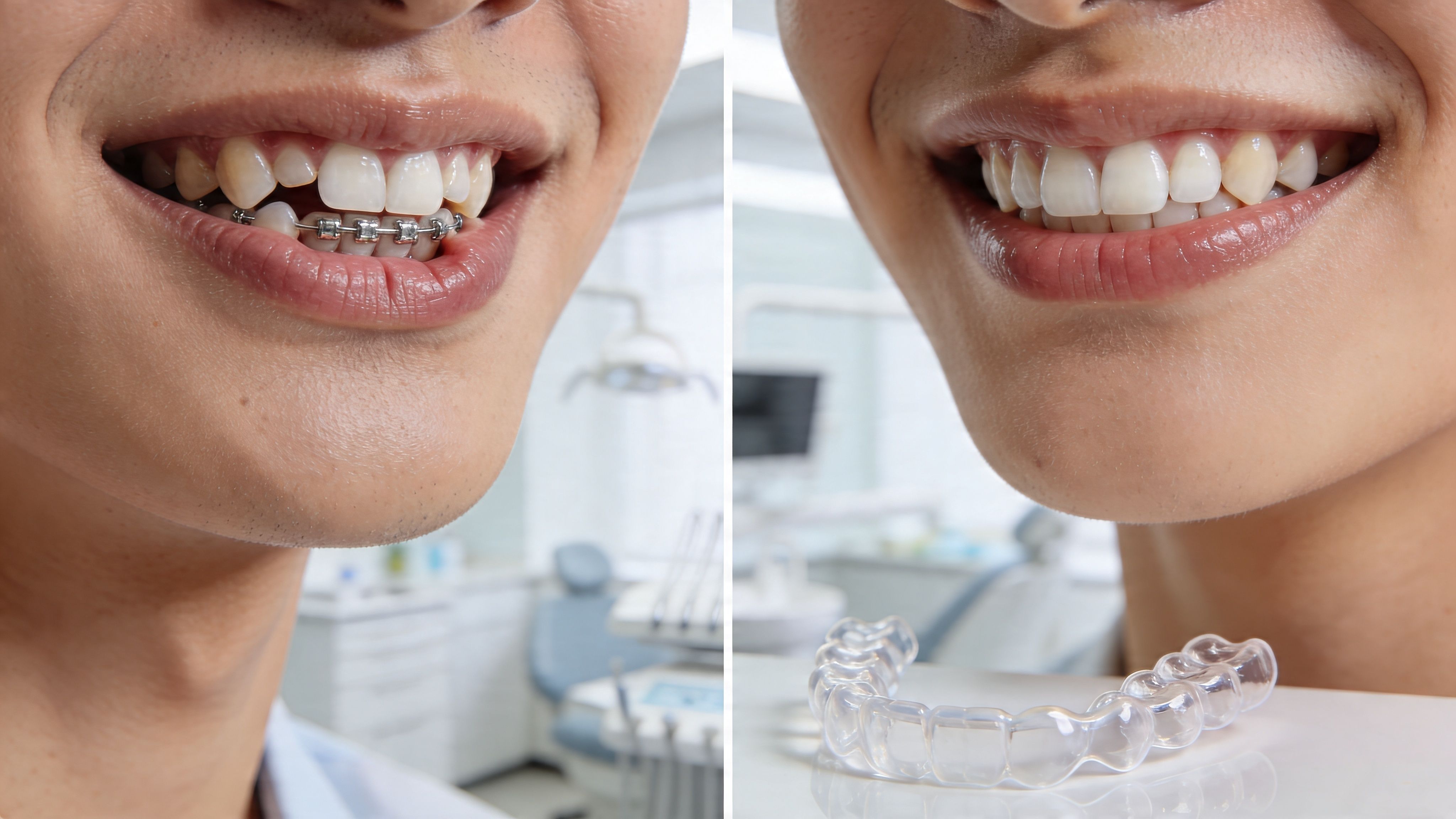
Then an honest orthodontist will tell you that — and explain why. In some cases, traditional metal braces or another treatment path may actually be the better option given the complexity of the case. The goal of the consultation is to figure out what's actually right for you, not to fit everyone into the same box.
Ready to Find Out What's Actually Possible for Your Smile?
If you've been carrying around a "no" from a front desk or a general dentist, the most useful thing you can do is get evaluated by a specialist who can actually look at your records. Dr. Jeremy and Dr. Melissa see adults throughout Huntington Beach and Fountain Valley — including patients with crowns, prior restorative work, and complicated histories — and they take the time to walk through exactly what they're seeing and why. Call Magic Fox Orthodontics at 714-594-5777 or visit magicfoxsmiles.com to schedule a consultation and get a real answer.