When Should a Fountain Valley Teen Actually Start Orthodontic Treatment?
Direct Answer: Most teens are ready for full orthodontic treatment between ages 11 and 14, once their permanent teeth have come in. An evaluation by age 7 helps catch issues early, but that visit rarely means starting treatment right away.
A lot of parents I talk to are quietly wrestling with the same question: did I wait too long, or is my kid too young to start? It comes up constantly — a dentist mentions braces at a checkup, a neighbor's kid just got them, and suddenly you're not sure if you missed some window.
The truth is, the right age to start orthodontic treatment is not one-size-fits-all — and for families across Fountain Valley, Huntington Beach, and the surrounding neighborhoods, understanding the difference between an early evaluation and actually starting treatment can save a lot of confusion and unnecessary expense.
I want to walk through the timing question honestly — when to bring your teen in, what we're actually looking for, and how your teen's specific life (sports, school photos, instrument practice) should factor into which treatment makes the most sense.
The Age-7 Rule — What It Actually Means
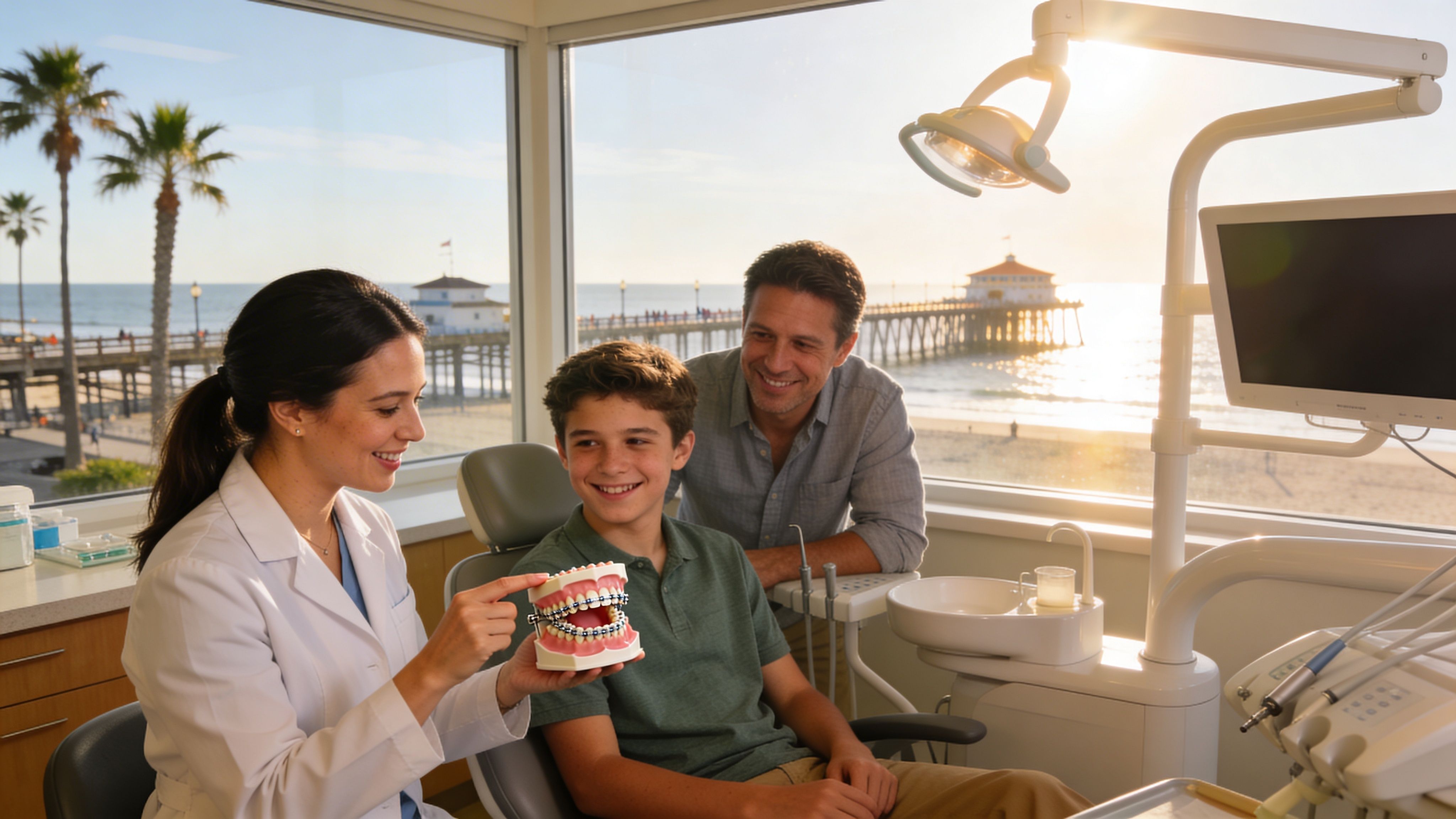
The American Association of Orthodontists recommends that kids see an orthodontist by age 7. I know that sounds early, and a lot of parents hear that and assume it means braces at age 7. It doesn't.
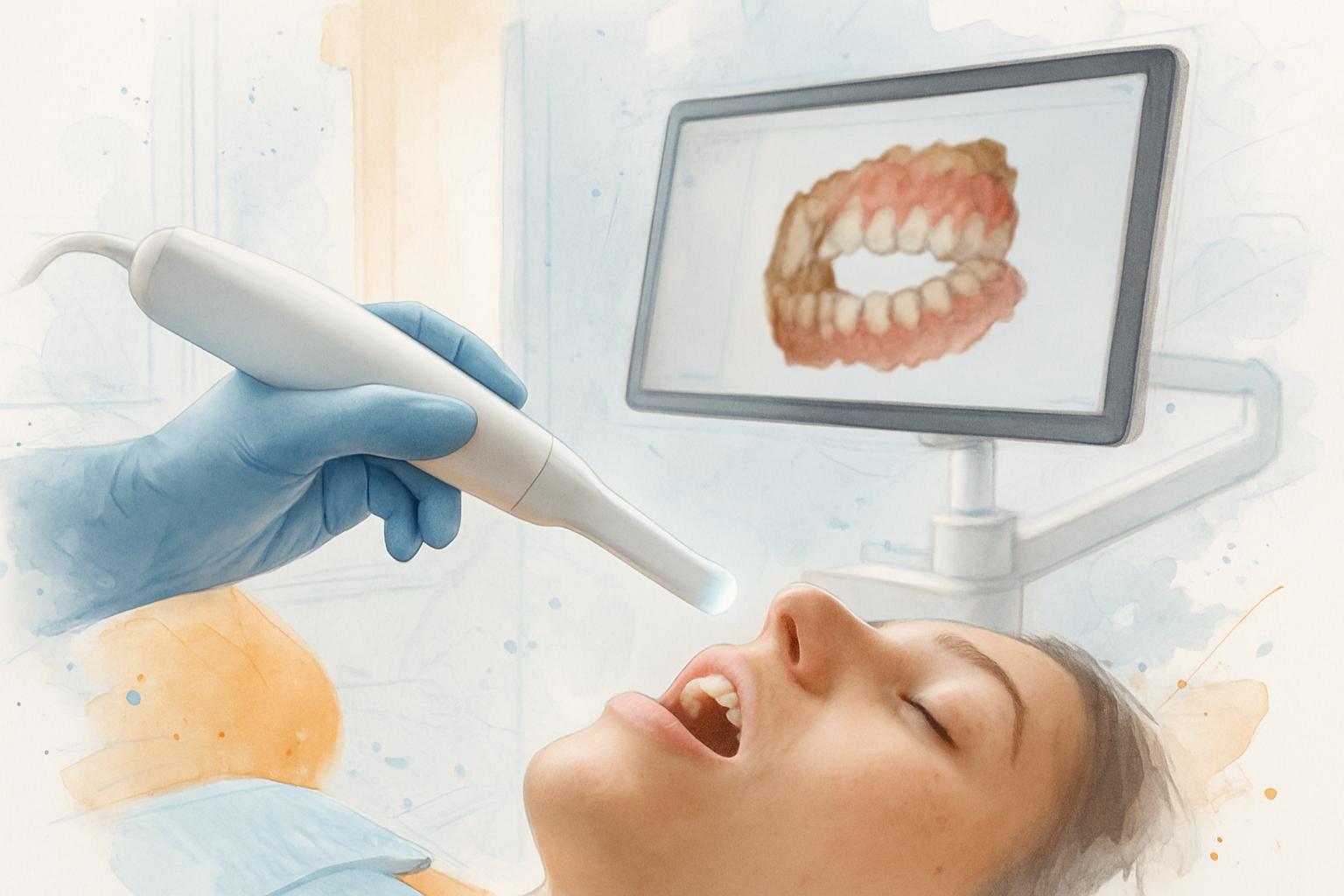
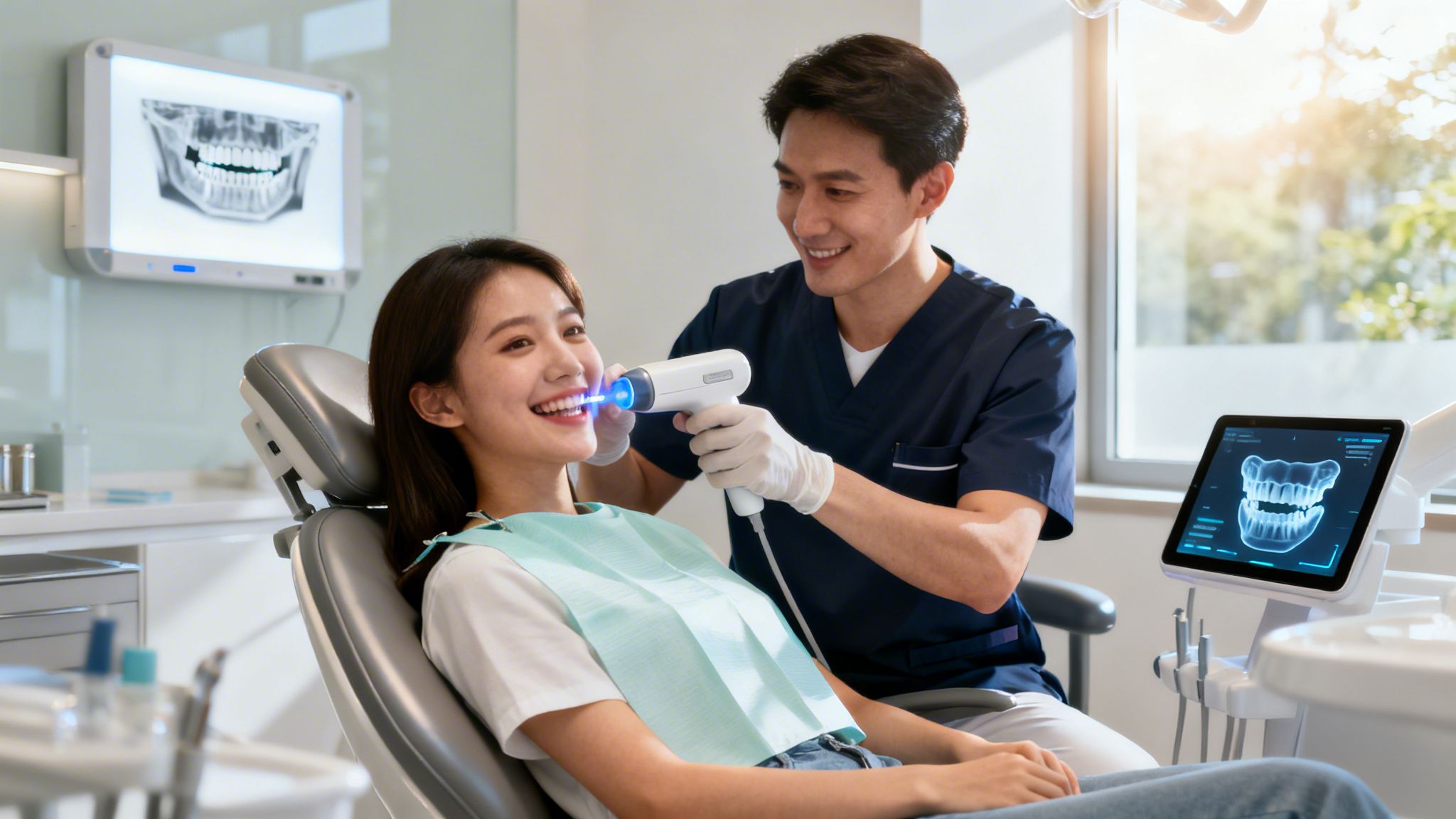
At 7, a child typically has a mix of baby teeth and permanent teeth. That combination lets an orthodontist spot developing problems — crossbites, crowding, jaw discrepancies — while there's still enough growth happening to do something about them before they get worse.
But the vast majority of kids who come in at 7 leave with a simple plan: come back in a year or two. We're watching, not rushing. Early orthodontic check-ups for kids are about gathering information at the right developmental moment — not locking a second-grader into treatment.
The families who benefit most from that early visit are the ones whose kids do have a specific growth issue. In those cases, a short phase of early interceptive work — like a palate expander or partial braces on a few teeth — can guide jaw development while baby teeth are still present. That's a completely different clinical decision from starting full treatment.
Early Interceptive Work vs. Full Teen Treatment — Two Different Decisions
Parents sometimes come in after another office told them their 8-year-old needs a full round of braces immediately. That recommendation sometimes makes sense — and sometimes it doesn't. I've seen kids come in for a second opinion and walk out with a much simpler plan.
Early interceptive treatment is appropriate in specific situations:
- A narrow upper jaw that's causing a crossbite and can be widened while growth is active
- Severe crowding where creating space early prevents more complicated work later
- A jaw relationship issue (like a significant underbite) where timing matters for growth guidance
Full comprehensive treatment — the braces or Invisalign that most people picture — is typically done after most or all permanent teeth have come in. For Fountain Valley teens, that usually lands somewhere between ages 11 and 14, though it varies by the individual.
Thinking of these as two separate decisions made at two separate ages clears up a lot of confusion. Your 9-year-old isn't necessarily behind if they haven't started. And your 13-year-old isn't too old — they're often right in the ideal window.
If you're not sure where your child falls, this overview of early orthodontic care lays out what that first phase actually involves.
The Orthodontic Timing Roadmap for Fountain Valley Families
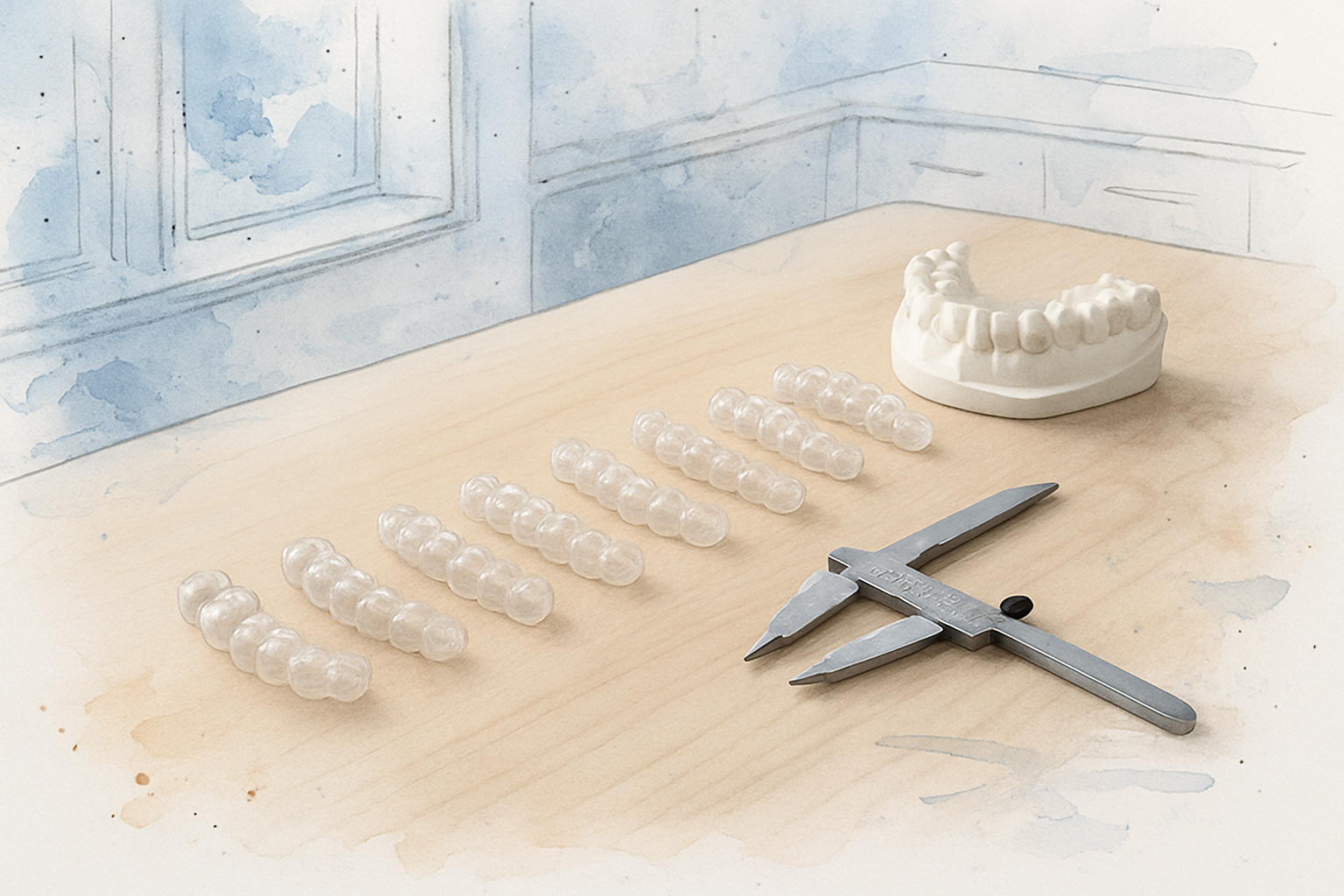
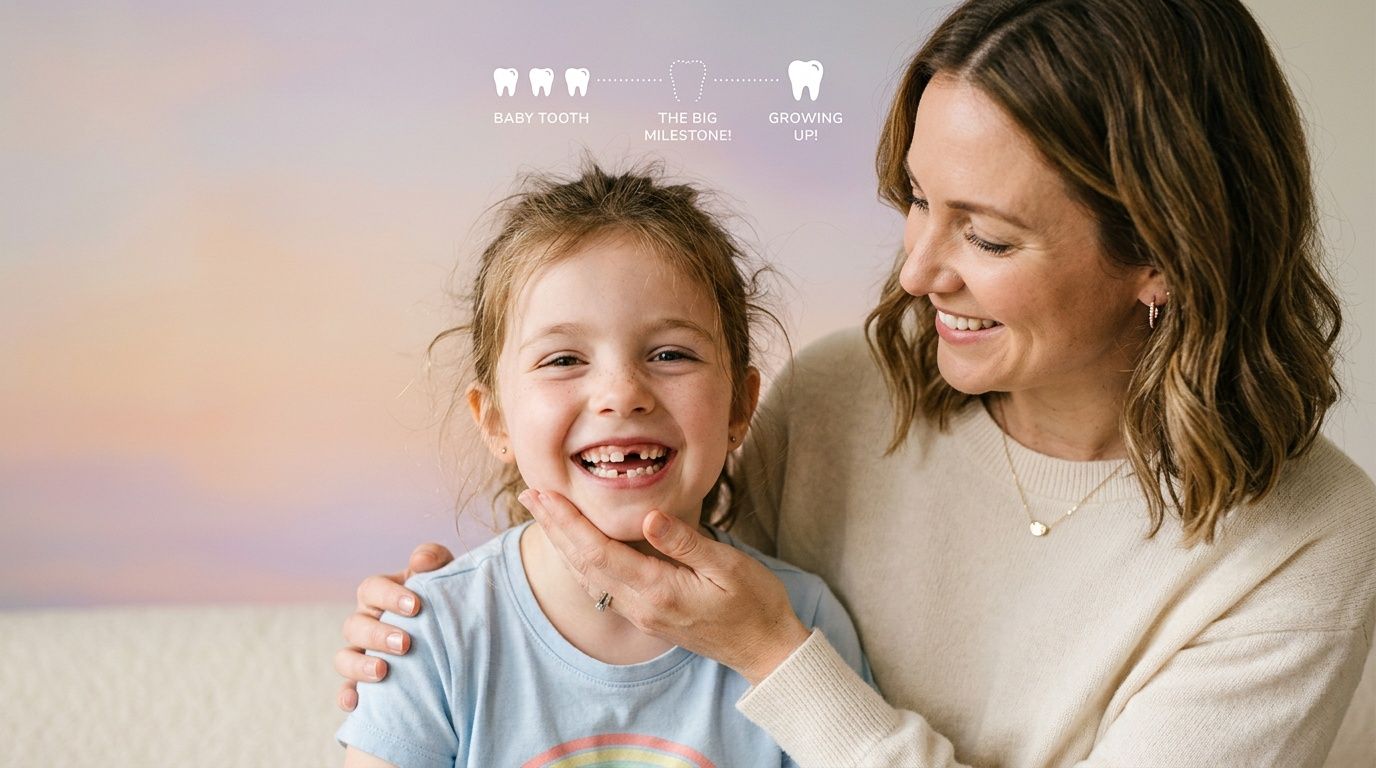
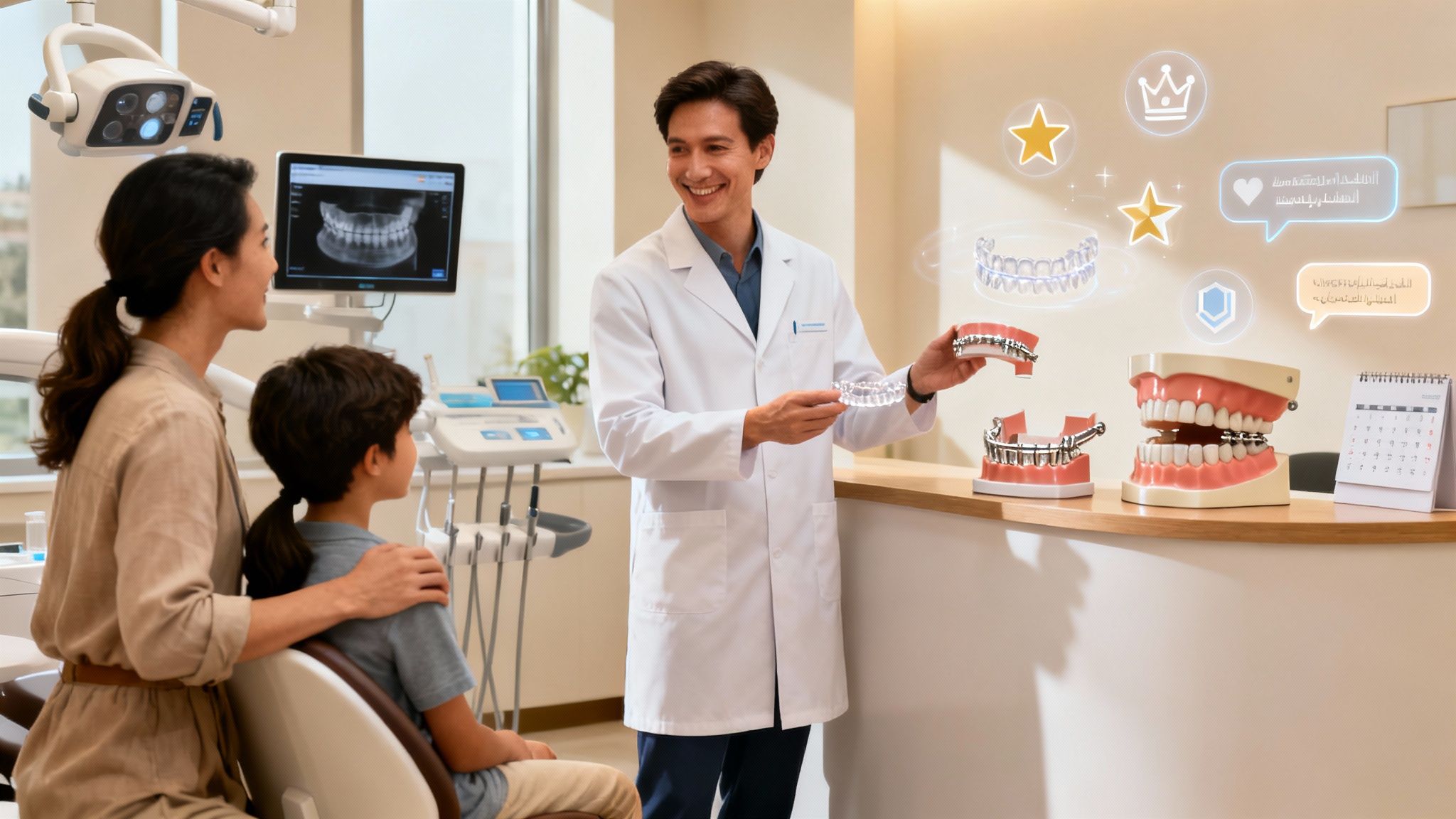
This roadmap shows the typical checkpoints from first evaluation through full teen treatment — so you know what to expect at each stage.

How a Teen's Life Should Shape the Treatment Decision
Once we've confirmed it's the right time developmentally, the conversation shifts to which treatment fits your teen's actual life. And that's where I think a lot of offices miss something.
Sports: A teen who plays contact sports — soccer, basketball, water polo along the Fountain Valley rec leagues — deals with a different set of risks with fixed brackets versus removable aligners. A knocked bracket mid-season is inconvenient; a mouth injury with a metal bracket is more serious. Mouthguards exist for both, but the conversation is worth having.
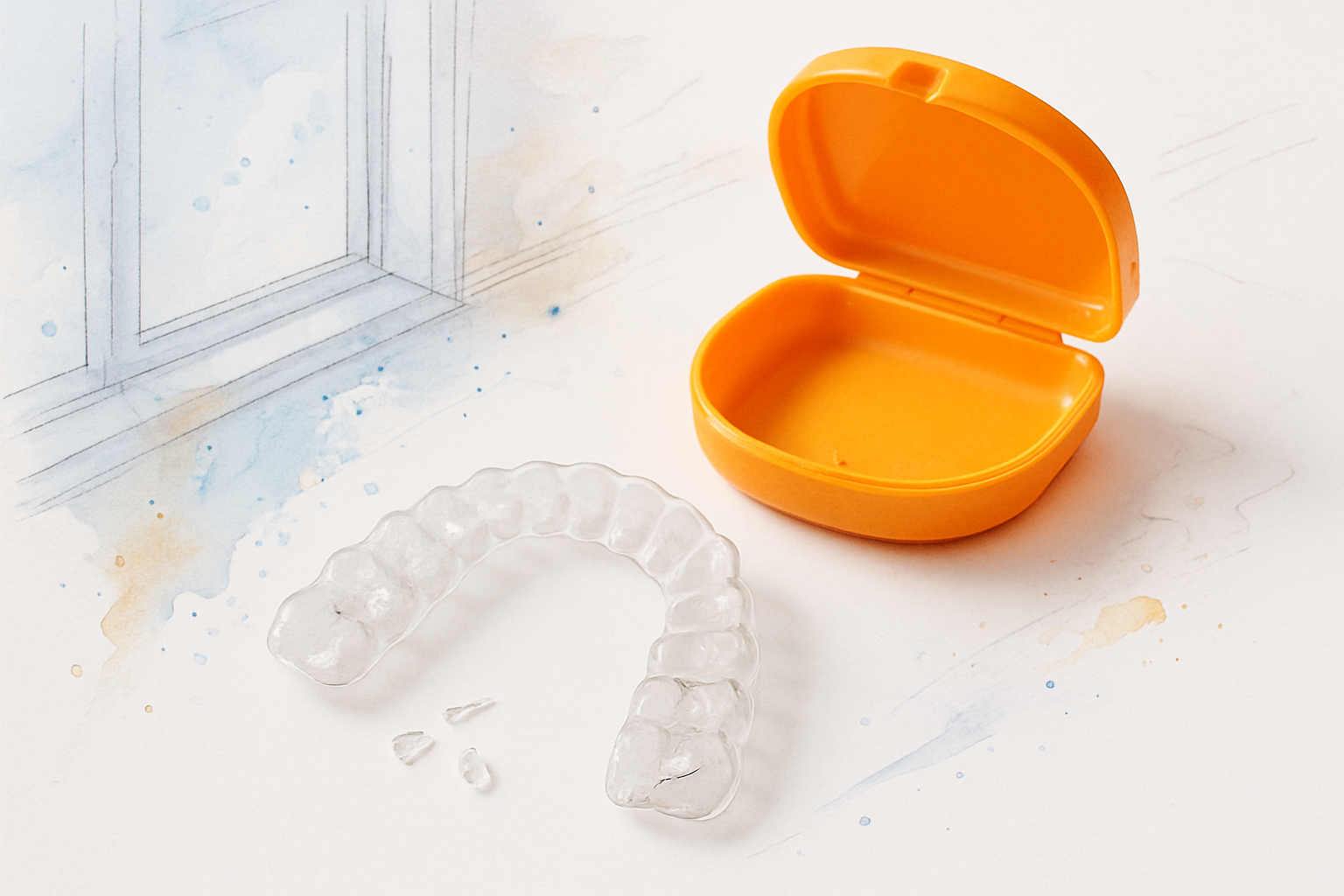
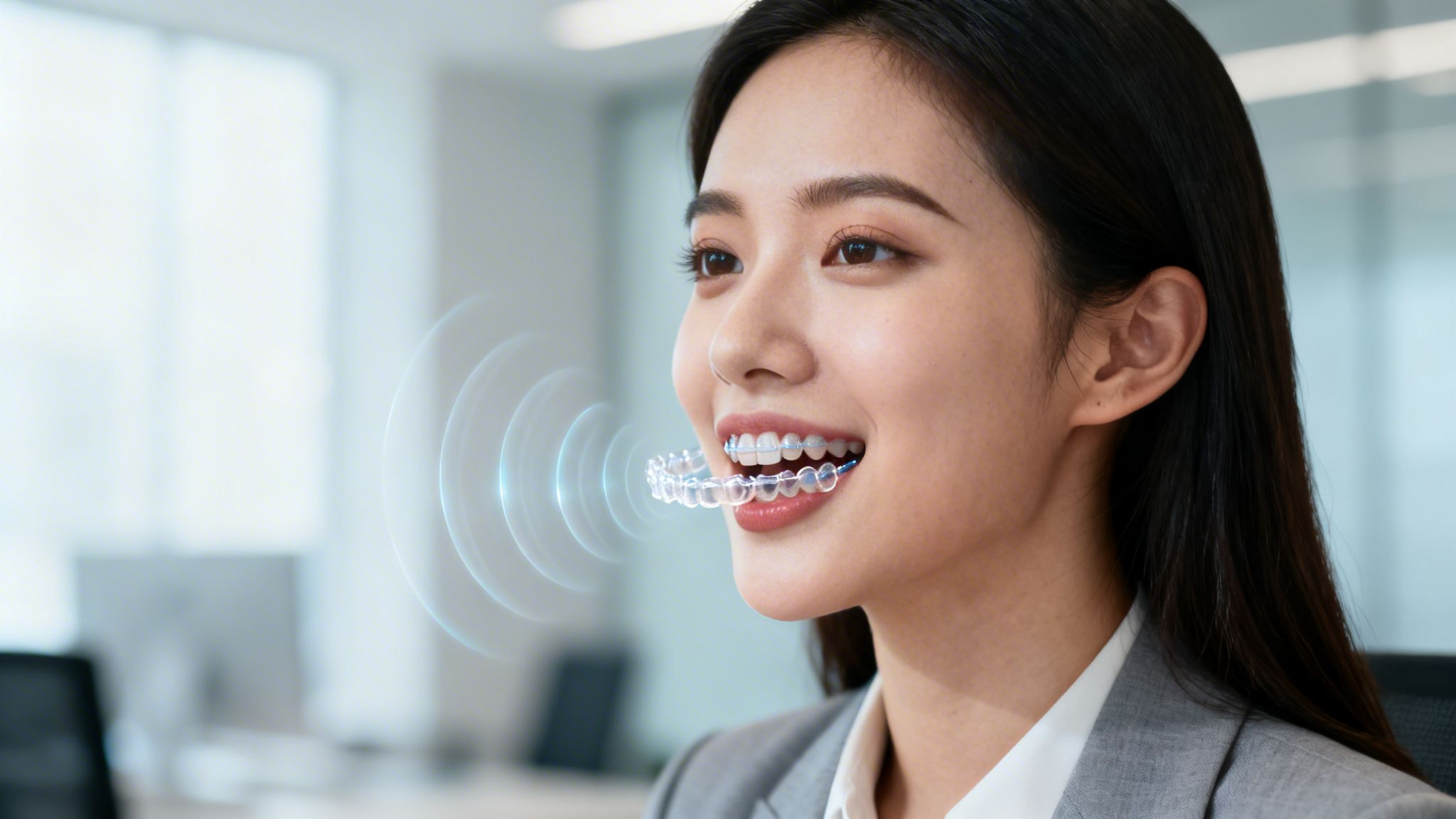
Instrument playing: Band students who play woodwinds or brass sometimes find fixed braces affect their embouchure, at least in the adjustment period. Invisalign can be removed during practice, which matters more to some teens than others.
School photos and social confidence: I hear this one a lot — parents asking about timing around picture day, or teens who are genuinely self-conscious about how they'll look. That's a real concern worth addressing, not dismissing.
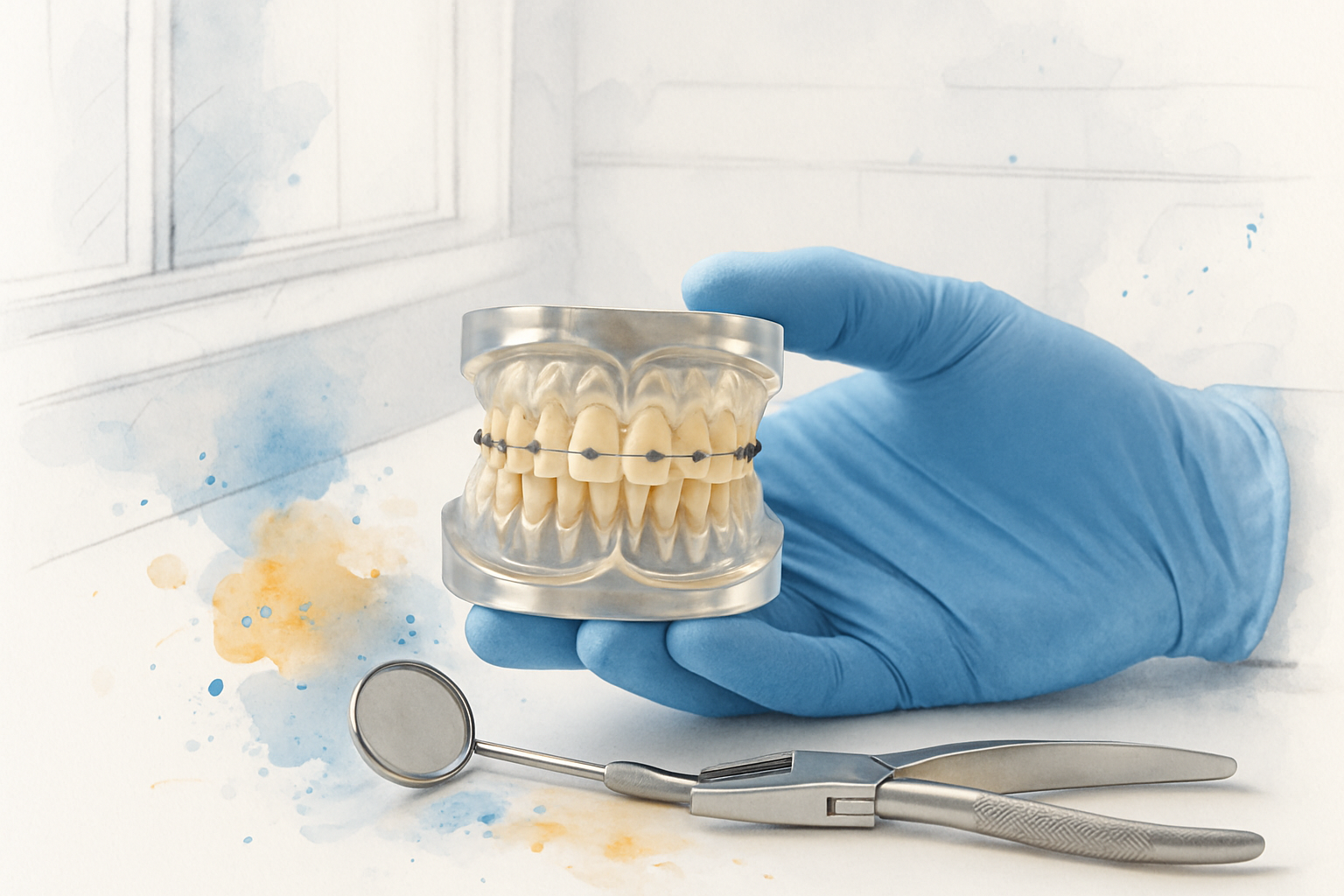
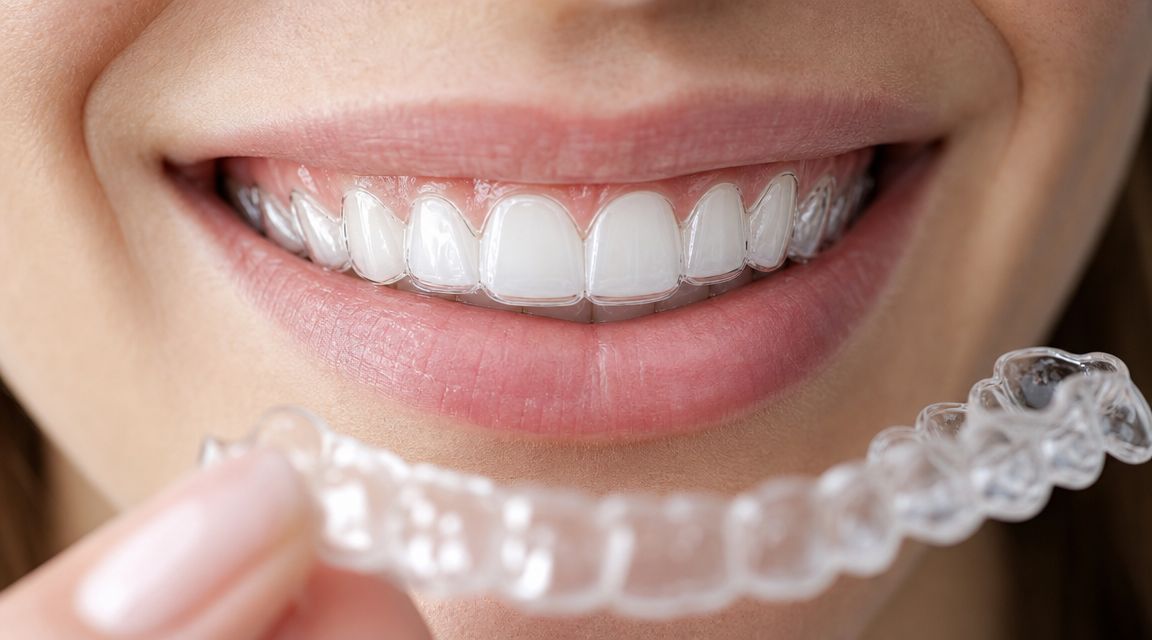
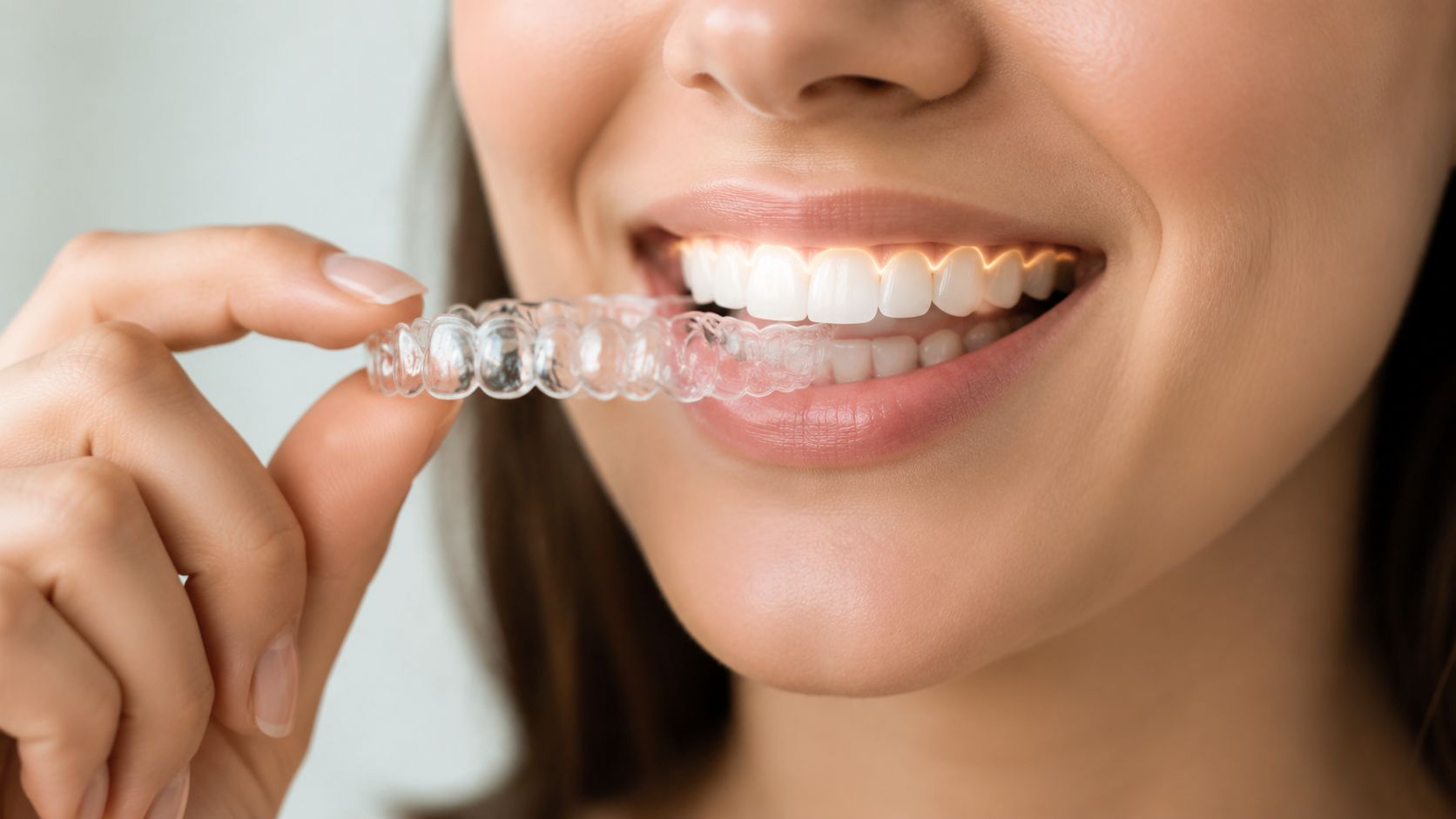
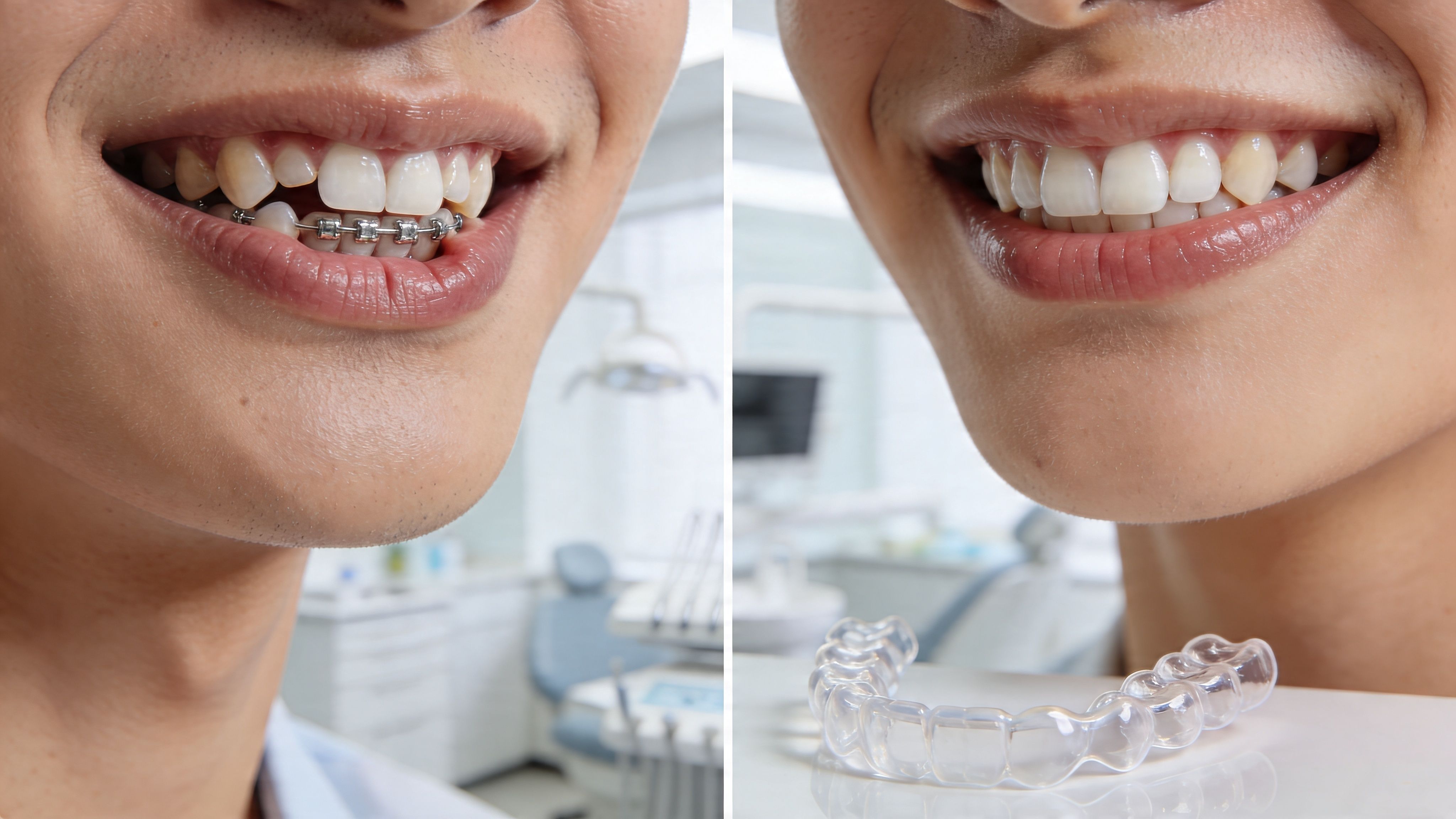
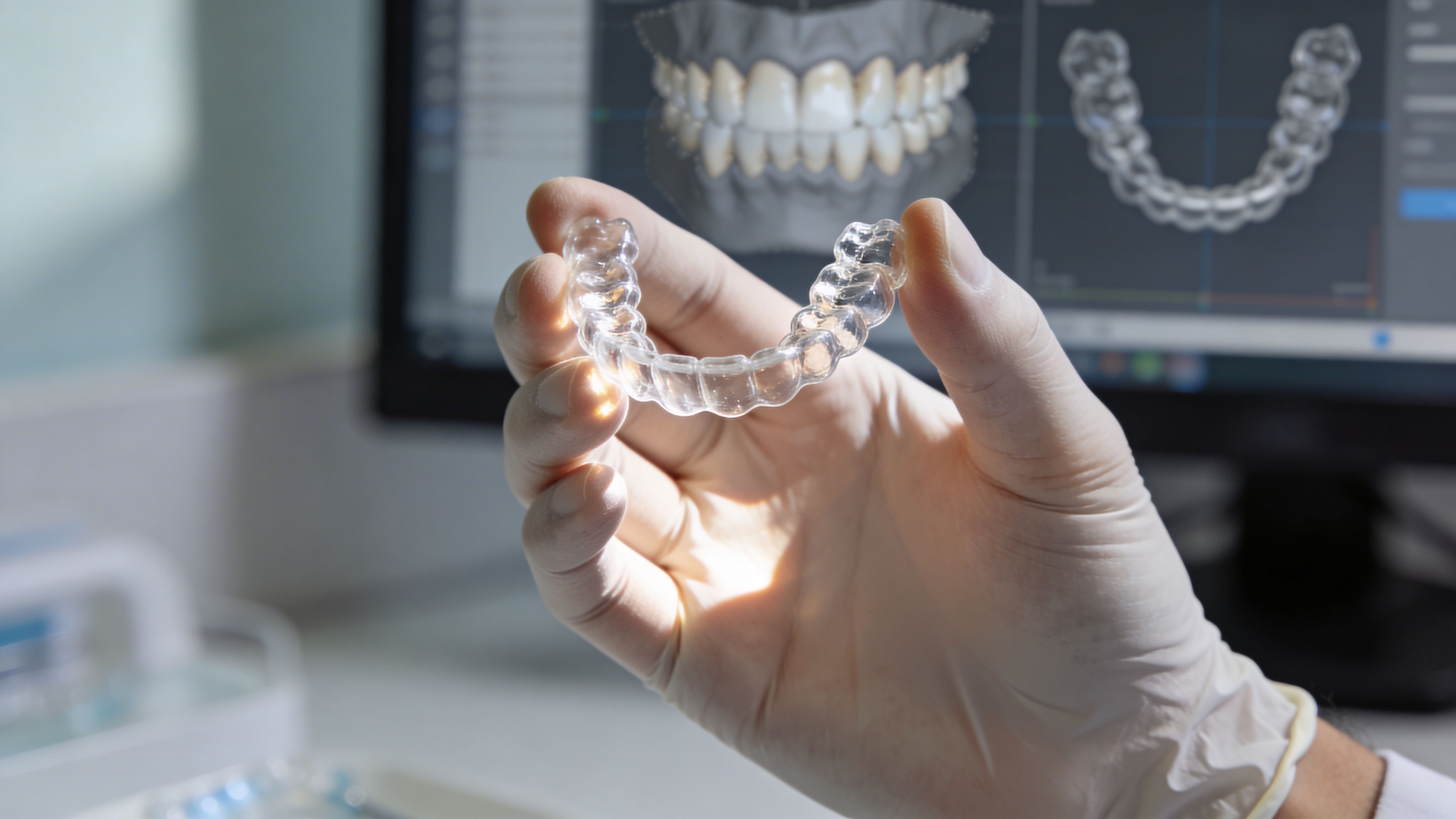
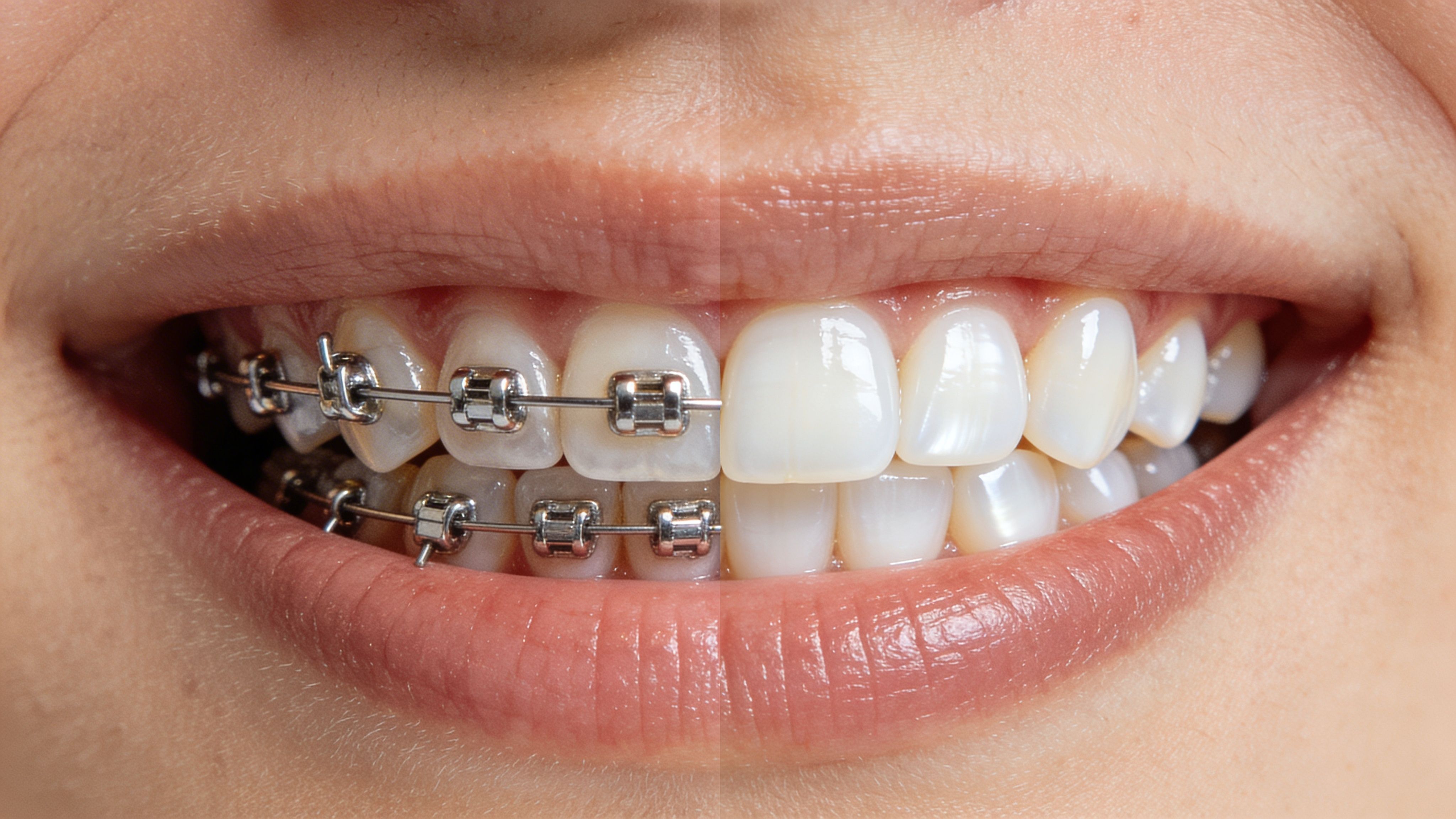
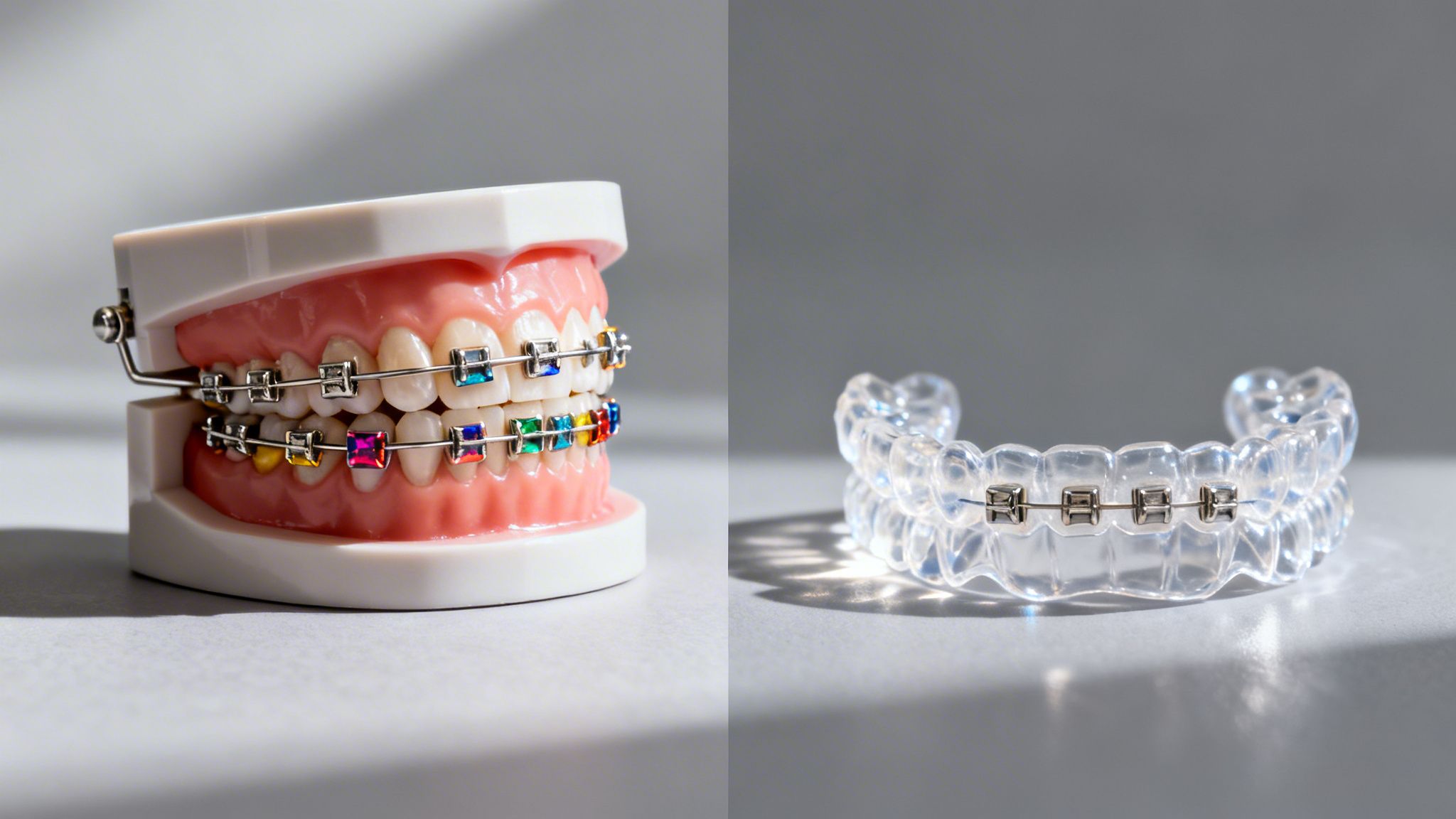
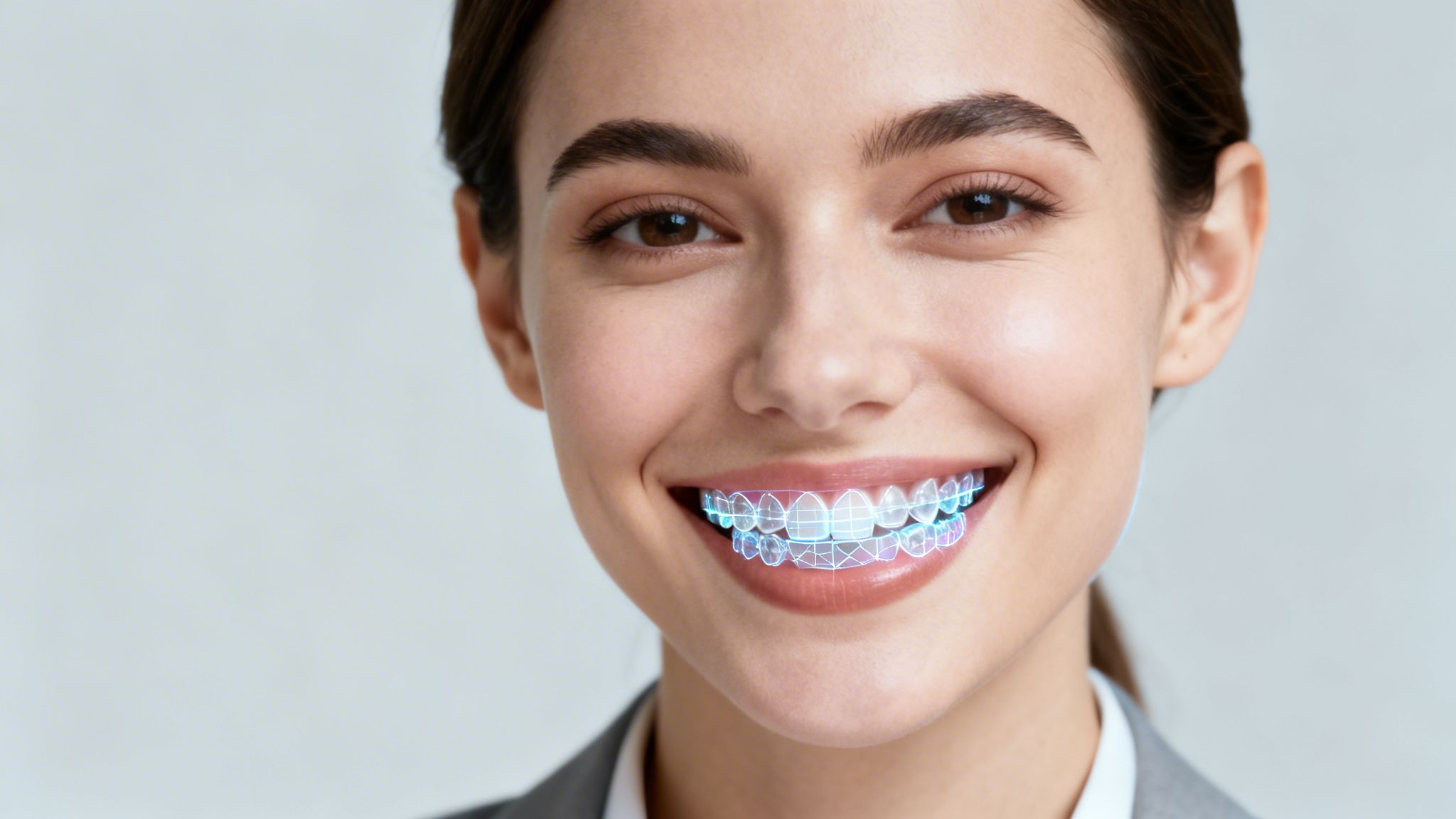
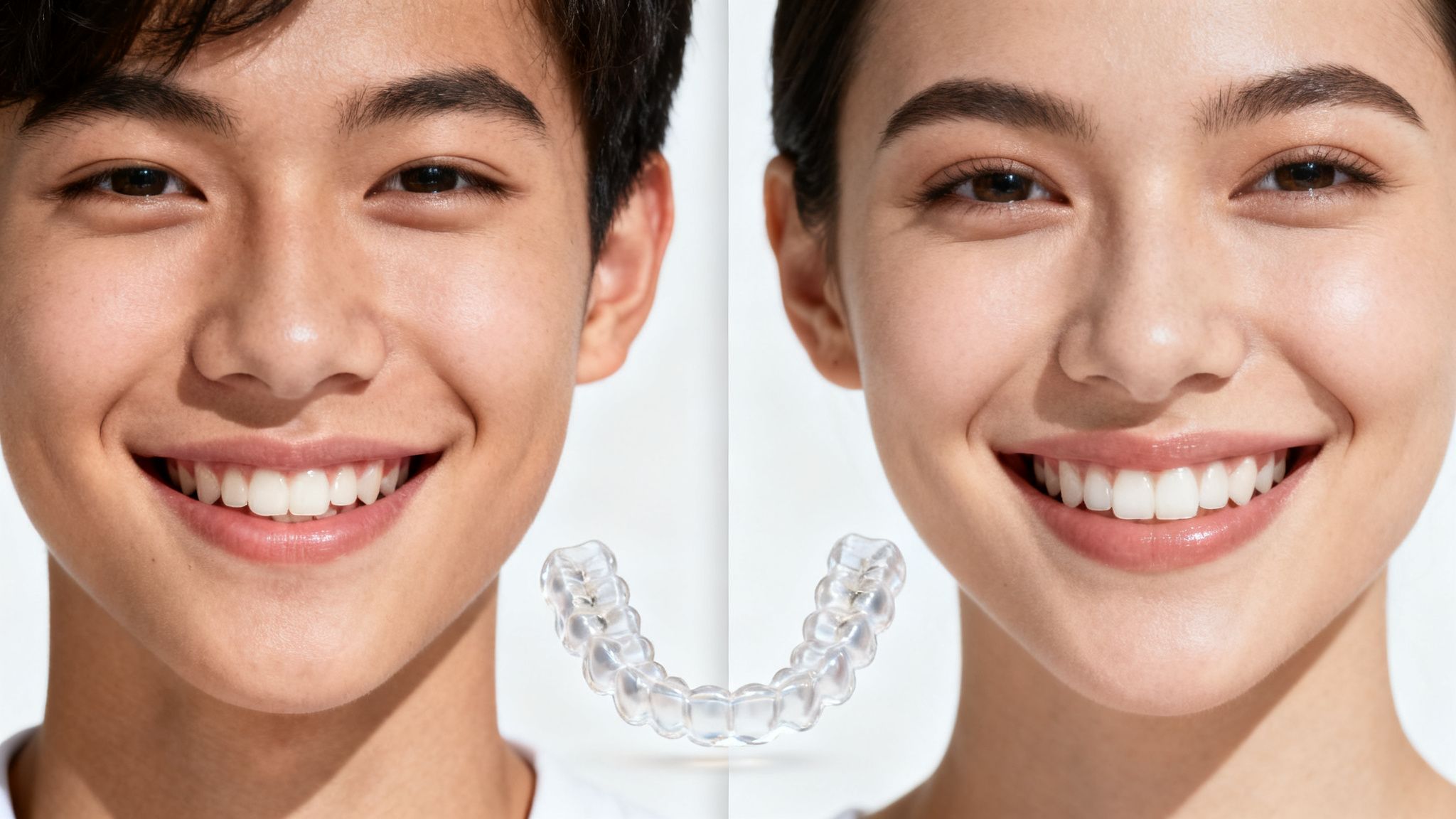
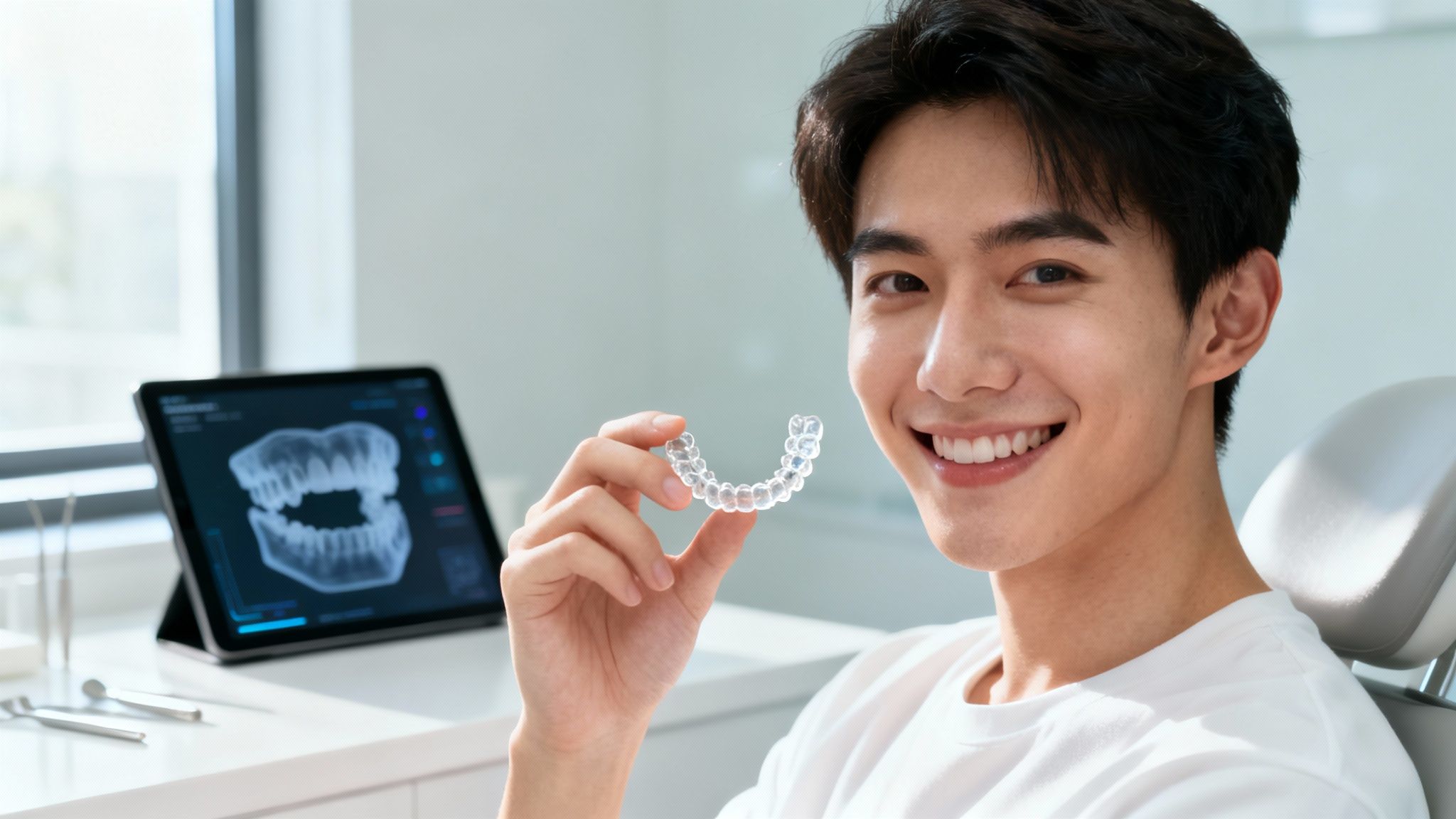
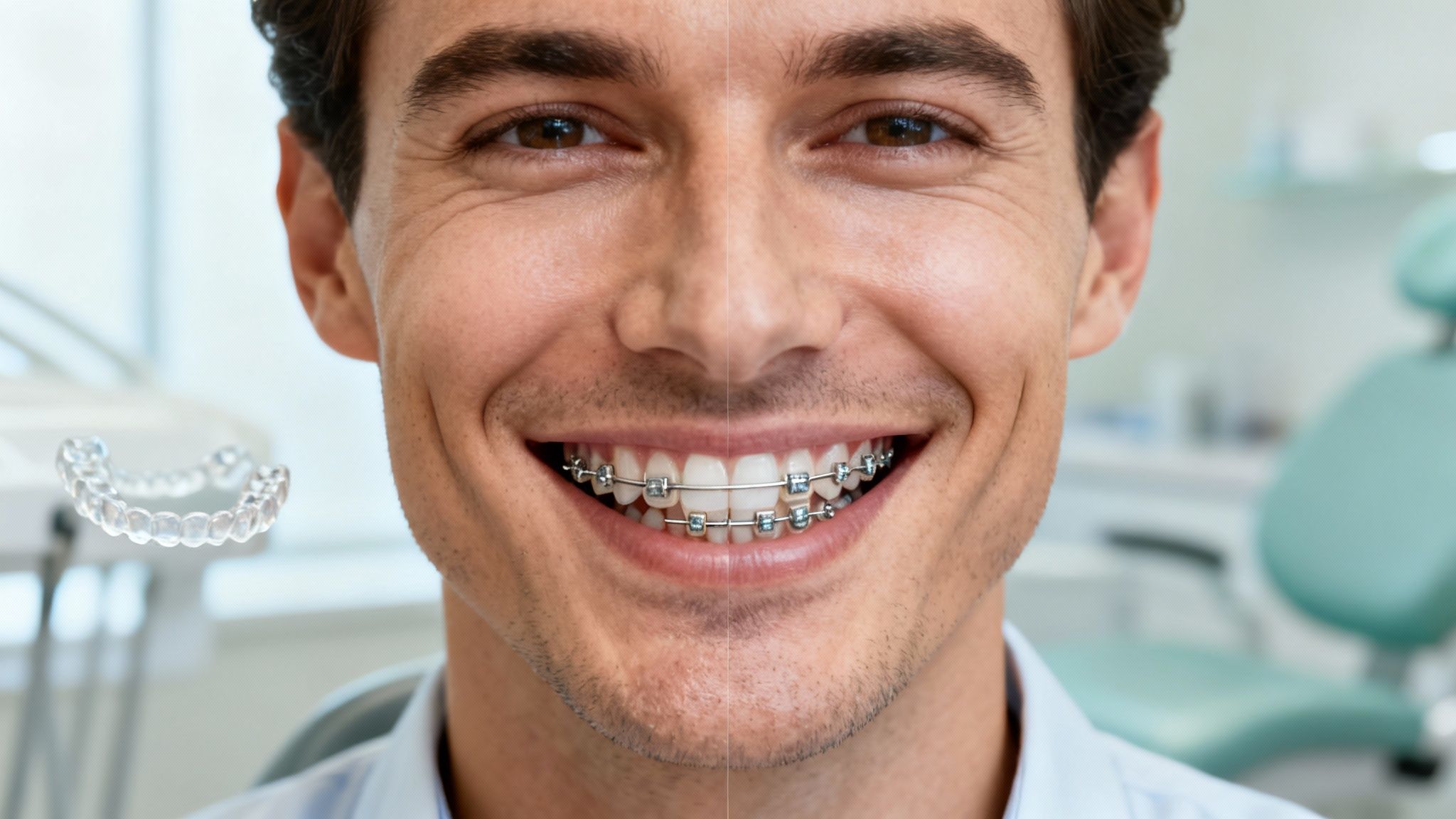
For teens who are seriously worried about visibility, we offer Invisalign clear aligners and Iconix esthetic brackets — a gold-toned bracket option that looks warmer and less institutional than standard metal. Traditional metal braces remain the right call for more complex cases or when compliance is a real concern. Comparing these options for teens is worth doing carefully, because the best treatment is the one your teen will actually commit to.
Braces vs. Invisalign vs. Iconix for Fountain Valley Teens
Here's a straightforward look at how the three options compare across the factors teens and parents usually care about most.
| Option | Best For | Key Consideration |
|---|---|---|
| Traditional Metal Braces | Complex cases, teens who need compliance support | Most durable; always working; brackets are visible |
| Invisalign Clear Aligners | Self-conscious teens who will wear them 20-22 hrs/day | Removable for sports and instruments; requires discipline |
| Iconix Esthetic Brackets | Teens who want a warmer, less visible look with fixed braces | Gold-toned brackets; fixed like metal braces but more discreet |
Why Fountain Valley Families Start Treatment in June or July
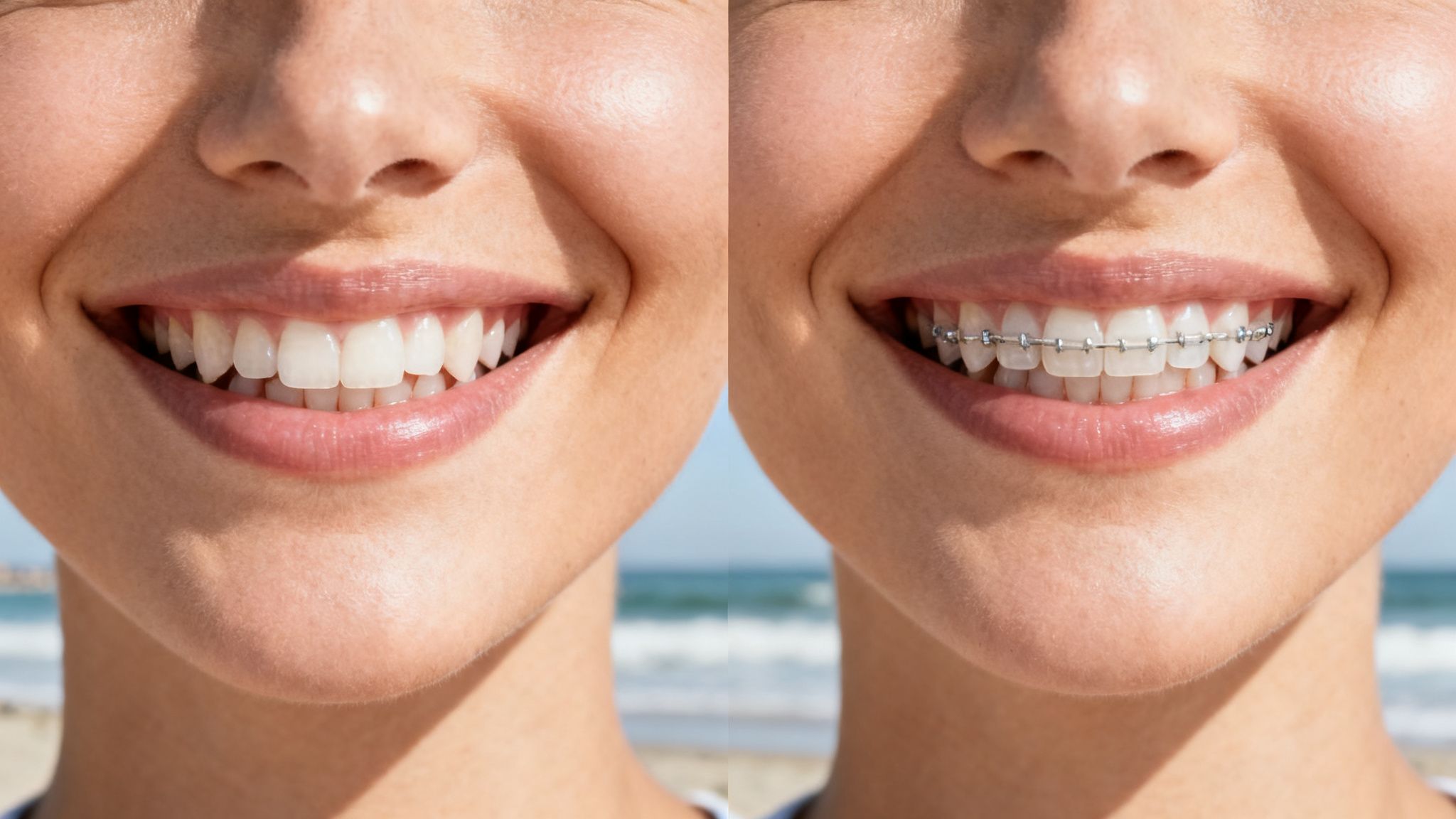
There's a timing pattern I've noticed with families throughout Central Fountain Valley, Talbert Village, and Newland — a lot of them deliberately schedule treatment starts for June or early July, right after school lets out.
It makes a lot of practical sense. The first week or two of any orthodontic treatment involves an adjustment period — some soreness, getting used to a new feeling in your mouth, figuring out how to eat or (with Invisalign) building the habit of wearing the aligners consistently. When that happens over summer break, your teen isn't navigating a full school day at the same time.
By the time August rolls around and school photos, fall sports, and social life all resume, most teens are well past that initial phase. They've adjusted to the routine, they're not as sore, and they feel more comfortable with how everything looks.
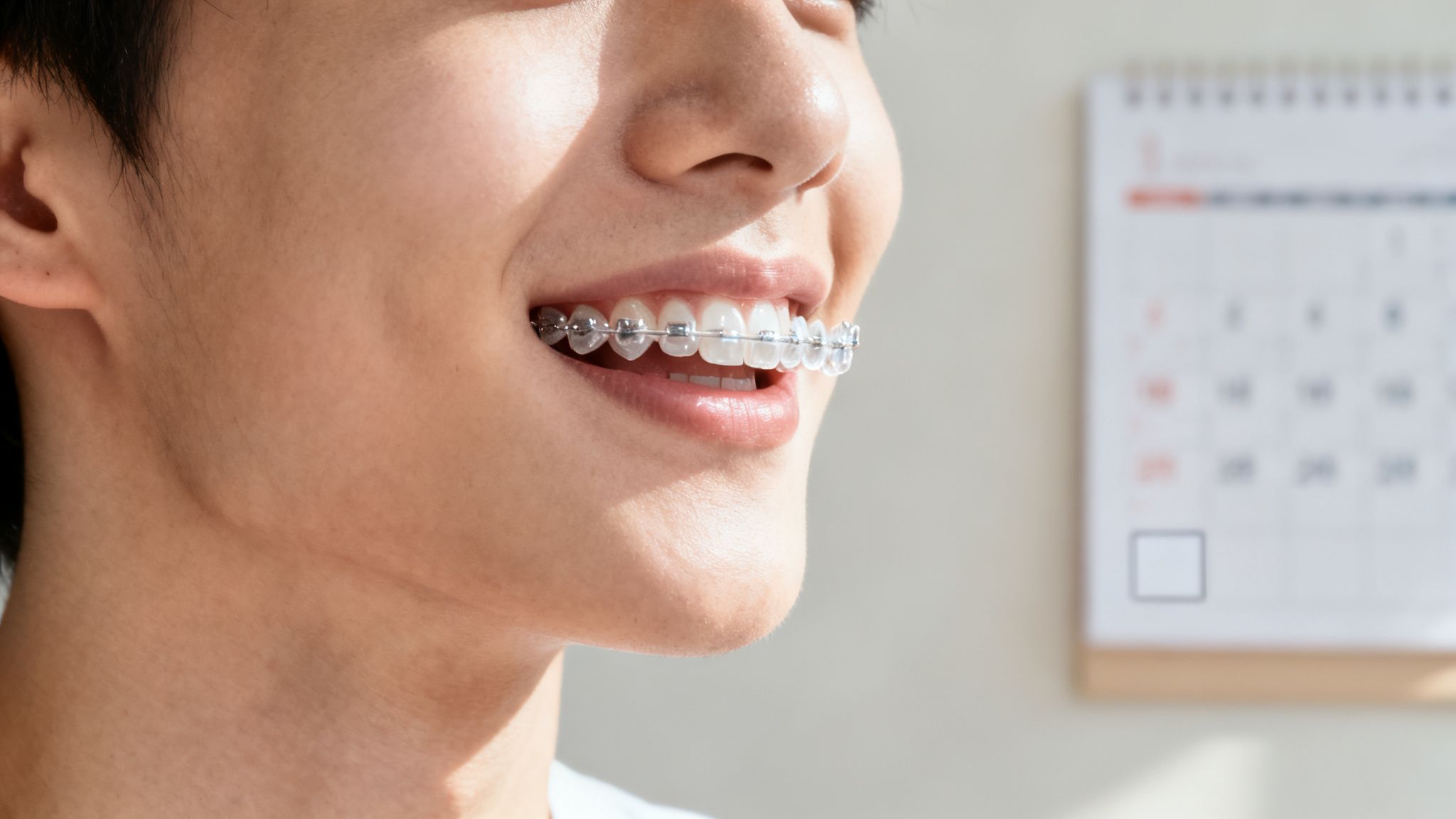
If a summer start is your goal, it's worth getting an evaluation done in April or May so there's enough time for records, planning, and scheduling — not scrambling the week before school ends.
Frequently Asked Questions About Teen Orthodontic Timing
My dentist said my 9-year-old needs braces now. Should I get a second opinion?
Yes, absolutely — and don't feel awkward about it. A second opinion on early treatment recommendations is completely normal, and a good orthodontist will welcome the question. Some 9-year-olds genuinely benefit from early interceptive work, but others are better served by waiting. We've had families come in after being told their child needed a more aggressive treatment plan, and in some cases, a simpler monitoring approach was the right answer. The evaluation itself costs nothing and gives you a clearer picture.
Is 14 too late to start braces?
Not at all. 14 is solidly within the typical treatment window for teens. The mouth is still growing, permanent teeth are in, and treatment tends to move efficiently at that age. The concern about waiting usually applies to specific growth-related issues that benefit from earlier intervention — not to standard alignment treatment, which works well throughout the teen years and beyond.
My teen refuses to wear Invisalign consistently. Should we switch to braces?
That's a real issue worth discussing with your orthodontist. Invisalign only works when it's being worn — the target is around 20 to 22 hours per day. If a teen is regularly taking them out and not making up the time, results will stall. Metal braces or Iconix brackets are fixed, so they're always working regardless of whether your teen remembers. Some teens do much better with that kind of consistency built in.
Will the doctor actually be at every appointment, or will we mostly see an assistant?
At our practice, Dr. Jeremy and Dr. Melissa see every patient at every visit. That matters more than it might seem — it means the people overseeing your teen's treatment know their case firsthand, not just from notes. Several families have specifically mentioned this as something that mattered to them when choosing where to go.
How long does teen treatment usually take?
Most full treatment cases for teens run somewhere between 12 and 24 months, depending on complexity. Simple crowding cases can sometimes finish closer to the shorter end; more involved bite corrections take longer. The consultation is where you get an honest estimate specific to your teen's situation — general ranges are just that, general.
Ready to Get a Clear Answer on Your Teen's Timing?
If you're a family in Fountain Valley, Huntington Beach, or the surrounding neighborhoods and you're not sure whether now is the right time — or if another office gave you a recommendation that didn't quite sit right — Dr. Jeremy and Dr. Melissa are glad to take a look and give you a straight answer. You can reach Magic Fox Orthodontics at 714-594-5777 or visit magicfoxsmiles.com to learn more and request a consultation.