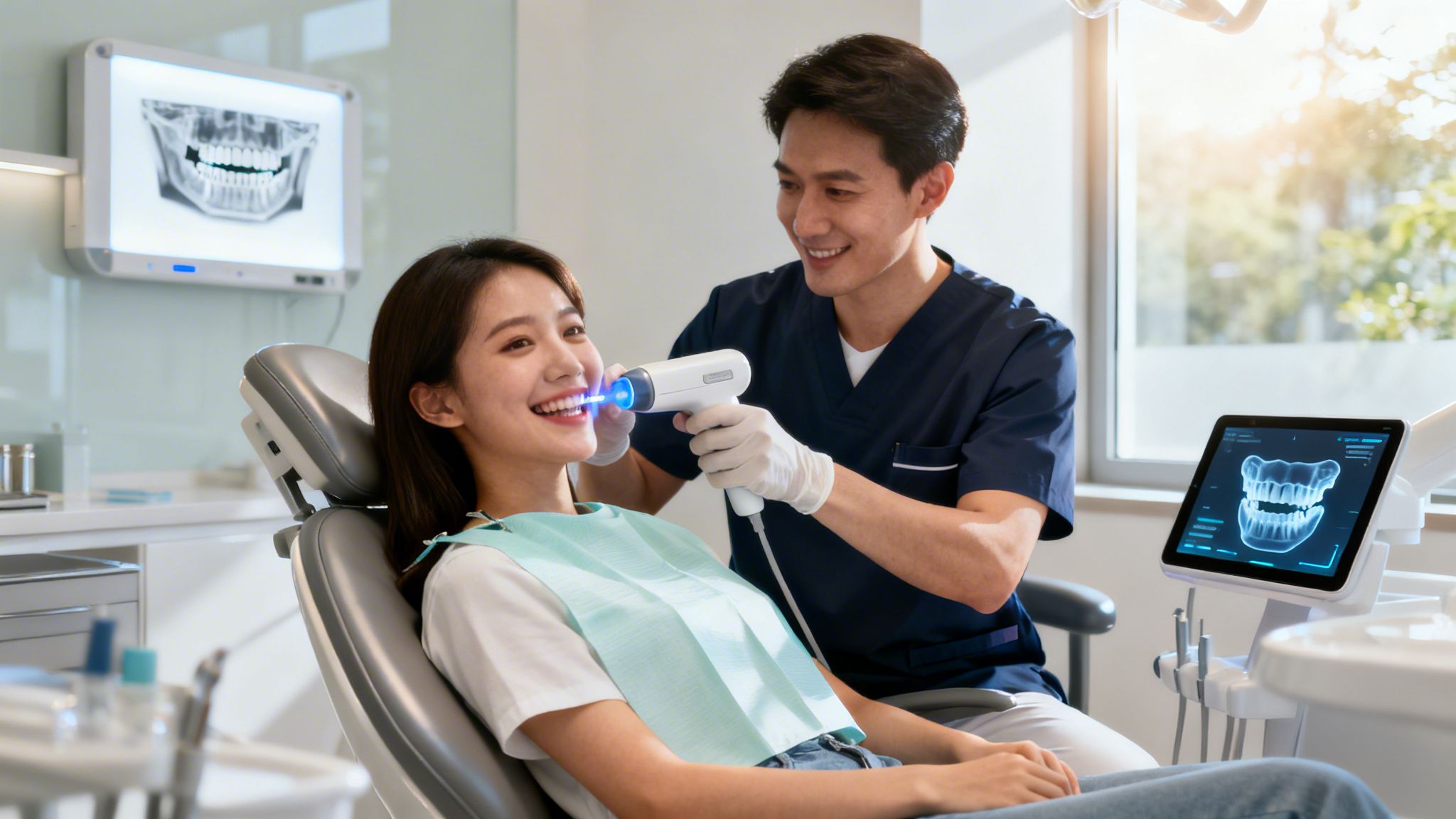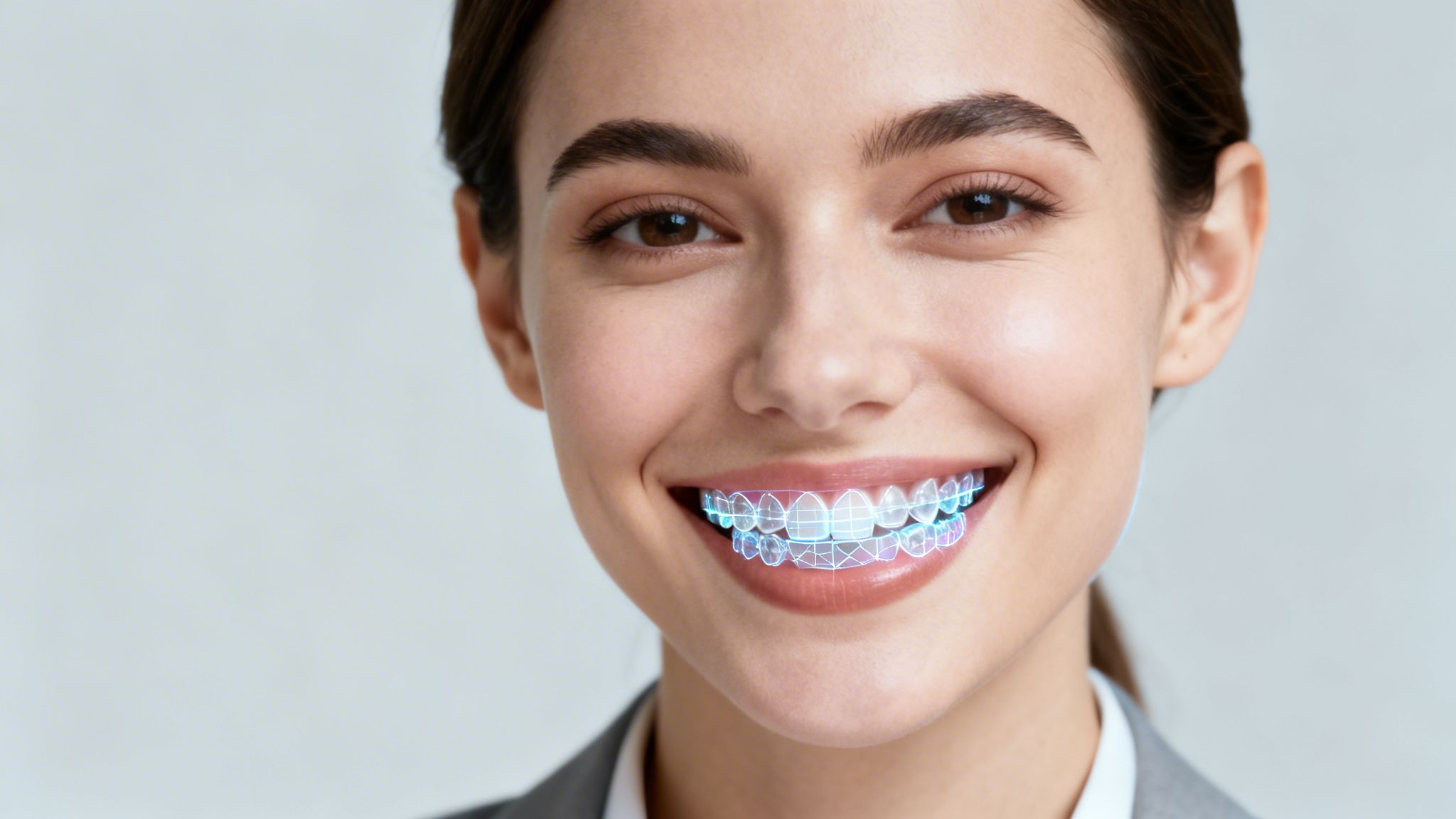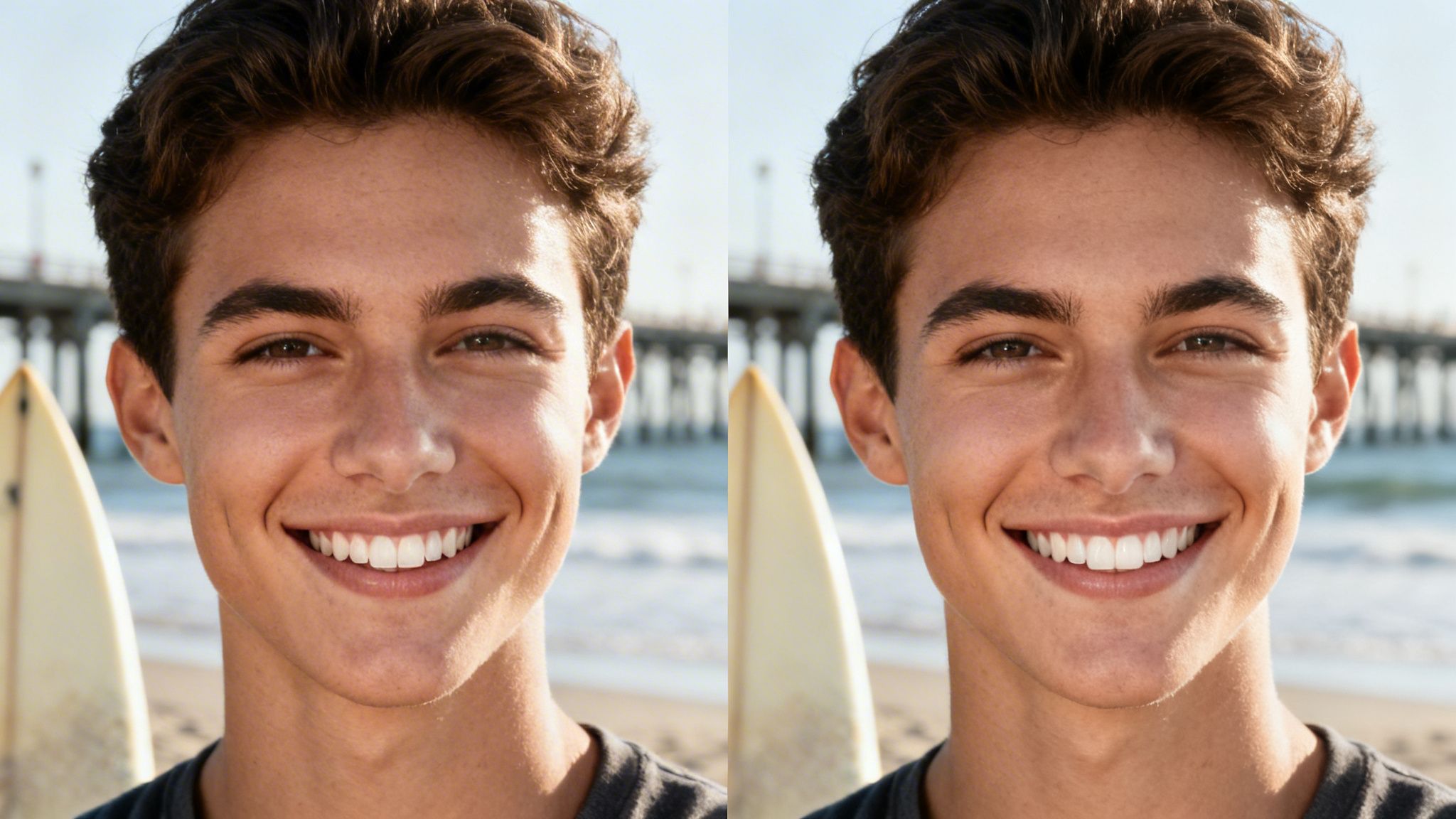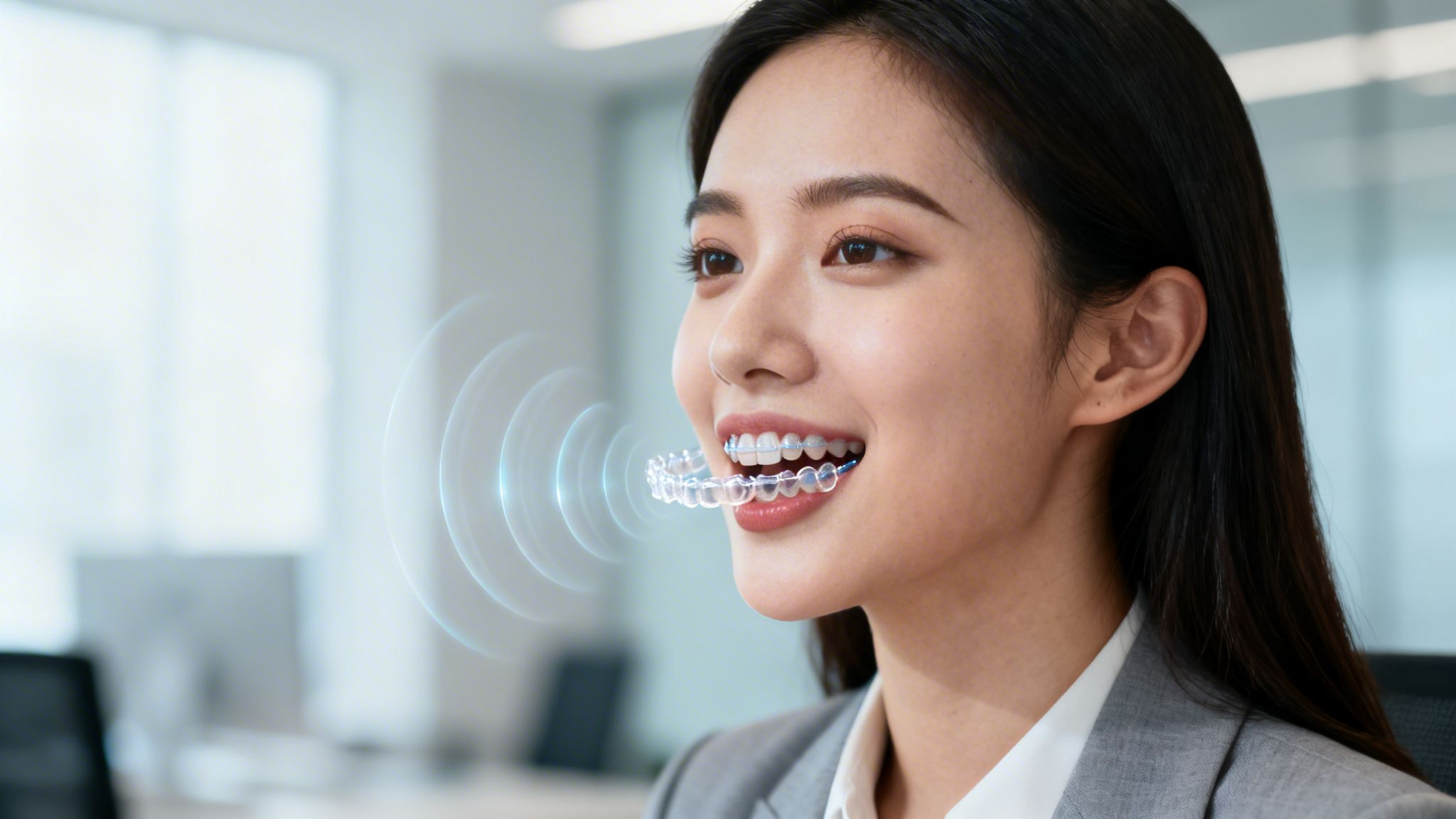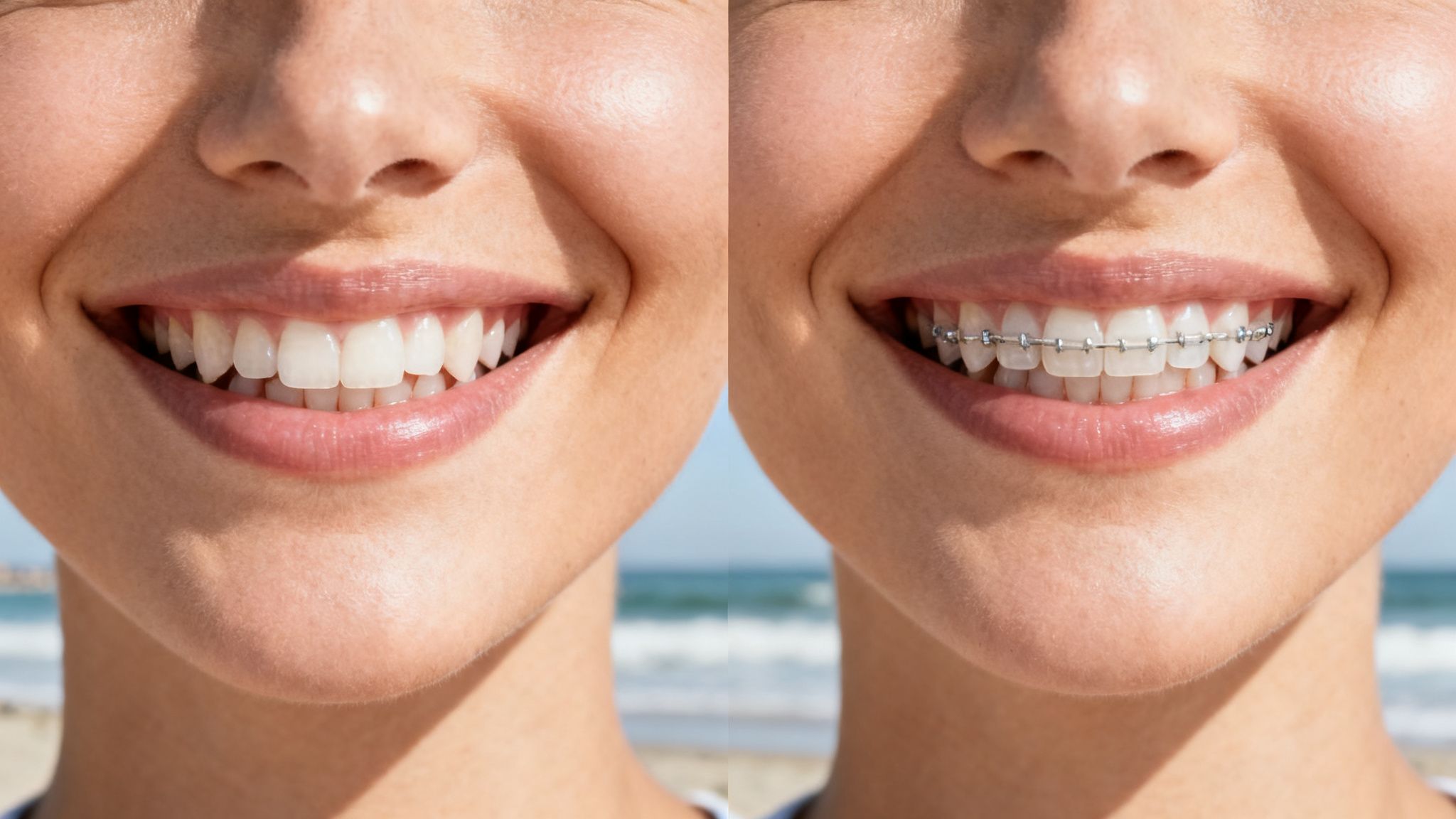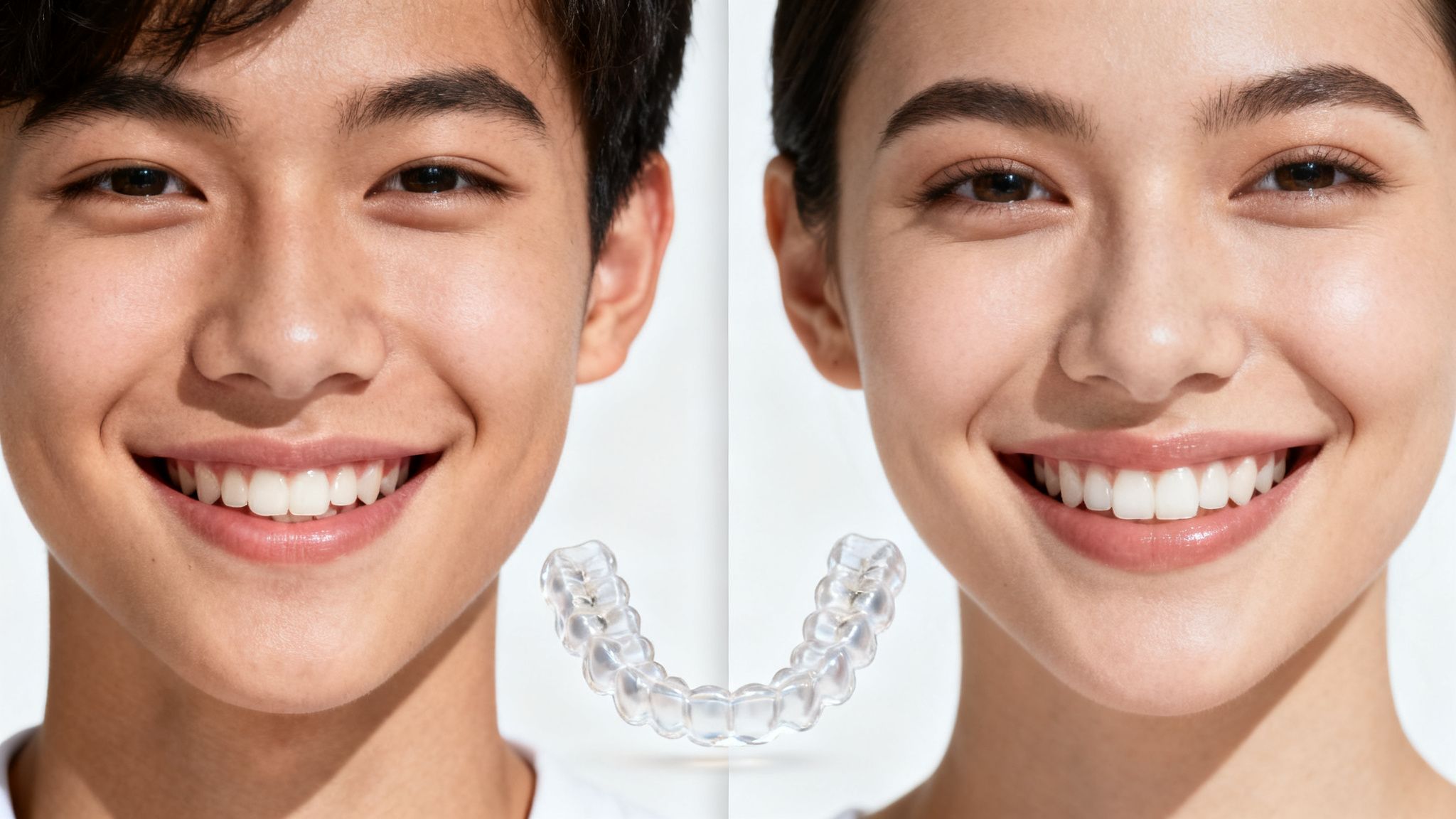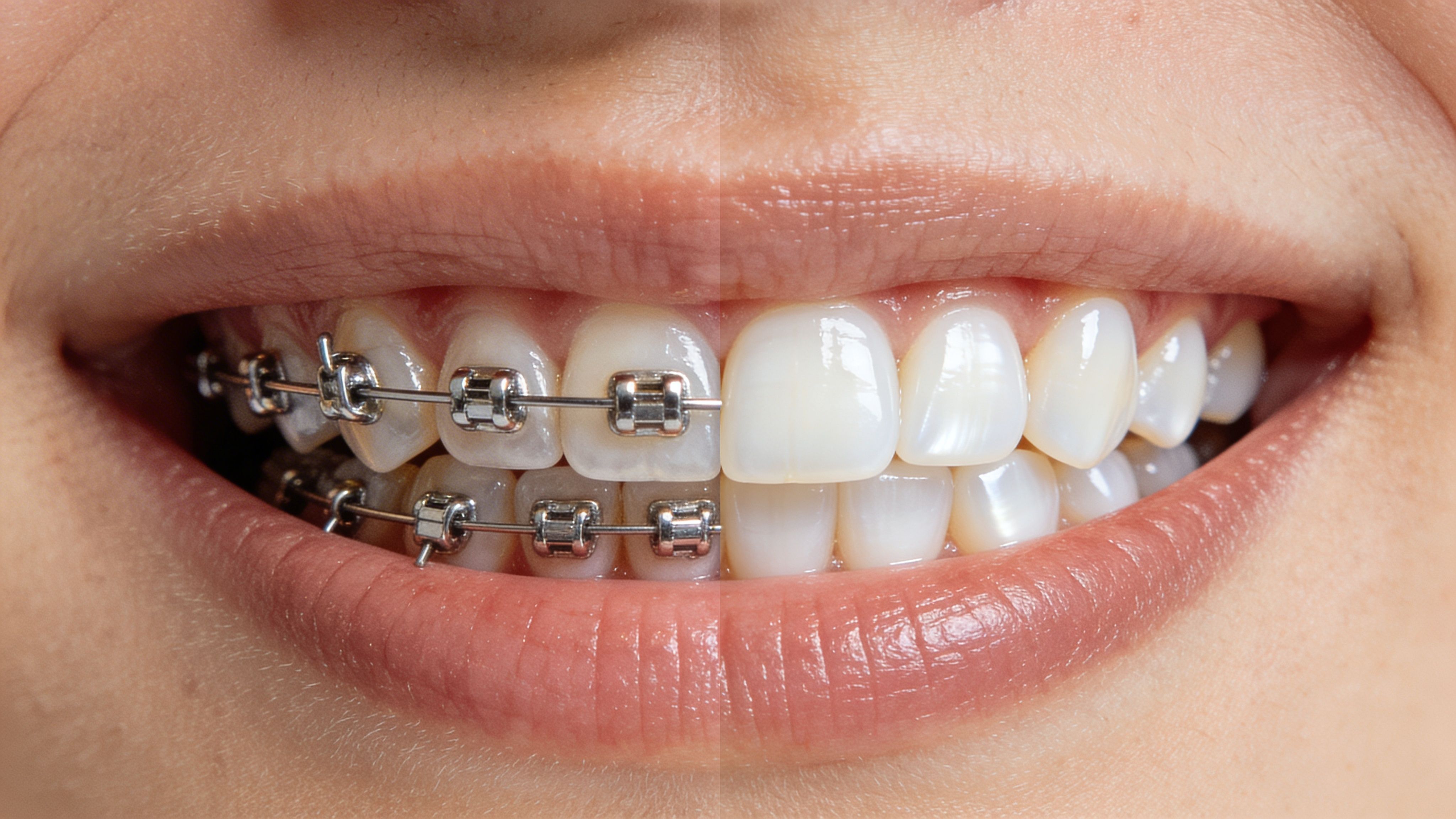
Should I Get Braces or Veneers First for a Better Smile?
You want a better smile, but you don't want to make an expensive decision in the wrong order. That question comes up often in Huntington Beach because veneers sound fast, while braces or Invisalign sound slower but more foundational.
When considering should i get braces or veneers first for a better smile?, the right sequence is to align first, then decide whether veneers are needed.**, the right sequence is to align first, then decide whether you still need cosmetic finishing. That approach usually protects more natural tooth structure, gives a more balanced result, and avoids using veneers to hide problems they weren't designed to fix.
Quick Answer
In most cases, braces or Invisalign should come before veneers if your teeth are crooked, rotated, crowded, or your bite is off. Orthodontic treatment creates a healthier foundation, often reduces how much enamel has to be removed later, and can make veneers unnecessary or more conservative if you still want them. Veneers first usually make sense only when alignment issues are very minor, the bite is healthy, and the goal is purely cosmetic. The right answer depends on your bite, enamel, gum health, and smile goals.
Introduction
A lot of adults sit in this exact spot. They want straighter, whiter, more even teeth, but they don't know whether to move teeth first or cover them first.
That confusion makes sense. Veneers can change a smile quickly, while orthodontics takes time. But speed and sequencing aren't the same thing, and the order matters significantly.
Understanding Orthodontics and Veneers
A Huntington Beach patient may come in asking for a faster smile fix, then realize the primary question is not speed. It is whether the teeth need to be moved or reshaped.
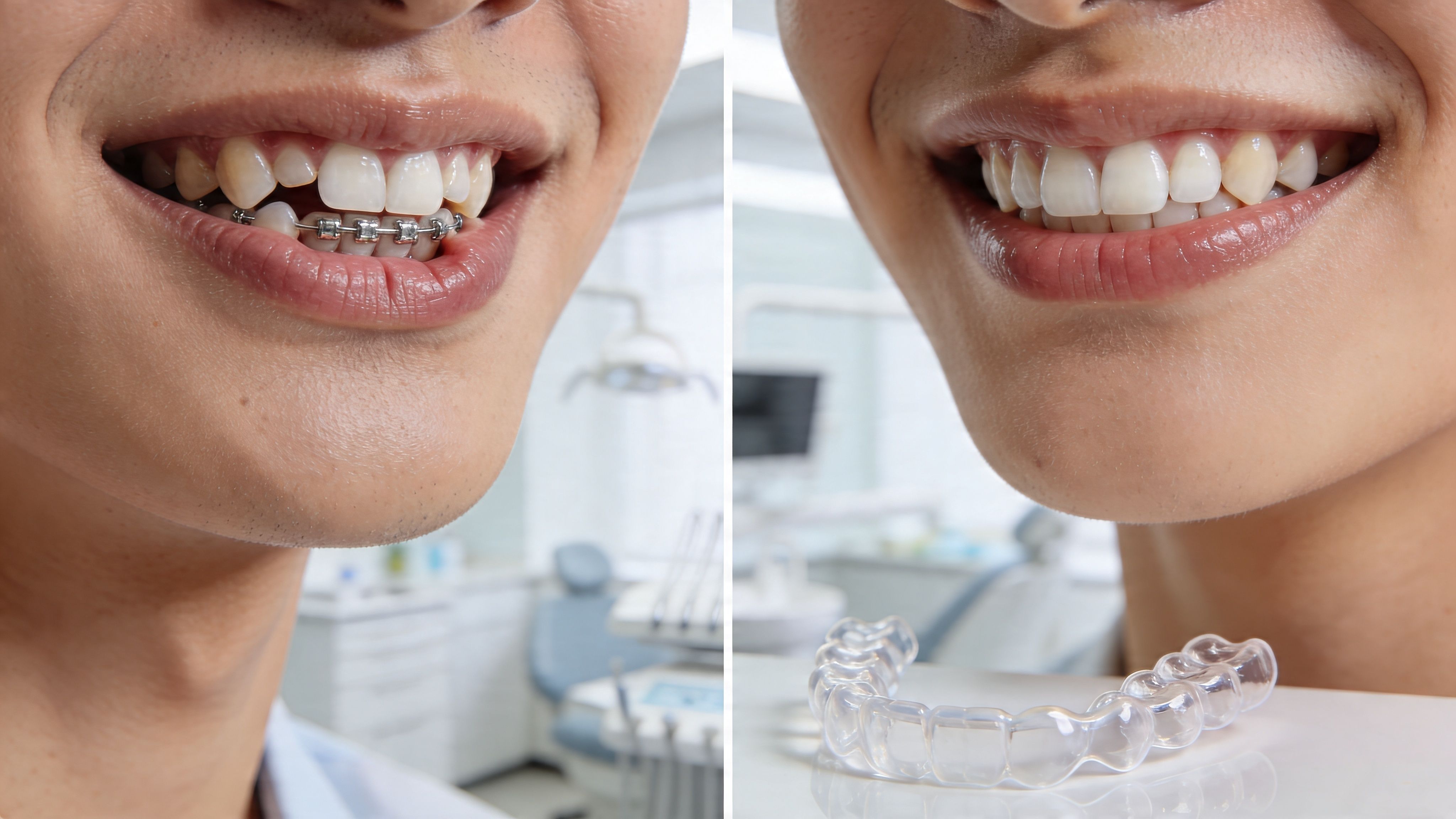
Orthodontics and veneers can both improve a smile, but they do different jobs.
What orthodontics actually does
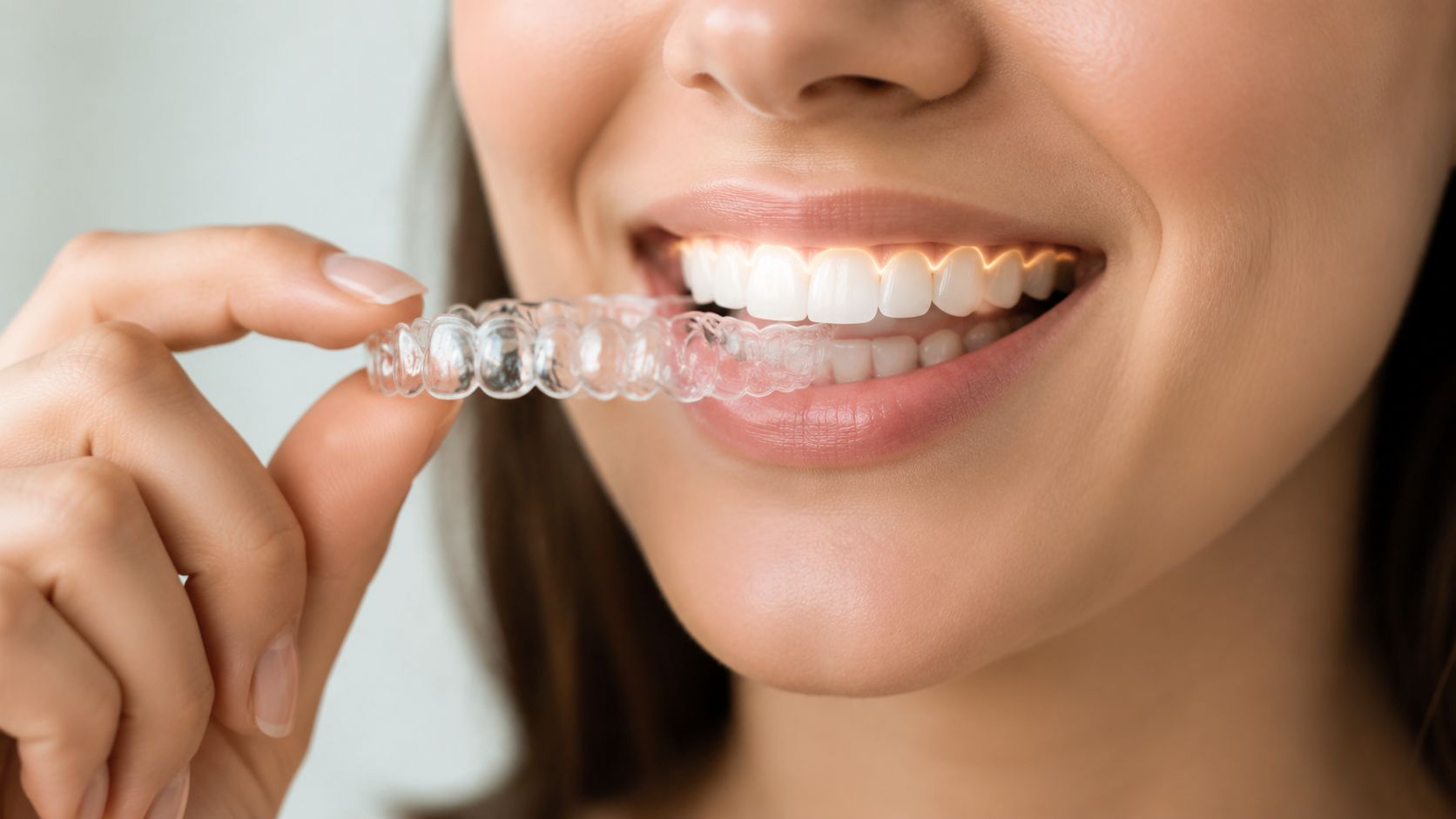
Orthodontic treatment moves teeth into better positions. That includes crowding, spacing, rotations, and bite problems such as excessive overjet or a deep bite. The goal is structural correction, not surface coverage.
That difference matters in real treatment planning. If a tooth sits too far forward, is twisted, or meets the opposing teeth incorrectly, covering it with porcelain does not change the position underneath. Braces or clear aligners address the setup first, which often gives a cleaner result and preserves more natural tooth structure before any cosmetic work is considered.
What veneers actually do
Veneers change the visible front surface of a tooth. They are used to improve color, shape, proportion, small chips, and mild irregularities that orthodontics alone will not fix. They can make a smile look straighter, but they do not correct the bite or move roots into healthier positions.
They also come with a trade-off. Veneers usually require enamel reduction, and that makes sequencing important. In cases I see locally, especially adults who want a polished cosmetic result before weddings, job changes, or on-camera work, the better long-term plan is often to align first and then decide whether veneers are still needed at all.
Sometimes they are not.
Why patients confuse the two
The confusion usually starts with the phrase "smile makeover." Many people hear that and assume veneers are the main tool. In practice, a strong smile plan may involve orthodontics alone, whitening after alignment, or limited cosmetic bonding instead of a full set of veneers.
That is a big reason I encourage patients to review the bigger picture before committing to porcelain. This explanation of the truth about smile makeovers most providers don't tell you is helpful if you want to compare cosmetic speed with long-term function. If veneers stay on the table, it also helps to understand how long porcelain veneers last before making an irreversible decision.
A simple rule works well here. If the main problem is position, start with orthodontics. If the teeth already sit well and the main problem is shape, color, or minor wear, veneers may be the cosmetic finishing step.
Why Braces Before Veneers Matters
A common Huntington Beach scenario goes like this. An adult wants a straighter, brighter smile before a wedding, a new job, or more time on camera, and veneers seem like the fastest route. The problem is that veneers can end up compensating for tooth position instead of refining shape and color.
That usually means more enamel removal than the case needed.
Braces first often keeps treatment more conservative
If teeth are crowded, rotated, or sitting outside the arch, veneers have to do extra work. The dentist may need to reduce more tooth structure just to create a natural-looking contour and a path for placement. Once orthodontics puts teeth in a better position, veneers can be thinner, more even, or unnecessary altogether.
That matters because enamel is finite.
For many adults, the most enamel-preserving sequence is simple. Move the teeth first. Reassess after alignment. Then decide whether whitening, bonding, contouring, or a limited number of veneers will finish the smile.
Better tooth position usually leads to better veneer design
Well-aligned teeth are easier to restore with restraint. Margins can stay cleaner, contours can be more natural, and the final result is less dependent on bulky porcelain to hide overlap or rotation.
I see this trade-off often in adults who were told they need a full cosmetic redo when the primary issue is tooth position. After orthodontic correction, the cosmetic plan usually gets smaller. Sometimes that means four veneers instead of eight. Sometimes it means no veneers at all.
That is a meaningful long-term cost difference.
Bite forces do not disappear because the goal is cosmetic
A smile can look straighter in photos and still function poorly if the bite was never corrected. Veneers placed on teeth that hit unevenly take more stress during chewing, clenching, and nighttime grinding. Over time, that raises the chance of chipping, debonding, edge wear, or repeated replacement.
Orthodontics addresses the foundation first. Veneers are then used as a finishing step, not as structural camouflage.
What this means in Huntington Beach
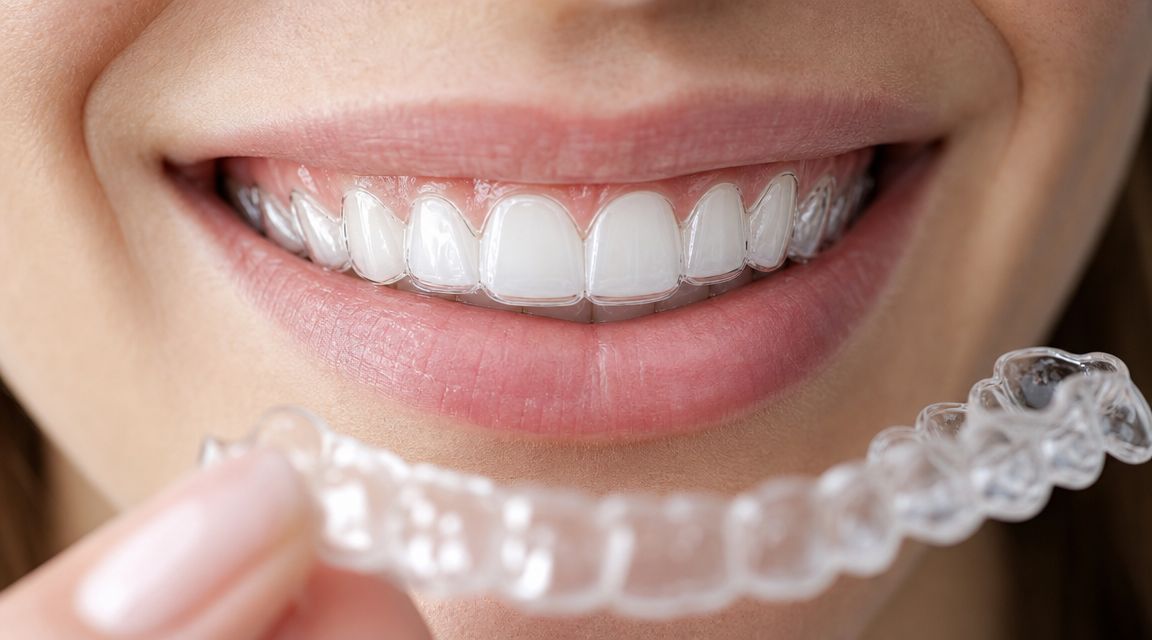
In Huntington Beach, many adults ask for the least visible path to a better smile. That often means clear aligners first, or braces when tooth movement needs tighter control, followed by a cosmetic review once the teeth are in the right place. At Magic Fox Orthodontics, that sequence helps patients avoid paying for porcelain that may become larger, thicker, or more extensive than necessary. This explanation of whether you can skip braces and go straight to a smile makeover is useful if you are weighing speed against enamel preservation and long-term maintenance.
For patients thinking beyond the next event and looking at the next ten to fifteen years, braces before veneers is usually the more conservative and less expensive sequence.
When Veneers First Can Work
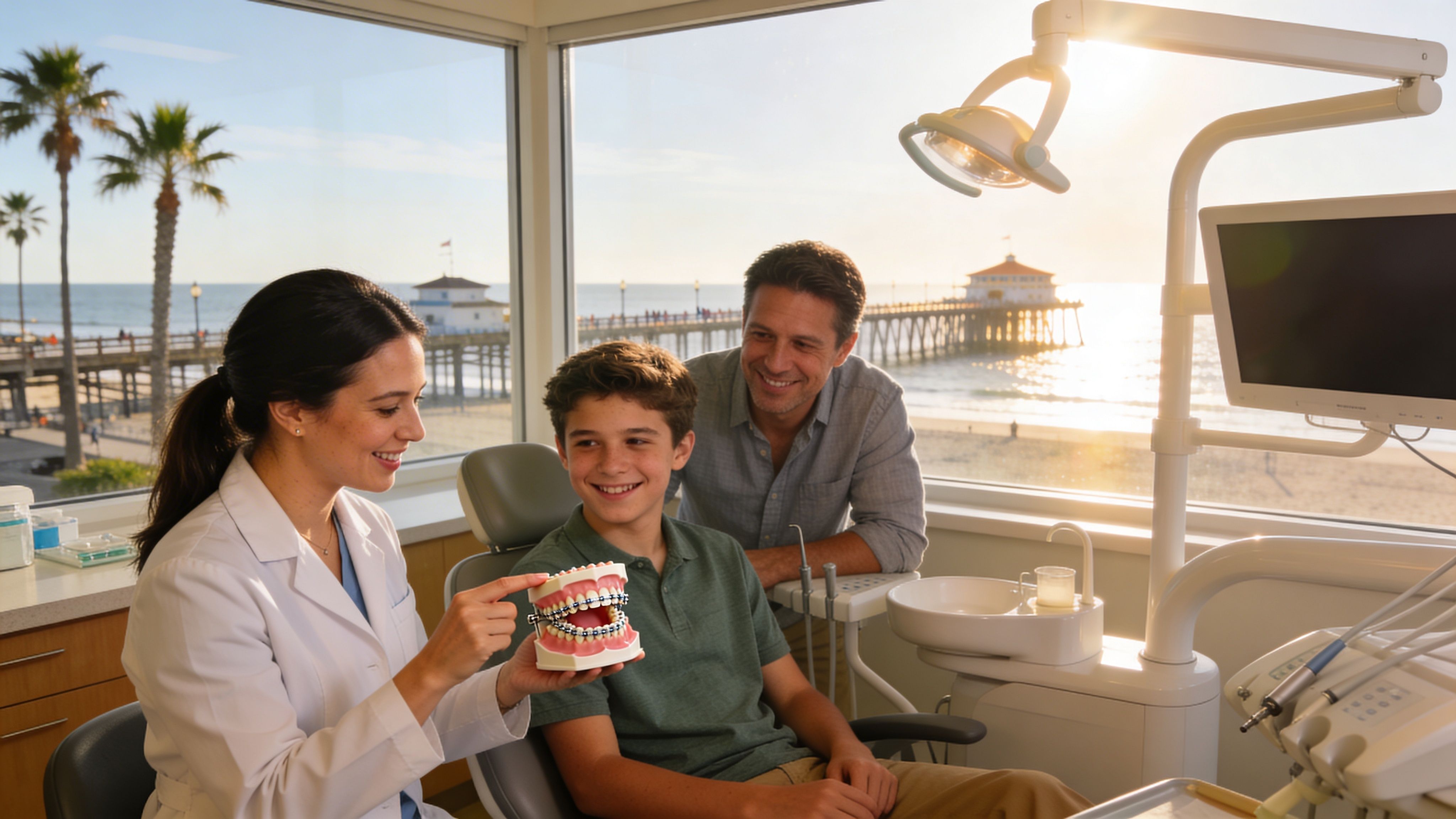
A Huntington Beach patient comes in wanting a faster cosmetic fix before a wedding, a job change, or a round of family photos on the pier. That request is reasonable. Veneers first can work, but only in a narrow set of cases where the teeth already fit together well and the goal is to refine shape, color, or small spaces rather than correct tooth position.
The best veneers-first cases are usually quiet from an orthodontic standpoint. The bite feels stable. The front teeth are not significantly rotated. The spacing or crowding is mild enough that a restorative dentist can improve the smile without making the porcelain look bulky or removing more enamel than necessary.
That usually looks like this:
- Small front gaps with no broader bite problem
- One or two teeth with minor size or shape differences
- Color and proportion concerns paired with only slight alignment irregularity
In those situations, veneers can be a reasonable first step because they solve a cosmetic problem directly. They do not need to carry the extra job of disguising a crooked bite.
The mistake is stretching that indication too far. If the teeth are rotated, if the upper and lower front teeth hit awkwardly, or if the arches are out of sync, veneers start compensating for a movement problem. That is where treatment often gets less conservative. Veneers may need to be wider, thicker, or placed on more teeth just to create the appearance of alignment.
That matters for two reasons. More compensation usually means more enamel reduction. It also raises long-term replacement costs because the cosmetic fix is doing work that orthodontics would have handled more predictably.
There are a few rare exceptions I discuss in practice. An adult with very mild spacing, healthy enamel, a stable bite, and a strong preference to avoid orthodontic treatment may still choose veneers first after a careful exam. Another example is a patient who already needs restorative work on specific front teeth because of wear, fractures, or old bonding that is failing. In that setting, veneers may be part of the first phase, even if limited tooth movement is considered later.
A simple self-check helps.
You may be a veneers-first candidate if all three are true:
- Your bite feels comfortable and stable.
- The spacing or crowding is minor.
- Your main goal is to change tooth shape, color, or proportion, not correct position.
If any one of those is off, orthodontics first is usually the safer sequence. For Huntington Beach patients comparing speed, enamel preservation, and total cost over time, I usually recommend reviewing the full Invisalign cost vs braces cost comparison before committing to porcelain as the first move.
Comparing Timeline and Cost
A Huntington Beach patient may sit down expecting a simple speed comparison. Veneers can be finished quickly. Orthodontics usually takes longer. The better question is what you are paying for, what tooth structure you keep, and what you may need to pay for again later.
Timeline and Cost Comparison
| Treatment | Typical timeline | How fees are usually structured |
|---|---|---|
| Braces or clear aligners | Months to about two years, depending on tooth movement and bite goals | Usually one treatment fee for diagnosis, active treatment, and follow-up visits |
| Veneers | A few visits over a few weeks | Usually priced per tooth, plus possible future repair or replacement costs |
In practice, veneers often look faster on paper and more expensive over time, especially if several front teeth are involved. Orthodontics asks for more patience up front, but it often reduces how much porcelain work is needed later. That is the enamel-preserving sequence many adults overlook.
Why the fee comparison can be misleading
Patients do not buy these treatments for the same reason. Orthodontics improves tooth position and bite fit. Veneers change the visible front surface of the tooth.
That difference matters financially.
If a patient in Huntington Harbour or near Bella Terra needs alignment and also wants a brighter, more even smile, braces first can shrink the cosmetic phase. Sometimes that means fewer veneers. Sometimes it means veneers are no longer needed at all, and whitening or bonding is enough. That can lower both the first bill and the lifetime bill.
Long-term cost usually matters more than start date
Porcelain is not a one-time purchase for life. Veneers can look excellent, but they enter a maintenance cycle. Repairs, replacement, and edge wear become part of the conversation over time. Orthodontics has its own maintenance too, mainly retainers and follow-up if teeth relapse, but it usually preserves more natural enamel on day one.
That is why I frame the decision this way for adults comparing braces and veneers in Huntington Beach. If the bite and alignment can be corrected first, cosmetic dentistry often becomes more conservative afterward.
For patients also thinking about enamel health before any cosmetic work, it helps to review ways to support enamel repair and reverse early tooth decay.
Insurance and phasing
Insurance may support part of orthodontic treatment when there is a functional component. Veneers are commonly treated as cosmetic, so patients often pay fully out of pocket. That coverage difference can make sequencing more practical. Start with the part that corrects position and function, then decide how much cosmetic finishing is still needed.
If you are weighing aligners against braces specifically, this guide to Invisalign cost vs braces cost gives a clearer look at the orthodontic side of the budget.
Bottom line: Veneers usually win on speed. Braces or aligners usually do a better job of protecting enamel, controlling long-term costs, and setting up more conservative cosmetic work later.
Age and Oral Health Factors
Age changes the conversation. So does enamel, gum health, and whether the bite is still developing or already stable.
For kids and parents
For children ages 7 to 12, early orthodontic evaluation can be a preventive decision, not just a cosmetic one. One underserved-angle source notes that families may face 20% to 30% higher veneer replacement rates and TMJ-related issues later when bite correction is delayed and veneers are placed on misaligned teeth instead (Dreamland Dental).
That matters for parents in Oak View, Newland, or Adams who are wondering whether "we can deal with it later" is the cheaper path. Often, it isn't.
For adults
Adults with healthy gums, a stable bite, and small cosmetic issues may be reasonable veneer candidates. Adults with crowding, edge-to-edge bite patterns, crossbite tendencies, or narrow arch form usually benefit from alignment first.
Enamel thickness also matters. Veneers require preparation, so preserving enamel should stay high on the priority list. If you're also thinking about cavity prevention and remineralization, this guide on ways to support enamel repair and reverse early tooth decay is a helpful general resource.
For older adults
Older adults can still move teeth successfully if their periodontal health is stable. The decision isn't about age alone. It's about the condition of the teeth, bone, gums, and bite.
For that reason, adults in Huntington Beach and Fountain Valley who assume they've "aged out" of orthodontics should look at can adults over 60 still get braces or Invisalign. The same sequencing principles still apply.
Visual Examples of Treatment Outcomes
The easiest way to understand sequencing is to look at typical treatment patterns. These aren't numerical case reports. They're the kinds of real-world scenarios orthodontists and cosmetic dentists evaluate every week.

Example one with braces first and veneers second
An adult patient has crowding, one rotated lateral incisor, and a bite that places extra force on the front teeth. The patient initially asks for veneers because the front teeth look uneven in photos.
Orthodontic treatment comes first. Once the teeth are aligned, the cosmetic dentist can decide whether a very limited veneer plan, bonding, whitening, or no restorative work at all is needed.
The advantage here is obvious. The final cosmetic work doesn't need to hide crooked roots with bulky porcelain.
Example two with aligners first and no veneers after
A young professional has mild spacing and some relapse from old orthodontic treatment. The initial assumption is that veneers will be needed to create a "finished" look.
After clear aligner treatment, the spacing closes, the midline improves, and the smile looks balanced enough that the patient chooses whitening and minor contouring instead of veneers. This is common. Once teeth are in the right place, patients often realize their natural teeth already look better than expected.
If you want to see how position changes the appearance of crowded teeth, this article on crooked teeth Invisalign before and after is a good visual reference.
Example three with veneers first as the exception
A patient has healthy enamel, no functional bite issue, and a small front gap with minor edge wear. The patient also wants a color change and slightly different tooth proportions.
That can be a true veneers-first case. The cosmetic dentist isn't using porcelain to fake major alignment. They're refining a smile that is already structurally stable.
Good sequencing usually produces a result that looks less "done" and more natural.
Decision Flowchart for Smile Sequencing
You don't need a complicated formula. They need a practical way to sort themselves into the right lane before a consultation.
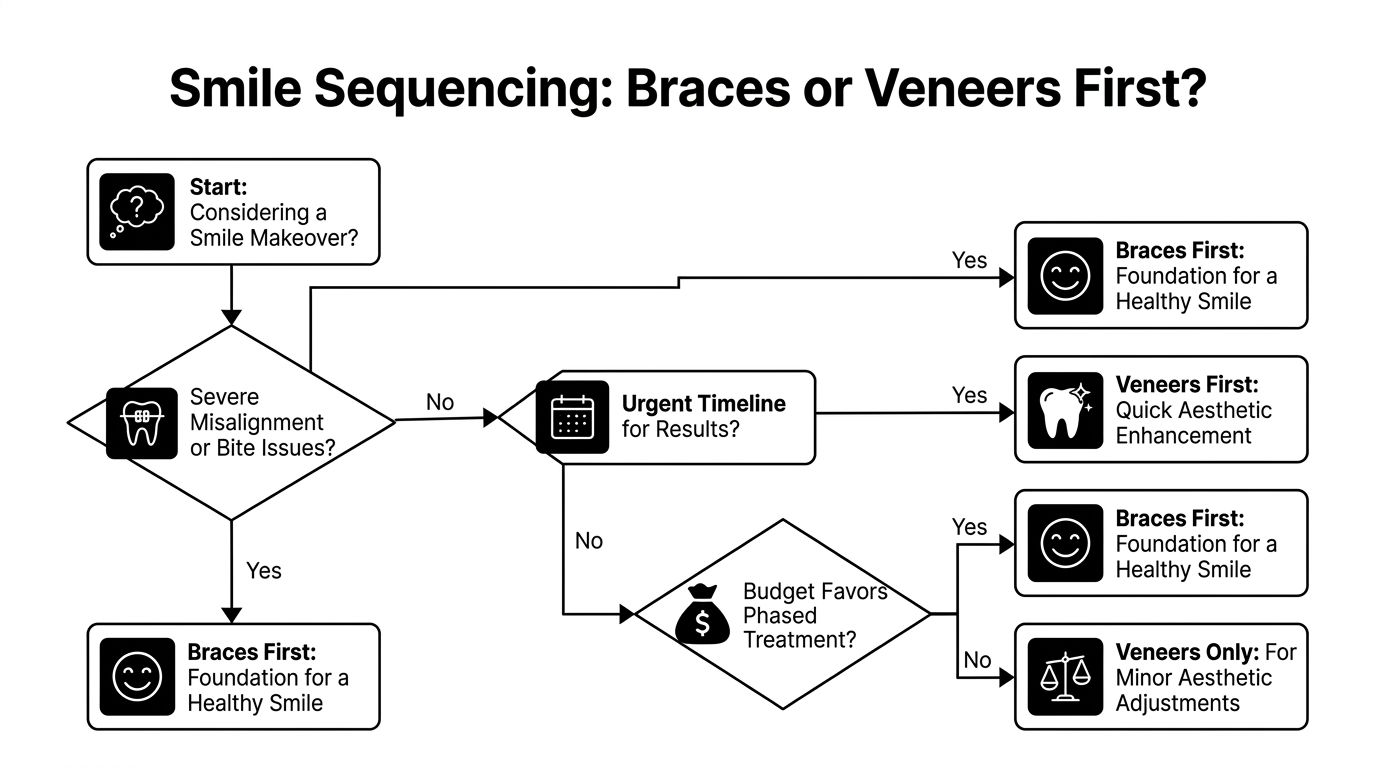
Start with the bite
If you have obvious crowding, rotation, bite problems, or teeth that meet unevenly, start in the braces first lane. Veneers won't correct the underlying mechanics.
If your teeth are mostly straight and the complaint is limited to shape, proportion, or a small gap, keep going to the next question.
Check your timeline honestly
If your timeline is urgent and the alignment issue is minimal, veneers may be worth discussing. That's the exception path.
If your timeline isn't urgent, orthodontics gives you more conservative options later. You can still choose cosmetic finishing afterward, but you aren't forced into it.
Think in phases, not single transactions
A phased plan often looks like this:
- Phase one addresses alignment and bite
- Phase two re-evaluates whether whitening, contouring, bonding, or veneers are still needed
- Phase three protects the result with retainers and ongoing dental care
That phased approach tends to be more conservative because each step depends on what remains after the previous one is done.
Use this quick decision guide
- Braces first if your teeth are crowded, rotated, or your bite is off
- Veneers first if the issue is minor and mostly cosmetic
- Combined approach if you want both alignment and shape/color changes, but the order still usually starts with orthodontics
If you're still unsure, that's normal. This is one of those decisions where records, photos, and a bite exam matter more than online guesses.
Frequently Asked Questions
Q: If I only care about appearance, do I still need braces first?
A: Maybe. If the issue is mild and your bite is healthy, veneers may be enough. If your teeth are visibly crowded or rotated, braces or aligners usually create a better foundation even when the goal is cosmetic.
Q: Are veneers faster than braces?
A: Yes. Veneers are typically completed in weeks, while braces usually take much longer. The trade-off is that veneers don't move teeth or fix bite problems.
Q: Will I always need veneers after braces?
A: No. Many patients don't. Once teeth are aligned, some people are happy with whitening, edge smoothing, or no cosmetic treatment at all.
Q: Do braces damage enamel less than veneers?
A: In general, yes, because veneers require enamel removal and braces do not remove healthy tooth structure to change tooth position. That is one of the main reasons orthodontics often comes first when alignment is part of the problem.
Q: Can Invisalign come before veneers instead of braces?
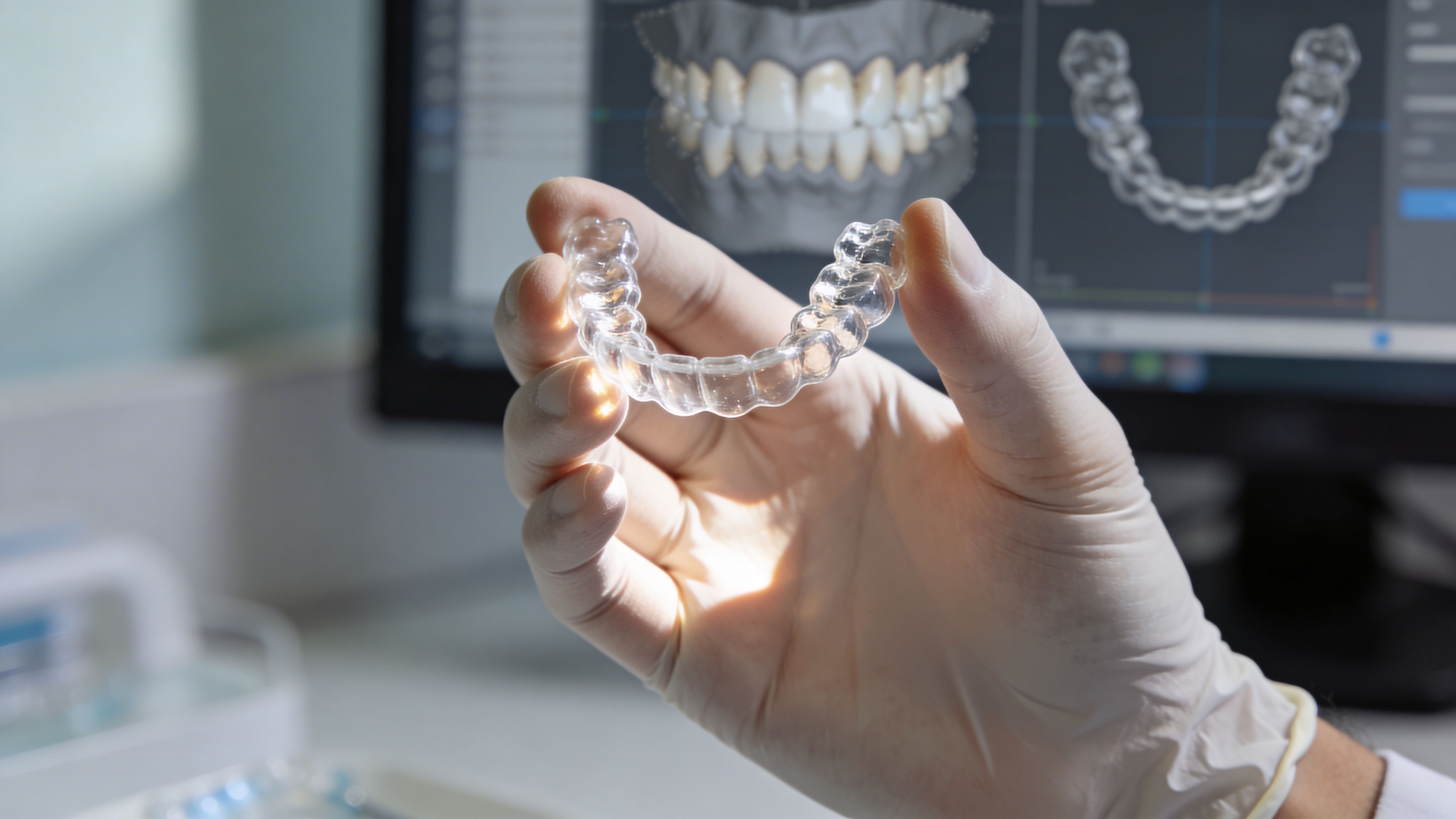
A: Yes. If clear aligners are appropriate for your case, they can serve the same sequencing role as braces by improving tooth position before cosmetic work. The key issue is alignment first, not whether the appliance is visible or removable.
Q: What if I have one crooked tooth and want a quick fix?
A: It depends on how crooked it is and whether the bite is involved. A single tooth that only looks slightly off may be handled cosmetically, but a rotated or displaced tooth often looks better and functions better when it is moved into place first.
Q: Do I still need retainers if I choose braces before veneers?
A: Yes. Retainers help maintain the new tooth position after orthodontic treatment. Without retention, teeth can drift and compromise both the alignment and any later cosmetic work.
Why Magic Fox Orthodontics
For patients in Huntington Beach, Fountain Valley, Wintersburg, and nearby neighborhoods, the key is finding an orthodontic team that understands both function and aesthetics. Dr. Jeremy Chau and Dr. Melissa Ven Dange focus on the orthodontic side of smile design first, which is often the step that determines whether later cosmetic dentistry can stay conservative.
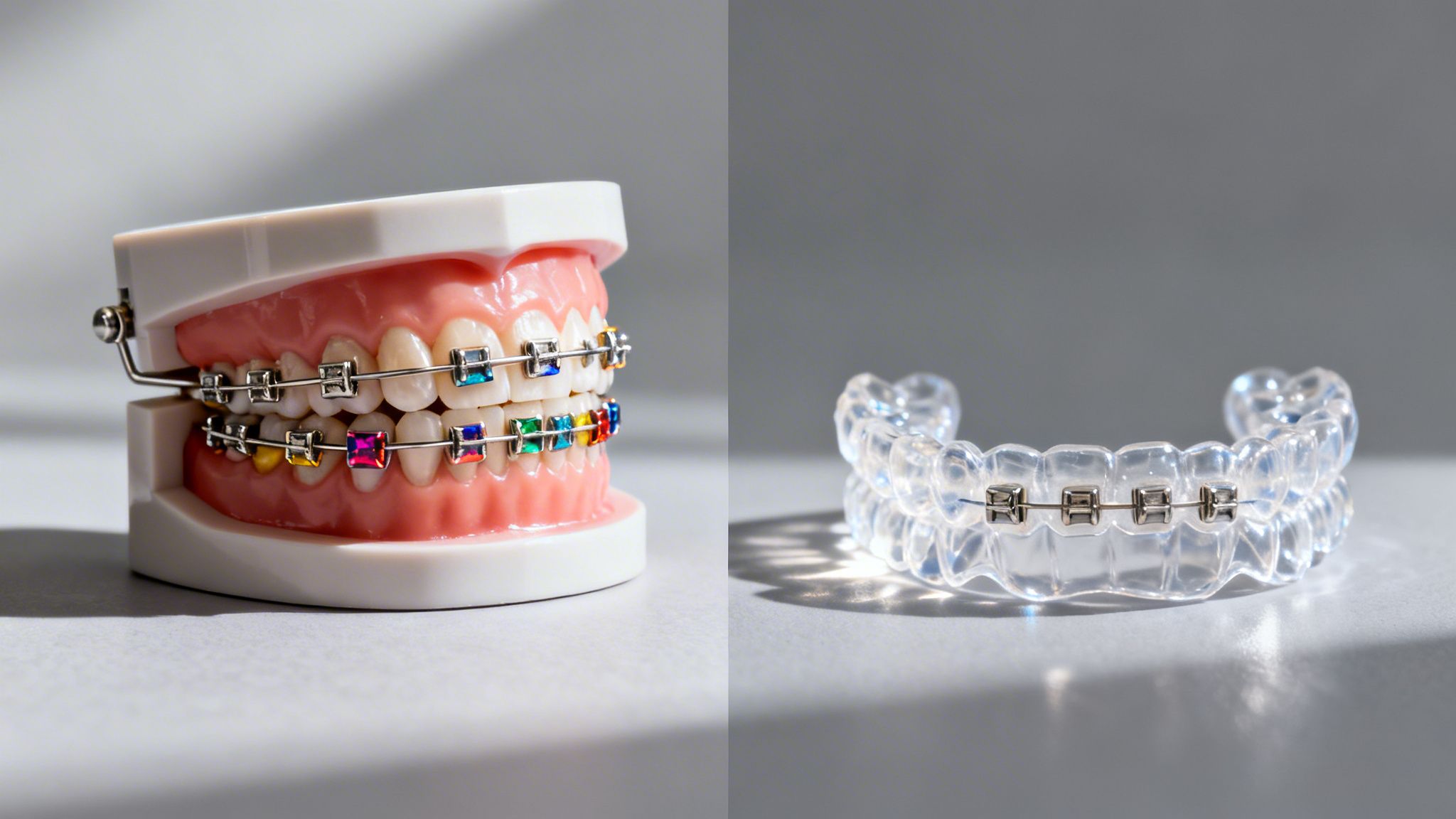
The practice offers Invisalign clear aligners, Iconix esthetic brackets, and traditional metal braces, which gives adults and teens more than one way to handle alignment before considering cosmetic finishing. That flexibility matters when someone wants a discreet plan or a treatment style that fits work, school, or family routines.
Magic Fox Orthodontics also serves a diverse local community, including many Spanish- and Vietnamese-speaking families, and that makes the consultation process easier for parents and adults who want clear explanations before making a long-term decision.
Call to Action
If you're still weighing should i get braces or veneers first for a better smile?, a consultation can help sort out what is cosmetic, what is functional, and what order makes sense. Call 714-594-5777 or visit 17041 Beach Boulevard Suite 101, Huntington Beach, CA 92647. The office is open Monday through Friday 9am to 5pm and Saturday 8am to 2pm.
Sources
These references support the clinical and cosmetic points discussed above, especially the enamel-preserving logic of aligning teeth before placing veneers and the cost trade-offs that follow from sequencing.
Impressions Dental. "Veneers Statistics 2025." 2025. https://impressionsdental.com/blog/veneers-statistics-2025/
Dreamland Dental. "Braces or Veneers First." 2025. https://dreamlanddental.com/braces-or-veneers-first/
As noted earlier in the article, several braces-versus-veneers comparison sources were used for general background. Their links are not repeated here so each external citation appears only once across the page.
If you're deciding between braces, Invisalign, or a cosmetic-first approach, Magic Fox Orthodontics can help you understand the sequence that fits your smile, bite, and long-term goals.