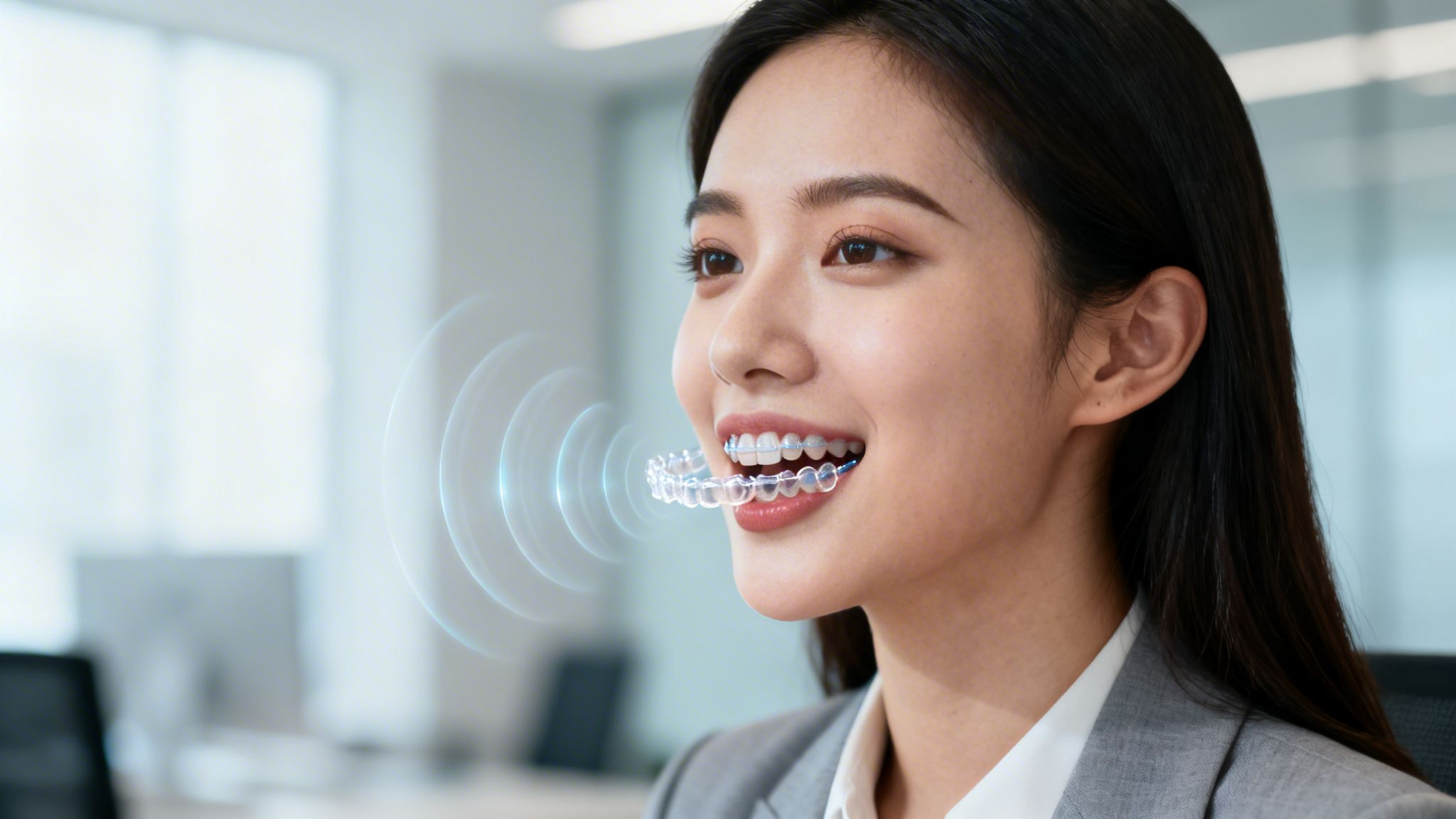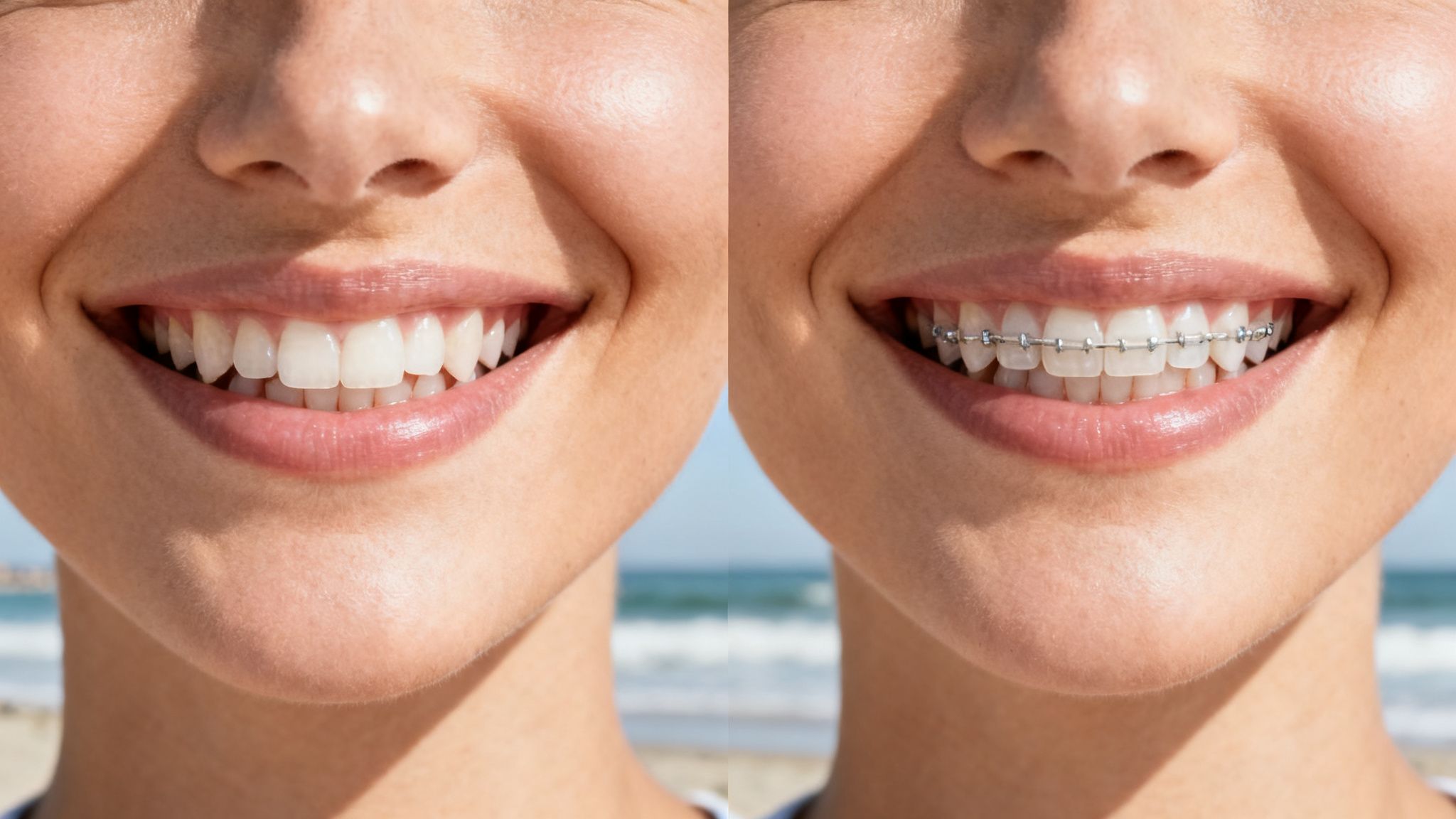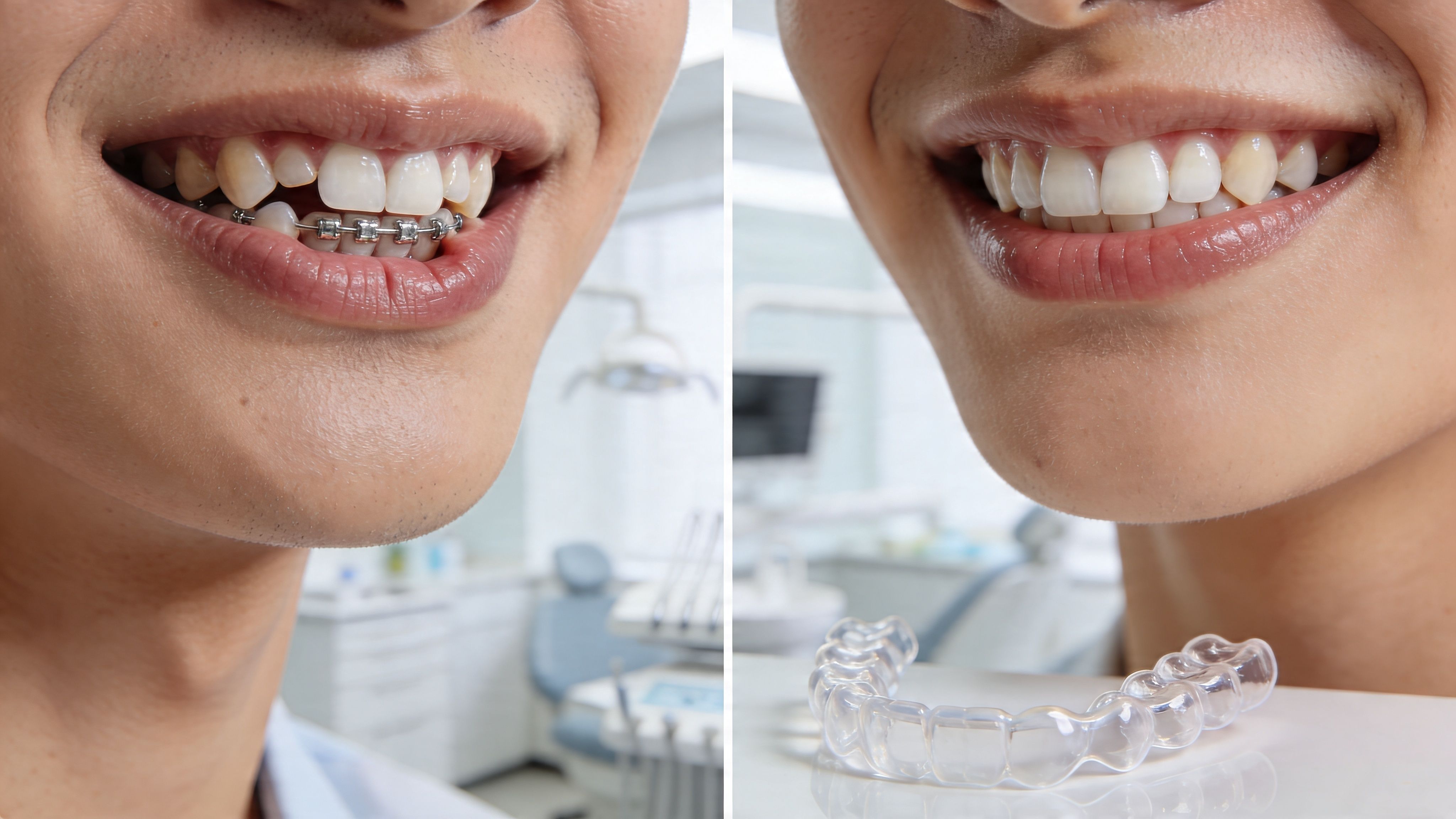
6 Invisalign Deep Bite Before and After Examples
Quick Answer
A patient comes in saying, “My teeth look straight enough, but I keep biting hard on the front teeth and my smile looks short.” That is often a deep bite. Invisalign can correct many of these cases, but the result depends on how the bite is being opened, not just whether the teeth are lined up.
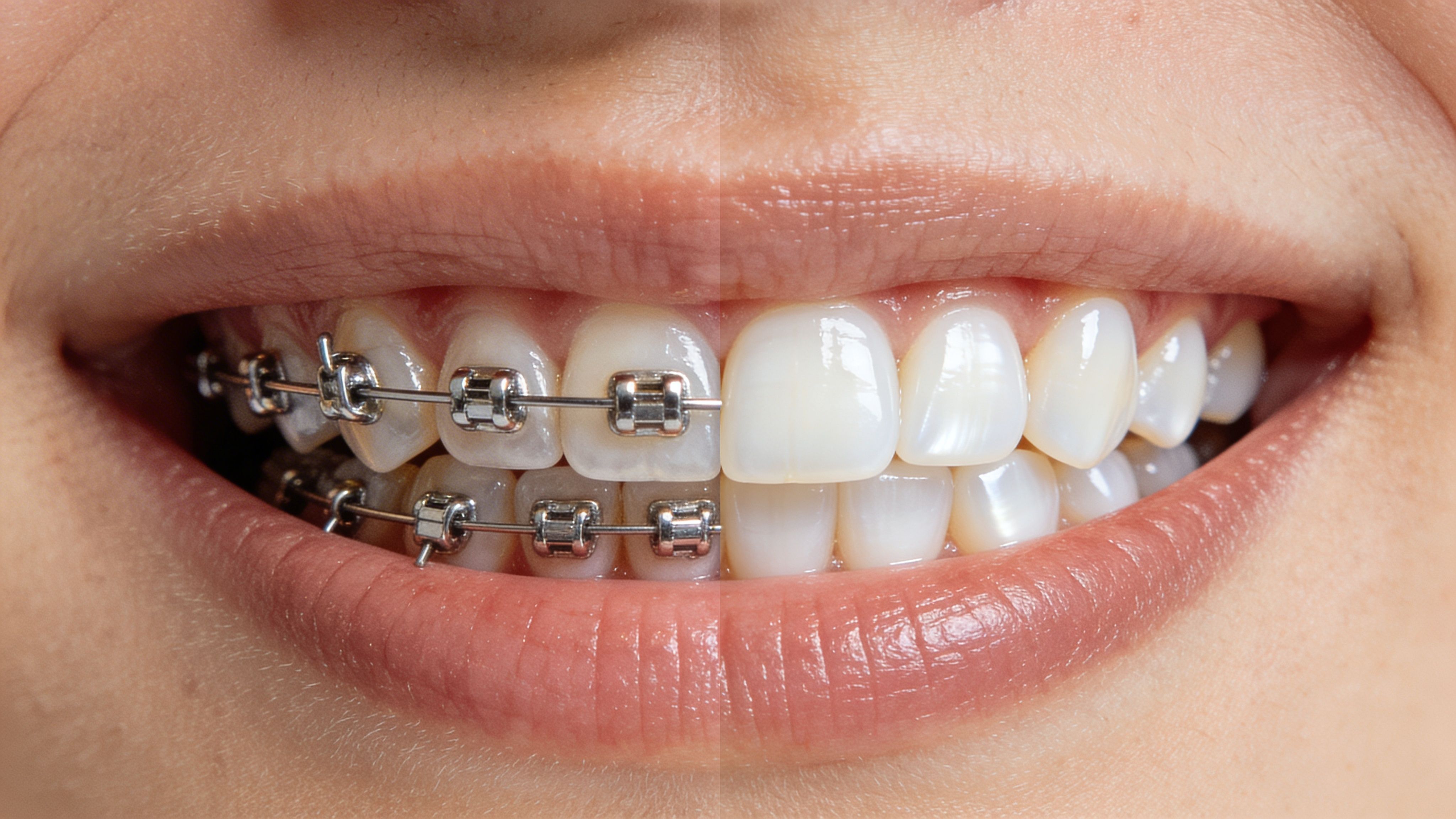
The before-and-after photos that matter show more than straighter teeth. A good result usually means less lower-tooth coverage, better contact on the back teeth, and less pressure on the front teeth. In practice, I look at whether the case needs incisor intrusion, posterior support, bite ramps, attachments, elastics, or a staged approach that changes the vertical dimension gradually.
Deep bite treatment is also not one-size-fits-all. An adult with worn front teeth, a teen with crowding, and a patient whose bite relapsed after braces can all look similar in a photo, yet need different Invisalign mechanics and different retention plans. Families comparing options for younger patients often start by reviewing Invisalign for teens in Huntington Beach because compliance, growth, and aligner wear time affect the outcome as much as the trays themselves.
That is why a quick answer has to be honest. Yes, Invisalign can fix many deep bites. The stronger cases succeed when the treatment plan addresses the cause of the bite, the patient wears the aligners as prescribed, and retention is taken seriously after treatment.
1. Adult Professional with Severe Deep Bite - 18-Month Invisalign Correction
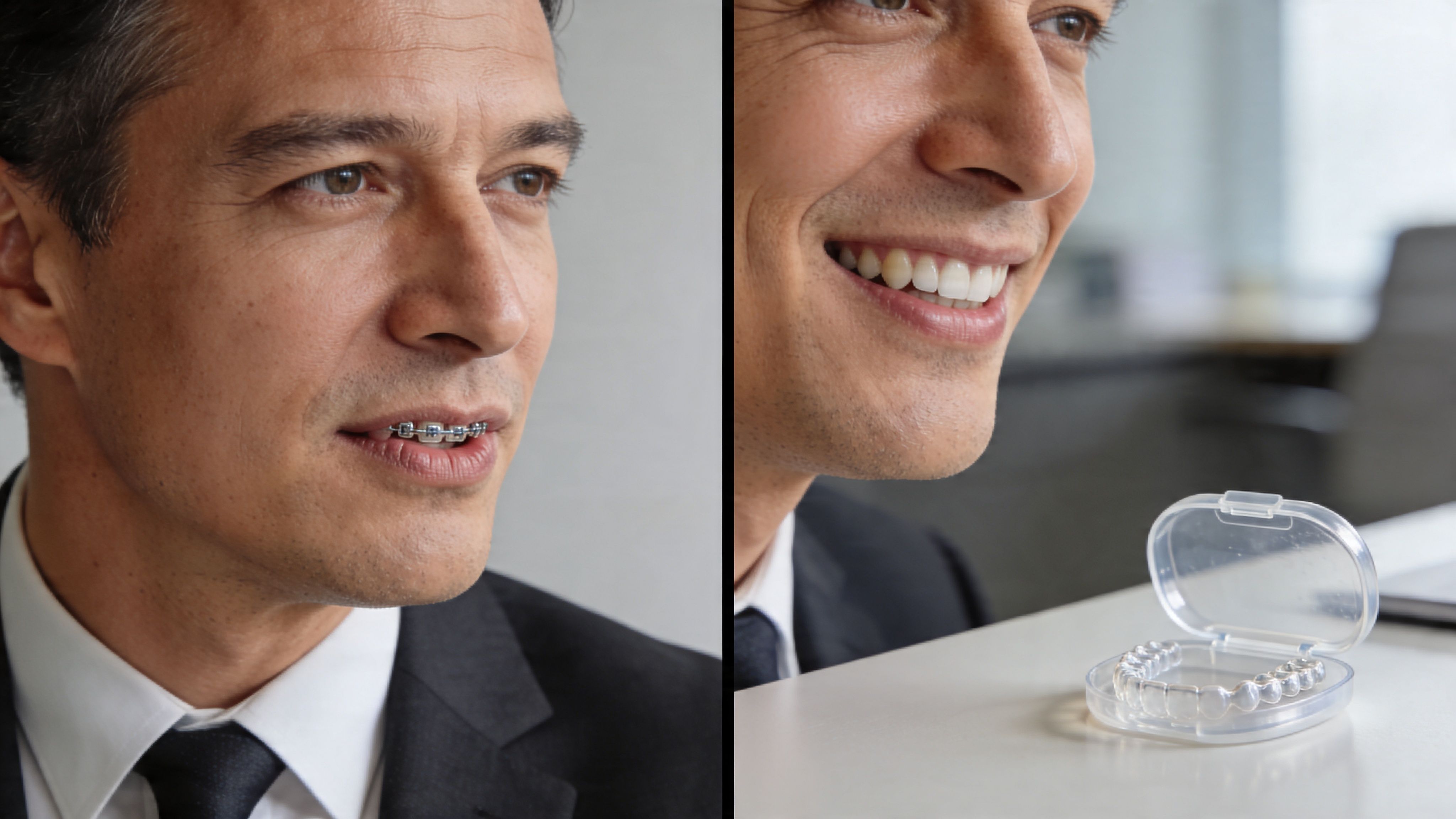
A common adult consult goes like this: the teeth look fairly straight in photos, but the patient chips the front edges, feels heavy contact on the incisors, and wants a treatment option that fits a professional schedule. That is often a severe deep bite, not just a cosmetic alignment problem.
In this type of 18-month Invisalign case, the goal is to reduce the front-tooth load while improving smile display and keeping the bite stable enough to finish well. Adults usually do not get the same growth-related help that younger patients do, so the plan has to be precise from the start. The mechanics matter more than the brand name on the box.
What changed in the before and after
The visible change is usually a longer, less compressed smile and less overlap of the lower front teeth. The more important change is functional. The front teeth stop carrying so much of the bite, and the back teeth are brought back into better support.
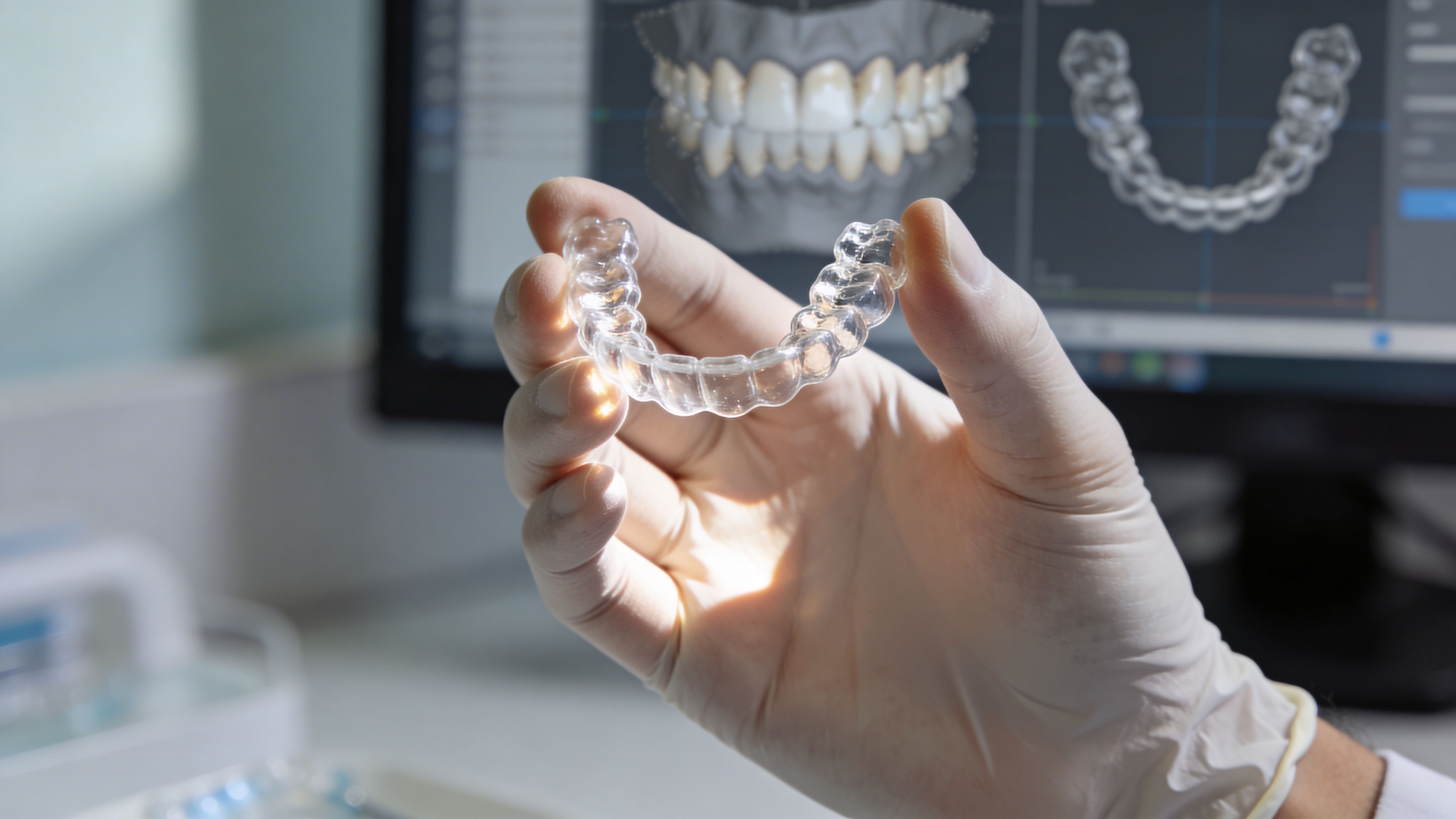
For a severe adult deep bite, I would expect the treatment plan to include a mix of lower incisor intrusion, careful control of the upper incisors, and posterior settling over time. Bite ramps are often part of that strategy because they create space for the front teeth to move without the patient continuing to bite directly into the same locked position. Attachments help the trays hold the teeth firmly enough to deliver those vertical movements. In some cases, elastics are added if the overbite is tied to an anteroposterior correction as well.
Clinical priority: In an adult deep bite case, the plan has to show exactly how the bite will be opened and how the posterior contacts will be preserved or rebuilt by the end.
That is the part patients rarely see in before-and-after photos. Two finished smiles can look similar from the front, while one has stable posterior support and the other still leaves the incisors overloaded.
Why this case type can be challenging
Adults with severe deep bites often present with enamel wear, clenching, short-looking clinical crowns, or a history of prior orthodontic treatment that did not fully correct the vertical problem. If the patient had braces years ago and the bite has closed again, the planning has to account for relapse patterns and retention failures. Patients in that situation often benefit from reading about why teeth shifted after braces before starting a second round of treatment.
Treatment time around 18 months is reasonable for a case that needs both alignment and meaningful bite opening, but the trade-off is compliance. Bite ramps do not help if the trays are worn inconsistently. Refinements are also common. That is not a sign the case failed. It is often how the final posterior settling and incisor detailing are completed in adults.
What usually helps this kind of case finish well
What helps:
- Full-time aligner wear: Severe deep bite correction depends on sustained force, especially if the trays include bite ramps.
- Staged vertical mechanics: Opening the bite too quickly can create tracking problems or unstable contacts.
- Monitoring for wear and clenching: Heavy muscle activity can affect how the aligners seat and how the bite settles.
- A retention plan with a real purpose: Adults who started with a strong deep bite usually need consistent retainer wear to keep the correction from closing down again.
What causes problems:
- Judging progress by straightness alone: Front alignment can improve while the bite is still too deep from the side.
- Trying to finish without refinements: Many adult vertical cases need extra detailing to balance the contacts.
- Stopping retention early: Deep bite relapse is frustrating because the teeth can still look straight while the vertical overlap slowly returns.
For the right adult patient, Invisalign can correct a severe deep bite effectively and discreetly. The result depends on the mechanics behind the trays, the wear habits during treatment, and the maintenance after treatment ends.
2. Teenage Patient with Mixed Deep Bite and Crowding - Accelerated 14-Month Correction
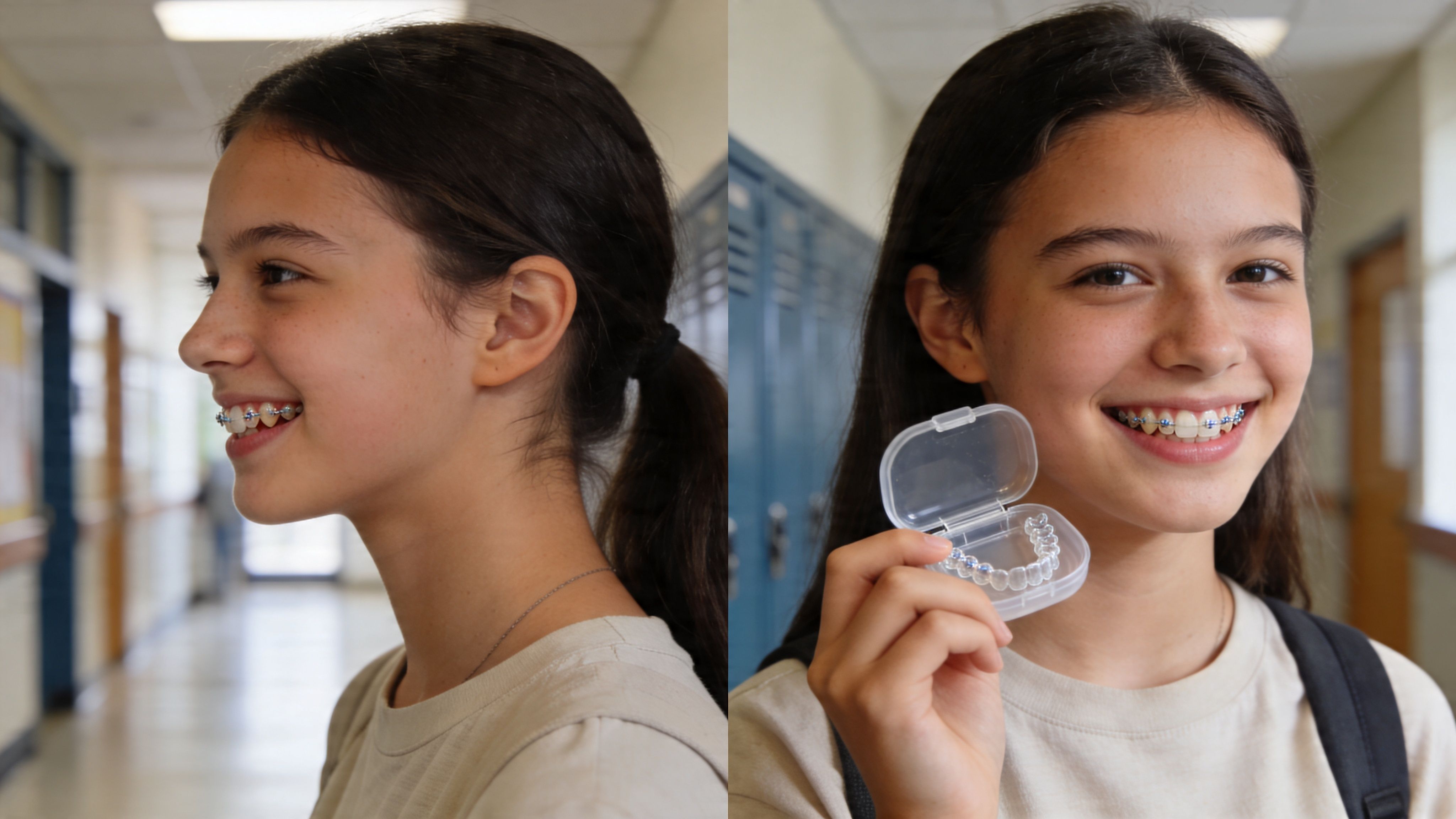
A common teenage consult goes like this: the front teeth look crowded, the upper incisors cover too much of the lowers, and the family wants a treatment option that works at school, in sports, and in photos. These cases can respond very well to Invisalign, but the plan has to address two problems at once. Straightening the teeth without opening the bite enough can leave the result looking better from the front while still functioning poorly from the side.
Teens often give us one advantage. Their teeth usually track more predictably than older adults if they wear the aligners as directed. That makes a difference in mixed cases where the bite needs to open while crowded teeth are being lined up in a controlled sequence.
What made this 14-month plan work
In a case like this, I do not start by chasing straight front teeth alone. The treatment has to be staged so the crowded teeth can align without blocking the vertical correction.
A typical accelerated teen plan may include:
- Attachments for grip and control: These help the trays deliver more reliable alignment and intrusion forces.
- Precision bite ramps: These create space between the front teeth so the deep bite can open while the arches level out.
- Careful staging: Some teeth need to move earlier, and some need to wait, so the aligners keep fitting and the bite does not fight the plan.
- Close family support: Teenagers who have a wear routine, text reminders, and spare trays tend to finish faster and need fewer rescue visits.
The trade-off is straightforward. Invisalign gives teens more flexibility for meals, instruments, and contact sports, but removable treatment only works when the trays are in place. In this age group, missed hours add up quickly. The first sign is usually not pain. It is loss of tracking, slower bite opening, or a refinement phase that could have been shorter.
Why mixed deep bite and crowding needs a different strategy
Crowding can hide how deep the bite really is. Once the front teeth start to uncross and line up, the patient and parents often notice the smile improving early. That is encouraging, but it is not the finish line. The core decision-making happens behind the scenes: how much incisor intrusion is realistic, whether bite ramps are needed from the first trays or later, and how to keep posterior contacts developing as the bite opens.
This is also why younger patients benefit from timely evaluation. Families who want to understand why early orthodontic assessment matters for kids with bite problems are usually asking the right question. Early planning does not always mean early full treatment, but it often helps us choose the right timing and avoid a harder correction later.
For families comparing options for school-age treatment, our page on Invisalign for teens in Huntington Beach explains how that process is usually structured.
The after photos in cases like this matter, but the maintenance matters too. Once the bite is opened and the crowding is corrected, retainers are part of keeping that correction. Teenage deep bite cases can look stable at the end of treatment and still begin to close again if retention is inconsistent.
3. Young adult with relapse after braces
Relapse cases are some of the most frustrating before-and-after stories because the patient already did orthodontic treatment once. The teeth looked good. Then the retainer routine slipped, and the deep bite started to return along with spacing or crowding.
Invisalign is often a practical retreatment option for this group because the patient already knows what changed and what they want back. The difference the second time is that retention has to be treated as part of the case, not as an afterthought.
Why the retreat plan has to be precise
A 2022 case-series in adults reported an average overbite reduction of 4.1 ± 1.3 mm, ending with an ideal post-treatment overbite of 1.1 mm. The correction was driven primarily by 2.1 mm of mandibular incisor intrusion while controlling proclination, which is exactly the kind of detail that matters in relapse retreatment (PMC deep bite case-series).
That doesn't mean every relapse case follows the same script. Some need intrusion. Some need arch coordination. Some need to reopen or close small spaces before the bite can be finalized.
"If you don't fix the retention problem, the bite problem usually comes back with it."
What usually caused the relapse
The most common reason isn't mysterious. The patient stopped wearing retainers consistently, or an old retainer no longer fit but wasn't replaced. Sometimes there's also clenching, tongue posture issues, or gradual settling that wasn't monitored.
What works in retreatment:
- Focused tooth movement: Retreat cases are often narrower in scope than first-time full treatment.
- Clear retention planning: Patients need to know what they'll wear after treatment and for how long.
- Early warning checks: Small changes are easier to correct than full relapse.
What doesn't:
- Assuming "short treatment" means "easy treatment"
- Using old retainers after teeth have shifted
- Skipping follow-up once the smile looks straight
If your teeth have moved since braces, the practical first step is understanding why teeth shifted after braces before starting another round of treatment.
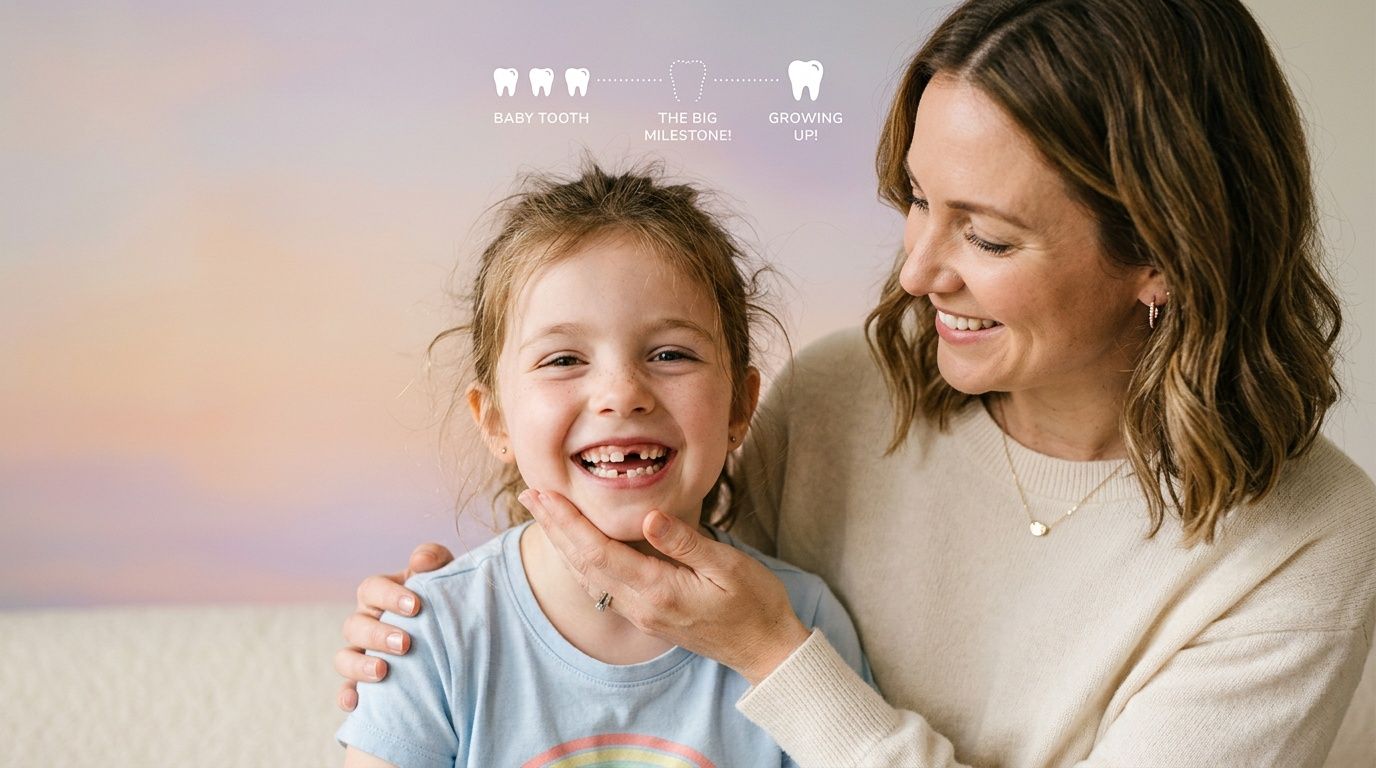
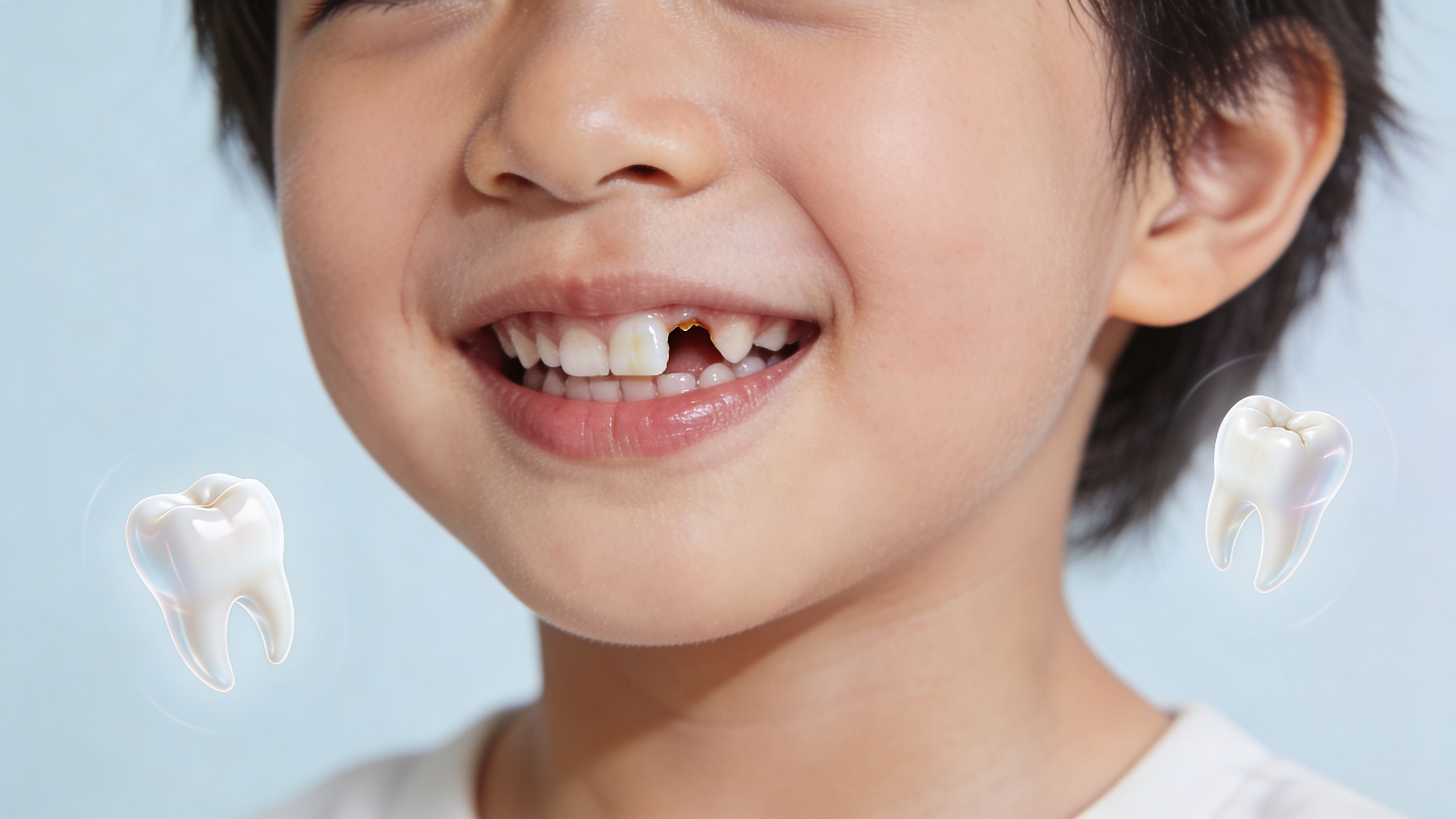
4. Pediatric Patient with Early-Onset Deep Bite - Interceptive Invisalign at Age 10
A parent brings in a 10-year-old because the top front teeth are covering too much of the lowers, and the lower incisors are already getting irritated. The question is usually not, "Can we finish everything now?" Instead, the question is whether early treatment can reduce trauma, guide eruption, and make the next phase easier.
That is a reasonable use of Invisalign in selected mixed-dentition cases. It also requires careful expectations. At this age, I am not promising a final adult bite. I am trying to improve the way the bite functions while the child is still growing, protect the lower front teeth, and create better conditions for the permanent teeth that are still coming in.
What the before and after means in a child
Before and after photos in younger patients can look dramatic because even a modest reduction in overbite changes the smile quickly. The more important part is the strategy behind the result. In an interceptive case, the plan often focuses on limited goals: reducing excessive overlap, opening space for erupting teeth, and stopping a pattern that is getting worse.
The tools are different from a typical adult plan. Depending on the child, treatment may include small composite attachments for retention, staged expansion, and bite-opening features such as posterior build-ups or aligner programming that helps disclude the front teeth. Some children do well with excellent tray wear. Others need a simpler first phase because age, eruption timing, and compliance set the ceiling.
Treatment time also varies more than parents expect. A child may complete an initial phase in under a year, then move into observation while more permanent teeth erupt. That observation period matters just as much as the active trays.
When early Invisalign is worth considering
Early treatment tends to make sense when the bite is causing a problem now, not just because a parent wants to be proactive.
Common reasons to intervene include:
- Heavy overlap of the lower front teeth
- Early wear, gum irritation, or palatal trauma
- Deep bite developing alongside crowding
- A clear eruption pattern that is likely to worsen without guidance
The trade-off is straightforward. Starting earlier can reduce damage and simplify later treatment, but it can also mean a two-phase process instead of one longer phase in adolescence. Families need to know that before they start.
I also discuss maintenance early. After phase-one correction, children usually need retainers or a supervised holding phase, plus periodic checks as the remaining permanent teeth come in. If cost is part of the timing decision, it helps to review a practical breakdown of affordable braces and orthodontic treatment costs for families along with our page on early orthodontic care for kids.
5. Multilingual family seeking clear communication
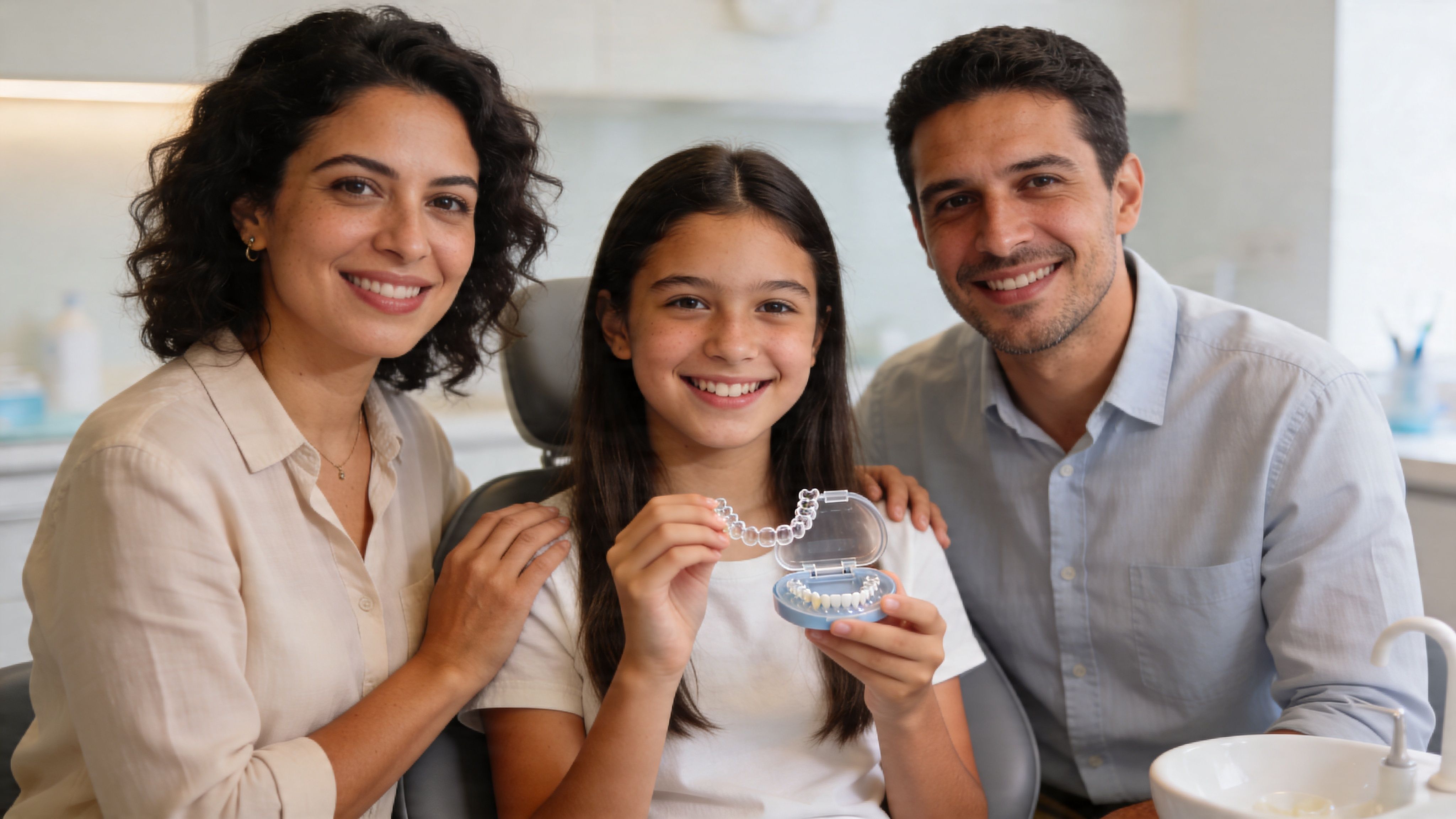
A parent nods through the consultation, the child leaves with trays, and by the second visit the aligners are off schedule because nobody felt comfortable asking questions. I see that pattern more often in multilingual families, especially when earlier dental visits felt rushed or overly technical.
Deep bite treatment with Invisalign asks a lot from the family at home. Tray wear, change intervals, chewies, elastics in some cases, and watching for poor fit all affect the result. If instructions are unclear, the before-and-after outcome usually suffers, even when the treatment plan itself is sound.
Why communication affects the result
For many of these cases, the clinical question is only half the job. The other half is making sure the family understands why we are intruding the front teeth, opening the bite, or adding attachments and bite ramps. Once that makes sense, compliance improves because the steps no longer feel arbitrary.
Moderate deep bites can respond well to aligners when the mechanics match the problem. In practice, that often means bite ramps to create posterior disclusion, attachments to improve incisor control, and a schedule that the family can realistically follow. Severe cases still need a careful conversation about limits, treatment time, and whether braces would give better control.
What families need before they start: a clear explanation of the goal, the likely timeline, the tools being used, and what to do if a tray stops fitting.
One detail I discuss early is maintenance. Families often focus on the active trays and overlook retention, but deep bites have a real tendency to settle back if retainers are inconsistent. That matters even more if treatment took extra coordination across languages, school schedules, and multiple caregivers.
What improves follow-through at home
The strongest results usually come from simple systems, not complicated instructions.
Helpful approaches include:
- Giving written instructions in the family's preferred language
- Assigning one parent or guardian to track tray changes and wear time
- Reviewing bite ramps, attachments, or elastics in person until everyone is comfortable
- Explaining retainer wear before the last trays are delivered
Families also ask practical questions about cost when they are comparing options for more than one child. A clear review of family orthodontic treatment costs and affordable braces options helps them plan treatment without guessing.
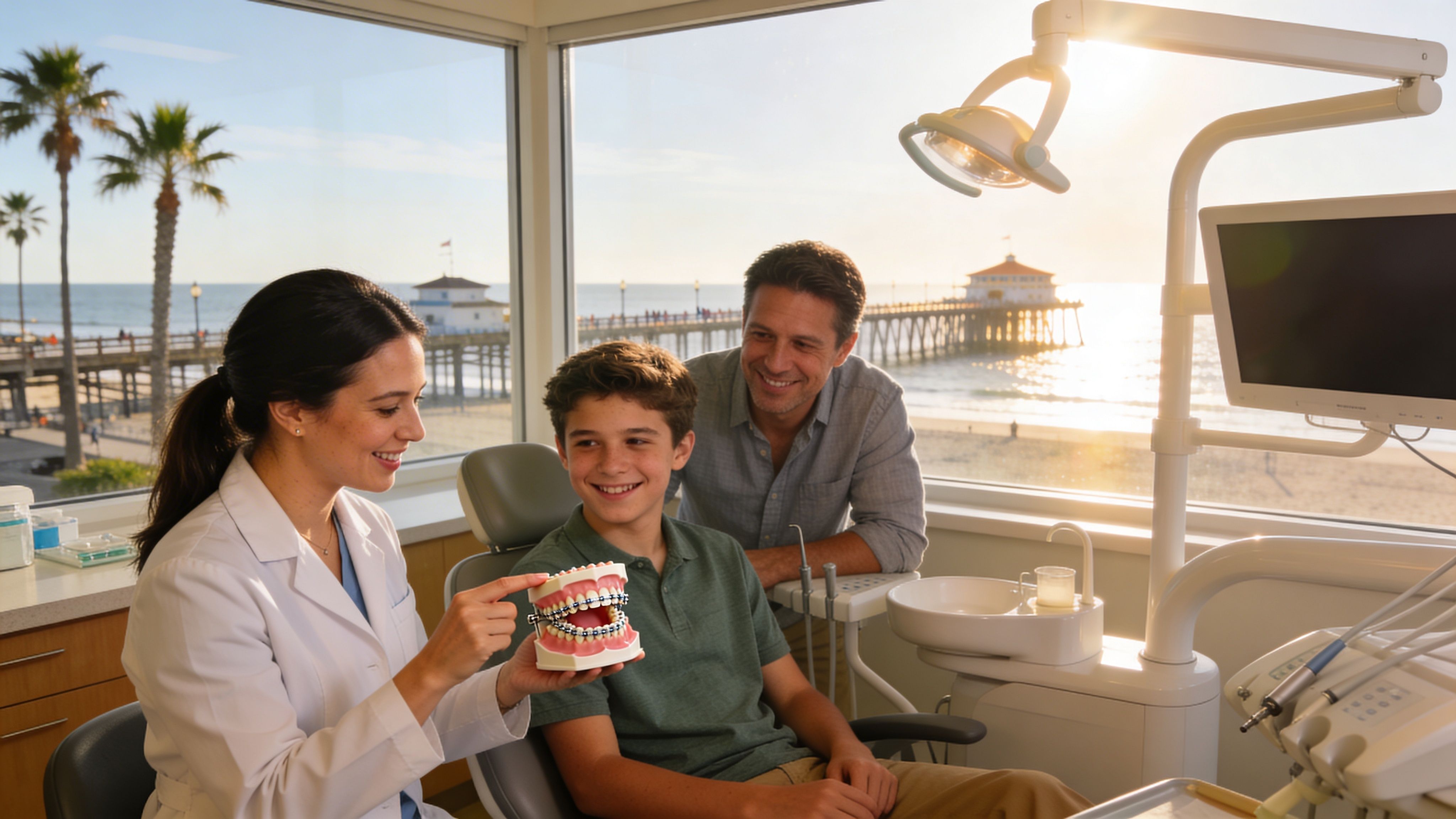
In Oak View, Huntington Beach, and nearby neighborhoods, clear communication is not an extra courtesy. It is part of how a deep bite case stays on track from the first tray to long-term retention.
6. Budget-conscious family comparing Invisalign with other options
Families often come in thinking the main question is whether Invisalign works for a deep bite. The second question usually arrives right behind it. Is it the right choice for this child or teen compared with braces?
That answer depends on case severity, compliance, and whether the bite can be corrected efficiently with aligners alone. If a family has multiple kids who may need treatment, the decision also has to make sense over time, not just at the first appointment.
What affects value in a deep bite case
An aligner deep-bite case may be efficient when the patient is compliant and the movements are suitable for Invisalign. It may be a poor value if the bite is severe, the trays aren't worn well, or the case clearly needs a different approach from the start.
For some families, Invisalign is still the right fit because it allows discreet treatment and easier hygiene. For others, Iconix esthetic brackets or traditional metal braces may offer better control for the problem we're trying to solve.
What works for budget-conscious families:
- Choosing the appliance based on the bite, not the advertisement
- Understanding whether refinements are likely
- Planning treatment timing for siblings carefully
- Asking how retention is handled after active treatment
What doesn't:
- Comparing only the starting fee
- Assuming one child's case predicts another's
- Picking aligners for a teen who won't wear them
If you're balancing treatment decisions for more than one child, our guide to affordable braces in Huntington Beach can help frame the discussion before a consultation.
6-Case Invisalign Deep Bite Before & After Comparison
| Case | Implementation Complexity 🔄 | Resource Requirements ⚡ | Expected Outcomes ⭐📊 | Ideal Use Cases | Key Advantages 💡 |
|---|---|---|---|---|---|
| Adult Professional with Severe Deep Bite, 18‑Month Invisalign Correction | High, 54 trays; precise vertical control; strict 20–22 hr/day compliance | Higher cost; 18 months; 4–6 week visits; 3D digital planning | Functional deep‑bite correction; improved aesthetics; reduced TMJ symptoms | Client‑facing adults seeking discreet treatment (30–50) | Nearly invisible; removable for events; improved hygiene; faster than braces |
| Teenage Patient with Mixed Deep Bite & Crowding, Accelerated 14‑Month Correction | Moderate, simultaneous bite ramps + crowding resolution; 42 trays | Moderate cost; 14 months; parental oversight; sports‑compatible | Aesthetic and functional correction before college; crowding resolved | Active, self‑conscious teens (13–18) who need discretion | Removable for activities; shorter timeline; clear progress tracking |
| Young Adult Female with Relapsed Deep Bite, Post‑Braces Correction in 16 Months | Moderate, targeted retreatment; emphasis on retention; 48 trays | Moderate‑high cost (retreatment); 16 months; fixed + Vivera retainers | Relapse correction; spacing closure; improved long‑term stability with retention | Patients with prior braces relapse (19–30), customer‑facing roles | Less invasive than re‑bracing; strong retention protocol; focused correction |
| Pediatric Patient with Early‑Onset Deep Bite, Interceptive Invisalign at Age 10 | Moderate, mixed dentition management; growth‑guidance mechanics; ~24–28 trays | Moderate cost; 12‑month interceptive phase; high parent supervision; frequent checks | Improved jaw development; may reduce need for future comprehensive treatment | Children in mixed dentition (7–12) needing early intervention | Guides growth; non‑invasive; may avoid extractions and complex future care |
| Multilingual Spanish‑Speaking Family, Deep Bite Correction with Culturally‑Sensitive Communication | Moderate, standard Invisalign mechanics + bilingual coordination | Moderate cost; 15 months; bilingual staff and translated materials; slightly longer appointments | High compliance and understanding; successful correction with stronger family engagement | Non‑English‑speaking families; patients needing culturally sensitive care | Eliminates language barrier; improves compliance; builds trust; clearer informed consent |
| Budget‑Conscious Family with Multiple Children, Deep Bite Correction with Flexible Financing | High, staggered treatment scheduling; insurance coordination across children | Variable cost; 18–24 months per child (staggered over 3–4 yrs); flexible 12–36 month payment plans | Comprehensive family coverage achievable; manageable monthly payments; phased results | Families with multiple children and limited budget | Flexible financing; insurance optimization; staggered plans reduce immediate burden |
FAQ
Can Invisalign really fix a deep bite
Often, yes. The best results come in mild to moderate cases and in patients who wear their aligners as directed. More complex deep bites may still be treatable with Invisalign, but some need added features or a different appliance choice.
How long does Invisalign take for a deep bite
Treatment time varies by how deep the bite is, whether crowding or overjet is also present, and how consistently the aligners are worn. Published case reports and studies show that deep-bite correction can take many months, and some cases need refinement before the bite is fully settled.
What actually changes in a deep bite before and after result
The visible change is that less of the lower front teeth are hidden behind the uppers. Functionally, the goal is better tooth contact, less excessive overlap, and a more balanced bite pattern instead of constant pressure on the front teeth.
Do bite ramps make a big difference
They often do. Bite ramps are small built-in features that help separate the bite and support the vertical correction we want. They can feel unusual at first, but they're often one of the reasons aligners can handle deep bite cases more effectively.
Is Invisalign better than braces for deep bite correction
Not automatically. Invisalign is a strong option for many patients, especially those who want a discreet appliance, but braces can still be the better choice in some severe or compliance-sensitive cases. The right question isn't which one is better in general. It's which one gives better control for your bite.
Will my deep bite come back after Invisalign
It can if retention is ignored. Deep bite correction doesn't end when the last tray is finished. Retainers and follow-up matter because teeth can shift, and younger patients still change as they grow.
Does deep bite treatment hurt
Most patients describe pressure more than pain, especially when changing to a new aligner. Bite ramps, attachments, and intrusion movements can make the teeth feel tender for a few days, but that usually settles as the teeth adapt.
Can kids get Invisalign for a deep bite
Some can. Early treatment may be appropriate for selected children, especially when the bite is severe enough to justify interceptive care. Kids need close supervision because removable treatment only works when it is worn.
Ready to See Your Own After
Looking at invisalign deep bite before and after examples can help, but the photos don't tell you whether your bite needs intrusion, bite ramps, attachments, or a different appliance altogether. That's the part that determines whether treatment goes smoothly or turns into a frustrating stop-and-start process.
The strongest results usually come from a plan that matches the underlying problem. In some patients, the issue is mostly front-tooth overlap. In others, the bite is tied to crowding, overjet, eruption pattern, or relapse after old orthodontic treatment. Those cases can look similar in pictures and still need very different mechanics.
That matters for adults who want discreet treatment, for teens balancing school and activities, and for parents deciding whether to start care early for a child with a developing deep bite. A good consultation should explain not just whether Invisalign can work, but why it would work in your specific case, what the limitations are, and what maintenance will look like after treatment.
At Magic Fox Orthodontics, Dr. Jeremy Chau and Dr. Melissa Ven Dange provide free consultations for patients in Huntington Beach, Fountain Valley, and nearby communities. If Invisalign is a good fit, you'll get a clear explanation of the plan. If Iconix esthetic brackets or traditional metal braces would give you better control, that should be said plainly too.
The goal isn't to promise a perfect before-and-after photo. It's to diagnose the bite accurately, choose the right tool, and help you understand what success will require from start to finish.
Sources
UAB Digital Commons. "Cephalometric Evaluation of Deep Bite Correction with Invisalign." Year not specified in provided data. https://digitalcommons.library.uab.edu/cgi/viewcontent.cgi?article=4523&context=etd-collection
Your AZ Braces. "Can Invisalign Fix Deep Bites?" 2024. https://yourazbraces.com/can-invisalign-fix-deep-bites/
PubMed Central. "Case-series and analysis on Invisalign deep bite correction in adults." 2022. https://pmc.ncbi.nlm.nih.gov/articles/PMC12890393/
If you'd like clear answers about your own bite, schedule a free consultation with Magic Fox Orthodontics. Dr. Jeremy or Dr. Melissa can evaluate your deep bite, explain whether Invisalign, Iconix esthetic brackets, or traditional metal braces make the most sense, and walk you through next steps. Call (714) 594-5777 or visit us at 17041 Beach Boulevard, Suite 101, Huntington Beach, CA 92647. Office hours are Monday through Friday 9:00 AM to 5:00 PM and Saturday 8:00 AM to 2:00 PM.