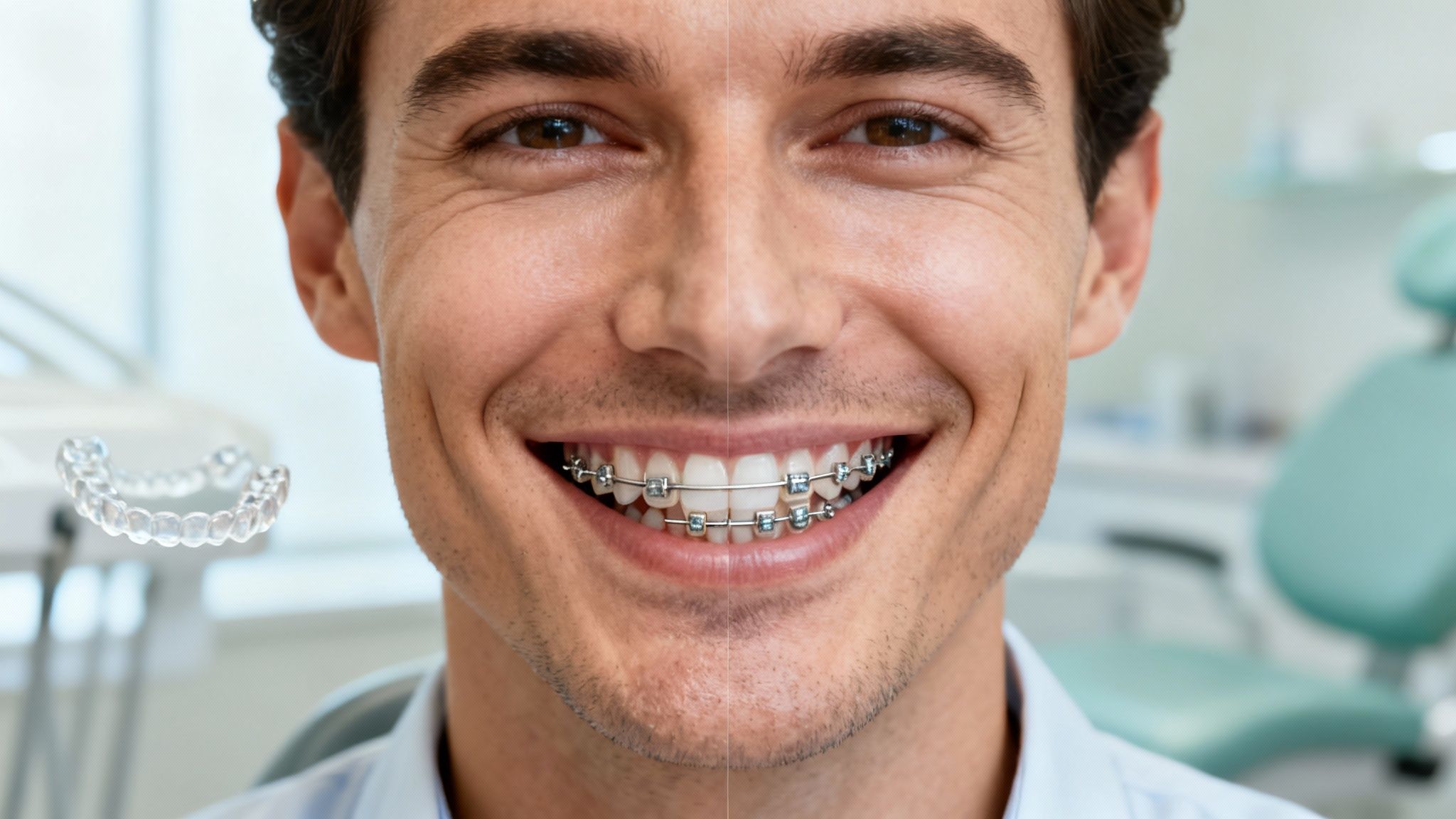
Can Invisalign Bring Teeth Down? 2026 Guide to Extrusion
Quick Answer
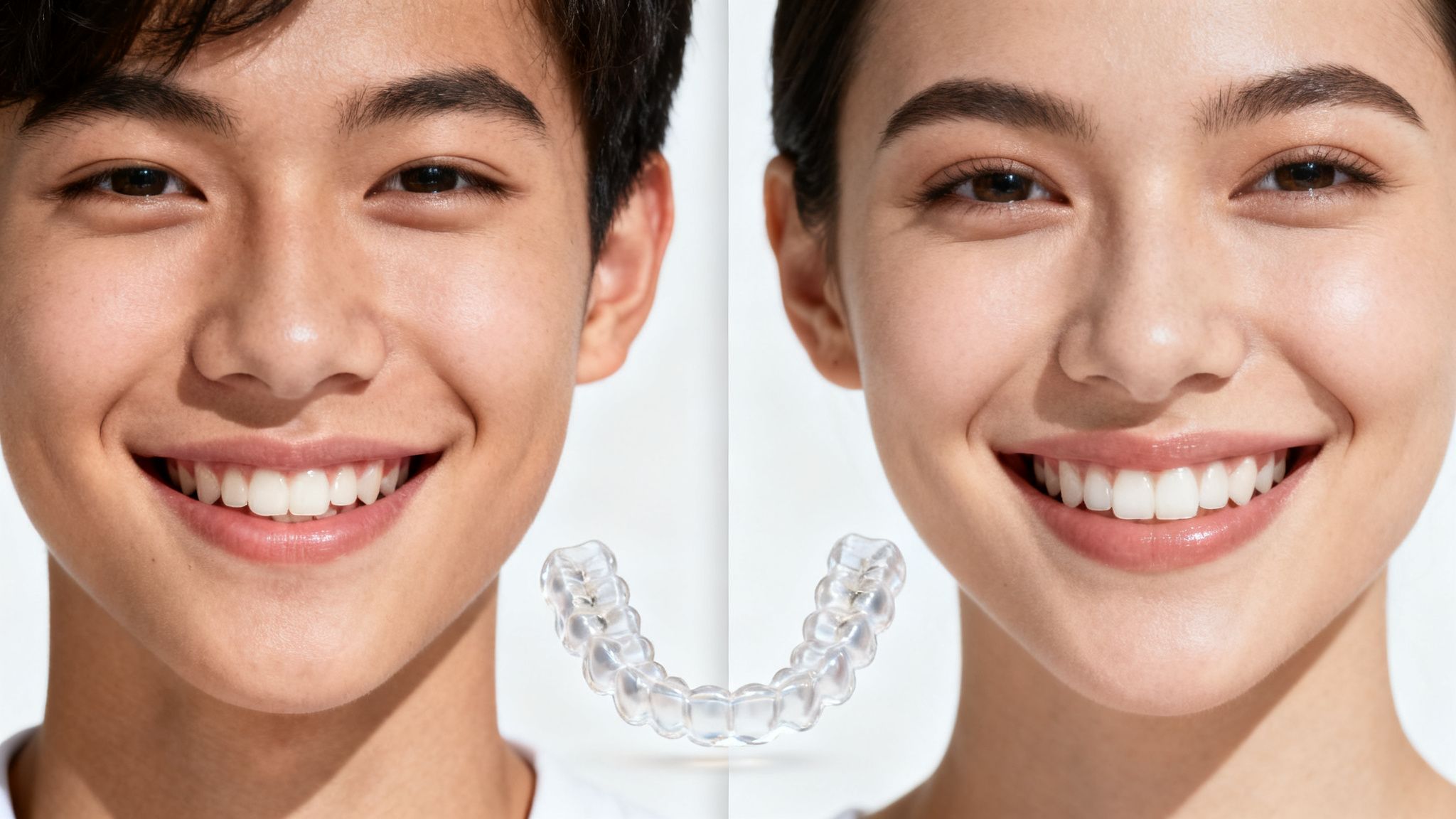
Yes. Invisalign can bring certain teeth down through extrusion, but this is one of the harder tooth movements to do predictably. It usually works best in mild to moderate cases, especially when treatment includes attachments, elastics, careful staging, and strong wear compliance. In more demanding vertical cases, braces may still be the better tool.
If you're looking in the mirror and one tooth looks too high, or your front teeth don't meet the way they should, you're asking the right question. Patients often want the look of clear aligners, but they also want an honest answer about whether aligners can really handle vertical tooth movement.
The short answer is yes, but not every “bring a tooth down” case is equally good for Invisalign. The actual issue isn't just whether it can happen. It's how well, how predictably, and what support the movement needs.
Can Invisalign bring teeth down in real cases
Invisalign can move teeth in a downward direction. In orthodontics, that movement is called extrusion.
That matters in several situations. A tooth may sit too high compared with the teeth next to it. A patient may have an open bite, where the front teeth don't touch. In other cases, the front teeth need more vertical overlap for the bite to function better.
What “bringing teeth down” actually means
When patients say they want to bring a tooth down, they usually mean one of these:
- A single tooth looks short or high and needs to line up with the smile
- Upper and lower front teeth don't touch and need vertical correction
- A bite feels uneven because one or more teeth haven't erupted or positioned ideally
- Front teeth need more vertical control for function as well as appearance
Some of these are straightforward with aligners. Some are not.
Practical rule: Invisalign is usually more attractive to patients than braces, but attractiveness and predictability aren't the same thing. For vertical movements, those two things have to be weighed carefully.
Why the answer isn't the same for every patient
Extruding a tooth isn't just about pushing on the crown. The root has to follow in a controlled way, the aligner has to hold its grip, and the patient has to wear the trays as directed for the plan to track.
If the movement is small and the tooth anatomy gives the aligner something to grip, Invisalign may be a good option. If the vertical correction is larger, if several teeth need strong vertical control, or if the bite is already unstable, braces often give us more direct control.
Why vertical tooth movement is harder than it sounds
Clear aligners are very good at some movements. Vertical movement is not usually the easiest one.
A prospective clinical study published in a peer-reviewed orthodontic journal found that the mean accuracy of prescribed tooth movements with Invisalign was 41% overall, and extrusion had the lowest accuracy at 29.6%. The same study noted that extrusion of the maxillary incisors was particularly difficult, which is relevant when front teeth need to be brought down for open bite or smile line correction (prospective clinical study on Invisalign tooth movement accuracy).
That doesn't mean extrusion with Invisalign fails. It means vertical movements need more planning and more realism than patients often expect.
Why extrusion is mechanically difficult
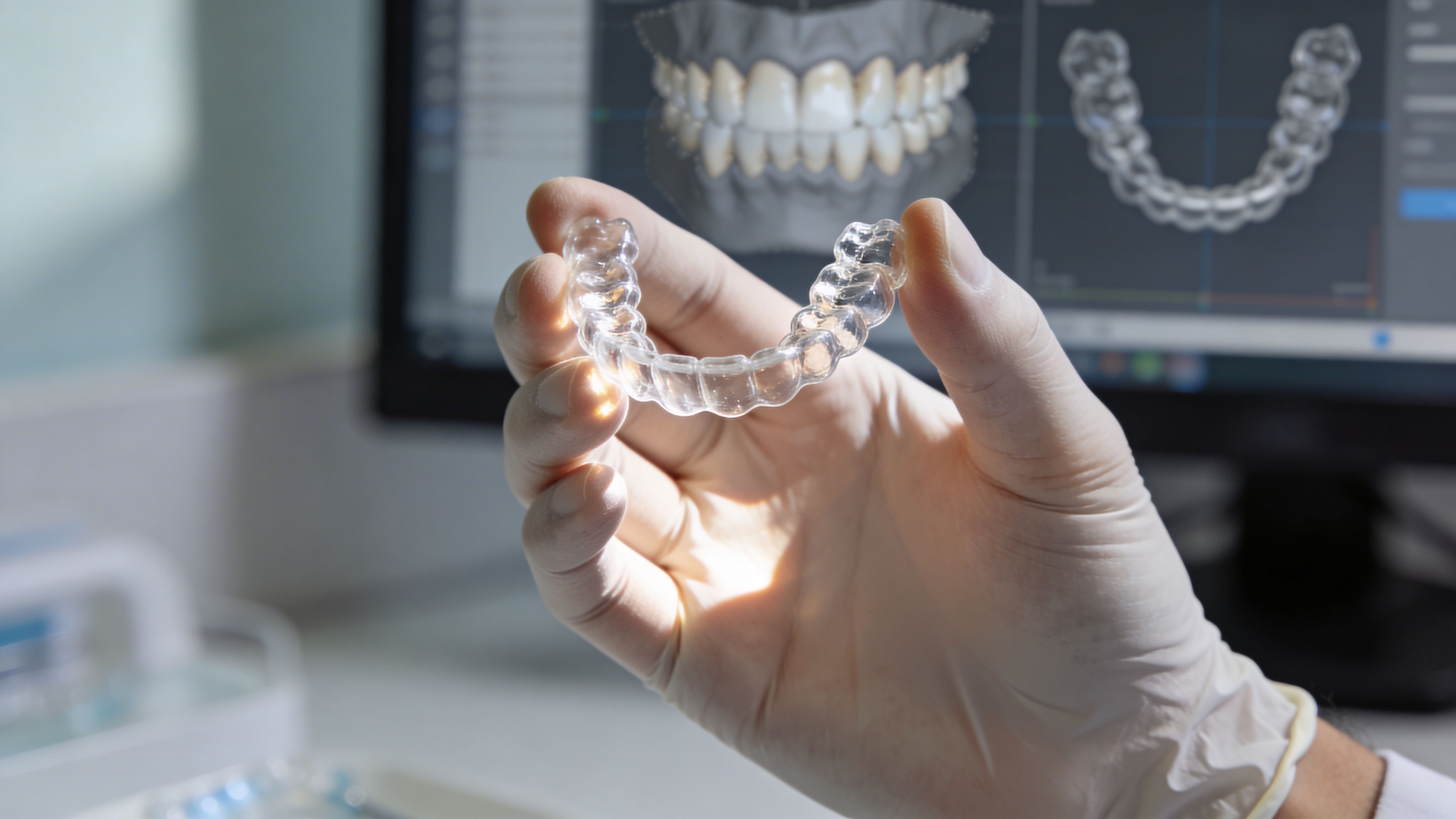
Aligners are removable plastic trays. They work by fitting over the teeth and delivering planned force as the shape changes from one tray to the next.
For extrusion, the aligner has to do more than nudge a tooth sideways. It has to hold onto the tooth well enough to pull it in a vertical direction, while also keeping neighboring teeth controlled. That is harder when the tooth is short, tapered, rotated, or not giving the plastic enough grip.
Why front teeth are often the hardest
Upper front teeth are the teeth patients notice most, and they are also the teeth where vertical precision matters a lot. Even small tracking errors can show up in the smile or leave the bite less stable than planned.
When a case depends on maxillary incisor extrusion, I usually treat that as a point that deserves a very honest discussion up front. If a patient wants only aligners no matter what, they need to know that the movement may require refinements, extra attachments, auxiliaries, or a change in treatment approach.
Vertical correction with aligners is possible. Predictable vertical correction is where treatment planning earns its keep.
How Invisalign moves a tooth down
A patient will often point to one front tooth and say, "Can you just pull that one down with Invisalign?" The honest answer is yes, sometimes. The more useful answer is how we make that movement happen, and how much control we really have over it.
A tooth does not get dragged through bone like a loose object. The aligner applies controlled force to the tooth, the periodontal ligament responds, and the surrounding bone remodels over time. For extrusion, that force has to be directed vertically enough to bring the tooth farther into the bite without losing control of the neighboring teeth.
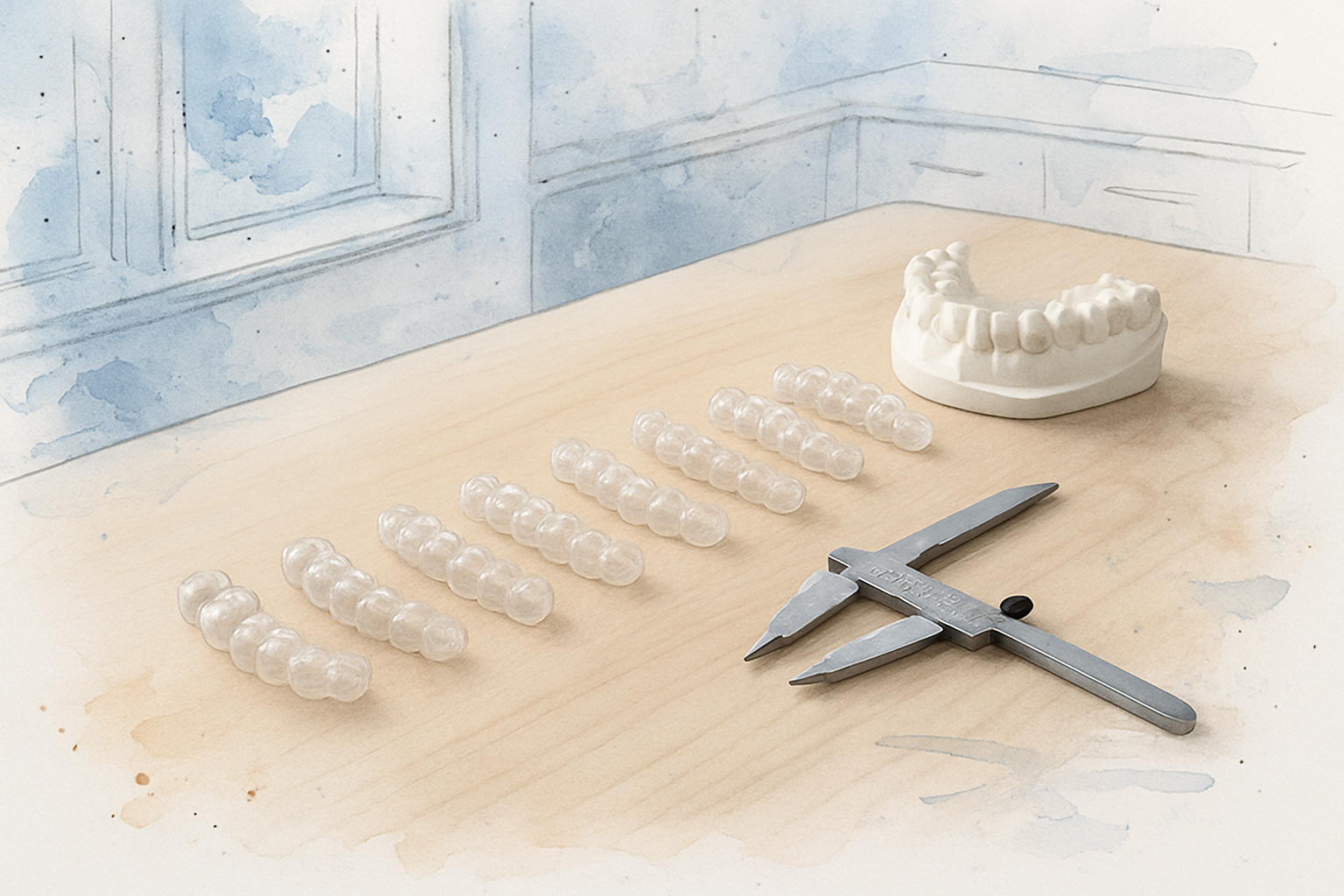
That is why the digital plan matters so much. I do not program a big vertical jump and hope the tray figures it out. The movement is staged in small steps so each aligner asks for a limited amount of change, then the next tray builds on that if the tooth is tracking well.
What actually creates the pull
Clear plastic alone is often not enough for extrusion. In real cases, we usually add features that make the force more precise:
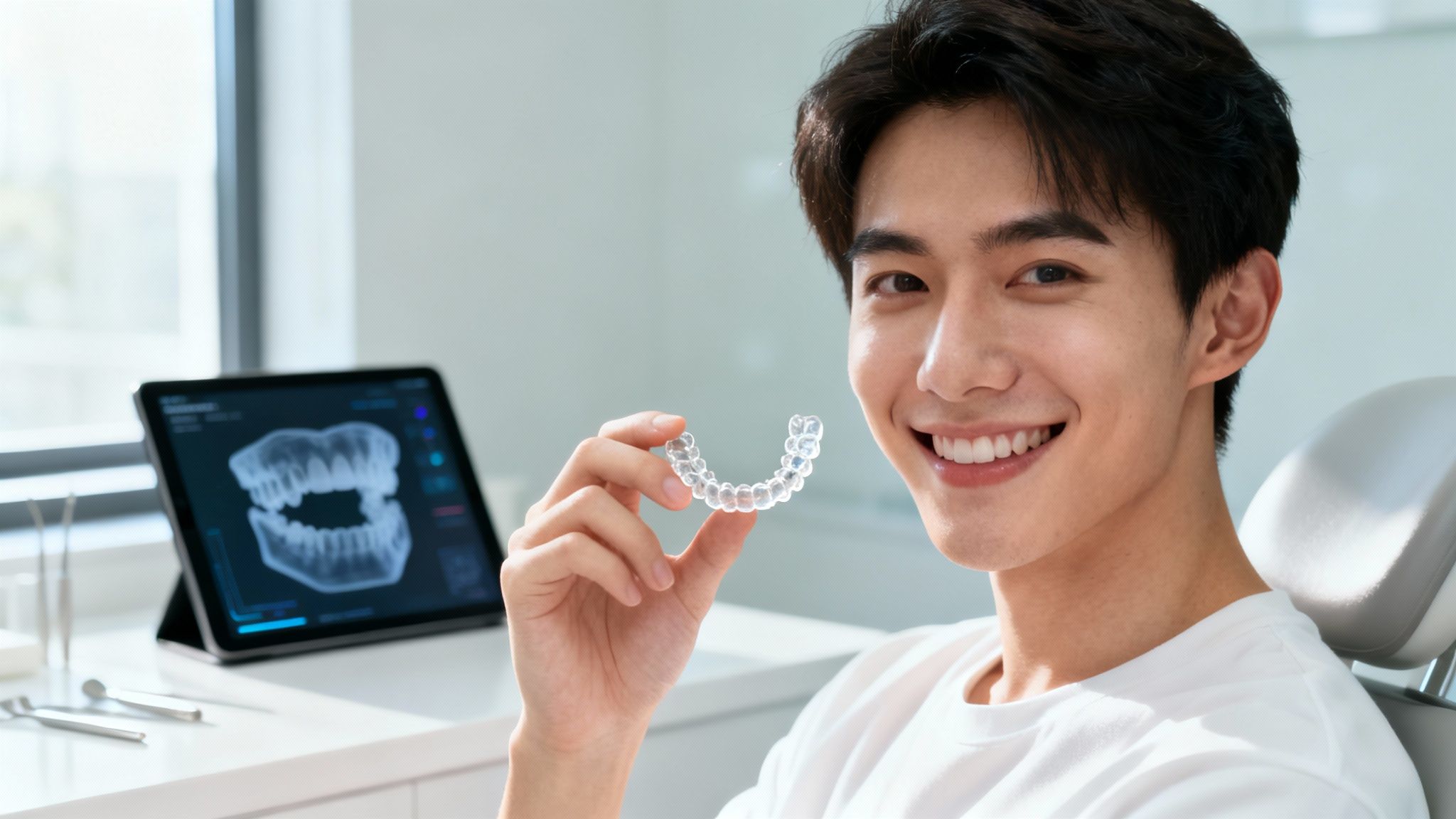
- Attachments give the tray a better surface to engage, especially on teeth that are short, smooth, or difficult to grip
- Staged aligner changes break the movement into smaller planned increments
- Elastics or other auxiliaries may be added when the tray needs help with force direction or bite control
- Refinement scans let us correct the plan if the tooth does not come down as projected
Attachments do a lot of the practical work here. They are small composite shapes bonded to the tooth, and for extrusion they improve the aligner's ability to hold and pull rather than just slide over the crown. If that grip is weak, the tray can fit the other teeth reasonably well while the target tooth lags behind.
Wear time also matters more than many patients expect.
With vertical movements, inconsistent wear does not just slow treatment. It increases the chance that the tray stops fitting the way it was designed to, which means the programmed extrusion becomes less predictable. That is one of the reasons I am cautious when someone wants aligners for a demanding extrusion case but already expects to wear them part-time. In that situation, braces may give a more dependable result.
In practice, successful extrusion with Invisalign usually comes from a combination of careful staging, well-placed attachments, good tray seating, and a willingness to refine the plan if the tooth responds more slowly than predicted. This represents the fundamental mechanics of bringing a tooth down with aligners.
How well Invisalign works for extrusion and open bite cases
Patients deserve clarity regarding this treatment. Invisalign can work very well for some vertical problems, but not all of them.
Clinical reviews and manufacturer-backed research cited in one treatment overview report 70% to 80% success rates for open bite corrections, which directly involve vertical movements such as extrusion and intrusion. The same summary notes lower effectiveness in severe cases, where traditional braces or surgery may be needed (review of Invisalign effectiveness for open bite correction).
Mild to moderate cases are the sweet spot
If the problem is limited in scope, aligners can be a reasonable and effective choice. That is especially true when the treatment goal is to improve a mild open bite or extrude a tooth with good anatomy for attachment-assisted movement.
In those cases, the patient gets the advantages people usually want from Invisalign. The trays are removable, easier for brushing and flossing, and less visible in school, work, or social settings.
Severe vertical problems are different
Severe vertical discrepancies often need stronger force control and fewer variables. Removable aligners introduce a variable that fixed braces don't have. The patient can always take them out, wear them less than prescribed, or seat them inconsistently.
When the movement is demanding, that matters. If a case already starts near the limit of what aligners can do well, small lapses in compliance can change the result enough that the treatment plan has to be revised.
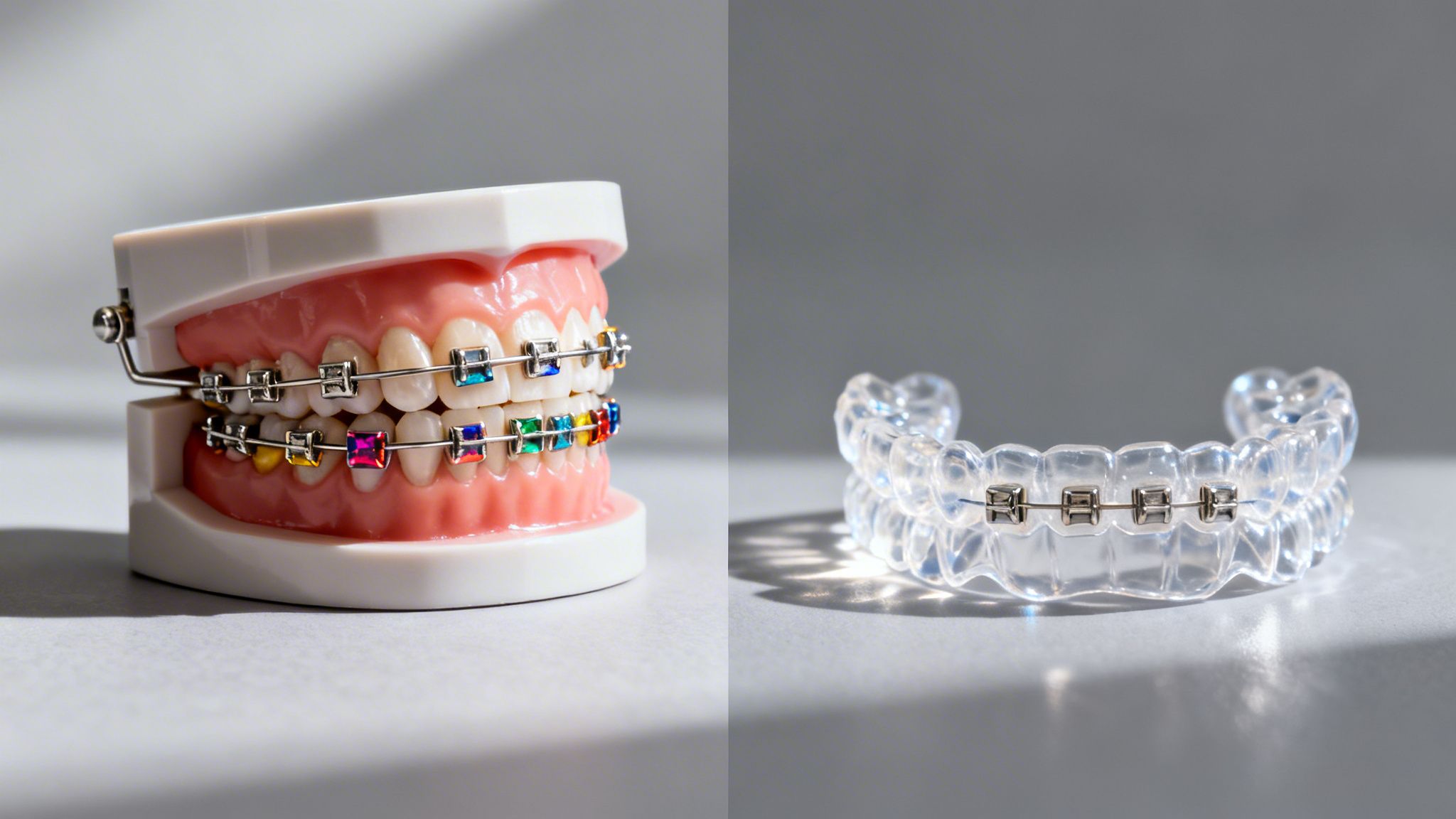
A practical comparison
| Situation | Invisalign outlook | Braces outlook |
|---|---|---|
| Mild single-tooth extrusion need | Often reasonable with attachments | Also effective |
| Mild to moderate open bite | Often workable with careful planning | Often effective and sometimes more direct |
| Severe vertical correction | Less predictable | Usually more controlled |
| Patient who won't wear trays reliably | Poor candidate | Often better choice |
What improves success with Invisalign extrusion
A common real-world scenario is the patient who wants a front tooth brought down with Invisalign, but also wants no attachments and the fewest possible visits. That combination lowers the odds of success. Extrusion usually works best when the plan accepts the mechanics the tooth needs.
The biggest improvement comes from case selection and force control. In my experience, small vertical movements are far more dependable than larger ones, especially when the tooth has enough visible surface for a well-placed attachment and the bite does not keep knocking the aligner off that tooth. If those conditions are missing, the movement becomes less predictable before treatment even starts.
What usually helps
- Attachments give the aligner something to grip so it can pull on the tooth more effectively
- Elastics can improve the direction of force in selected cases, especially when the bite relationship is part of the problem
- Careful staging keeps the tooth from being asked to extrude while too many competing movements are happening at once
- Frequent tracking checks catch loss of fit early, before a small lag becomes a missed movement
- Refinement scans let the plan be updated if the tooth only moves part of the way
- Retention helps hold the result, because vertically moved teeth can rebound if they are not stabilized
Wear time matters just as much as the mechanics. A patient who is inconsistent with trays often sees this movement stall first. Invisalign can only deliver the planned force when the aligners are fully seated and worn as directed.
What lowers the odds
The weaker approach is trying to extrude a tooth with aligners alone while avoiding the features that make aligners work better. Patients often ask whether the trays can do it "without anything on the teeth." Sometimes, for very minor changes, they can. For true extrusion, that is usually not how I would set the case up.
Bite interference is another problem that gets missed. If the opposing teeth keep hitting in a way that blocks the tooth from moving down, the aligner may fit on paper but struggle in the mouth. That is one reason vertical movements need closer monitoring than straightforward alignment.
I tell patients this plainly. If you want Invisalign to bring a tooth down, you usually also need to accept attachments, possible elastics, refinement trays, and disciplined wear. Those are the trade-offs that improve the chances of getting the result.
What the treatment process looks like in practice
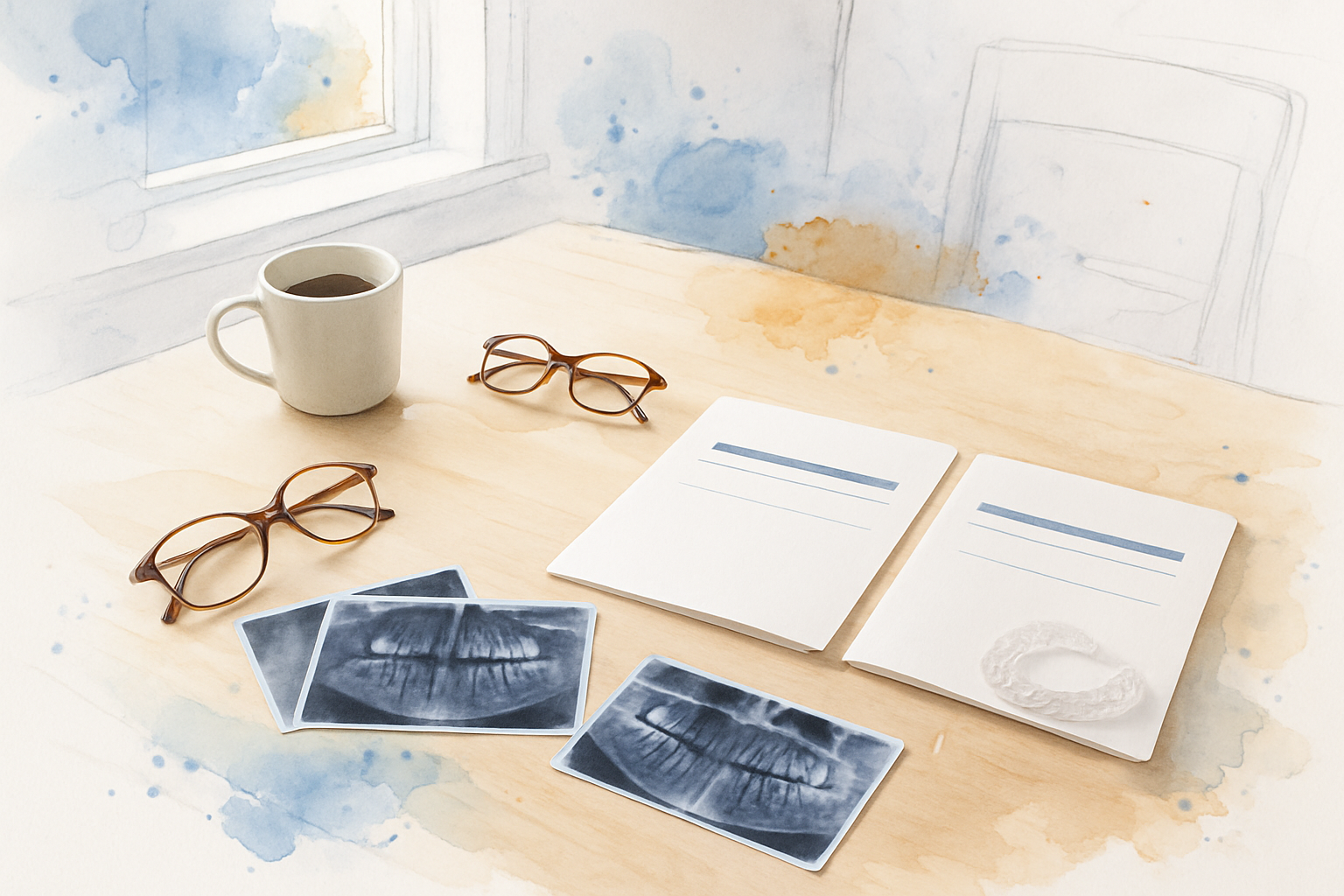
The process starts with records and a diagnosis, not with choosing trays or braces by preference alone. A tooth may look “too high,” but the underlying problem could involve eruption pattern, bite relationship, arch coordination, or the way the upper and lower teeth meet.
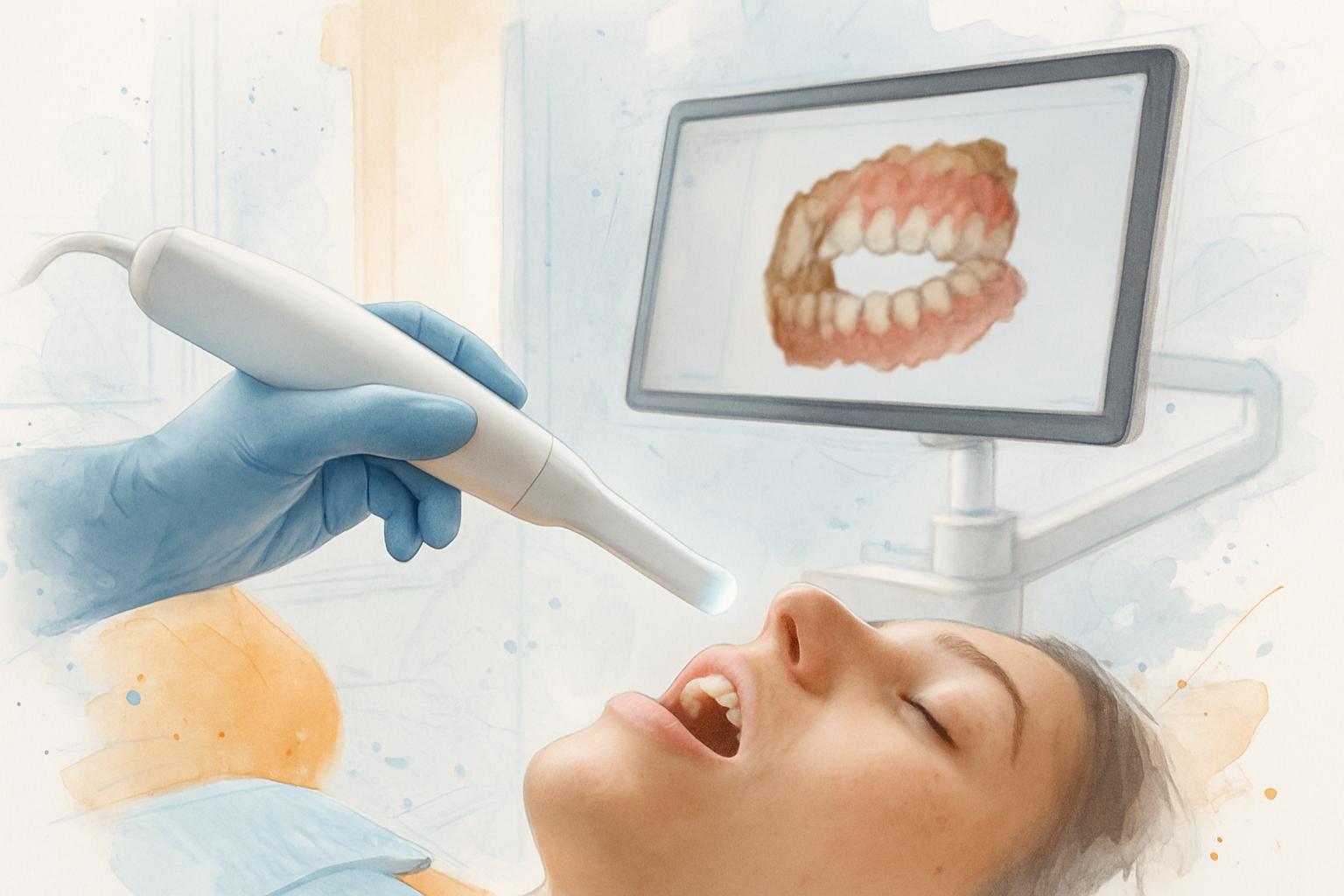
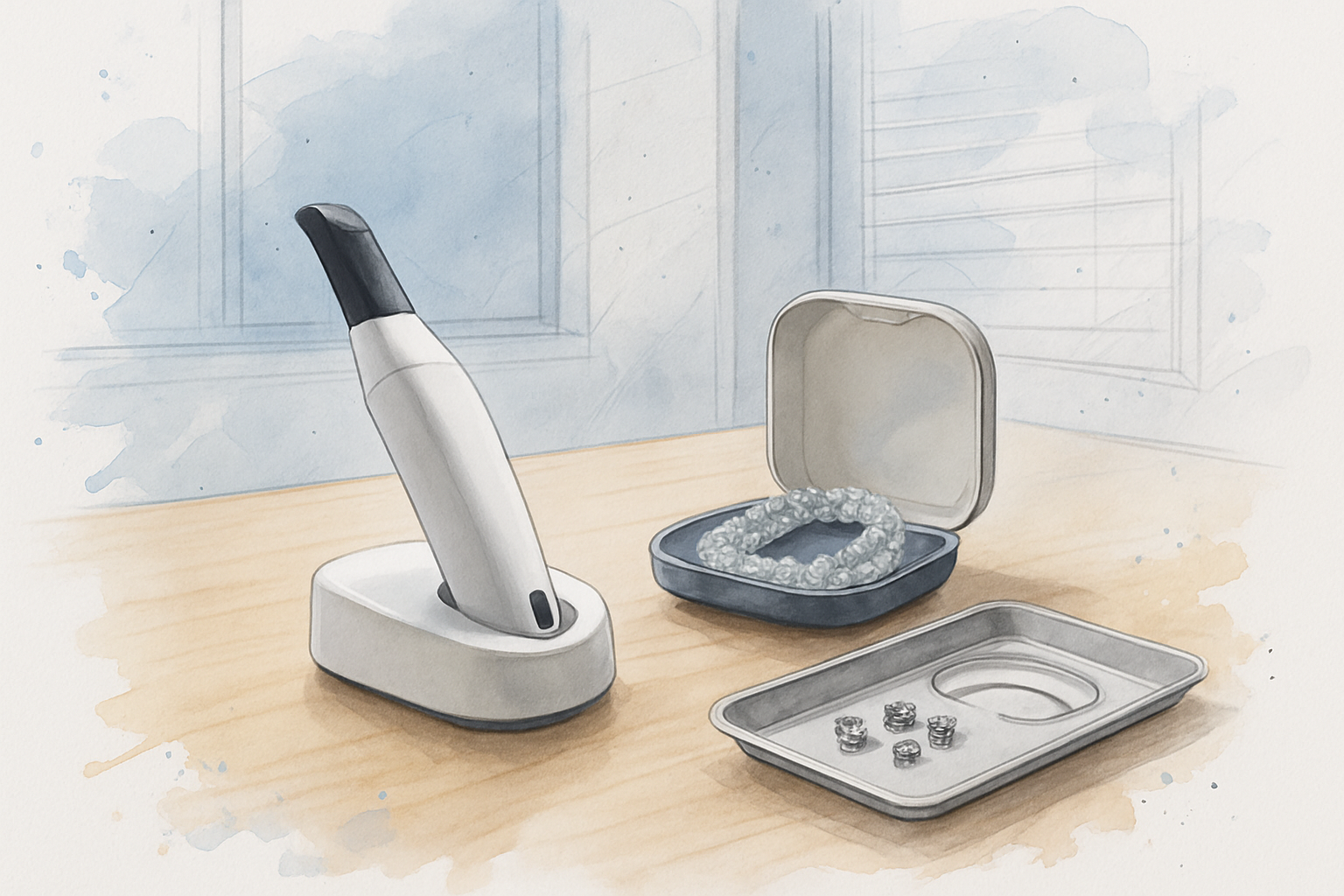
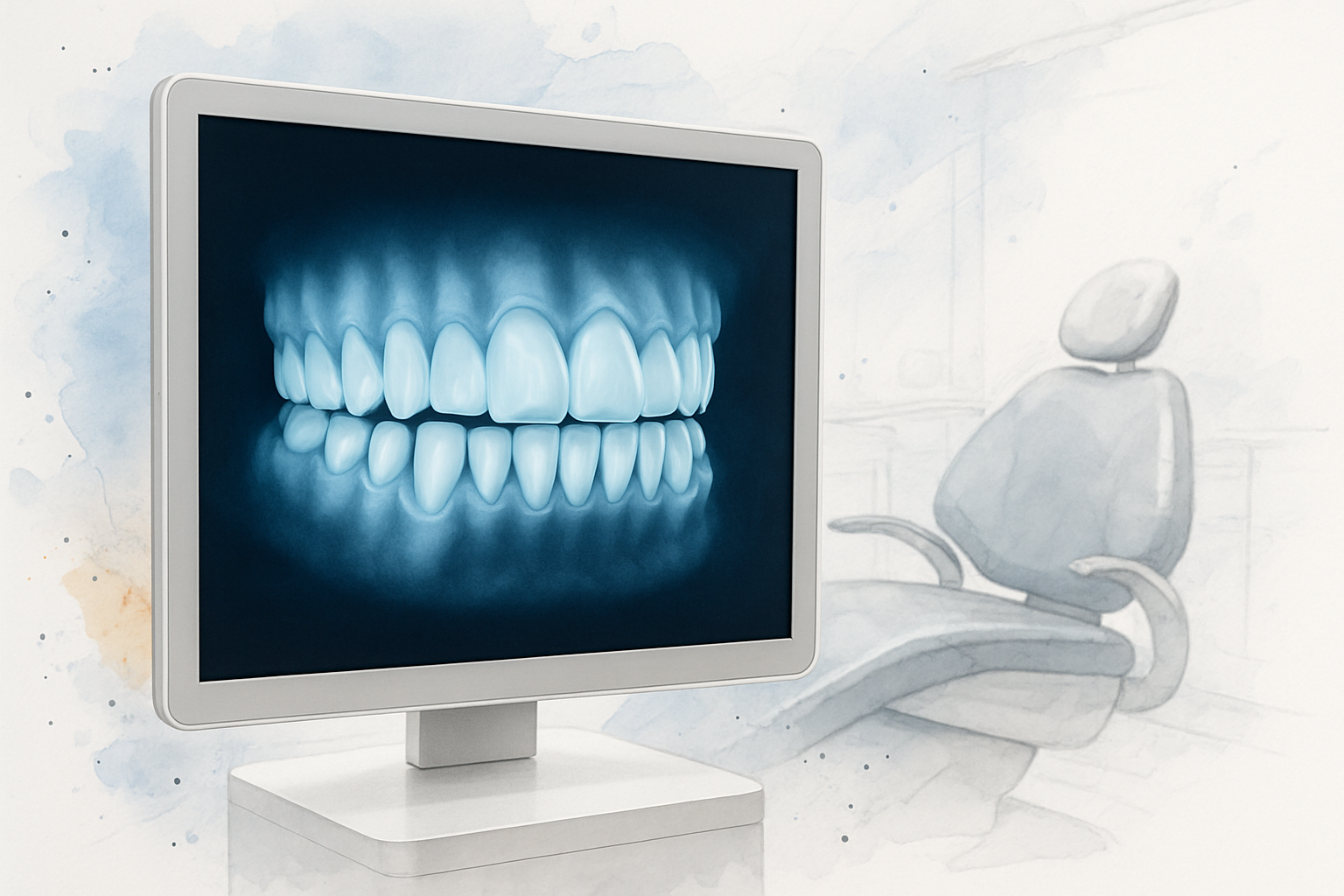
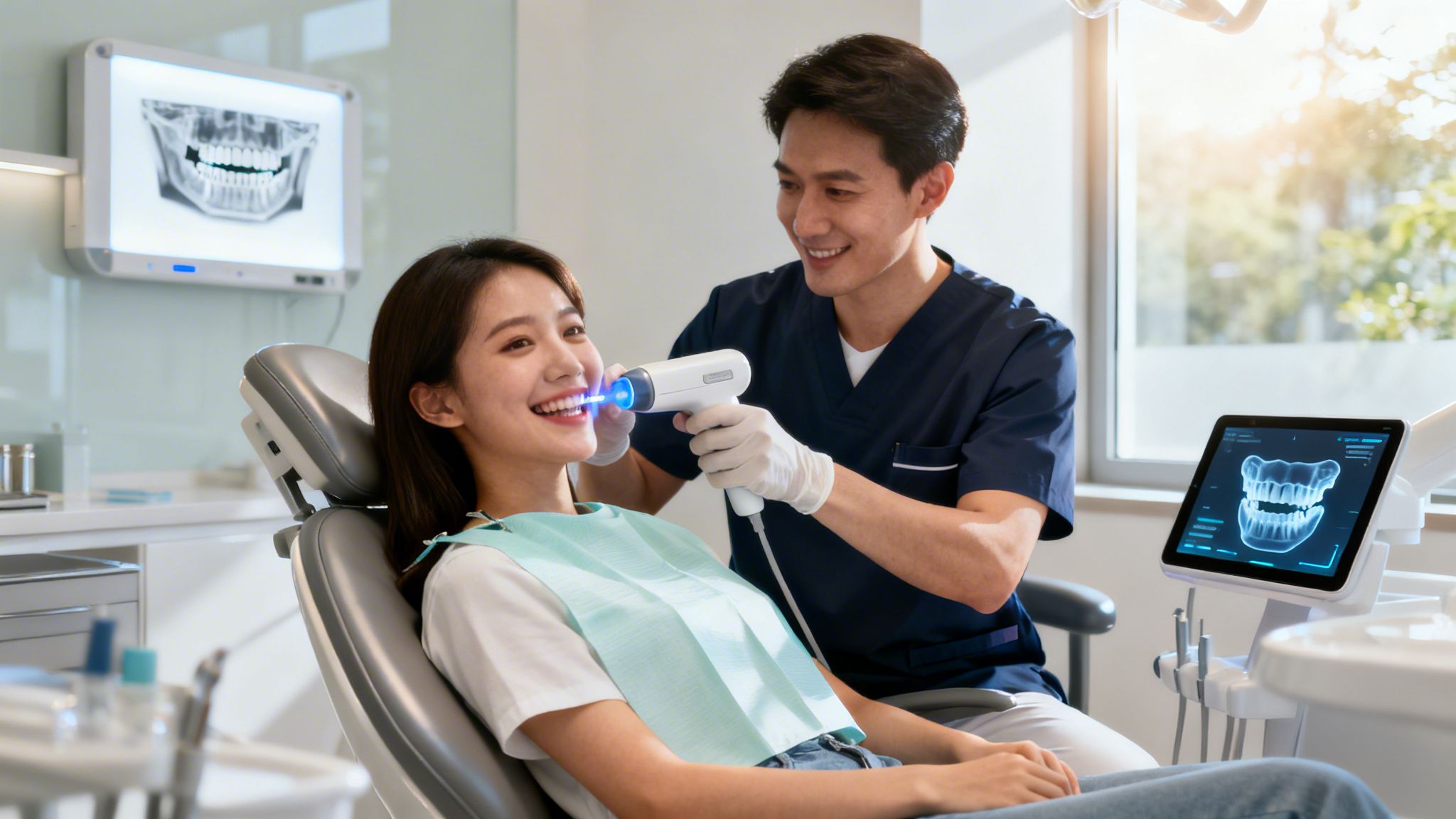
In practice, treatment planning for vertical movement usually includes digital scans, photographs, bite analysis, and a review of whether the movement is realistic with aligners alone. If not, the better answer may be braces, or a hybrid plan.
Early planning matters
For children and teens, an early orthodontic evaluation can be useful when eruption and vertical development look off. That doesn't mean every child needs treatment right away. It means the timing and the method are easier to choose when we catch the problem before it gets more complicated.
For adults, the key question is usually different. It is whether the desired change is mainly cosmetic and limited, or whether it involves a bigger bite issue that needs stronger control.
What patients should expect during treatment
Most Invisalign extrusion cases involve:
- A digital treatment setup showing the intended tooth movement
- Attachment placement on selected teeth
- Regular tray changes on the prescribed schedule
- Periodic checks to confirm the tooth is tracking
- Possible refinements if the actual movement falls behind the plan
- Retainers after active treatment
Patients usually do well when they understand that refinement is not automatically a sign something went wrong. With vertical movement, refinement is often part of getting the result from good to finished.
Timeline expectations need honest framing
Patients always want to know how long it takes to bring a tooth down. That's a fair question. The honest answer is that individual variation is significant, and current sources don't give a reliable case-by-case prediction model for who will move faster or slower.
One source specifically identifies this as a content gap, noting that while minor movement may take a few months and more significant changes may take longer, the available material does not provide dependable percentages for who falls into each category or which patient factors most accurately predict extrusion timing (discussion of timeline uncertainty in Invisalign extrusion).
What I tell patients instead of guessing
I don't give a precise timeline for extrusion just to sound confident. That tends to create frustration later.
I usually frame timing around these practical realities:
- Small movements tend to finish faster than larger vertical corrections
- Tracking matters more than the calendar in extrusion cases
- Refinement may be needed, especially if the tooth doesn't fully follow the original trays
- Age, bite complexity, and compliance all affect the pace, even if we can't attach a precise prediction to each factor from current evidence
The better question to ask
Instead of asking, “How many months will this take exactly?” a better question is, “Is my case likely to be straightforward with aligners, or does it look like a case where braces would give a more predictable result?”
That question usually gets you closer to the truth.
When braces are the better answer
Patients sometimes worry that choosing braces means something has gone terribly wrong with their case. That's not how orthodontists see it.
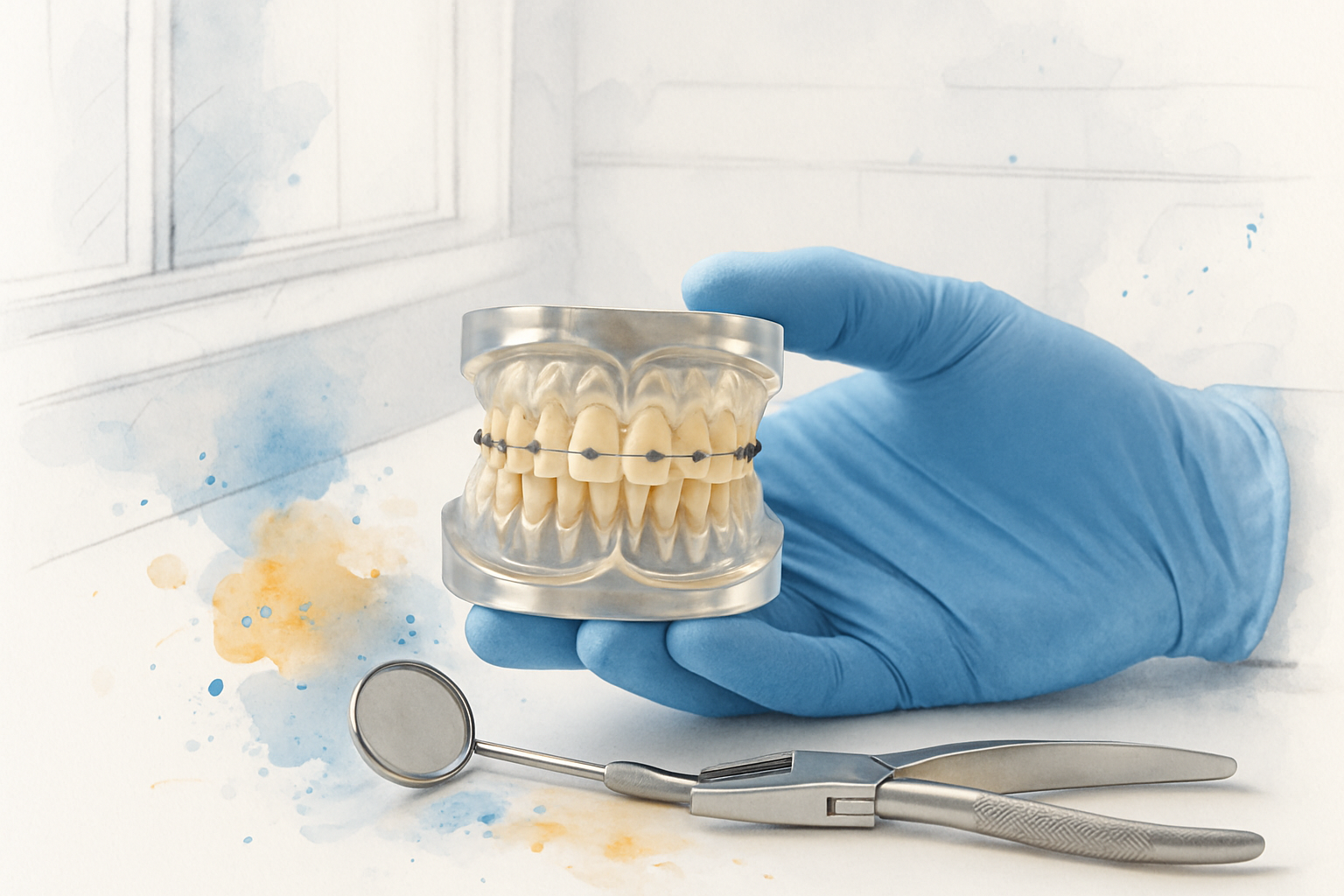
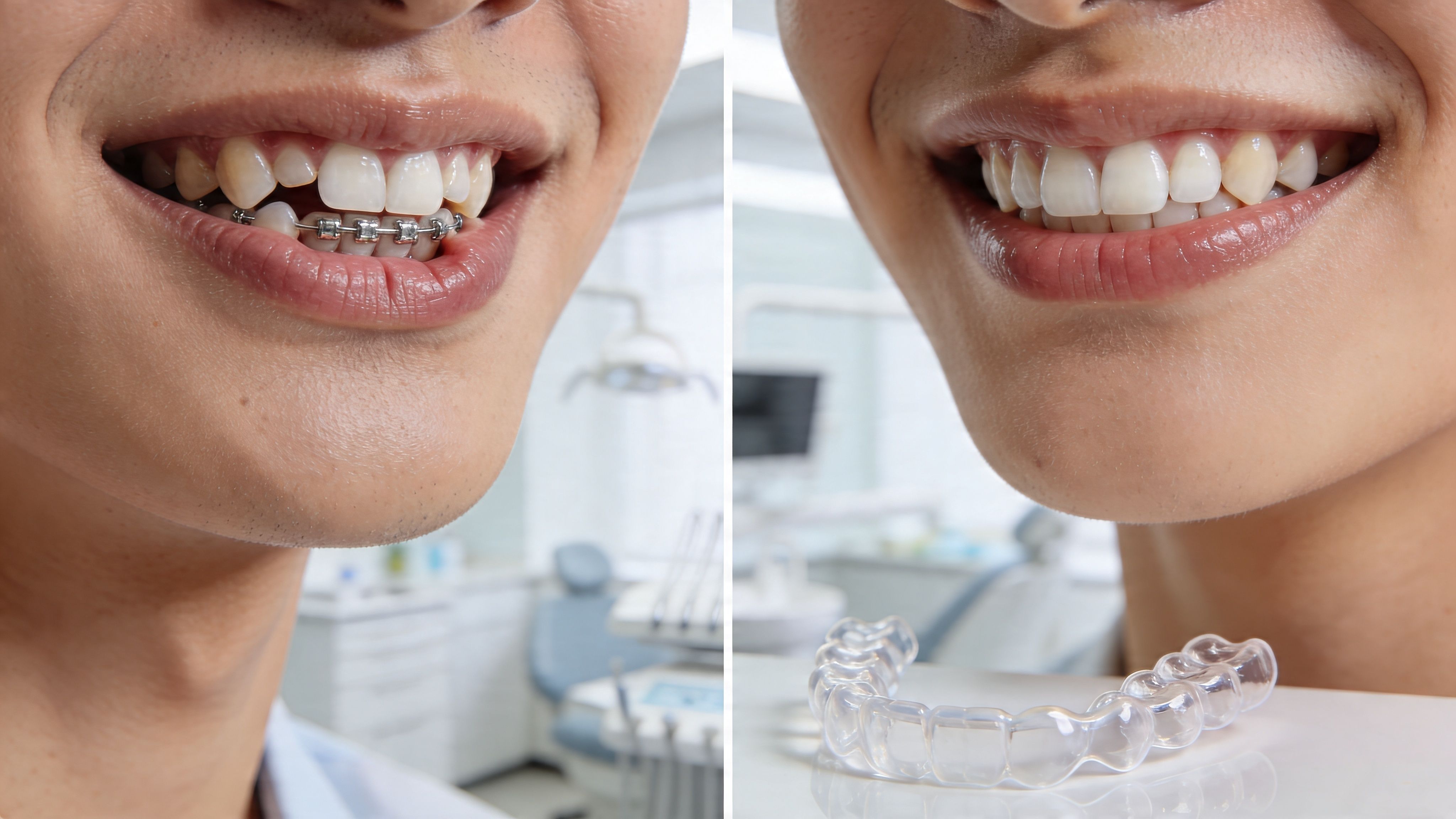
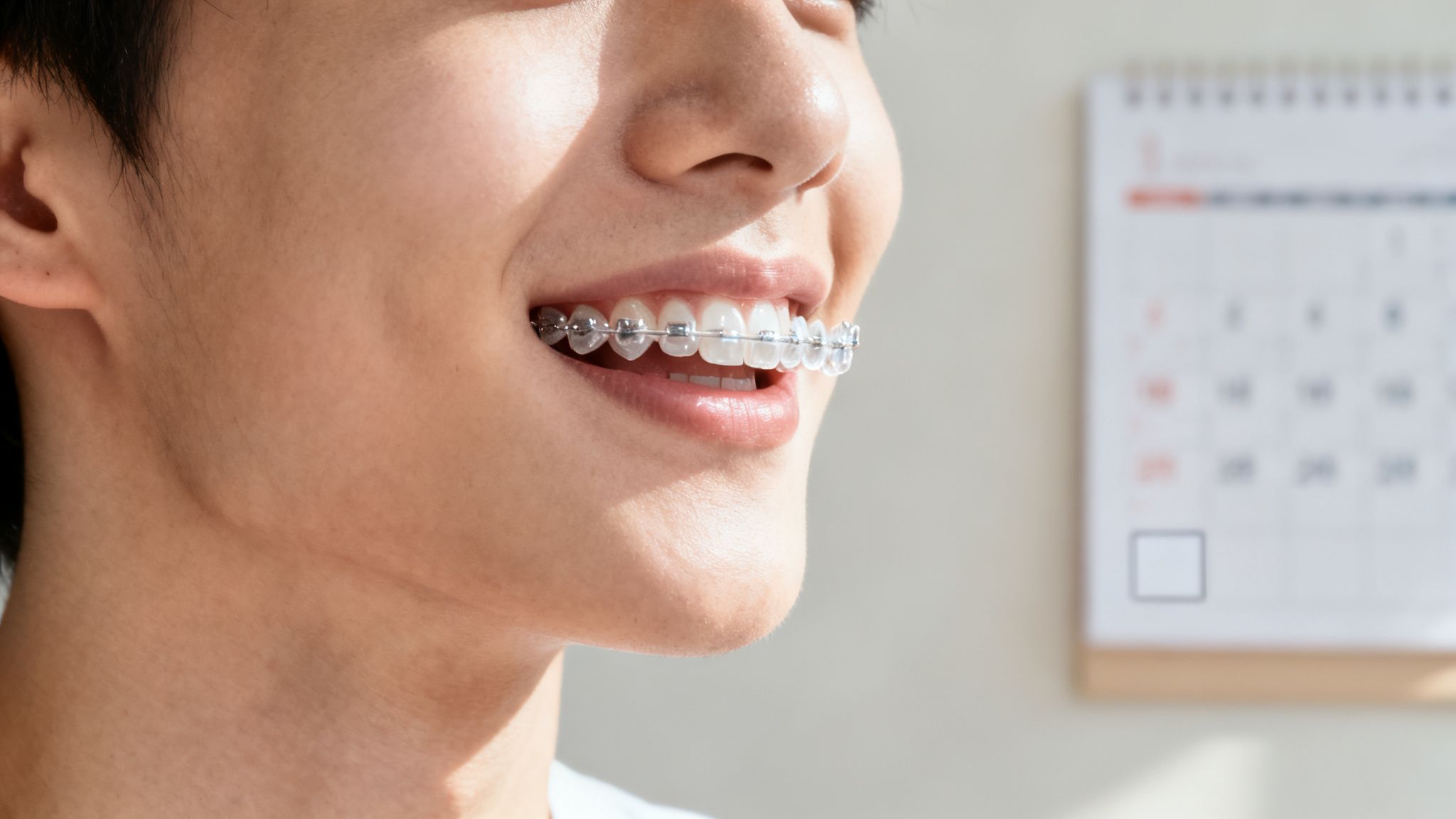
Braces are a stronger tool for certain movements. If the vertical change is large, the bite is complex, or the tooth movement needs tighter control than aligners are likely to deliver, braces may be the more efficient and more reliable choice.
Signs aligners may not be ideal
- Severe open bite or major vertical discrepancy
- Need for significant extrusion of front teeth
- History of poor compliance with removable appliances
- Complex movement in several planes at once
- A strong preference to avoid attachments or refinements
If aesthetics still matter
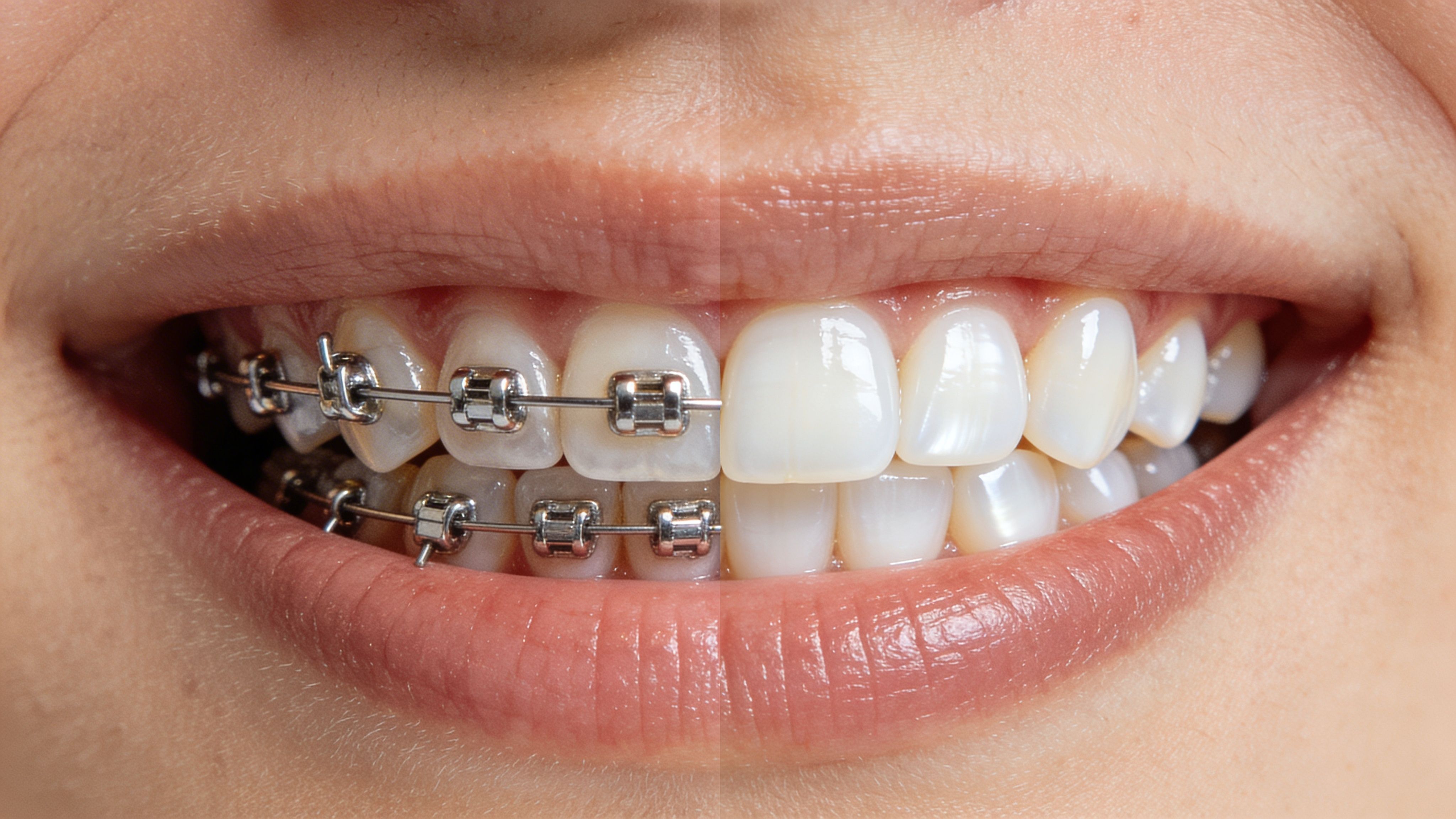
Patients who want something less flashy than traditional metal braces still have options. When fixed treatment is the smarter route, more aesthetic bracket choices can help bridge that concern without sacrificing control.
The right appliance is the one that gives you the best balance of appearance, predictability, and stability. Not the one that looks best on day one.
FAQ
Can Invisalign bring one tooth down if it's higher than the others?
Yes, sometimes it can. A single-tooth extrusion case is often more manageable than a larger bite correction, especially if attachments can be used and the movement needed is modest. The deciding factor is how predictable that specific tooth movement looks on exam and scan review.
Is bringing teeth down with Invisalign harder than straightening crooked teeth?
Usually, yes. Vertical extrusion is one of the less predictable clear aligner movements, while some tipping and alignment movements are generally more favorable. That's why treatment plans for extrusion often need more built-in support.
Will I need attachments if I want Invisalign to bring a tooth down?
Often, yes. Attachments help the aligner grip the tooth and direct force in a way that makes extrusion more realistic. If a patient wants no attachments at all, that can limit what Invisalign can do well in vertical cases.
How many hours a day do I need to wear Invisalign for this to work?
The sources on aligner mechanics consistently point to 20 to 22 hours per day for proper wear in active treatment. For extrusion, that level of consistency matters even more because vertical movement tends to be less forgiving when trays are worn loosely or inconsistently.
Is Invisalign or braces better for an open bite?
It depends on the severity. Mild to moderate open bite cases may respond well to Invisalign with good planning and compliance. More severe vertical problems often give us more control with braces.
Does Invisalign hurt when it's bringing a tooth down?
Most patients describe aligners as pressure rather than sharp pain. You may feel soreness for a short time after switching trays or adding attachments, but that usually settles. If a tray feels dramatically wrong, it should be checked rather than forced.
How long does it take for Invisalign to bring teeth down?
There isn't a dependable one-size-fits-all timeline for extrusion. The timing depends on how much vertical movement is needed, how well the trays track, and whether refinements are required. A specific estimate should come from an exam, not from a generic promise online.
What if Invisalign doesn't move the tooth down enough?
That can happen. In many cases, the next step is refinement aligners, added auxiliaries, or a change in mechanics. In some cases, switching to braces is the more practical move to finish the job well.
Is Invisalign a good option for teens who need vertical correction?
Sometimes, yes. Teens can do very well with aligners if they're responsible with wear and the movement needed fits what aligners do predictably. If compliance is doubtful, fixed braces are often the safer recommendation.
Will the tooth stay in place after treatment?
It can, but retention matters. Teeth have a natural tendency to shift, especially after active orthodontic movement, so retainers are part of keeping the result stable.
If you're trying to figure out whether can invisalign bring teeth down applies to your specific bite, the best next step is an in-person evaluation. Dr. Jeremy and Dr. Melissa offer free consultations at Magic Fox Orthodontics and can tell you whether Invisalign, Iconix esthetic brackets, or traditional metal braces make the most sense for your case.
Call (714) 594-5777, visit Magic Fox Orthodontics, or stop by 17041 Beach Boulevard, Suite 101, Huntington Beach, CA 92647. Office hours are Monday to Friday 9:00 AM to 5:00 PM and Saturday 8:00 AM to 2:00 PM.