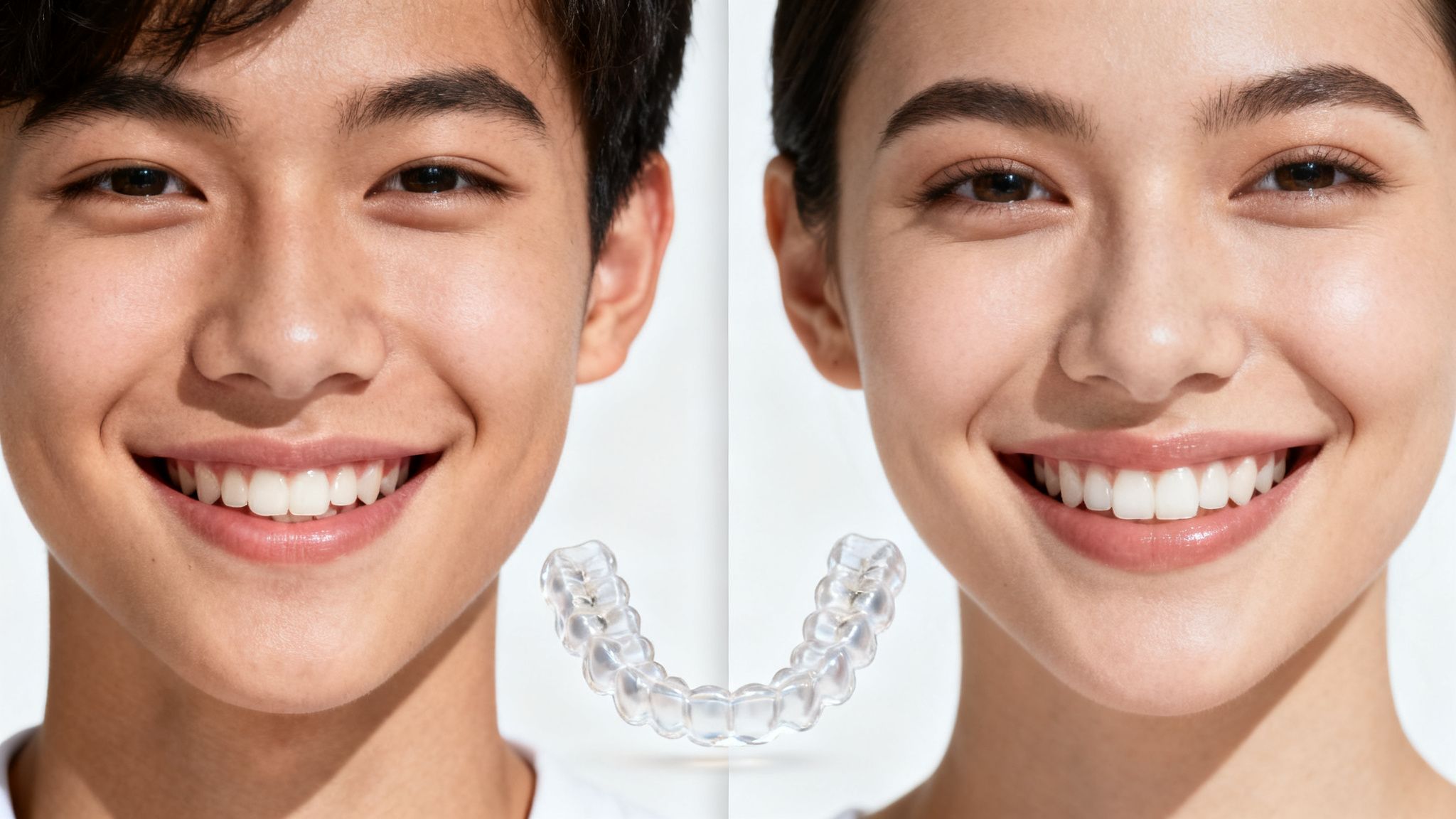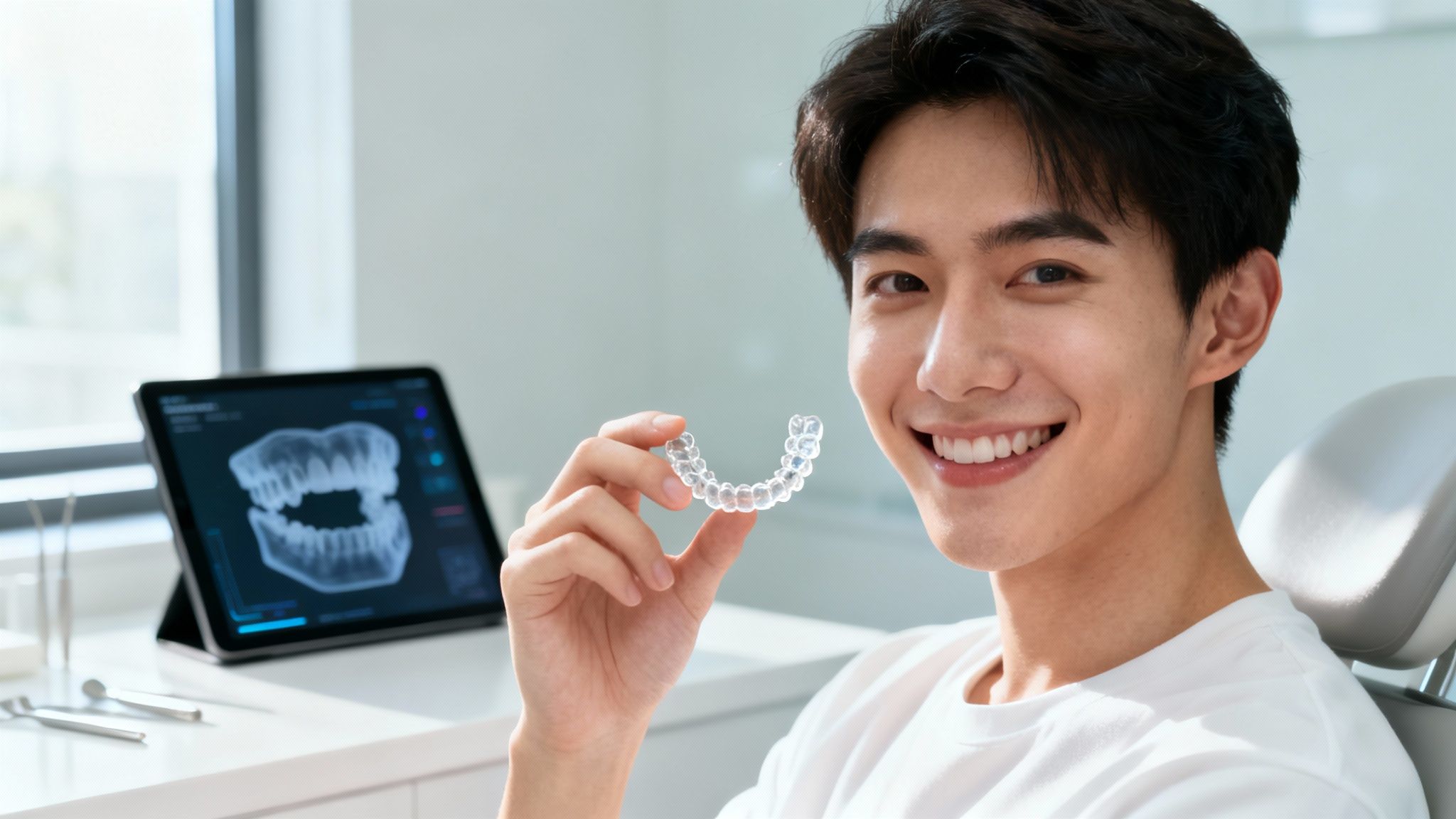
What an Invisalign Specialist Does That a Regular Dentist Doesn't
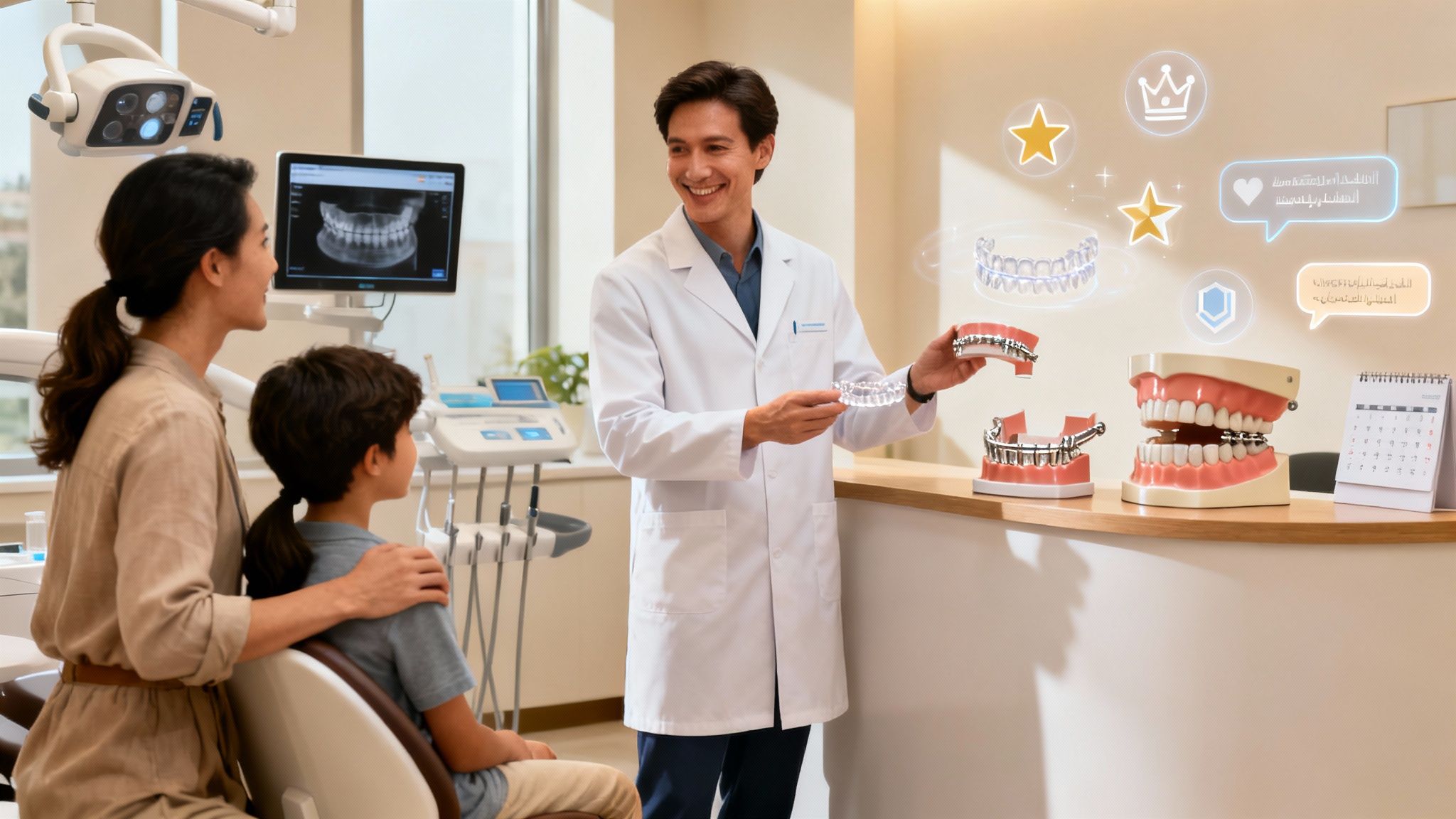
Direct Answer: An Invisalign specialist is an orthodontist who finished 2 to 3 extra years of residency in tooth movement and bite mechanics. That training shapes the treatment plan, not just the trays.
You searched for clear aligners near you and got a wall of results. Some are orthodontic offices. Some are general dental offices that also advertise Invisalign, and from the outside they look about the same.
That confusion comes up constantly with patients who walk into our office on Beach Boulevard from Oak View, Goldenwest, and Central Fountain Valley. Almost every week someone asks me some version of "can my regular dentist just do this?" The honest answer is that both can technically offer it, but the training behind the plan is very different.
I want to walk you through what that difference actually looks like in practice: who is allowed to provide aligners, where specialist training changes the outcome, and what questions to ask before you say yes to a plan.
Invisalign Is a Brand, Not a Credential
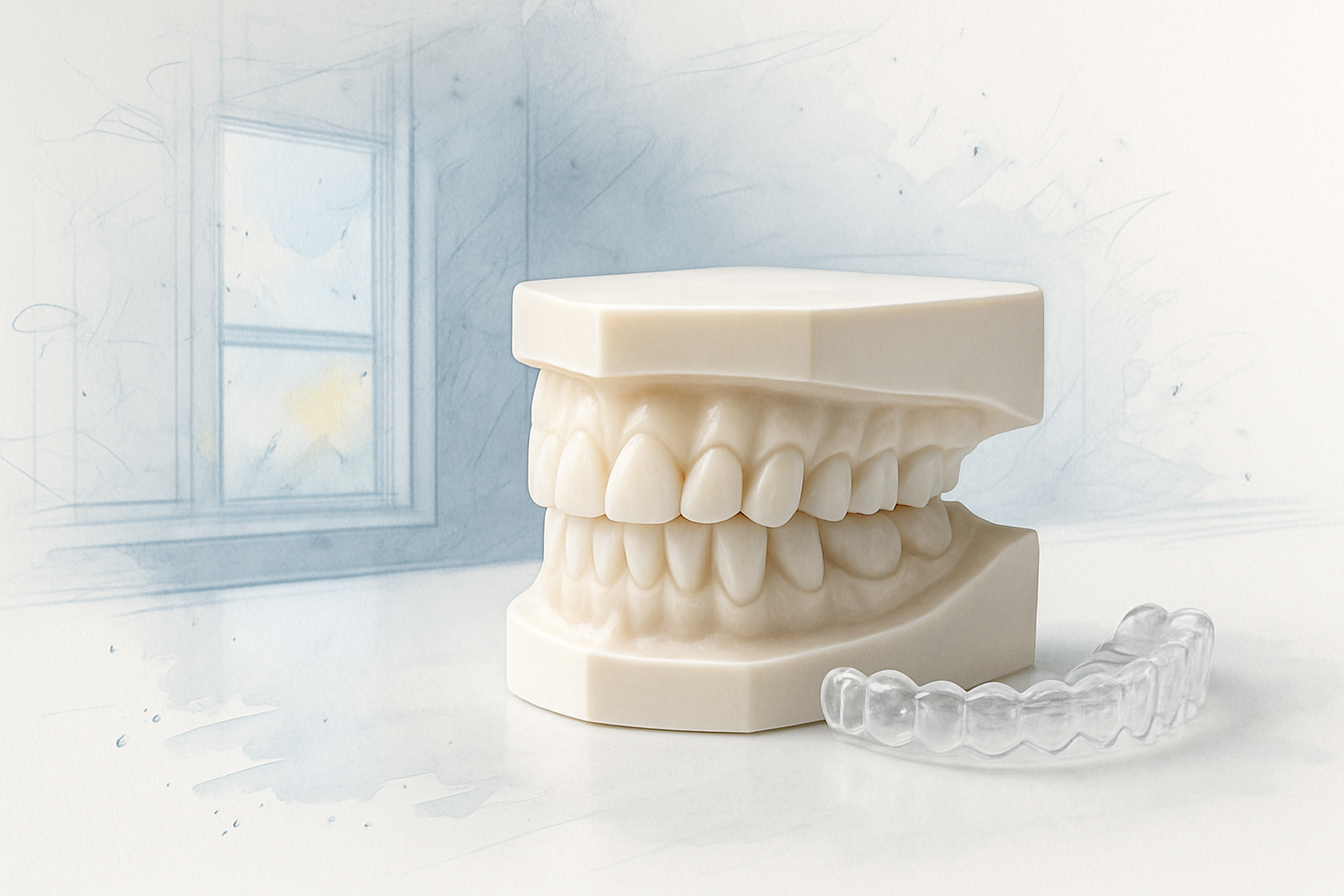
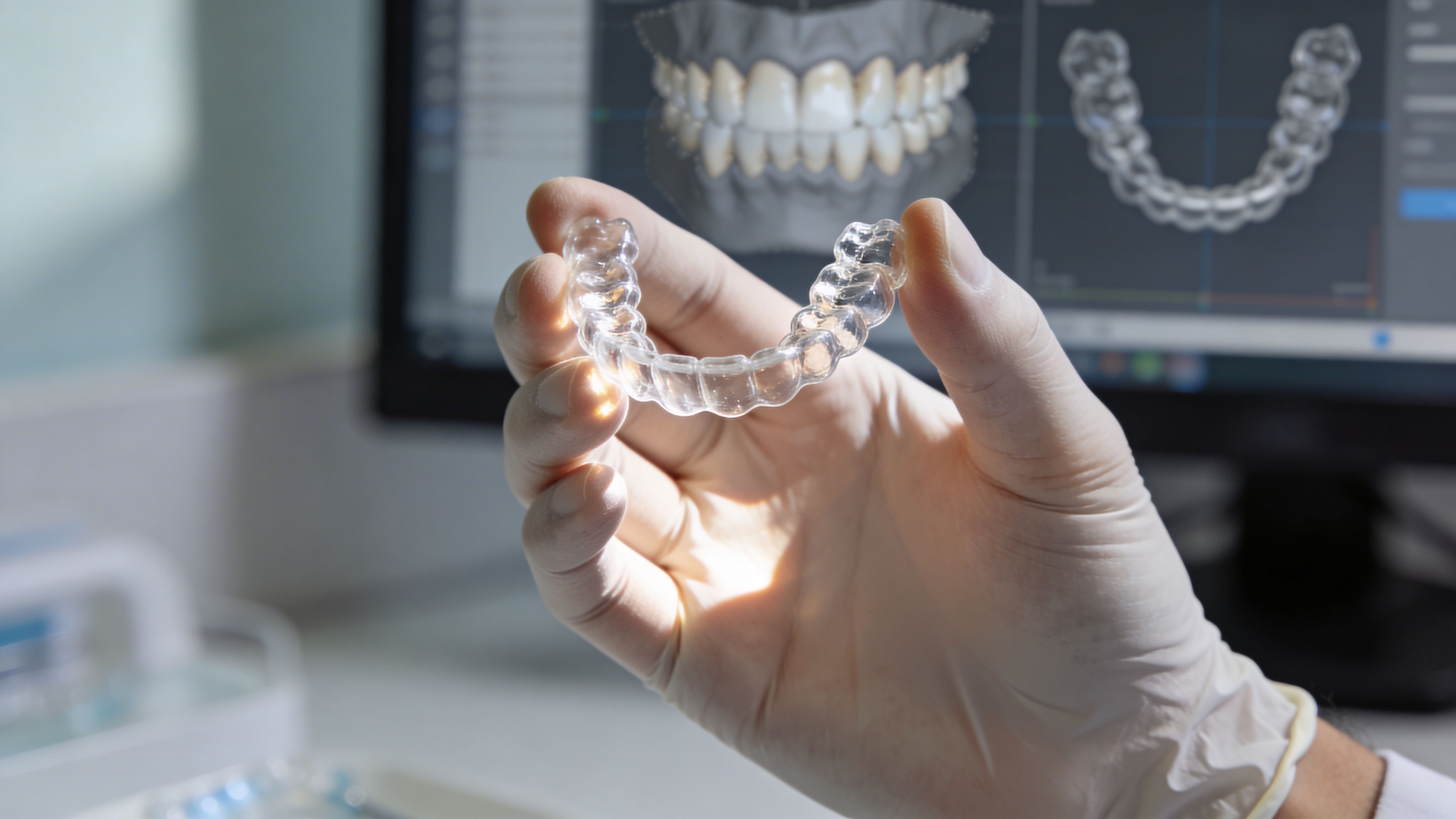
This is the part most people miss. Invisalign is a product made by a manufacturer, and a licensed dentist can become a provider by completing a certification course.
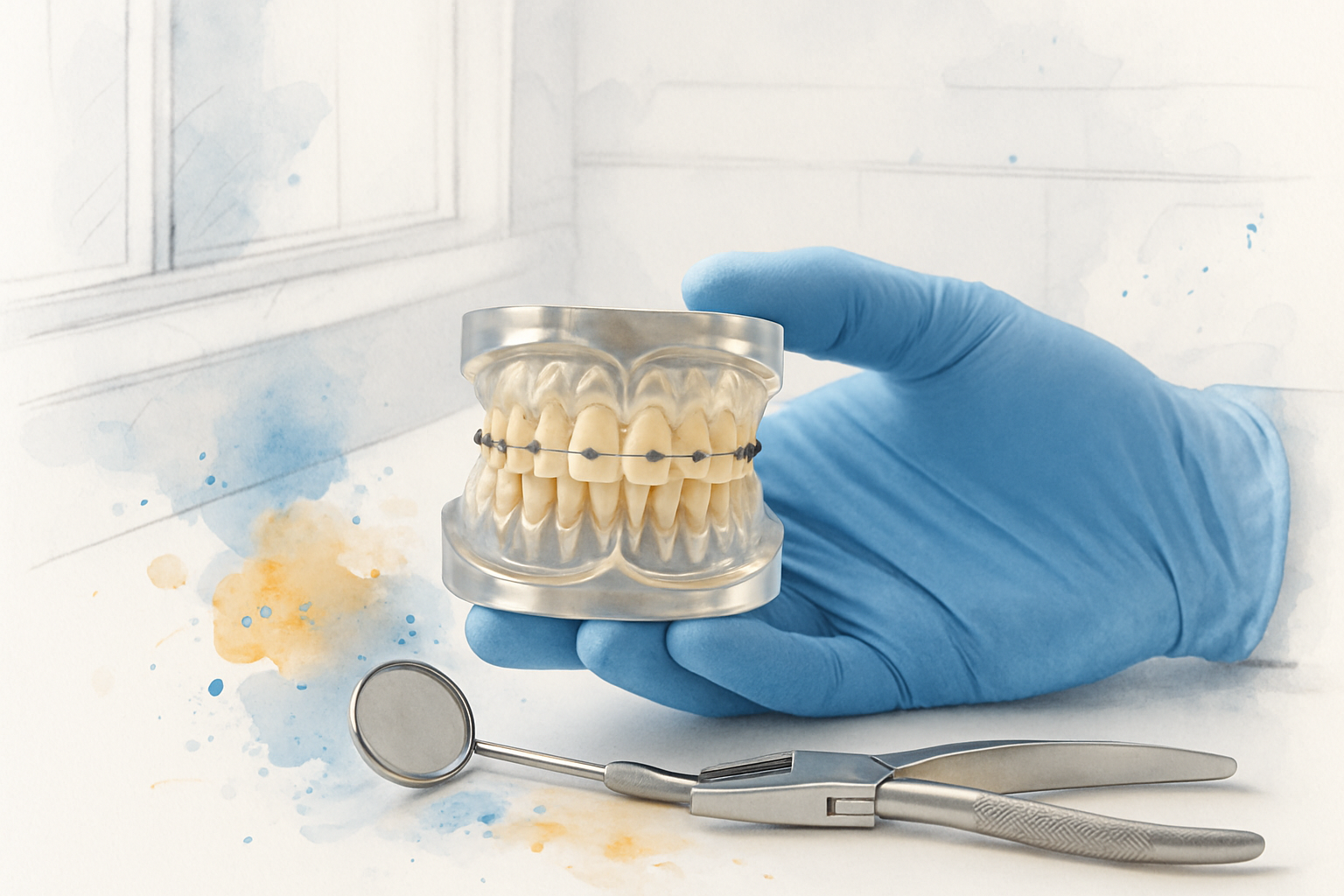
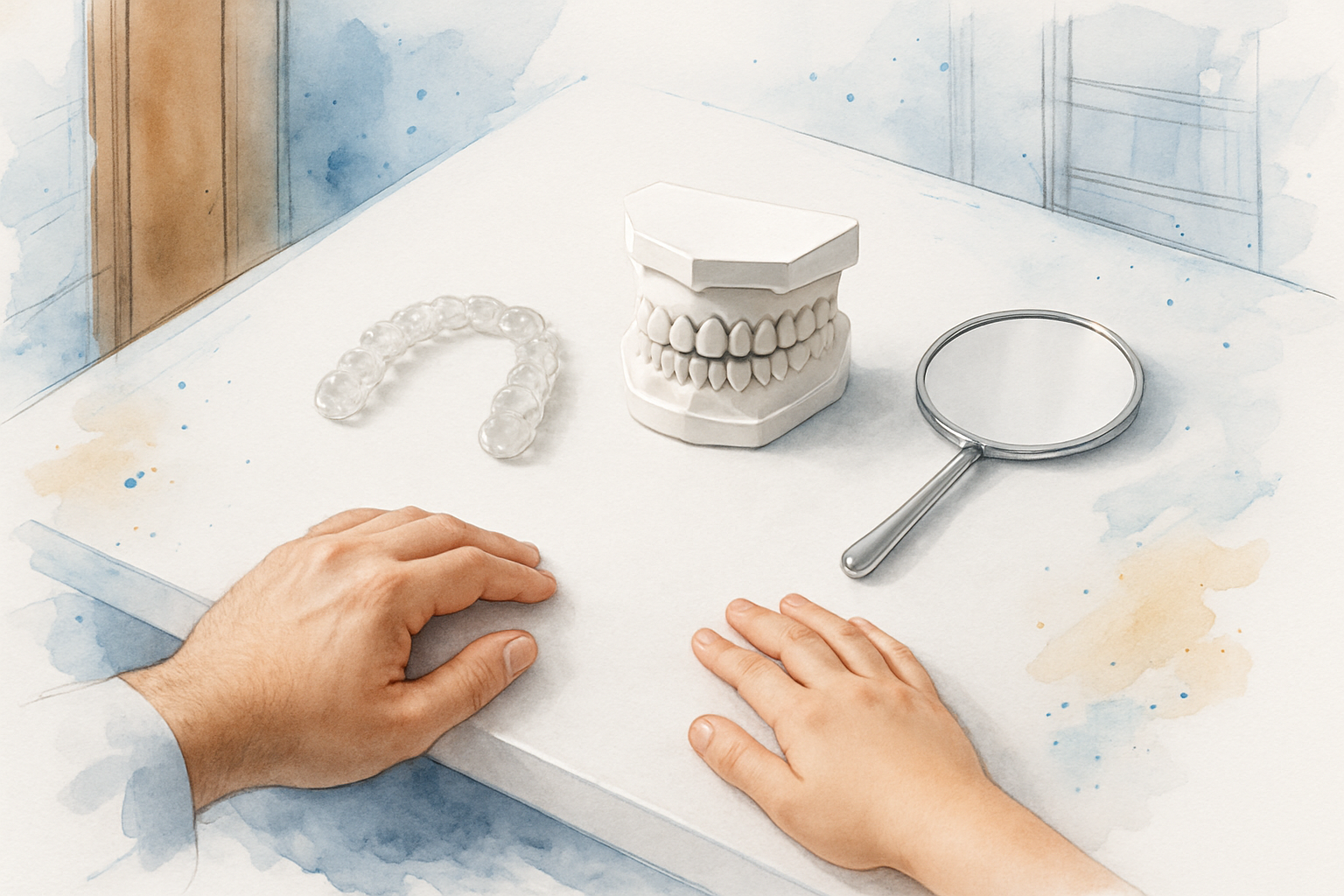
An orthodontist is something else. After dental school, an orthodontist completes 2 to 3 years of full-time residency focused on one thing: how teeth and jaws move, and what happens to the bite when they do. According to the American Association of Orthodontists, that residency is what separates the specialty from general practice.
So when you compare two offices that both show the same aligner logo on the window, you are not comparing the same service. You are comparing:
- The trays, which are the same product either way
- The diagnosis, which decides whether aligners are even the right tool
- The movement plan, which decides how many trays, in what order, and with what attachments
- The mid-course judgment, which decides what happens when a tooth does not track the way the software predicted
Three of those four come from the provider, not the product. We wrote more about the licensing side of this in our piece on whether your regular dentist can do Invisalign or braces.
Where the Specialist Gap Shows Up: Bites, Not Just Crooked Teeth
If your only issue is one slightly rotated front tooth, most providers will get you to a reasonable result. The gap opens up the moment your bite is part of the problem.
Look at the messages we actually receive through our website. People write in describing a crossbite and asking about braces. They ask whether aligners can fix a gap left by a missing tooth. They mention an overjet and want to know if clear trays alone can pull it back.
Those are not cosmetic questions. They are jaw position questions, and they need someone trained to answer them:
- Crossbite: upper and lower teeth meeting in the wrong relationship, sometimes with the jaw shifting to compensate
- Open bite: front teeth that never touch, which can involve tongue posture and vertical control
- Overjet: upper front teeth sitting well ahead of the lower ones, where the fix depends on age, growth, and whether the jaws or just the teeth are out of position
- Severe crowding: where the real question is whether there is enough room, not just how to rotate a tooth
Dr. Jeremy and Dr. Melissa are trained to tell you when aligners will handle a case cleanly, when they need help from other mechanics, and when braces will simply give a more predictable result. Saying "aligners are not the best tool for this one" is part of the job. If you want the detail, we broke down whether Invisalign can actually fix an overjet and what crossbite correction looks like before and after.
Training and Scope: A Side by Side Look
Neither column is a knock on anyone. General dentists do excellent work in general dentistry. This is simply about what the extra training covers.
| What you are comparing | General dentist offering aligners | Orthodontic specialist |
|---|---|---|
| Education after dental school | Manufacturer certification course, typically short | 2 to 3 year full-time orthodontic residency |
| Daily case volume | Aligners alongside fillings, crowns, cleanings | Tooth movement and bite correction all day, every day |
| Typical case fit | Mild spacing and light cosmetic alignment | Mild through complex, including bite and growth cases |
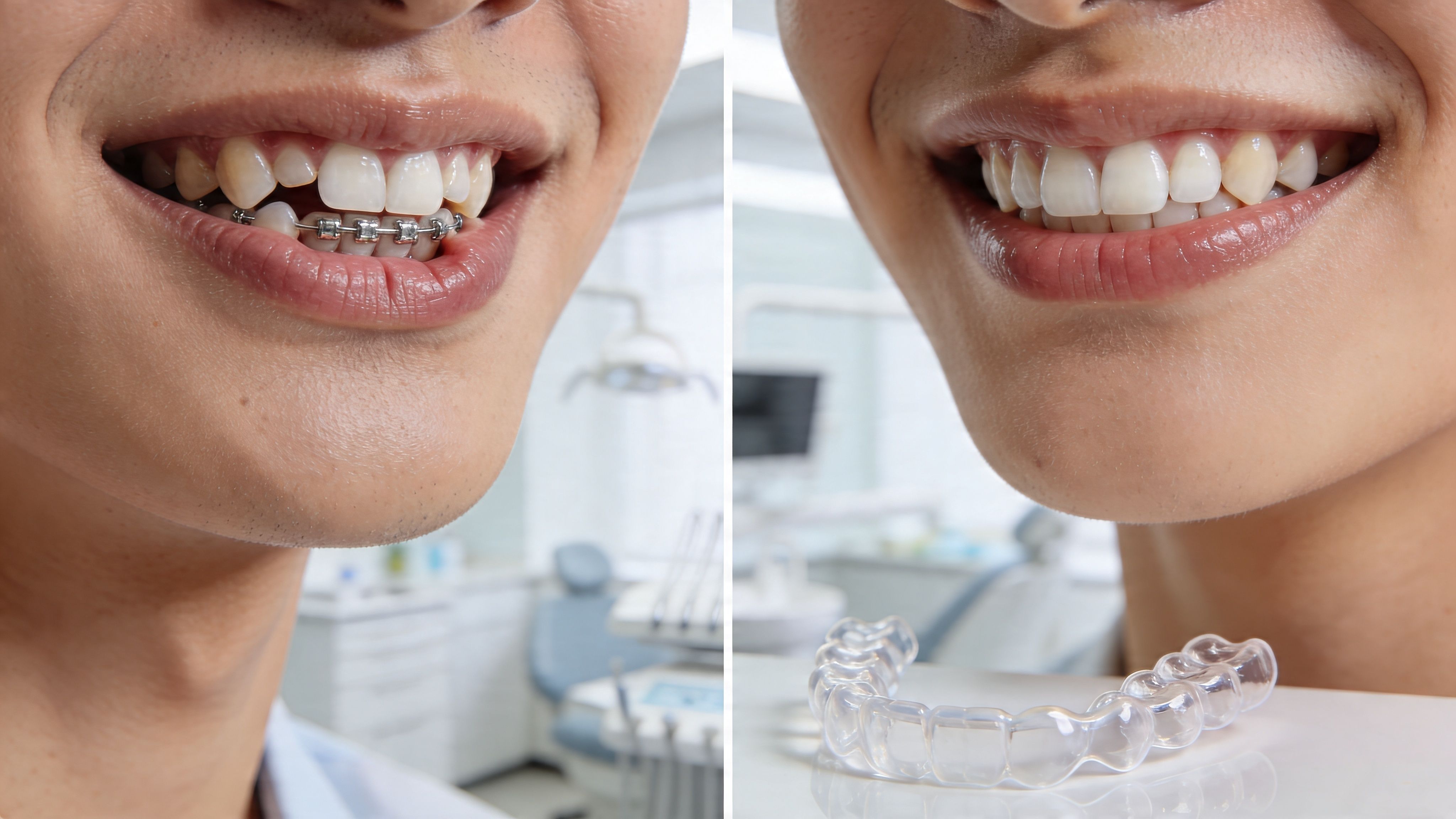
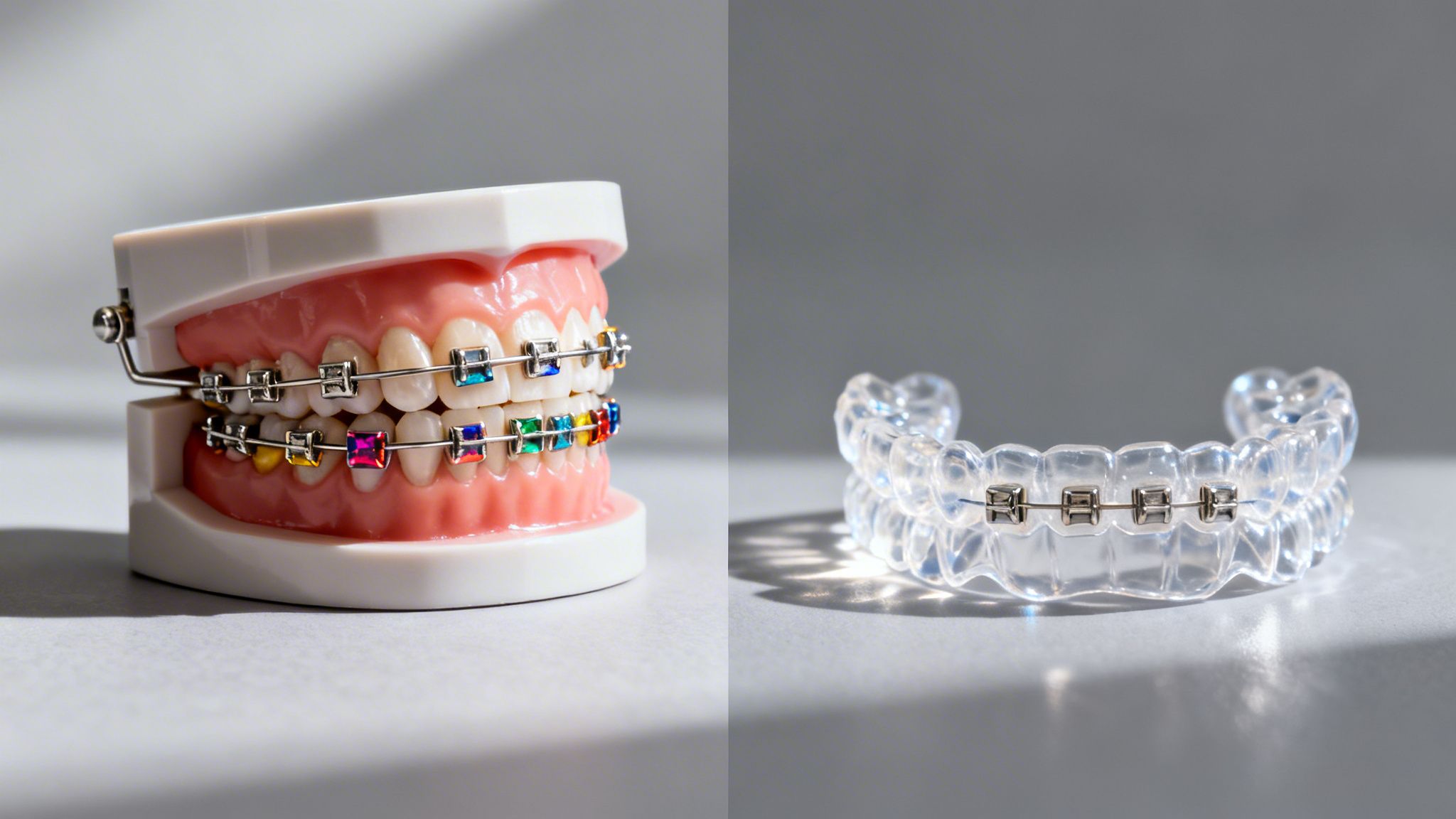
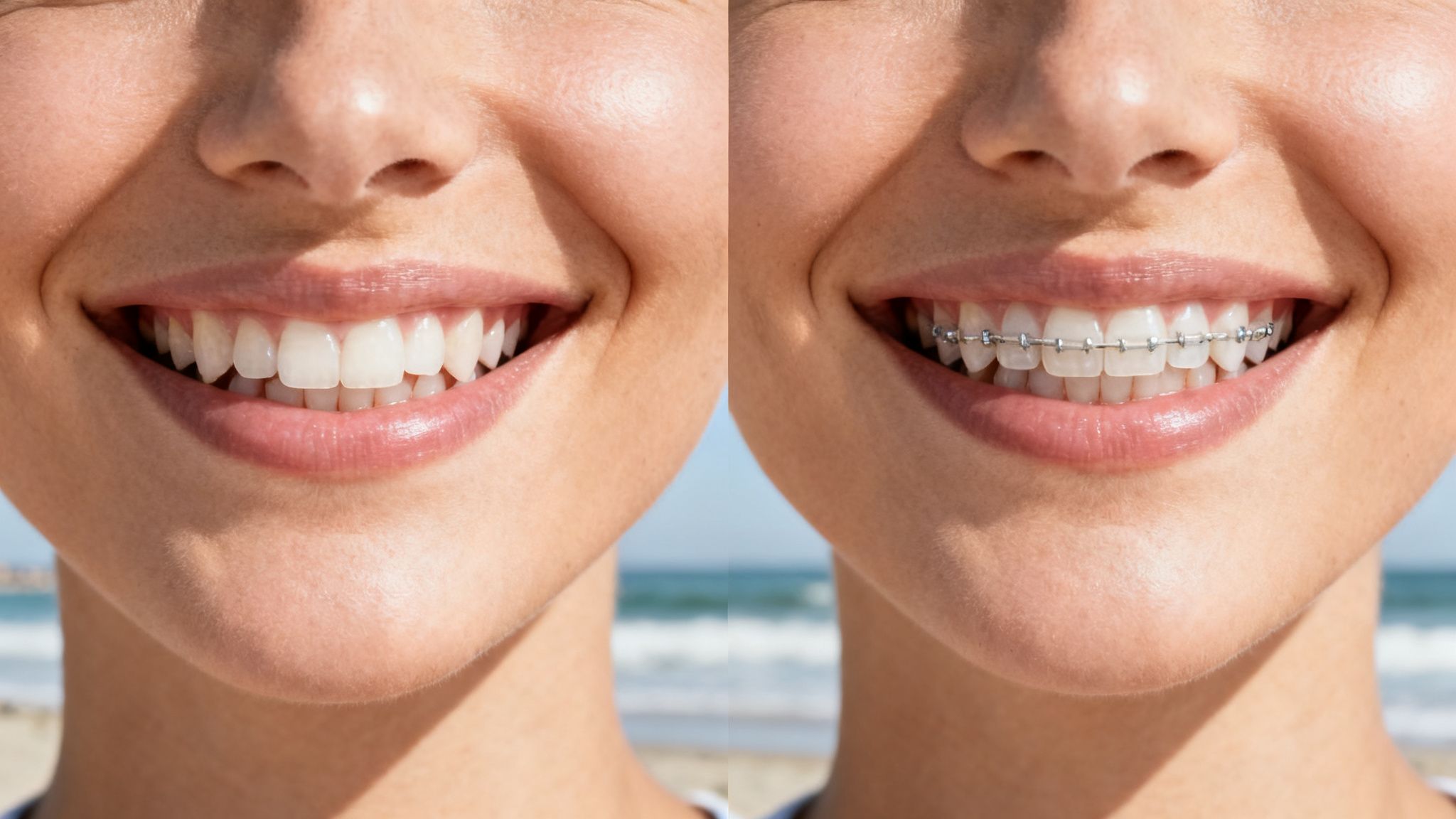
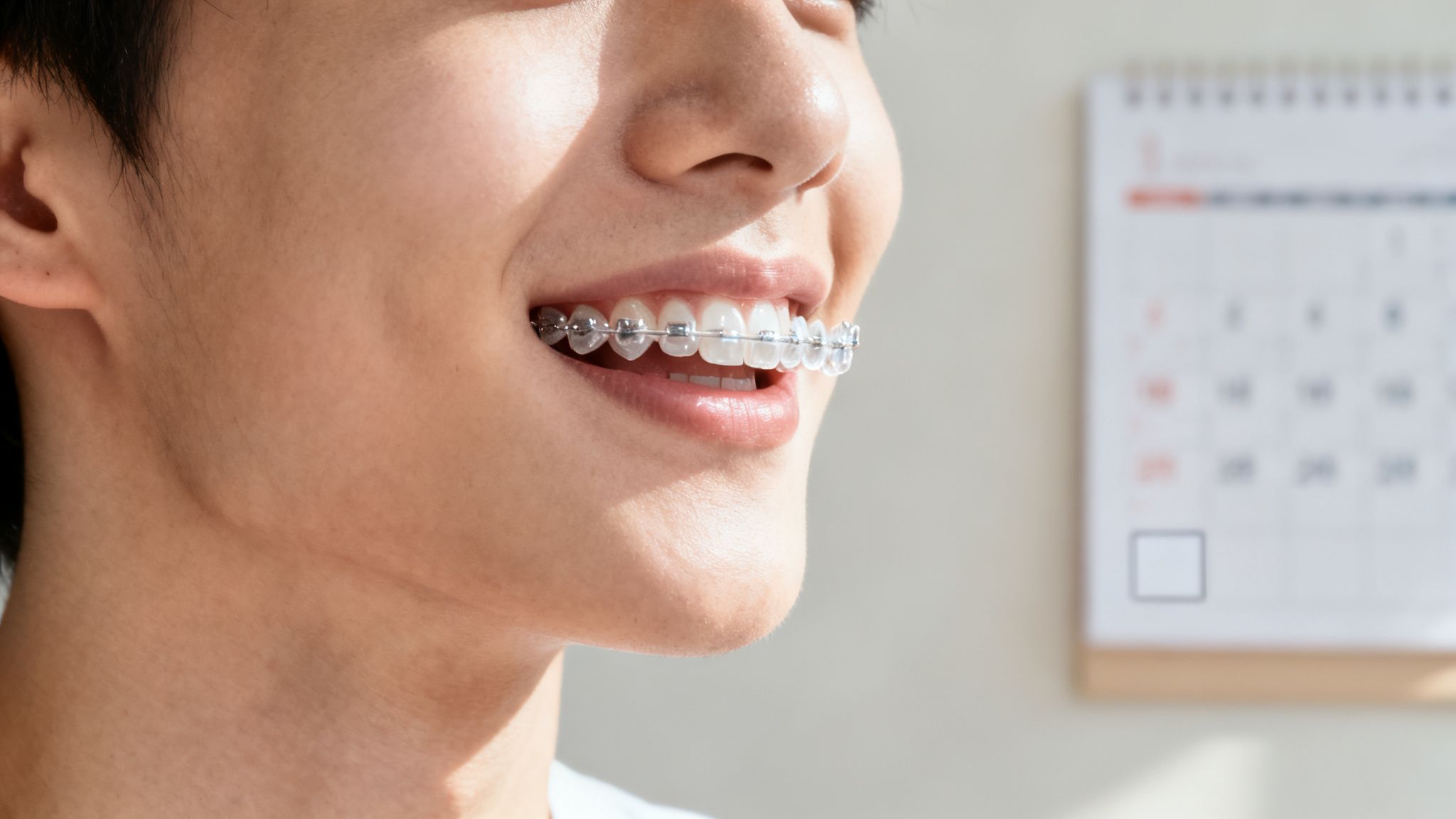
| Braces as a backup option | Often not offered in-house | Metal braces and champagne-colored Iconix brackets available if aligners are not the right fit |
| Who adjusts the plan mid-treatment | Varies by office | The orthodontist who designed the plan |
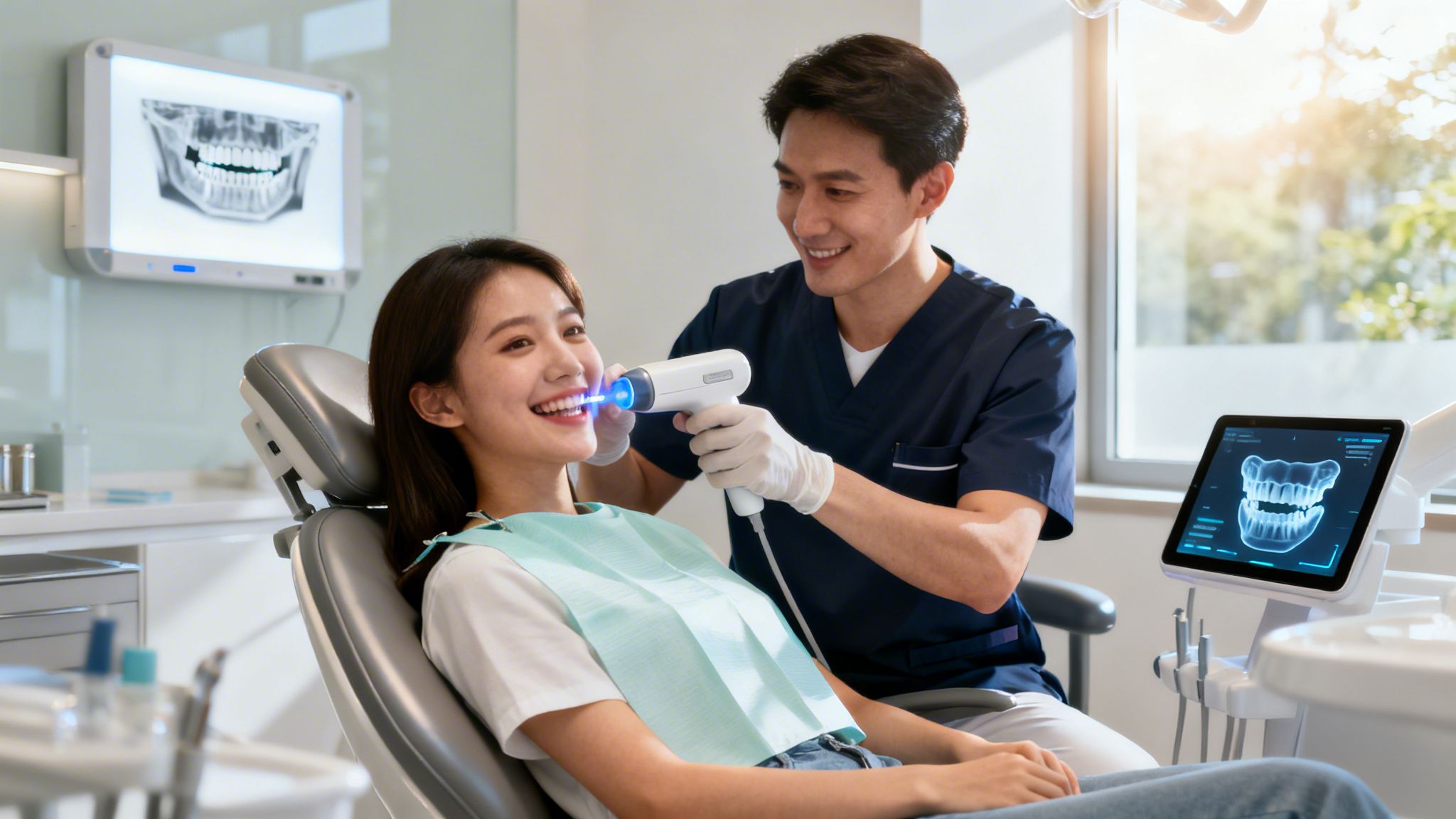
What a Specialist-Led Consultation Actually Involves
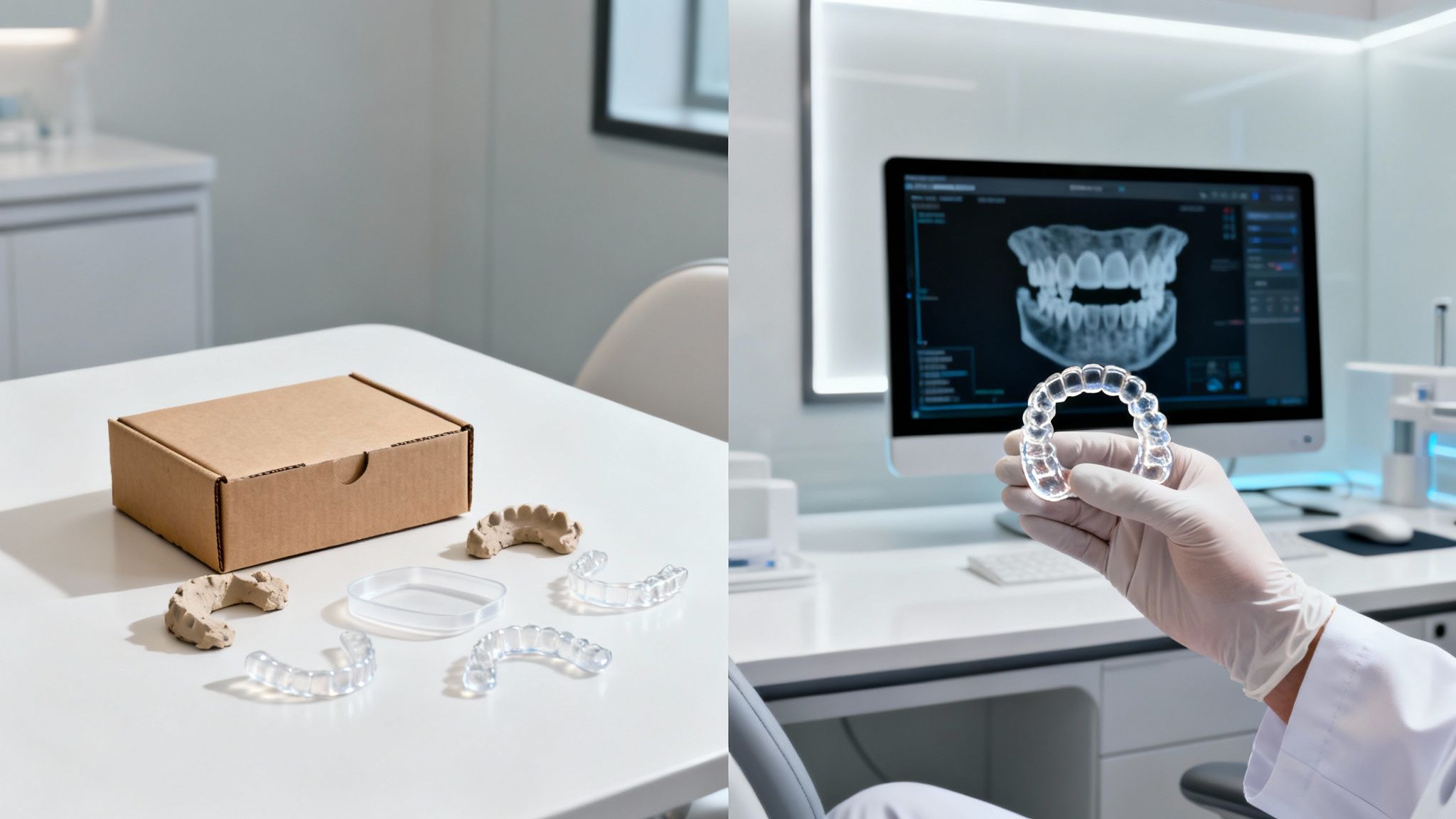
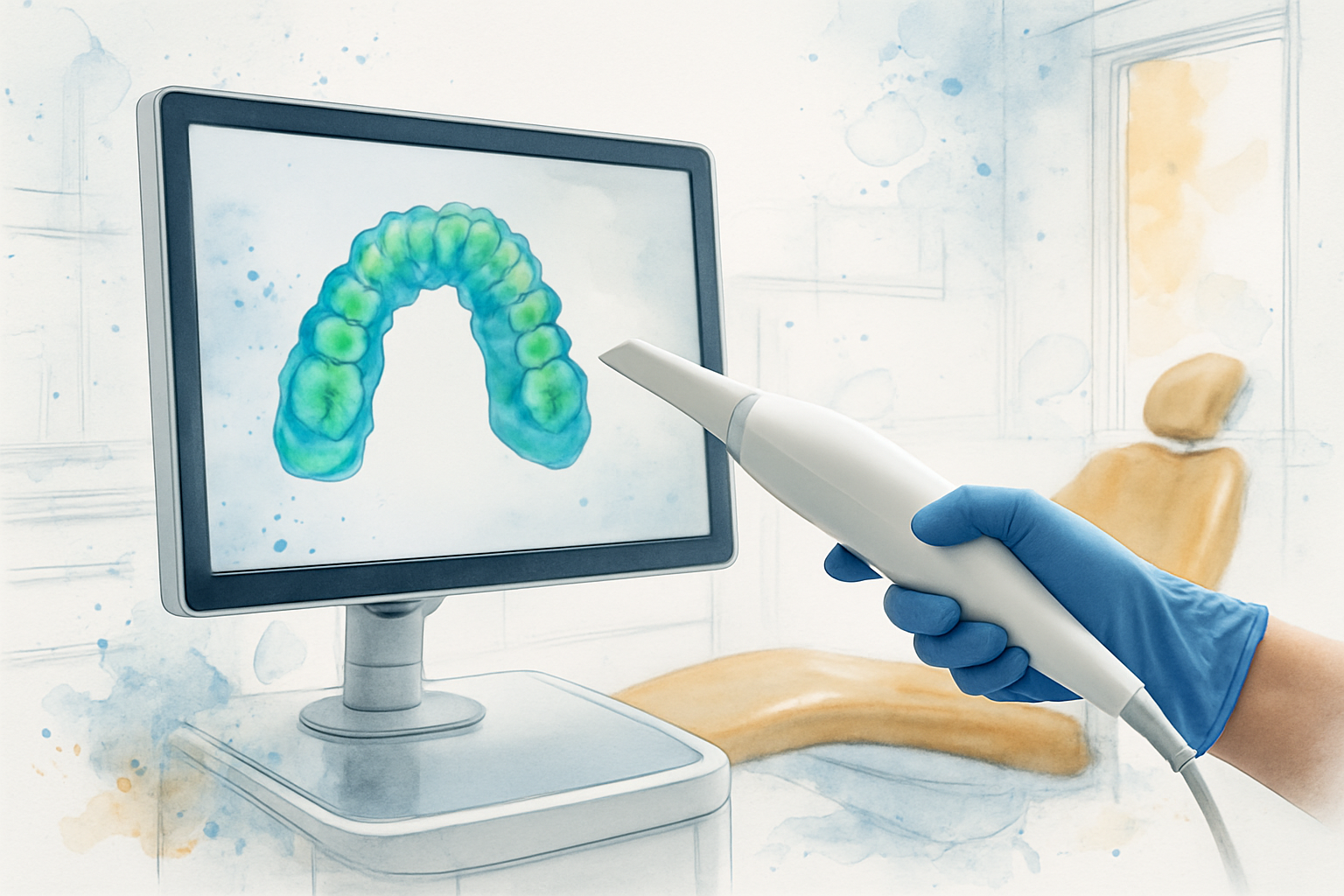
A shorter aligner intake often jumps straight from a scan to a price. A specialist consult adds diagnostic steps before anyone talks numbers.

What Specialist Care Feels Like in the Chair
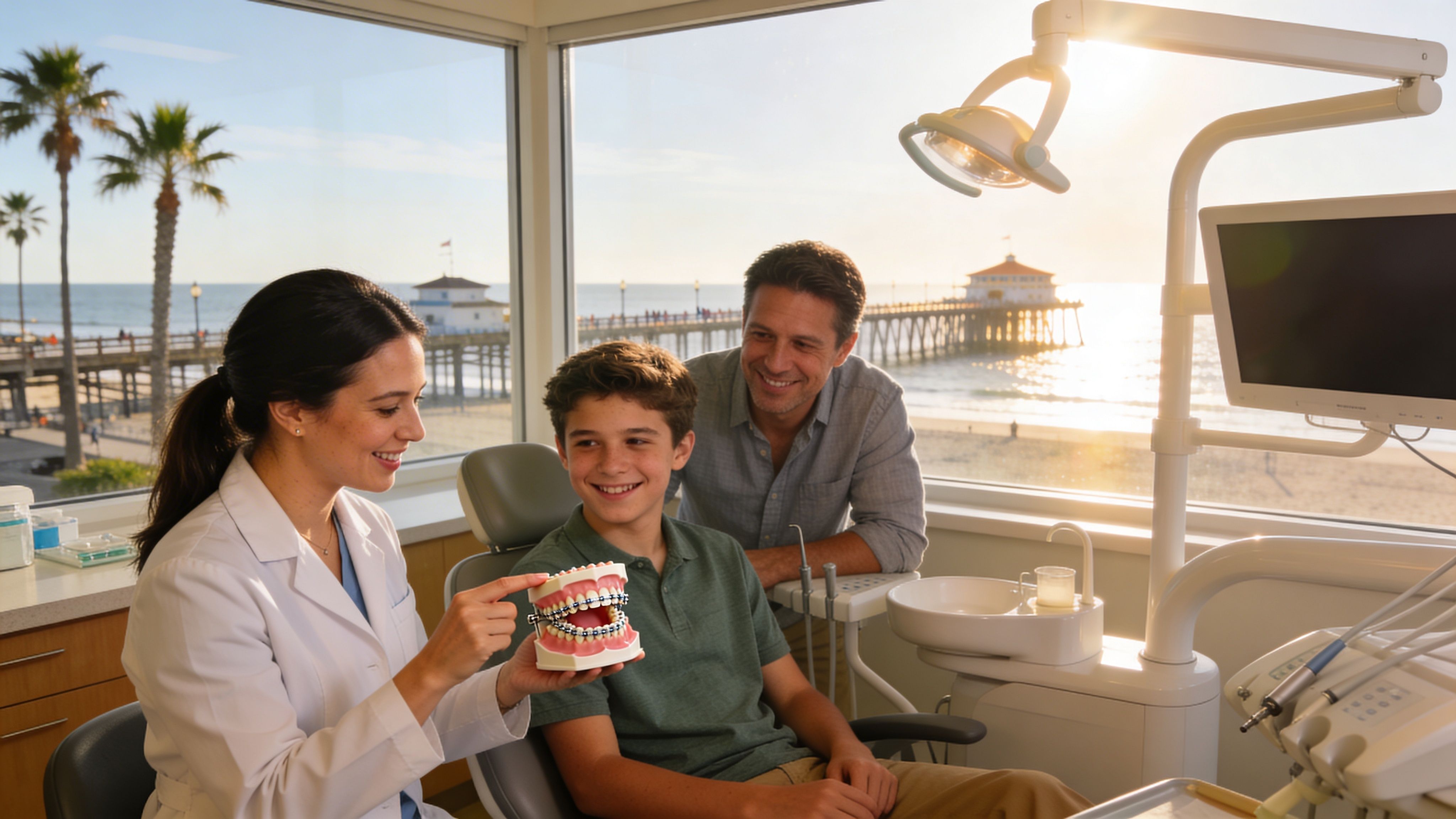
Credentials are on the wall. The part you actually notice is how much time someone spends explaining your case before anything starts.
We hear from people who came in for a second opinion because a previous consult felt rushed, or because they were handed a plan they did not fully understand. One patient's parent put it this way in a review: "She is knowledgeable and sincere. Always answers our questions and explains everything so clearly." That is a description of the process, not the product.
A good consult should leave you able to answer three things on your own:
- What is actually going on with my bite, in plain words
- Why this treatment option was chosen over the others
- What the realistic timeline and total cost look like
If you cannot answer those after leaving an office, you did not get a treatment plan. You got a quote.
One more thing worth saying to our neighbors in Talbert Village, Newland, Adams, and Wintersburg: seeing a specialist does not mean a colder, more clinical visit or a longer drive. We are right on Beach Boulevard, a few minutes from most of Fountain Valley, and the office is built for kids and nervous adults alike. There is even a magic door that our younger patients talk about more than their teeth.
Questions to Ask Before You Start Anywhere
Adults now make up the majority of clear aligner patients nationally, and more offices offer the product every year. That means more people are picking a provider without knowing what to ask.
Bring these questions to any consult, ours included:
- Are you an orthodontist, and did you complete a residency? A direct question deserves a direct answer.
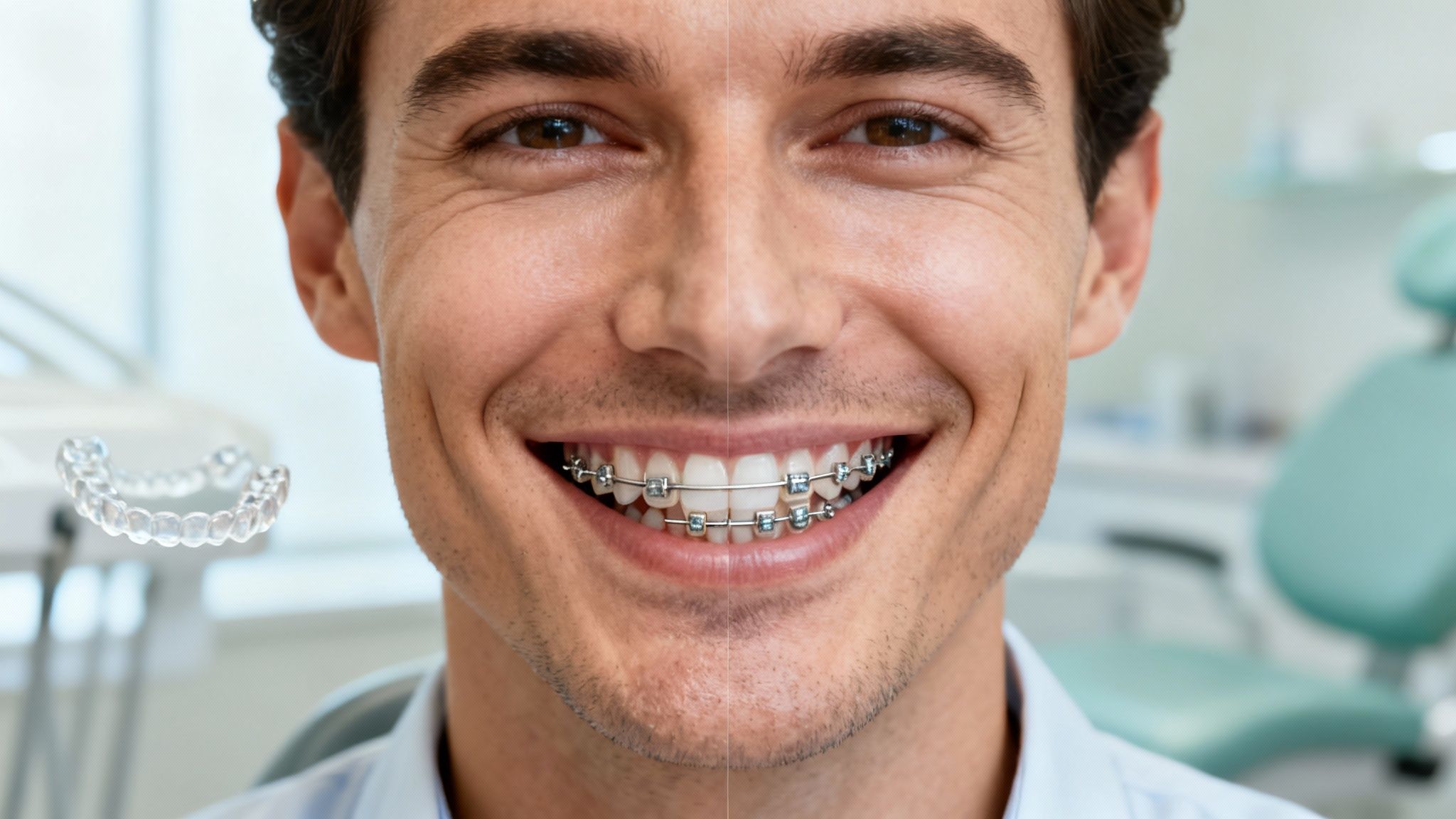
- Is my case aligner-appropriate, or would braces be more predictable? Listen for a real reason either way.
- Who reviews my scans and adjusts the plan? You want the same clinician start to finish.
- What happens if a tooth does not track? Mid-course corrections and refinements are normal, so ask how they are handled.
- Do I need full treatment, or would limited treatment work? Plenty of people call us saying they only have a minor issue and do not think they need full braces. Starting in July we began offering focused touch-up treatment for exactly that situation, so ask whether a limited option fits.
On cost, I will not quote you a number I cannot stand behind. Fees vary quite a bit based on case complexity, treatment length, whether you need braces or aligners, and what your plan covers. What I can tell you is that most orthodontic offices around Huntington Beach will review insurance and monthly payment options at the consult, and PPO plans behave very differently from HMO plans. Ask for the total, not just the monthly figure. If you want more context first, we cover how Invisalign cost compares to braces cost and how to tell whether you need braces or Invisalign.
Frequently Asked Questions About Choosing an Invisalign Specialist
I already had braces years ago and my teeth shifted. Can I start over with aligners?
Yes, and this is one of the most common things people write to us about. Teeth drift after treatment, especially if a retainer stopped fitting. A relapse case is usually shorter than the original treatment, but it still needs a fresh diagnosis, since the reason things moved matters as much as how far they moved.
Will insurance cover treatment again if a previous dentist already did my Invisalign?
It depends entirely on your plan. Many dental plans include a lifetime orthodontic maximum, meaning once it is used, it is used, no matter which provider did the work. Some plans reset under different circumstances. Call your carrier or ask the office to check benefits before your consult so there are no surprises.
Am I too old to be doing this?
No. We treat patients well into their 70s, and one of our patients wrote her review at 76. Adult bone responds more slowly than a teenager's, so treatment can run a bit longer, but age by itself is not a disqualifier.
Is Invisalign more expensive at an orthodontist than at a general dentist?
Not necessarily, and price differences between offices usually come down to case complexity and how many trays your plan requires rather than the sign on the door. What changes is who is diagnosing the case. Ask both offices for the full treatment fee, what refinements are included, and whether retainers are part of the quote.
My dentist referred me. Do I still need a separate consult?
Yes, and that is a good thing. A referral means your dentist spotted something worth a specialist's look. The consult is where records get taken, the bite gets diagnosed, and you find out what your realistic options actually are.
Thinking Through Your Options?
If you are weighing aligners, metal braces, or Iconix brackets and want a specialist to look at your bite before you commit to anything, Dr. Jeremy and Dr. Melissa see patients from across Huntington Beach and Fountain Valley at our Beach Boulevard office. Consultations can be arranged at 714-594-5777 or through magicfoxsmiles.com whenever you are ready to ask your questions.