When You Only Need to Fix One or Two Teeth: What to Know
Direct Answer: Focused touch-up orthodontics corrects one or two specific teeth instead of the whole bite. It usually runs a shorter timeline than full treatment, but an exam is needed first to confirm the issue is truly limited.
You had braces in high school. You wore the retainer for a while, then it ended up in a drawer, and now one front tooth has quietly rotated back. Or the retainer still exists but it hurts to put in, which is its own kind of message.
I hear some version of this almost every week from adults in Huntington Beach and Fountain Valley. One caller put it plainly: they only had a minor tooth issue and did not think they needed full braces again.
They are usually right to ask. Below I want to explain what focused touch-up treatment actually is, why teeth drift in the first place, and how to tell whether your situation qualifies for a smaller fix or genuinely needs more.
Why one or two teeth drift after treatment (and even without it)
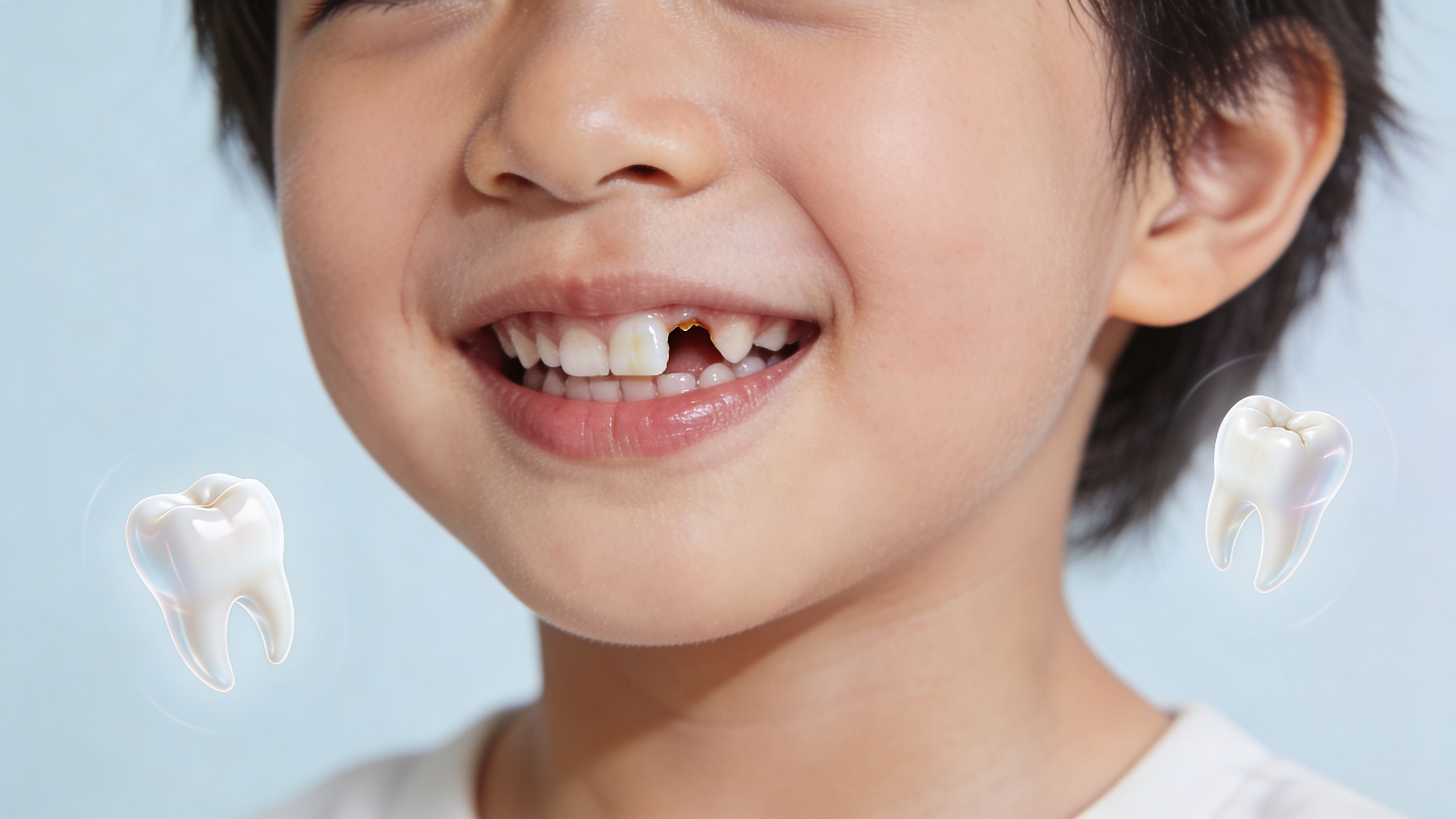
The most common story I see is orthodontic relapse. You finished treatment, retainer wear tapered off, and teeth moved back toward where they started. Lower front teeth are usually the first to go because they are small, crowded, and under constant pressure from the tongue and lips.
But this is not only a former-braces problem. Teeth shift throughout adulthood whether or not you ever had treatment. A few reasons:
- Natural aging. Jaw structure and bone density change over decades, and teeth migrate slightly forward and inward.
- Pressure patterns. Chewing habits, clenching, and even how you sleep apply small forces year after year.
- A missing or worn tooth. Neighboring teeth tilt into open space over time.
- Old dental work. A restoration that changes the bite by a fraction can nudge teeth off course.
The American Association of Orthodontists has long recommended retainer wear as a long-term habit rather than a temporary one, and that is the piece most people never hear clearly the first time around.
So if you are in Oak View or Talbert Village staring at one crooked lower incisor that was straight fifteen years ago, nothing went wrong with you. That is normal biology, and it is usually fixable.
What focused touch-up orthodontics actually means
We started offering focused touch-up treatment in July, specifically for patients who want to correct one or two things rather than commit to a full case. It is not a lite version of comprehensive treatment. It is a different scope of work.
Here is what makes it different:
- The goal is limited. We are moving a small number of teeth a small distance, not reorganizing the whole bite.
- The timeline is shorter. Many limited cases run in the range of a few months rather than the 18 to 24 months people associate with braces.
- Fewer visits. Less movement means fewer adjustment appointments squeezed into your work week.
- Cost scales with scope. Limited treatment is priced differently than comprehensive treatment because it is genuinely less work.
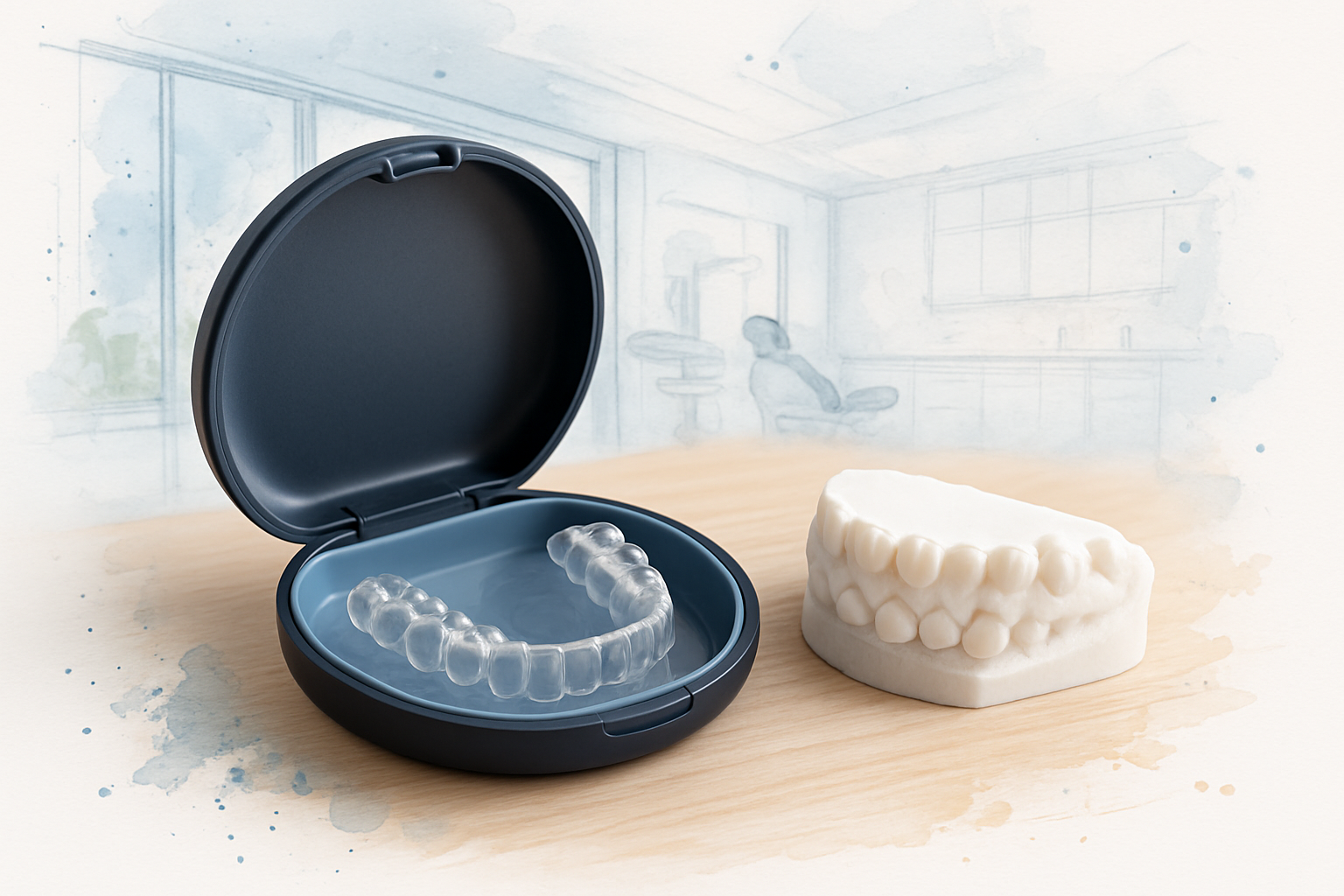
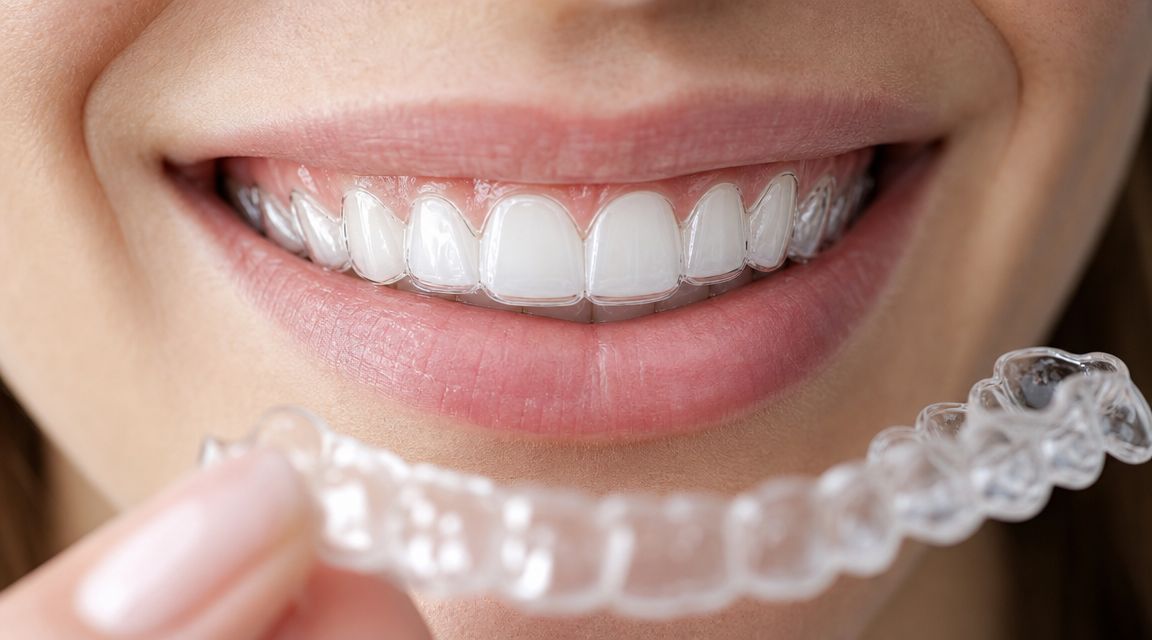
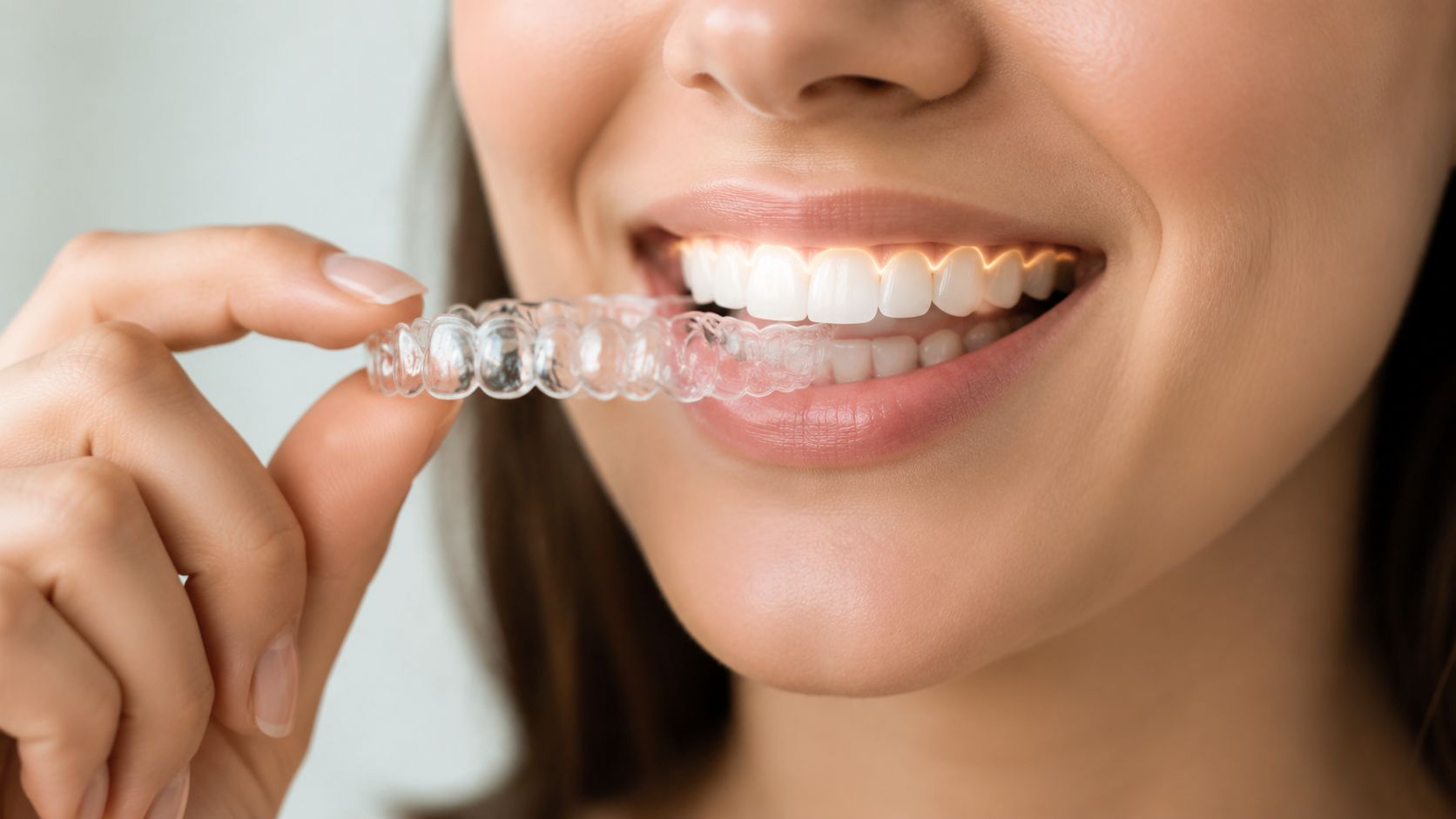
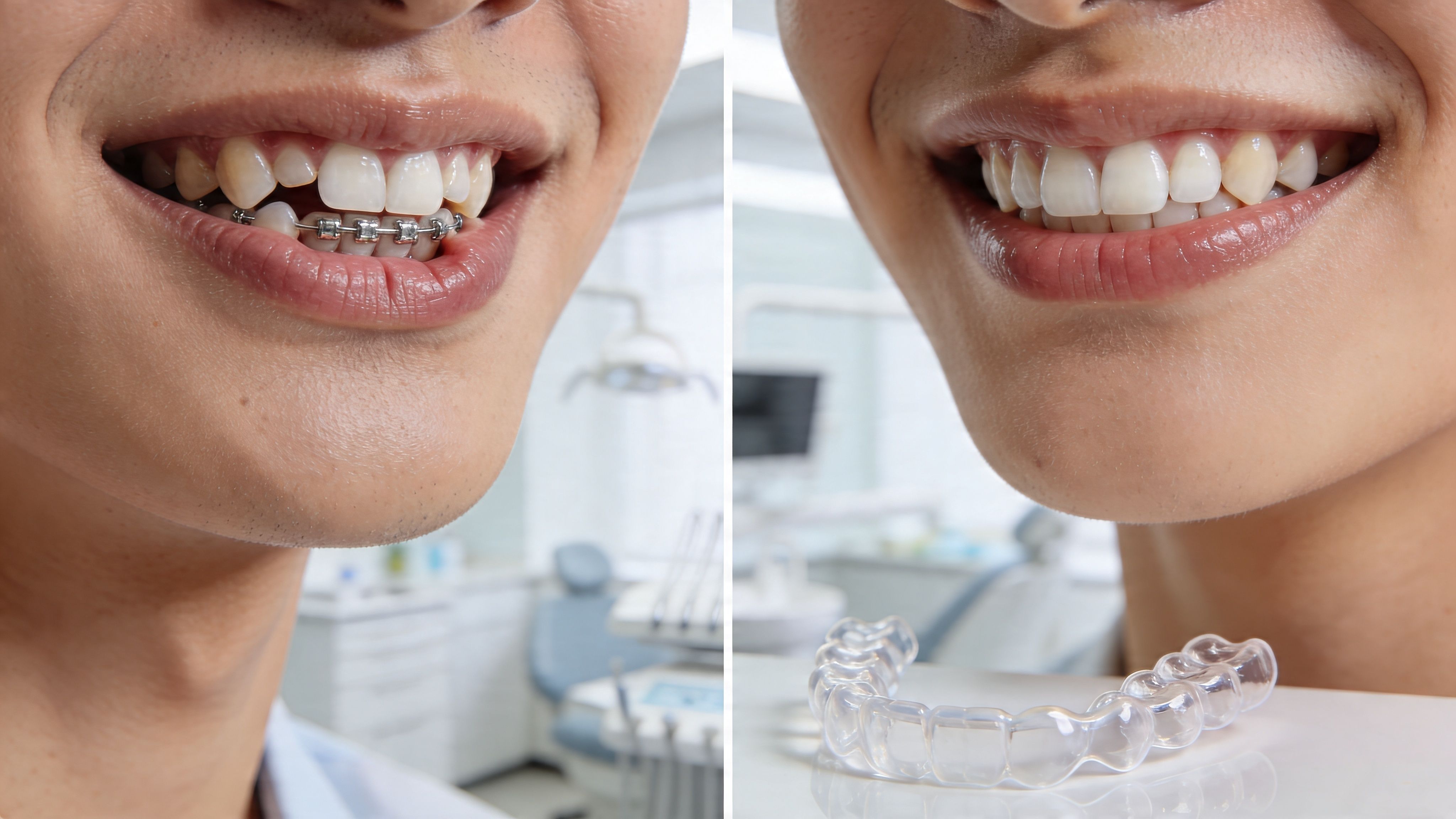
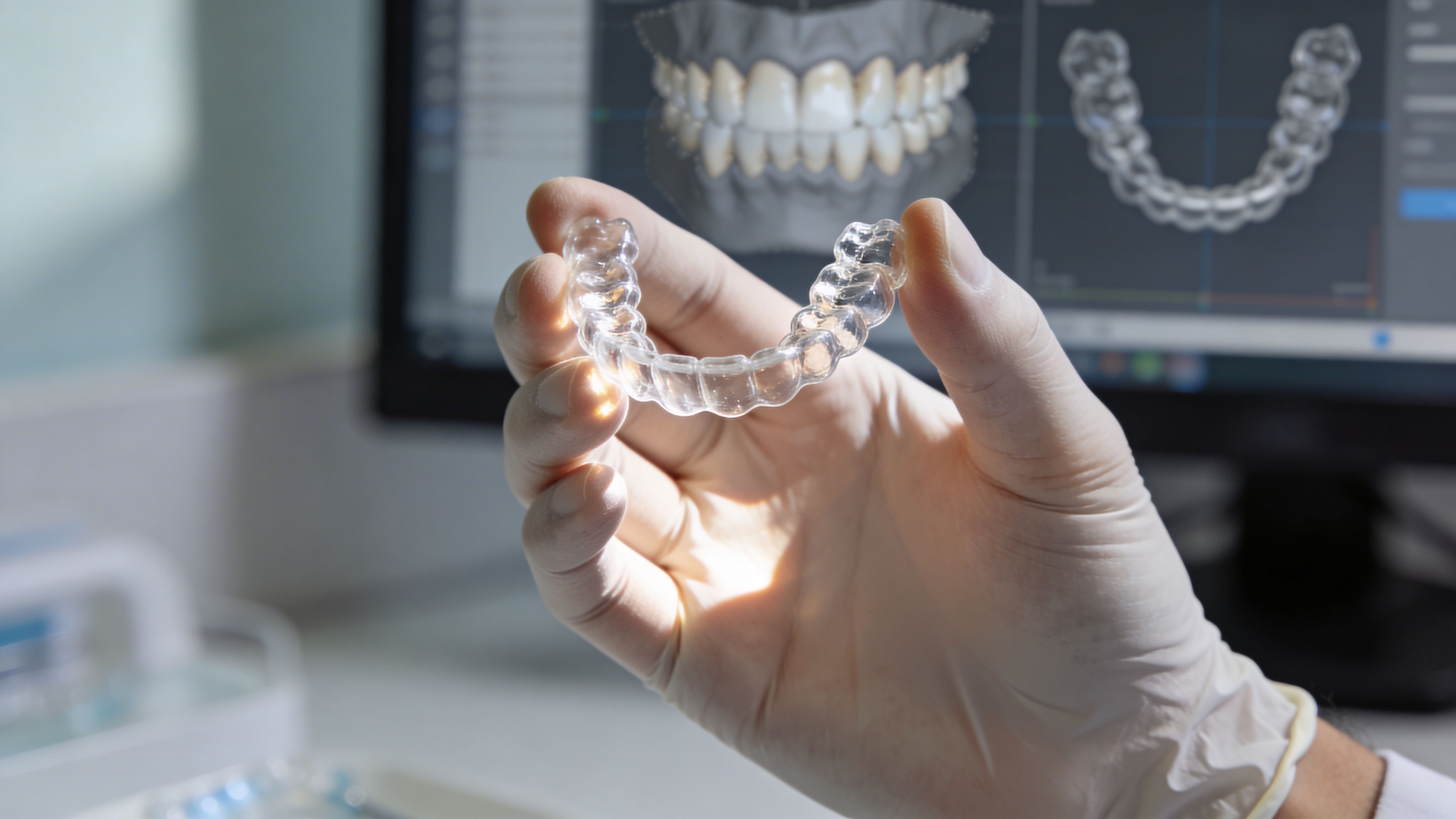
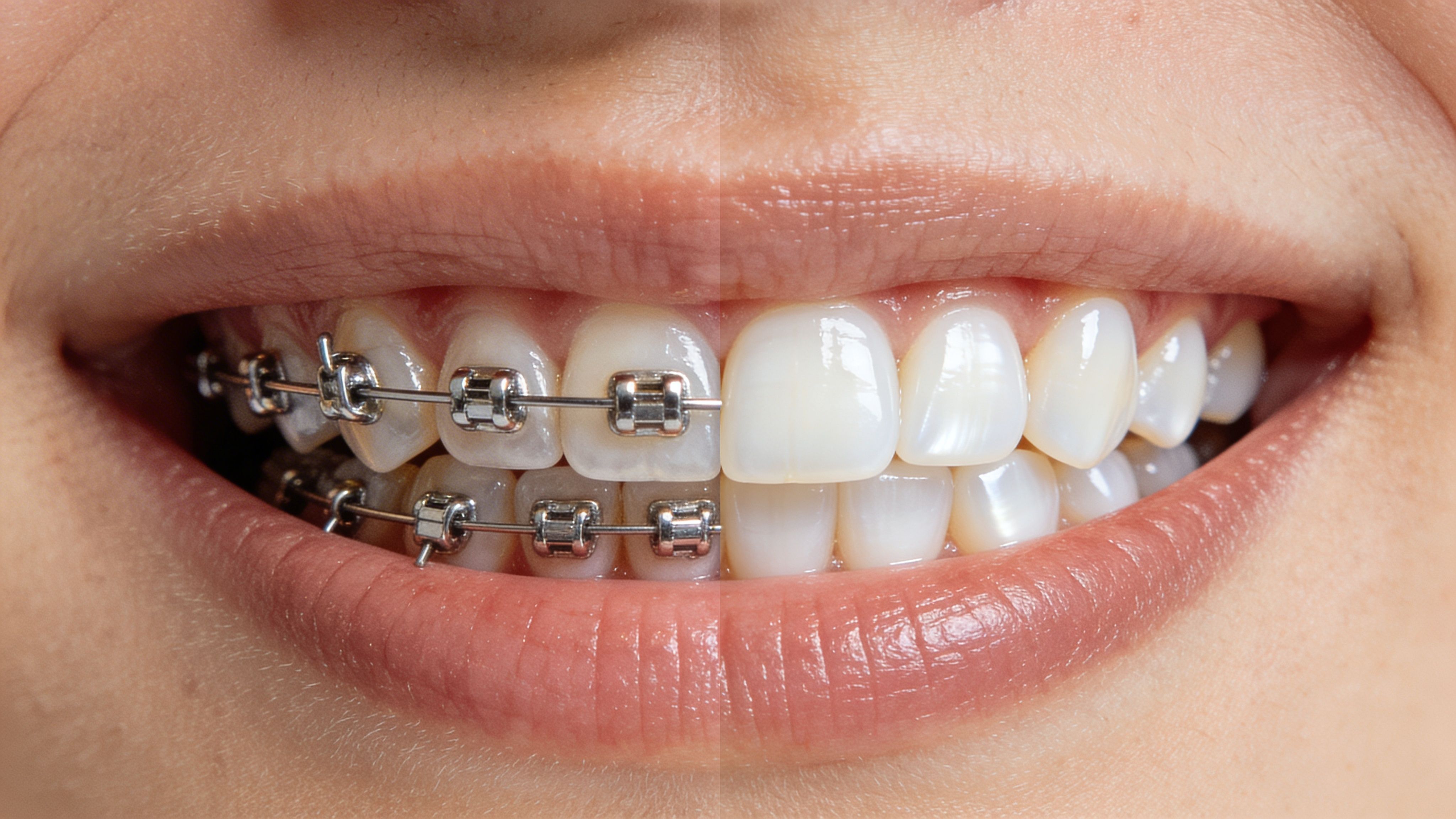
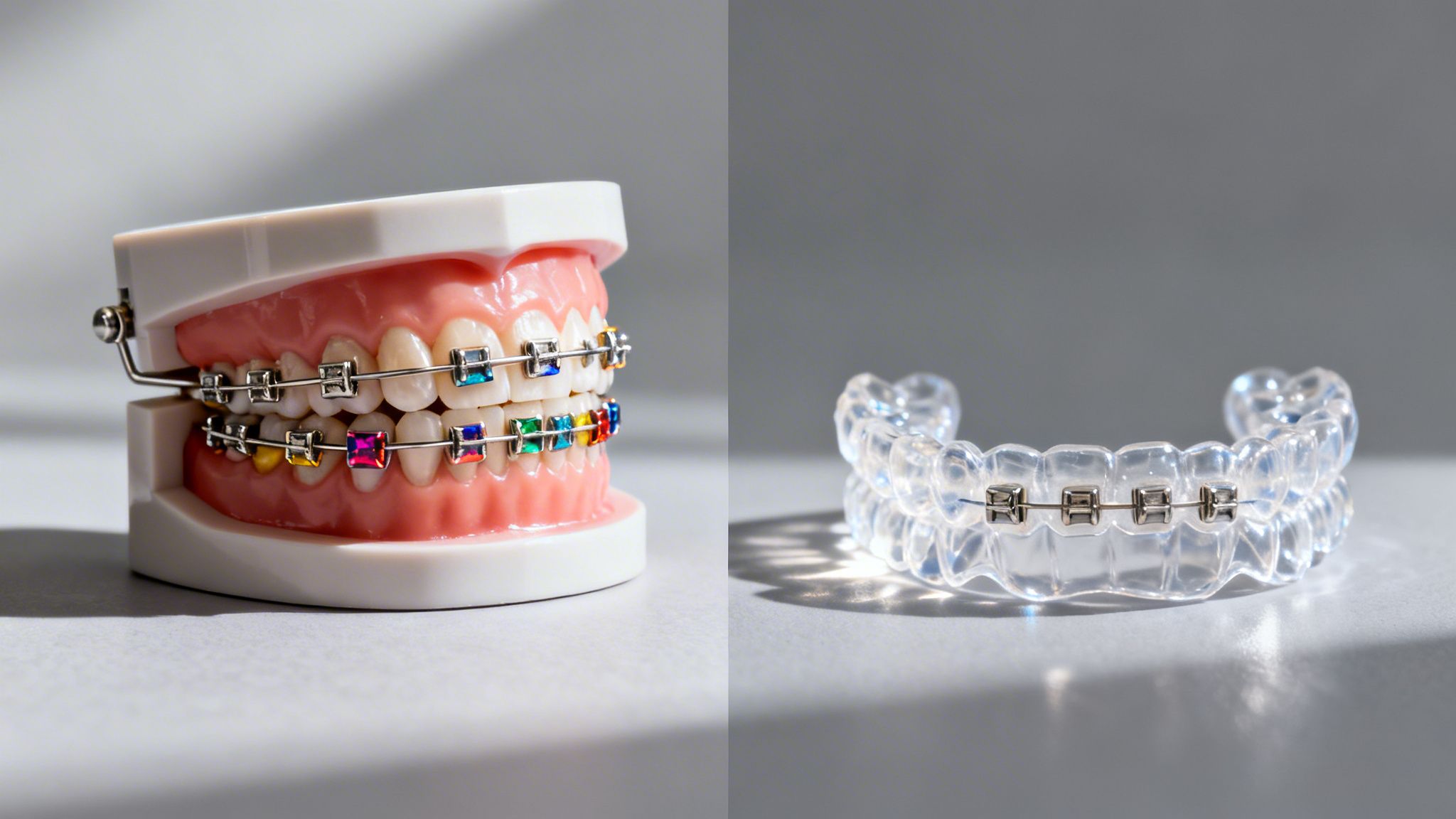
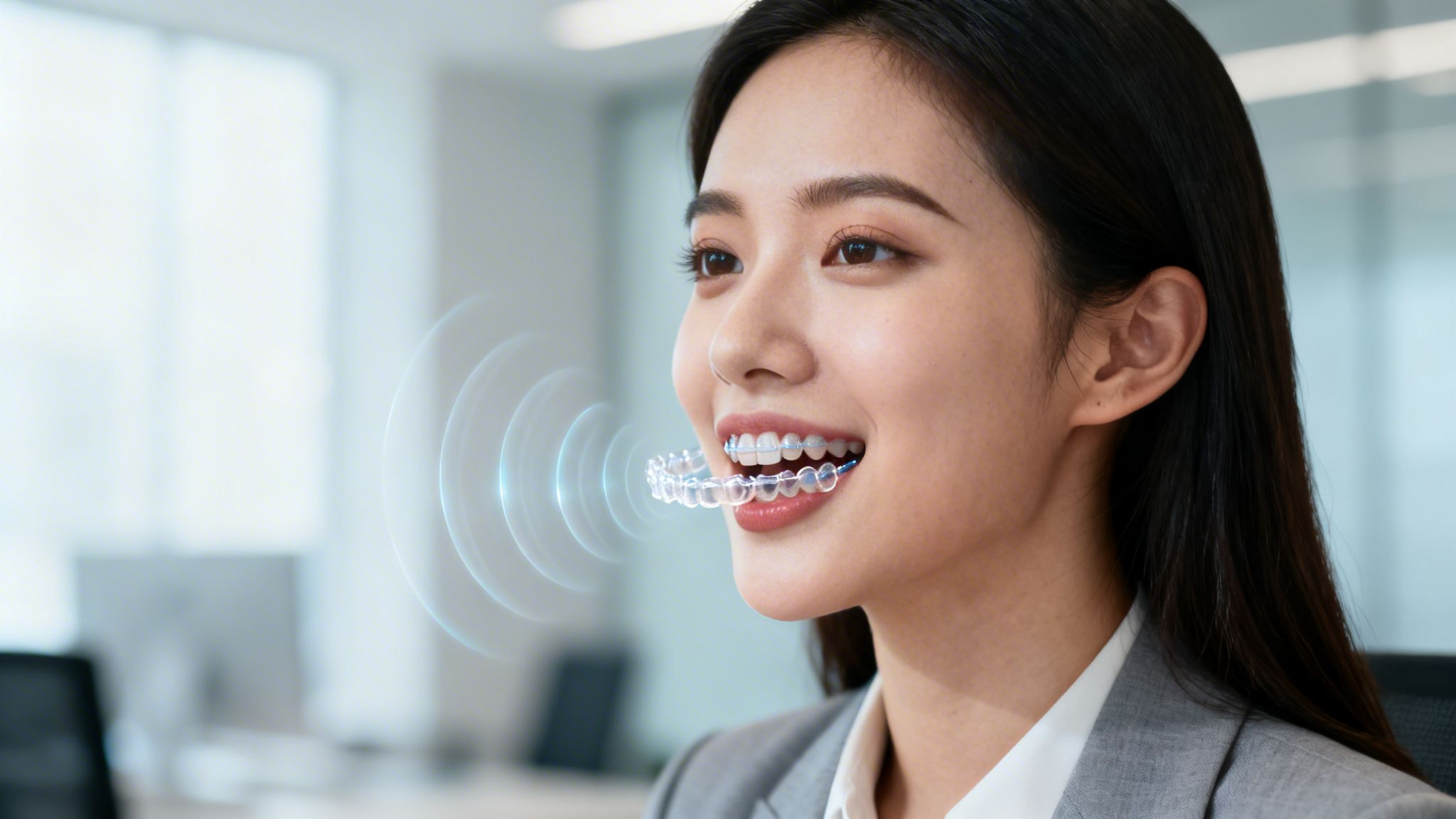
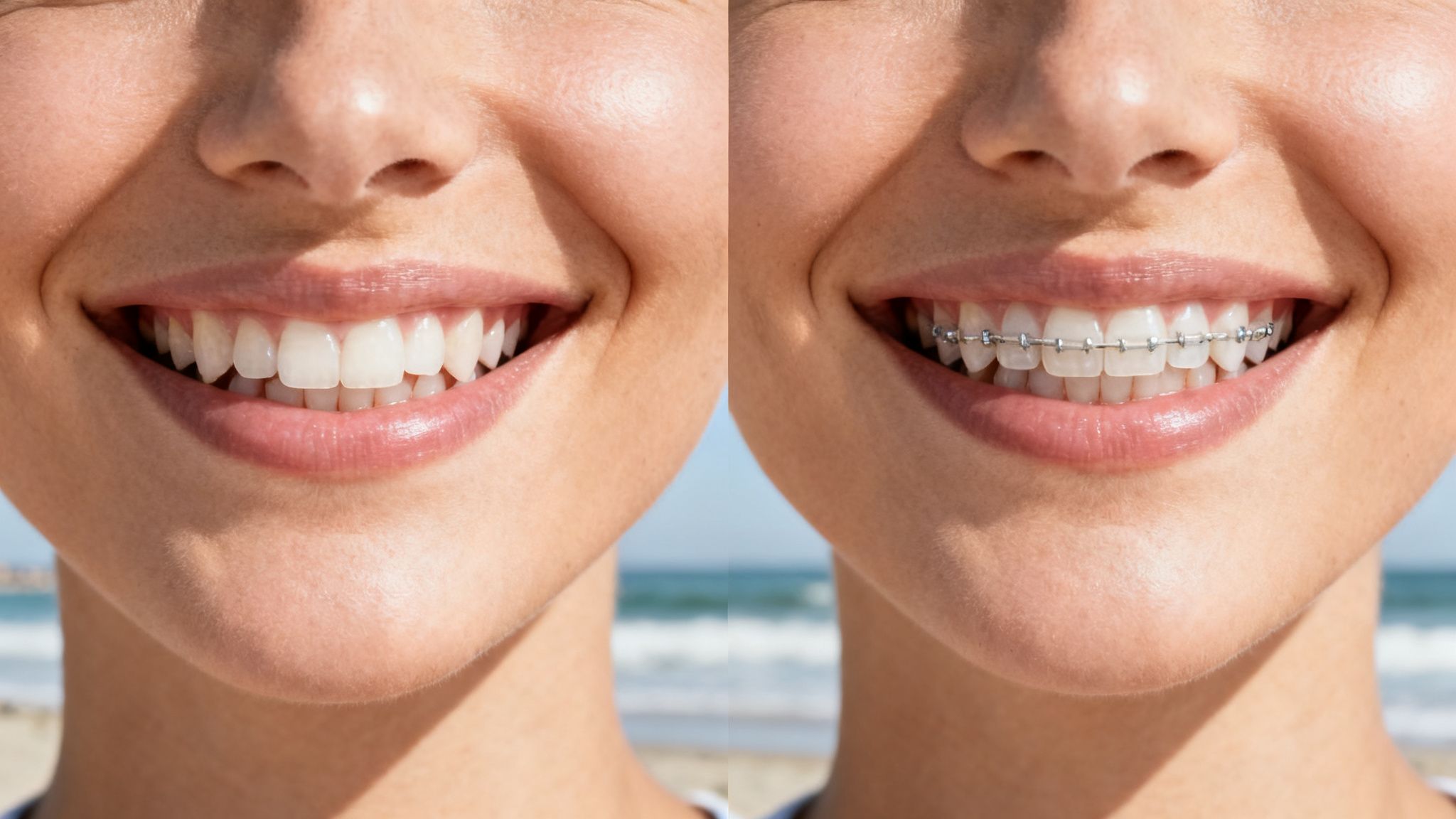
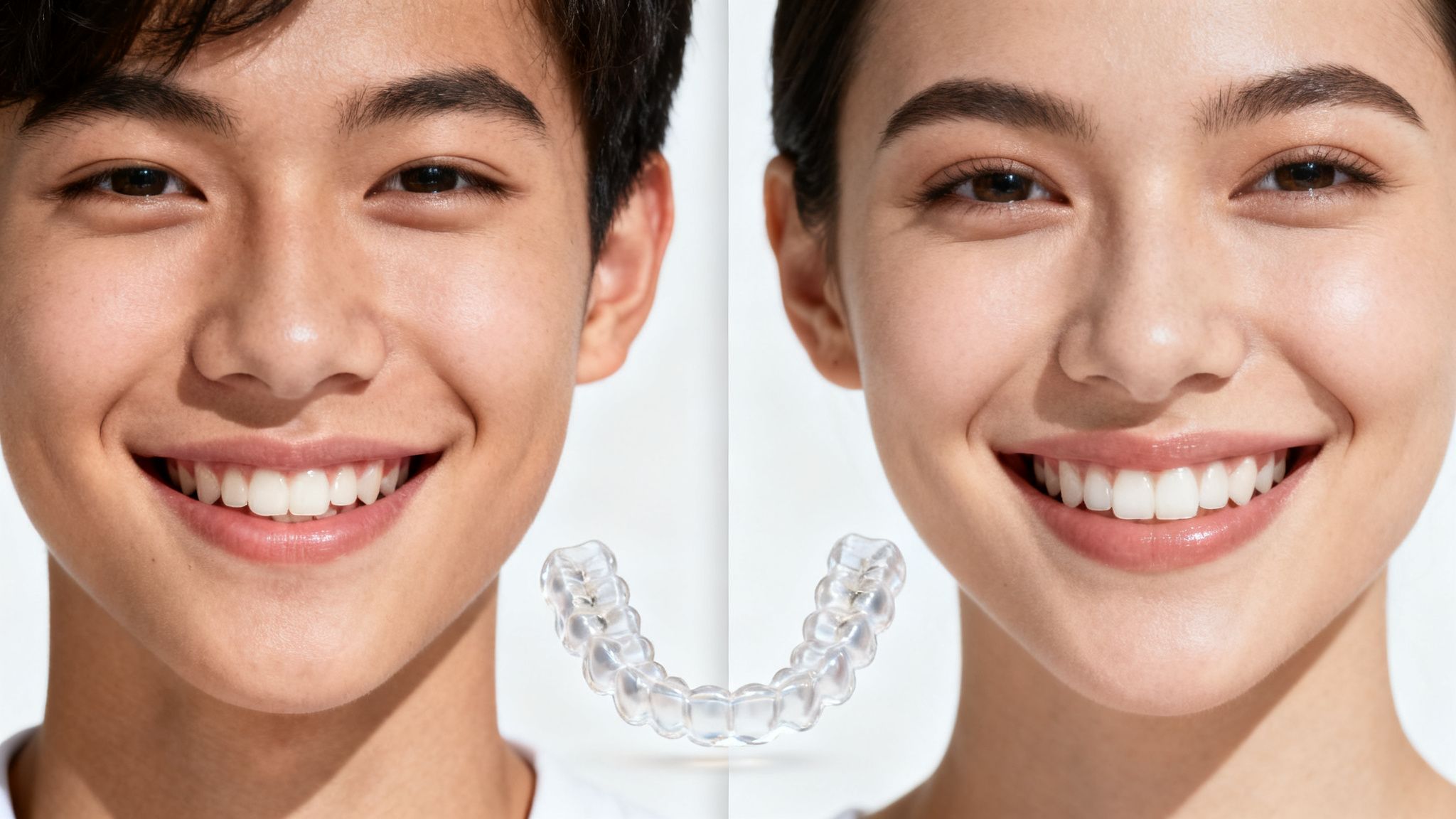
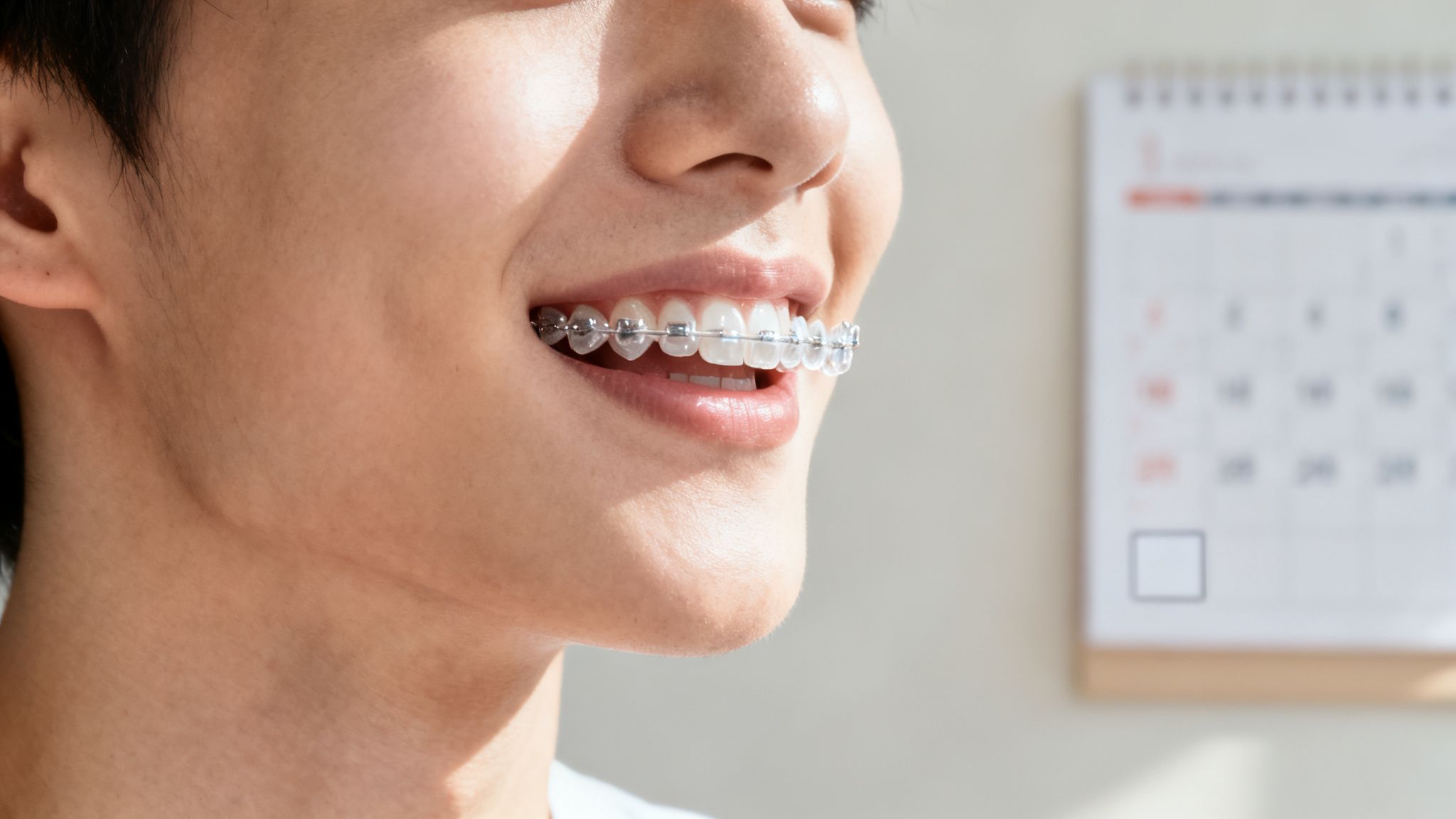
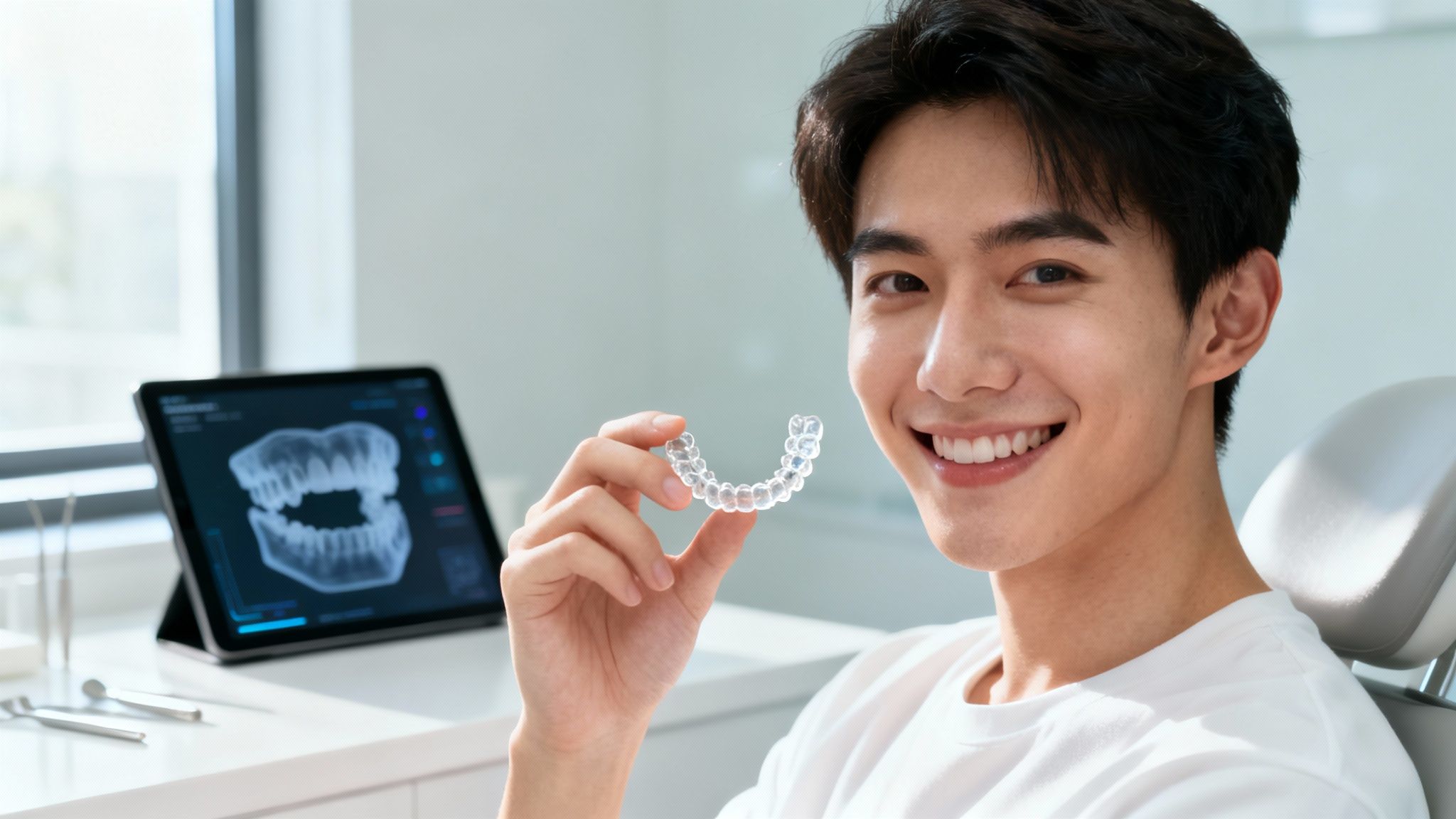
Most focused cases are handled with Invisalign clear aligners, since a small correction is well suited to a removable tray you can take out for lunch or a meeting. Some cases are better served by brackets on a few teeth, and when appearance matters we can use Iconix champagne-colored brackets, which read as far more subtle than standard silver.
If you are weighing whether your case is small or not, I wrote more about that judgment call in one or two crooked teeth and whether you need full braces.
Focused touch-up vs. comprehensive treatment
This is a general comparison, not a promise about your specific case. Scope is always confirmed after an exam.
| Factor | Focused touch-up | Comprehensive treatment |
|---|---|---|
| What it addresses | One or two specific teeth | Full arch alignment and bite correction |
| Typical timeline | Often a few months | Commonly 18 to 24 months |
| Common approach | Invisalign, or brackets on select teeth | Full braces or full aligner series |
| Visit frequency | Fewer check-ins | Regular ongoing adjustments |
| Relative cost | Lower, scaled to limited scope | Higher, reflects full treatment |
| Best fit | Minor relapse or a single drifted tooth | Bite issues, crowding, spacing across the arch |
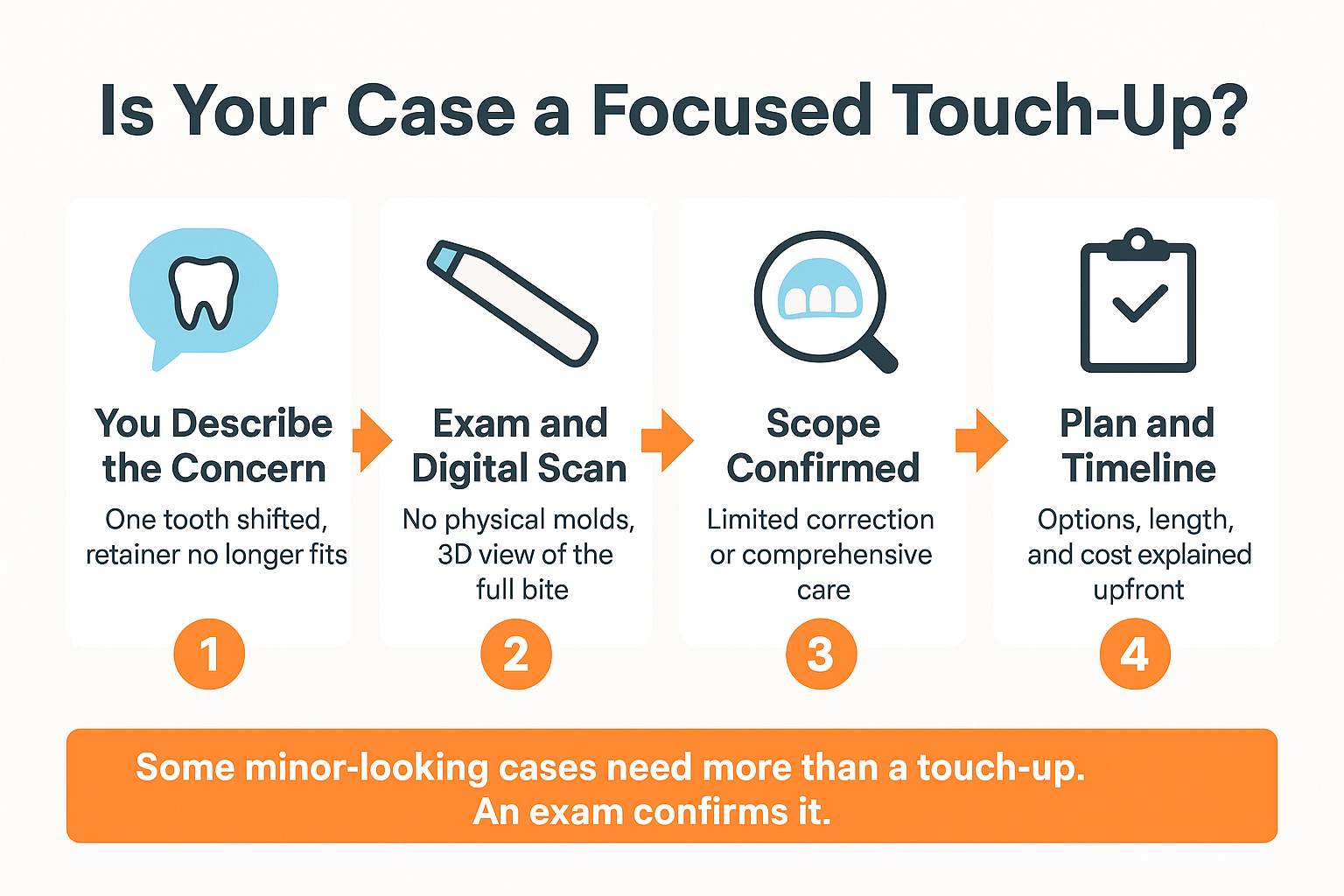
How we decide if your case is truly limited
This is the short version of the evaluation path, from your first call to a scoped plan.
Being honest: not everyone qualifies
This is the part I will not soften. Some cases that look minor in the bathroom mirror turn out to need more attention once we actually examine them.
A single rotated tooth can be a symptom of crowding across the whole arch. Moving it without addressing the space problem sets you up to be back in the same spot in two years. Bite changes, meaning how your upper and lower teeth meet, also disqualify a lot of otherwise small-looking cases.
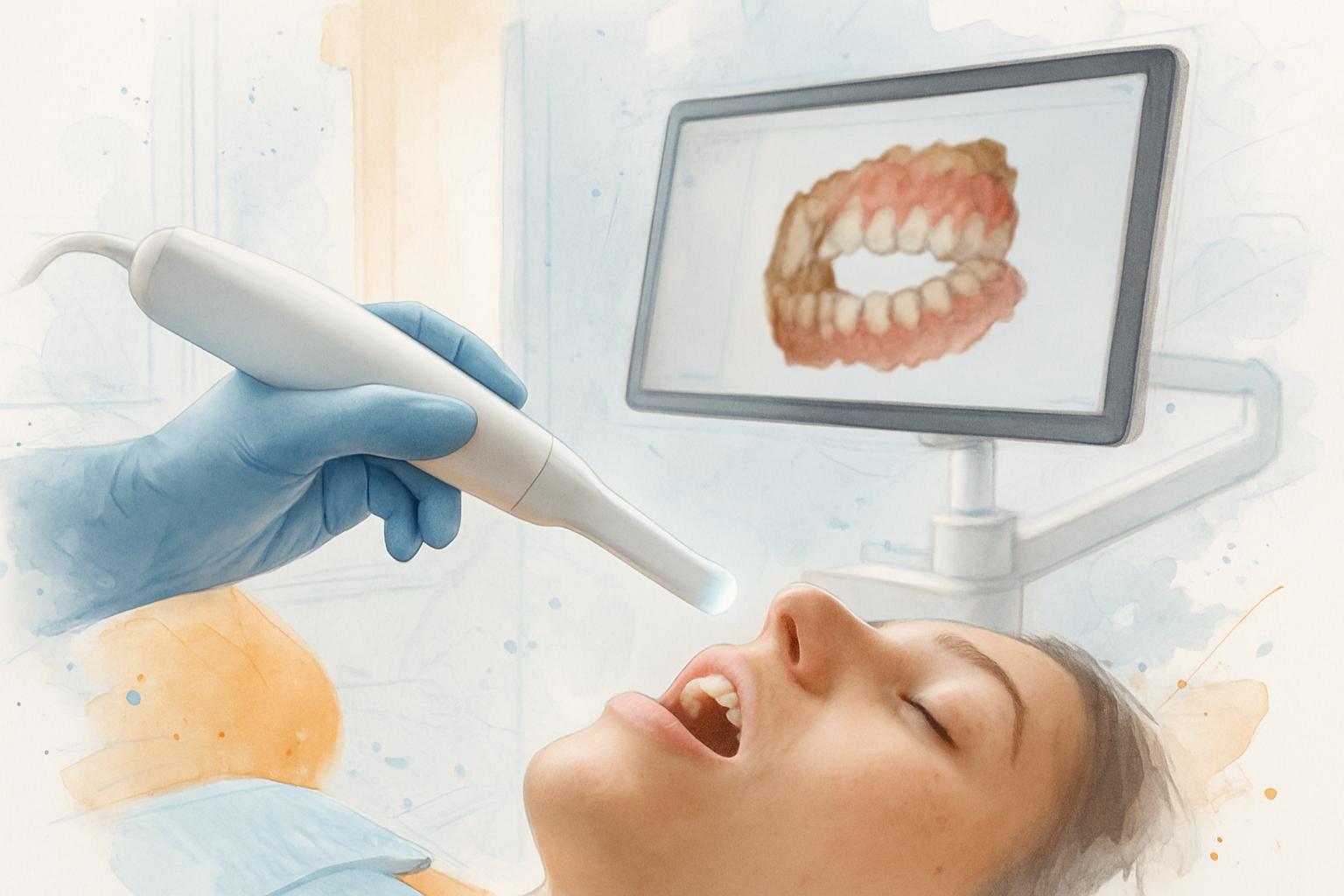
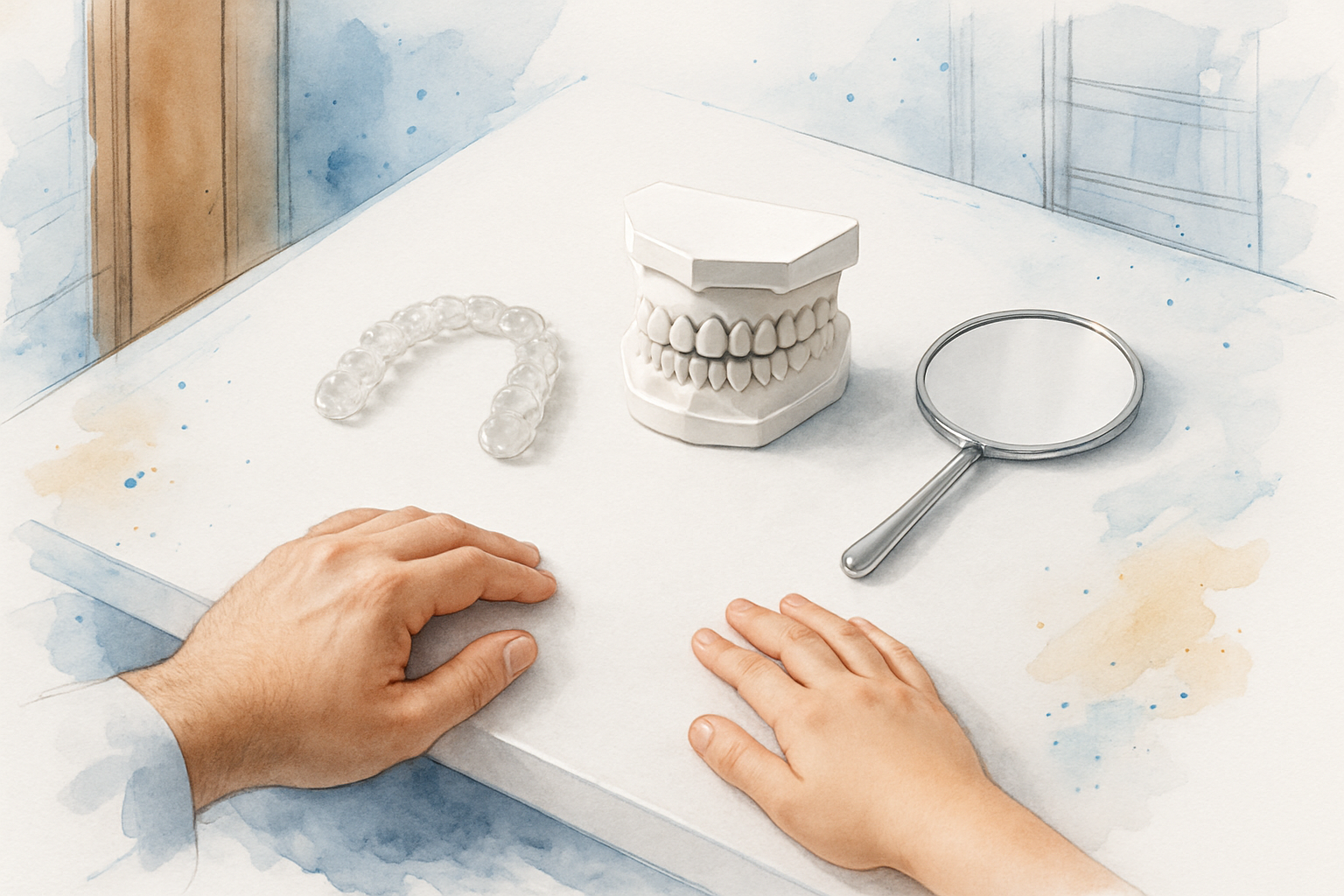
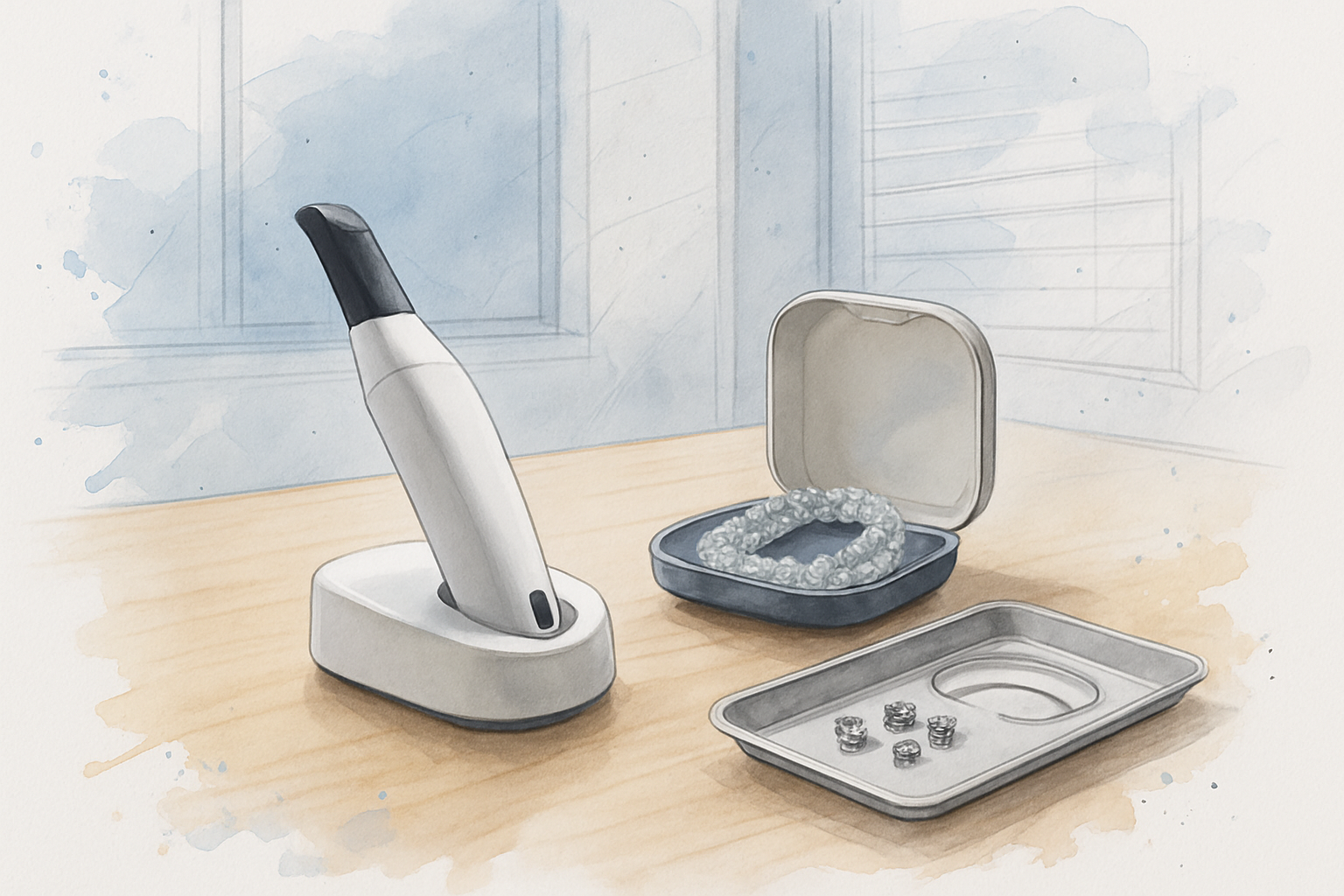
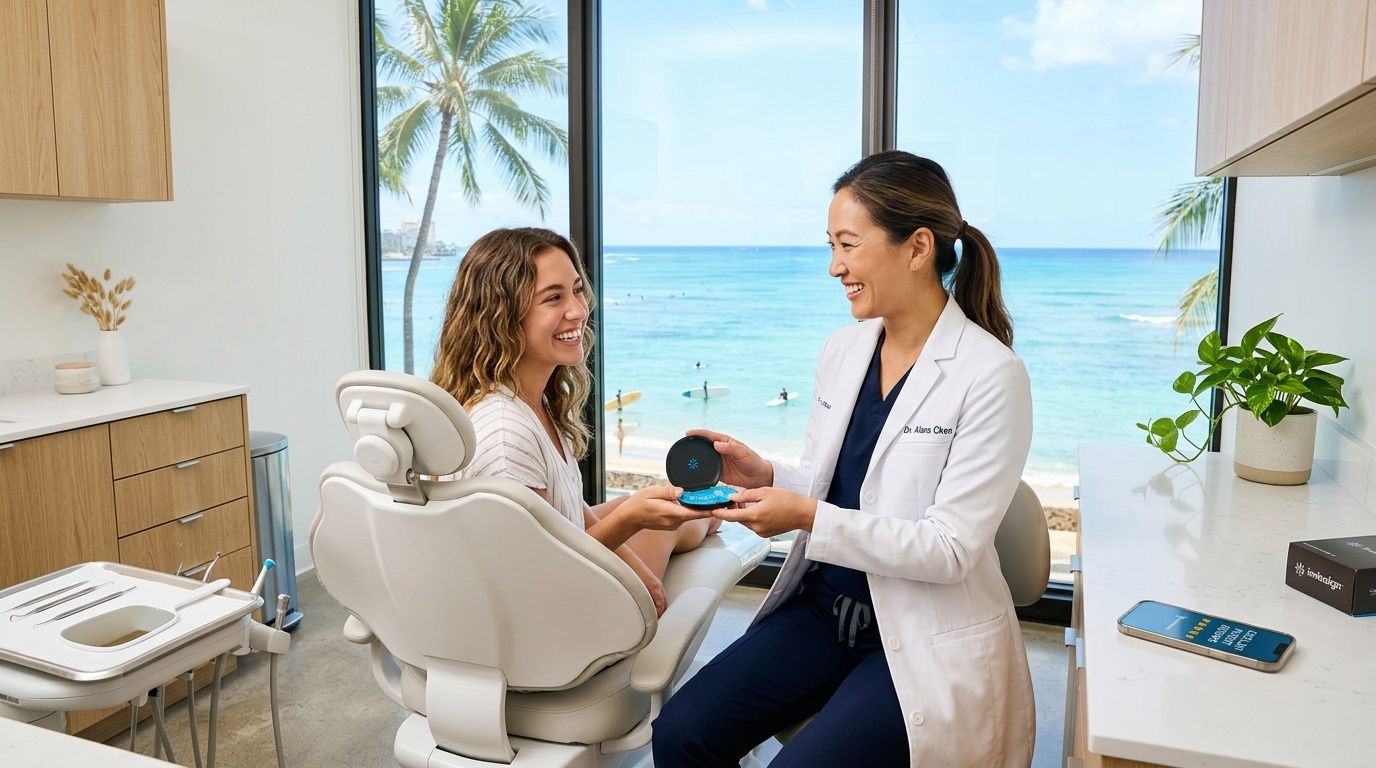
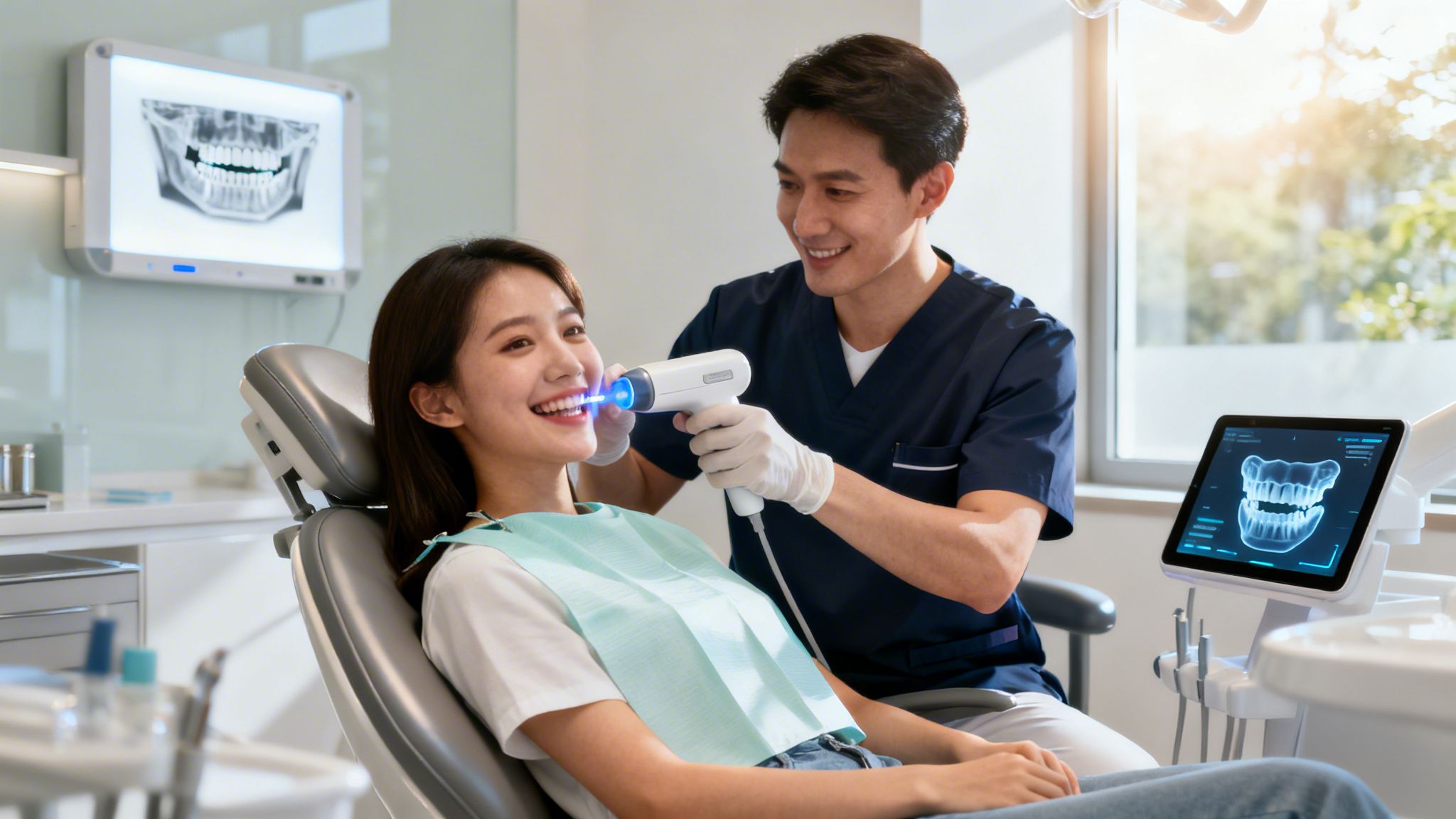
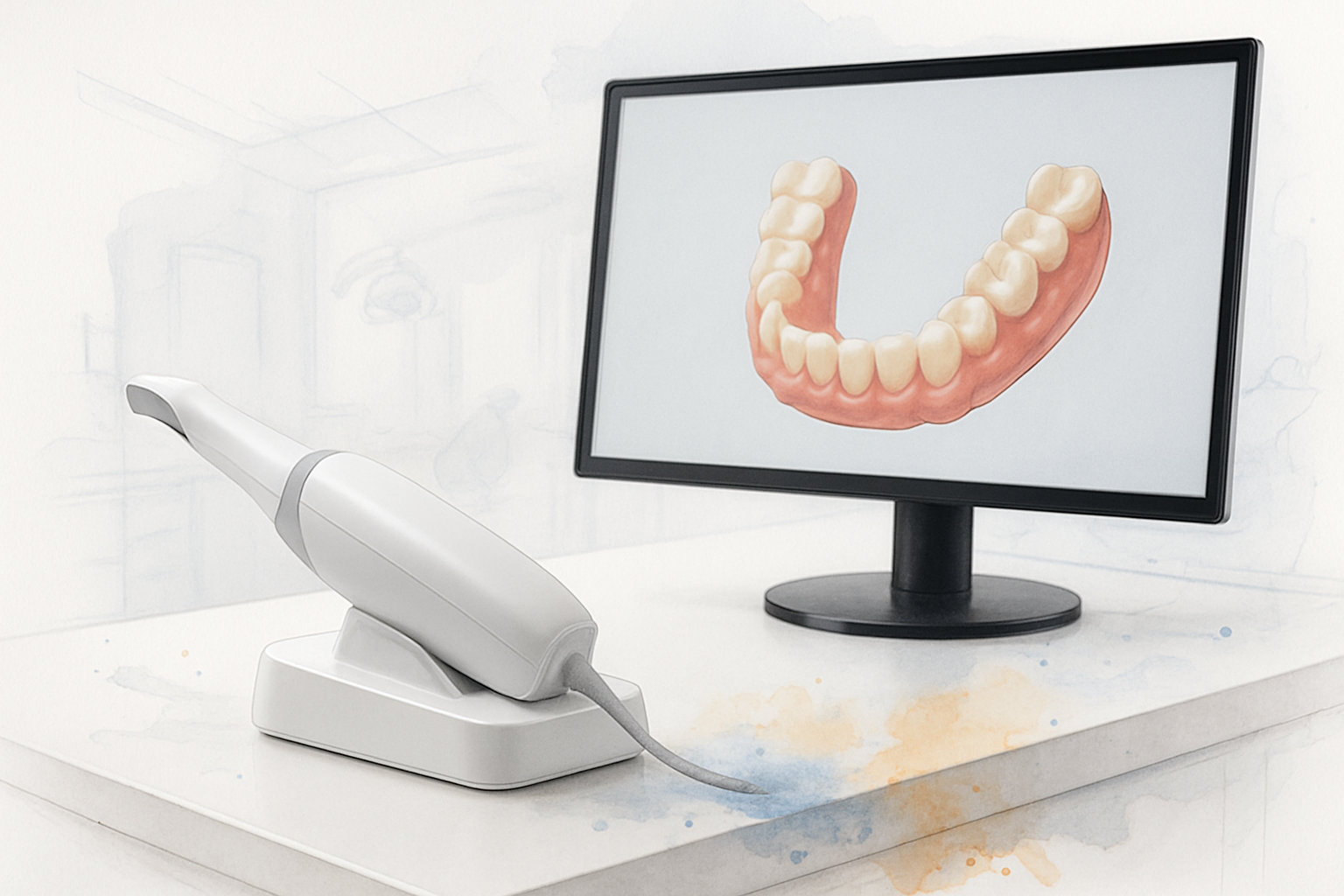
That is why the first step is an evaluation with Dr. Jeremy and Dr. Melissa rather than a price quote over the phone. We scan the full bite digitally, no physical molds, and look at whether the concern is genuinely contained.
If it is, we scope it small. If it is not, we tell you that and explain what comprehensive treatment would involve so you can decide with real information. And you can walk out having decided nothing. If you have never sat through an ortho exam as an adult, here is what to expect at a first appointment.
What drives the cost of a limited case
Price is the question people in Central Fountain Valley and Downtown Huntington Beach ask before anything else, and I get it. I cannot give you a number here honestly, because a limited case can mean very different amounts of work.
What moves the price:
- How many teeth need to move and how far.
- Which approach fits, aligners or brackets.
- Whether a retainer is included or replaced at the end.
- Your insurance, since orthodontic coverage varies widely and PPO plans behave differently than HMO plans.
Monthly payment plans exist for orthodontic care, and many patients also use pre-tax dollars. I covered that in detail in using FSA and HSA funds for braces and Invisalign, and there is a fuller cost breakdown in what drives Invisalign pricing.
The short answer: a focused case should cost meaningfully less than full treatment. Ask for the number in writing at your exam so you are comparing apples to apples.
Frequently Asked Questions About Fixing One or Two Teeth
My old retainer hurts to put in. Does that mean my teeth moved?
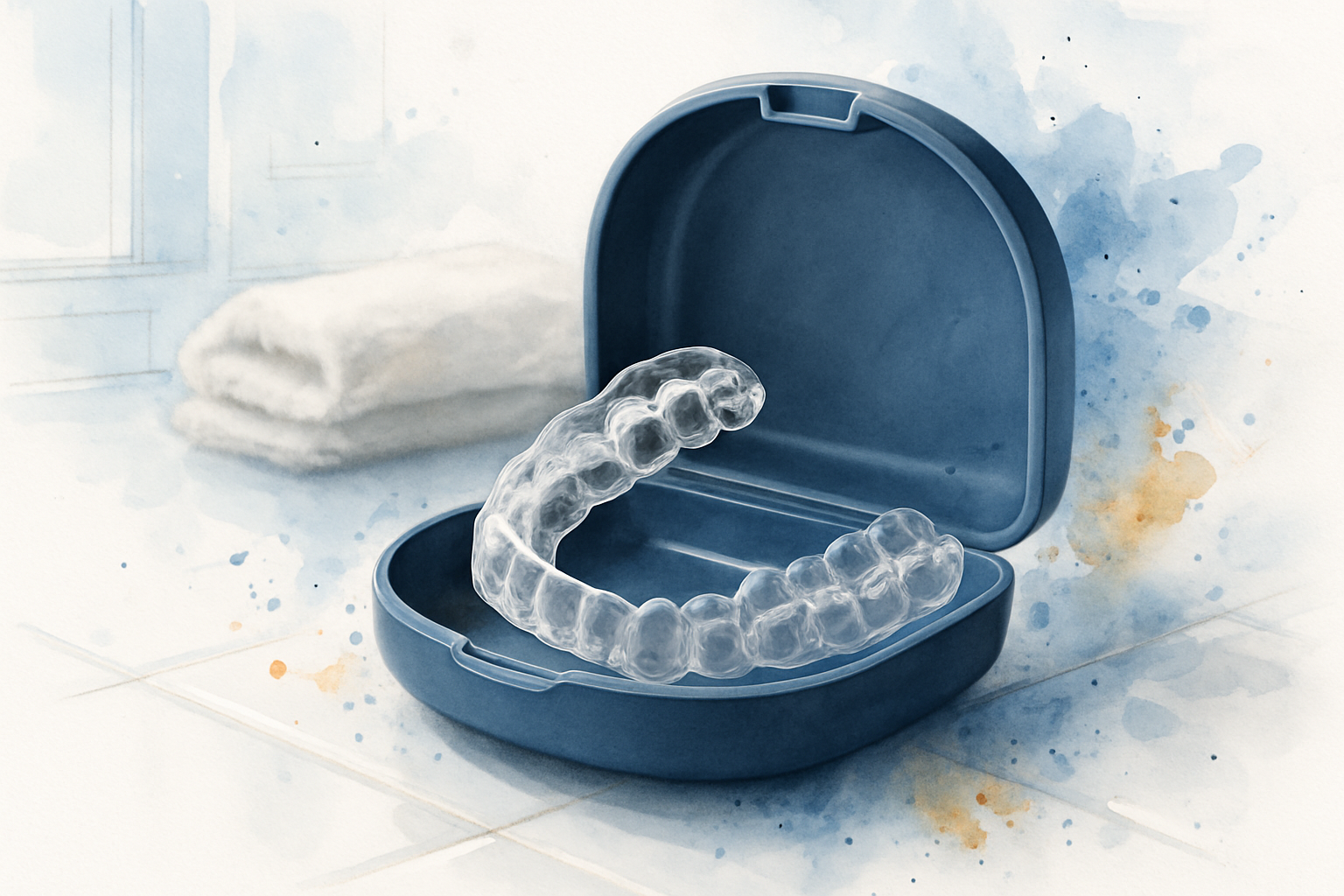
Almost always, yes. A retainer that suddenly feels tight or painful is telling you the teeth have shifted away from the shape it was made for. Do not force it. Forcing an ill-fitting retainer can move teeth in directions nobody planned. Bring it with you to your exam so we can see how far off it is.
Can I just get a new retainer instead of treatment?
Sometimes. If the drift is very slight, a new retainer made to your current teeth may be the right call to hold things where they are. But a retainer holds position, it does not correct it. If you want the tooth moved back, that requires treatment first, then a retainer to keep it there.
How long does a focused touch-up take?
Many limited cases run a few months rather than a year or two, but the honest answer depends on how far the teeth need to travel and how your teeth respond. We give you a projected range at the consultation and update it as we go.
Am I too old for this? I'm in my sixties.
No. We treat patients well into their seventies, and adult teeth respond to orthodontic force the same way at 65 as at 25, just sometimes a bit more slowly. One patient in her seventies left us a review saying her smile turned out awesome. Age is not the disqualifier people assume it is.
Will people at work notice?
With clear aligners, most people around you will not. That is the main reason adults choose them for small corrections. If brackets are the better fit for your case, champagne-colored Iconix brackets are noticeably more subtle than traditional silver.
Wondering if your case is small enough for a touch-up?
If one tooth has drifted and you are not sure whether it needs a small fix or something more, an evaluation is the only way to know for certain. Magic Fox Orthodontics is on Beach Boulevard, convenient and local for families and adults across Huntington Beach and Fountain Valley, and consultations are available at 714-594-5777 or through magicfoxsmiles.com whenever you are ready to ask.