Your Mail-Order Aligner Company Shut Down Mid-Treatment. What Now?
Direct Answer: You can finish. A new orthodontist scans your teeth where they sit today and builds a fresh plan from that point, rather than resuming your old tray sequence.
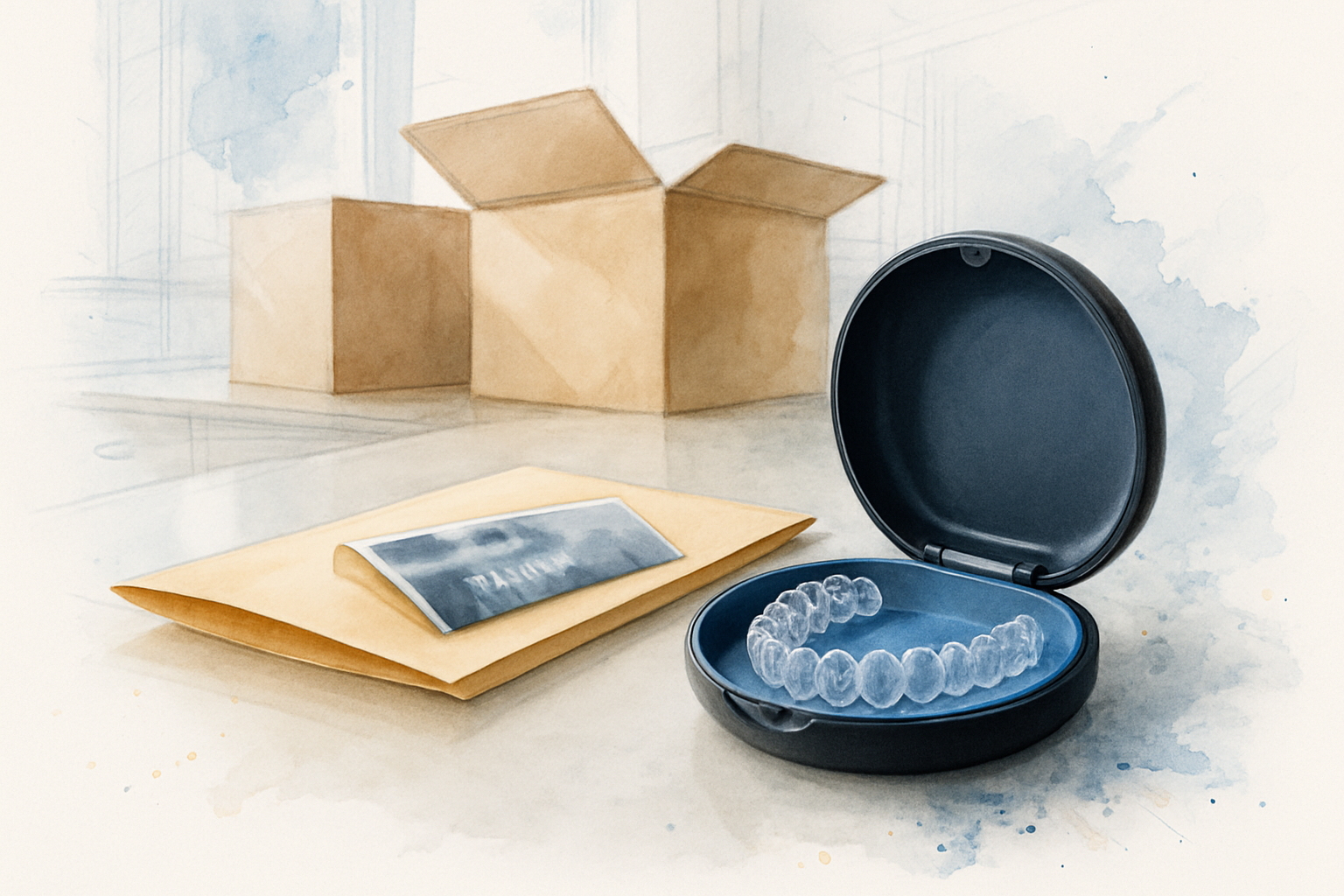
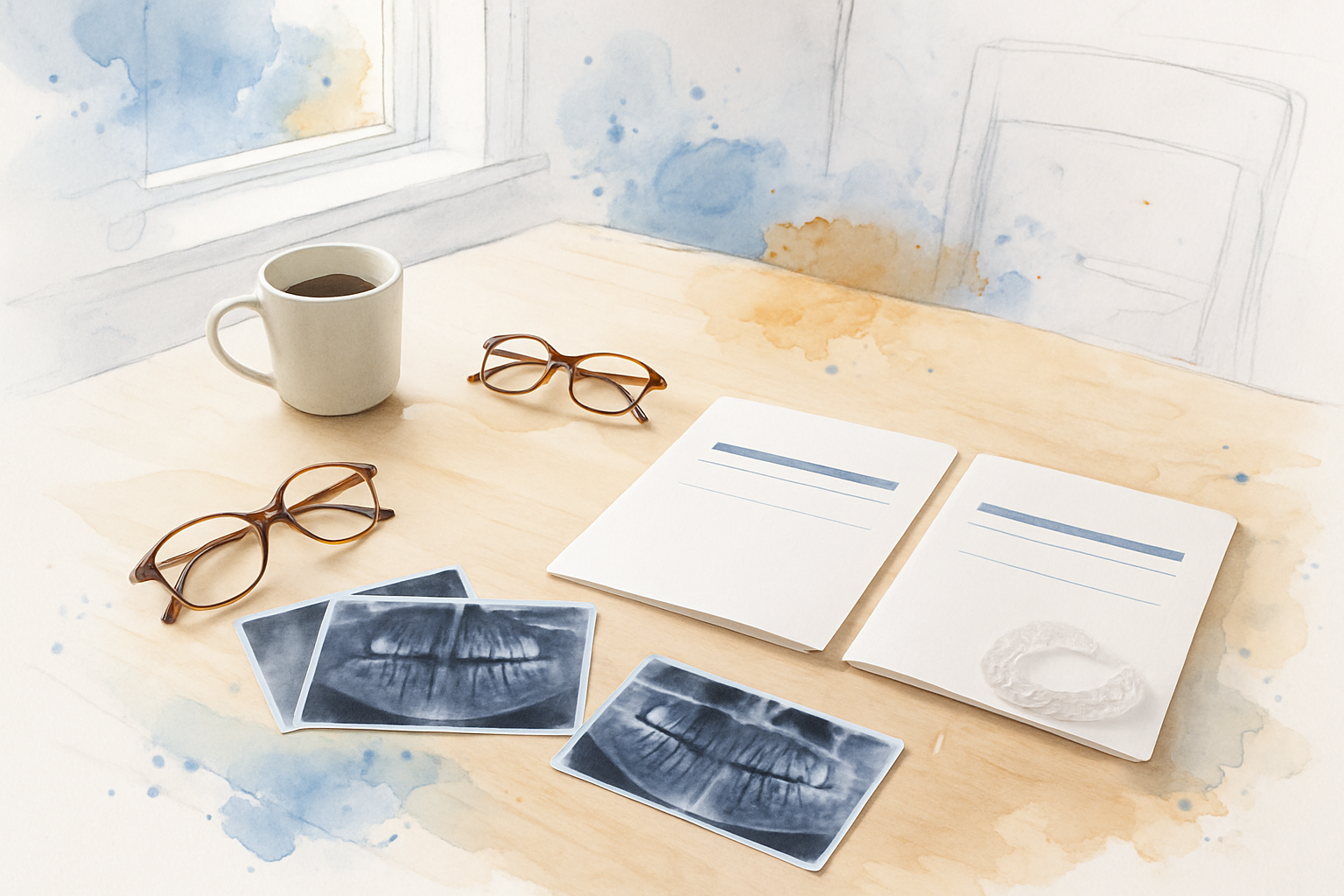
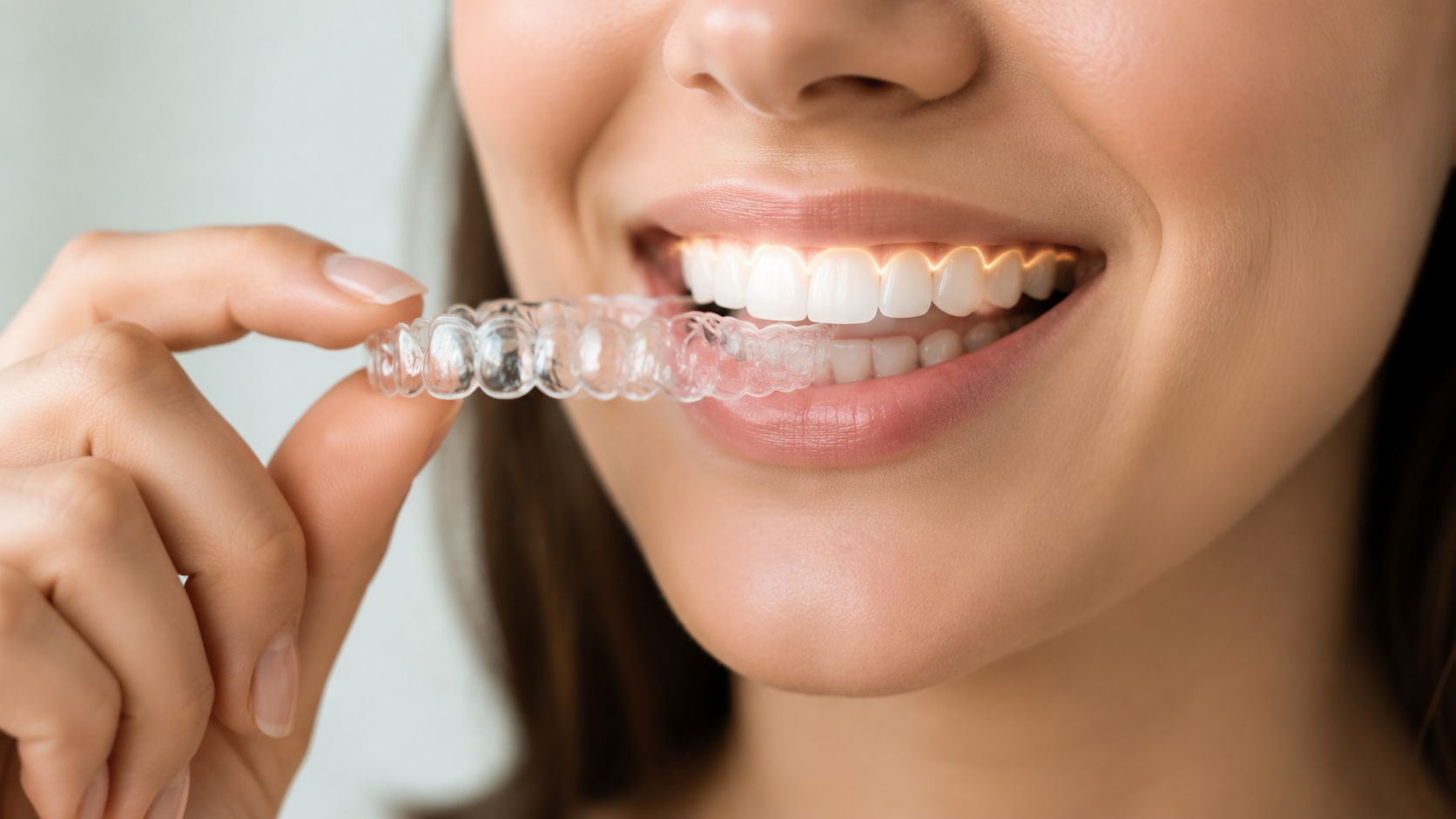
The trays are sitting in a drawer. Your teeth moved partway, then stopped. And the company you bought them from no longer answers the phone, because it no longer exists.
I hear this from people across Huntington Beach and Fountain Valley more often than you would think. One person wrote to us recently to say they were partway through a mail-order aligner plan, the company closed, and they wanted to know how to finish what they started with something more permanent.
That is a fixable situation, not a personal failure. This article walks through what a restart actually involves, what to do about leftover attachments still stuck to your teeth, and what drives the cost when you pick the process back up.
Why your aligner company vanished, in about two sentences
Most people never got a clear explanation, so here it is. Byte's parent company voluntarily suspended sales and marketing of its aligners and impression kits in October 2024, announced in January 2025 that the aligners would no longer be offered to new patients, and wrote the business off entirely the following month. SmileDirectClub had already ceased operations in December 2023, leaving its customers with treatment halted mid-plan.
You can read the October 2024 suspension and the January 2025 decision confirmed in the company's own annual filing with the SEC. That is the whole backstory, and it has nothing to do with anything you did wrong.
What matters now is your mouth, not the corporate timeline. Teeth that were mid-movement and then left alone tend to drift. The longer the trays sit in the drawer, the more your starting point today differs from the plan you paid for, which is exactly why a restart begins with a fresh look instead of a quote.
Still have attachments bonded to your teeth? That part is easy.
This is the second version of the problem, and it comes up almost as often as the first. Someone contacted us to say old attachments from a previous clear aligner treatment were still bonded to their teeth years later, that family circumstances got in the way of ever having them taken off, and they wanted to know what removal would cost.
Here is what I want that person to know, and anyone else sitting on the same thing. Removing leftover attachments or buttons is a routine, short appointment. It is not surgery, it is not dramatic, and nobody is going to lecture you about the delay.
It also does not have to be bundled with any bigger decision. You can:
- Come in and have the leftover hardware removed, and stop there
- Have them removed and take some time to think about whether you want to keep going
- Have them removed as the first step of a full restart plan
Embarrassment is usually what keeps these teeth untreated for years, not cost and not time. I have seen people carry attachments around for three or four years because they assumed the conversation would be uncomfortable. It is a ten minute conversation and a short visit.
What an unfinished mail-order clear aligner treatment restart actually involves
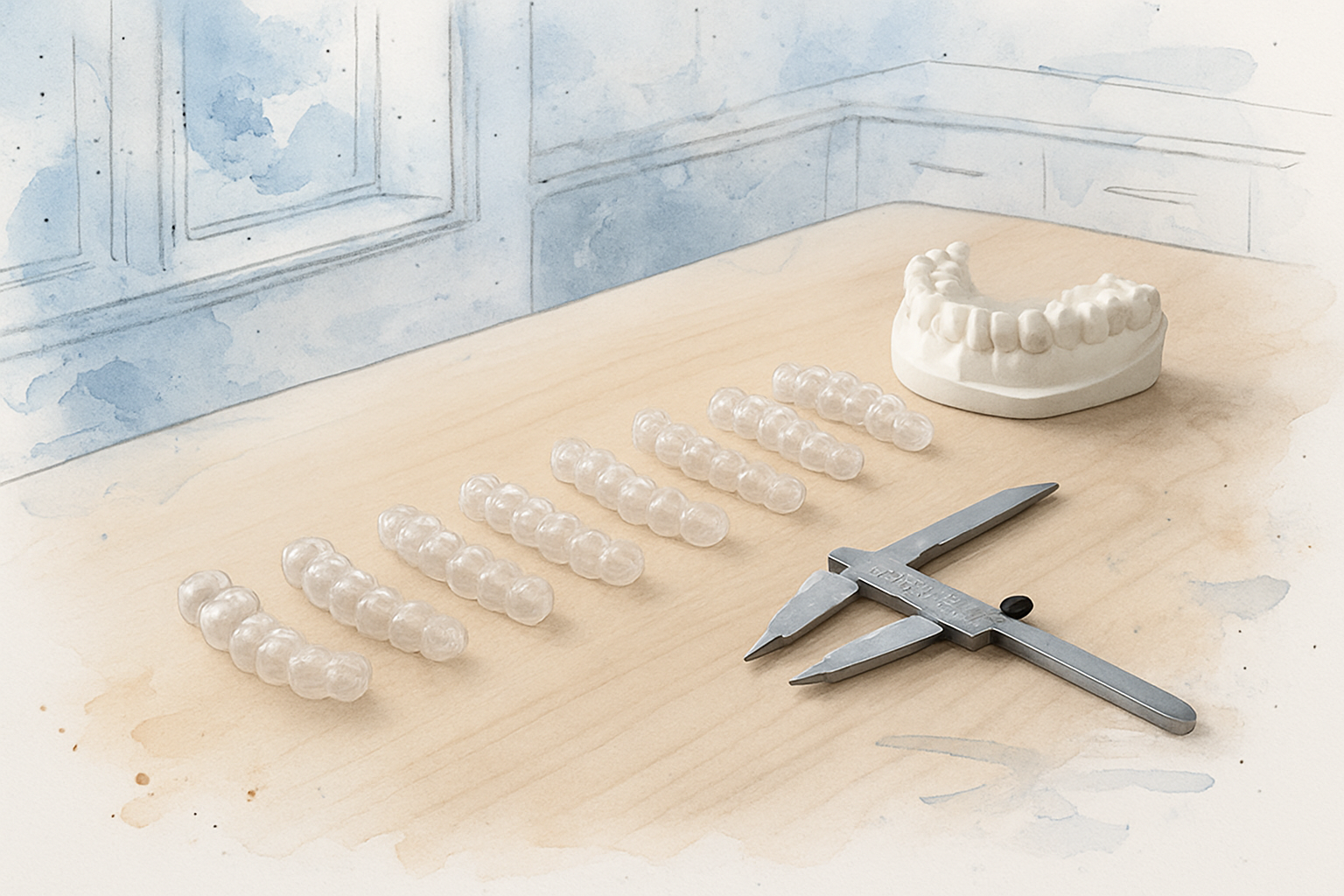
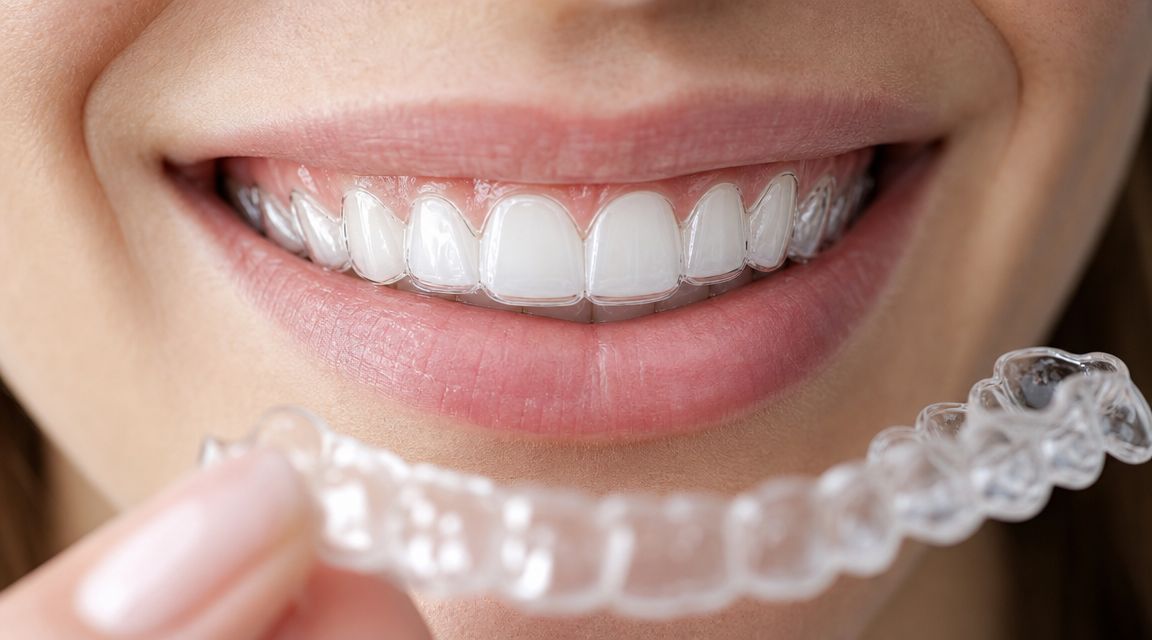
A restart is not resuming your old tray sequence. Those trays were built around a snapshot of your teeth from months or years ago, and your teeth have moved since, sometimes back toward where they started.
So the first visit is about establishing where things really stand today:
- A fresh set of records, including photos and the imaging needed to see root position and bite
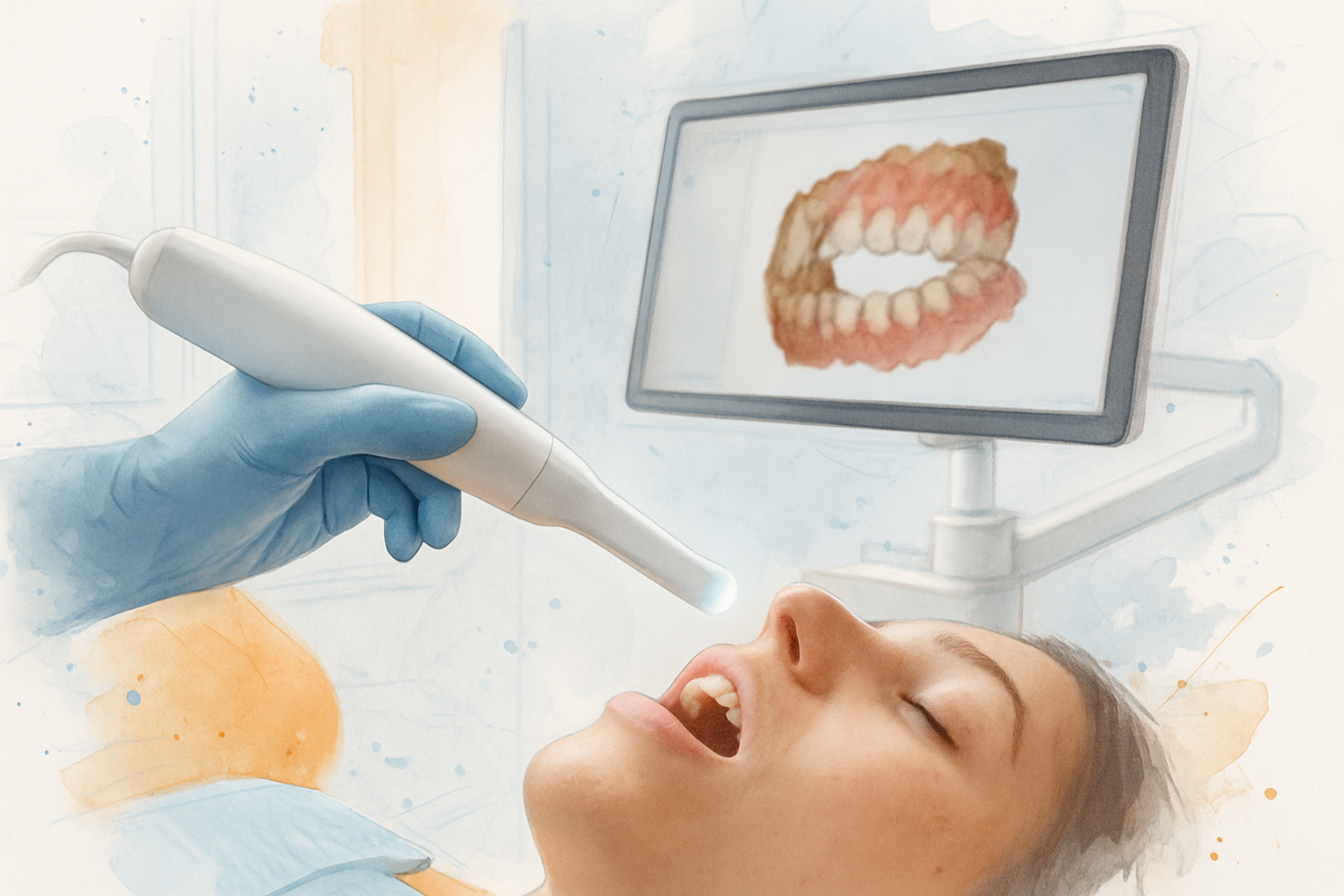
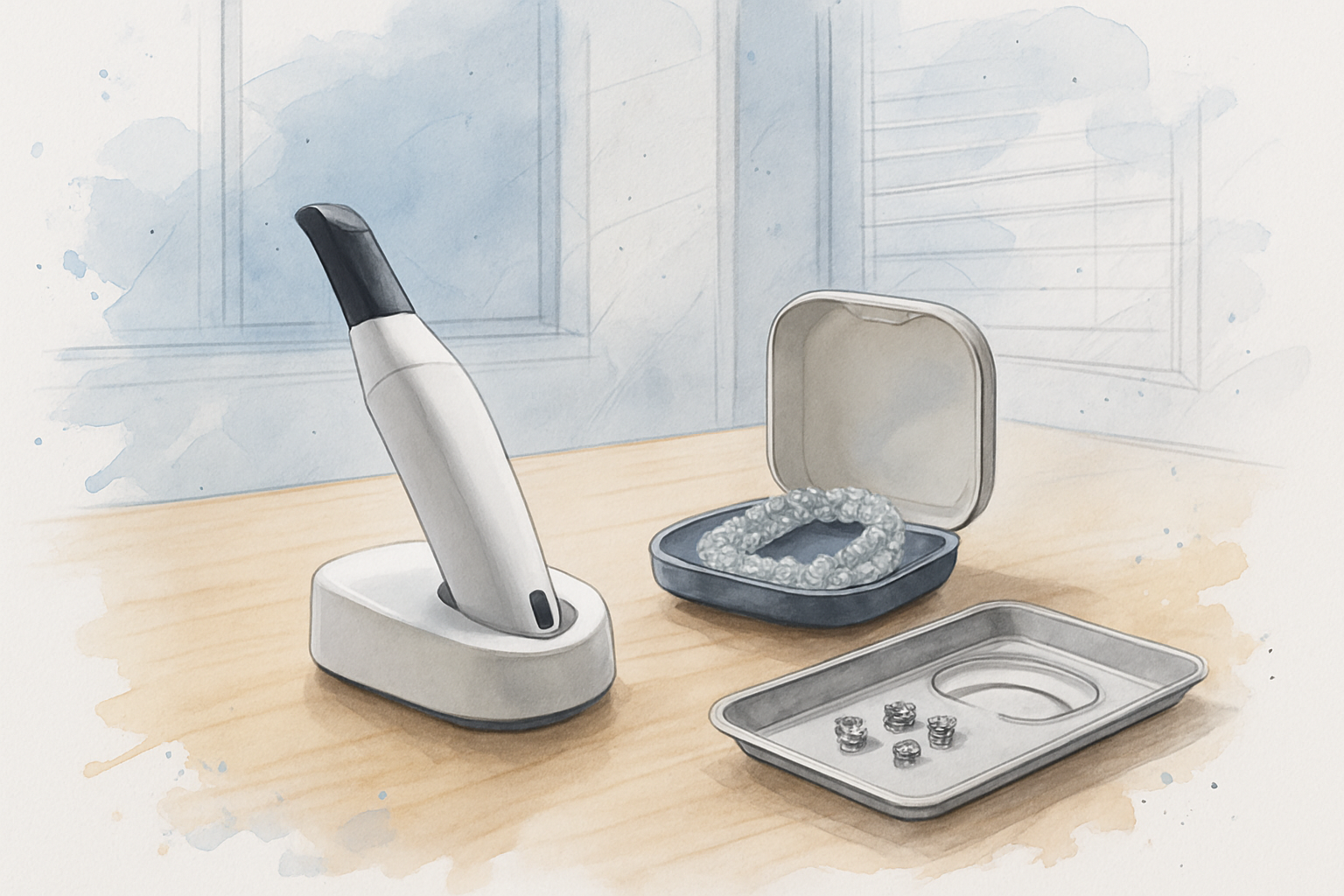
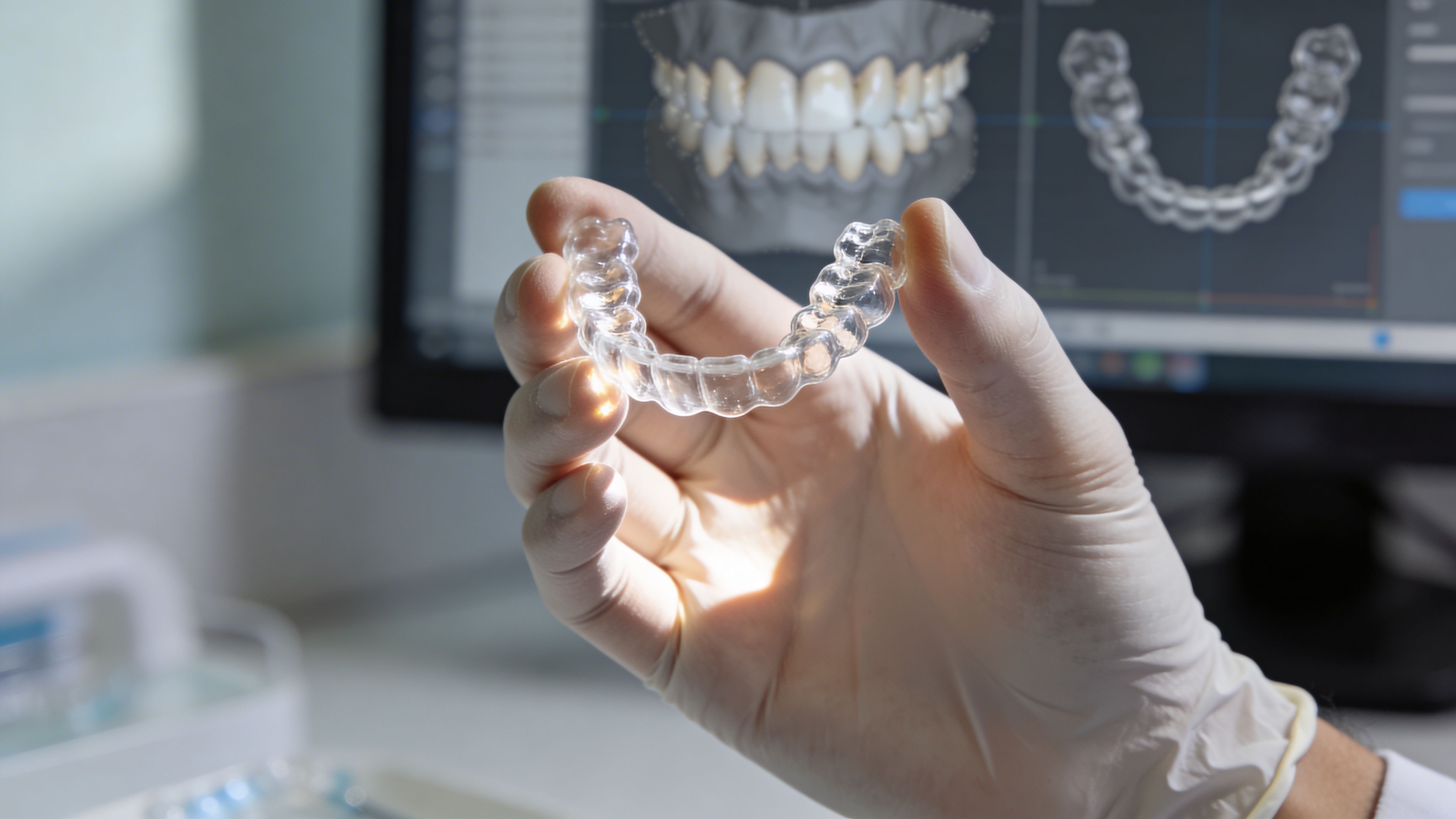
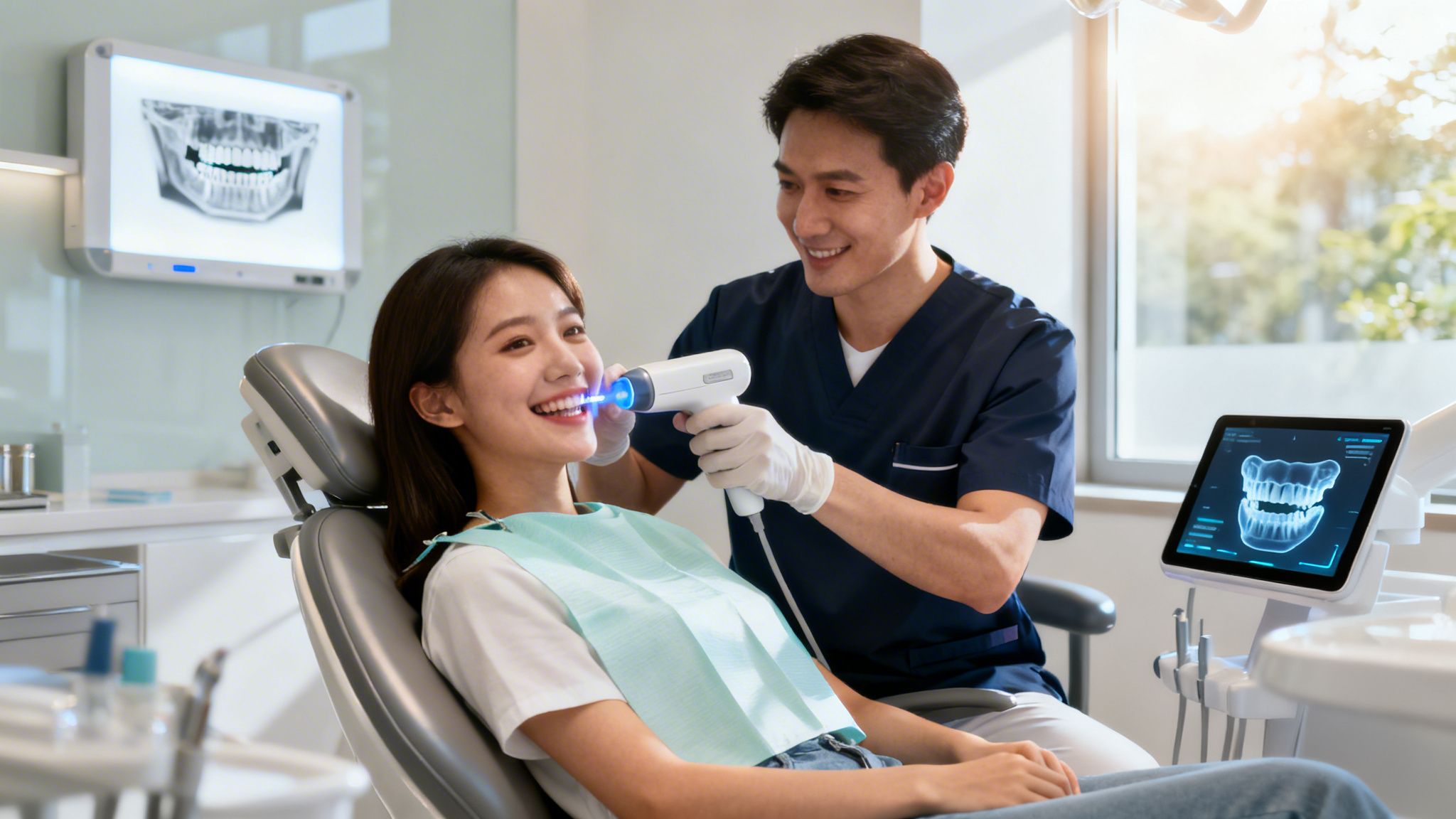
- A digital scan of your teeth as they sit right now, not where an at-home impression once said they sat
- An exam of the bite, not just the front teeth you were originally unhappy with
- A new plan built from that starting point, with a realistic timeline attached
Patients tell us the scan is the part that surprises them most. One reviewer described a machine mapping out her mouth instead of the "weird molding chemicals," and that reaction shows up again and again.
I also want to be honest about something. The exam sometimes turns up a bite issue the mail-order plan never accounted for, because that model was built to move front teeth, not to manage how your teeth come together. That is not a scare tactic, it is the reason the visit starts with a look rather than a number. If you want the longer version of how timing works, our breakdown of the Invisalign treatment timeline covers what a typical case looks like start to finish.
The Restart Path, Step by Step
Here is the order things usually happen when someone picks up an abandoned aligner case.
"Am I paying for this twice?" What really moves the number
This is the real hesitation, and I would rather address it plainly than dodge it. Nobody wants to pay for the same smile a second time.
I cannot give you a figure from a blog post, and you should be skeptical of anyone who does. What I can give you is the list of things that actually move the scope and the price:
- How far your teeth already traveled before treatment stopped, and how much of that held
- Whether leftover attachments need removing first
- Whether one or two teeth are off versus the whole arch
- Whether the bite needs correcting, not just the visible front teeth
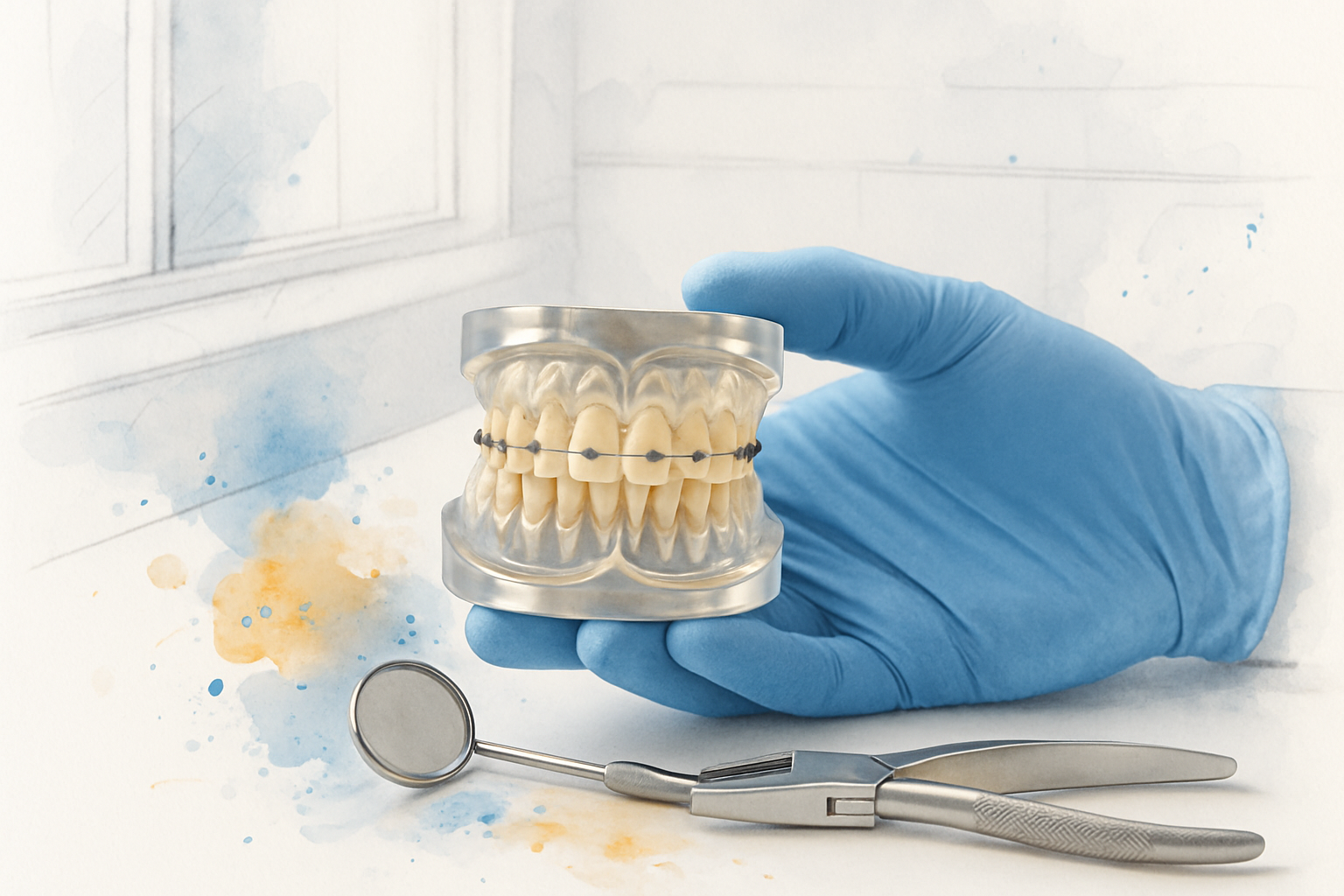
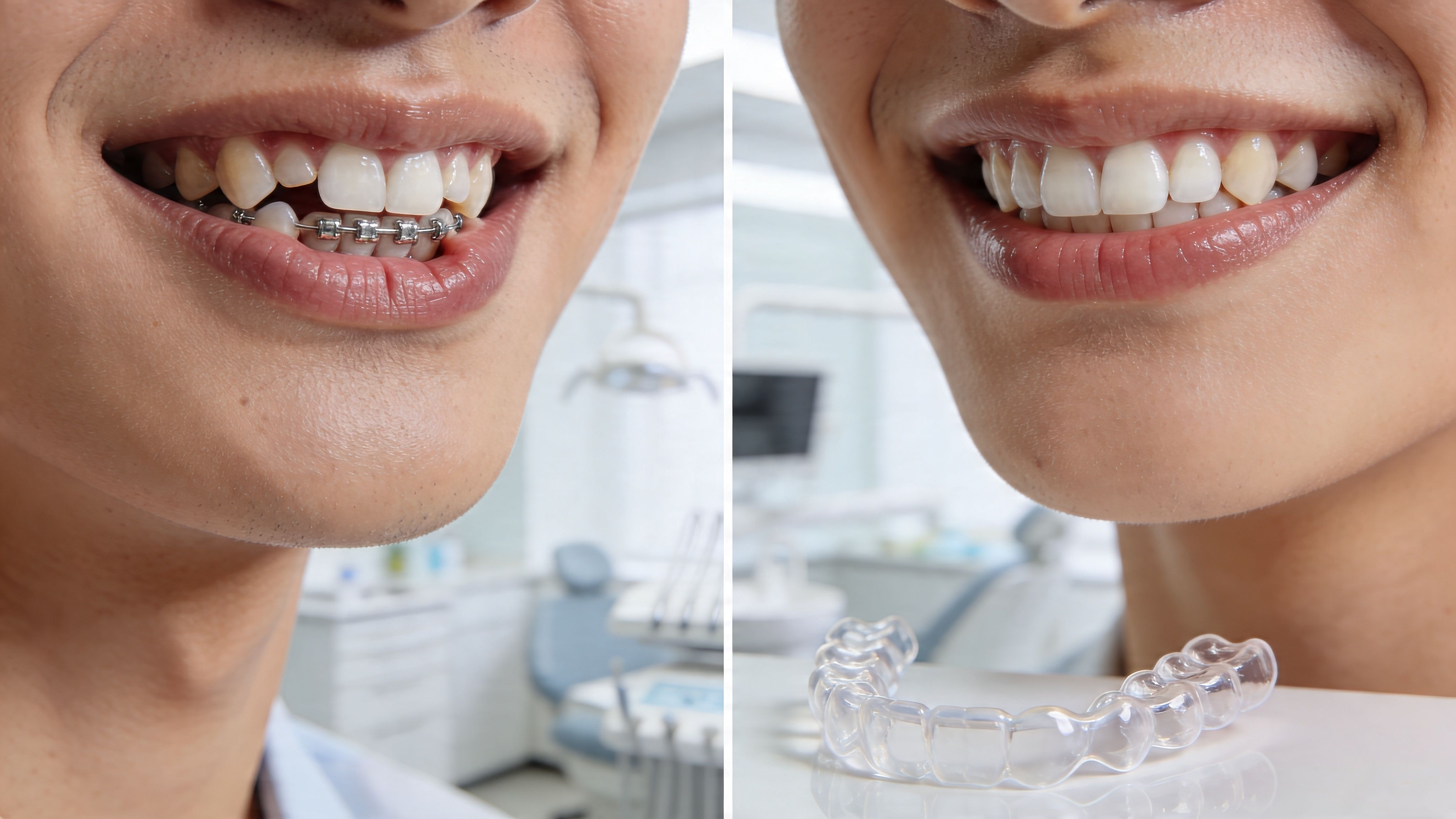
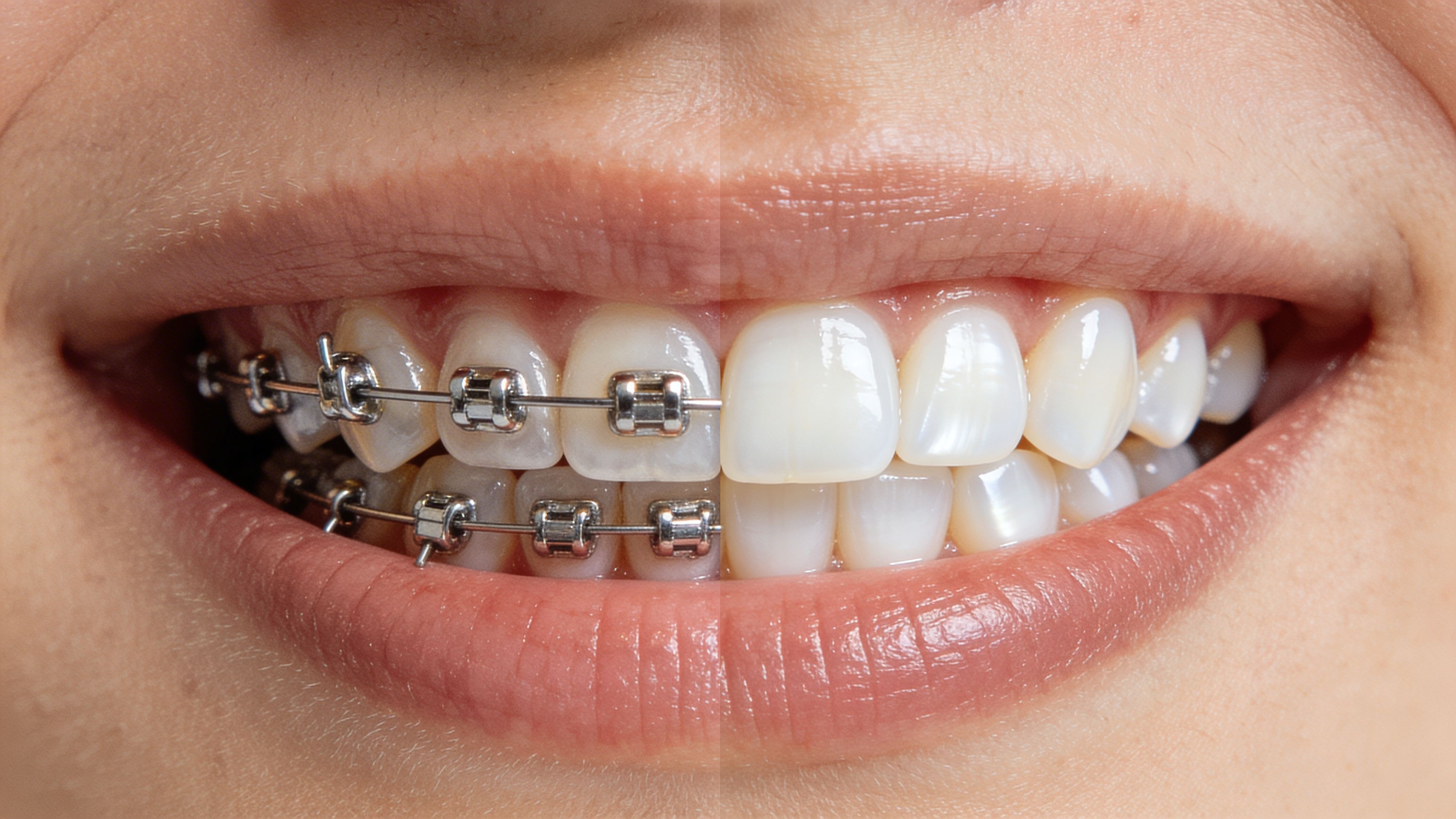
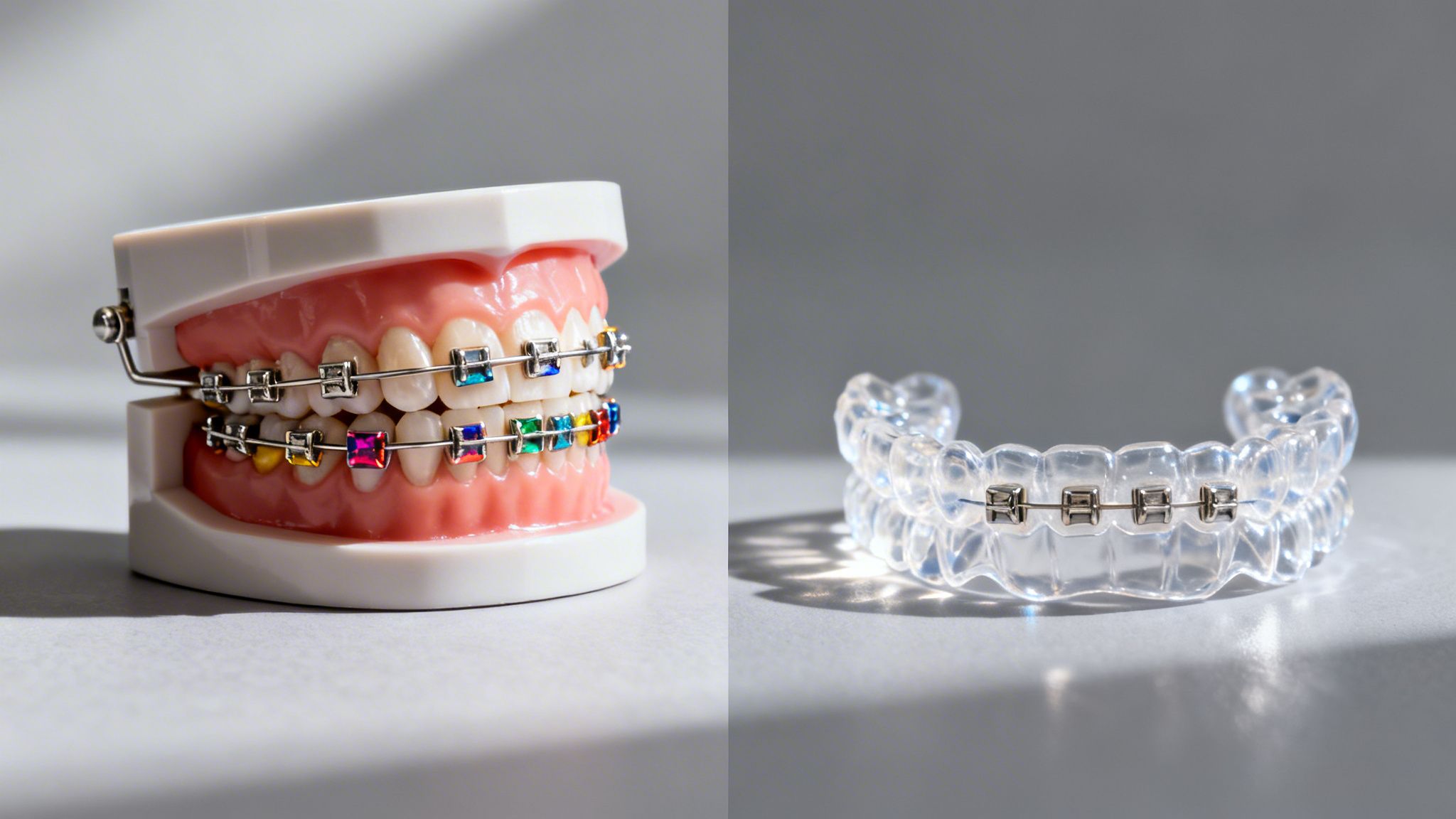
- Which option you choose, since clear aligners, metal braces, and champagne-colored Iconix brackets each carry different costs
A focused touch-up on a couple of teeth is scoped and priced differently from full treatment. Starting in July we began offering that kind of limited, targeted care for people who only want one or two specific things corrected, and the mail-order restart crowd is a big part of who asks for it.
Some people find that a limited case fits inside a single benefit year while a comprehensive case does not. That is worth checking with your plan before you assume anything. If you are curious why doctor-supervised aligners carry a different price than the mail-order model did, we wrote about why clear aligners from the orthodontist cost more.
The only honest next step is a consultation that produces a written scope and an exact figure for your mouth.
Focused Touch-Up or Full Treatment? What Pushes a Case Each Way
Every case is judged on its own, but these are the patterns I see most often when someone restarts.
| Factor | Points toward a focused touch-up | Points toward full treatment |
|---|---|---|
| How much moved | Teeth got close before treatment stopped | Teeth drifted back near the original position |
| How many teeth | One or two teeth out of line | Crowding or spacing across the whole arch |
| The bite | Teeth come together the way they should | Overbite, underbite, or crossbite never addressed |
| Time since stopping | Months, with retention worn part of the time | Several years with no retention at all |
| Your goal | Fix the one tooth that bothers you | Finish the result you originally paid for |
Restarting in your 30s, 40s, or 60s is not unusual here
If part of what is stopping you is the sense that adult orthodontics is a teenager's world, let that go. The American Association of Orthodontists reports that roughly one in three orthodontic patients is now an adult, and that matches what I see on our schedule.
We treat patients well into their 70s. One of our reviewers, who is 76, wrote that she would recommend anyone at any age come in and improve their smile. You are not too old, and you are not late.
Dr. Jeremy and Dr. Melissa see patients from Oak View, Goldenwest, Wintersburg, Downtown Huntington Beach, Central Fountain Valley, Talbert Village, Newland, and Adams. The office sits on Beach Boulevard, which puts it a few minutes from most of Fountain Valley, and that convenience matters more than people expect when you are fitting checkups around work and school pickup.
If you are weighing your options from scratch again, our piece on clear aligners without an orthodontist covers the supervision question, and what comprehensive treatment means explains where the line sits between a limited case and a full one.
The part the mail-order model was missing
I am not interested in piling on companies that already closed. But the structural gap in that model was simple: nobody with specialty training was looking in your mouth as the teeth moved.
That is the piece we built around. Dr. Jeremy and Dr. Melissa personally see patients at each visit rather than handing them off to whoever is free, and it shows up in what people write afterward. One parent put it this way: "I love that they are the ones that see my son at every appointment." - Anh N.
We also welcome second opinions, and there are plenty of visits where the honest answer is that someone needs less treatment than they were told elsewhere. That includes restart cases where the teeth held better than the patient assumed. If you want the fuller argument for why supervision matters, we covered it in why in-person supervision still matters.
Frequently Asked Questions About Restarting an Unfinished Aligner Case
Can I just use my remaining trays with a new orthodontist supervising?
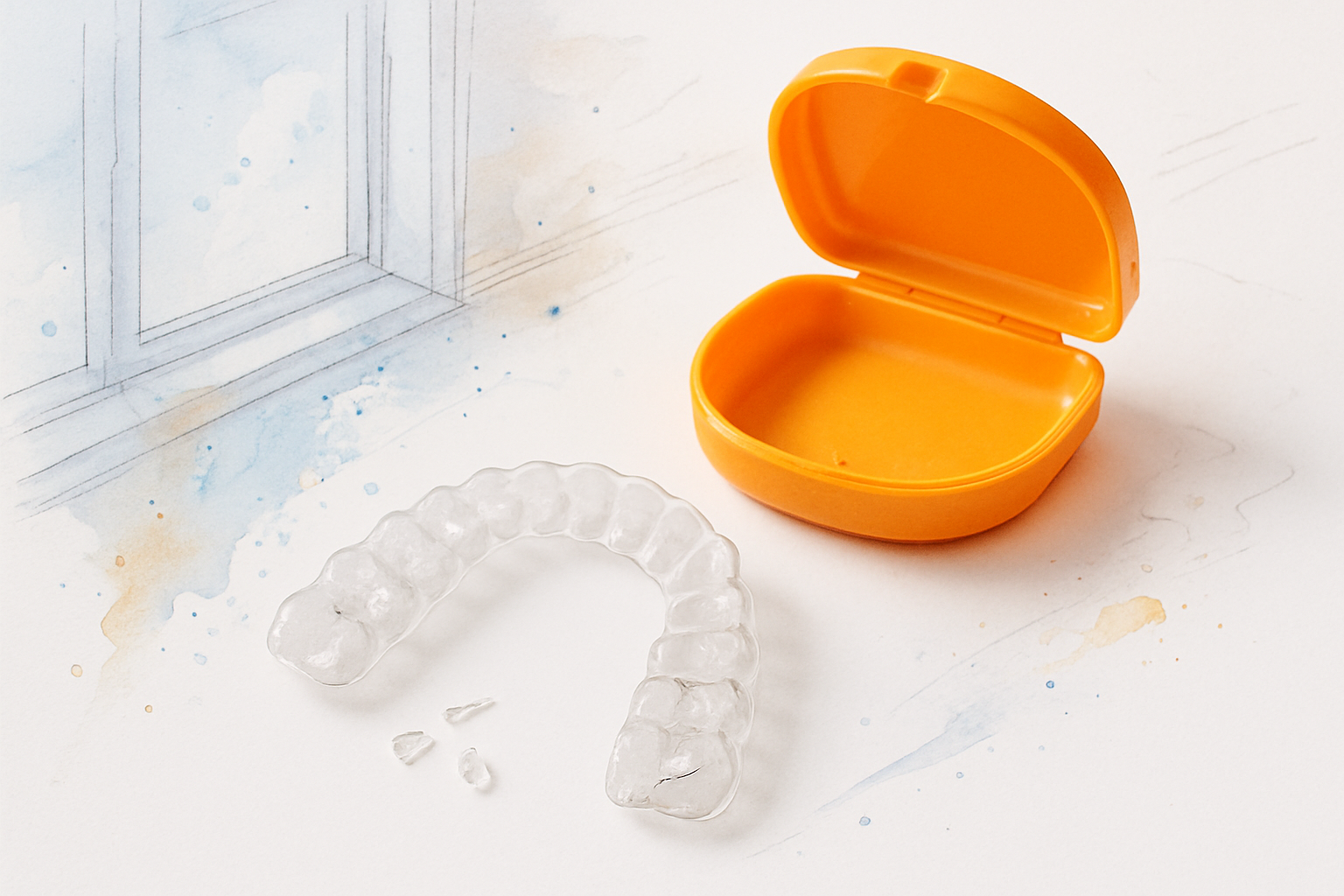
Almost never, and not because anyone is trying to sell you something new. Those trays were manufactured for a specific sequence of positions, and once teeth drift off that path, the next tray in the stack no longer fits the teeth you have today. A current scan tells us what actually fits.
How much does it cost to get old aligner attachments removed?
Removal is a short, routine appointment, so it is scoped very differently from treatment. The exact number depends on how many attachments are still bonded and what else you want done at that visit, so it is worth calling for a figure rather than guessing.
Will I have to start the whole treatment over from zero?
Not necessarily. Progress you made often holds in part, which can shorten the remaining plan. But the plan itself is built new, from where your teeth sit today, instead of being resumed from an abandoned sequence.
I feel embarrassed that I let this sit for years. Is that going to come up?
No. Life gets in the way, and family circumstances derail dental plans all the time. We care about where your teeth are now and where you want them to go.
Do I have to use clear aligners again, or can I switch?
You can switch. Some people restarting a case go with Invisalign again because it fits their work life, and others choose metal braces or champagne-colored Iconix brackets for a case that needs more control. None of those is universally better. The right one depends on your bite, your schedule, and what you want the next year to look like.
Ready to finish what you started?
If you have trays in a drawer or attachments still bonded to your teeth, a consultation will tell you exactly where things stand and what finishing would involve. We see patients from across Huntington Beach and Fountain Valley on Beach Boulevard, and Dr. Jeremy and Dr. Melissa are happy to take a look and give you a straight answer. You can reach our team at 714-594-5777 or at magicfoxsmiles.com whenever you are ready.