Will Insurance Cover Braces? What Huntington Beach Families Ask Us Most
Direct Answer: Many dental plans include some orthodontic coverage, but it sits in a separate bucket with its own lifetime maximum. Coverage usually pays a percentage over the months of treatment, not all at once.
Most people call an orthodontic office with one question sitting in front of every other question. Before treatment options, before timelines, before anything else, they want to know: does my insurance cover any of this?
I hear it constantly. Roughly one in ten calls we take opens with some version of it, and callers usually name their plan right away. Delta Dental, United Healthcare, Cigna PPO, Blue Shield, MetLife, Medi-Cal.
So let me walk you through how orthodontic coverage actually works, what to look up on your own plan before you call anybody, and where families across Huntington Beach and Fountain Valley most often get surprised.
Does insurance cover braces in Huntington Beach, or not?
Usually it covers part of it. Rarely all of it. And whether it covers anything at all depends on a section of your plan most people have never read.
Here is the piece that trips up almost everyone: orthodontic benefits sit in a separate bucket from routine dental benefits. Your cleanings, exams, and fillings run through one set of rules. Braces and Invisalign run through another.
That means being in network for your twice-a-year cleaning tells you close to nothing about braces. I have talked to parents in Oak View and Newland who assumed the two were connected, then found out their plan had no orthodontic benefit at all.
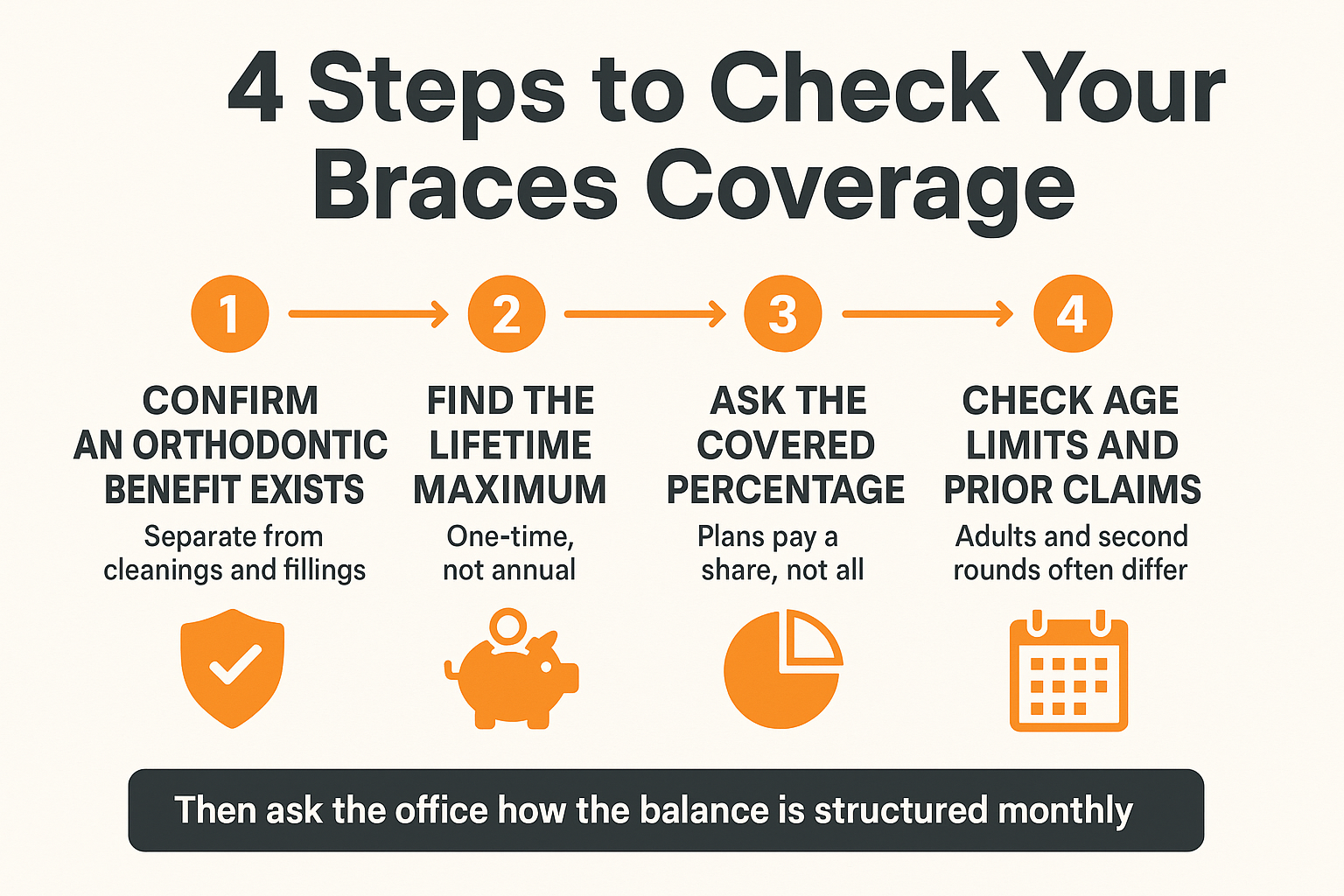
Before you call any office on Beach Boulevard or anywhere else in Orange County, look up four things on your own plan:
- Is there an orthodontic benefit at all? Some plans simply do not include one.
- What is the lifetime orthodontic maximum? This is the total the plan will ever pay toward orthodontics for that person.
- What percentage does the plan pay? Most plans cover a share of treatment, not the whole thing.
- Does it apply to dependents only, or adults too? Plenty of plans stop coverage at a certain age.
With those four answers in hand, every conversation you have after that gets faster and a lot less frustrating.
I have an HMO plan. Will that work?
This one comes up week after week, so I want to answer it plainly rather than bury it.
Our practice works with PPO plans. We are not able to work with HMO dental plans. If that is your situation, it is not a dead end, and I will get to what comes next in a second.
The reason the split exists has to do with how the two plan types are built. An HMO dental plan routes your care through a narrow contracted network with a fixed fee schedule, so treatment has to happen at a specific assigned office. A PPO plan reimburses a percentage of treatment across a much wider range of offices, which gives you more say in where you go.
Neither one is better. They are just different structures, and orthodontic offices contract differently with each.
If your plan does not fit, that is a coverage mismatch, not a verdict on whether you can afford care. There are in-house payment options, including no-interest monthly plans, and plenty of patients here started that way. One patient who finished braces put it like this in a review: "Affordable plans especially coming from someone who was unemployed for awhile lol!"
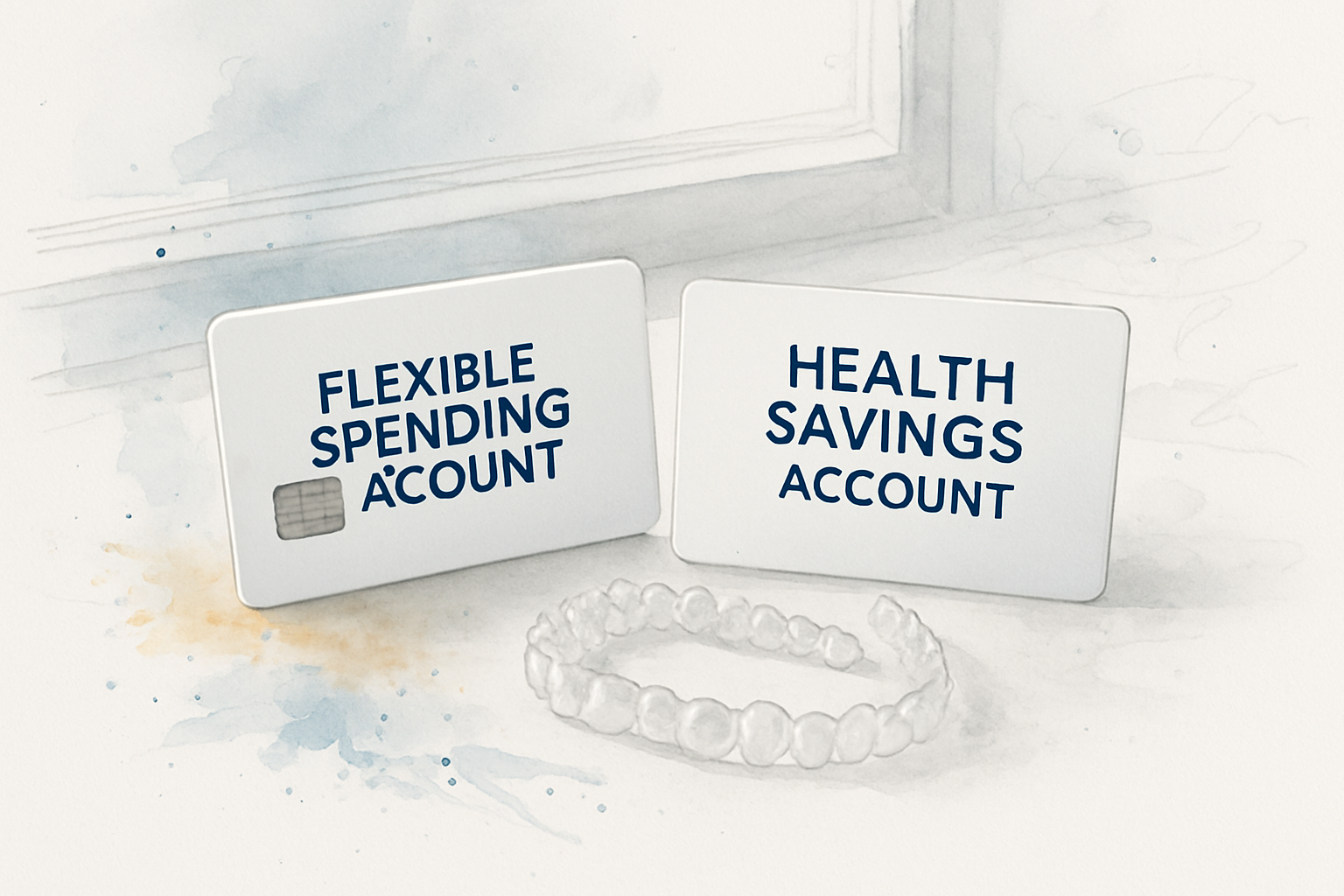
It is also worth checking whether you have an FSA or HSA through work, since those funds are often usable for orthodontics. I wrote more about using FSA and HSA dollars for braces and Invisalign if that applies to you.

How does orthodontic coverage actually pay out?
This is where most people are genuinely surprised, and it is worth understanding before you sign anything.
Many plans set a one-time lifetime orthodontic maximum instead of an annual allowance. So it is not a benefit that refreshes every January. It is a single pot of money, and once it is used, it is generally gone.
The second surprise is timing. That amount is usually released in installments across the months of treatment rather than paid as a lump sum on day one. The insurer sends a portion as treatment progresses, often tied to continued eligibility.
What that means in practice:
- Your plan covers a portion of total treatment, not a flat discount off the top.
- The remaining balance is what a monthly payment plan gets built around.
- If you change jobs or lose coverage mid-treatment, the remaining installments can stop.
I am not going to throw dollar figures at you here, because every plan is written differently and the numbers move. What I can tell you is that any office should be able to sit down and break down your specific plan against your specific treatment before you commit. If you want more on what actually drives the underlying price, we cover the cost side separately.
The four plan details worth writing down
Call your plan's member services line and get these four answers before you talk to any orthodontic office. Here is what each one actually tells you.
| What to ask | Why it matters | What you might hear |
|---|---|---|
| Is there an orthodontic benefit? | Some dental plans exclude orthodontics entirely, even good ones | Yes, no, or covered under a rider |
| What is the lifetime orthodontic maximum? | This is the ceiling on what the plan will ever pay per person | A single dollar figure, not annual |
| What percentage is covered? | Determines your share of the balance and your monthly plan | A percentage of eligible treatment |
| Age limits, waiting periods, or prior claims? | Adults are often excluded, and past treatment may have used the benefit | Dependents only, 12-month wait, or benefit already used |
Your insurance check, in four steps
Here is the order I recommend doing this in, because each step changes what you need to ask next.
I already had braces once. Will insurance cover a second round?
Usually not, and I would rather tell you that up front than have you find out later.
A lifetime orthodontic maximum that has already been used is typically gone for good. It does not reset because years passed, because you switched employers, or because your teeth shifted back.
We get this question often. One person who reached out had recently finished clear aligners with another provider and wanted to know if a Delta Dental PPO would pay for Invisalign again. Another asked about restarting aligners under Medi-Cal after being a patient years earlier.
A few things that commonly fall outside coverage the second time around:
- Replacement retainers, which most plans exclude outright
- Minor correction after relapse from earlier treatment
- Second-round comprehensive treatment once the lifetime max is spent
This is exactly why focused touch-up treatment exists as an option. If one or two teeth have drifted and everything else is fine, you should not have to commit to a full course of treatment to fix them. It is scoped and priced for what it actually is.
And honestly, most relapse cases I see started with a retainer that got lost or stopped being worn. If your treatment finished recently and something is shifting, ask about it sooner rather than later.
Does Medi-Cal cover braces for kids?
Families across Oak View, Wintersburg, and Newland ask this all the time, so it deserves a real answer rather than a shrug.
California's Medi-Cal Dental program can cover orthodontic treatment for qualifying patients under 21. But coverage hinges on medical necessity, not appearance.
That generally means the case has to meet a qualifying severity score, or involve conditions such as cleft palate or other craniofacial anomalies. The program also requires records and prior authorization before treatment starts, plus continued eligibility while treatment is underway. You can read the criteria yourself in the Medi-Cal Dental provider handbook.
What this means for most parents: routine crowding or purely cosmetic concerns generally do not qualify. That is not a judgment on whether treatment is worth doing. It is just how the program is written.
One more thing that catches people. Not every orthodontic office participates in the program, and participation is separate from whether your child qualifies. So there are two confirmations to get, not one. Ask the office directly when you call, and ask about the coverage determination through the program itself. If you want a fuller walkthrough, we have a piece on public coverage for kids' braces.
What should I actually say when I call?
Nobody hands you a script for this, so here is one.
Ask your plan's member services line:
- Is there an orthodontic benefit on this plan?
- What is the lifetime orthodontic maximum?
- What percentage is covered?
- Are there age limits or a waiting period?
- Has a prior claim already counted against the benefit?
Ask the orthodontic office:
- Do you file the claim on my behalf, or do I submit for reimbursement?
- How is the remaining balance structured monthly?
- Is the initial consultation charged?
On that last one, ours is not. We do not charge for the initial consultation, and the front desk will sit with you and read the orthodontic section of your plan line by line if that is easier than doing it alone.
Our team also speaks English, Vietnamese, and Spanish, which matters in a service area where a large share of Fountain Valley households speak a language other than English at home. Insurance language is confusing enough in your first language.
Why I think this conversation should happen before treatment, not during
The patients who feel best about their decision are almost always the ones who understood the numbers before anything started.
We see a fair number of second opinions here, often from people who felt rushed somewhere else or were handed a recommendation without an explanation of the cost behind it. The most repeated theme in our reviews is that Dr. Jeremy and Dr. Melissa take the time to explain the plan, including the financial side, before a single bracket goes on.
That is not a sales tactic. It is just the only way anyone can make a real decision.
If you are still weighing whether the price you are quoted is fair, this piece on what "affordable braces" should and shouldn't mean goes deeper into how to read a treatment estimate.
More Insurance Questions Huntington Beach Families Ask
My dentist referred us to an orthodontist. Does that change my coverage?
No. A referral from your general dentist is helpful for getting you to the right place, but it does not unlock orthodontic benefits or change your lifetime maximum. Your plan's orthodontic section still governs what gets paid.
Does insurance treat Invisalign differently from metal braces?
Most PPO plans treat them the same way, applying the same orthodontic benefit and the same lifetime maximum regardless of appliance. A small number of plans word things differently, so it is worth asking specifically about clear aligner coverage if that is the route you are considering.
I am 60. Am I too old for coverage, or for treatment?
Two separate questions. Plenty of plans limit orthodontic benefits to dependents, so adults often pay out of pocket, and that is worth confirming early. Treatment itself is a different story. We treat patients well into their 70s, and one 76-year-old patient left a review saying her smile turned out awesome. Age is a coverage issue far more often than a clinical one.
Can I use FSA or HSA money if my plan does not cover braces?
Often yes. Orthodontic treatment is commonly an eligible expense for both, which makes it a real option when coverage is thin or nonexistent. Check your plan administrator's rules, since the details vary by employer.
What if I lose my job partway through treatment?
Because benefits pay out in installments over the treatment period, losing coverage mid-course usually stops the remaining payments. Tell the office as soon as it happens rather than after the fact, because payment plans can often be restructured when there is time to work with.
Still not sure what your plan covers?
Our office on Beach Boulevard is convenient and local for families across Huntington Beach and Fountain Valley, from Goldenwest and Downtown Huntington Beach to Talbert Village and Central Fountain Valley. If you have your plan information in front of you and want someone to read the orthodontic section with you, we are happy to do that by phone at 714-594-5777 or through magicfoxsmiles.com. No pressure to book anything while you are figuring it out.