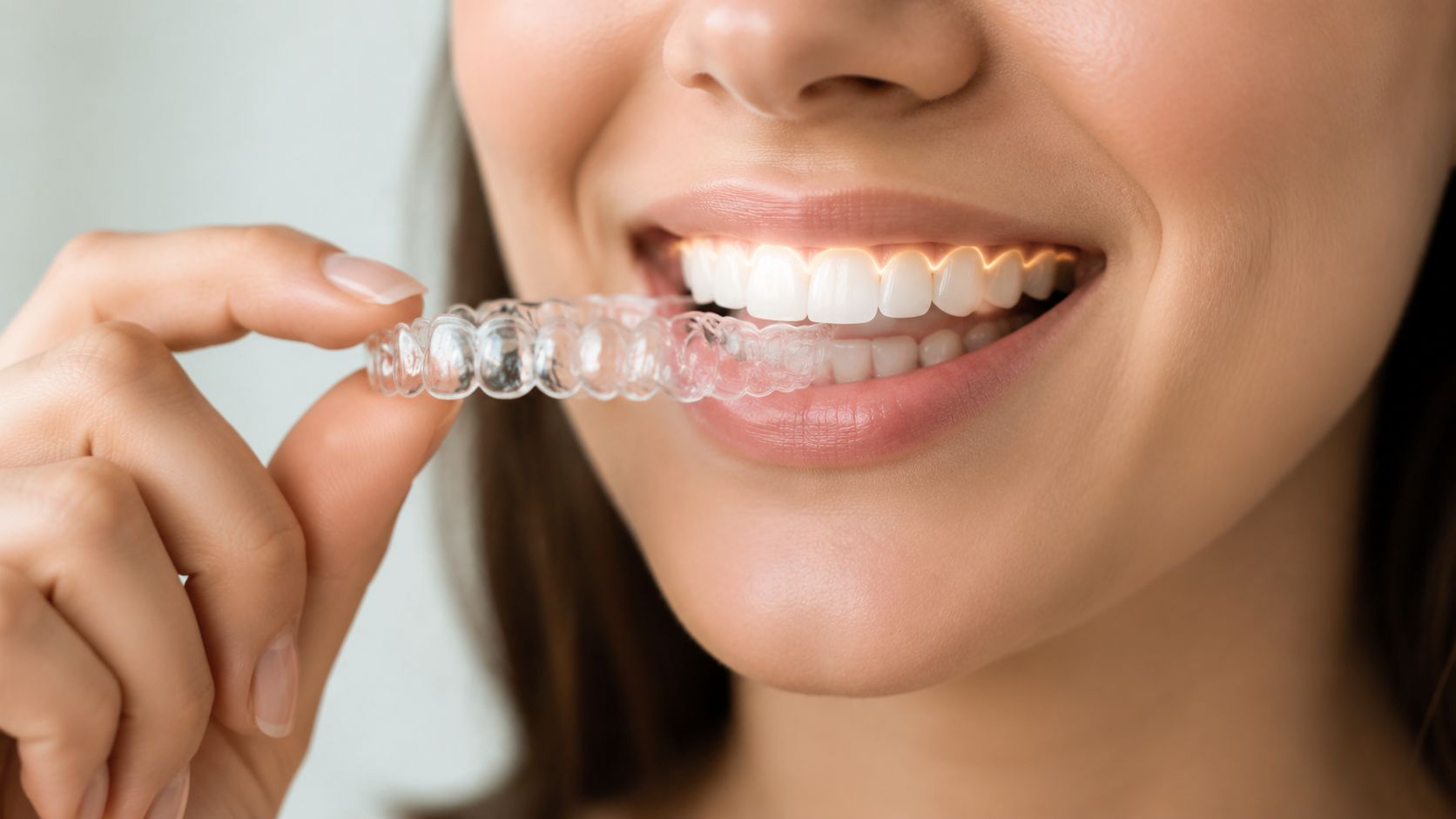
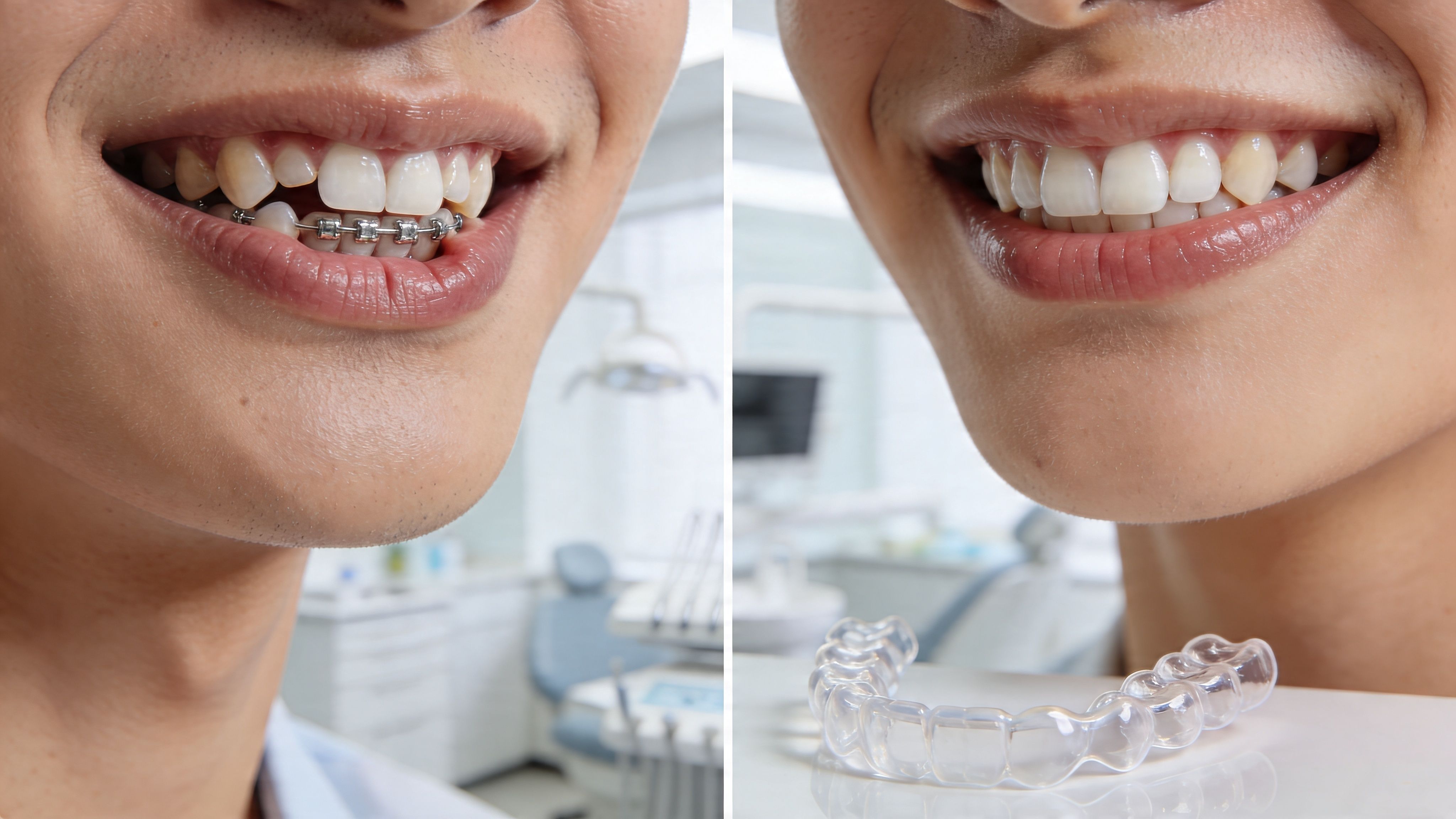
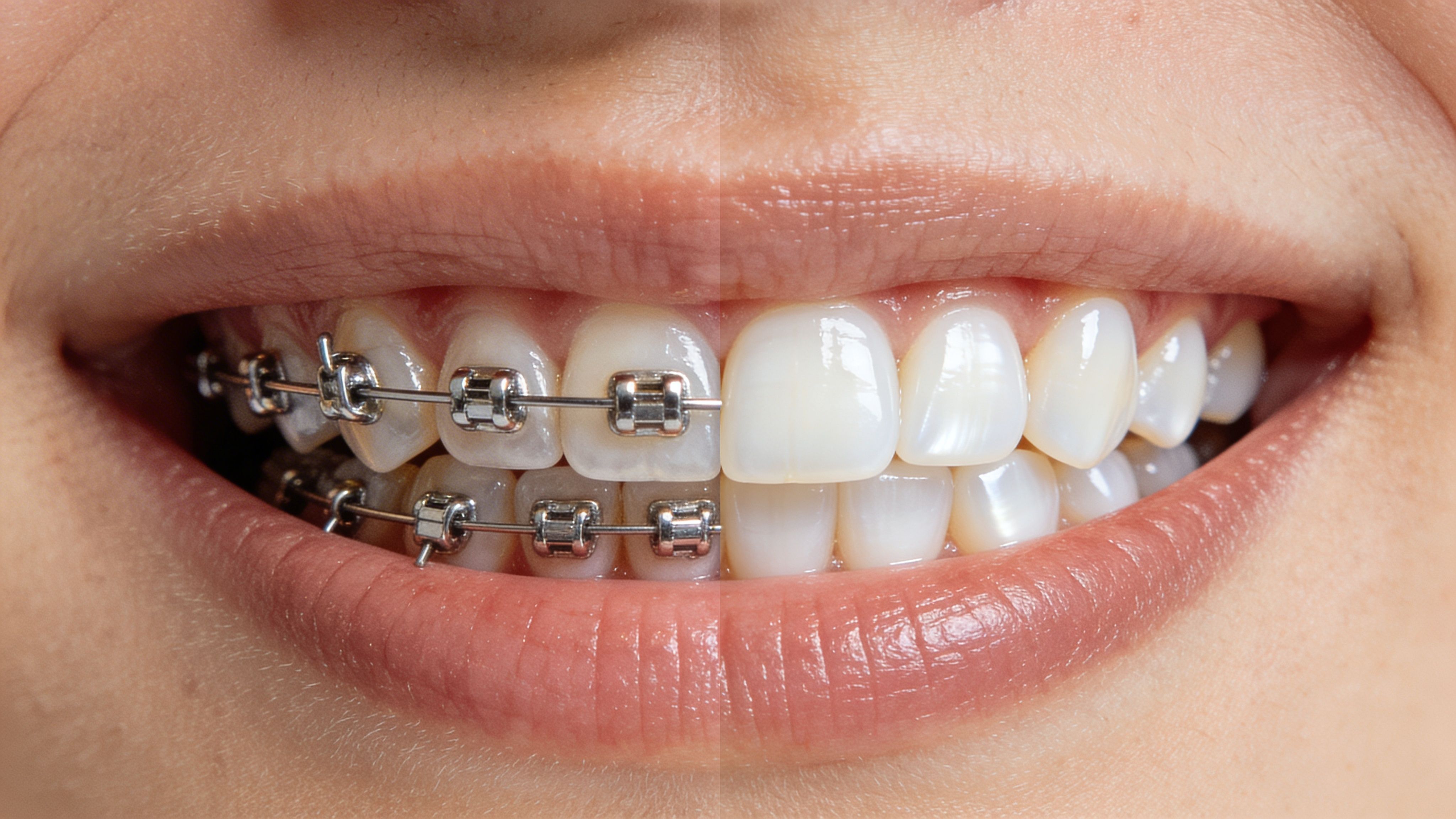
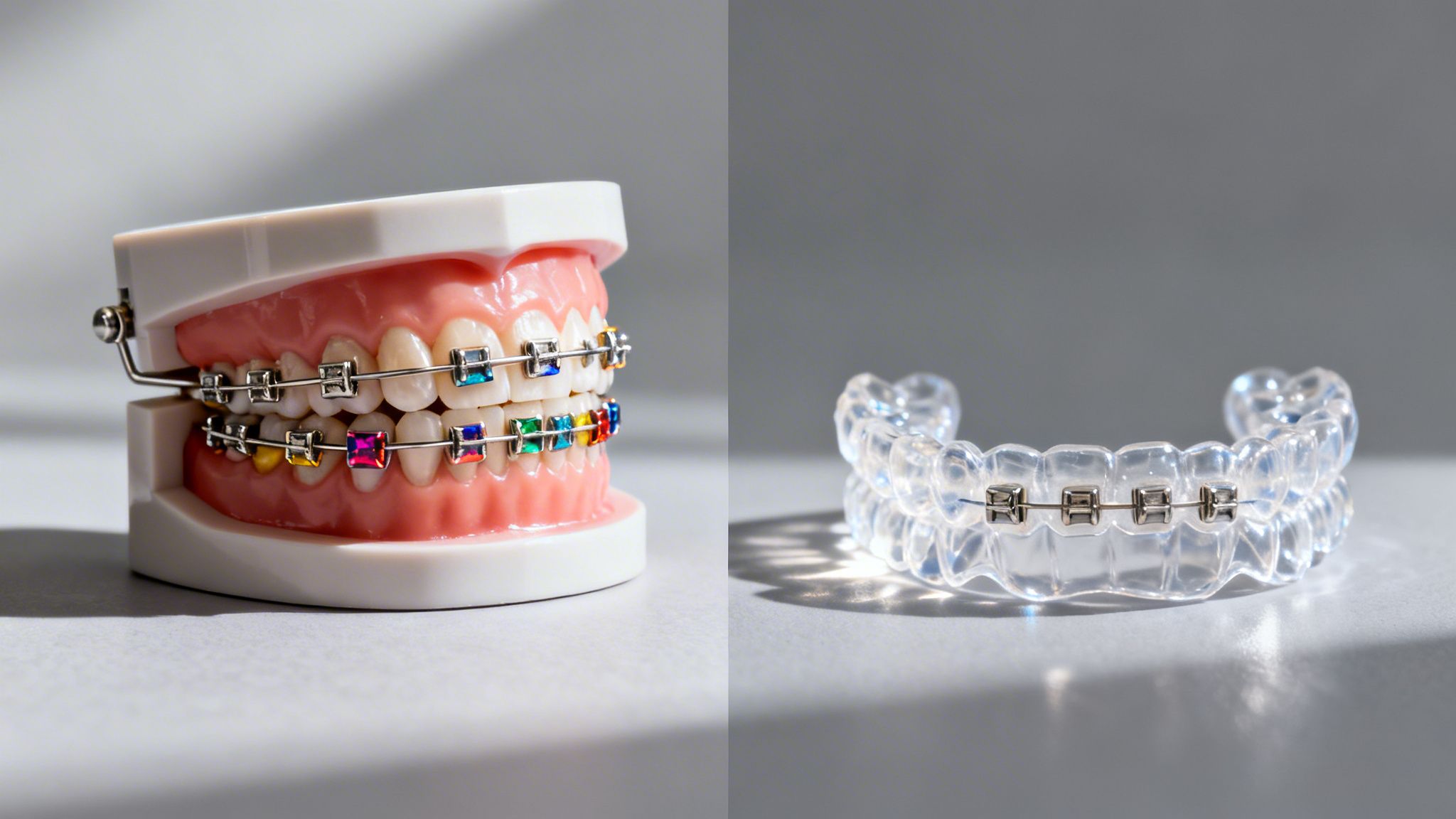
Your Permanent Retainer Wire Came Loose. Is That an Emergency?
Direct Answer: Usually not a true emergency. If the wire is poking, cover it with orthodontic wax and call during business hours. Call right away only for sharp constant pain or a fully detached piece.
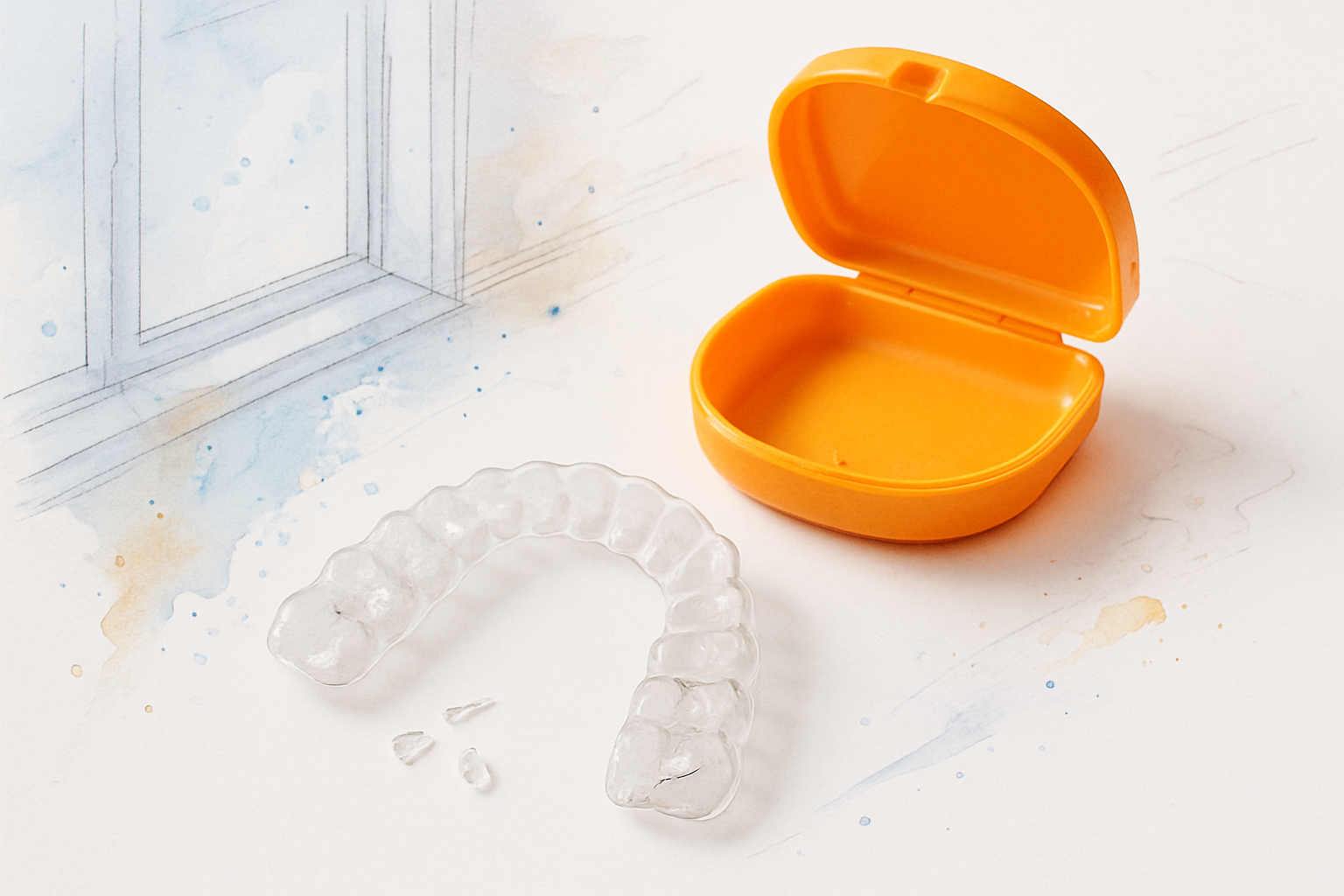
It is 9 PM on a Friday and your tongue keeps finding something sharp behind your lower front teeth. That thin wire that has been quietly sitting back there since your braces came off years ago has let go on one tooth. And now you are wondering if this is an after-hours emergency or something that can wait until Monday.
I take versions of this call all the time from people across Huntington Beach and Fountain Valley. Retainer questions are one of the most common reasons our phone rings, and a big share of them start with a bonded wire that came loose.
So let me give you a straight answer about what to do in the first 24 hours, what the appointment actually involves, and what moves the cost. This one is specifically about the fixed wire bonded behind your front teeth, not a removable retainer that stopped fitting.
Is a loose permanent retainer wire an emergency?
In most cases, no. A bonded wire that has detached at one tooth is time sensitive, but not urgent. It needs attention in days, not weeks, and not at midnight.
The situation changes when there is real injury involved. Here is how I sort it:
- Call right away: a piece of wire came fully off and you may have swallowed or inhaled it
- Call right away: sharp, constant pain, heavy bleeding, or a tooth that moved after a hit to the mouth
- Call during business hours: the wire is loose or poking your tongue but you are otherwise fine
- Call during business hours: the wire feels loose and nothing hurts at all
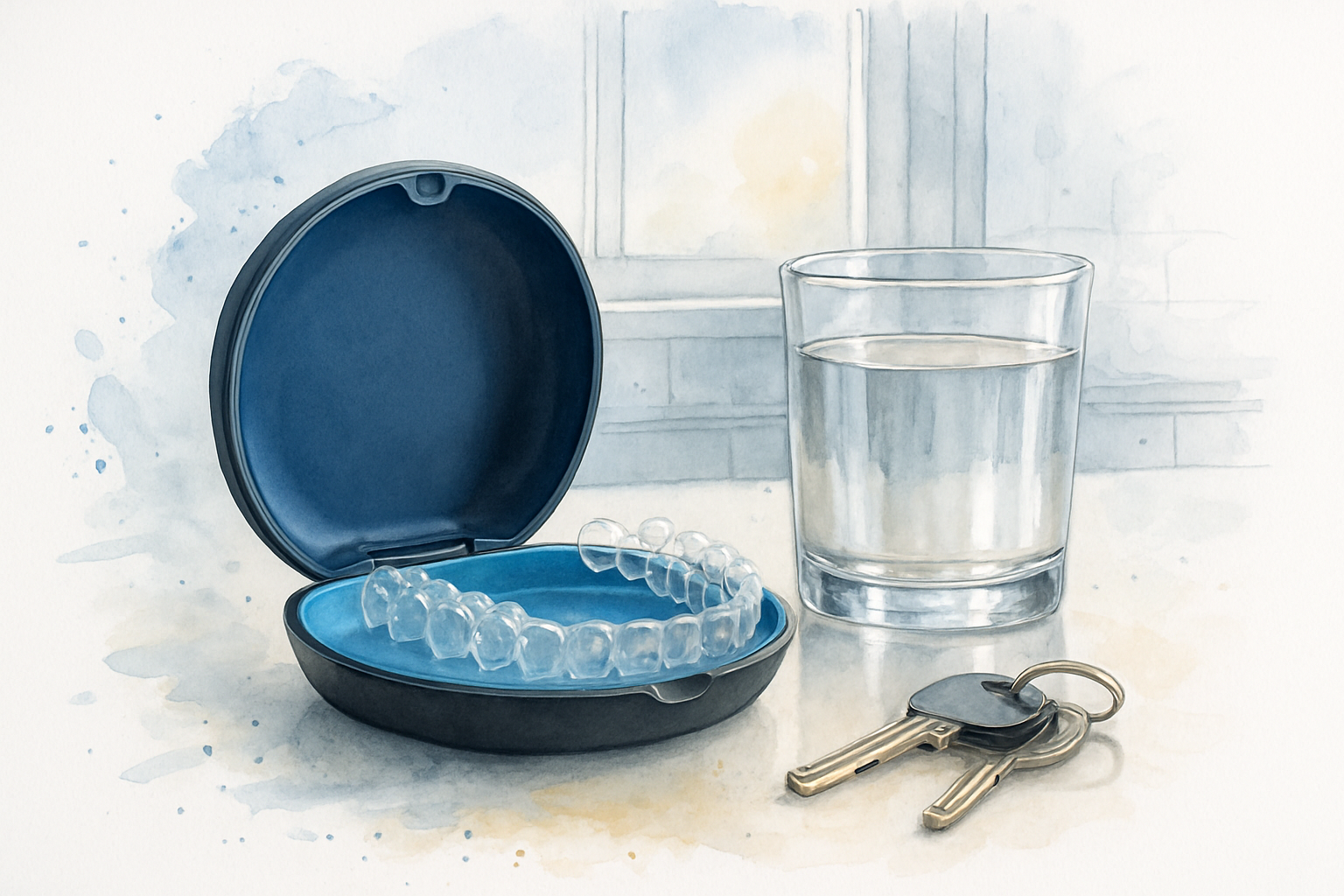
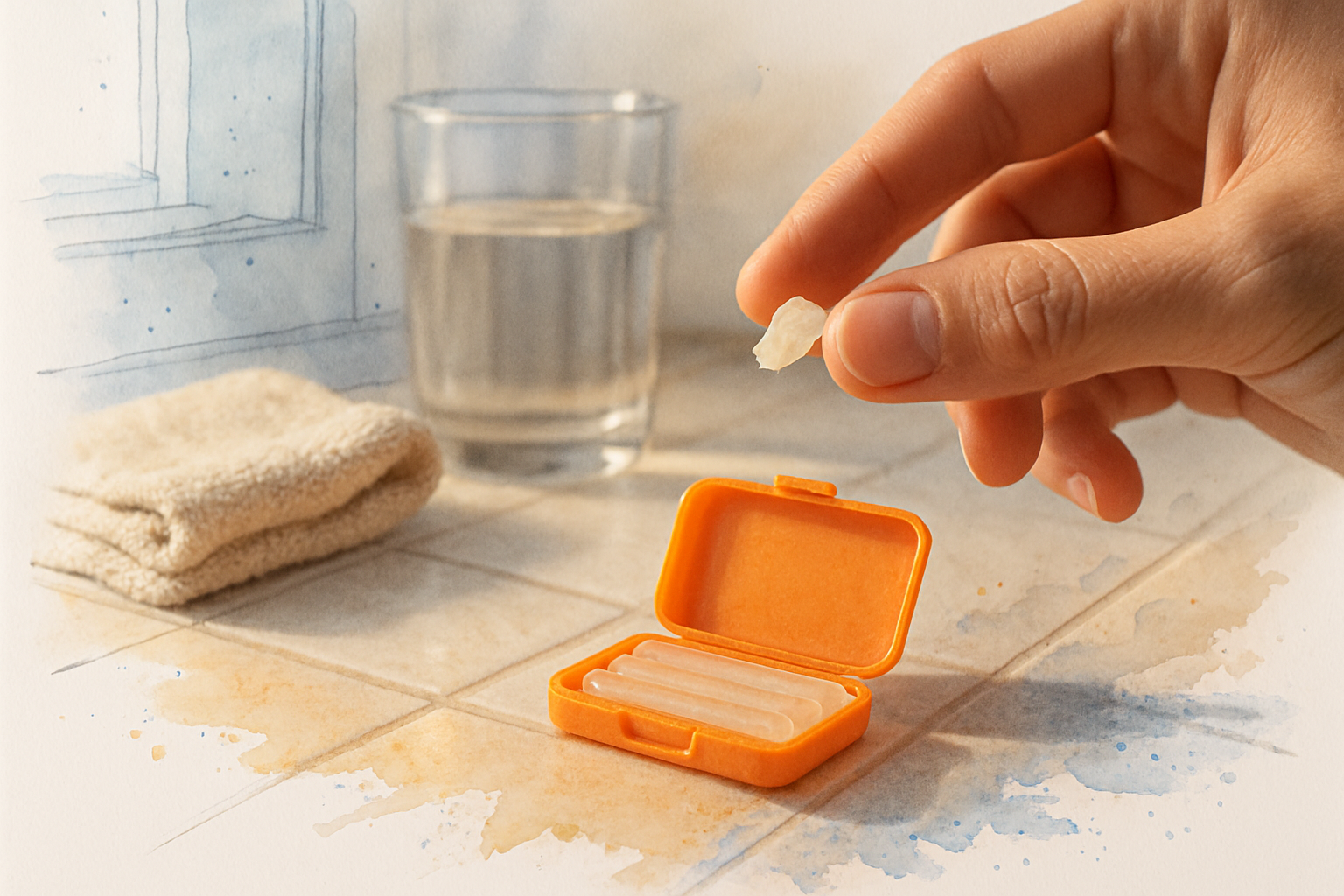
For the common version, the Friday night version, do three things. Dry the area with a tissue, press a small ball of orthodontic wax over the sharp end, and keep brushing and flossing around it so the gum tissue stays healthy.
Then call when we open. Our hours run Monday through Friday, 9 AM to 5 PM, with Saturday by appointment, so a Friday night discovery usually means a Monday morning call.
What I do not want you to do is wait three weeks because nothing hurts. The American Association of Orthodontists points out that fixed retainers can break or come loose and that teeth can start drifting once they do.
Quick Triage: What You Notice vs. When To Call
Use this to figure out which situation you actually have before you decide how fast to move.
| What you notice | What it usually means | When to call |
|---|---|---|
| A rough end your tongue keeps finding | The bond let go on one tooth | Wax it, keep it clean, call during business hours |
| Wire feels loose, nothing is poking | Same problem, less irritation | Call within a few days, do not wait weeks |
| A section of wire is gone entirely | Needs a look, and mention if you may have swallowed it | Call right away |
| Sharp, constant pain after an injury | Treated as urgent | Call right away |
| Wire looks fine but a front tooth looks turned | Teeth may have already shifted | Schedule an exam, no rush that day |

What the appointment actually looks like
Most people picture something far worse than what happens. They imagine starting over with full braces, and they put off the call for months because of it.
Here is the ordinary version of the visit:
- We look at the wire and find exactly where the bond failed
- We check whether the teeth behind that wire have moved at all
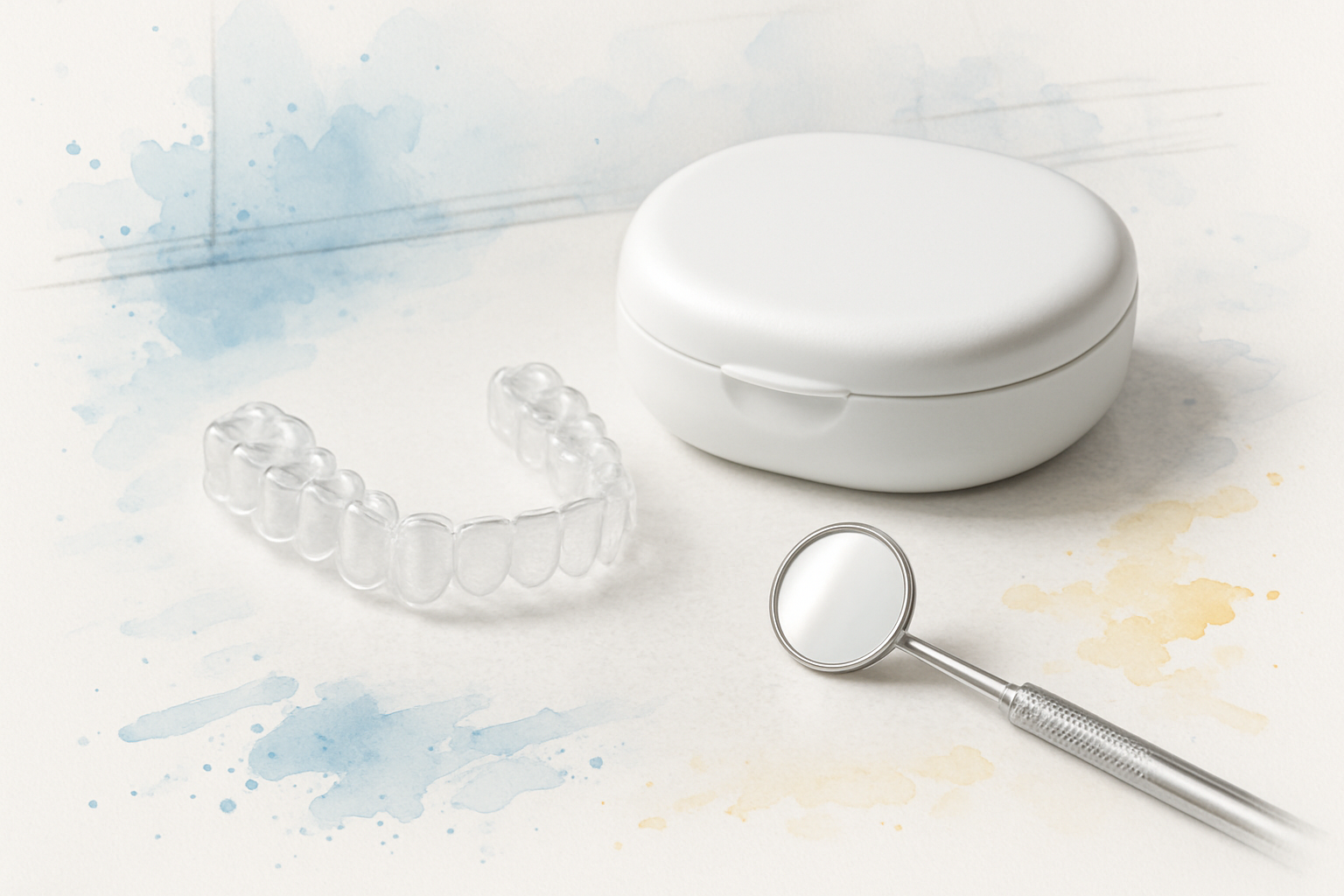
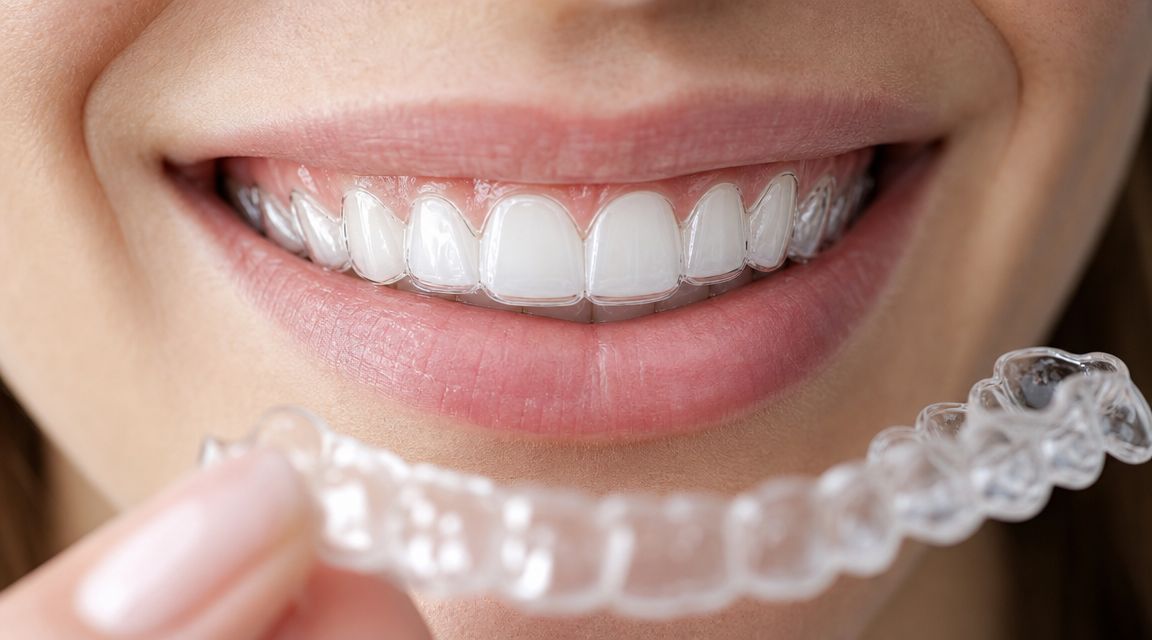
- We talk through three paths: re-bond, replace the wire, or switch to a removable retainer
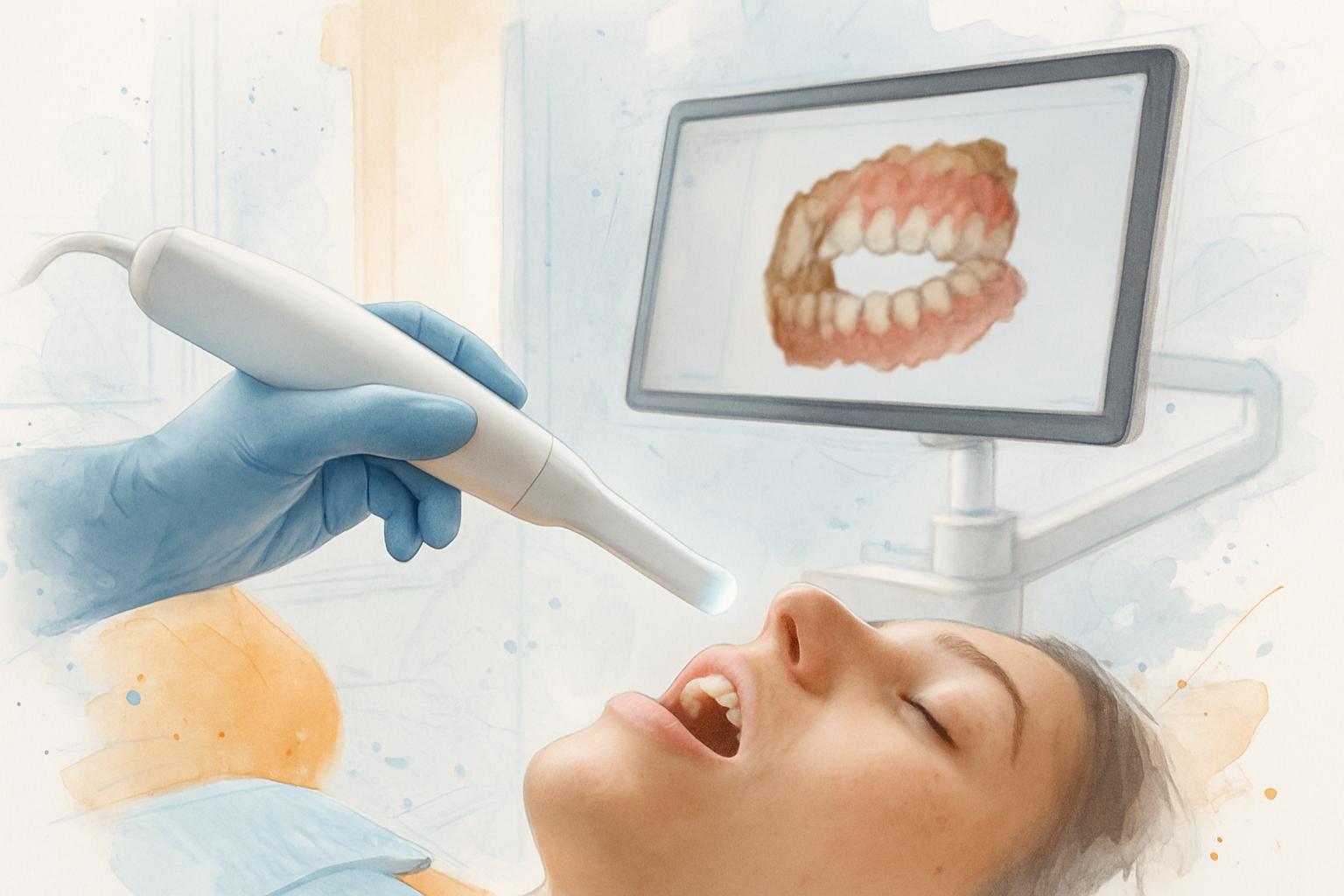
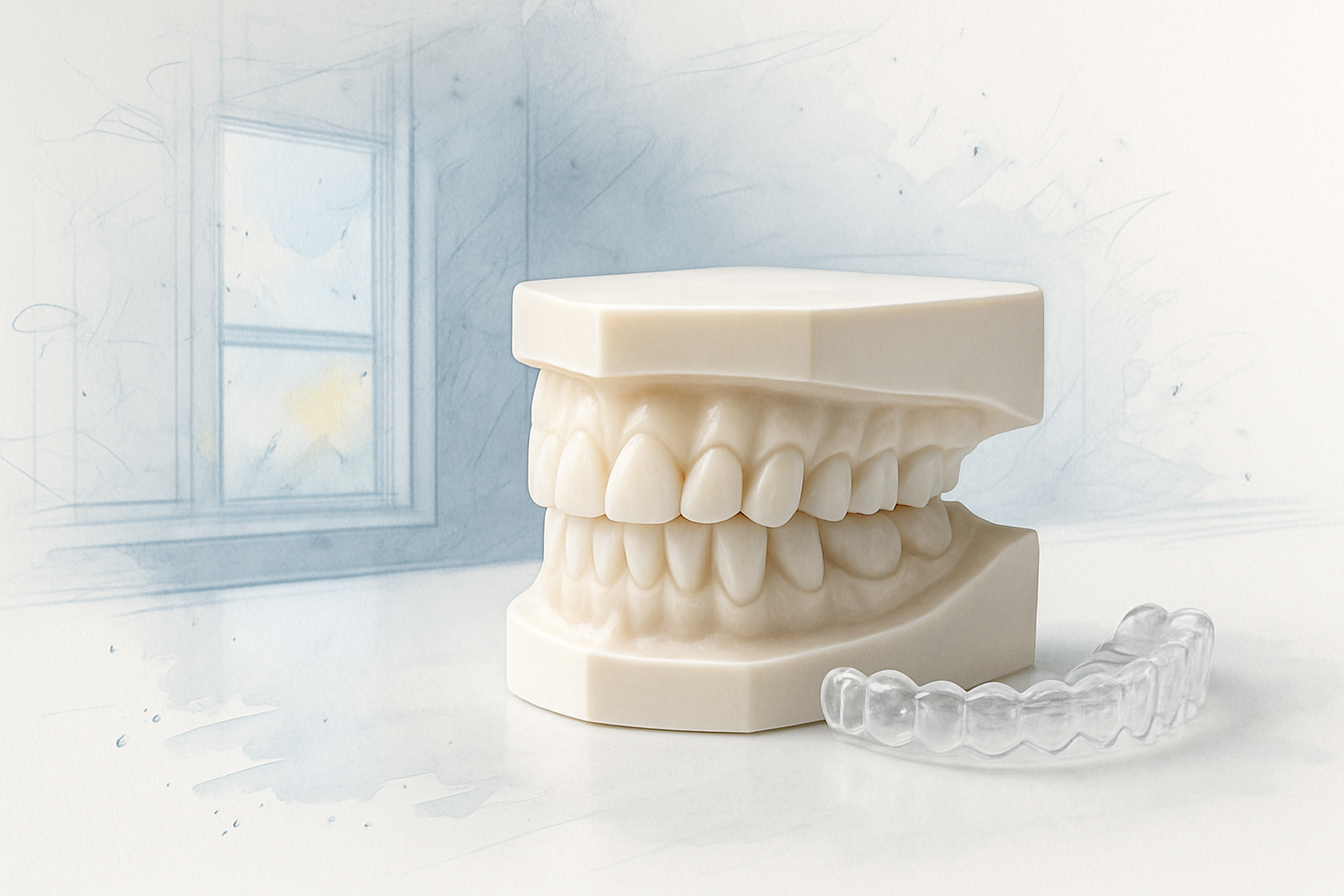
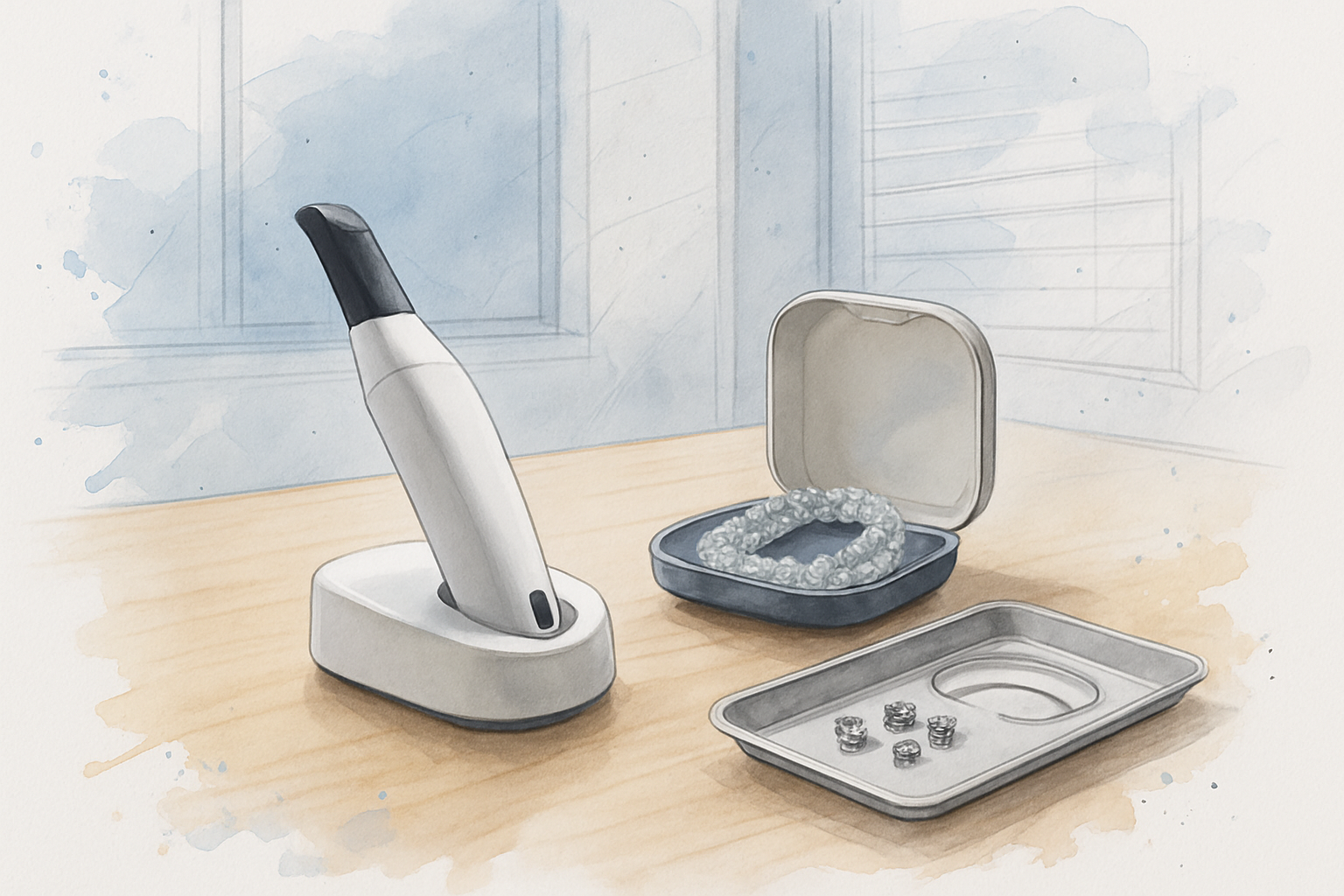
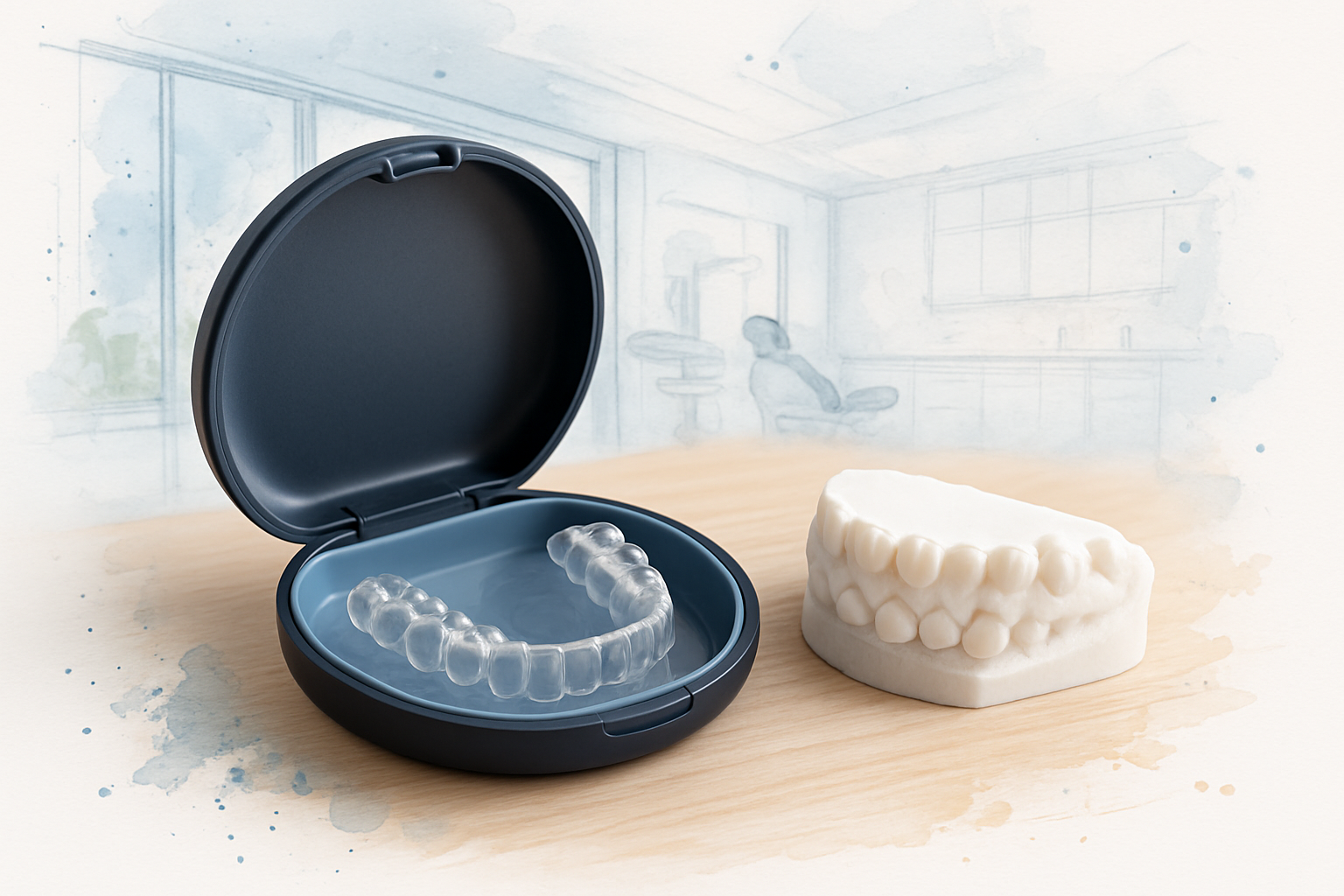
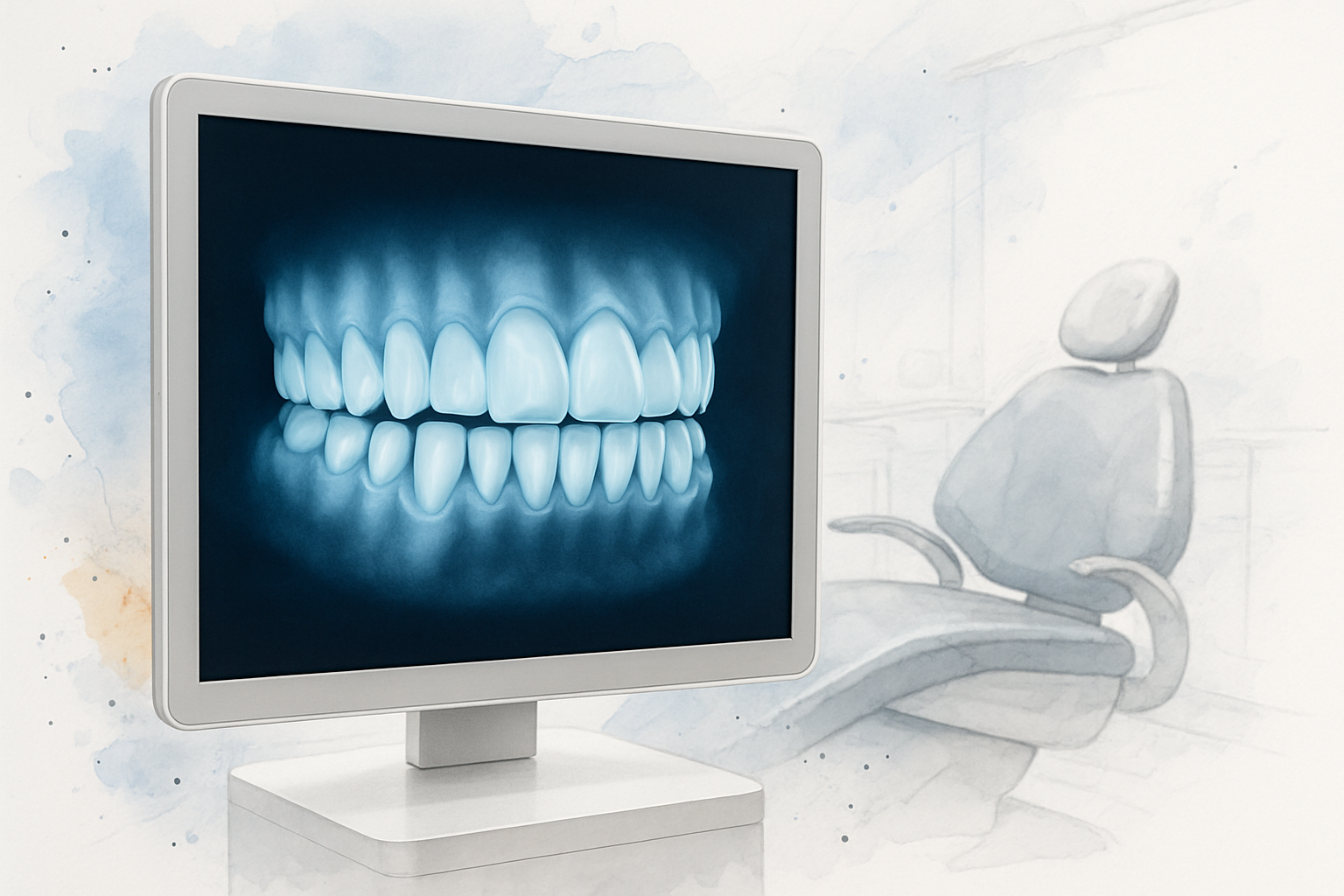
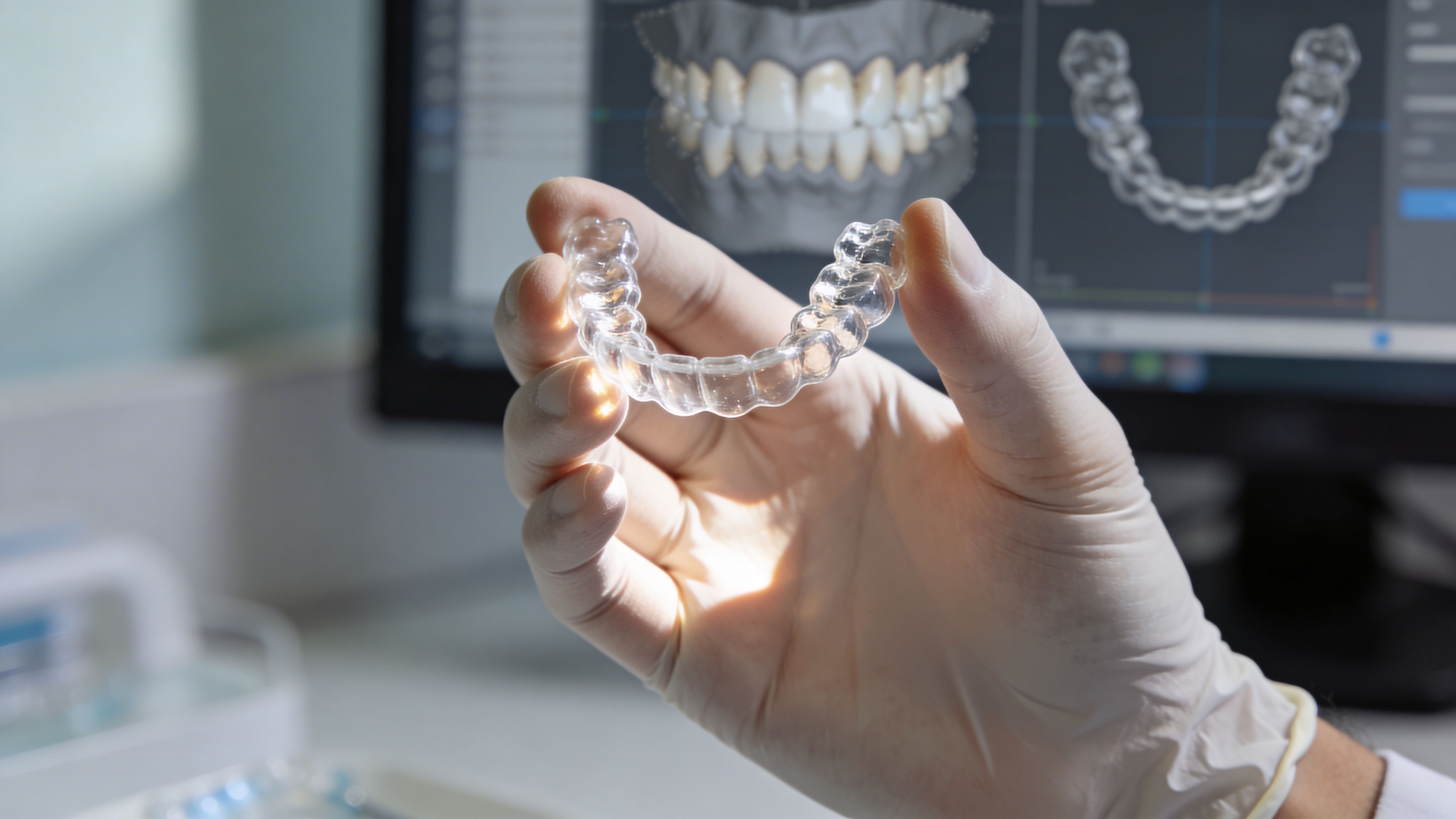
- If a new retainer makes sense, we take a digital scan instead of a physical impression
That scan part matters more to people than I expected when I started. Patients bring it up constantly, especially on retainer visits. One put it this way: "I thought it was really cool how they didn't have to take a physical mold of my mouth to make my retainer!"
No tray, no goop, no gagging. Just a wand and a few minutes.
Re-bonding a wire at one tooth is a short appointment. Replacing the whole wire takes longer. A new removable retainer means a scan and then a wait for fabrication, and turnaround has been running in the neighborhood of two weeks for our patients. You can read more about how retainer replacement works here.
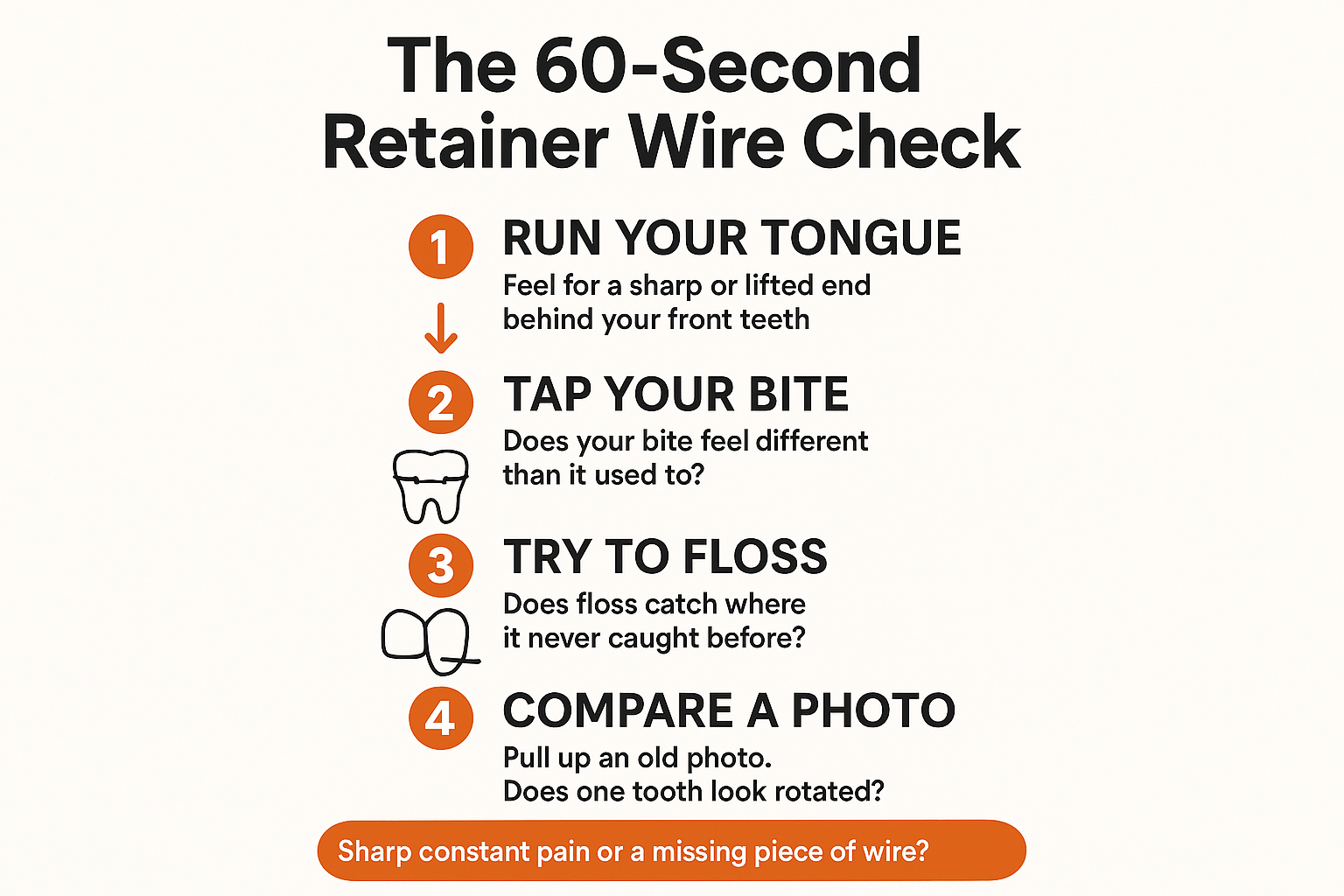
The 60-Second At-Home Check
Before you call, these four quick checks tell you whether you are dealing with a loose wire alone or a loose wire plus teeth that have already moved.
You do not need to have had your braces here
This is the question people are most embarrassed to ask out loud, so I will answer it before you have to.
You can be seen for a loose or failing retainer even if someone else put your braces on, in another city or another state, fifteen years ago. A good number of our retainer calls come from people who finished treatment somewhere else entirely.
One caller recently had just moved to the area and simply needed the retainer looked at. Another was a parent whose child had lost a retainer right after the family relocated. Both are normal, both are welcome.
A few things worth saying plainly:
- Records from your old provider help, but they are not required. A new exam and a scan stand on their own.
- Nobody is going to lecture you. If that retainer sat in a drawer for six years, you are in large company.
- You are not too old. We treat patients well into their 70s.
If it has been a long time since your last orthodontic visit, here is what a first appointment involves.
What drives the cost of fixing it
I am not going to quote you a number in a blog post, because the honest answer is that the number depends on what we find. But I can show you the ladder, smallest to largest:
- Re-bonding the wire at one tooth. The smallest fix by a wide margin.
- Removing and replacing the entire bonded wire. More chair time, more materials.
- A new removable retainer for one arch. Scan plus fabrication.
- A new removable retainer for both arches. Roughly double the above.
- Any tooth movement needed before retention. This is the biggest jump, because it is treatment, not just retention.
On insurance, ask your plan one specific question: does it cover orthodontic retention, separate from active treatment? Many dental plans treat those two categories differently, and the answer changes what you pay. Our front desk can help you read the answer, and this piece on orthodontic insurance covers the basics.
The exact figure comes after someone looks in your mouth. That is not a dodge. It is the only way to know which rung of that ladder you are on.
Loose wire, or loose wire plus teeth that already drifted?
These are two different conversations, and knowing which one you are walking into takes the fear out of the call.
If the wire just came loose and your bite feels exactly the same, you are likely looking at a re-bond and a return to nightly retainer wear. Done.
If the wire came loose months ago and you are only noticing now, teeth may have moved. The outcomes then spread out:
- Small shift: re-bond or replace, then hold the result
- One or two teeth out of line: focused touch-up treatment aimed at just those teeth, not your whole mouth
- Significant movement: full treatment with braces or Invisalign, discussed honestly before anything starts
I will not promise you which one it will be. Anyone who does without looking is guessing.
How a retainer question gets handled on Beach Boulevard
The thing that frustrates people most about a failed retainer is not the wire. It is that there was nobody to call.
In our practice, Dr. Jeremy and Dr. Melissa are the ones in the room at your appointments. They look at the wire, explain what they are seeing, and lay out the options before anything is done to your teeth. That continuity is the whole point of having an orthodontic home instead of a one-time fix.
We are on Beach Boulevard, which keeps us convenient and local for families in Oak View, Wintersburg, Goldenwest, Newland, Adams, and Downtown Huntington Beach. For patients coming from Central Fountain Valley or Talbert Village, it is a short hop across the 405.
Consultations can be scheduled by calling 714-594-5777 or visiting magicfoxsmiles.com whenever you are ready to have it looked at.
Frequently Asked Questions About a Loose Permanent Retainer Wire
Can I just cut the loose part off myself?
Please don't. Home clippers leave a rough edge that can cut your tongue, and removing part of the wire takes away the hold on those teeth without anyone checking what happens next. Wax it and call us instead.
How long can I wait before the teeth start to move?
There is no universal clock on this. Some people go weeks with no visible change, others notice a tooth turning within a month. The safest approach is to treat it as a days, not weeks situation and get it looked at.
Will I need braces all over again?
Usually not. Most loose wire visits end with a re-bond, a replacement wire, or a new retainer. If teeth have genuinely drifted, focused touch-up treatment on one or two teeth is often enough, and full treatment is the least common outcome.
Do you take out old bonded hardware that has been on my teeth for years?
Yes, removing old bonded retainer wire is a routine part of what happens in these visits. We will also check what the teeth underneath look like before deciding what replaces it.
What if the wire comes loose on a Saturday?
Saturdays are by appointment, so leave a message or submit a request through the website and we will get back to you. Unless there is sharp continuous pain or a fully detached piece of wire, wax and careful brushing will hold you over until Monday morning.
Wondering what your loose wire actually needs?
If that wire behind your front teeth has let go, a short look is all it takes to know whether you need a quick re-bond or something more. Our team sees patients from across Huntington Beach and Fountain Valley for exactly this, whether or not your original braces were done here. Consultations can be scheduled at 714-594-5777 or at magicfoxsmiles.com.