How Monthly Payment Plans for Braces Work in Fountain Valley
Direct Answer: Most orthodontic plans use an initial payment at the start, then monthly payments spread across treatment. Many offices offer in-house, no-interest options. Your exact number depends on the total fee, down payment, and plan length.
The question I hear most on the phone is rarely one question. It usually arrives as a cluster: what are my payment options, can I do monthly payments, what's the down payment, and do you bill my insurance?
Most people asking are parents in Central Fountain Valley or Talbert Village whose dentist just recommended braces for a 10 year old. Some are adults who have been putting this off for years. All of them want the same thing, which is a straight answer about money before they take time off work to come in.
So I'm going to walk through those questions in the order people actually ask them. No prices pulled out of thin air, because a real number comes from looking at your teeth, but a clear picture of how the mechanics work so you can plan.
What are my payment options? Can I do monthly payments?
Yes, monthly payments are the standard way orthodontic treatment gets paid for. Very few families write one check.
Most practices, including ours, structure it the same basic way:
- An initial payment at the time treatment starts
- Monthly payments spread across the length of treatment
- Insurance benefits applied against the total, when you have them
There are generally two flavors of monthly plan you'll run into. The first is an in-house plan, where the office carries the balance directly and typically charges no interest. The second is third party financing, which runs a credit check and usually charges interest over the life of the loan.
Those are very different things, and it's worth asking which one you're being offered. A patient who finished braces with us mentioned in a review that the payment plan held up even through a stretch of unemployment, which I share not as a guarantee but because in-house plans tend to have more room for a real conversation when life changes.
If you want the broader picture on what drives cost before you get to the payment structure, we covered that in our guide to what affordable braces should and shouldn't mean.
How is the monthly number actually calculated?
This is where I think most websites do people a disservice by throwing out a single monthly figure. Three variables move that number, and changing any one of them changes the rest.
- The total treatment fee. Driven by case complexity, the appliance chosen, and how much tooth movement is needed.
- The size of the initial payment. A larger amount up front lowers the monthly. A smaller one raises it.
- The number of months in the plan. Usually tied to how long treatment is expected to run.
A case that runs 18 to 24 months spreads over more payments than one that runs 6 to 9 months. That alone can make two totals that are fairly close feel very different month to month.
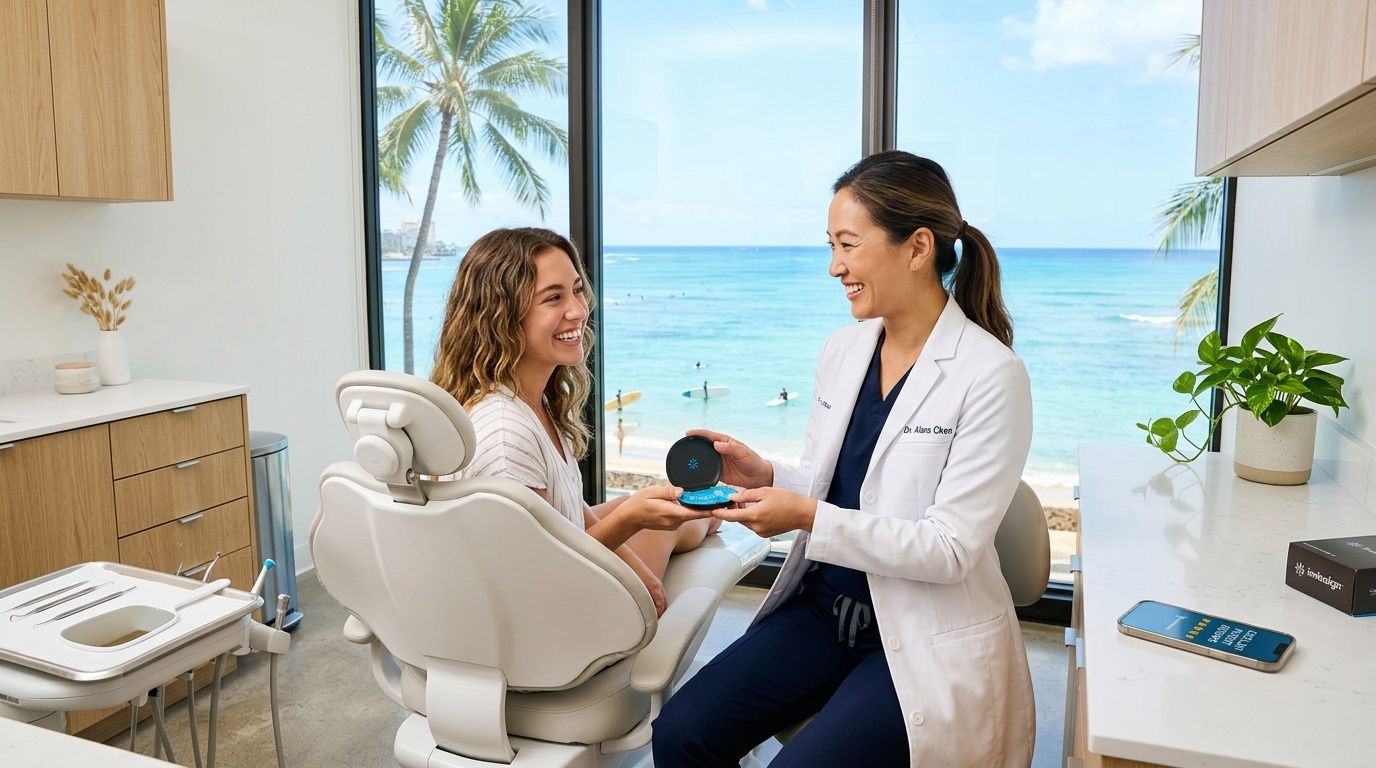
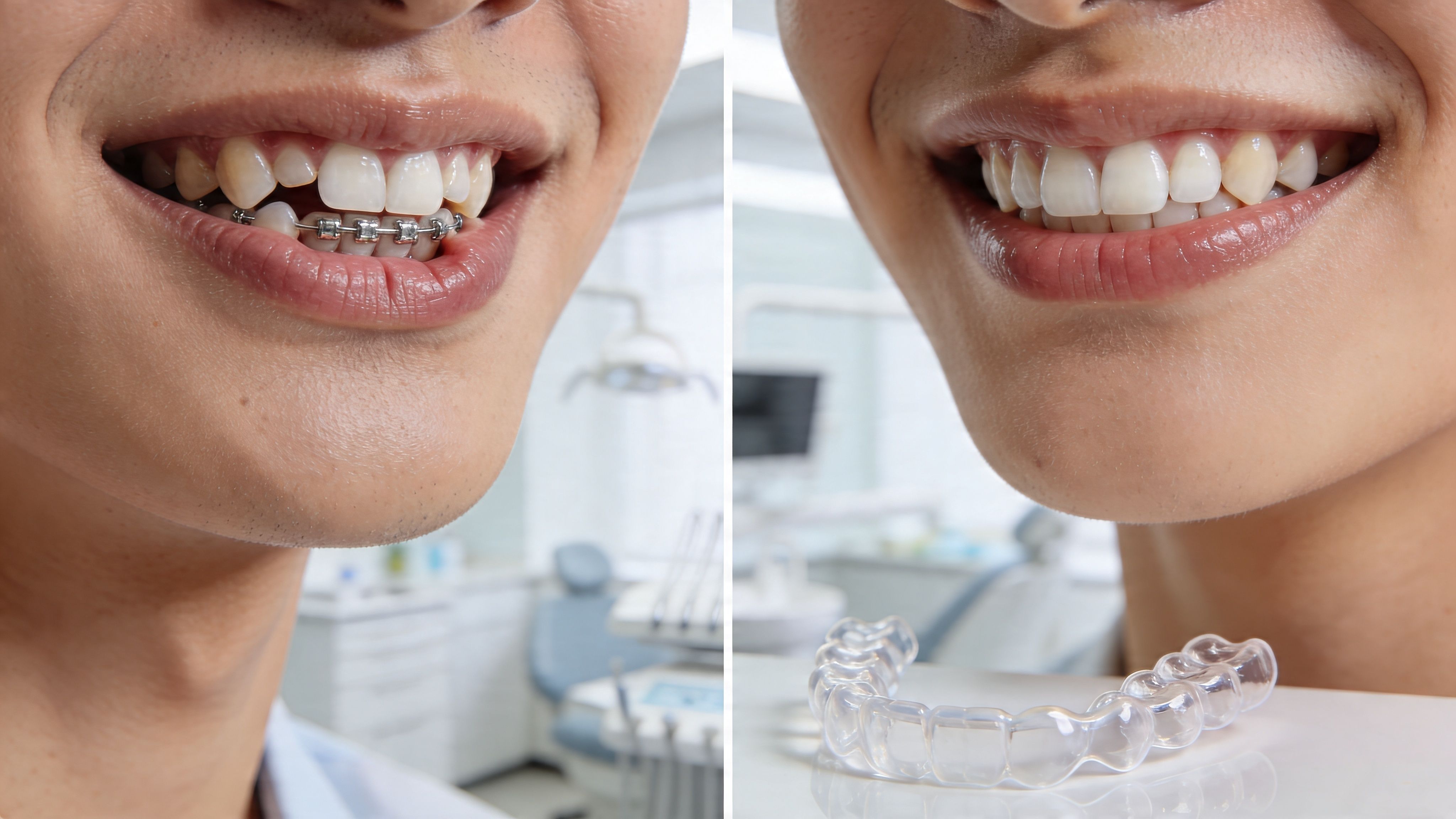
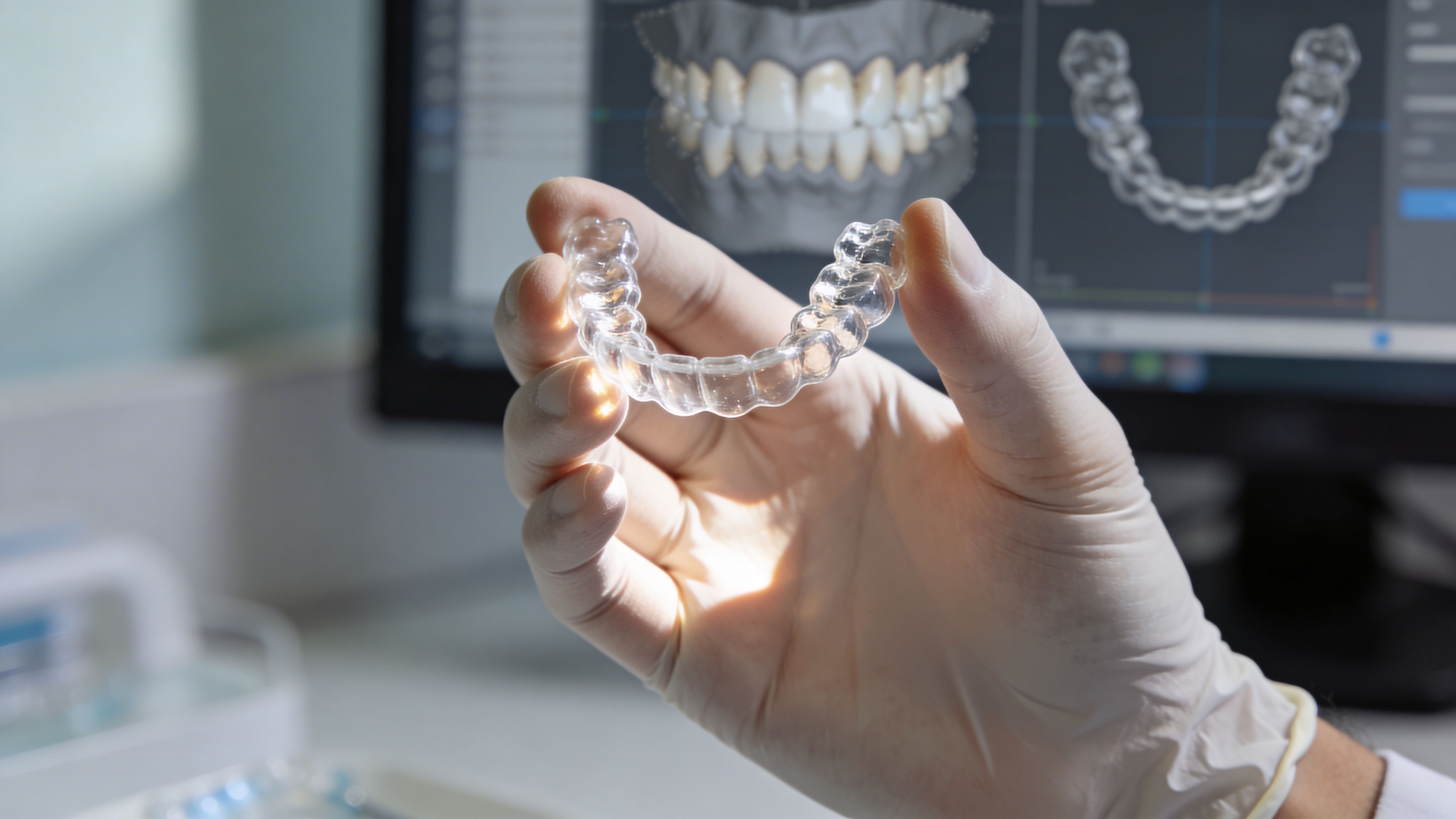
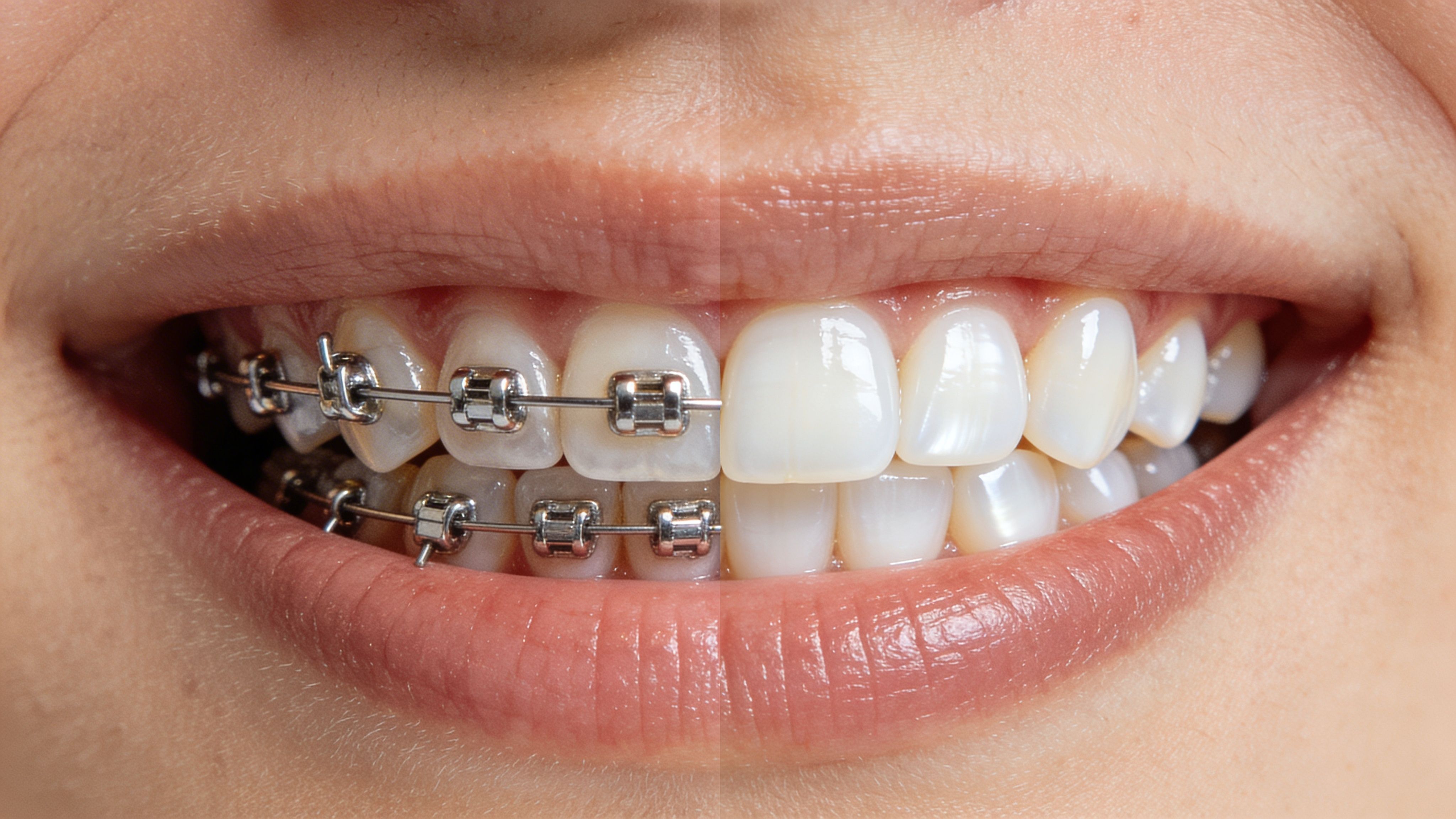
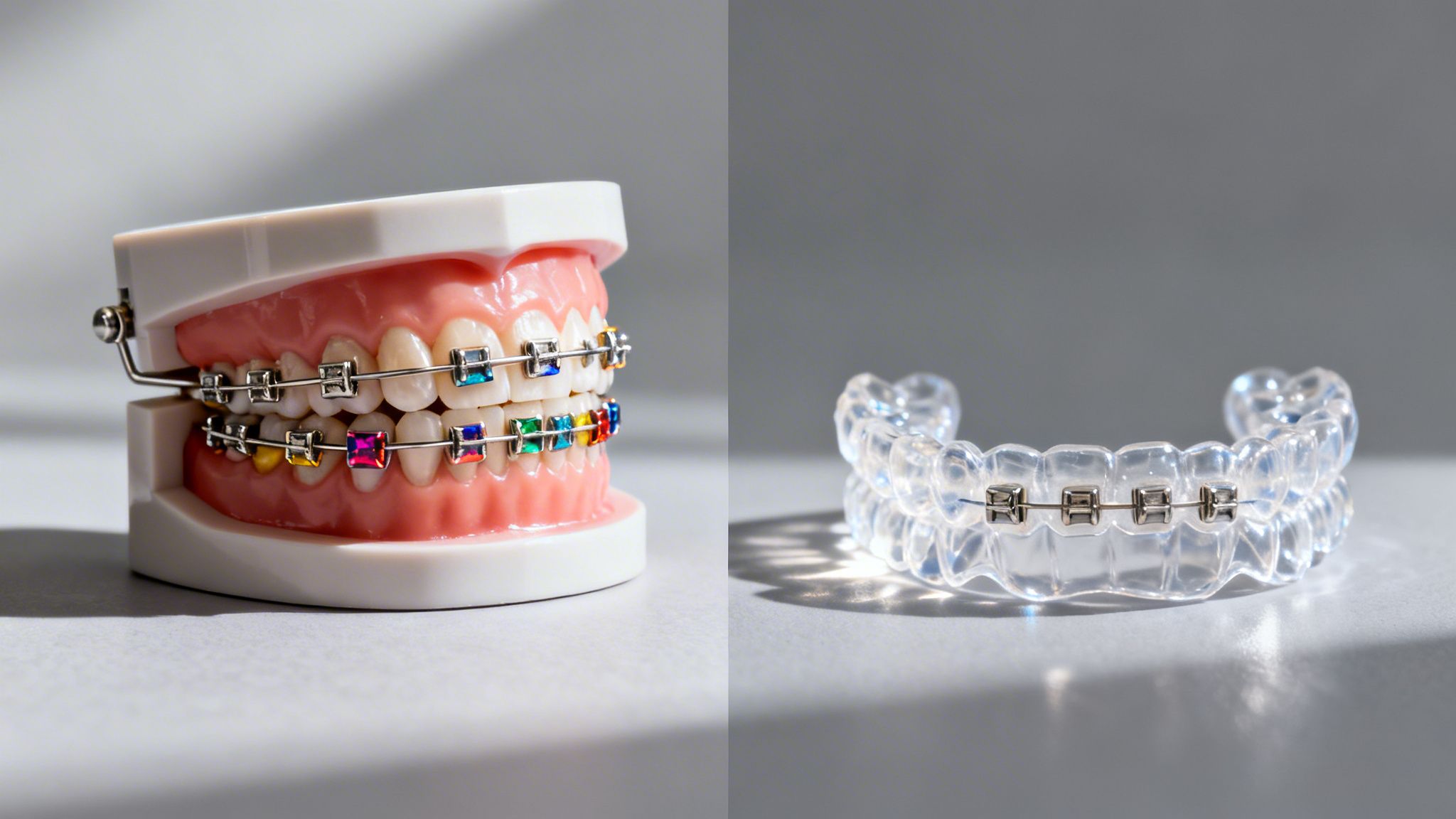
Appliance choice matters too. Traditional metal braces, champagne-colored Iconix brackets, and Invisalign clear aligners are all real options with different costs, and Dr. Jeremy and Dr. Melissa go through the tradeoffs case by case rather than pushing one.
The honest answer on your specific number is that it comes out of a consultation, not a web page. But once you know these three levers exist, you can ask to see the plan adjusted a couple of different ways.
The Three Things That Move Your Monthly Payment
Here's how each variable pulls on the monthly number, so you know what to ask about when you sit down with a treatment coordinator.
| Variable | What it means | Effect on your monthly payment |
|---|---|---|
| Total treatment fee | Set by case complexity, appliance type, and scope of movement needed | The starting point for everything else |
| Initial payment | The amount paid when treatment begins | More up front lowers the monthly; less raises it |
| Plan length in months | Usually matched to estimated treatment time | Longer plan means smaller monthly payments |
| Insurance benefit | Applied against the total, often as a lump lifetime maximum | Reduces the balance being financed |
| What's included | Records, X-rays, adjustments, retainers | Changes what the fee actually buys |

What's the down payment, and can I start with less?
There is no universal down payment in orthodontics. It's a negotiable piece of the plan, not a fixed toll.
What I'd tell any parent calling from Newland or Adams is this: the initial payment and the monthly payment are trading against each other. If the monthly number is the constraint in your household budget, say so out loud and ask for the plan rebuilt with a bigger initial payment. If the up front amount is the problem, ask the other direction.
One detail that catches people off guard is that insurance benefits often arrive over time, not all at once. Plenty of orthodontic plans pay an initial amount and then release the rest in installments across treatment. That affects how the office structures your schedule, so it's worth asking how your carrier pays out.
Get the final plan in writing before you sign anything. A clear schedule with dates and amounts is the single best protection against a surprise twelve months from now.
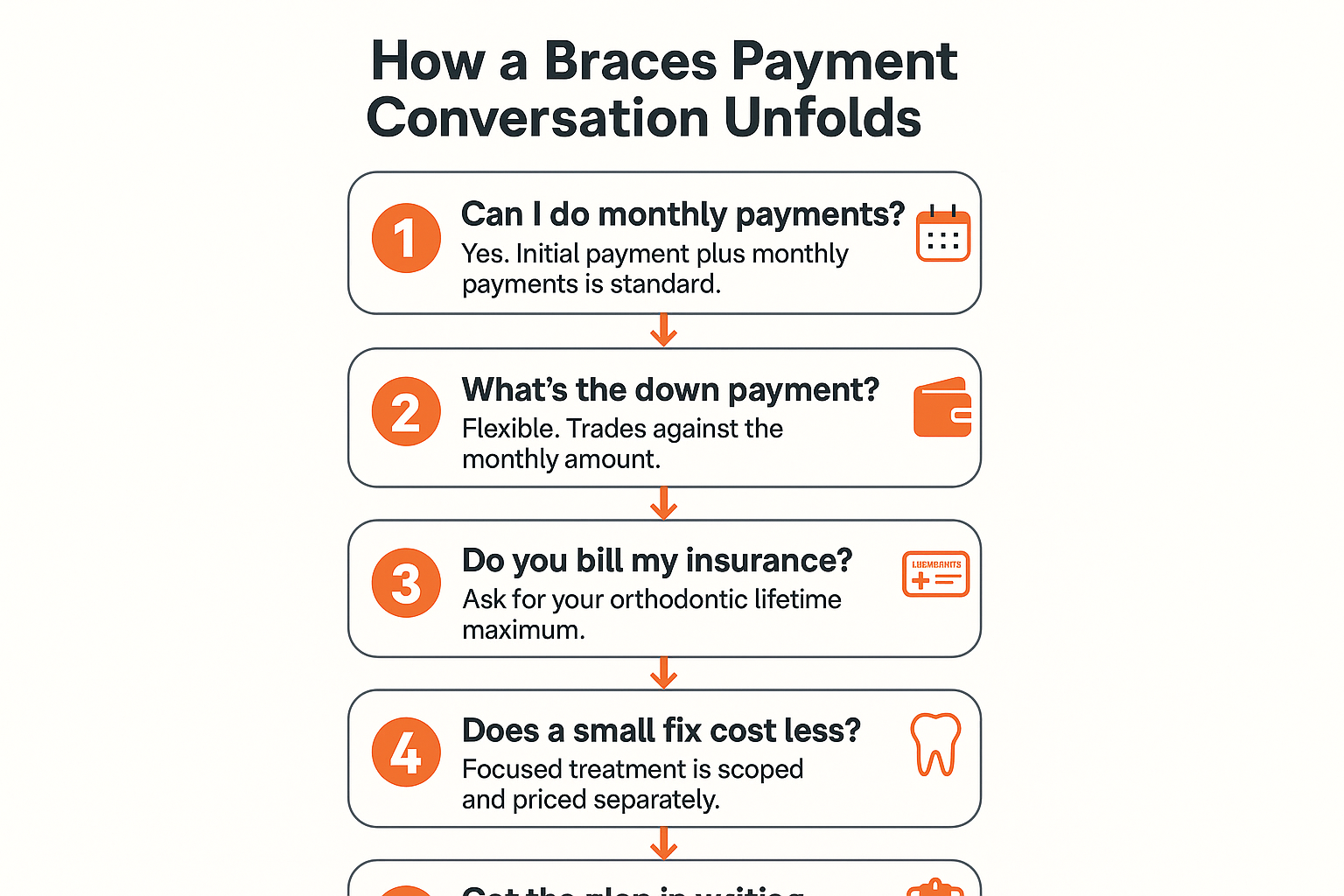
The Order People Actually Ask These Questions
This is the sequence almost every cost conversation follows, from the first phone call to a signed plan.
Do you bill my insurance directly, and how do orthodontic benefits work?
We bill insurance directly, and yes, we check your benefits for you. But I want you to understand one thing about orthodontic coverage that trips almost everybody up.
Orthodontic benefits usually work as a one-time lifetime maximum, not a yearly amount that refills. So when you open your plan documents, the number to hunt for is the orthodontic lifetime maximum. That's a completely separate figure from your annual dental maximum, and confusing the two leads to some painful math.
A few other things to check before you call:
- Waiting periods. Some plans won't pay for orthodontics until you've been enrolled a set number of months.
- Age limits. Certain plans only cover dependents under a specific age, which matters a lot for adults.
- Plan type. HMO and DHMO plans work very differently from PPO plans in terms of which offices you can use and how benefits pay.
And if you find out your specific plan isn't accepted here, please don't treat that as the end of the road. Ask what a self-pay plan looks like. A self-pay monthly payment with no interest is often closer to the insured number than people expect, especially once you account for a lifetime maximum that only covers a slice of the total anyway.
I just have one crooked tooth. Do I really need full braces?
Somebody called recently and said, in essence, I just have a minor tooth issue and I don't think I need full braces. I love that call, because a lot of people in that situation talk themselves out of even coming in before price is ever discussed.
Since July we've offered focused touch-up treatment for patients who want to correct one or two specific things instead of committing to full comprehensive treatment. It's scoped differently and priced differently.
That matters for two reasons:
- A shorter case means fewer months of payments overall
- A small case can sometimes finish inside a single benefit year, which changes how your coverage lines up
The honest caveat is that not every small-looking problem is a small case. Sometimes one crowded lower tooth is the visible part of a bite issue, and Dr. Jeremy and Dr. Melissa will tell you that plainly rather than selling you a quick fix that relapses. If you want a sense of how timelines vary, our post on how long braces take in Fountain Valley breaks it down.
Why do two offices quote different numbers for the same mouth?
Price shopping is real, and I don't blame anyone for doing it. But comparing two headline numbers side by side is usually comparing two different things.
Differences typically come down to:
- Case complexity and how each provider reads it
- The appliance being recommended
- How long treatment is projected to run
- Whether records, X-rays, and retainers are folded into the quoted fee or billed separately
- Whether the provider is an orthodontic specialist or a general dentist offering orthodontics
Retainers are the classic gap. If one quote includes your retainers and the other doesn't, those two numbers were never comparable.
Ask each office the same question: what is included in this fee, and what will I be billed for separately? Then ask for it in writing. That one habit does more for your budget than any coupon.
We get into how to evaluate a practice beyond price in our guide to choosing an orthodontist in Fountain Valley.
Is there a better time of year to start?
Two moments on the calendar give local families the most room to restructure what they pay out of pocket.
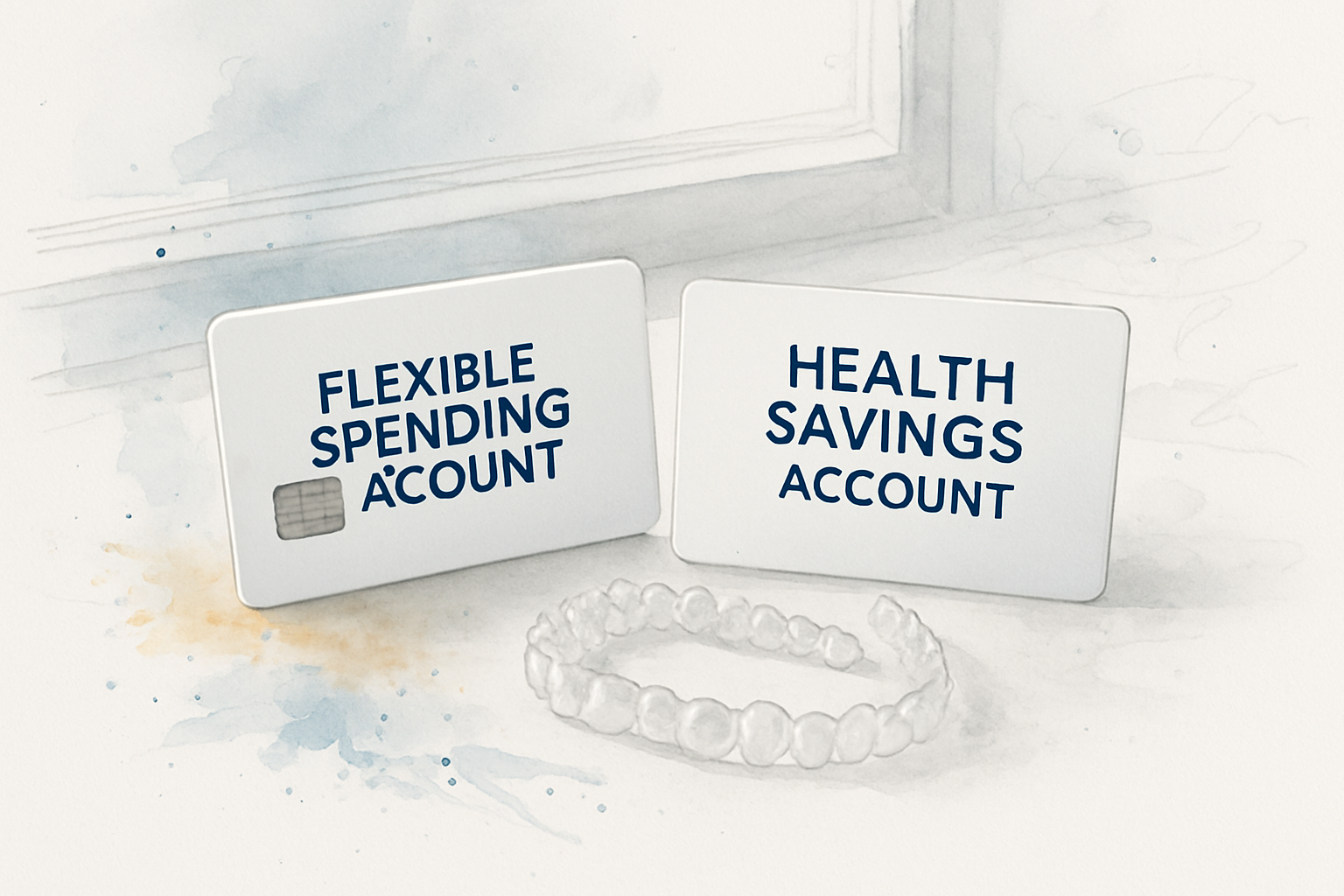
January benefit resets matter if your plan has any annual component or if you're switching carriers. Fall FSA elections matter even more, because orthodontic treatment is generally an eligible expense and electing the right amount during open enrollment can cover a meaningful chunk of your year's payments with pre-tax dollars. You can read the basics of how these accounts work on healthcare.gov.
There's also a cost nobody puts on the treatment plan, which is the cost of showing up. Over a one to two year plan you're looking at regular visits, and every one of them is gas plus missed work or school hours.
For families in Central Fountain Valley and Talbert Village, being minutes from Beach Boulevard means those visits don't add a freeway commute on top of everything else. That's a genuine part of what treatment costs you, even though it never appears on a quote. We wrote more about scheduling around real life in our post on fitting ortho visits into school and work weeks.
Frequently Asked Questions About Braces Payment Plans in Fountain Valley
Do in-house payment plans charge interest?
Many in-house orthodontic plans carry no interest, which is the main thing separating them from third party financing. Third party options typically involve a credit check and interest across the life of the loan. Ask which type you're being offered before you sign.
Can I put more money down to lower my monthly payment?
Yes, and it's worth asking. The initial payment and the monthly payment trade directly against each other, so the plan can usually be rebuilt a couple of different ways depending on which number is tighter for your household.
What number should I look for on my insurance plan?
Look for the orthodontic lifetime maximum, not the annual dental maximum. Orthodontic benefits usually pay once over your lifetime rather than refilling each year, so those two figures mean very different things. Also check for waiting periods and any age limits on dependents.
Does a small correction cost less than full braces?
Usually, yes. Focused touch-up treatment for one or two specific issues is scoped and priced differently from comprehensive treatment, and shorter treatment means fewer months of payments. Whether your case qualifies depends on what's actually going on with your bite, which is what the exam is for.
Am I too old to start, and does age change the cost?
Age doesn't disqualify you and doesn't set the price. We treat patients well into their 70s, and one patient who started at 76 left a review saying her smile is awesome. Cost tracks case complexity and treatment length, not the year you were born.
What if you don't accept my insurance?
Ask what a self-pay plan looks like before you hang up. Since orthodontic coverage is often a limited lifetime amount, the gap between an insured plan and a no-interest self-pay plan is frequently smaller than people assume.
Want to see what the numbers look like for your case?
Consultations are available for families across Fountain Valley and Huntington Beach, and questions about payment structure are a normal part of that visit rather than an awkward add-on. Dr. Jeremy and Dr. Melissa will walk through what treatment would involve and what the plan would look like month to month. You can reach us at 714-594-5777 or at magicfoxsmiles.com whenever you're ready.