Your Dentist Recommended Braces for Your Child. What They Spotted
Direct Answer: A dentist referral usually means they spotted crowding, a bite that does not line up, or baby teeth not falling out on time. It buys an evaluation, not an automatic braces appointment.
Your child went in for a routine cleaning. You walked out with a referral slip, a name you had never heard of, and a question nobody stopped to answer: what did the dentist actually see in there?
I talk to parents from Oak View, Goldenwest, Wintersburg, and Central Fountain Valley every week who arrive with that exact slip in hand. Most of them are motivated and ready to act. Almost none of them know whether the referral means something is wrong.
So let me decode it. Below is what a general dentist typically spots during a cleaning, what the orthodontic evaluation adds that a checkup structurally cannot, and what the age on that referral actually tells you.
Why Your Dentist Referred Your Child to an Orthodontist
A dentist is looking at decay, gum health, and the teeth that are visible in the mouth today. When something falls outside that lane, they hand it off to someone who measures growth and bite for a living.
In my experience, a referral for a child almost always traces back to one of these:
- Crowding with nowhere left to go. The adult teeth are coming, and the arch does not have the room.
- An underbite or a crossbite. The lower teeth sit in front of the uppers, or a few teeth bite on the wrong side.
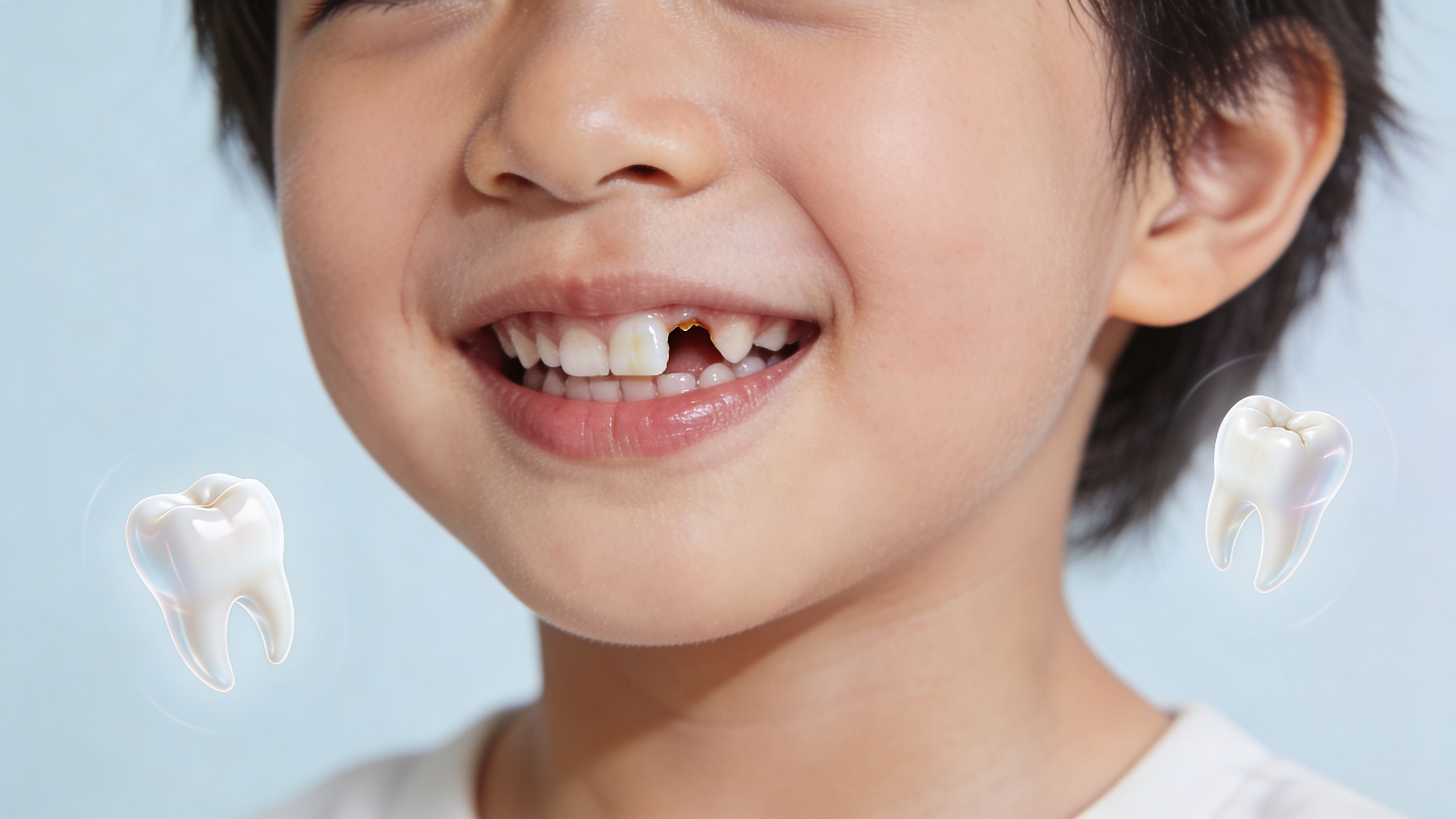
- Baby teeth that are not falling out on schedule. Either one is holding on too long or one came out years early.
- Adult teeth erupting off to the side. A tooth comes in high, low, or angled instead of straight into its slot.
- Upper and lower teeth that do not meet properly. Deep bites, open bites, or a midline that is visibly shifted.
None of those are emergencies. They are patterns that get easier and cheaper to manage when someone watches them early rather than inherits them late.
If you want more detail on where one profession ends and the other begins, we covered that in when to see an orthodontist vs a dentist.
A Referral Is Not a Diagnosis, and It Is Not Bad News
The biggest misread I see is a parent assuming the referral means braces are already being scheduled. It does not. A referral buys you an evaluation.
And sometimes the honest result of that evaluation is watch and recheck in six or twelve months. That is a real outcome, not a brush-off. Growth answers questions that no scan can answer on the spot.
This matters because a lot of parents walk in braced for a sales pitch, often with a spouse at home waiting to sign off on something. One parent put it this way in a review: "They addressed his orthodontic needs without making us feel pressured to start treatment right away, which we really appreciated." That was from Gina P., and it is the response I want every parent to have.
You are going in for information. A good visit can absolutely end with nothing yet, let us look again next year.

What the Evaluation Adds That a Cleaning Cannot
Here is the part parents never think to ask about. A dentist sees the teeth that are in the mouth right now. An orthodontic evaluation builds a record of what is happening under the gums and inside the jaw.
That record usually includes:
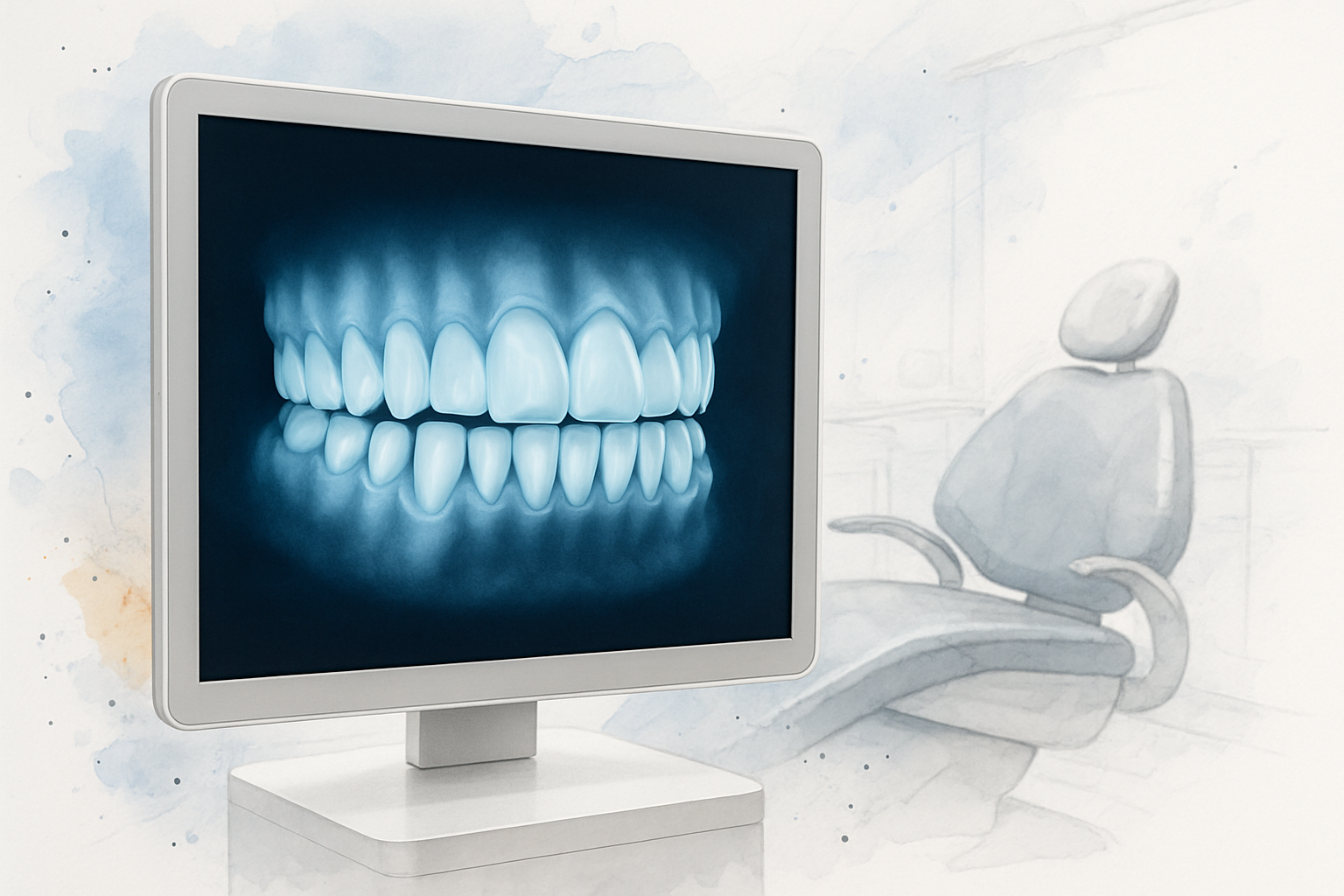
- Imaging that shows unerupted teeth, including where adult teeth are sitting, how they are angled, and whether any are blocked
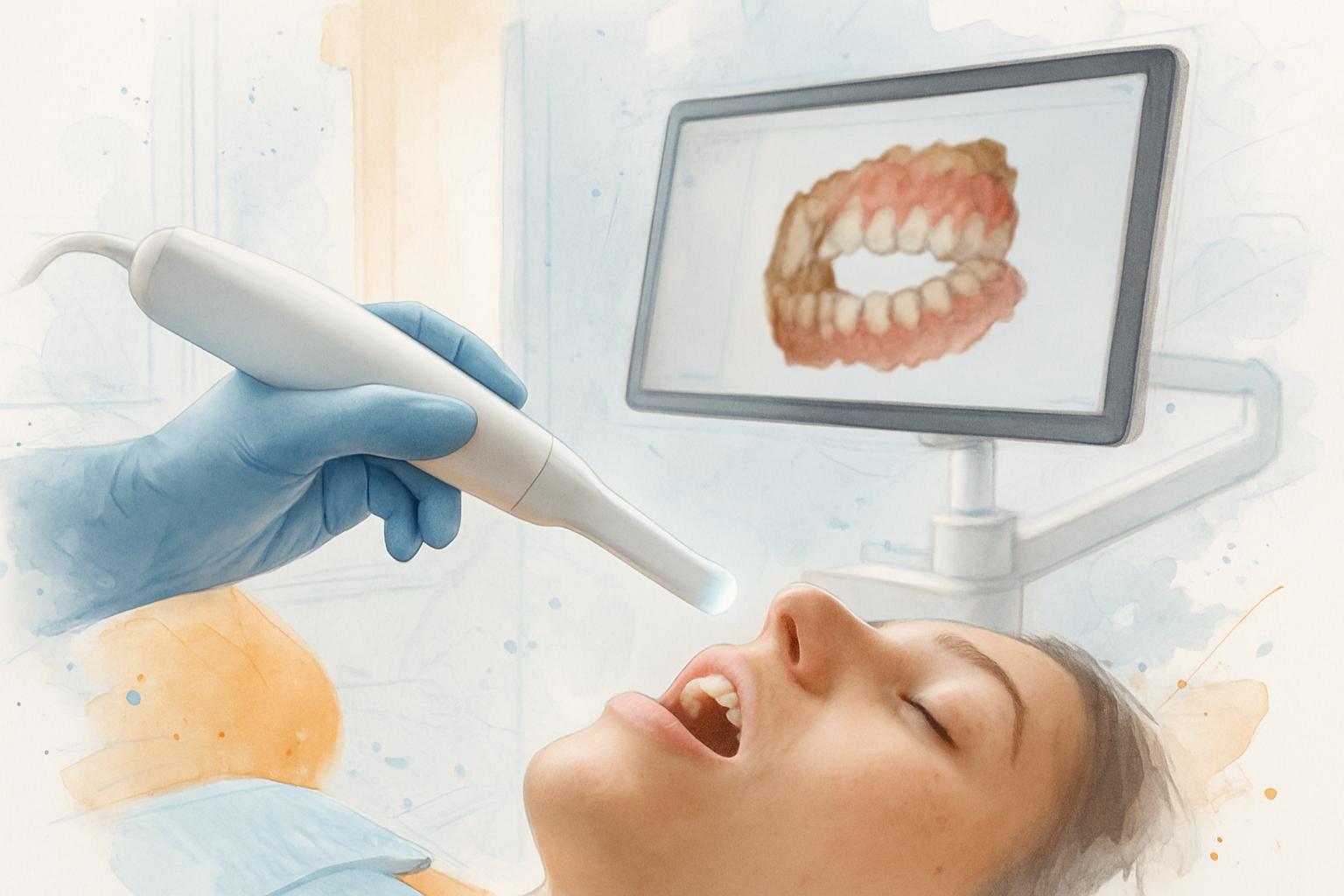
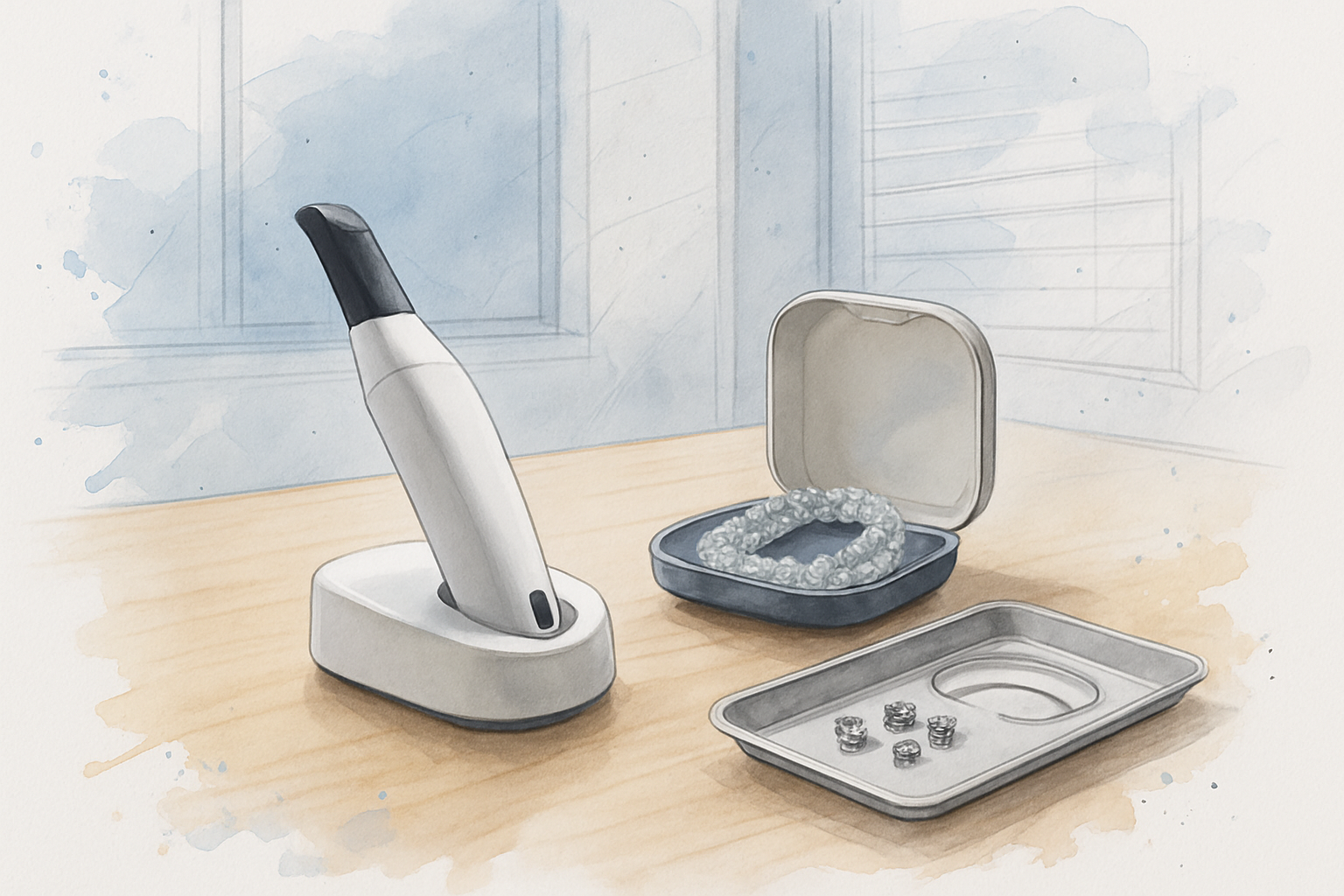
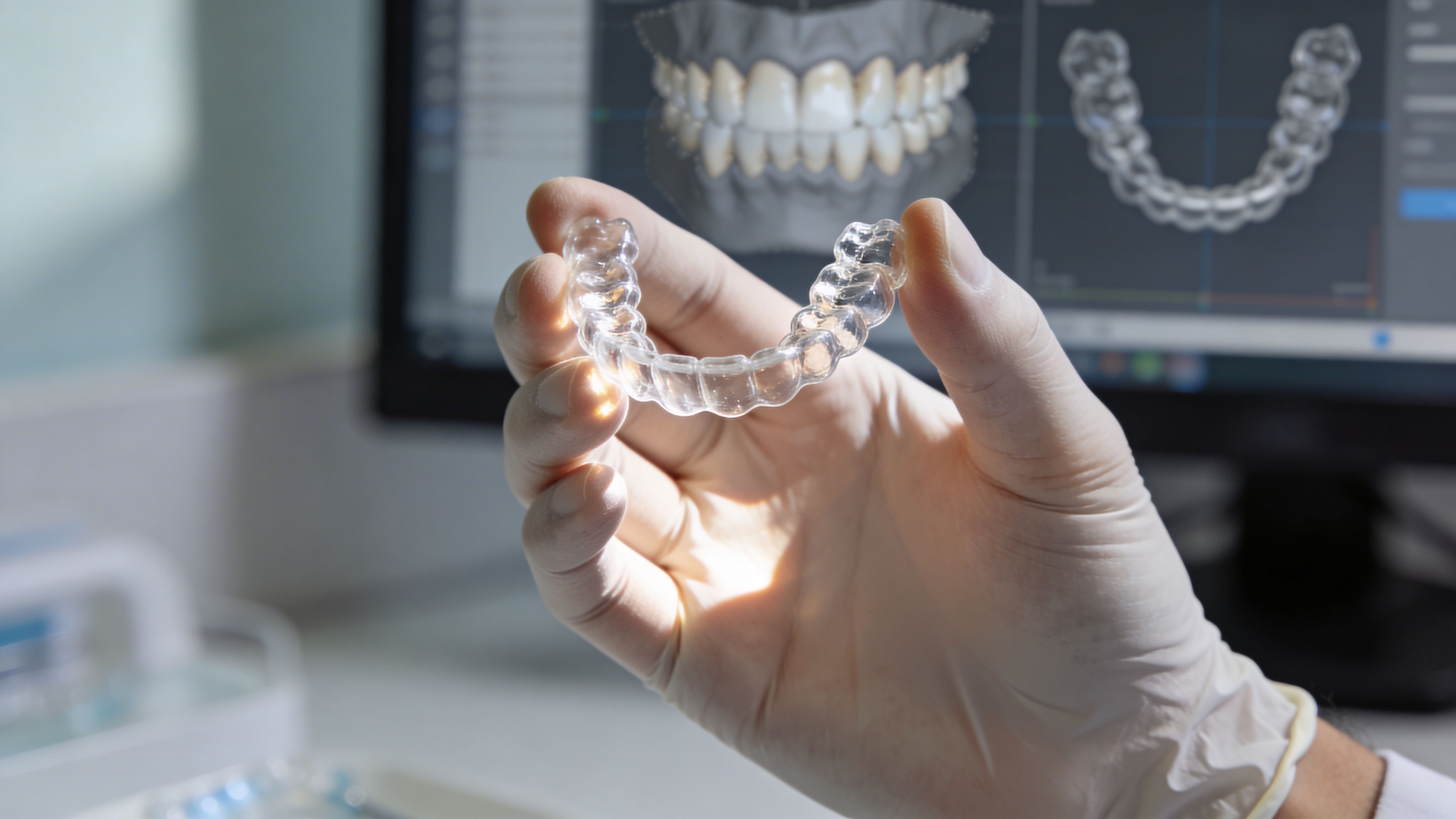
- A digital scan of both arches, which takes the place of the goopy impression tray you probably remember from your own childhood
- Photos of the face and bite at rest and smiling
- Bite and growth measurements, so the next visit has something to compare against
From your kid's side of the chair, it is mostly sitting still and holding a pose. The scan wand is a small camera they move around the teeth, no tray, no chemicals, no gagging. One mom here told us her son said the X-rays were the most comfortable he had ever had done.
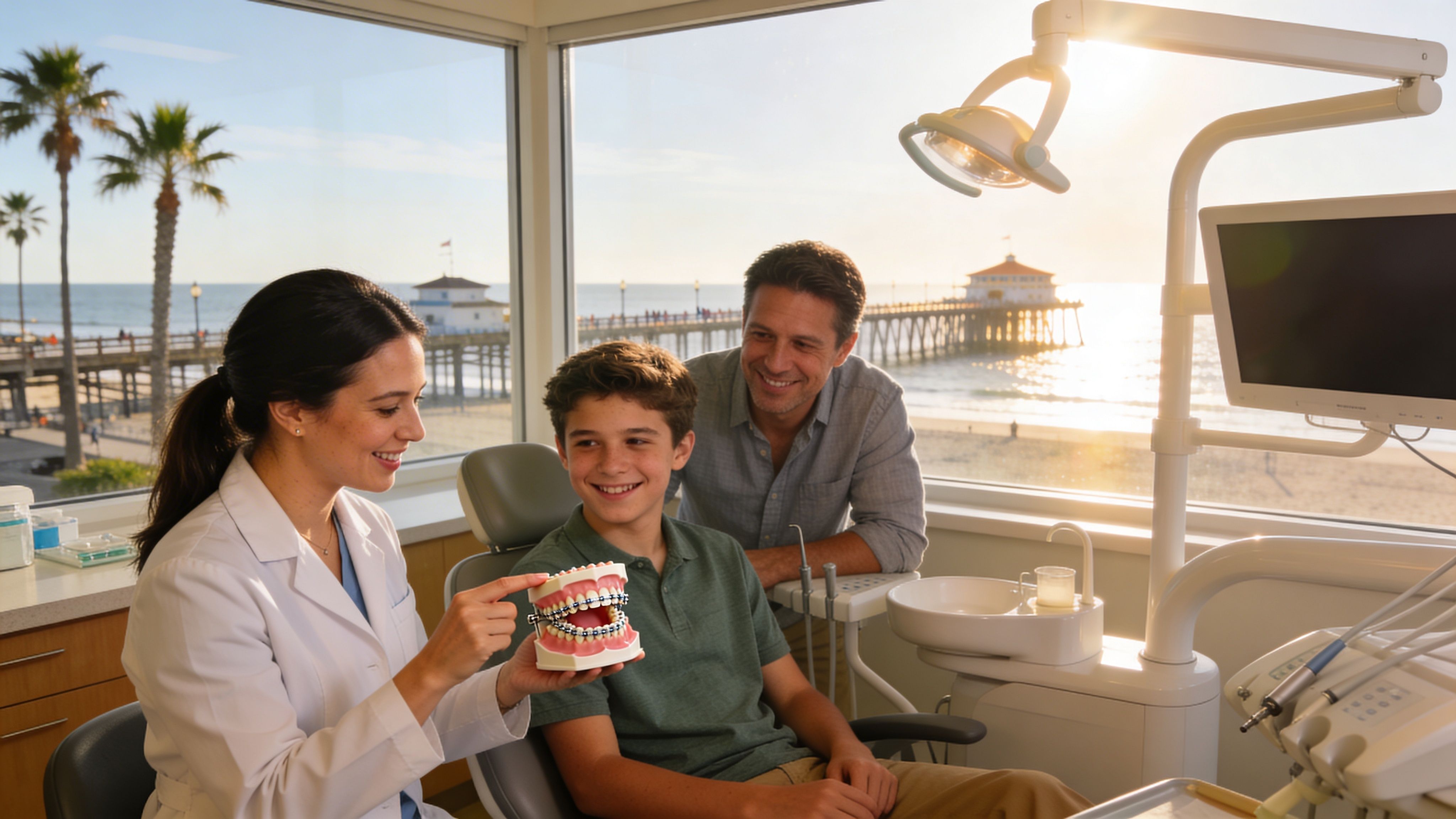
Both Dr. Jeremy and Dr. Melissa do this part themselves rather than handing the room to an assistant and popping in at the end. That is the whole point of a doctor-led evaluation. You get the person reading the images explaining them to you, in plain language, until you actually understand what you are looking at.
What Gets Checked at a Dental Cleaning vs. an Orthodontic Evaluation
This breaks down why the two appointments answer completely different questions about your child's teeth.

The Age on the Referral Changes What It Means
A referral at seven and a referral at twelve are asking two different questions. This is where a lot of parents get stuck, because they hear "orthodontist" and picture a mouth full of metal on a second grader.
Early does not mean early braces. It means an early look. The point of checking at seven is usually to find out whether you can safely wait.
The American Association of Orthodontists recommends a first orthodontic consultation no later than age seven, back when the first adult molars and front teeth have come in. That timing is not about starting treatment. It is about catching the handful of problems that are much simpler to correct while the jaw is still growing.
We see plenty of kids in that six to eight range whose parents were told about a slight underbite or a narrow upper arch. Many of them leave with a recheck date and nothing else. For a deeper look at timing, see our breakdown of the best age for braces.
What a Referral Usually Means at Each Age
Use this as a rough translator for the slip in your hand. Every child is different, but the pattern holds up.
| Age at Referral | What the Dentist Likely Spotted | Common Outcome of the Evaluation |
|---|---|---|
| Ages 6 to 8 | Crossbite, underbite, severe crowding, or baby teeth lost way early or way late | Monitoring visits, or a short Phase 1 to guide growth and make room |
| Ages 9 to 11 | Adult teeth erupting off-angle, blocked canines, space loss | Records and a recheck, or limited early treatment while teeth are still coming in |
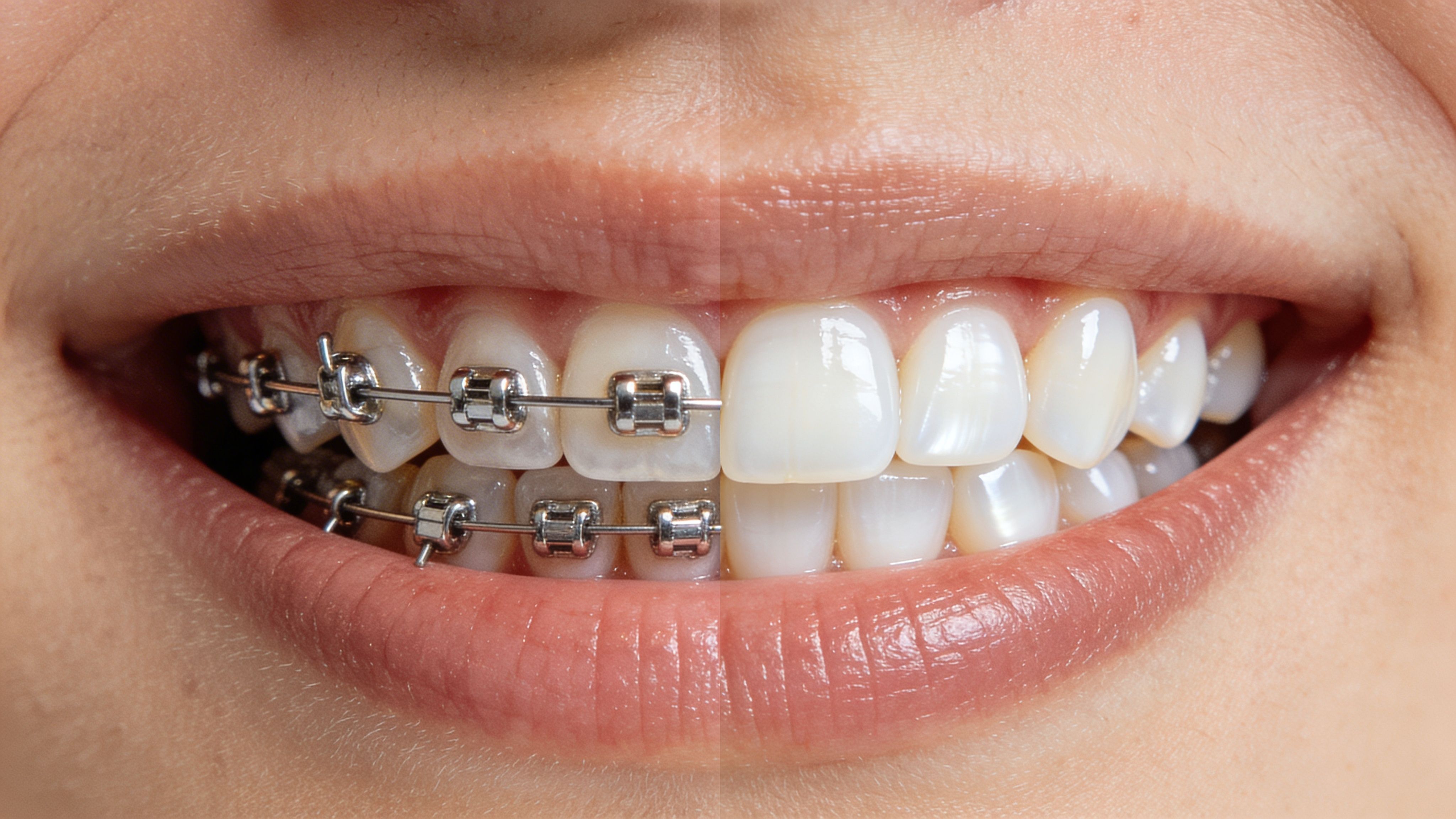
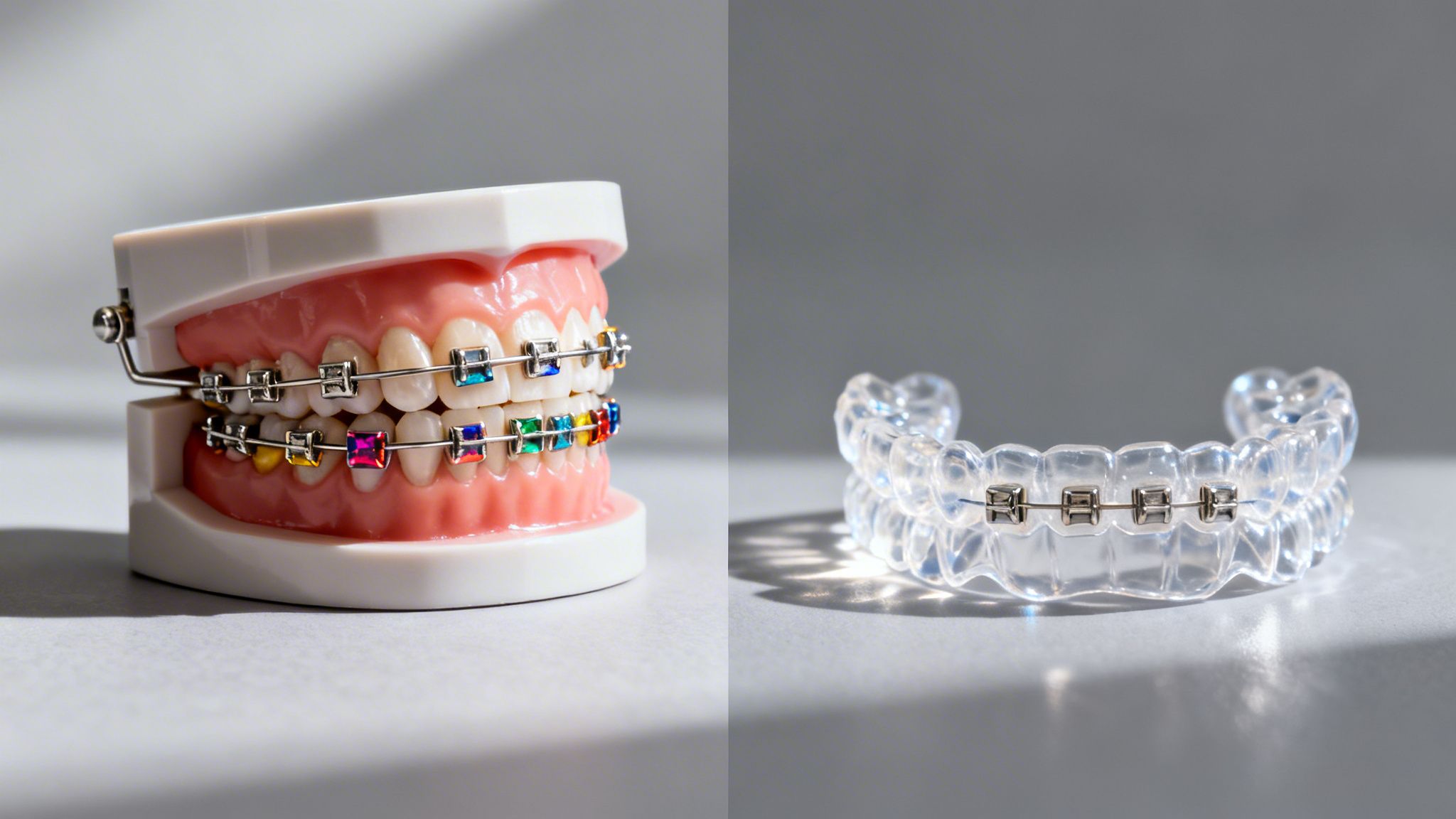
| Ages 12 to 14 | Crowding, spacing, or a bite that does not line up once most adult teeth are in | Full treatment discussion: metal braces, champagne-colored Iconix brackets, or Invisalign |
| Ages 15 and up | Leftover crowding or a bite issue noticed at a routine cleaning | Treatment options sized to the goal, including focused touch-up work for one or two teeth |
What To Do in the Two Weeks Before the Visit
This is where motivated parents lose momentum. The slip goes on the fridge, three weeks pass, and nobody calls. A short checklist you can knock out on a lunch break fixes that.
- Ask the dentist's office to send over recent X-rays and notes. If your child had a panoramic X-ray in the last year or so, it may save an image and a step.
- Write down the exact name of your dental plan before you call. Not just the carrier, the specific plan. Insurance questions come up on a large share of our new-patient calls, and having the plan name in front of you gets you a straight answer faster.
- Ask whether the consultation and imaging carry a fee. Policies differ by office. At ours, the initial consultation does not carry a fee, but you should ask that question wherever you call.
- Book earlier than you think you need to. Saturday and after-school slots get requested more than any other time, which means they go first.
- Ask to be added to the cancellation list. It is a normal request, it costs nothing, and it works more often than people expect.
From Talbert Village or Newland, the drive up Beach Boulevard is short enough that a late-afternoon appointment does not blow up the whole evening. Our team speaks English, Vietnamese, and Spanish, which matters in a service area that borders Little Saigon.
Frequently Asked Questions About Dentist Referrals to an Orthodontist
Does a referral mean my child is definitely getting braces?
No. A referral means your dentist saw something that sits outside the scope of a cleaning and wants a closer look. Plenty of evaluations end with a monitoring plan and a recheck in six or twelve months instead of treatment.
My child is only seven. Isn't that too young for an orthodontist?
Too young for braces in most cases, yes. Too young for a look, no. At seven, the first adult molars and front teeth are usually in, which is enough information to tell whether a bite or spacing problem is developing. The most common result at that age is watch and recheck.
If we do early treatment now, will we end up paying for braces twice?
That is a fair question and one I hear constantly. Early treatment is not a replacement for later treatment in every case, so you deserve a clear explanation of what Phase 1 is meant to accomplish and whether a second phase is likely. Ask for that in plain terms at the evaluation, along with how each phase would be priced, since costs vary widely by case and by plan coverage.
Do I need a referral to schedule an orthodontic evaluation?
No. A referral is helpful because it tells us what your dentist noticed, but you can book an evaluation on your own if you have a concern about your child's teeth or bite.
How long does the first visit take?
Plan on roughly an hour for records, the exam, and a conversation about what we found. Most of that time is the explanation, not the scanning.
My older child wants something less noticeable than metal. What are the options?
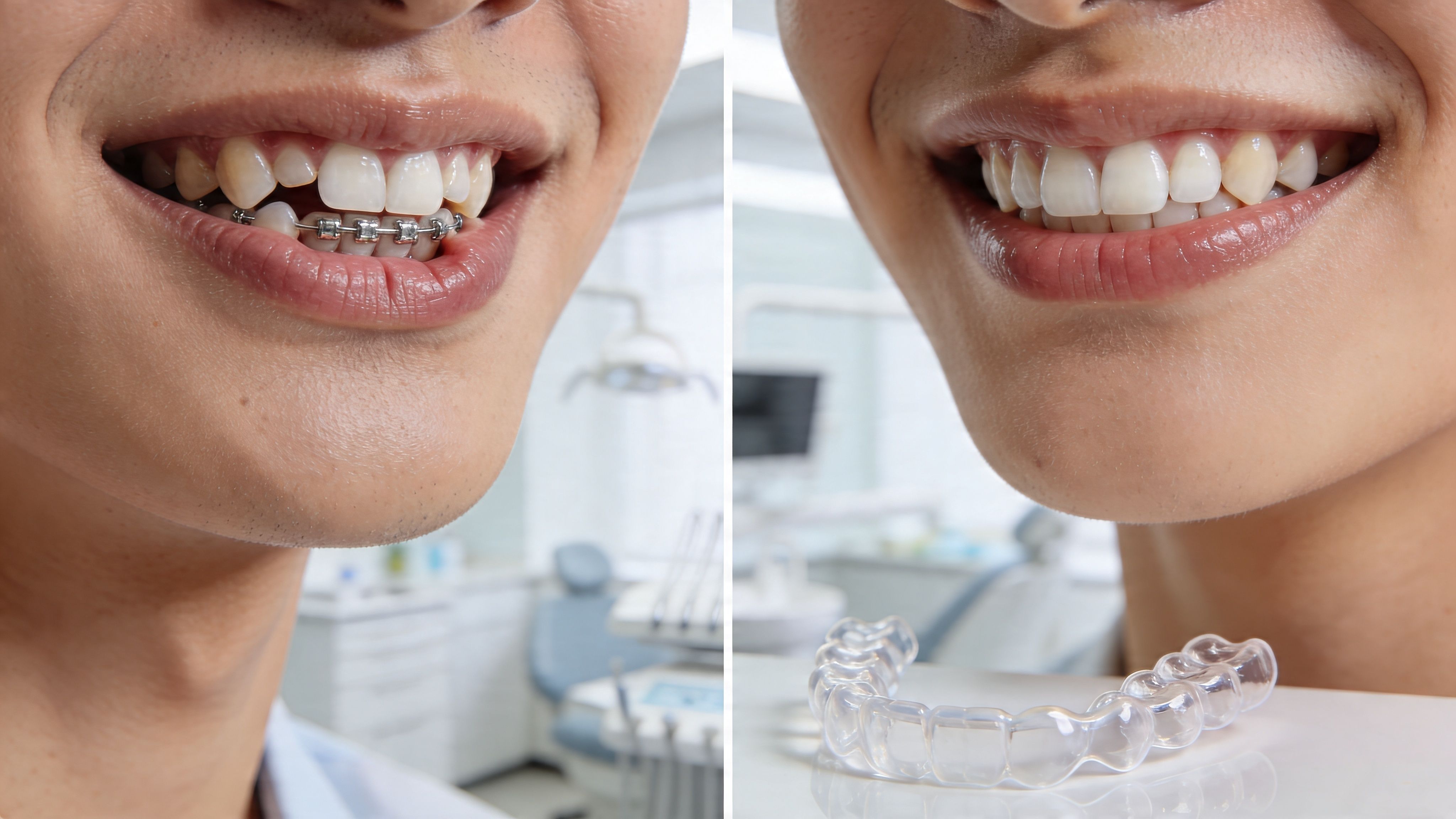
Invisalign clear aligners and champagne-colored Iconix brackets are both common choices for teens who care about how treatment looks day to day. Neither is universally better than traditional metal braces. The right choice depends on the case, the age, and how reliably your teen will wear aligners, which is exactly what the evaluation sorts out.
Still Holding That Referral Slip?
If you have a slip from your dentist and want someone to read the full picture before you decide anything, Magic Fox Orthodontics is on Beach Boulevard, a short drive for families across Huntington Beach and Fountain Valley. Consultations with Dr. Jeremy and Dr. Melissa can be arranged at 714-594-5777 or at magicfoxsmiles.com, including Saturday availability by appointment.