Dreading the Goopy Mold? What a Digital Scan Visit Is Like
Direct Answer: Braces, Invisalign, and retainer records are now taken with a small handheld scanner that photographs your teeth in seconds. No putty, no tray, no holding still while you gag.
You remember the tray. Cold putty piled high, pressed onto your teeth, then four long minutes of trying not to gag while somebody said "almost done."
That one memory keeps more adults out of an orthodontic chair than cost does. About a third of the patients who write about their visit with us describe themselves as nervous, apprehensive, or say they put off care for years after a bad dental experience.
So here is the honest update. The physical impression tray is no longer how records get taken for braces, Invisalign, or retainers, and most people do not find that out until they are already sitting in the chair. I want to walk you through what actually happens instead, minute by minute.
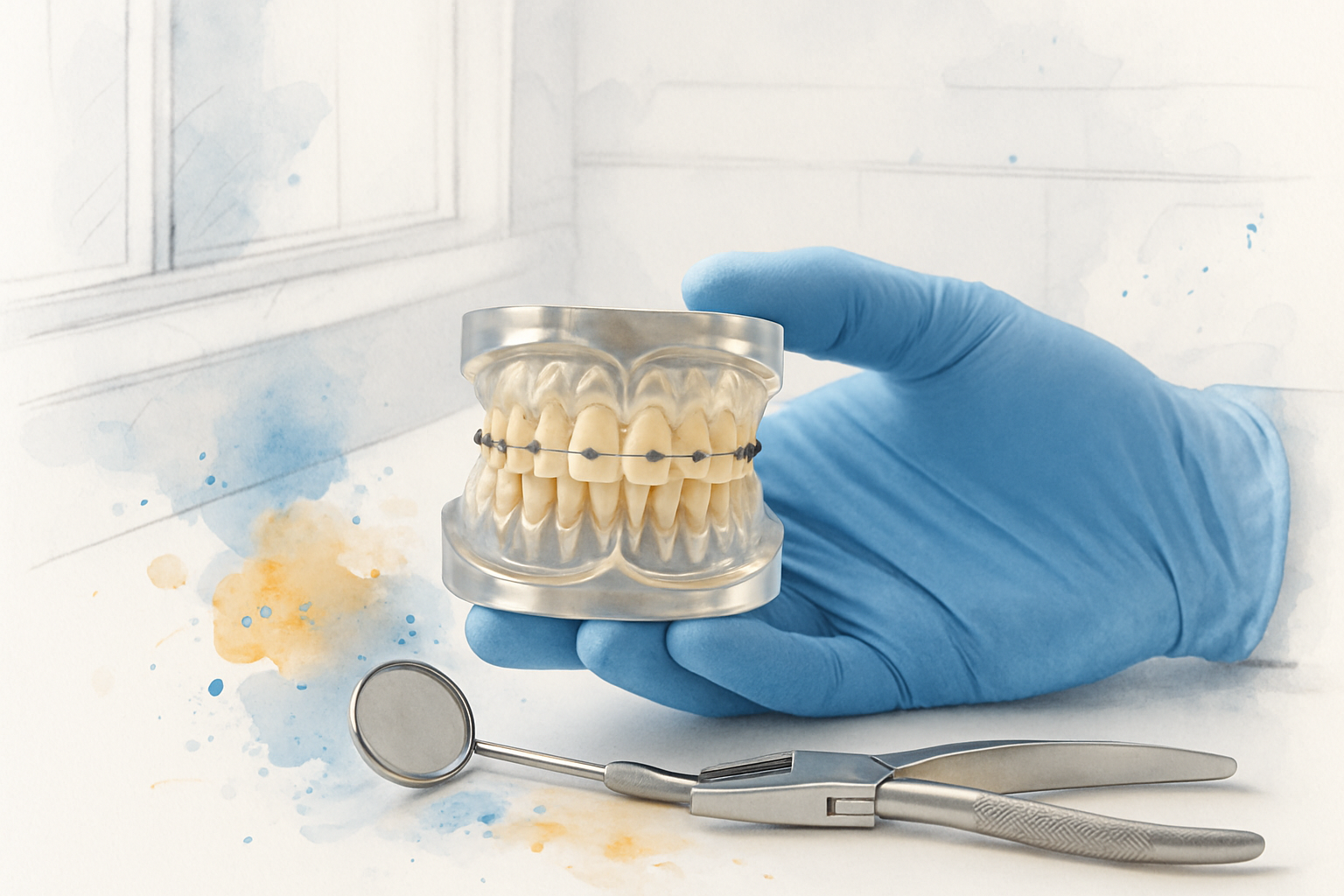
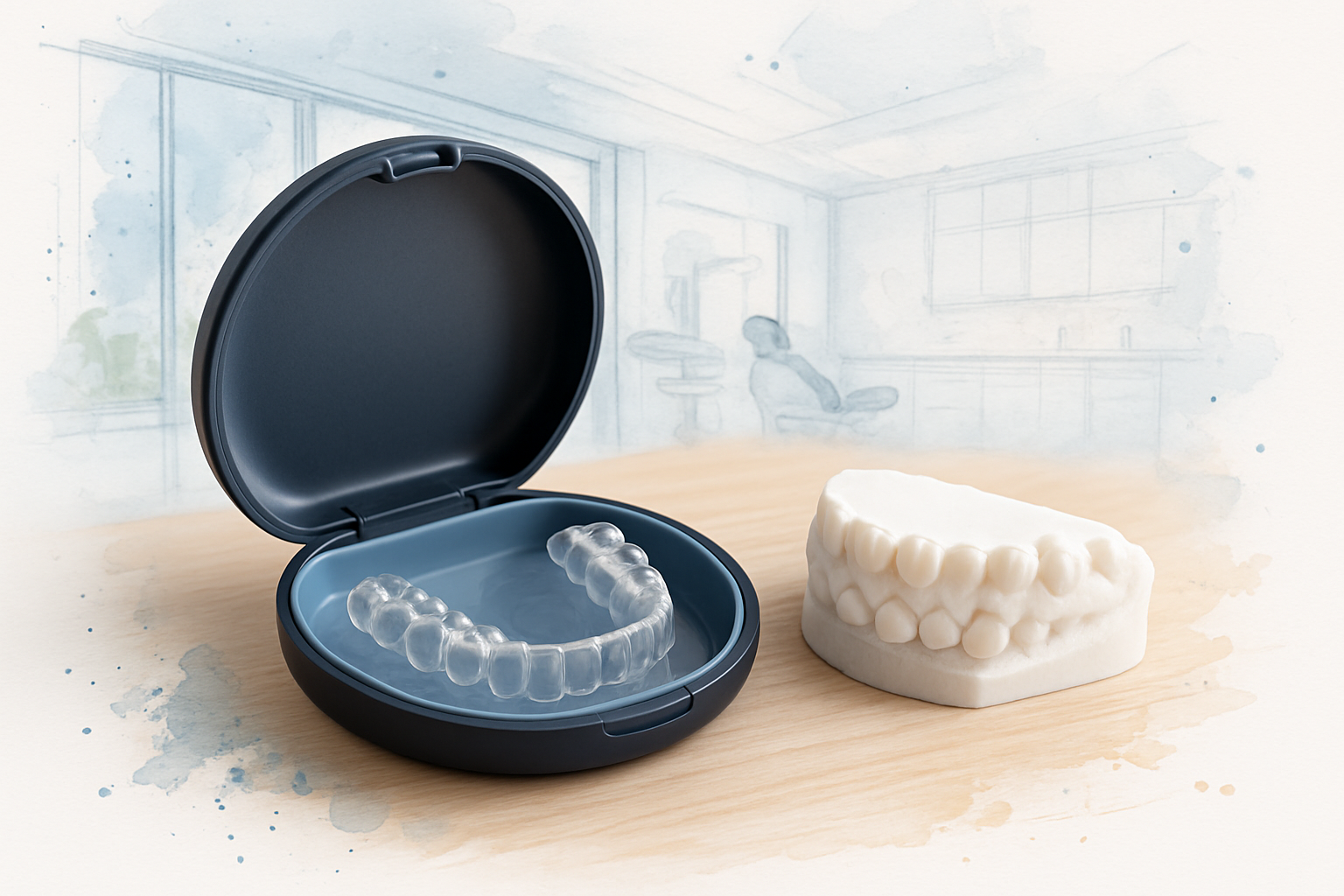
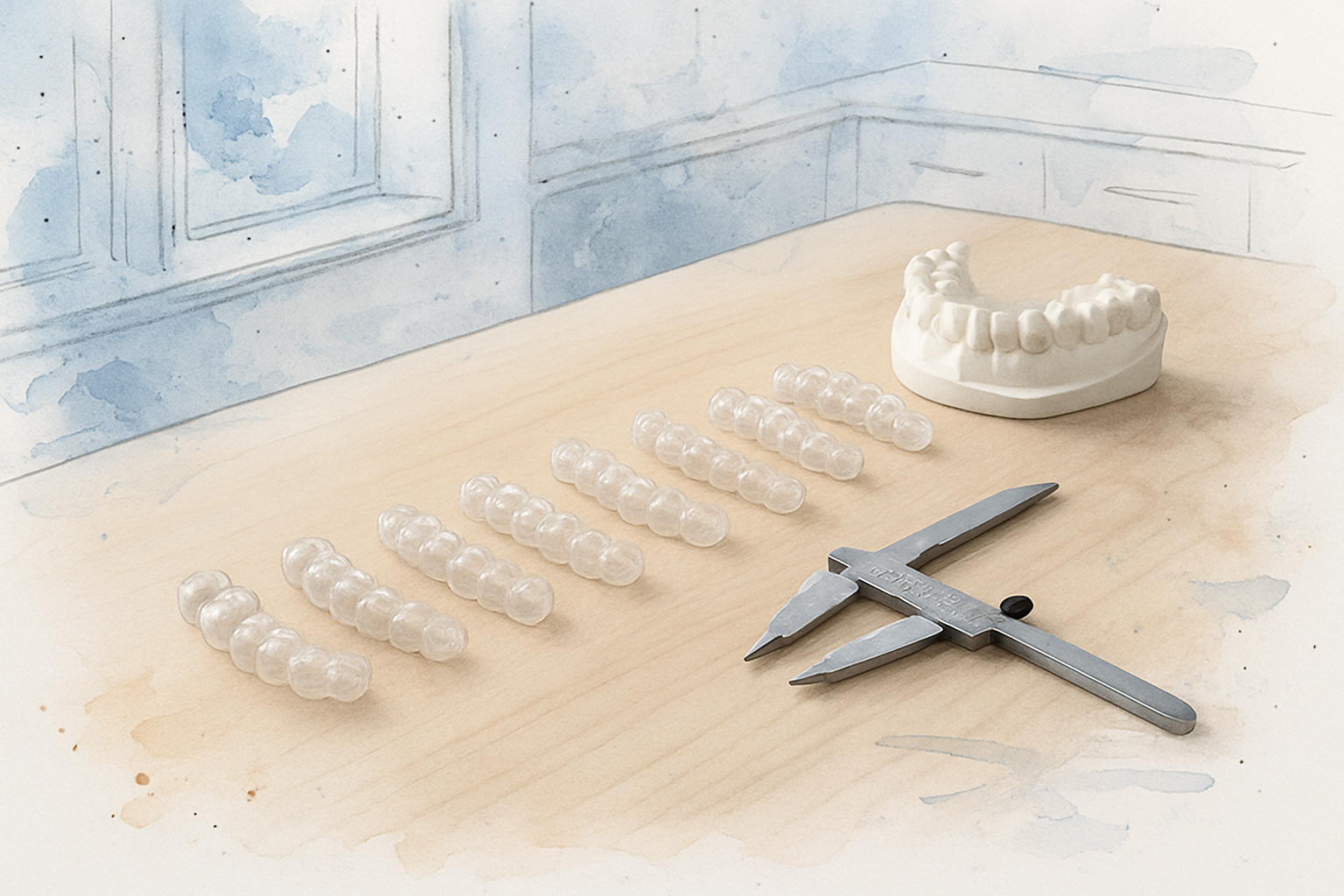
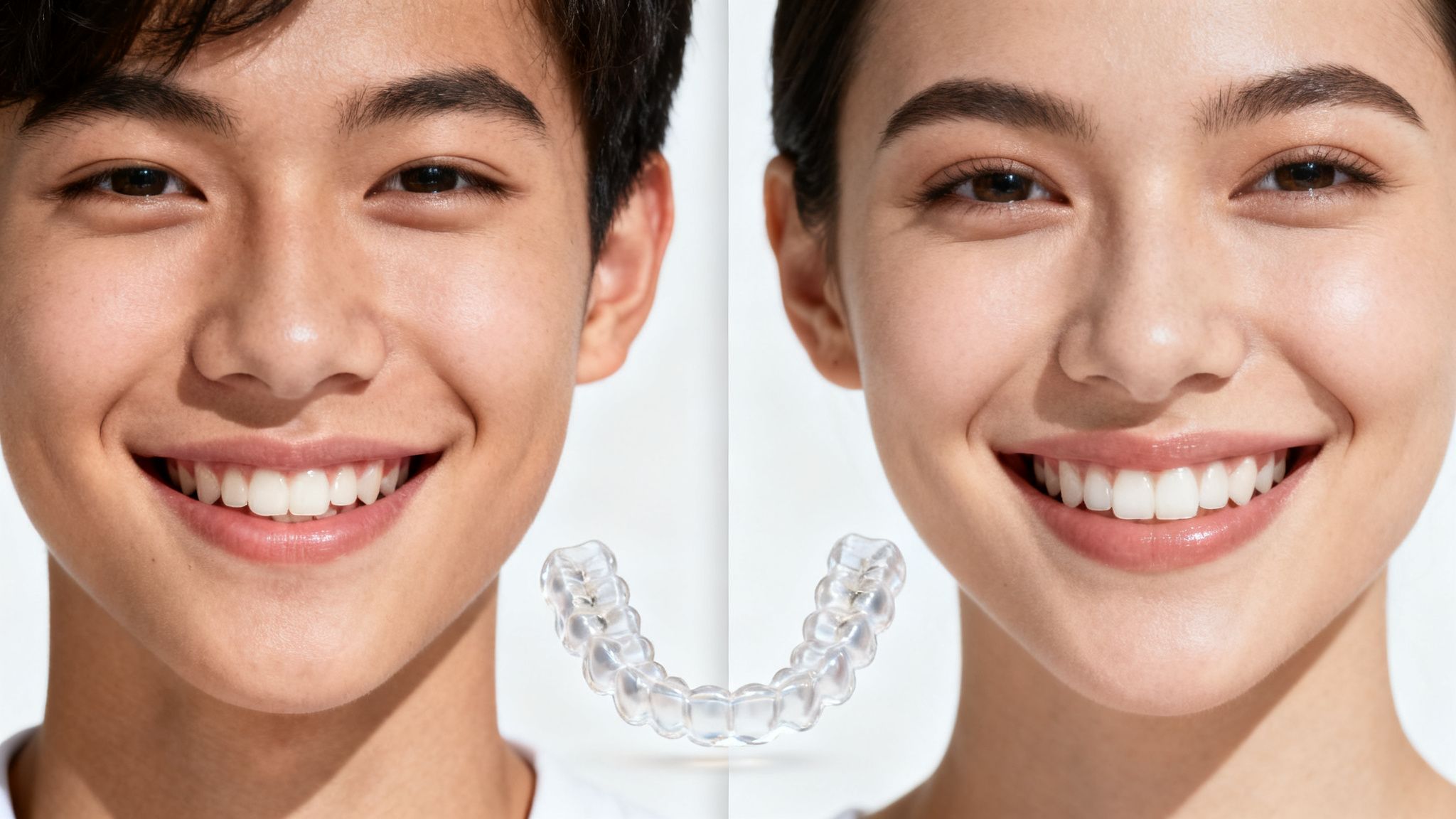
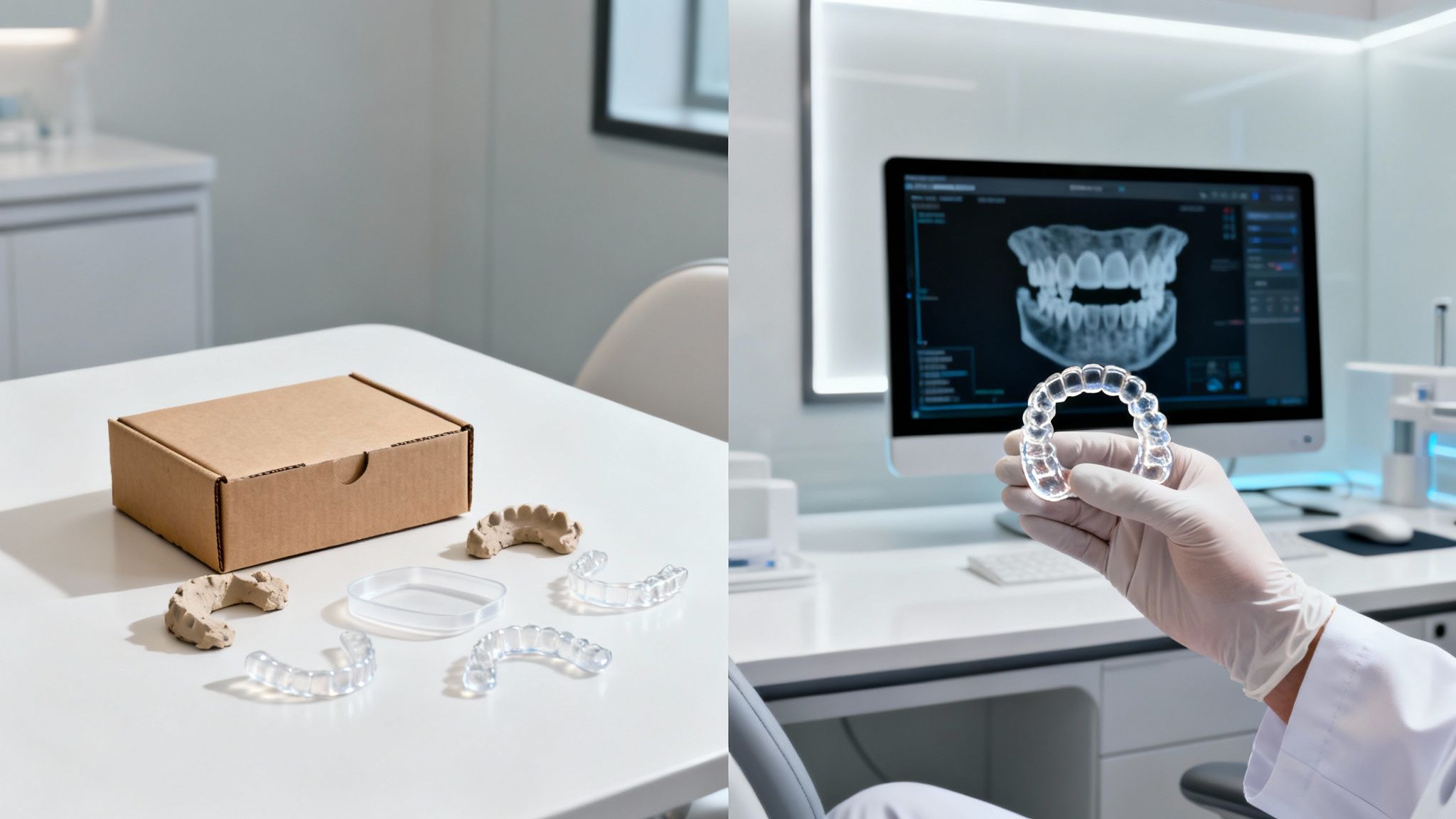
Digital scans replaced dental impression molds for braces and Invisalign
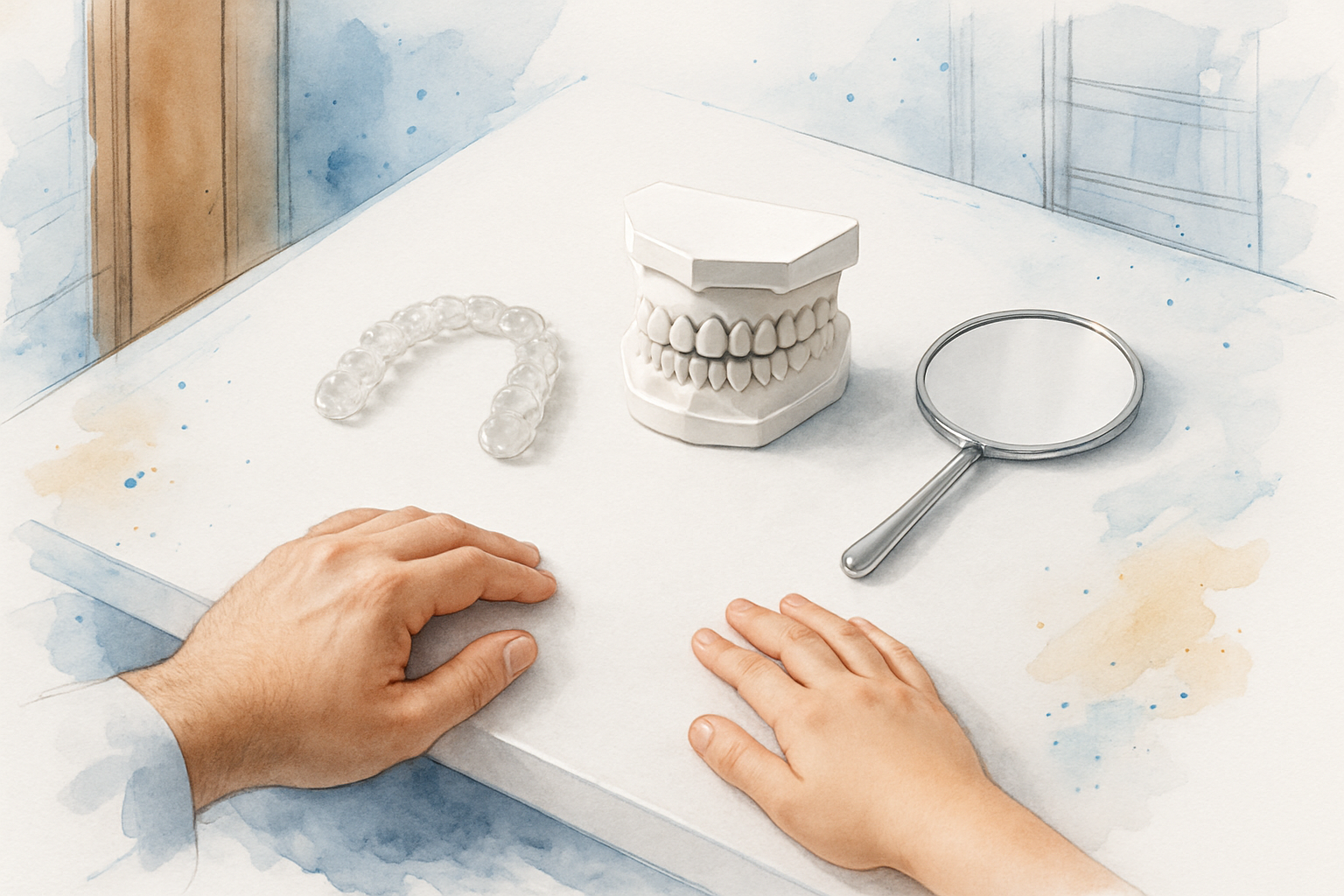
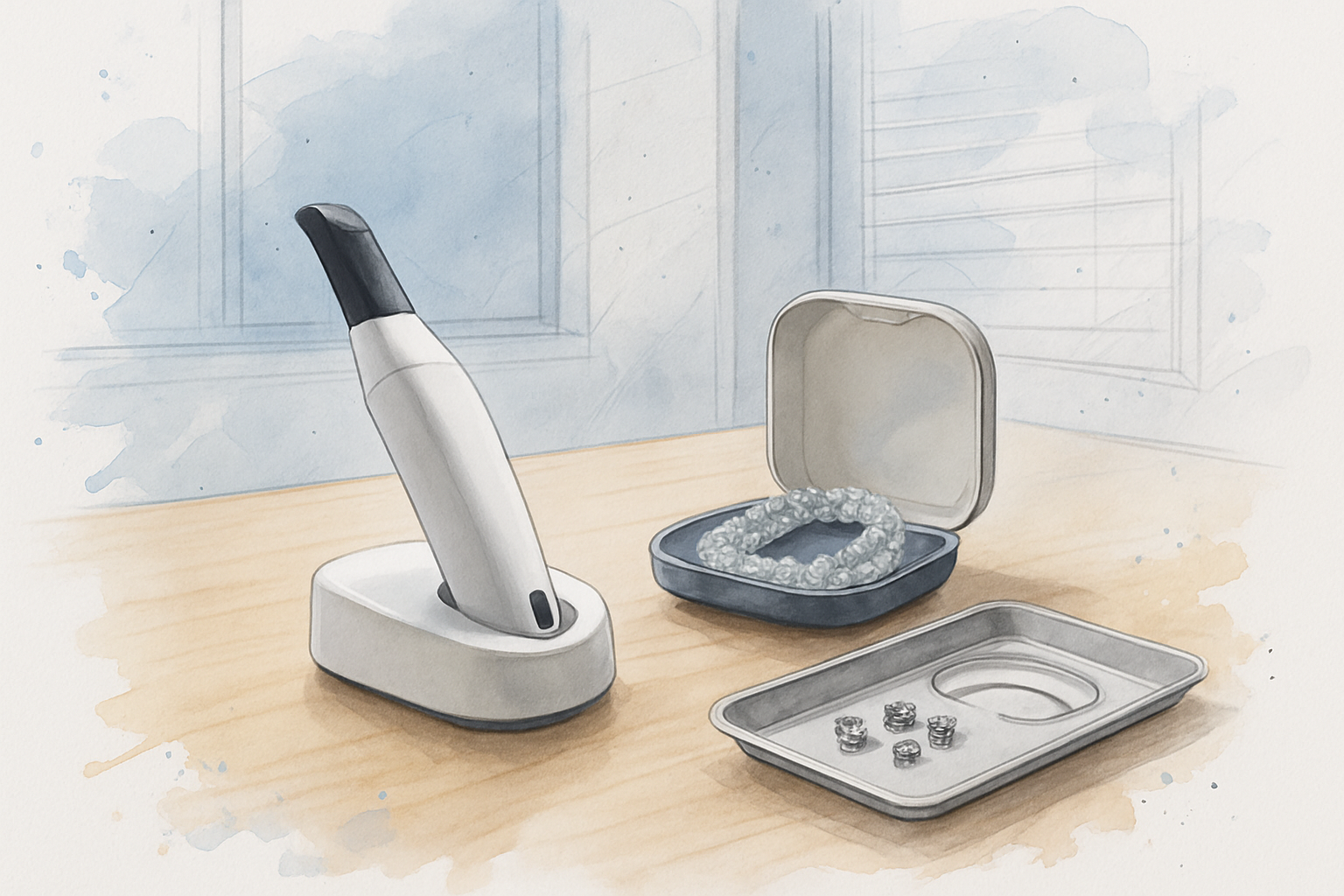
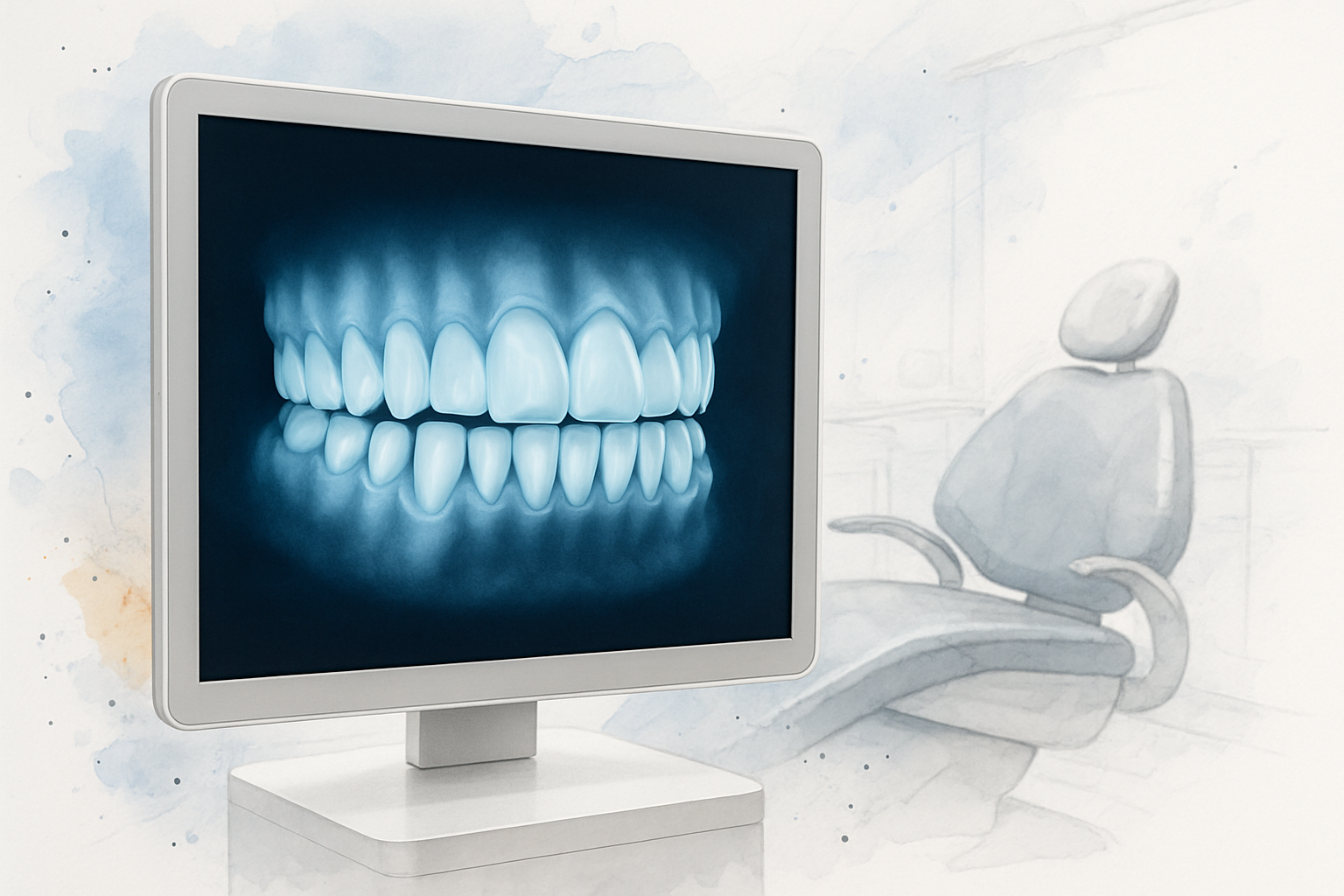
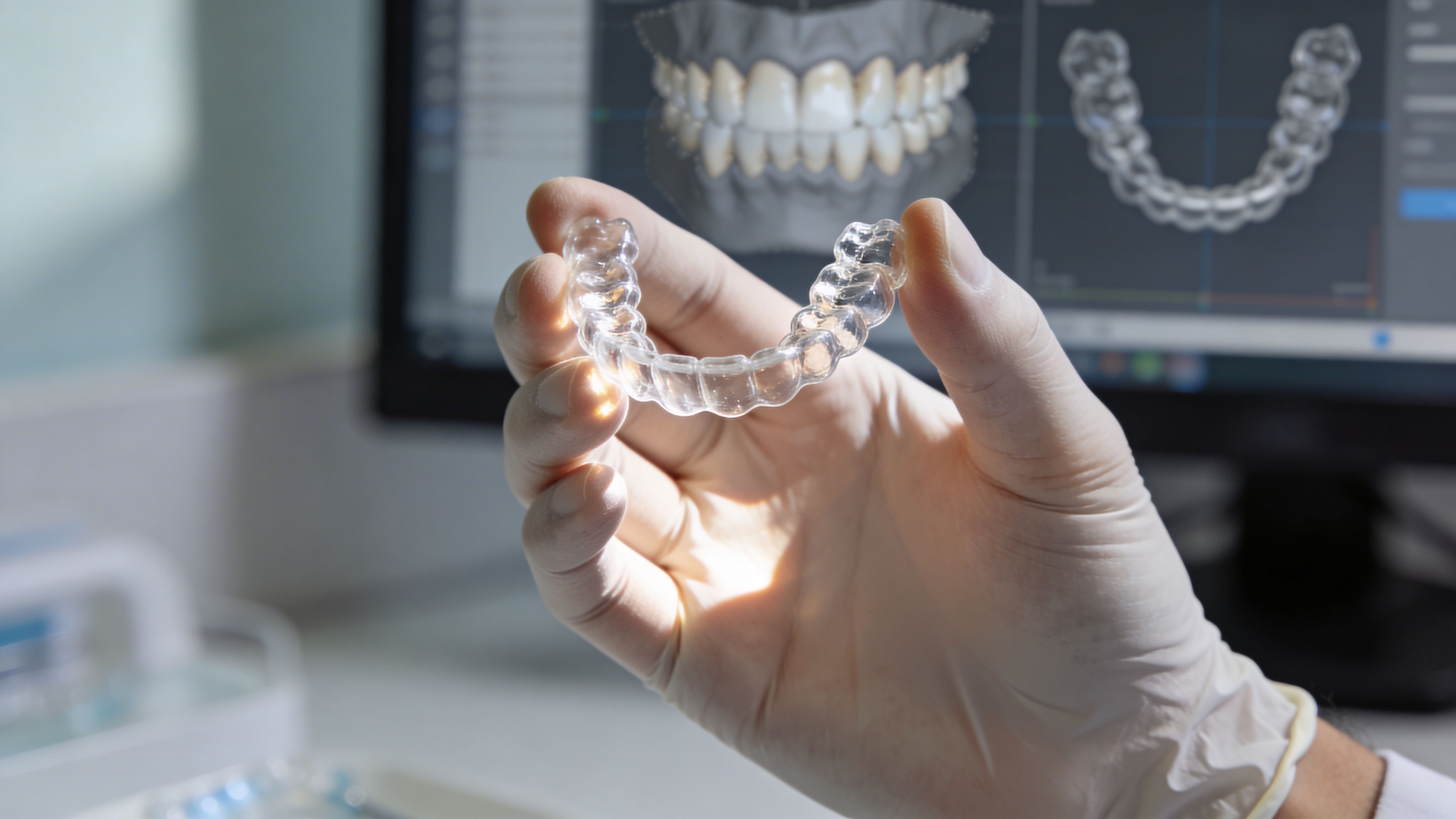
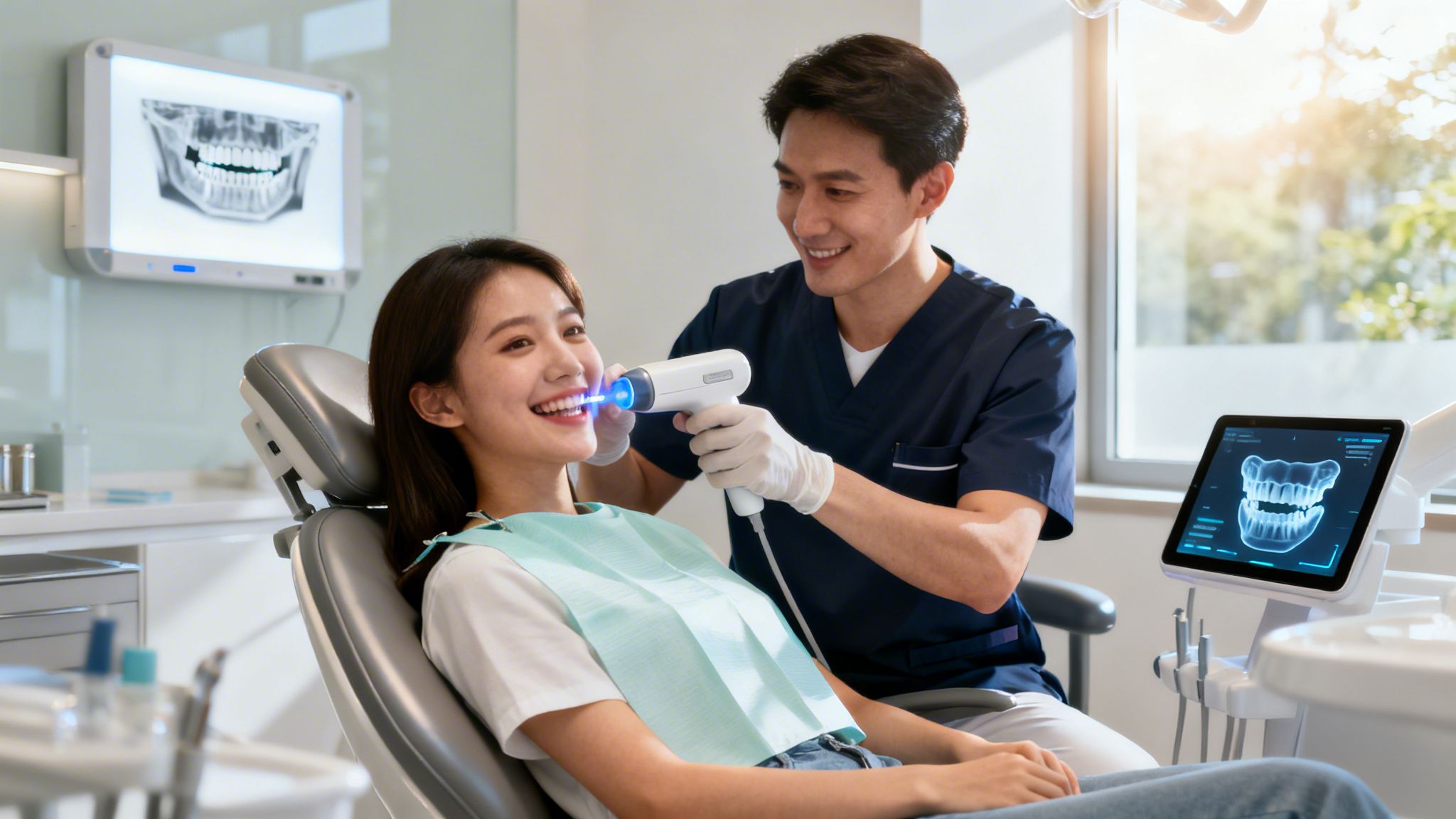
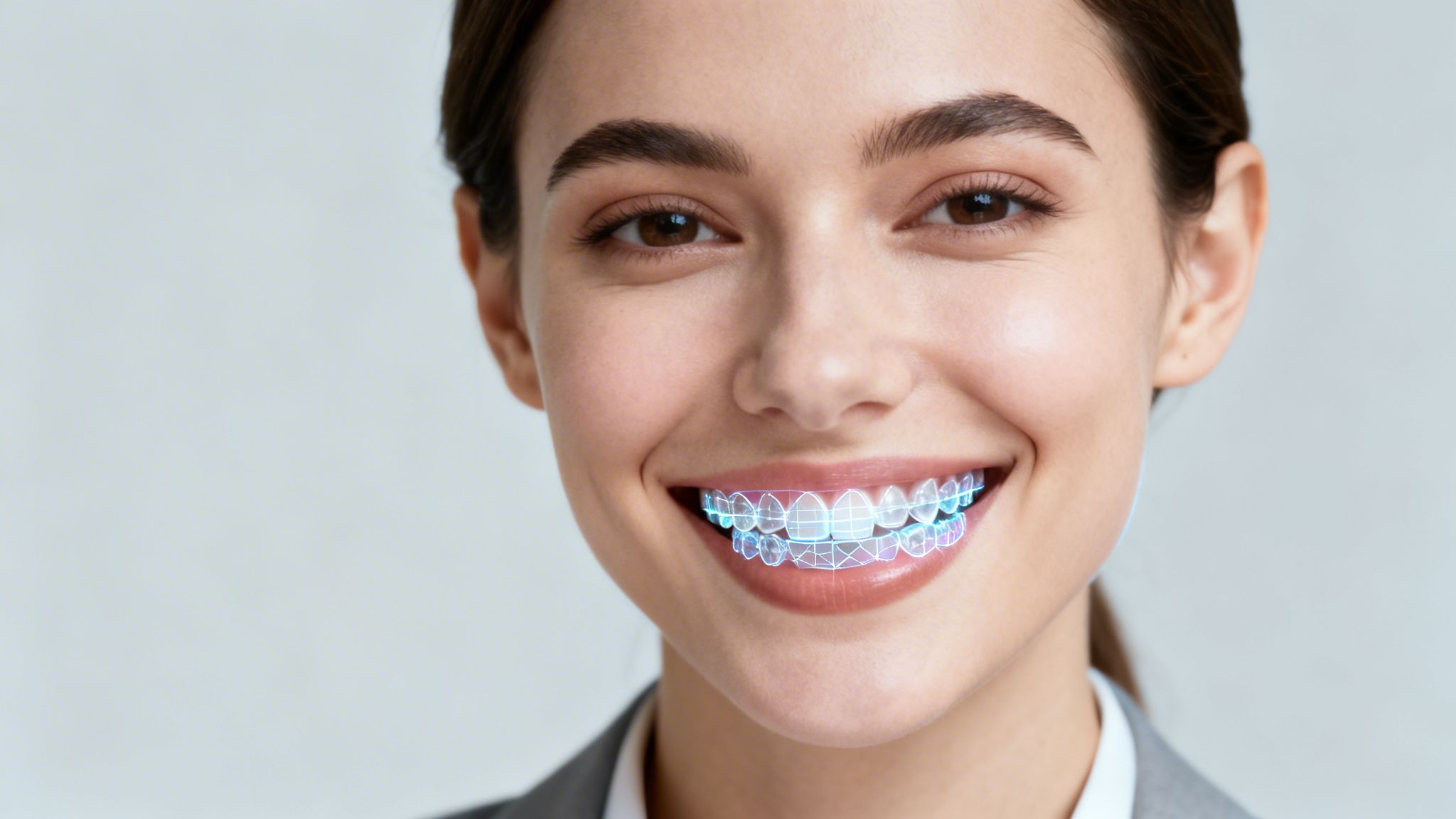
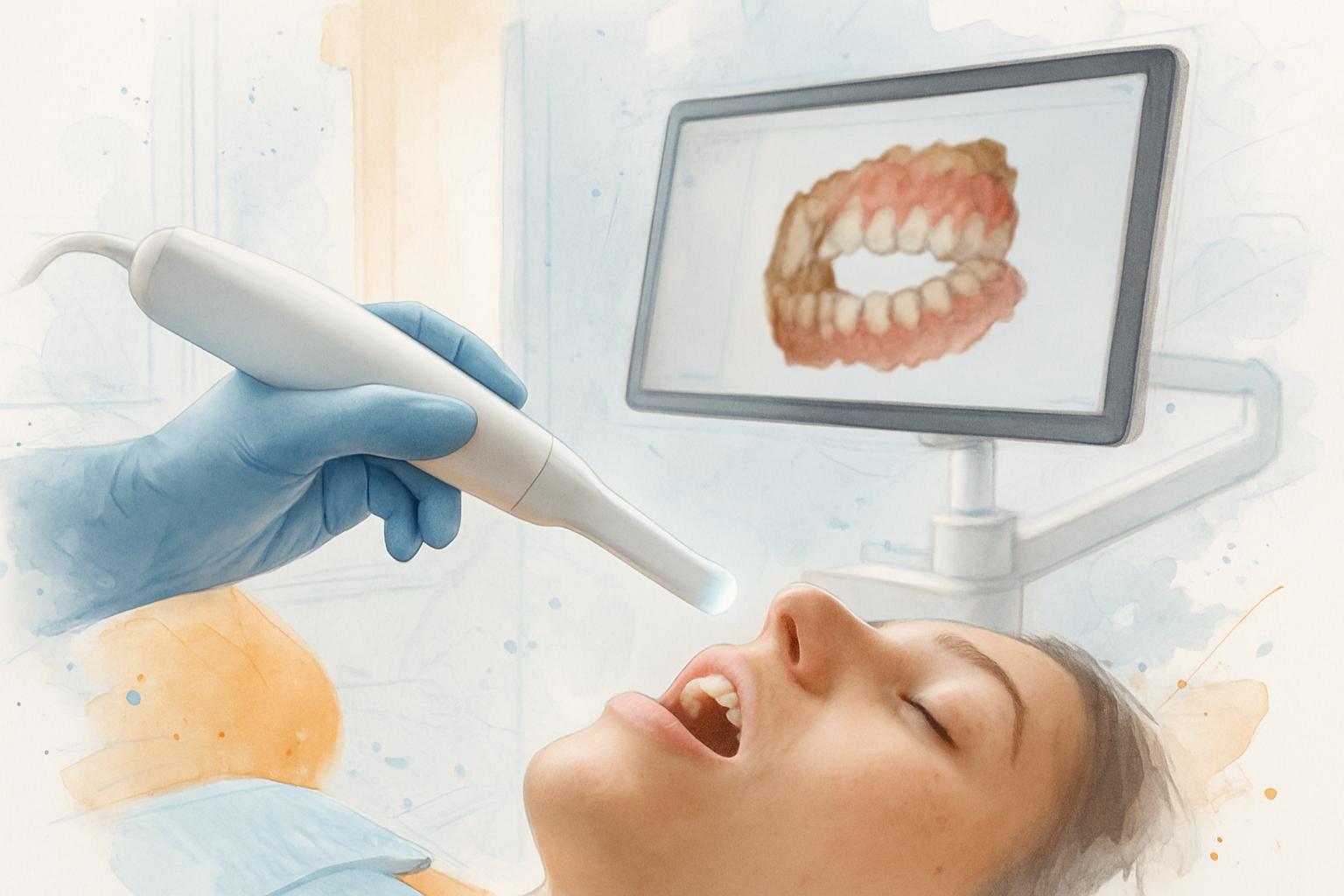
A digital scan uses a small handheld wand, about the size of an electric toothbrush head. It takes hundreds of images per second as it passes over your teeth and gums, and software stitches those images into a 3D model on the screen next to you.
Nothing sets, nothing hardens, nothing has to stay in your mouth. You breathe through your nose or your mouth, you swallow when you need to, and you can raise a hand to stop at any point.
What changes for you as a patient:
- No putty, no tray, no setting time. The wand only touches teeth, not the back of your throat.
- You can pause mid-scan. We pick up right where we left off instead of starting over with fresh material.
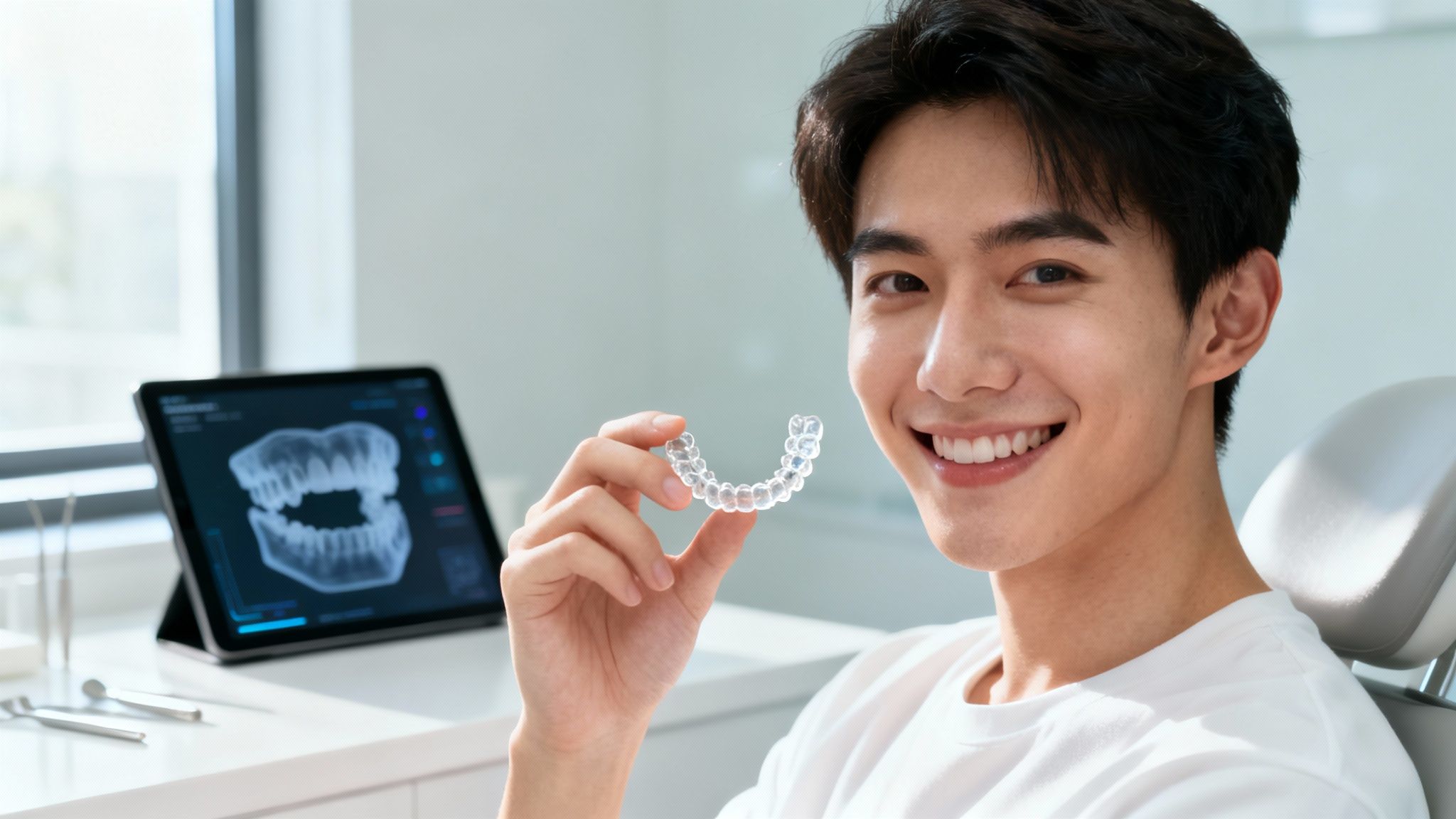
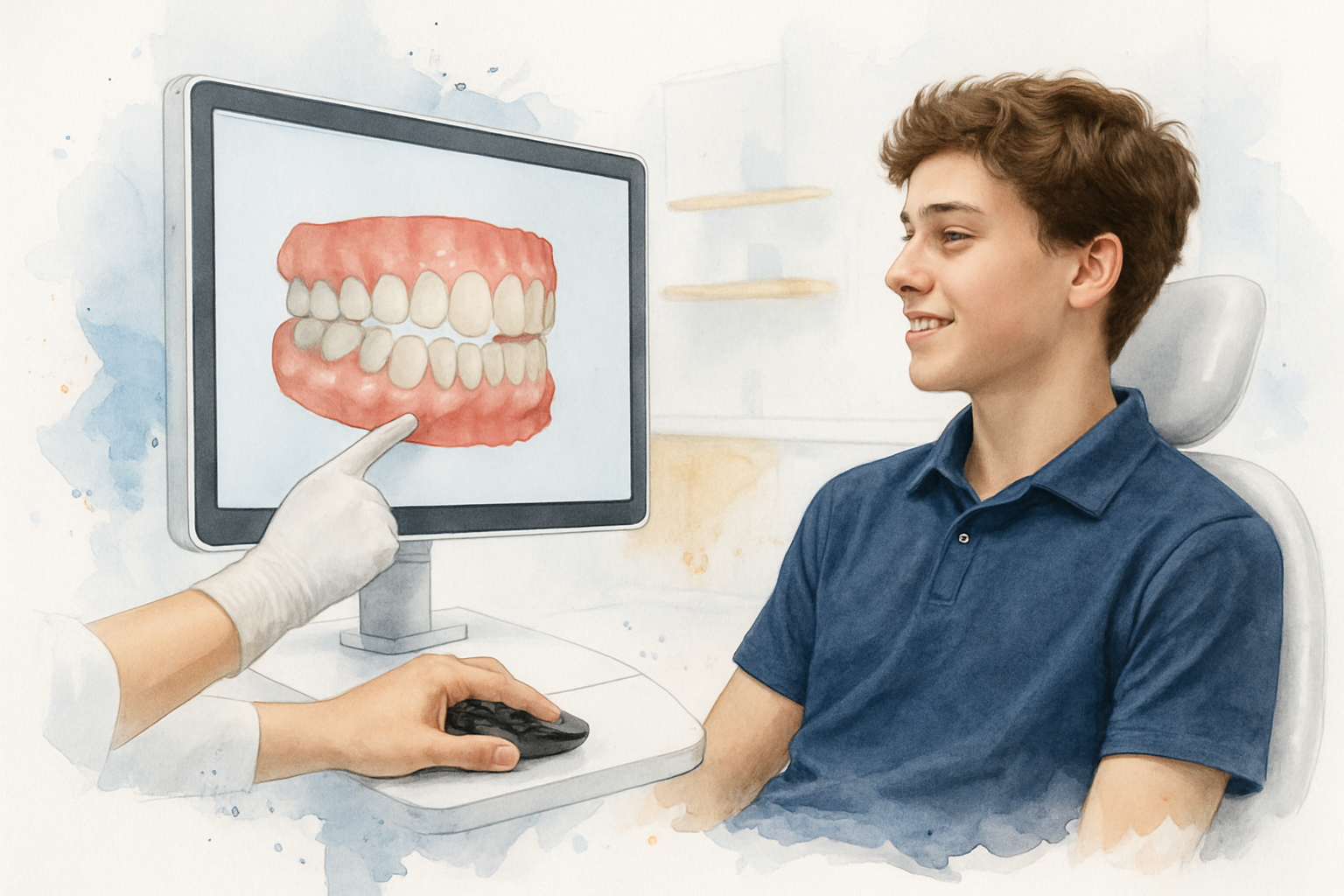
- You see your own teeth on the screen. Most people lean in to look, which is the opposite of how the old molds felt.
- No redo appointments because a mold pulled away or a bubble ruined the impression.
One patient put it plainly in a review: "I thought it was really cool how they didn't have to take a physical mold of my mouth to make my retainer! Instead they used a machine that mapped out my mouth." That reaction comes up more often than any technical detail ever could.
What the appointment actually feels like, start to finish
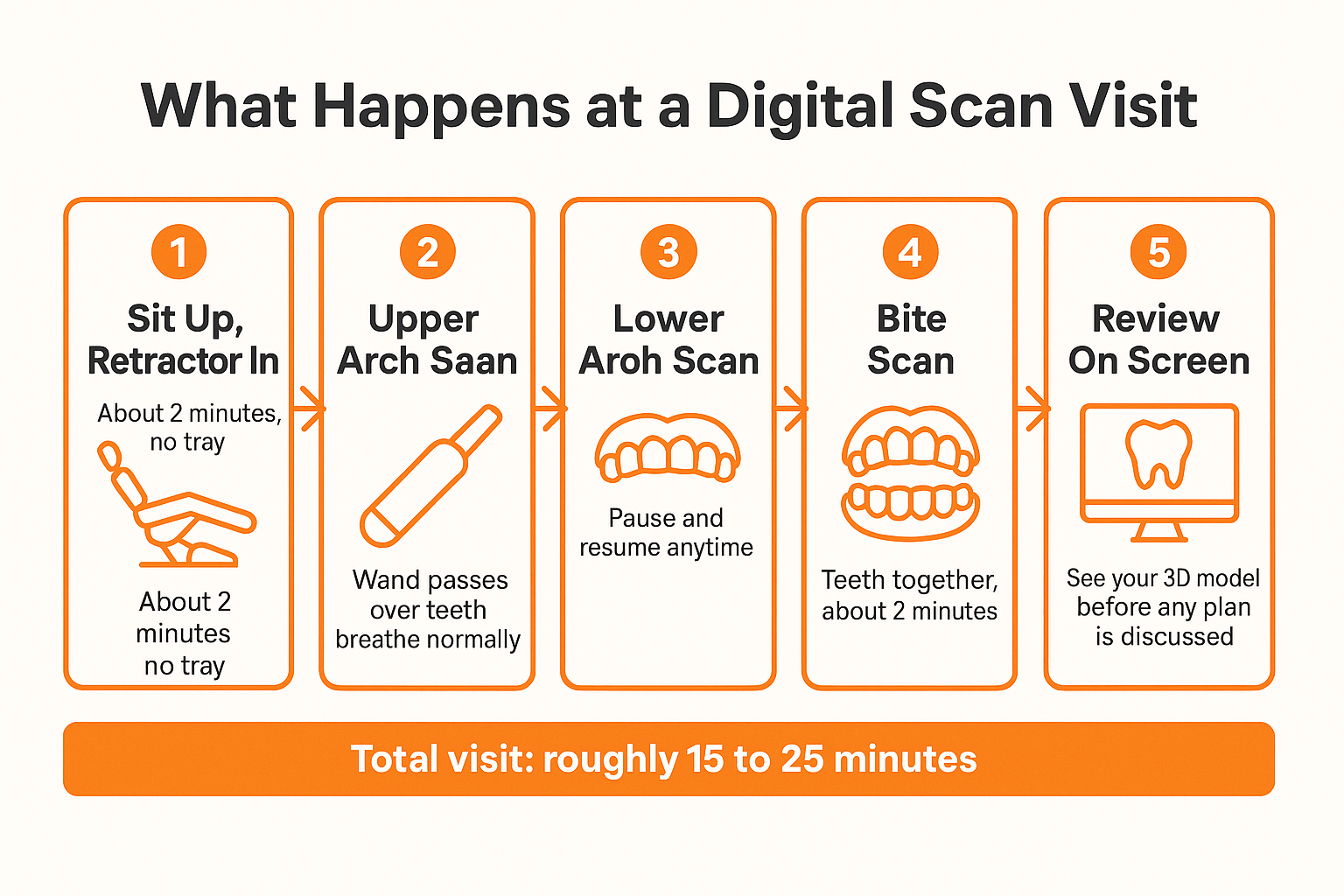
Here is the real sequence, not a brochure version. A records visit usually runs 15 to 25 minutes total, and the scanning part is the short piece of it.
- Minutes 1 to 3: You sit up, not flat back. A cheek retractor goes in so the wand has a clear path, which feels odd for a second and then you forget about it.
- Minutes 3 to 8: The wand traces the outside, chewing surface, and inside of your upper teeth. You watch the model build in real time.
- Minutes 8 to 12: Same pass on the lower arch. If you need a break, we stop and resume.
- Minutes 12 to 14: A short bite scan with your teeth together, so the two arches line up correctly.
- Minutes 14 on: Photos, and a look at the finished model on screen together.
The part most people are surprised by is how conversational it is. You can talk between passes. Nobody is holding anything in your mouth waiting for a timer.
Putty Impressions vs. Digital Scans: What Changes for You
Both methods end up in the same place, which is a model of your teeth. How you get there is completely different.
| What you care about | Old putty impression | Digital scan |
|---|---|---|
| Gag reflex | Material sits near the soft palate, common trigger | Wand stays on teeth, far less triggering |
| Time in the mouth | Several minutes of set time per arch | Continuous passes you can stop anytime |
| Can you pause? | No, the material is already setting | Yes, scan resumes where it stopped |
| Redos | Bubbles or pulls mean a fresh tray | Gaps get rescanned in seconds |
| Seeing your results | Nothing to look at but a plaster model later | 3D model on screen during the visit |
| Records later on | Physical model stored or discarded | Digital file can be pulled up years later |
Two different kinds of scanning, and why you might hear about both
Parents often book a consultation and a 3D scan on the same visit and understandably ask why both exist. They answer different questions.
The surface scan captures the shape and position of the teeth you can see, plus the gum line and how the bite fits together. That is the file used to build aligners and retainers.
A cone beam 3D X-ray looks under the gums. It shows unerupted teeth, root angles, and jaw position, which matters a great deal for early evaluation in kids and for planning how far a tooth can safely move in an adult.
That second one is imaging, not just photography, so it gets used when it changes the plan, not by default. According to the FDA's guidance on dental cone beam computed tomography, exposure settings should be kept as low as reasonably achievable while still producing an image that is actually useful. That is the standard we work to, and it is a fair question to ask any provider before imaging.
If you are still deciding between treatment types before any of this, our guide on how to know if you need braces or Invisalign is a good starting point.
A Records Visit, Step by Step
This is the whole arc of a scan appointment, from walking in to seeing your own 3D model.
Why scan accuracy shows up in your results, not just your comfort
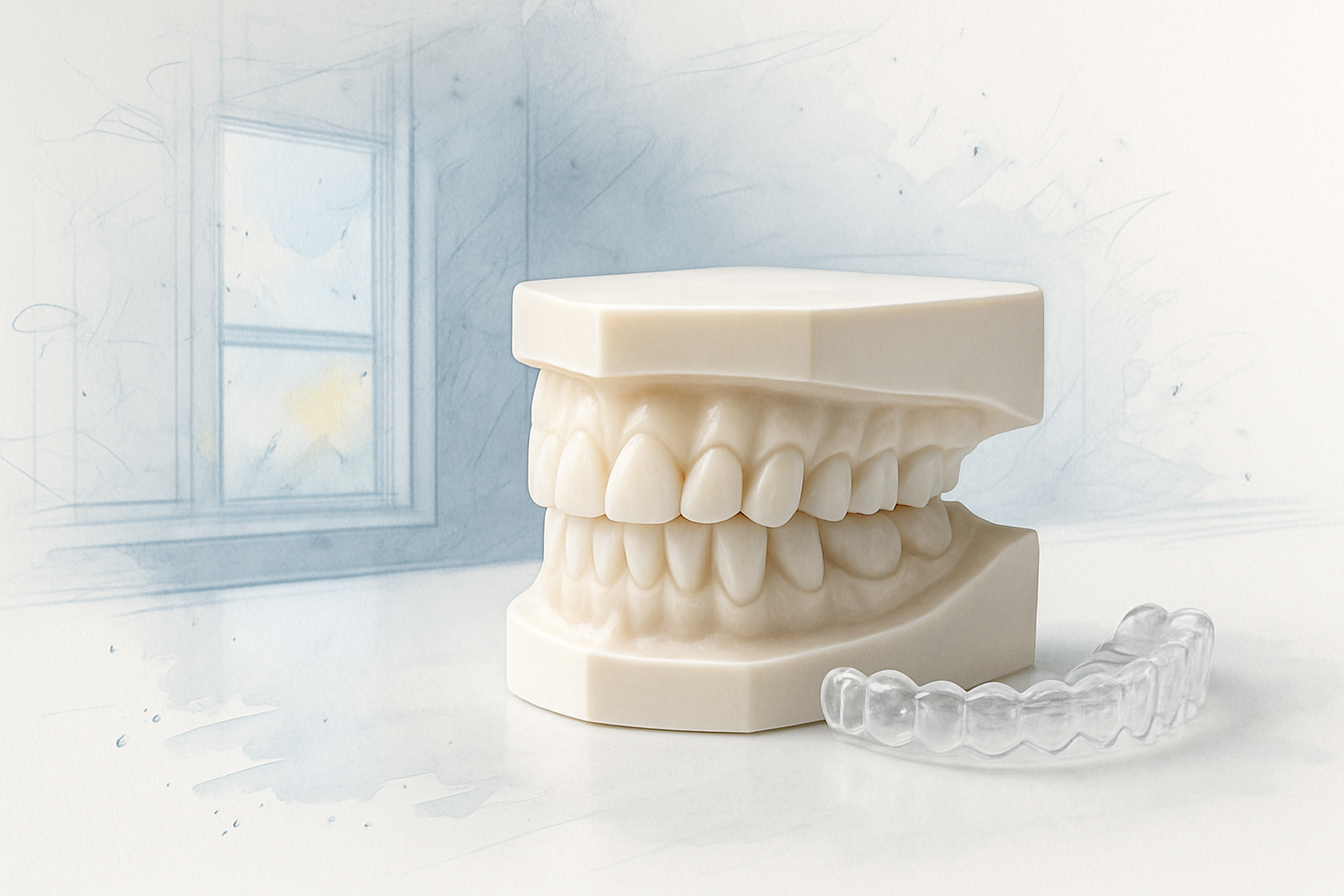
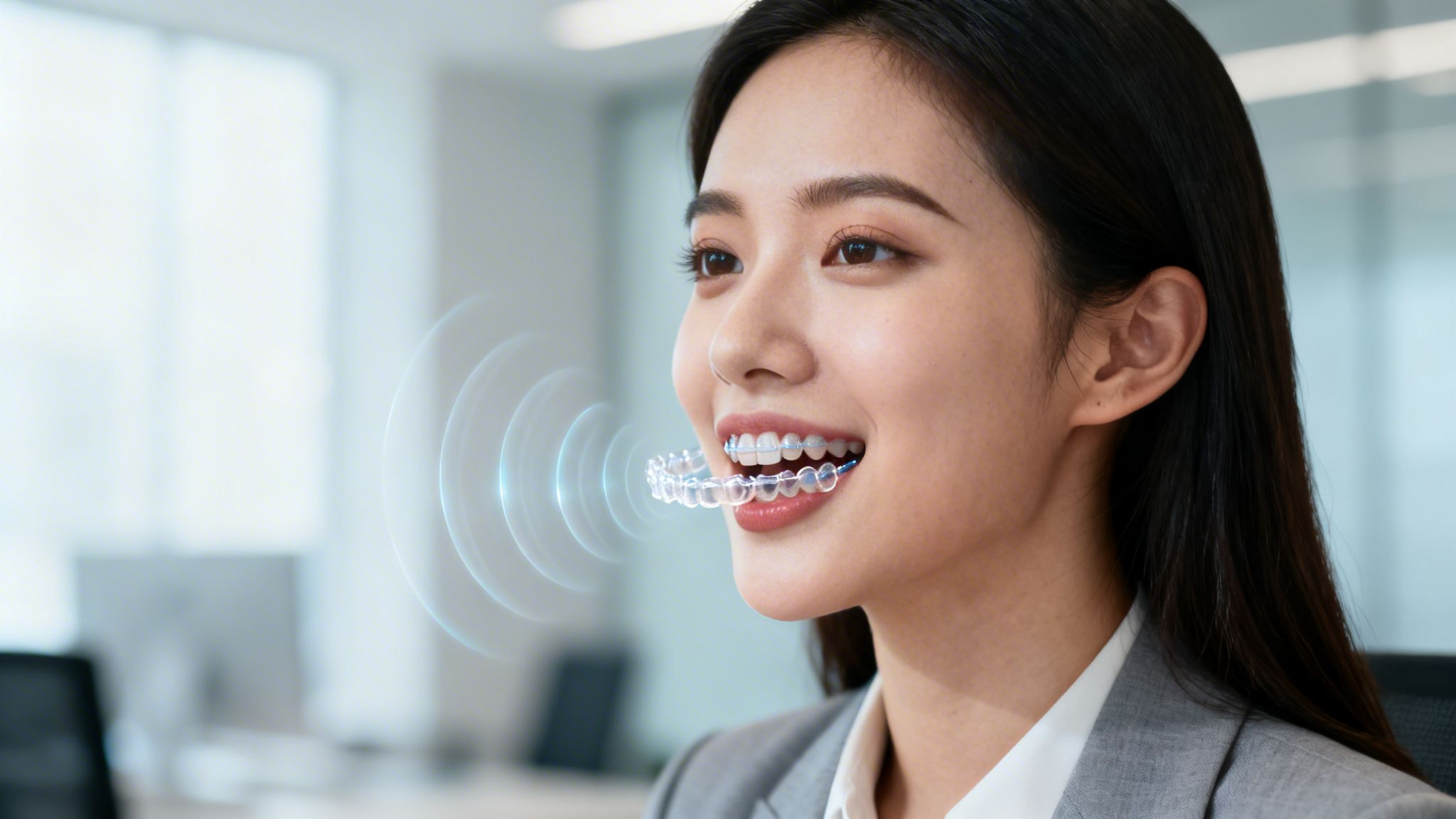
Here is the part that matters after you leave. The digital file is what an Invisalign tray series or a retainer is manufactured from.
An accurate scan means aligners that seat down properly on every tooth. A sloppy one means trays that rock, catch on an edge, or never fully engage, which quietly stretches out your treatment.
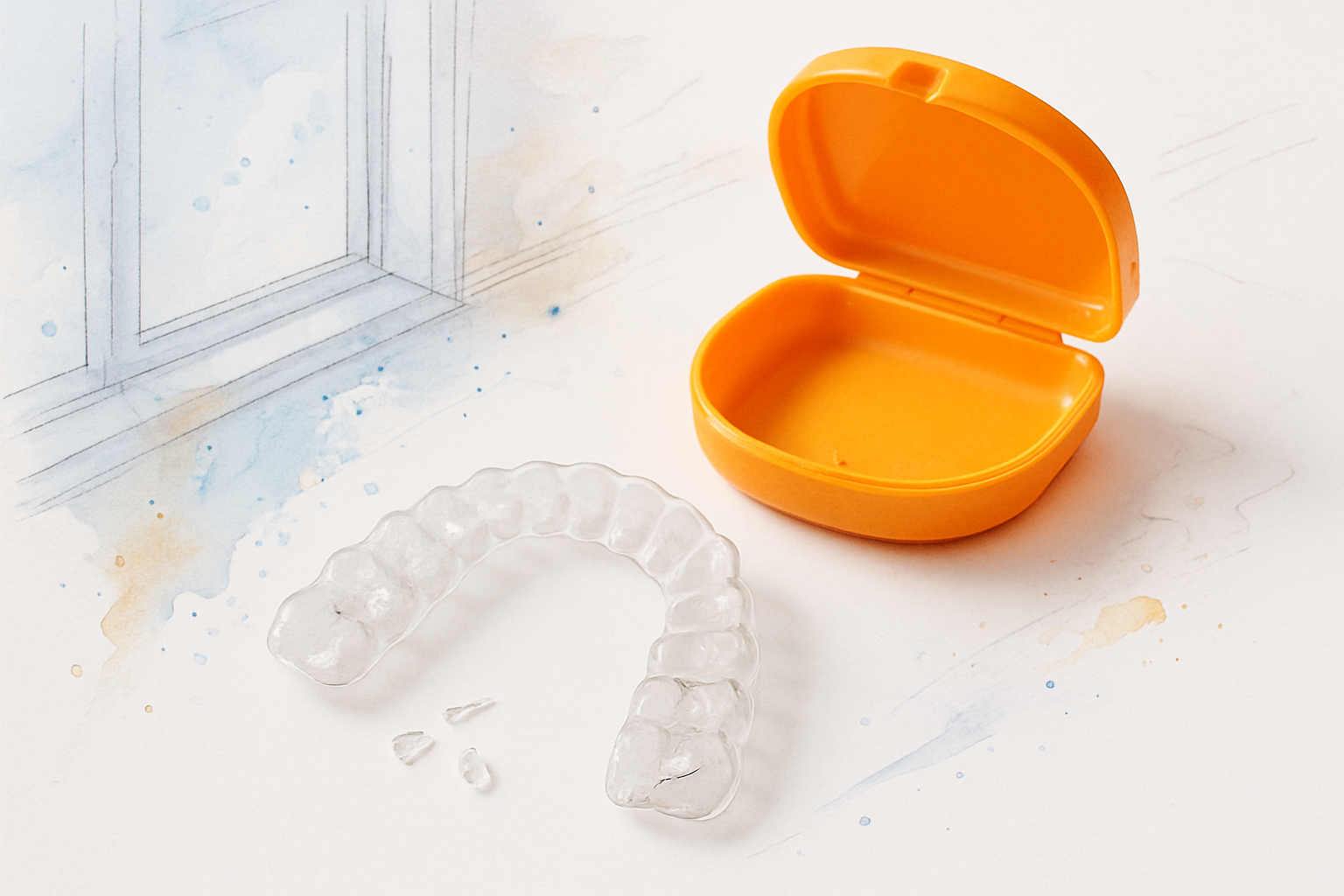
The file also sticks around. That comes up constantly with people who finished treatment years ago and are now calling because a retainer broke, disappeared in a hotel room, or no longer fits after a few years without wear.
If your teeth have shifted since your last scan, an old file will not help you, and printing from it would fight your current bite. The path forward is a new scan plus an exam, and cost depends on which retainer type fits your situation and how much movement has happened. That is a conversation worth having in person rather than guessing at over the phone.
If you are already in treatment, caring for your Invisalign properly is the cheapest way to avoid needing extra scans at all.
Why this matters even more for kids and teens
Younger patients have a stronger gag reflex and much less patience for sitting still. That combination is exactly why the old putty trays were miserable for a nine year old, and why the appointment sometimes ended in tears and a second try.
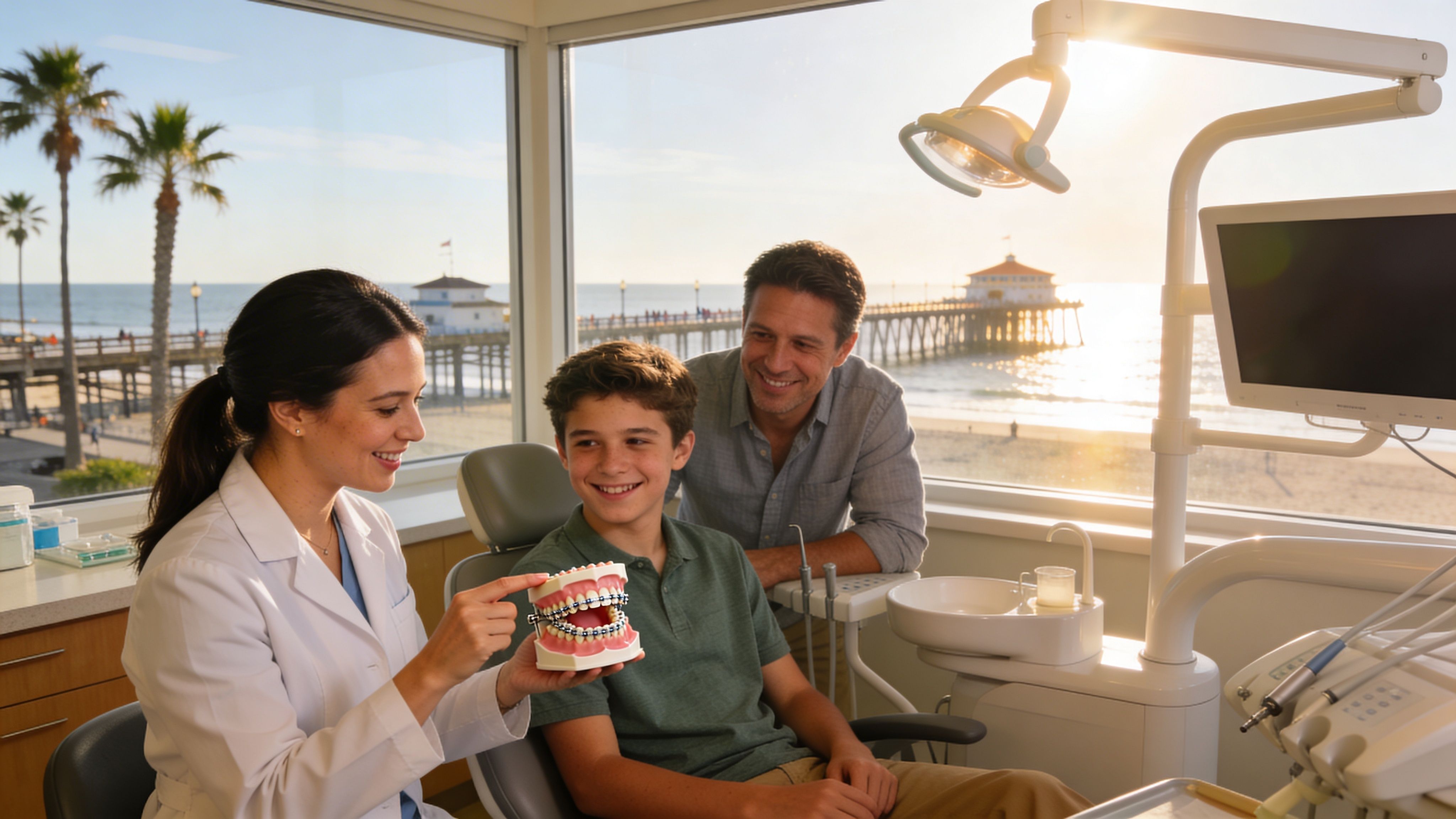
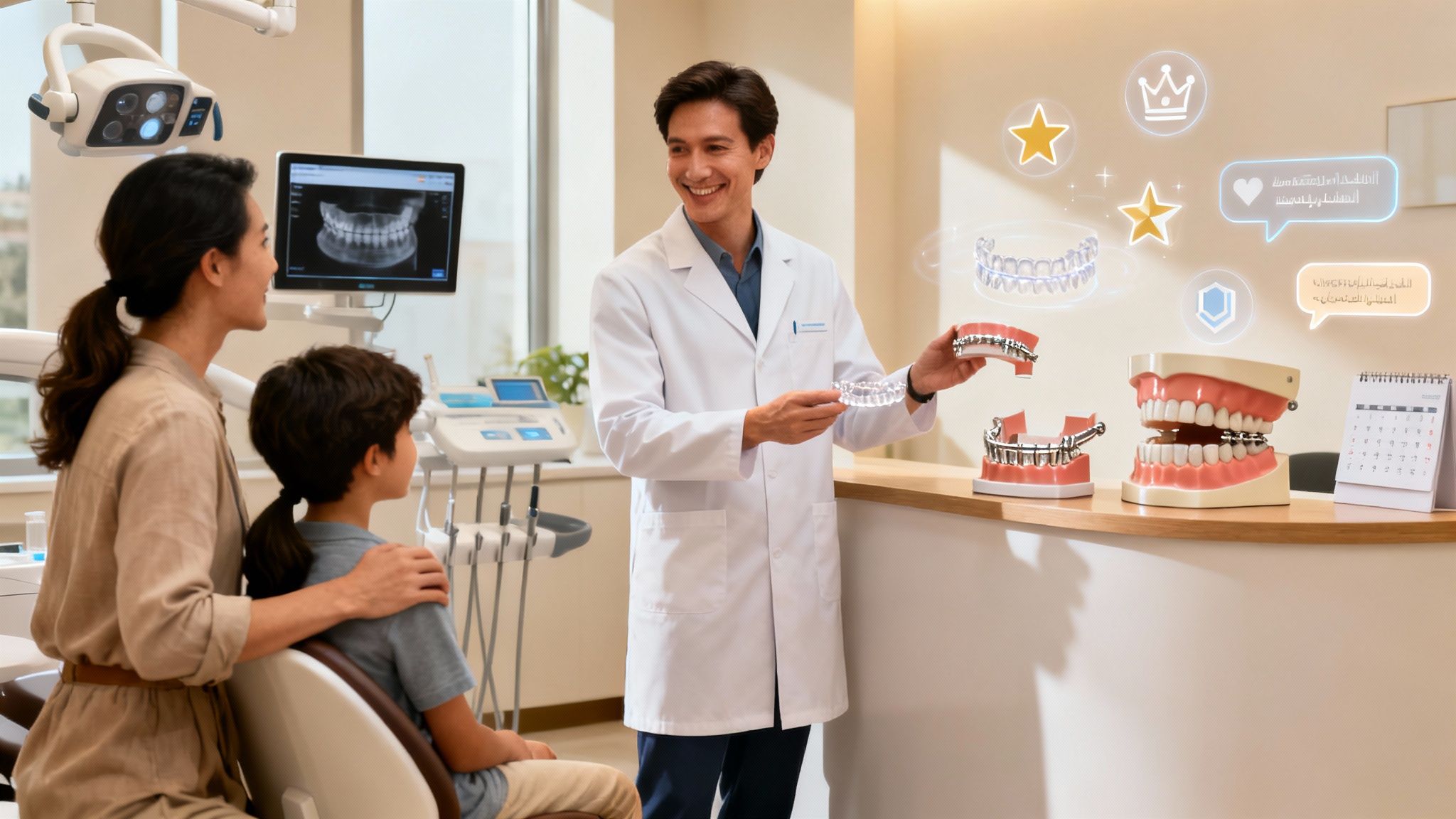
A scanner can be stopped and restarted mid-appointment as many times as a kid needs. We can let them look at the screen, show them a tooth that has not come in yet, and hand the moment back to them.
One local mom described her son's visit this way: "my son said that the X-rays were the most comfortable X-rays he's ever had done for his teeth." That is a low bar in most kids' minds, and it is worth clearing.
There is a scheduling upside too. Families driving in from Oak View, Goldenwest, or Talbert Village can usually get records done in the same visit as the consultation instead of coming back to Beach Boulevard a second time, which matters a lot once the school year starts.
If your child is in the age range where evaluation is being discussed, our notes on the best age for braces explain what we look for at age 7 and why.
Frequently Asked Questions About Digital Scans
Will a digital scan make me gag like the mold did?
It is far less likely. The wand stays on the tooth surfaces and never has to sit near the soft palate the way impression material does, and we can stop the second you need a break and resume from the same spot.
How long does the scan itself take?
The scanning is usually 5 to 12 minutes for both arches plus the bite. The full records visit, including photos and reviewing the model with you, tends to run 15 to 25 minutes.
Do I need the cone beam 3D X-ray too, or just the surface scan?
Not everyone needs it. The surface scan handles the shape and position of visible teeth, while 3D imaging is used when we need to see roots, unerupted teeth, or jaw position because that information would change the treatment plan. If it would not change anything, there is no reason to take it.
I finished braces somewhere else years ago and lost my retainer. Can you just print a new one?
Not from someone else's old records, and honestly not from an old file of our own either if time has passed. Teeth move, so the process starts with a new scan and an exam to see where things actually stand. Cost varies by retainer type and how much movement has happened, so ask for a straight answer at that visit.
Can the scan happen at the same appointment as my consultation?
In most cases, yes. That saves families a second trip, which is the main reason we try to combine them when the schedule allows.
Am I too old for any of this?
No. We treat patients well into their 70s, and the scan process is identical regardless of age. If that is the question really holding you back, our piece on whether adults over 60 can still get braces or Invisalign goes deeper.
Curious what your own 3D model looks like?
At our office on Beach Boulevard, Dr. Jeremy and Dr. Melissa pull the scan up on the screen and explain what they are looking at with you before any treatment plan gets discussed, which is the thing patients mention most often in reviews. Consultations for families and adults across Huntington Beach and Fountain Valley can be scheduled at 714-594-5777 or at magicfoxsmiles.com, and Vietnamese and Spanish are spoken in the office. If the goopy mold is the reason you have been putting this off, that reason no longer applies.