How to Tell a Real Orthodontist From a General Dentist in Huntington Beach
Direct Answer: A licensed orthodontist completed two to three additional years of full-time specialty training beyond dental school, focused entirely on tooth movement and bite mechanics. A general dentist may offer Invisalign or braces, but they do not have that specialized background.
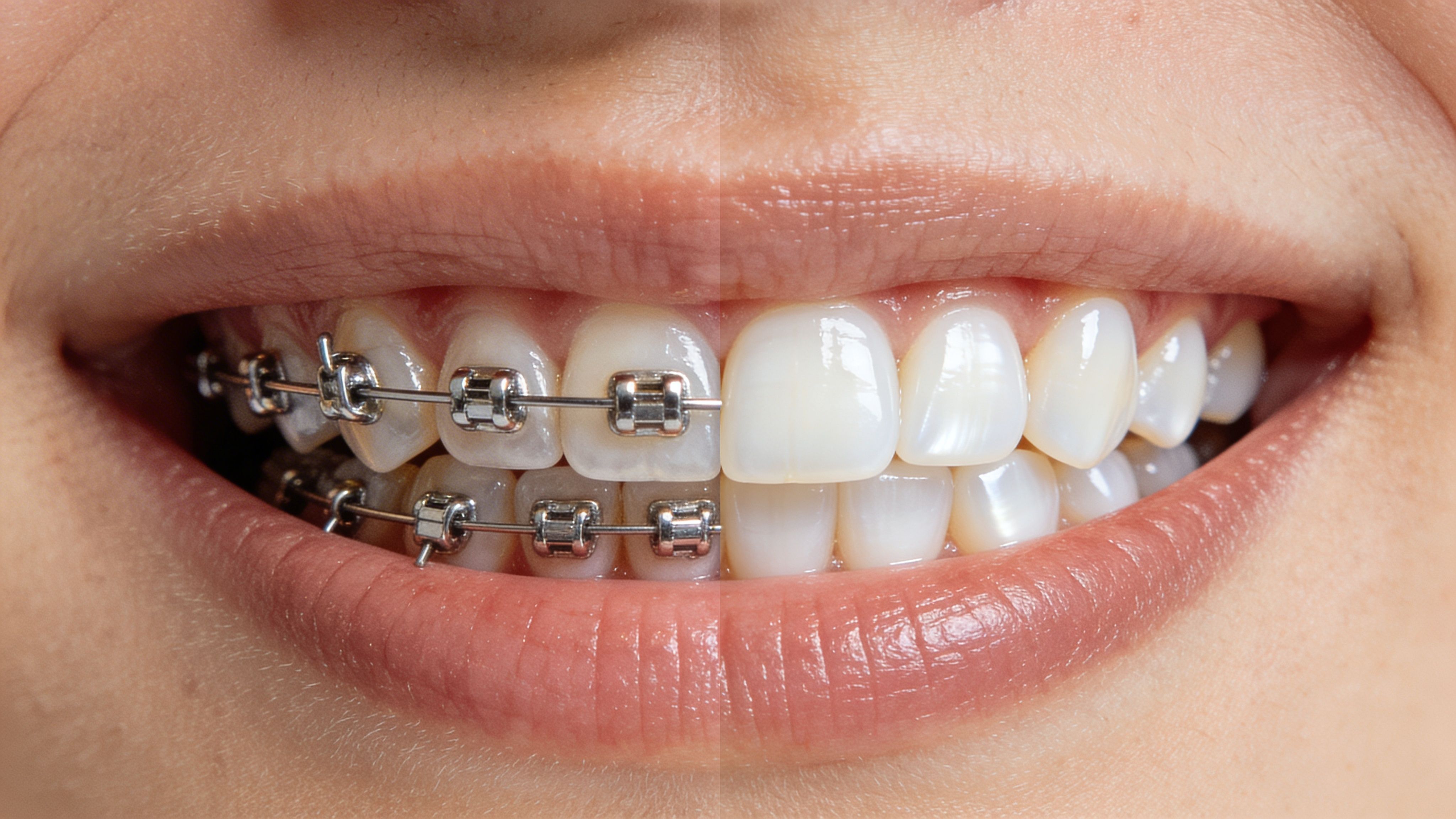
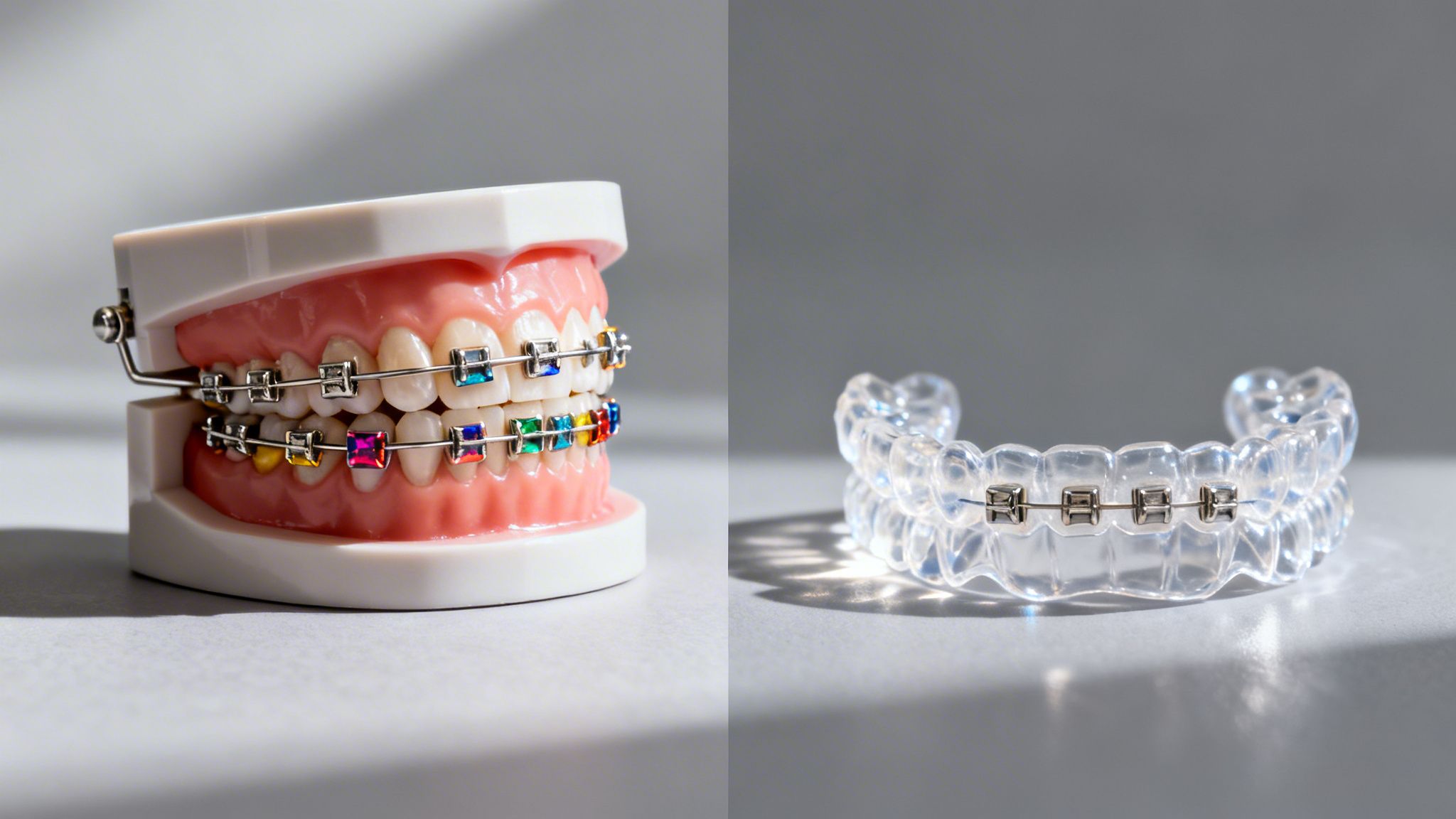
If you've been searching for braces or Invisalign in Huntington Beach, you've probably noticed that a lot of offices offer them -- dental offices, orthodontic practices, even some urgent care chains. And that's where a lot of families hit their first real question: does it actually matter whether the person treating you is a specialist?
The honest answer is yes, and the difference isn't a marketing line. It comes down to training, how treatment decisions get made, and what happens when a case turns out to be more complicated than it looked at first. I want to walk you through what that difference actually looks like in practice, and give you a short list of questions that will help you vet any office you're considering.
This isn't about scaring you away from general dentists -- many are excellent clinicians. It's about helping you make an informed choice, especially when you or your child are committing to a 12 to 30 month treatment process.
What Extra Training an Orthodontist Actually Completes
Every orthodontist starts out exactly where a general dentist does -- four years of dental school, a dental degree, and a state license to practice. That baseline is the same.
What happens after that is where the paths split. An orthodontist then spends two to three additional years in a full-time, accredited residency program focused entirely on orthodontics. That's not a weekend course or an add-on certificate. It's a separate graduate program where they study tooth movement, jaw development, facial growth, bite mechanics, and how to manage complex cases from start to finish.
According to the American Association of Orthodontists, orthodontists limit their practice to this specialty -- they are not doing fillings, root canals, or extractions alongside braces. The focus is narrow on purpose, because the mechanics of moving teeth correctly require a depth of knowledge that takes years to build.
Beyond that residency, some orthodontists pursue board certification through the American Board of Orthodontics. This is voluntary -- no state requires it -- and it involves submitting completed cases for peer review, passing written and clinical exams, and demonstrating ongoing competency over time. It is a meaningfully higher bar than simply holding a dental license, and it signals that a doctor has chosen to hold their own work to external scrutiny.

When a General Dentist Offering Invisalign Is Fine -- and When It Isn't
I want to be fair here, because this is a nuanced topic. A general dentist who has completed Invisalign training and regularly treats straightforward cases can do good work. If you have mild crowding, a small gap, or very minor spacing issues and no significant bite problem, a skilled general dentist with Invisalign experience may handle that just fine.
But the cases that benefit most from a specialist's eye are the ones that don't look complicated on the surface:
- Bite problems -- overbites, underbites, crossbites, and open bites -- involve more than just moving teeth. They require understanding how the jaws relate to each other and how to correct the relationship, not just the aesthetics.
- Prior dental work -- crowns, implants, bridges, or missing teeth change how forces travel through the mouth during treatment. I've seen callers come in after describing exactly this situation, asking for a second opinion before committing to a plan.
- Growing patients -- children and early teens are still developing. Guiding jaw growth requires a different diagnostic framework than straightening adult teeth, which is why early interceptive treatment exists as a specialty within orthodontics.
- Longer treatment cases -- the more complex the tooth movement, the more critical it becomes to have someone who has spent thousands of hours managing how teeth respond under pressure.
The issue isn't that general dentists are bad at Invisalign. The issue is that they may not have the tools or training to recognize when a case has crossed into territory that needs specialist-level planning.
What the Direct-to-Consumer Aligner Pullbacks Should Tell You
In recent years, the orthodontic space saw a wave of mail-order and direct-to-consumer aligner companies promise fast, affordable treatment with no office visits. Then, in 2022, Byte -- one of the most prominent of those services -- voluntarily suspended operations after the FDA received reports of patient harm.
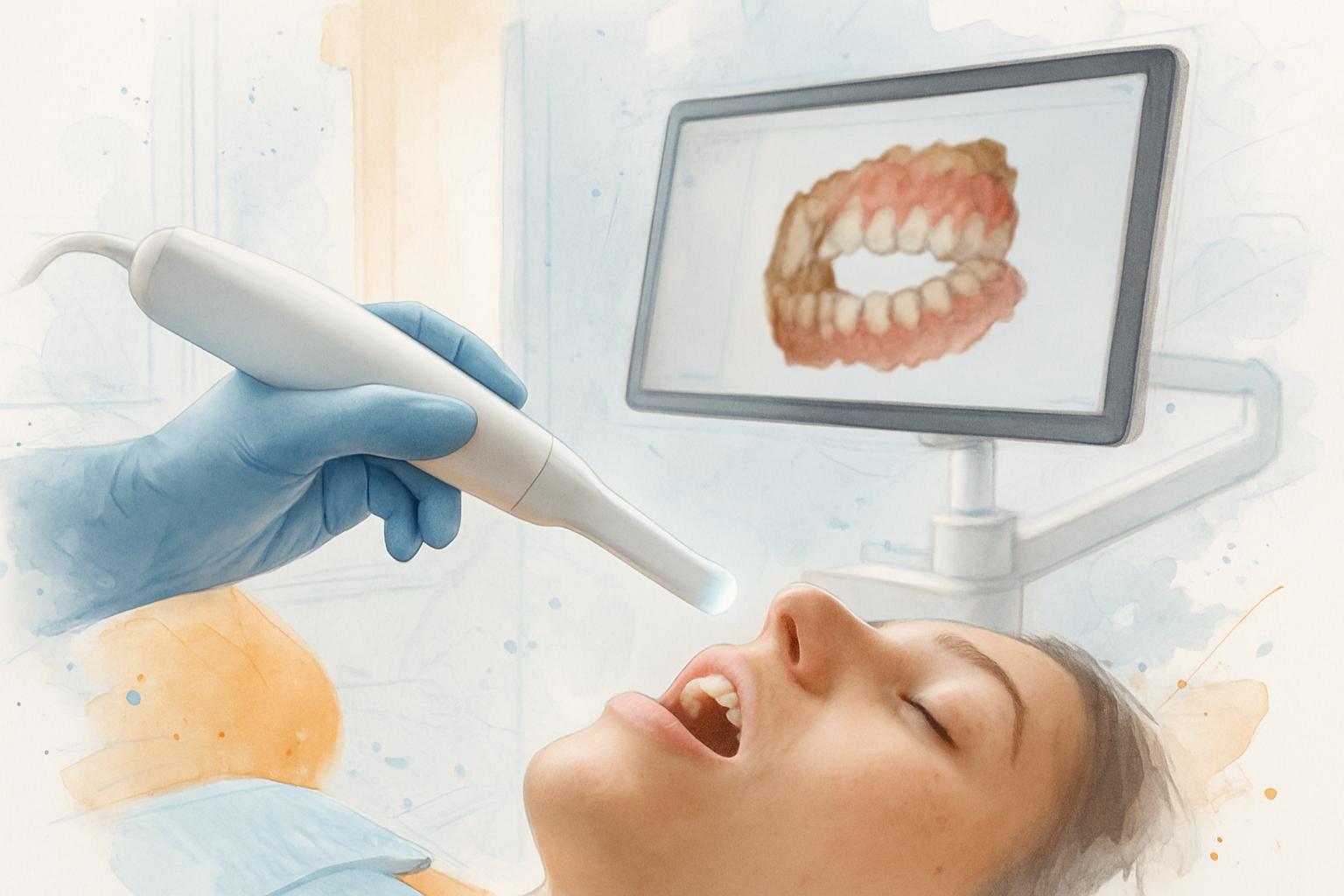
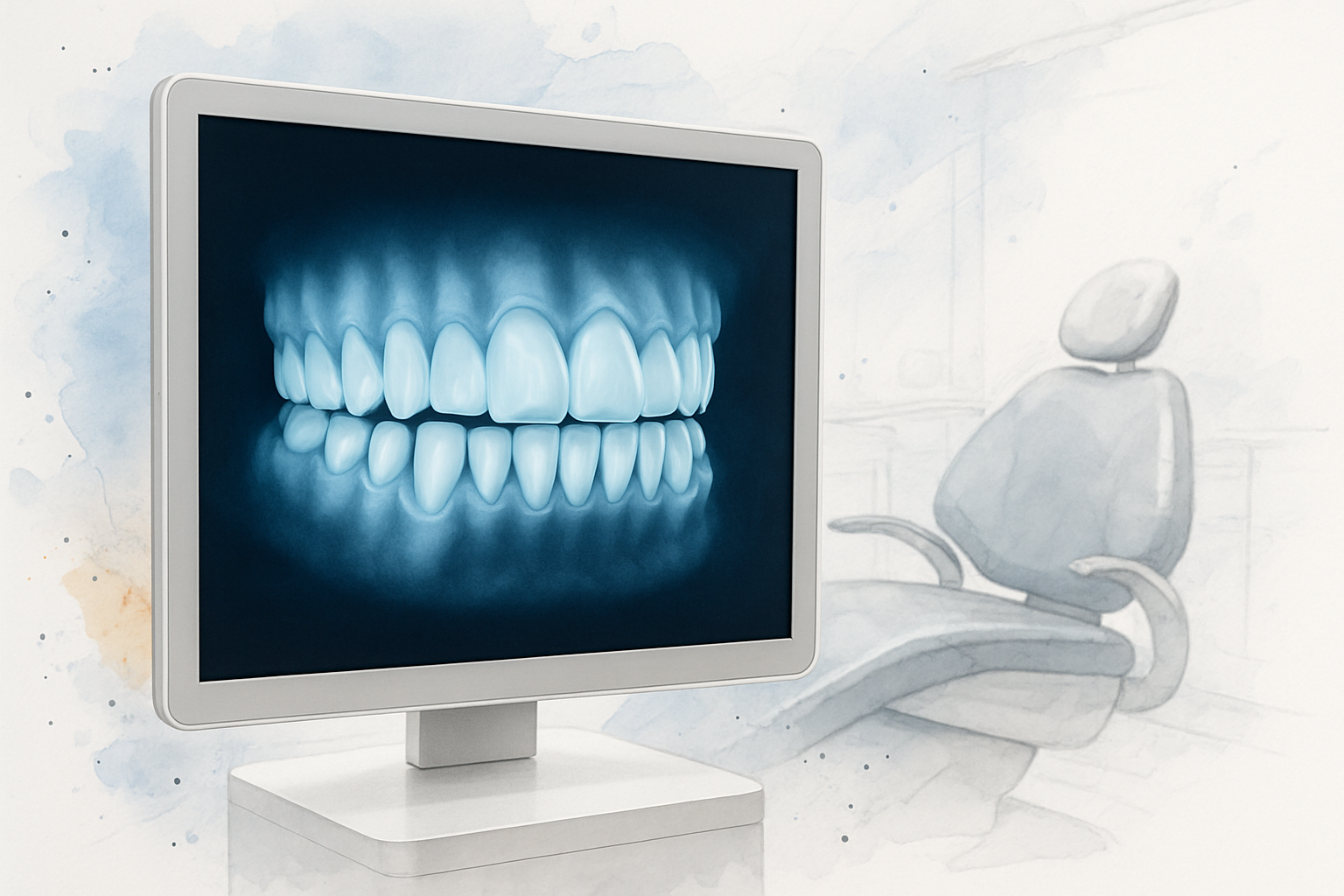
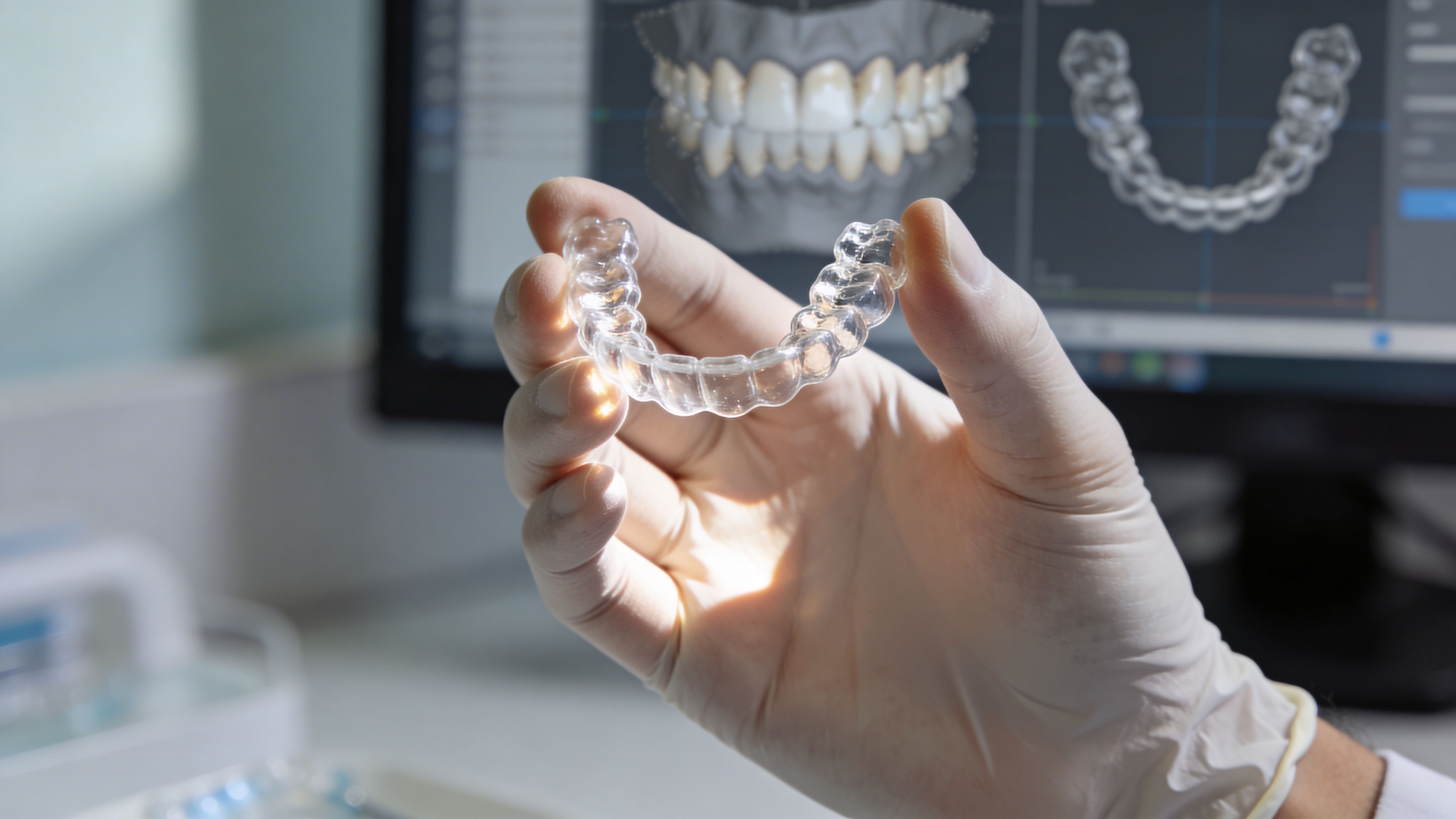
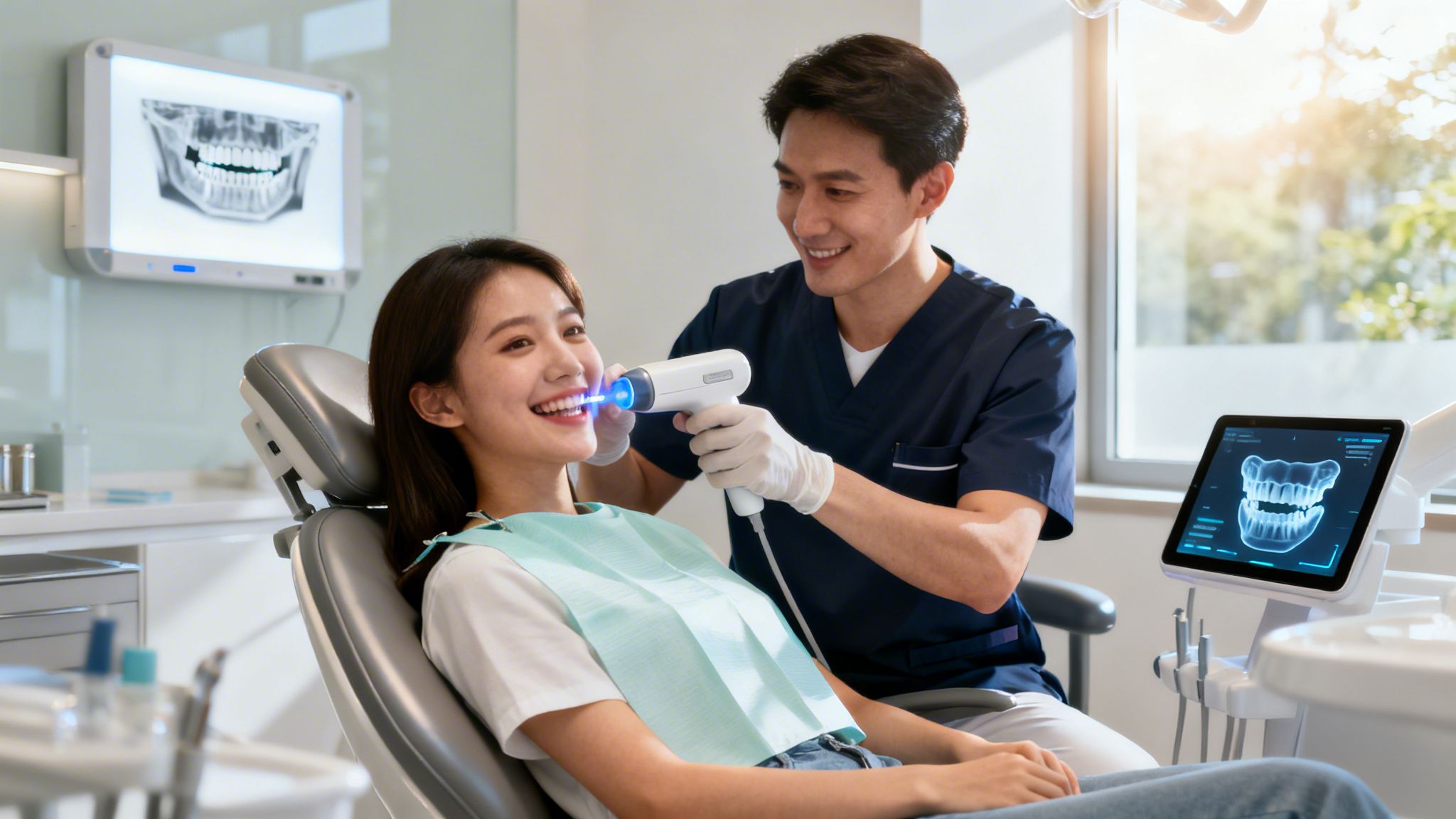
That episode did something useful for informed patients: it made diagnostic records feel important again. A proper workup before orthodontic treatment includes intraoral scans or dental impressions, X-rays, photographs, and often a CBCT scan for complex cases. These records let a trained clinician see what's happening below the gumline, how the roots are positioned, and whether a planned movement is actually safe.
A provider who skips this step -- whether a mail-order company or an office that jumps straight to a treatment quote without records -- is making decisions without complete information. You can read more about why in-person supervision matters in this breakdown of mail-order aligner risks.
Asking any orthodontic provider what records they take before quoting a plan is one of the most useful questions you can put to them. A specialist's office should not hesitate to answer it.
General Dentist vs. Board-Certified Orthodontist: A Side-by-Side Look
This comparison covers the key differences in training, scope, and diagnostic process between a general dentist and a board-certified orthodontist.

Questions to Ask Any Office Before You Commit
Before you book a consultation anywhere, these four questions will tell you most of what you need to know about who you're actually seeing and how they work.
| Question to Ask | What a Strong Answer Looks Like | Red Flag Answer |
|---|---|---|
| Is the treating doctor a board-certified orthodontist? | Yes, and they can tell you when they were certified | Vague answer or pivot to years of experience instead |
| Will the doctor -- not an assistant -- see me at every visit? | The doctor personally examines and adjusts at each appointment | Assistants handle most visits; doctor checks in occasionally |
| What records do you take before quoting a treatment plan? | Scans, X-rays, photos, and a full clinical exam happen first | They quote a price or start treatment before records are done |
| What happens if my case needs refinements mid-treatment? | Refinements are part of the process and included in the plan | Additional charges apply for any changes to the original plan |
Why Who Sees You at Every Appointment Is Worth Asking About
One thing I hear from patients who've had mixed experiences elsewhere is that they rarely saw the actual doctor. Adjustments were made by an assistant, and the doctor would briefly appear at the end -- or sometimes not at all.
This matters more than it might seem. Orthodontic treatment is not a static plan. Teeth don't always move exactly as projected. How a doctor responds to those variations -- whether they catch a root that's moving off-track, whether they recognize a bite correction isn't progressing as planned -- depends on them actually looking at your teeth at each visit.
For families across Oak View and Goldenwest comparing options near Beach Boulevard, this is a concrete question to put to any office. Ask directly: who will I see at every appointment? The answer will tell you a lot about the practice model.
You can also look at what patients say in reviews. Real feedback about whether the doctor explained each step, answered questions personally, and stayed hands-on throughout treatment is hard to fake across 180+ reviews. Patterns in that kind of feedback are a reliable signal.
Frequently Asked Questions About Orthodontists vs. General Dentists in Huntington Beach
Can my regular dentist do my Invisalign treatment?
Technically, yes -- general dentists can prescribe and deliver Invisalign after completing the manufacturer's training program. Whether that's the right choice depends on your case. Simple, mild alignment issues with no bite problems are often handled well by a dentist with solid Invisalign experience. But if your case involves a bite discrepancy, significant crowding, prior restorations, or you're still growing, the extra diagnostic depth an orthodontist brings is genuinely useful. When in doubt, a consultation with a specialist costs nothing and gives you a second data point.
What does board certification through the American Board of Orthodontics actually mean?
It means the orthodontist voluntarily submitted their completed patient cases for review by a panel of peers, passed written and clinical examinations, and met standards set by a professional body beyond the state dental board. It is not required to practice orthodontics, which is exactly why it signals something. A doctor who pursues it is choosing to be held to a higher external standard.
I called an office and they quoted me a price right over the phone without asking about my teeth. Is that normal?
It's not unusual, but it is a reason to be cautious. A responsible orthodontic provider should take diagnostic records -- scans, X-rays, photographs -- before recommending a treatment plan or confirming a price. A phone quote without records is based on nothing clinical. It might still fall in the right range, but you have no way to know until after an actual exam.
I'm an adult in my 50s. Does it matter more for me to see a specialist?
If anything, yes. Adult teeth have fully developed roots and denser bone, which means tooth movement is slower and the margin for error is smaller. Adults are also more likely to have prior dental work -- crowns, implants, old fillings -- that affects how forces need to be planned and applied. An orthodontist trained in these specifics is better positioned to manage that complexity. And for what it's worth, adults well into their 70s come through orthodontic treatment successfully -- age alone is not a barrier.
Are Invisalign results the same whether I go to a dentist or an orthodontist?
The Invisalign system is the same -- the trays, the software, the attachments. What differs is the clinical judgment being applied to how the trays are designed, when refinements are ordered, and how the treatment is monitored. For simple cases, that difference may be minimal. For moderate to complex cases, the orthodontist's training in biomechanics and bite correction is what separates a good outcome from one that required more refinement rounds or missed a correction the patient needed.
My child has an underbite and crowding. Should I be looking specifically for an orthodontist?
Yes. Underbites involve a jaw relationship issue, not just tooth position. Correcting that -- especially in a child who is still growing -- often requires treatment planning that accounts for jaw development over time. That's precisely what orthodontic specialty training covers. Starting with a specialist for this kind of presentation is the right call.
Ready to Get a Straight Answer From an Actual Specialist?
At Magic Fox Orthodontics on Beach Boulevard, Dr. Jeremy and Dr. Melissa personally see every patient at every appointment -- no exceptions. They take proper diagnostic records before recommending anything, explain the full plan before treatment begins, and have built a 4.99-star reputation across more than 180 reviews doing exactly that. If you're in Huntington Beach, Fountain Valley, or the surrounding area and you want a consultation with a board-eligible orthodontist who will give you real information, call us at 714-594-5777 or visit magicfoxsmiles.com to get started.