A Licensed Clinician, Not AI, Must Make Your Treatment Call in 2027
Direct Answer: Starting January 1, 2027, California's AB 1979 requires a licensed provider to exercise independent professional judgment whenever AI output informs your care. Software can assist. A human has to make the call.
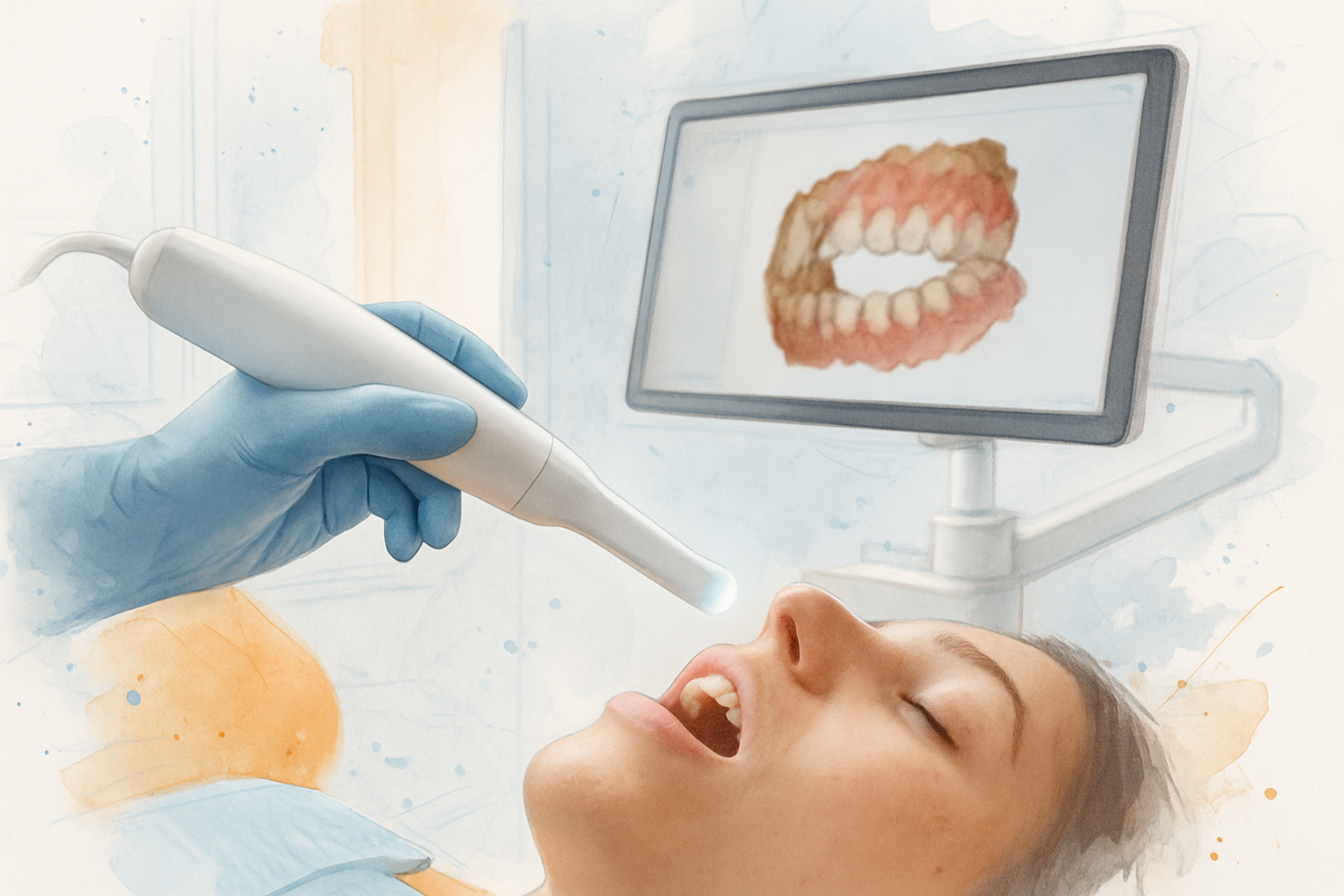
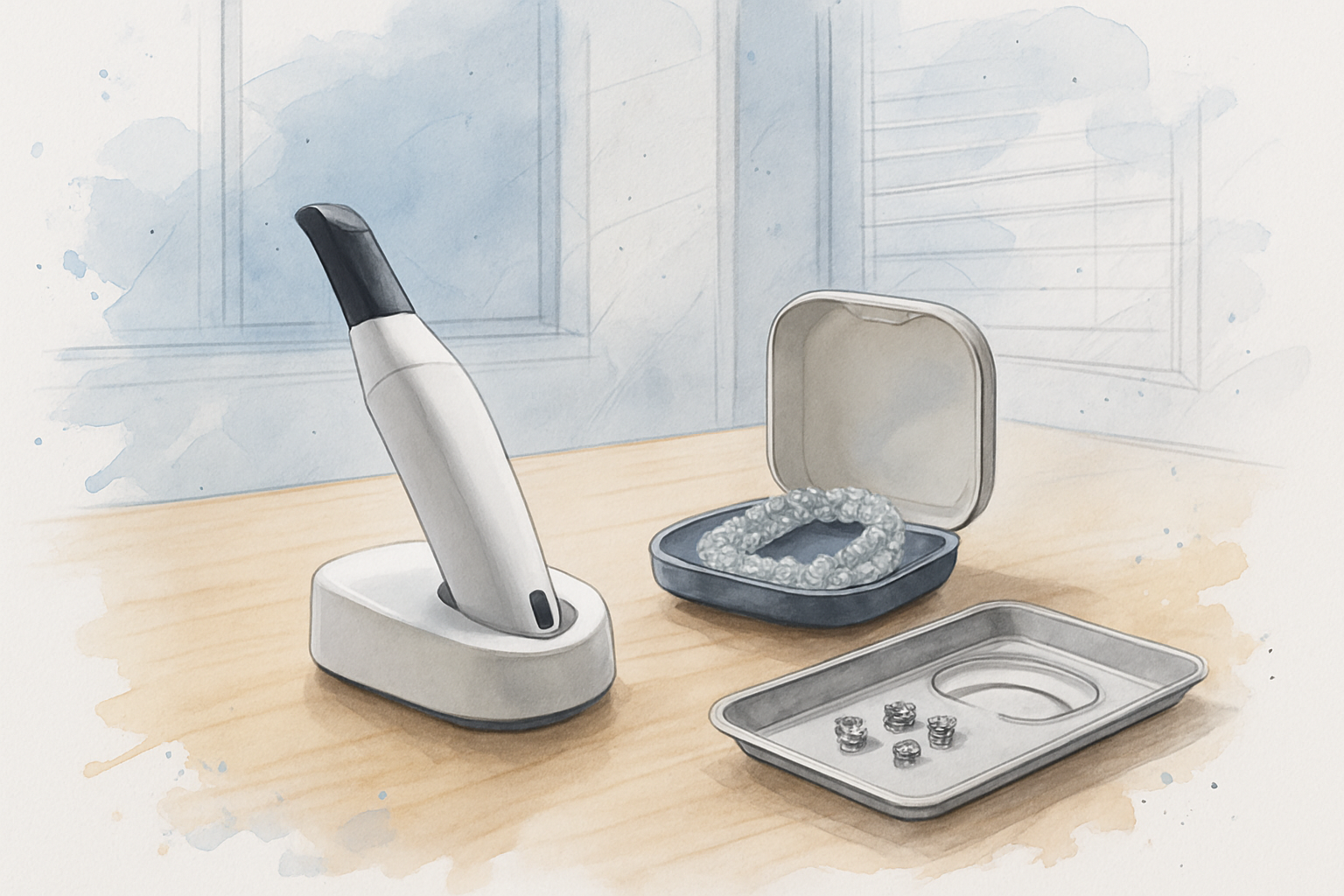
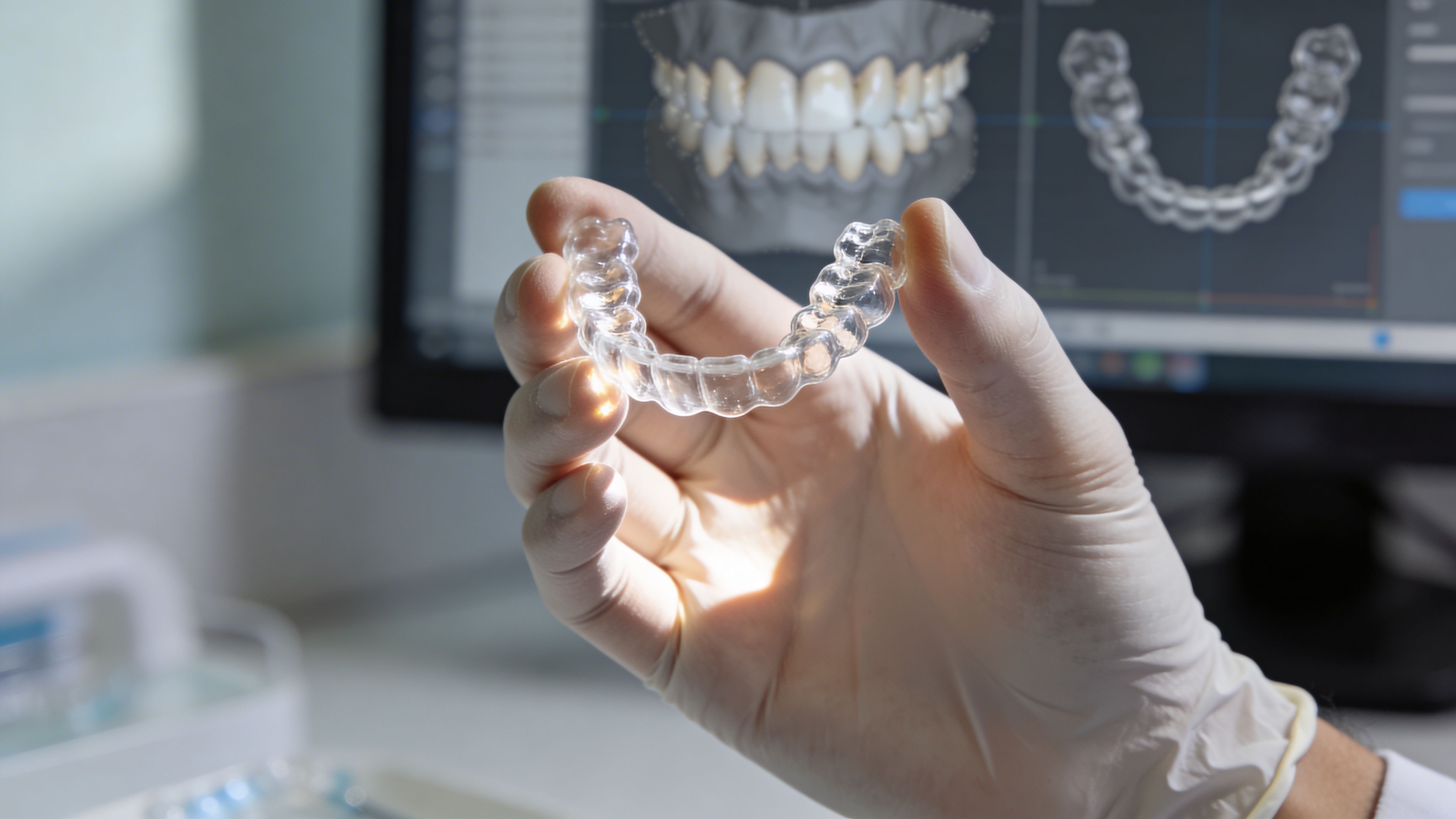
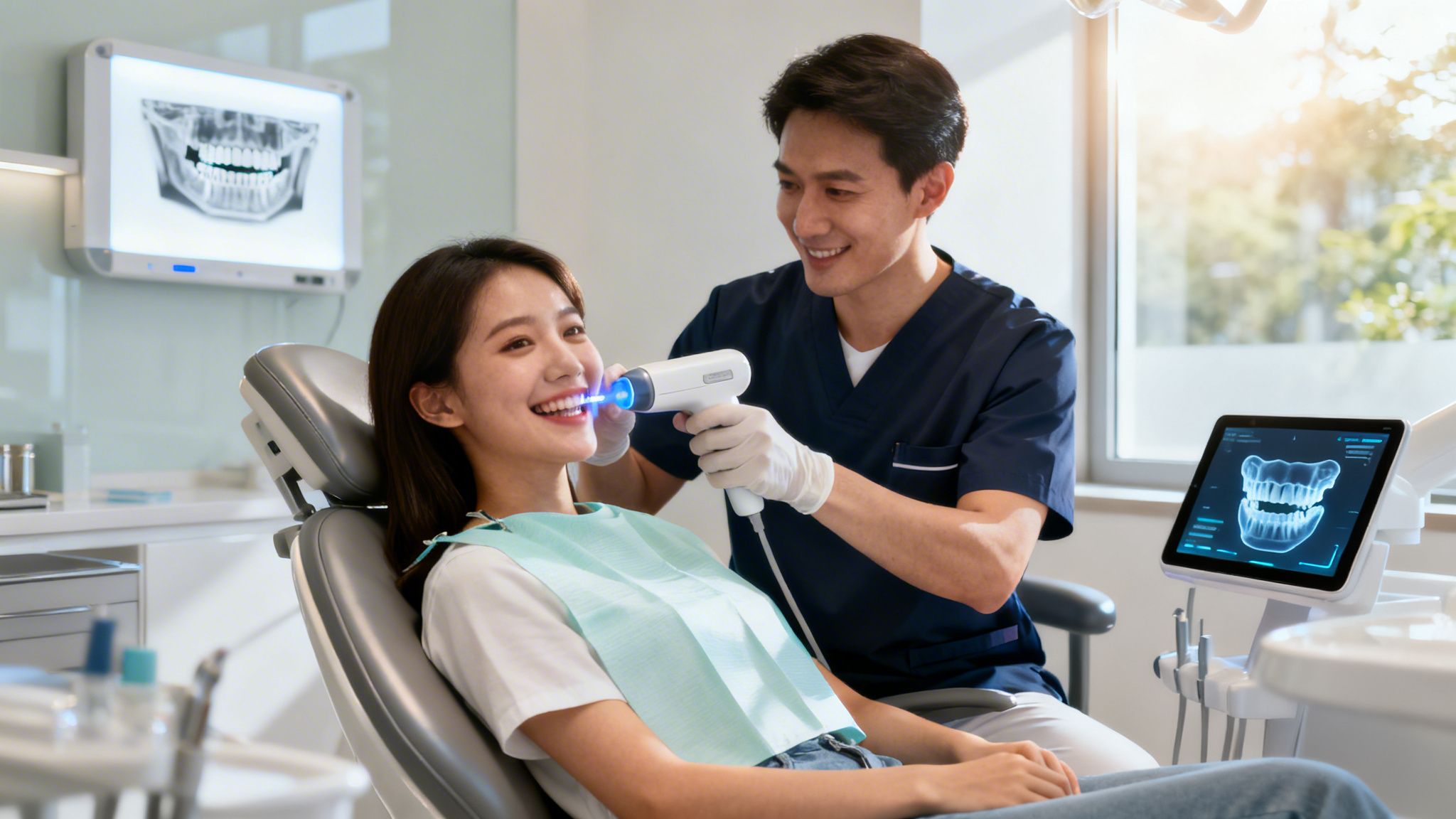
If you have sat in an orthodontic chair in the last few years, you have probably seen the wand that maps your teeth in about five minutes with no goopy mold. Patients mention it constantly. One reviewer put it simply: no more weird molding chemicals.
What most people do not see is the software sitting behind that scan, running simulations and suggesting tooth movements. And starting January 1, 2027, California has new rules about exactly how much authority that software is allowed to have.
I want to walk you through what AB 1979 and SB 503 actually say, where AI shows up in a real orthodontic visit here in Huntington Beach and Fountain Valley, and the questions worth asking at any consult you book next year.
What the California AI healthcare law AB 1979 means for patients
Governor Newsom signed both AB 1979 and SB 503 on September 30, 2026. Both take effect January 1, 2027.
AB 1979 requires health facilities, clinics and physicians to take "reasonable steps" so that a licensed health care provider exercises independent clinical judgment in patient care whenever that care is informed by the output of a clinical decision support system, which the law defines as an artificial intelligence system. As Reed Smith describes it, the duty lands on the physician's office or the office of a group practice.
The law goes further. Under AB 1979, the identified health care providers may not use or deploy any tool or device that uses AI to either independently perform, or to direct, guide, supervise, or instruct unlicensed personnel in performing, clinical functions that are required by law to be performed by a licensed professional. The law includes exceptions.
Two more pieces matter to you as a patient:
- Chatbots are now covered by medical privacy rules. AB 1979 extends the Confidentiality of Medical Information Act to businesses offering health care chatbots.
- SB 503 adds bias duties. It requires identification and mitigation of bias in clinical decision support tools.
The legal analysis from Holland and Knight on California's new AI ground rules lays out the full set of health care AI bills, including AB 1609, which also takes effect January 1, 2027.

Where AI actually shows up in an orthodontic visit
Orthodontics went digital before most of medicine did. If you walk into almost any office between Downtown Huntington Beach and Central Fountain Valley, software is already part of the process.
Here is where it typically appears:
- Digital scanning. The wand builds a 3D model of your teeth and bite in minutes.
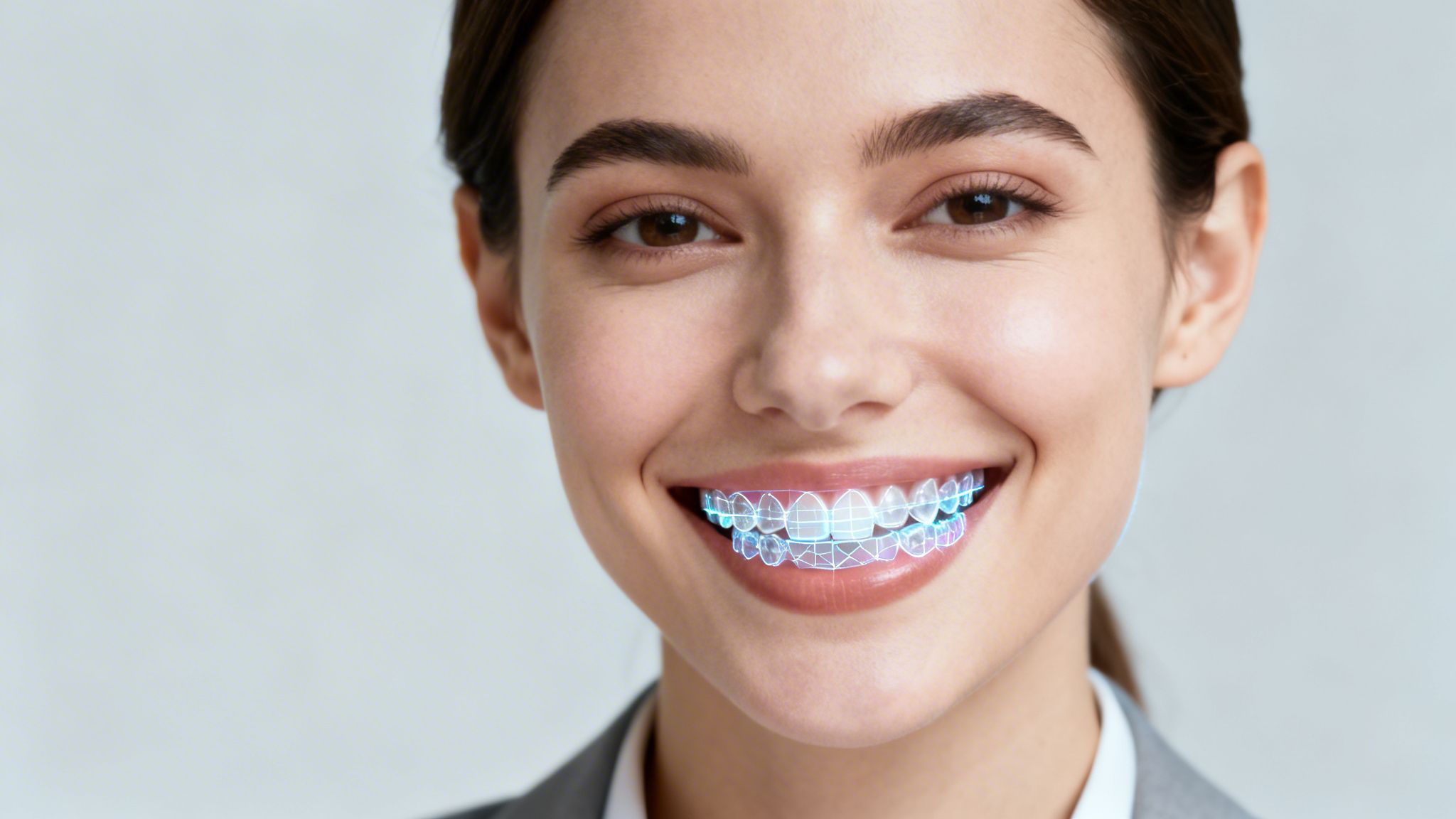
- Aligner planning software. Clear aligner systems generate a proposed sequence of tooth movements and a projected finish.
- Imaging analysis. CBCT and X-ray tools can flag measurements, root positions, and airway findings.
- Front desk chat tools. Website chatbots that answer questions about treatment, timing, or cost.
None of that is bad. A good scan is faster, more accurate, and far more comfortable than a tray of impression material. What AB 1979 addresses is the gap between a tool producing output and a licensed doctor deciding what to do with it.
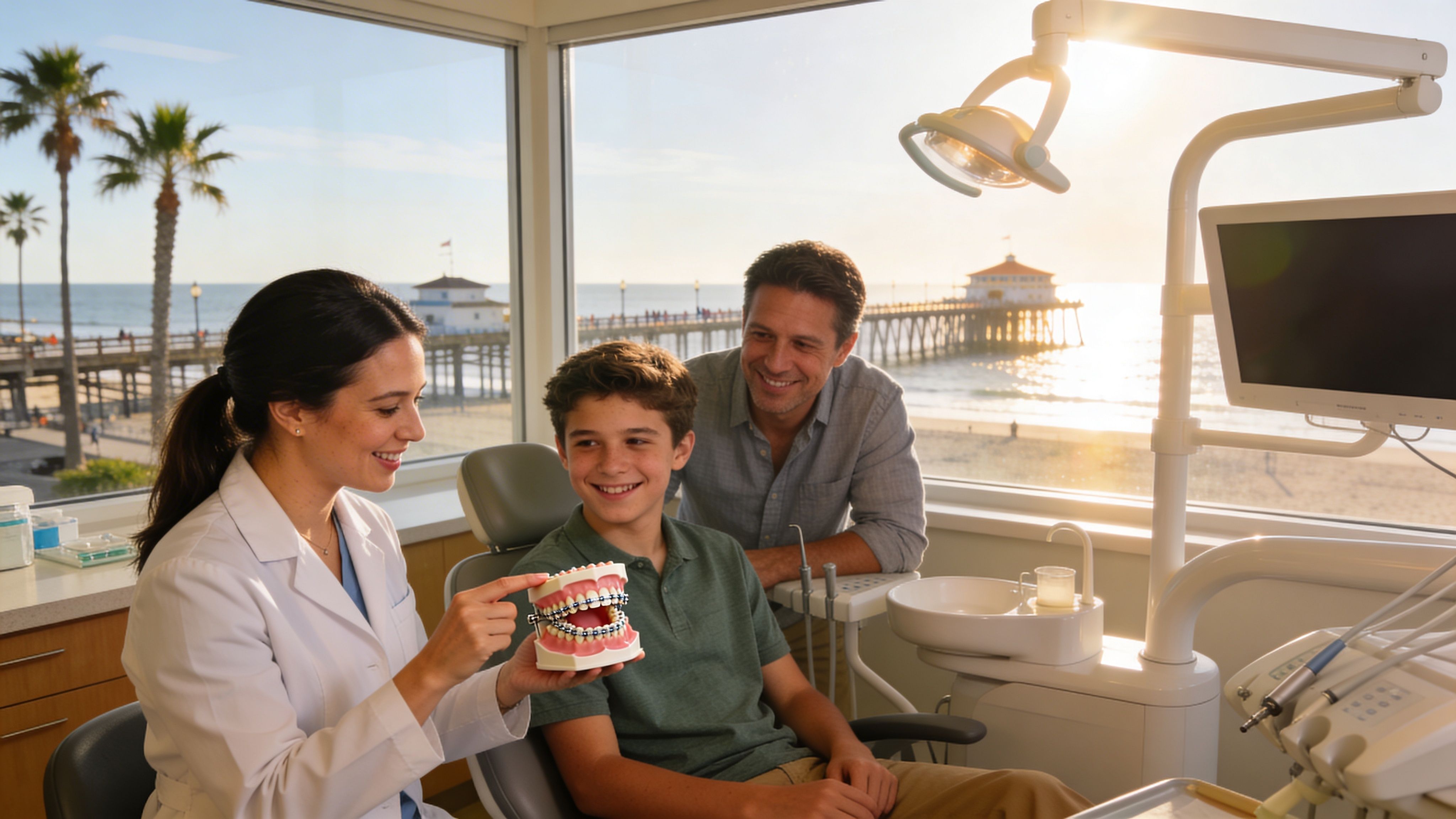
One patient left us a three-star review a while back making a related point: she felt an orthodontist should not have to lean on scanning software to determine a treatment plan. I think that criticism is worth sitting with, because it is the exact instinct the new law protects. The scan informs the plan. Dr. Jeremy and Dr. Melissa build the plan.
If you want the longer version of how that sequence works, we break it down in our piece on the orthodontic treatment process.
AI Tools in Orthodontics and Who Makes the Decision
This is a plain-language look at common digital tools and where the human judgment has to sit under the 2027 rules.
| Tool | What it produces | Who makes the clinical call |
|---|---|---|
| Digital intraoral scanner | A 3D model of your teeth and bite | The doctor interprets it alongside your exam and history |
| Clear aligner planning software | A proposed movement sequence and projected finish | The doctor approves, edits, or rejects every stage |
| CBCT and X-ray analysis tools | Measurements, root position, flagged findings | The doctor confirms findings and decides what they mean |
| Website or text chatbot | General answers to common questions | Not a diagnosis. Covered by California medical privacy rules as of January 1, 2027 |
| Automated reminders and scheduling | Appointment prompts and follow-ups | Administrative only, no clinical judgment involved |
How an AI Assisted Treatment Plan Should Work
Here is the order of operations a patient should expect at any California orthodontic consult in 2027.

What this costs you, and what it does not
Let me get the money question out of the way, because it is the first thing people ask on the phone. Callers from Oak View, Newland, and Talbert Village regularly ask what braces or Invisalign run before they will book anything, and a few are holding a competitor's quote while they ask.
AB 1979 and SB 503 are compliance obligations on practices, not new line items on your treatment agreement. The work falls on offices: reviewing which tools touch clinical decisions, documenting that a licensed provider is the one deciding, and meeting the new bias identification and mitigation duties for decision support tools.
Your actual treatment cost still depends on the things it always depended on:
- Case complexity, including crowding, bite correction, and whether you need full treatment or a focused touch-up
- Treatment length, which drives the number of visits and adjustments
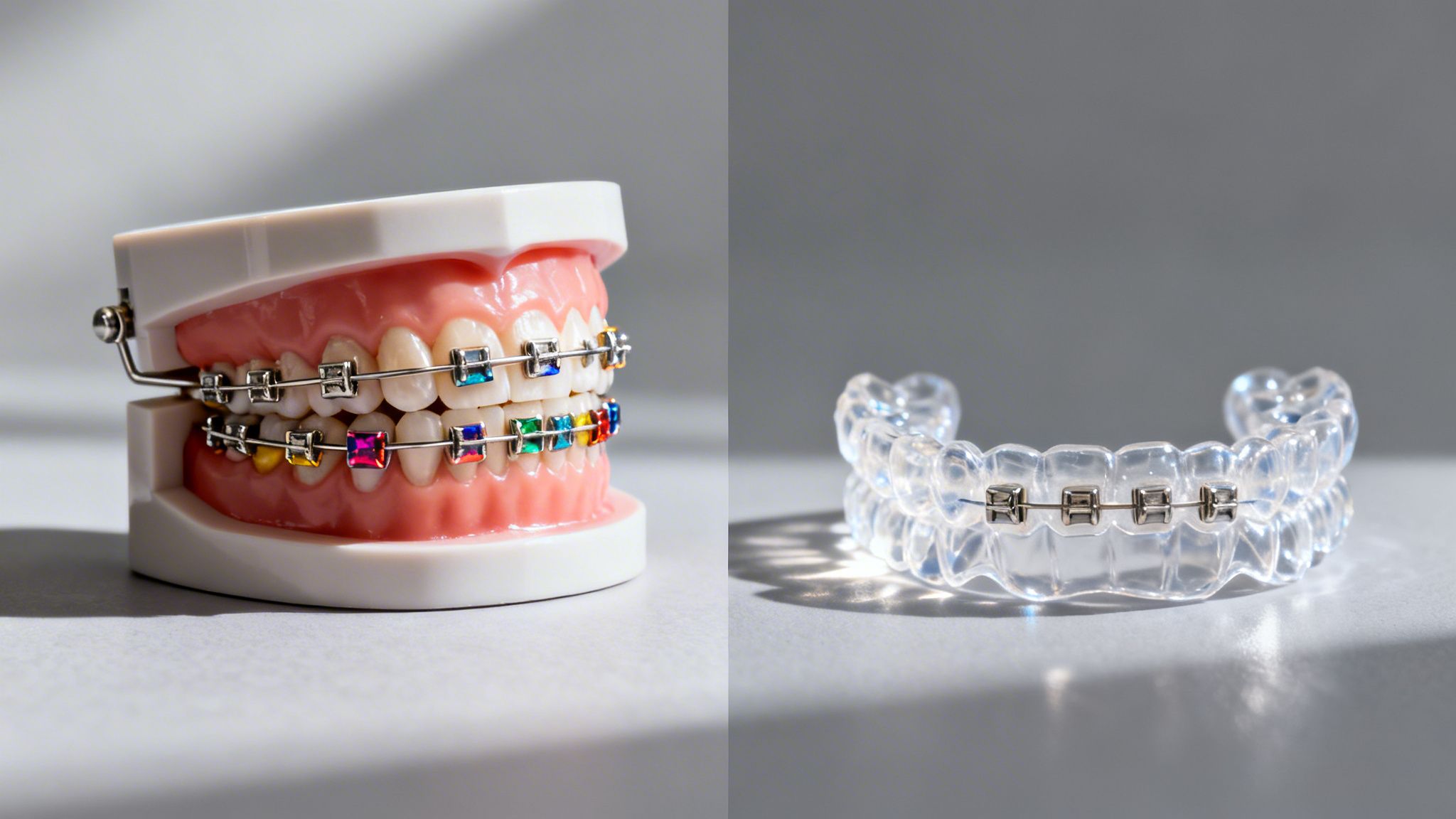
- Appliance type, since metal braces, champagne-colored Iconix brackets, and Invisalign carry different lab and material costs
- Your insurance benefits and any in-house payment arrangement
We never quote a number over the phone without seeing your teeth, because a guess helps nobody. We walk through the full picture of why orthodontic treatment costs what it does in a separate article. And if you are tracking California changes that hit your wallet directly, the dental assignment of benefits law taking effect in 2027 is the one to read next.
Four questions worth asking at your consult
Whether you are a parent in Goldenwest booking a first evaluation for a seven-year-old, or an adult in Wintersburg finally dealing with lower front crowding, these are fair questions to ask any office in 2027.
- "Who built this plan?" You should hear a doctor's name, not a software name.
- "What did you change from the software's first draft?" A real answer here tells you a human looked hard at it.
- "If the scan and your exam disagree, which wins?" The exam should.
- "Is anything I type into your website chat treated as medical information?" As of January 1, 2027, health care chatbot conversations fall under the Confidentiality of Medical Information Act.
One reviewer described her son's consult as "knowledgeable, honest, and transparent throughout the entire visit." That is the standard, and it has nothing to do with technology. It is a doctor taking the time to explain what they see and why they are recommending it.
For more on sorting good care from a nice lobby, we wrote about what to look for in an orthodontist beyond location.
Frequently Asked Questions About AB 1979 and AI in Orthodontic Care
Does AB 1979 mean my orthodontist has to stop using digital scans?
No. Scanning, imaging, and aligner planning software are all still in use. The law requires that a licensed provider exercises independent professional judgment when care is informed by that output, and bars AI tools from independently performing clinical functions the law requires a licensed professional to perform.
Who exactly does the law apply to?
As written, AB 1979 applies to health facilities, clinics and physicians, including a physician's office or the office of a group practice. The law includes exceptions. Either way, it is the standard any patient should expect from a provider using AI tools in care decisions.
What changed about health care chatbots?
AB 1979 extends the Confidentiality of Medical Information Act to businesses offering health care chatbots, effective January 1, 2027. If you describe a symptom or treatment concern to a provider's chat tool, that information carries medical privacy protections.
What is SB 503 and how is it different?
SB 503 is the companion bill signed the same day. It adds bias identification and mitigation duties for clinical decision support tools, so the software itself gets checked for skewed outputs rather than just being supervised at the point of care.
I'm 68 and thinking about Invisalign. Does any of this affect me?
Only in a good way. You are never too old for orthodontics, and we treat patients well into their seventies. One of our patients wrote her review at 76. The new rules simply mean the recommendation you get is a doctor's judgment about your teeth, your bone, and your goals, not a projection a program spit out.
Want a treatment plan a real doctor explains to you?
Our office sits on Beach Boulevard, convenient and local for families across Huntington Beach and Fountain Valley, and we are currently accepting new patients, including transfers who moved here mid-treatment. If you want to talk through options with Dr. Jeremy and Dr. Melissa, consultations can be scheduled at 714-594-5777 or at magicfoxsmiles.com. No pressure to start anything that day.