What an Invisalign Diamond or Platinum Badge Does Not Tell You
Direct Answer: Invisalign provider levels such as Platinum, Diamond and Diamond+ are set by the aligner manufacturer and counted from how many cases a practice starts. They measure volume, not how your case gets planned.
You have two or three consultation folders spread across the kitchen table. One of them leads with a badge: Diamond, Diamond+, or some version of "top 1% provider." And you have no real way to judge what that badge is worth.
I get this question more than almost any other from people who have already sat through several consultations, especially folks coming from another office mid-treatment. You are not being cynical for asking what the badge measures. It measures volume, which is real information, just much narrower than it looks on a homepage.
Here is my position, plainly: a provider tier tells you how many aligner cases an office starts, and almost nothing about how your case will be planned and watched. In this article I will explain where those levels come from, what they cannot describe, and what I would weigh instead if I were comparing offices along Beach Boulevard.
What Invisalign provider levels actually measure
The tier ladder is not a clinical ranking. It is a program run by the company that manufactures the aligners, and the levels are counted from how many cases a practice starts and completes over a rolling period.
The names and the thresholds have been revised more than once over the years, which is worth knowing if you are comparing a badge on one website to a badge on another. A tier earned under one set of rules is not always the same tier under the next.
What the count does and does not separate:
- A simple case with a couple of crowded lower teeth counts the same as a difficult bite correction
- A case that finished in six months counts the same as one that ran two and a half years
- A large multi-doctor office naturally accumulates more starts than a small one, regardless of skill
- A case that needed three rounds of refinements still counts as one case
So volume is real. A practice doing a high number of aligner cases has seen a lot of mouths, and that experience matters. But volume alone cannot answer the only question you actually have, which is whether your case will be handled well.
That is a different question, and it has a different answer.

The part a badge cannot describe: who plans your case
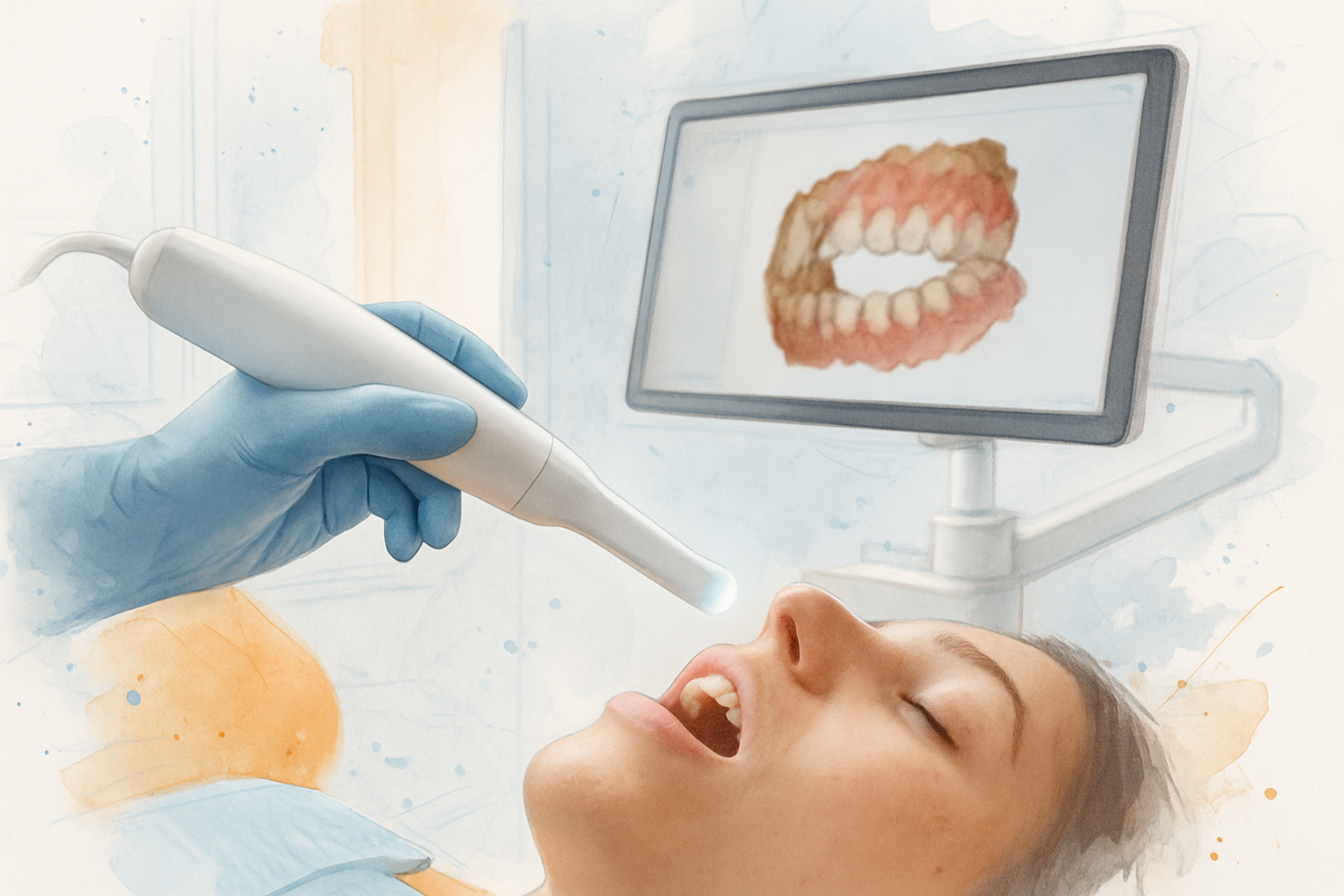
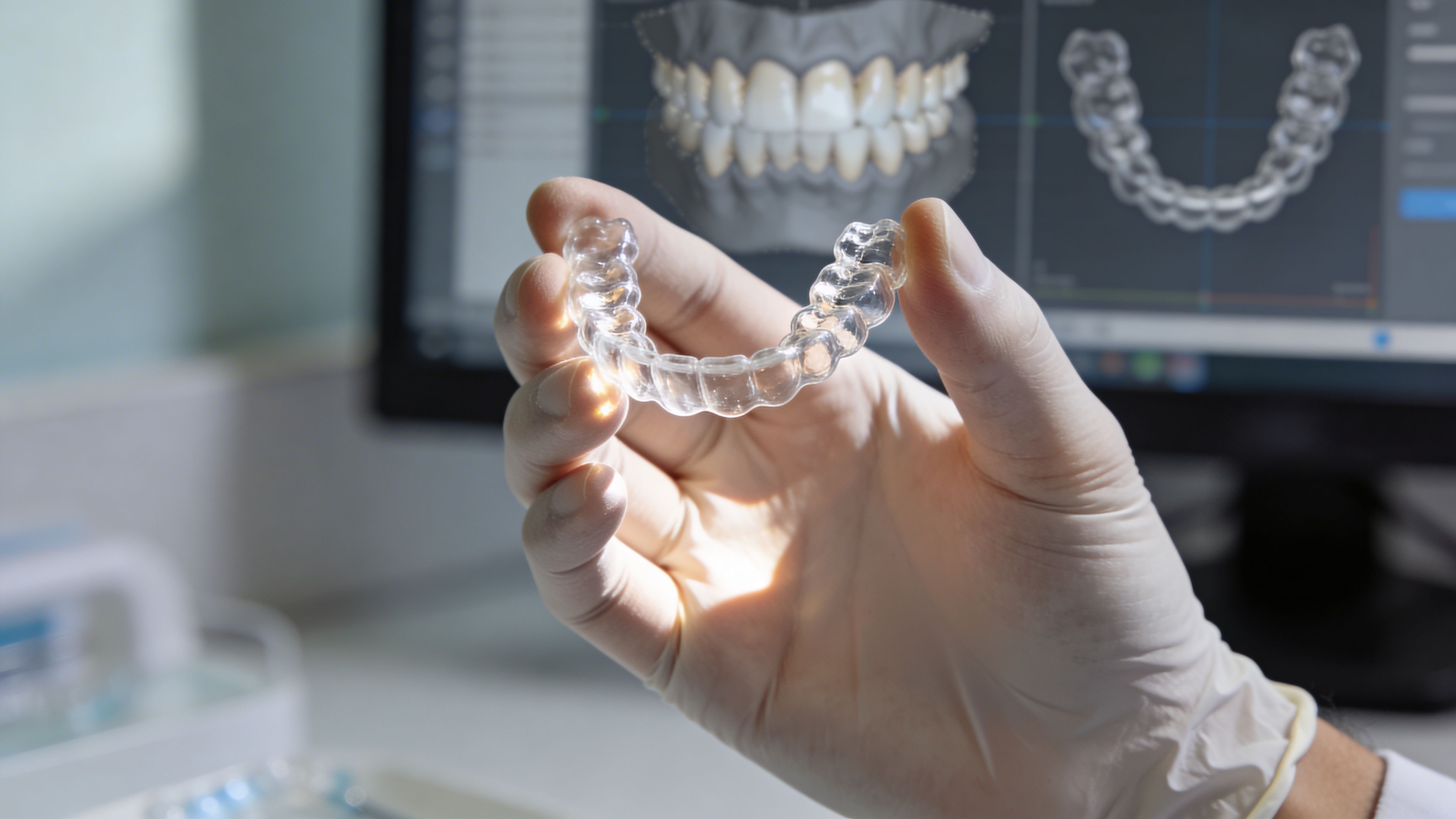
Aligners are manufactured to a treatment plan. The trays themselves come from the same factory no matter whose office you sit in. The plan is the variable, and so is what happens after the plan starts moving teeth.
Think about the parts of treatment nobody puts on a homepage:
- Who decides the order in which your teeth move, and which teeth get held still while others shift
- Who looks at your teeth at each visit when one tooth stops tracking with its tray
- What the office does when the case needs a refinement round, meaning a new set of trays partway through
- Whether anyone tells you honestly that braces might suit your bite better than aligners
That last point matters more than people expect. If an office only presents one option, you are not really choosing.
There is a local wrinkle here too. When you search for Invisalign in Huntington Beach, most of the page-one results are general dental offices rather than orthodontic practices. That is part of why so many patients assume all Invisalign is interchangeable.
It is not a knock on anyone. It is just a reason to ask whether a dentist or an orthodontist is planning your case, because orthodontists complete two to three additional years of specialty training in tooth movement after dental school, according to the American Association of Orthodontists.
What the badge answers, and what it doesn't
Here is how I would sort the questions people bring to a second opinion, against what a provider tier can honestly tell you.
| What you actually want to know | Does a provider tier answer it? | What does answer it |
|---|---|---|
| Has this office handled a lot of aligner cases? | Yes, roughly | The tier itself, verified through the manufacturer's locator |
| Will my specific case be planned by a specialist? | No | Asking who designs the plan and who reviews it |
| Is my case simple or complicated? | No | Records, a scan, and a doctor walking you through why |
| What happens if a tooth stops tracking? | No | Asking directly how refinements are handled and billed |
| Will I see the same doctor each visit? | No | Asking about the schedule and who runs adjustment visits |
| Should I consider braces instead? | No | A doctor who presents both and explains the trade-offs |
Five questions worth bringing to any consultation
Print these or keep them on your phone. They work at any office, including ours, and they tell you far more in twenty minutes than a badge does.

Listen for honesty, not for a sales answer
The point of those questions is not to catch anyone out. It is to hear how someone thinks.
A doctor who tells you your case is straightforward, and explains why, is giving you real information. So is a doctor who says your bite is complicated and sets expectations you may not love hearing.
The families I talk to who have already been to a few offices usually describe the same thing: they felt rushed somewhere, or they felt like treatment was recommended before anyone really looked. One local parent put it simply in a review: "I had 3 different consultations and they were by far my daughter's favorite place. We are starting Invisalign with them." - Gloria B.
Another review from a Huntington Beach parent says the doctors "addressed his orthodontic needs without making us feel pressured to start treatment right away." That is the tone to listen for.
If you are still deciding between approaches at all, it helps to read up on how to tell whether braces or Invisalign fits your situation before your visit, so you can follow the conversation instead of just nodding along.
Does a higher tier mean a higher price?
This is the question running underneath the badge question, and most people asking it are already holding a quote from somewhere else.
A higher provider tier is not supposed to mean a higher fee. Tier status reflects case volume with the manufacturer, not what an office charges you.
What actually moves a quote up or down:
- Case complexity, meaning how far teeth need to travel and whether the bite needs correcting
- Treatment length, since longer cases mean more visits and more trays
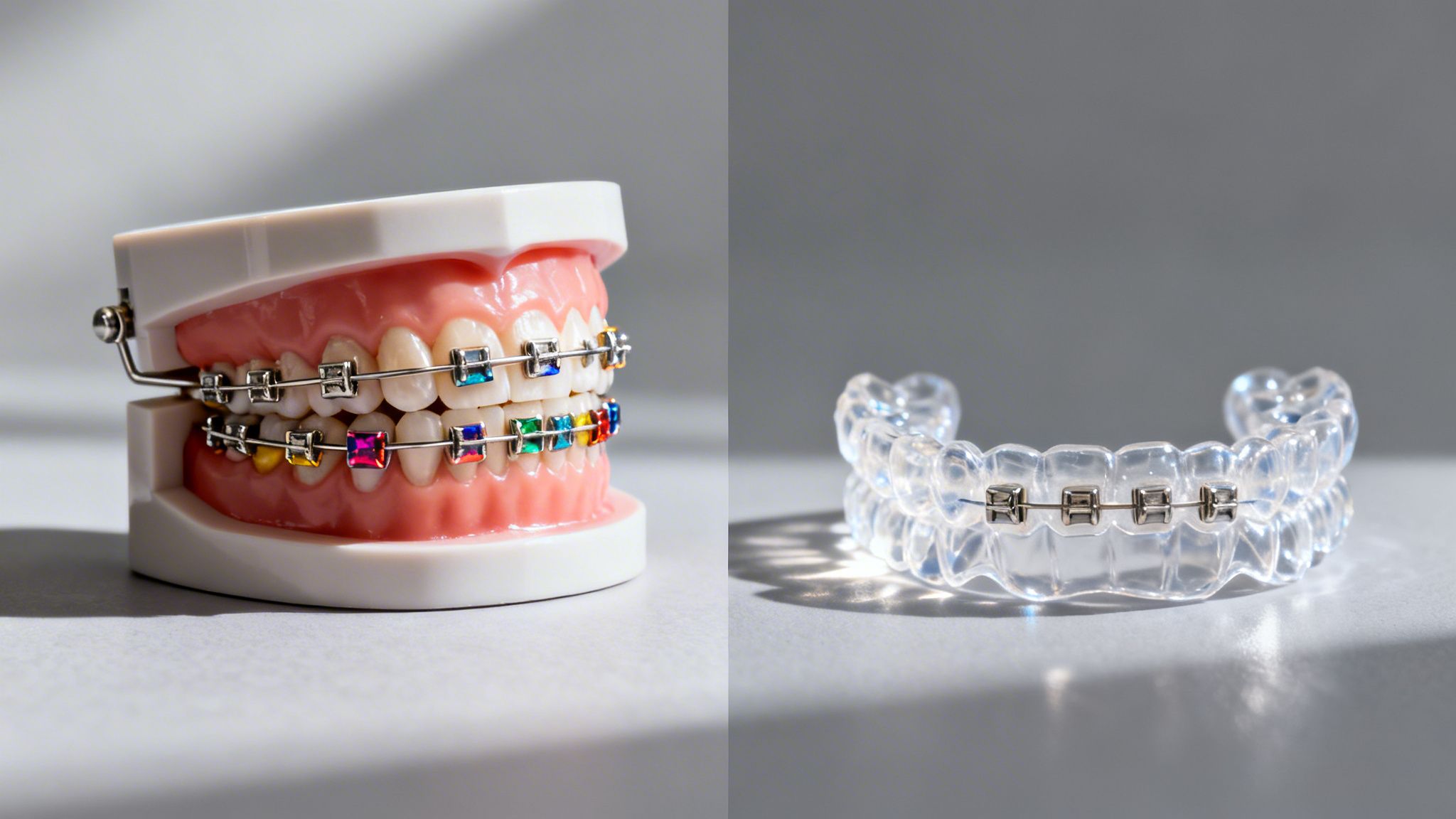
- Appliance type, whether that is clear aligners, traditional metal braces, or champagne-colored Iconix brackets
- Whether treatment is comprehensive or a limited touch-up aimed at one or two specific things
- Insurance benefits and payment plans, which vary a lot from household to household
Ranges vary widely by case and by office, and none of the main practices around Huntington Beach and Fountain Valley publish a figure, so people comparing offices are often comparing blind. If you want the general landscape before a visit, our breakdown of Invisalign cost versus braces cost walks through the factors without pretending there is one number.
The only number that applies to your mouth comes from an exam of your mouth.
How to check a tier yourself, then put it in proportion
If a badge matters to you, verify it. The designation is published by the aligner manufacturer and can be checked through its own doctor locator rather than taking a website's word for it.
Then set it beside the things you can judge directly:
- Whether an orthodontic specialist is planning and monitoring the case
- Whether the same doctor sees you at each visit, or whoever is free that day
- What the office does when a case needs adjusting partway through
- Whether transfer and second-opinion visits are routine there
That last one matters for anyone arriving mid-treatment from another practice. We hear from parents in Oak View, Goldenwest and Central Fountain Valley whose child has brackets from a prior office and who mostly want to know where things stand before committing to anything.
Patients in our own reviews tend to decide on clear explanation and continuity, not credentials. One mom noted that Dr. Jeremy and Dr. Melissa are the ones who see her son at every appointment, and that the personalized care is what sold her.
Use the badge as one input. Just do not let it be the deciding one.
Frequently Asked Questions About Invisalign Provider Levels
Is a Diamond provider better than a Platinum provider?
Not necessarily better at treating your case. The levels reflect how many aligner cases a practice starts over a rolling period, so a higher tier means more volume, not a more careful plan for your teeth.
Can I check a practice's Invisalign tier myself?
Yes. The designation comes from the aligner manufacturer and shows up through its own doctor locator tool, so you can confirm what an office claims rather than relying on the badge image on a homepage.
My child started treatment at another office and we moved. Can treatment continue somewhere new?
Usually, yes, though it depends on the appliance and how far along the case is. Transfer visits start with an assessment of where things stand, including existing records if you can get them, and then an honest conversation about what can and cannot carry over. We get these calls regularly from families around Wintersburg, Talbert Village and Downtown Huntington Beach.
What if I only want to fix one or two things, not my whole bite?
Focused touch-up treatment exists for exactly that, and it is a common request from adults who had braces years ago and saw a little shifting. It is a shorter, narrower scope than comprehensive treatment, so the planning conversation looks different.
Am I too old for this?
No. We treat patients well into their 70s, and one of our own reviewers started at 76. Age affects planning and sometimes timeline, but it is not a disqualifier.
Thinking through a second opinion?
Dr. Jeremy and Dr. Melissa are both Invisalign Certified Providers and trained orthodontic specialists who manage each case from start to finish, and second-opinion visits are a normal part of our week rather than an exception. Magic Fox Orthodontics sits on Beach Boulevard in Huntington Beach, a short drive for families in Central Fountain Valley, Talbert Village, Oak View and Goldenwest. If you would like a consultation, you can reach us at 714-594-5777 or at magicfoxsmiles.com.